Our Gang, Thevara (About The Clever One)

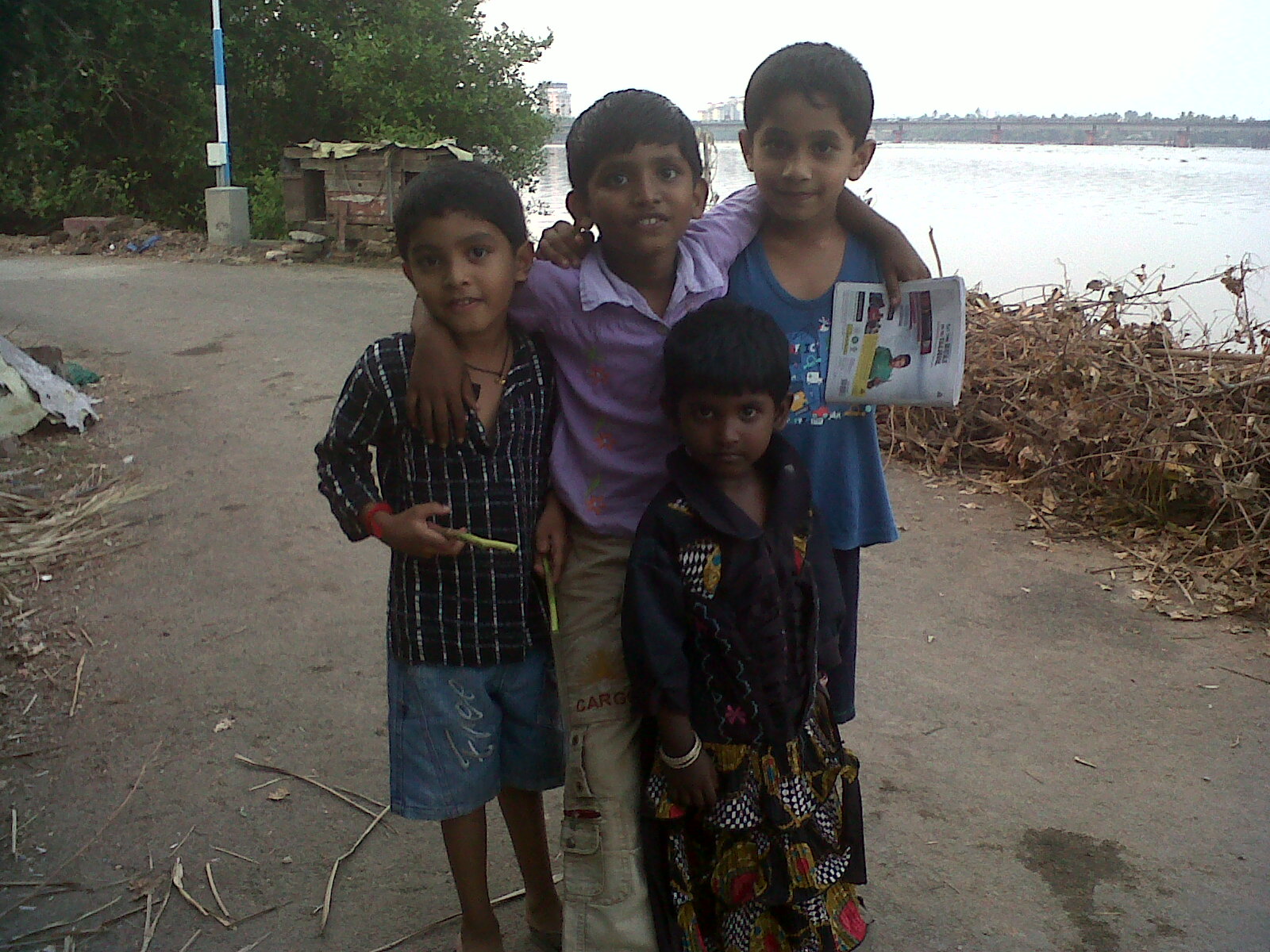
This young lady in the foreground of the photo above is special.  She has already broken an unspoken, unwritten, and increasingly irrelevant gender barrier in which girls play with girls and boys with boys: her brother has welcomed her into the fellowship that used to be strictly a fraternity.  It helps that she is clever.

Continue reading

Equitable Origin’s Partnership With Coordinating Organization Of Indigenous Communities Of The Amazon Basin (COICA)

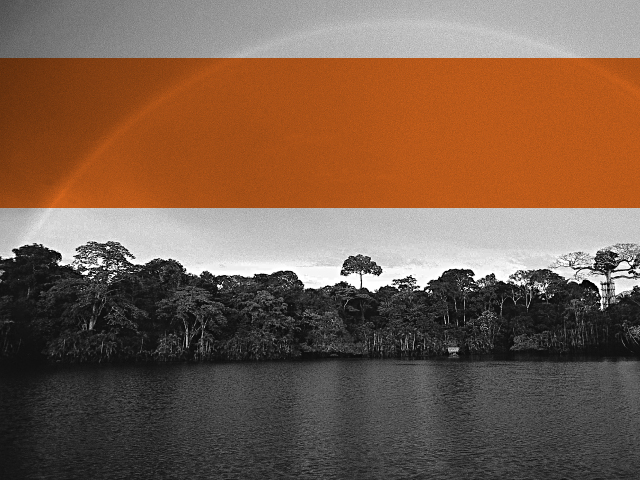
Equitable Origin has renewed its cooperation agreement with the Coordinadora de Organizaciones Indígenas de la Cuenca Amazónica (COICA).  The EO100 Standard is an ongoing project that will improve environmental and social practices in the oil and gas industry and we are very appreciative of the continued active support of COICA. Continue reading

Our Gang, Thevara (#10)

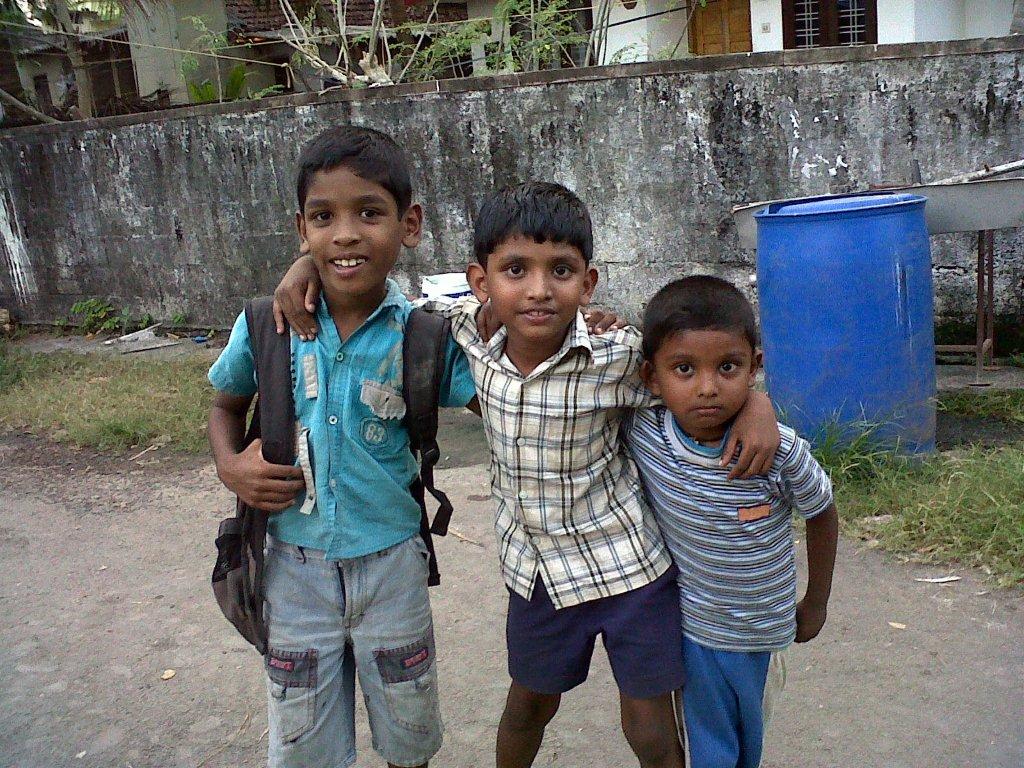
Two brothers and their neighbor buddy.  Thevara is one of our communities, part of Cochin (aka Kochi) and situated on the backwaters between the modern part of town and the older harbor sections of town called Fort Cochin and Mattancherry. Continue reading

Life Mein Ek Baar, Featuring River Escapes

Every minute of this is fun.  The 35th minute is particularly fun for those of us based in Kerala because members of our organization join the stage with the stars of this show.

About five months ago we were approached by a film production company about a show they were filming for National Geographic Channel.  They told us that River Escapes was recommended to them as having the best houseboats in the Kerala backwaters (a bit of music to our ears).  Then they proposed that their Kerala episode should be based on our houseboats (we danced to that music).

Continue reading

Almost Missed It

It is just the way things are.  My reading list/pile is always longer/taller than I have time for.  And living between the rice fields and spice-laden Western Ghats I do not have access to the kind of bookstores we took for granted while living elsewhere.  Amazon does not deliver in India, nor would I put a penny in their coffers until I have the sense that they are not trying to monopolize the book trade, not to mention everything else.

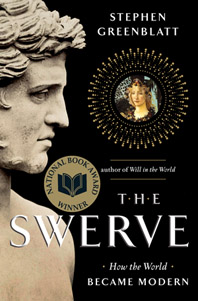
Even if I had access to a great book store I might not have picked this one up off the shelf, though I admire the author’s writing.  I have not been in the mood for anything too canonical or Great lately; rather merely useful, interesting, lesser reading.  Short- and long-form journalism tend to be my standard fare. There was something in the pile with Greenblatt’s name on it, a magazine article, that I kept burying for months and which persistently kept resurfacing. Continue reading

Gold’s Glitter Gratifies

17TH-TRAVANCORE_COINS.jpeg

Travancore Coins from Beena Sarasan’s Collection. Photo: Special Arrangment

A couple of  my recent posts appreciating the perspective of a capable Western observer on the topic of India, combined with my family’s pending celebration of Thanksgiving in a foreign land (as per our tradition), got me thinking: what news item in India since living here am I most grateful for.

No hesitation.  It has to do with the aftermath of a discovery in July. The discovery happened not too far from where we live, in the foundations of a Hindu temple.  The descriptions were remarkable on their own, in part just because of the difference between journalistic style in the culture where I grew up (fourth estate and all) versus India’s journalistic flourish:

…gold, jewels, and other treasures were unearthed in the vaults of the temple. Several 18th century Napoleonic era coins were found, as well as a three-and-a-half feet tall gold idol of Mahavishnu studded with rubies and emeralds, and ceremonial attire for adorning the deity in the form of 16-part gold anki weighing almost 30 kilograms (66 lb) together with gold coconut shells, one studded with rubies and emeralds… Continue reading

Leveraging Irrationality


Dan Ariely explains in a series of captivating short videos how frequently irrational tendencies can lead to optimal outcomes.  The Edison-Tesla example in the video above is about the tendency called “not invented here syndrome,” and the key point as he summarizes at the end is a familiar one: understood, this irrational tendency can be very useful.

Continue reading

Kolbert, Kerala & Clouds

Reading this post from Elizabeth Kolbert, a familiar cloud of doom came over me.  Read almost anything she writes, and you will know what I mean.  She writes most frequently about seemingly intractable environmental problems, and those about climate change have the most intense effect on me.  But ignorance is not an option, so I read.  The cloud lasted about seven hours, and parted just now in a most interesting manner. As if my head were just lifted out of the sand.  First, the portion that stuck with me:

Since we can’t know the future, it is possible to imagine that, either through better technology or more creativity or sheer necessity, our children will be able to find a solution that currently eludes us. Somehow or other, they will figure out a way to avoid “a 4°C world.” But to suppose that an answer to global warming can be found by waiting is to misunderstand the nature of the problem.

Continue reading

Shape Moves Market

Earlier this year one of the news outlets we trust when establishing a point of view had this report on a rock.

It was not until a few days ago that the memory of that rock coincided with a post of Amie’s. In it, she linked out to a very illuminating video explaining the role natural selection plays in shaping our aesthetic tastes.  It seems we have been remarkably consistent in our preference for the shape of rocks, or at least in those rocks that humans have been chipping away at for millennia. Continue reading

Phototectonics

As the son, brother and father of photographers I have to acknowledge that I am partial to the notion that people with cameras can produce rapturously important works of art.  Further, I am partial to landscape photography.  Recently I started to realize how quaint my understanding of the economics of being an “art” photographer, landscape or otherwise, has been; and those economics just experienced a tectonic shift.

Continue reading

National Geographic Dream Team In Kerala

News came today from the film production company mentioned a while back.  Editing is complete.  The travelers are still friends.  And more.

But the main point was: this Sunday night (India time) we finally get to watch the episode that features Kerala’s backwaters and our houseboats.  Thank you for the notification, Vivek!

To the right is a luggage tag.  Not a non sequitur: we were working on these while the film crew mentioned above was with us.  Our tags had been, quite frankly, boring.  We thought the crew deserved a reminder of where they had been with us.  So our friends at Thought Factory Design came up with a simple reminder.

I hope Vivek, his production crew, and those four dashing stars of the show are all still carrying around trunks, duffel bags, suit cases and carry-ons with these little reminders of their friends in Kerala…

That reminds me.  Before the end of 2011 you will be able to see some of the handiwork of Thought Factory Design if you happen to be traveling in Kerala.  Continue reading

Another Friedman Keeper

This quote may not be clear without the context, so read the full story here.  But following my previous mention of its author I was pleased to see that he is still writing from India, and I am most interested in this snippet because it captures a general point beyond the specific innovation he describes in the full article.

That conversation is the sound of history changing.

And not just for India. We’re at the start of a nonlinear move in innovation thanks to the hyperconnecting of the world — through social media, mobile/wireless devices and cloud computing — which is putting cheap innovation devices into the hands of so many more people, enabling them to collaborate on invention in so many new ways.

Continue reading

Occupy National Parks, Boycott Coca Cola

Did you read this?  If so, how many times did you say out loud, as I did no less than 14 times: really, Coca Cola?  Here is one example, among many, of a disturbing perspective:

A spokeswoman for Coca-Cola Refreshments USA, Susan Stribling, said … “Banning anything is never the right answer,” she said. “If you do that, you don’t necessarily address the problem.” She also characterized the bottle ban as limiting personal choice. “You’re not allowing people to decide what they want to eat and drink and consume,” she said.

Is this really about something as sacred as liberty?  No.  One of the greatest ideas of all time (the one about certain unalienable rights) is being invoked for purely commercial interests, and that is disturbing enough.  Continue reading

From Reliable Sources

Today major news organizations are reporting that, according to the IUCN, the Western Black Rhino is officially extinct.  The BBC, CNN and others must have received a press release that is not yet available on the IUCN website (as of my writing and posting this), but if you search on the terms IUCN and rhino you will find a link to the following video that provides a good visual definition of melancholic beauty:

When I see news like this, I fight the natural inclination toward depression and channel the emotional energy as best I can, using the news as a reminder of how slowly we are working at the various tasks mentioned in a string of earlier posts.  It is another example of the feeling I seem to have with increasing frequency: being late.

Continue reading

Thank You, Mr. Friedman

When I began teaching a new graduate course ten years ago–an elective course that considered the impact of globalization on entrepreneurship–I assigned The Lexus and the Olive Tree as required reading.  The diploma for the masters degree was coming from Cornell University, the course was being taught in Paris, and my students were from 23 different countries.  The discussion around that book were the best I ever experienced as a professor.

I am now based in India, in a business partnership with a student from that course, and we often find ourselves using words like hot, flat and crowded as shorthand when discussing strategy (ours is an entrepreneurial business much affected by technology and globalization).  Continue reading