A Question of Light

Selling “light,” not light bulbs, is one way that companies producing long-lasting L.E.D. bulbs hope to stay in business, even after “socket saturation” sets in. PHOTOGRAPH BY TONY CENICOLA / THE NEW YORK TIMES / REDUX

Selling “light,” not light bulbs, is one way that companies producing long-lasting L.E.D. bulbs hope to stay in business, even after “socket saturation” sets in.
PHOTOGRAPH BY TONY CENICOLA / THE NEW YORK TIMES / REDUX

In a business world of planned obsolesce and consumer world “throw away behavior”,  it’s enlightening to see how companies are handling “doing good by doing well” for the both the environment and the consumer’s pockbook.

TRYING TO SOLVE THE L.E.D. QUANDARY

Continue reading

Inspiring Science

Long before we tackled the science to allow a view of what Carl Sagan would come to call “our pale blue dot”, there were artists and explorers who imagined the vastness of the world and took off into the unknown – both figuratively and literally.

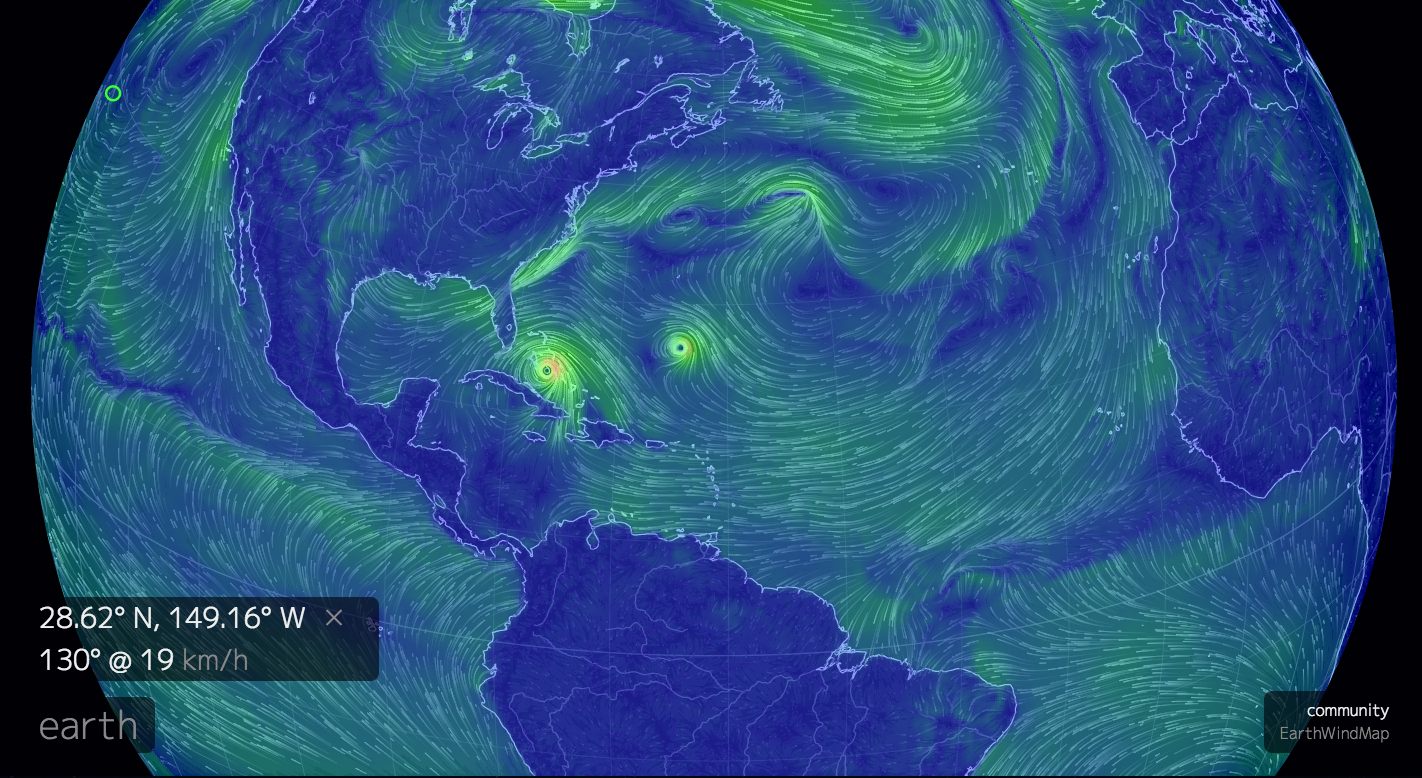
EARTH collaborates with information from scientific organizations such as NASA and NOAA to create an interactive visualization of global weather conditions forecast by super computers updated every three hours. The actual global images are a fascinating swirl of wind and current, reminiscent of a Vincent Van Gogh painting.  The ocean surface current estimates are updated every five days, ocean surface temperatures and anomaly from daily average (1981-2011) are updated daily, and ocen waves are updated every three hours – all of which combine to present a moving canvas of what is presently occurring on this blue marble of a planet.

About The Art

EARTH, by Cameron Beccario, is a near real-time visualization of global weather conditions forecast by supercomputers. This vivid capture depicts intricate, dramatic swirling patterns of wind streamlines reminiscent of oil paintings of the Impressionists. Continue reading

Coffee’s Potentially Powerful Afterlife

Researchers are experimenting with using used coffee grounds to filter pollutants out of water. Credit RJ Sangosti/The Denver Post via Getty Images

Researchers are experimenting with using used coffee grounds to filter pollutants out of water. Credit RJ Sangosti/The Denver Post via Getty Images

Coffee lovers that we are, it’s amazing that we almost missed this piece of news…

Each year, coffee manufacturers, restaurants, cafes and home brewers worldwide produce about six billion tons of coffee waste… If not rotting in a dump or fertilizing a garden, the grounds end up in animal feed and biofuels.

But researchers in Italy have found a new home for the stinky old coffee bits — by infusing them into a porous foam that removes heavy metals from polluted water, according to a study published this month in ACS Sustainable Chemistry and Engineering.

“We use a lot of coffee here in Italy,” said Despina Fragouli, the author of the study and a materials scientist at the Istituto Italiano di Tecnologia. She and her team develop new compounds from agricultural waste — like turning cacao husks into a material for preserving and packaging food.

Naturally, they wondered “What about coffee?” Continue reading

Bookstores Are Just A Small Notch Below The Library In Our Pantheon Of Cultural Institutions, But They Are There

eckstein-bodhi-1200

Bodhi Tree—Los Angeles, California

We liked it the first time around, and appreciate his extension:

DRAWING THE WORLD’S GREATEST BOOKSTORES

By

It was a little more than two years ago that I walked around New York, drawing pictures of the city’s endangered landmark bookstores.  Continue reading

If You Happen to Be In Gainsville

This slideshow requires JavaScript.

We’ve been posting on the environmental impact of the invasive lionfish ever since contributor Phil Karp took on the project of building a demand for the notoriously difficult to catch fish. Helping to build a market for the delicious meat and beautiful spines created income for local fishermen and their families in numerous areas of the Caribbean.

ReefSavers was created with all these goals in mind. Founded to gain control of the Lionfish population in the southeast US and Caribbean, they work toward both harvesting and developing a stable market in which supply can always meet the current demands. By unifying

the organizations working to control the Lionfish outbreak into a cohesive market place. Channeling all harvested Lionfish through a centralized market place will allow for a more stabilized fishery. With the creation of the Lionfish Market Place organizations will have a centralized place to sell their catch and buyers will not have to worry about limited supplies. By opening the Lionfish Market buyers for the whole state of Florida will be connected with a more constant supply, in turn this access will help to grow the industry and put revenue into the hands of the people trying to fight the outbreak.

The ReefSavers team came up with innovative strategies to help with supply and demand logistics, fanning the market for the fish for both chefs and more importantly, consumers. Welcome the Lionfish Invasion Tour in Gainsville, Florida! Continue reading

Viewing the Nobel Prize Through a 21st Century Lens

We believe in the core principle from market-based economics that incentives drive behavior. We lean toward behavioral economics as a more robust and believable model than the standard “homo economicus” (read oversimplified but mathematically model-able idea of human decision-making) taught to most 20th century students. We believe that desire for recognition is an incentive commonly found among super-achievers. And this explains why “big” prizes are created and tend to matter over time. Not to  suggest that geniuses chase prizes (on the contrary, much of the time).

But the Nobel probably inspires its fair share of young academics in a few fields. For that reason we find this editorial opinion piece quite compelling, especially due to the first example given:

In the mid-1960s, Robert Paine, a scientist at the University of Washington in Seattle, discovered a hidden organizing principle in the coastal ecosystem he was studying. When a certain species of starfish was present, a panoply of algae, limpets, barnacles, anemones and mussels lived in delicate, dynamic balance. But when he removed the starfish and tossed them into the ocean, that balance collapsed and one kind of mussel took over.

Dr. Paine coined a term to describe the starfish’s outsize influence: keystone species. Keystone species have since been identified in forests, in grasslands, in the ocean and even in the human gut. The concept has become one of ecology’s guiding theoretical principles, Continue reading

Birdsong – Making Visible the Invisible

We recently posted on artist Xavi Bou‘s creative use of chronophotography, a series of photos that capture the illusion of movement, to craft still portraits of birds in flight.

Australian artist Andy Thomas specializes in creating ‘audio life forms’: beautiful abstract shapes that react to sounds. These videos were created using computer program to activate particle effects from digitally captured bird sounds. Continue reading

Coal Mining, Climate Change & Entrepreneurial Conservation

coal-jp1-superjumbo

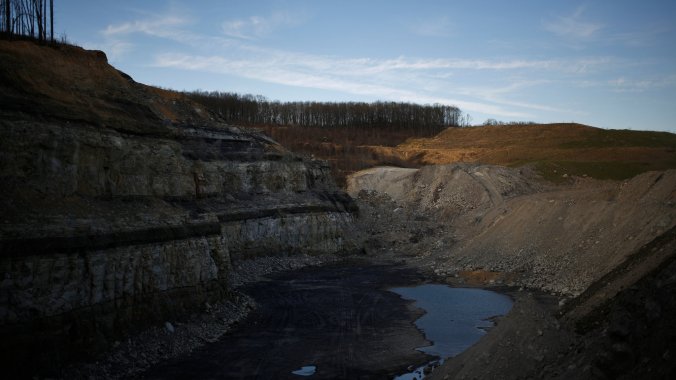
Reclamation crews fill in rock highwalls like this one, creating flat land that Tom Clarke intends to reforest as a way to trap and hold carbon dioxide. Credit Luke Sharrett for The New York Times

We had to read it to believe it:

A Curious Plan to Fight Climate Change: Buy Mines, Sell Coal

Tom Clarke, a nursing home owner, concocted a strategy to cut carbon emissions by gaining control of millions of tons of coal reserves and multiple mines.

FAIRVIEW, W.Va. — The coal was piled about as high as it could go, spilling down to the railroad tracks and towering over the elevator shaft. A yellow bulldozer pushed the mound to make room for more. From a distance on this rainy day, the black heap looked like a giant whale about to swallow the mine whole.

The word underground was that Federal mine No. 2 would soon have to close. It was early April, and the mine was running out of storage space. There were not enough buyers for all the coal. Continue reading

Perspective On The Ages

ages_custom-9ff69ab35ab626c9478bbdca45cef0f576c4797a-s1100-c85

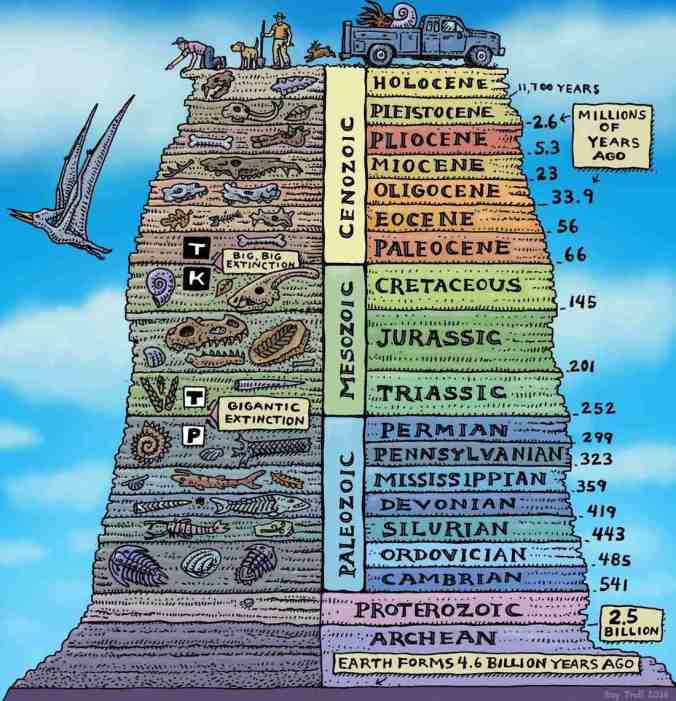
The Geologic History of Earth. Note the timescales. We are currently in the Holocene, which has been warm and moist and a great time to grow human civilization. But the activity of civilization is now pushing the planet into a new epoch which scientists call the Anthropocene. Ray Troll/Troll Art

Big words in the title may distract from the excellent point of this “cosmos & culture” article at National Public Radio (USA), worth a read:

Climate Change And The Astrobiology Of The Anthropocene

You can’t solve a problem until you understand it. When it comes to climate change, on a fundamental level we don’t really understand the problem.

For some time now, I’ve been writing about the need to broaden our thinking about climate. That includes our role in changing it — and the profound challenges those changes pose to our rightly cherished “project” of civilization. Continue reading

45 Red Wolves Remain In North Carolina

980x (3).jpg

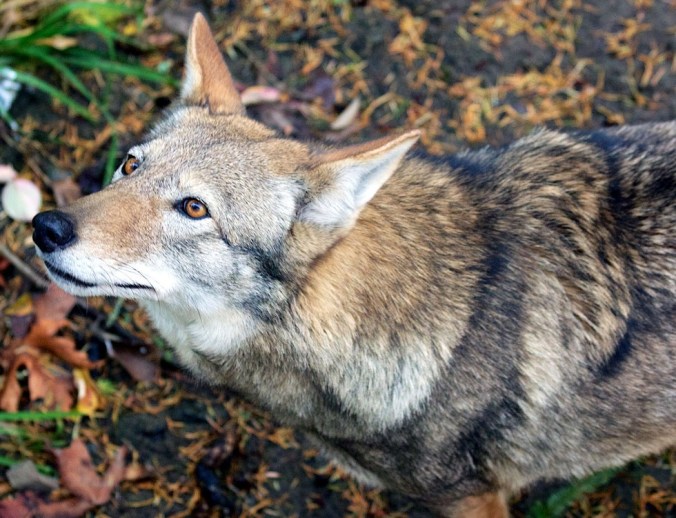
Captive red wolf at Species Survival Plan facility, Point Defiance Zoo and Aquarium (Tacoma, Washington).B. Bartel / USFWS

Thanks to EcoWatch for this news

The U.S. District Court for the Eastern District of North Carolina today issued a preliminary injunction that orders the U.S. Fish and Wildlife Service (USFWS) to stop capturing and killing—and authorizing private landowners to capture and kill—members of the rapidly dwindling population of wild red wolves. Continue reading

Olympic Acknowledgement

Jesse Owens, 1936, AP File Photo

Jesse Owens, 1936, AP File Photo

In February we posted about the documentary film Olympic Pride, American Prejudice, that highlighted the history of the 18 African American athletes attending “Hitler’s Olympics” in 1936 Berlin.

They returned home to their segregated country, receiving zero recognition from President Roosevelt, despite winning a quarter of the metals won by the U.S. team in the games.

Eighty years later, the athletes—16 men and two women—received their overdue recognition by a U.S. president Thursday when their relatives visited the White House for an event honoring the U.S. team at this year’s Rio games.

“It wasn’t just Jesse. It was other African American athletes in the middle of Nazi Germany under the gaze of Adolf Hitler that put a lie to notions of racial superiority—whooped ’em—and taught them a thing or two about democracy and taught them a thing or two about the American character,” President Obama said Thursday. Continue reading

Ornitographies – Making Visible the Invisible

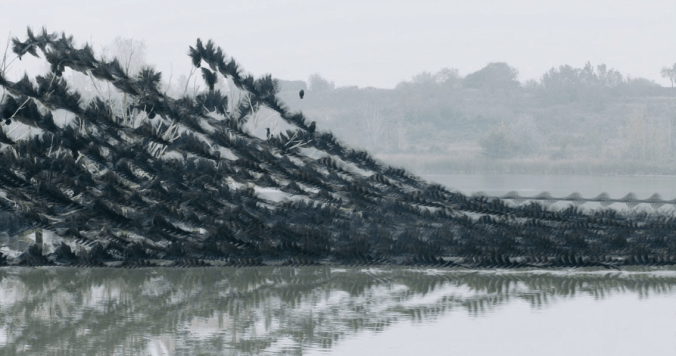
Great cormorants, Ibars Swamp, Catalonia (Courtesy of Xavi Bou)

Great cormorants, Ibars Swamp, Catalonia (Courtesy of Xavi Bou)

Birds are photogenic in their own right, but this creative capture of their flight by artist Xavi Bou is both innovative and etherial. A geologist and photographer by training, Xavi’s love of birds goes back to childhood.

Xavi Bou focuses on birds, his great passion, in order to capture in a single time frame, the shapes they generate when flying, making visible the invisible.

Unlike other motion analysis which preceded it, Ornitographies moves away from the scientific approach of chronophotography used by photographers like Eadweard Muybridge and Etienne-Jules Marey. Continue reading

Northern Lights, Iceland Edition

gettyimages-90757605-8f66af30a0491ce9c83ab10665cfc9ea55f536fd-s1100-c85

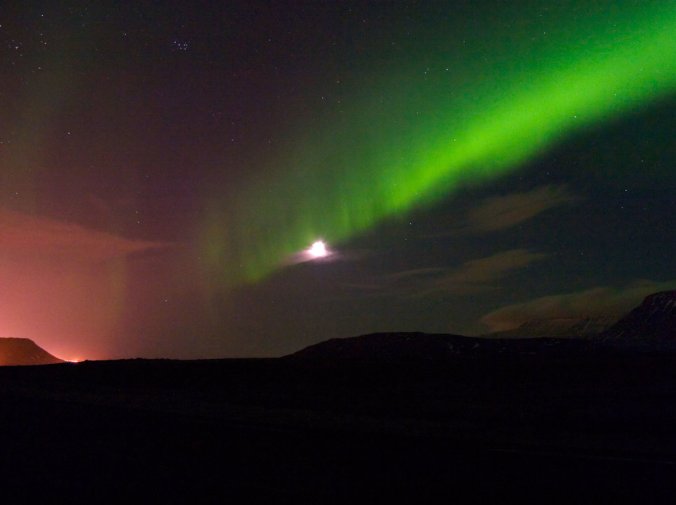
The northern lights over Iceland in February. The glowing orange area on the left side are the lights of the capital, Reykjavik. Jamie Cooper/SSPL via Getty Images

Thanks to National Public Radio (USA) for letting us know where they still take these things seriously:

Bees’ Emotions

bees-experiment.gif

A bee enters a cylinder with an ambiguous reward in the study of bee “feelings.” CreditClint J. Perry

We avoid gimmickry but now a bee has finally convinced us that a gif can do just what is needed to convey a point:

The Sweet Emotional Life of Bees

By

It is hard enough to figure out emotions in humans — but insects?

Nonetheless, as far back as Darwin, scientists have suggested that insects have something like emotional states, and researchers continue, despite the difficulties, to try to pin those states down. Continue reading

Banker, Genius, Good Guy

Jose Quinonez

Jose Quinonez, 2016 MacArthur Fellow, Mission Asset Fund, San Francisco/CA, Monday, Sept. 12, 2016.

In the years following the sub-prime and related financial crises, bankers got a thorough drubbing in the global imagination. But we have been depending on bankers in all our business and conservation activities all these years and never yet met a bad apple in the bunch. Still, kind of surprised to see a banker chosen for the prestigious awards we follow each year.  This year we are happy to see some extra coverage of the recipients of this award, as the following illustrates:

A Newly Minted MacArthur Genius on the Financially ‘Invisible’

“I wanted to change the world. I didn’t think I was going to do that by being a loan servicer.”

José Quiñonez has spent most of the past decade helping the financially invisible build credit and obtain loans. Continue reading

Hudson Gardens & Bees

bee-keeping-1_custom-a8509931c91172a9b5681ef572c8d35e73a5f844-s1100-c85

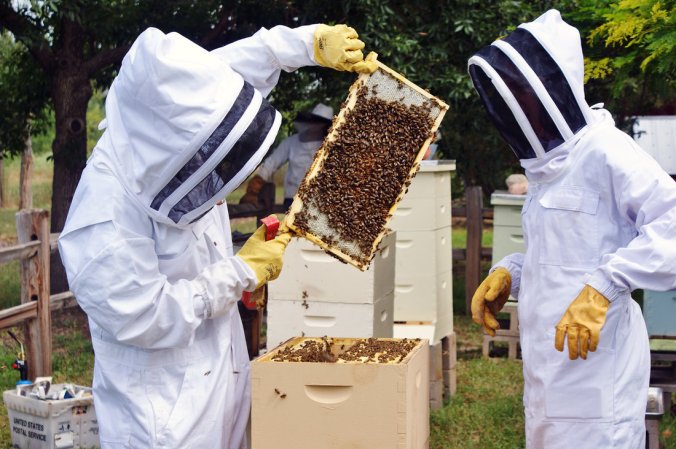
Beekeepers inspect bee frames at the Hudson Gardens community apiary near Littleton, Colo. Modeled after community gardens, community apiaries allow beekeepers to maintain hives in public spaces — and offer each tips and support. Courtesy of Hudson Gardens

We like what we have been learning about Hudson Gardens:

Beekeepers Benefit From The Hive Mind In Community Apiaries

JODI HELMER

Even though Marca Engman read countless books, watched YouTube videos and took a beekeeping class before installing her first hive in 2012, she knew she’d need help in the field.

“The whole idea of beekeeping was overwhelming,” she recalls. “Every year is different and every hive is different.”

Rather than working a backyard beehive solo, Engman installed her first hive in the community apiary at Hudson Gardens, a nonprofit garden near Littleton, Colo. Continue reading

Pangolins, Remarkable In More Ways Than One

1187

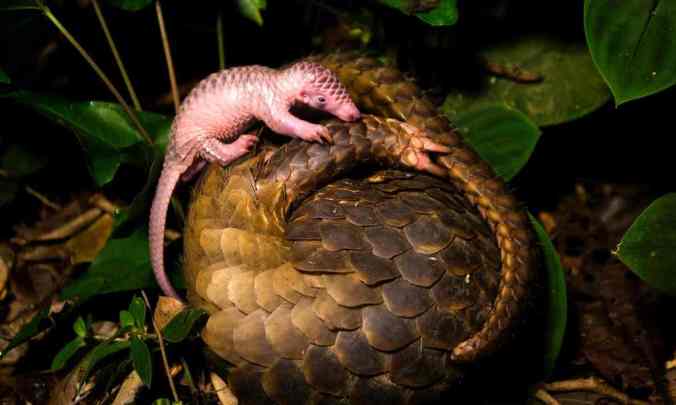
More than 1 million wild pangolins have been killed in the last decade. Photograph: Paul Hilton/WCS

We honestly knew little, perhaps nothing, about these creatures until very recently when they were in the news; and they were almost gone before we learned about them. Suddenly, thankfully, pangolins have been given the attention they deserve from the folks (including all of us) who may be able to help them survive as a species:

Pangolins thrown a lifeline at global wildlife summit with total trade ban

World’s most illegally trafficked mammal wins total ban on international trade in all species under the strictest Cites protection possible

Pangolins, the world’s most illegally trafficked mammal, were thrown a lifeline at a global wildlife summit on Wednesday with a total trade ban in all species. Continue reading

And In Other News Of Justice Related to Native Americans

gettyimages-477544415_slide-adeabb7c612c053a7083d6f756f6b0ec083cec86-s1100-c85

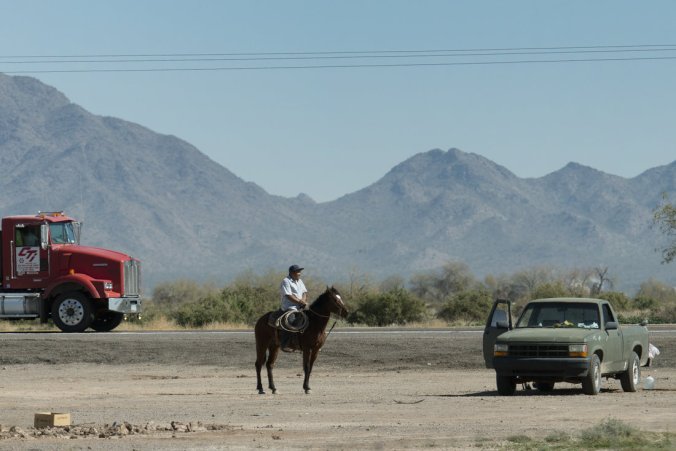
A road through the Gila River Indian Community in 2014. The tribe is one of 17 tribal governments the U.S. government announced Monday it had settled lawsuits with, over alleged mismanagement of land and resources. The Washington Post/Getty Images

Justice. Native Americans. Those are normally combined in the same sentence. But today, twice. In addition to the editorial here, we are happy to read the news below. Recognizing a mistake is a good first step. Taking action to fix the mistake is a great next step. Plenty more to be done on this one:

U.S. Government To Pay $492 Million To 17 American Indian Tribes

The U.S. government has agreed to pay a total of $492 million to 17 American Indian tribes for mismanaging natural resources and other tribal assets, according to an attorney who filed most of the suits.

In a joint press release by the Departments of Interior and Justice, Secretary of the Interior Sally Jewel said, “Settling these long-standing disputes reflects the Obama Administration’s continued commitment to reconciliation and empowerment for Indian Country.” Continue reading