Hydroponics at Home

mg_6498

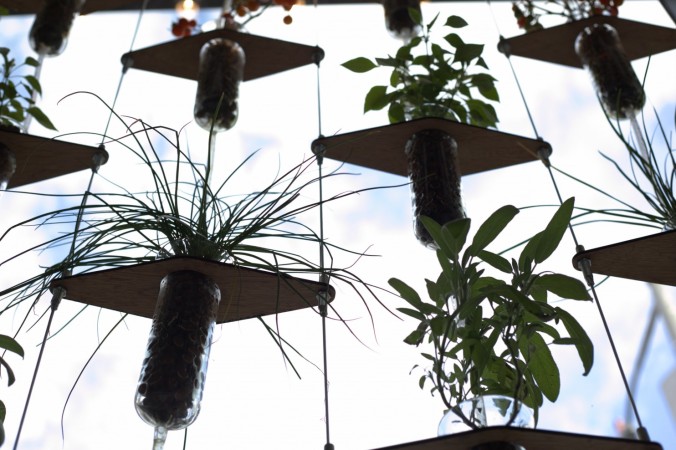
A vertical hydroponic system that also serves a artistic window decor by Michael Doherty.
Source: Washington Post

Hydroponics is far from a new subject on our blog (read on Milo’s experimentation with hydroponics), and while the sustainable benefits of this gardening method have been shared before, there is still one aspect we haven’t covered: appearance.

Just to cover the basics once again, hydroponics is a system of growing plants without soil and using mineral nutrient solutions in water. It’s water efficient and can be done easily in tight quarters, which means anyone can create a hydroponic system – in theory.

“If you understand the fundamentals, what the plants need, and you have some practical use of tools, it can be just a kiddie pool filled with water and a floating piece of Styrofoam board with holes cut in it,” believes Gene Giacomelli, a professor of agricultural and biosystems engineering at the University of Arizona and director of the Controlled Environment Agriculture Center.

Continue reading

Interview with Creator of Segway and More Important Technologies

Dean Kamen. Credit: DEKA Research

It is a somewhat morbid urban legend that the inventor of the Segway drove off a cliff in a fatal freak accident, but is founded in some truth: the man who purchased the company from inventor/entrepreneur Dean Kamen did indeed pass away in such a manner, a year after acquiring the tech manufacturer and nine years after the creation of the two-wheeled transportation tool. Mr. Kamen being alive and well, with hundreds of patents and plenty of ideas for inventions that particularly help in the medical world, spoke with Chau Tu from Science Friday about his company DEKA Research and Development and his history of prolific invention:

How did you first get interested in engineering?
I think I got started in a much more unusual way than most people I know. I sort of got into it as a kid, because I wanted to make things that weren’t available at the time, and in order to make them, I had to learn some engineering. I learned a little bit of electronics, I learned a little bit about mechanics, and I learned a little bit about how to make things and run machines—a lathe and a mill and a machine shop. I did that long before I academically studied any engineering or math or physics.

When I was in college, I had an older brother in med school who was a pediatric hematologist, and he needed ways to deliver very, very tiny amounts of drugs to very, very tiny babies. The equipment in the hospital was pretty much made for adults. So he asked if I could find a way to make a drug delivery system do what he needed. That was one of my first businesses and projects. [This was the AutoSyringe.]

Continue reading

Air, Water, Land

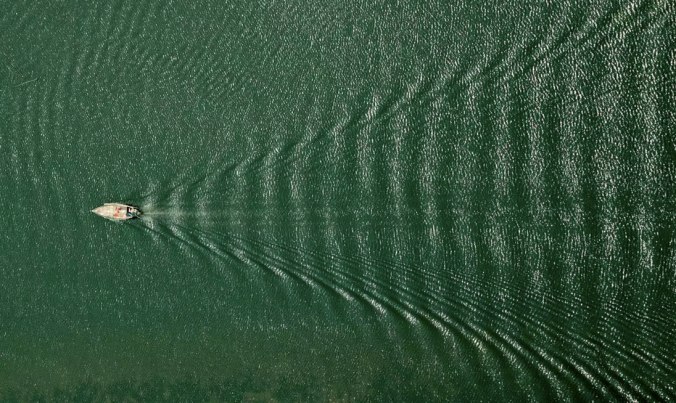
"This was somewhere over Meghna river, most probably over Narshingdi. I was looking for a shot when I noticed the boat splitting the waves and heading strong like an arrow. I was smiling while pressing the shutter – this is one of my favourite pictures." Photo credit: Shamim Shorif Susom

“This was somewhere over Meghna river, most probably over Narshingdi. I was looking for a shot when I noticed the boat splitting the waves and heading strong like an arrow. I was smiling while pressing the shutter – this is one of my favourite pictures.” – All photographs and captions by Shamim Shorif Susom.

Shamin Shorif Susom is a man of many talents. A pilot by vocation and a passionate photographer by hobby,  he grabs his aerial opportunities with amazing results. His photos over the waters of his home country Bangladesh are particularly inspiring. Thanks to the Guardian for sharing this set.  Continue reading

59 Parks in 59 Weeks

every-national-park-1024x683

All images from: Darius Nabors

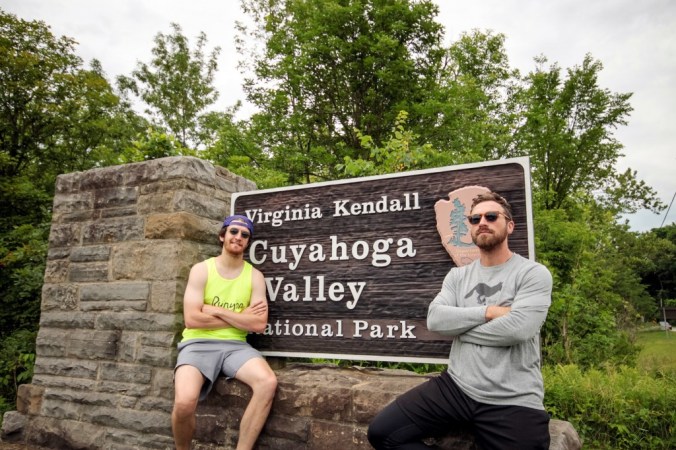
We continuously incentivize our readers to go out and explore the nature that abounds in the great outdoors. Well, Darius Nabors (although not a follower of ours – that we know of) raises our proposition to a whole new level by visiting all fifty-nine National Parks in fifty-nine weeks. In order to begin the pursuit of his goal, Nabors quit his job when he realized that it would take him forty-two years to see the ones he had not yet visited if he only traveled to one park per year. Therefore, he set himself this challenge while he is still young and active and can explore everywhere without worrying about physical limitations.

So far, Nabors and his friend and travel companion Trevor Kemp, who recently finished his Ph.D. in mechanical engineering, have visited 34 parks, including Glacier, Gates of the Arctic, Crater Lake, Haleakala and Joshua Tree.

Continue reading

Making Barrels High-tech

Kyle Guyer prepared to flip a barrel during toasting at the Missouri Cooperage operation of Independent Stave in Lebanon, Missouri. Lasers and infrared cameras have refined the toasting process to give the customer a desired flavor profile.
Credit August Kryger for The New York Times

Every now and then we find interesting stories from the world of distilleries. Maybe it’s a small mescal brewer, or a giant liquor corporation giving back in some way, or the history of traditional London gin, or people making beer out of wasted bread. In the world of wine and certain spirits, oak barrels are imperative to the process of aging the drink, and the technology involved in cooperage has changed a lot in the last couple years, even as barrels look exactly as they did hundreds of years ago. Clay Risen reports for the New York Times:

SALEM, Mo. — Standing on a wooded hillside in the Ozarks, about 100 miles southwest of St. Louis, Brad Boswell watches a chain-saw-wielding logger make several deft cuts at the base of a 100-foot white oak. The logger points to a clearing down the slope and, with one final, quick slash, sends the tree falling, exactly where he pointed.

Mr. Boswell scrambles over to look at the swirls and loops that make up the tree’s cross section. If they’re consistent, and the wood doesn’t show scars from fire damage or disease, it will most likely end up in some of the hundreds of thousands of barrels that his 1,500-person company, Independent Stave, turns out every year.

Continue reading

Warm and Wooly Homes

havelock_sheep_wool_fishermansdaughter

All images from triplepundit.com

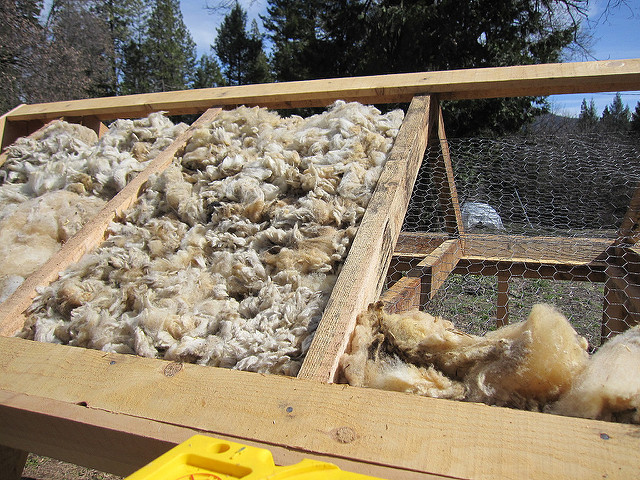
Sheep’s wool has long been proclaimed as one of nature’s best insulators, and San Francisco startup Havelock Wool, LLC has taken advantage of this property of wool to use it as a sustainable insulation product to meet the growing demand of higher efficiency buildings and homes. Although wool is typically known for keeping things warm, the company is also using the material for homes in warm and sunny environments:

The company recently tried out its products on a 17,000 foot mansion in Newport Beach, a destination harbor town in the middle of Southern California’s coastline. As with most insulating products, the material’s ability to lock out cold temps also gives it the ability to insulate homes during hotter weather. It absorbs moisture, drys out naturally and doesn’t become moldy.

But its most appealing quality is its environmental benefits.

Continue reading

Novel and Efficient Mosquito Control

The predator cues emitted by the Backswimmer, a mosquito larvae predator, trigger a stress response in the mosquitoes, which impairs their immune system.
Photo © E. Van Herk

Two weeks ago we saw a chemically-baited, solar-powered trap for mosquitos implemented in Kenya. New research – conducted only in the laboratory so far – has shown the potential for another chemical cocktail to be used in a very different way for mosquito control, hopefully in a manner that can reduce quantities of pesticide applied in eradication efforts. From the EurekAlert press release by the Belgian University of Leuven:

Existing strategies for mosquito control often involve the use of pesticides that harm the environment. These pesticides are increasingly less effective as well, as insects can become resistant to existing products relatively quickly.

Biopesticides are a possible alternative. The most commonly used biological pesticide is the Bacillus thuringiensis israelensis (Bti) bacteria. Unfortunately, mosquitoes are already developing a resistance to this pesticide as well. This means we have to keep increasing the dose of Bti to kill mosquitoes, so that this biological substance, too, is beginning to harm the environment.

Continue reading

Renewable Energy = Renewed Job Market

Workers with Bella Energy install solar panels on a rooftop in Boulder on July 25, 2014. Photo © Denver Post

The energy that is generated from coal needs to keep decreasing relative to alternative energy sources if we want to reduce the release of pollutants and greenhouse gases into the atmosphere and rely on renewables instead. But for many people working in the coal industry, this change represents unemployment and poverty. In Colorado, a plan to train coal workers for solar energy jobs may be able to ameliorate the situation. Lea Terhune reports for Share America:

What does greater use of green energy mean for workers in more traditional energy sectors? A Colorado initiative may have the answer: put the workers where the jobs are. Consider the findings of Michigan Technological University professor Joshua M. Pearce and associates: There are nearly 209,000 solar workers in the United States, compared to about 150,000 remaining jobs in the coal industry. Hence Colorado’s plan: train unemployed coal workers to install solar panels.

“Our results show that there is a wide variety of employment opportunities in the solar industry, and that the annual pay is attractive at all levels of education,” Pearce writes in the Harvard Business Review.

Continue reading

A Milky Package

milkplastic

Source: American Chemical Society

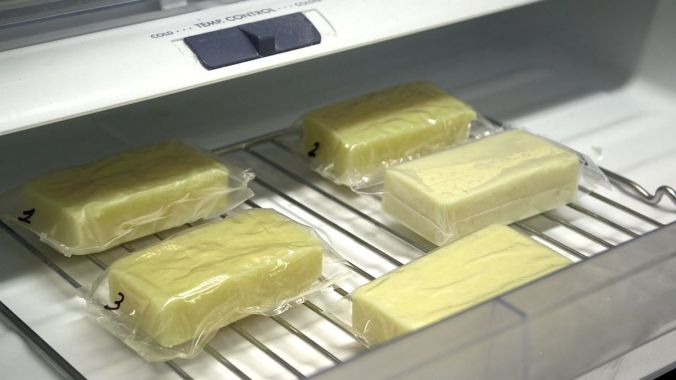
On numerous occasions we have written about the need to reduce consumption of plastics and the need for alternative, sustainable food packaging. Fortunately, researchers have developed a food packaging that is much better at keeping food fresh than regular plastics – it’s also biodegradable and edible. Yes, you read correctly, edible! This new packaging is made of casein from milk proteins, which are clear and fairly pliable, and has little flavor. This material has other unique applications  in addition to being used as plastic pouches and cling-style wrap. Continue reading

Papahānaumokuākea Quadrupled

Humuhumunukunukuāpua`a, the state fish of Hawaii (reef trigger fish) via statesymbolsusa.org

Hot on the heels of the creation of the new Katahdin Woods and Waters National Monument comes the expansion of Papahānaumokuākea Marine National Monument, which was designated by President George W. Bush in 2006 and became a World Heritage site four years later. This growth in the protected area quadruples the conservation monument’s size to 582,578 square miles and has been accomplished under President Barack Obama’s use of the Antiquities Act. Oliver Milman reports:

The monument, which is now double the size of Texas, stretches outward from the north-western Hawaiian islands and includes Midway Atoll, famed for its former military base and eponymous battle that was crucial in the US defeat of Japan in the second world war. The protected area is now larger than the previous largest marine reserve, situated around the Pitcairn Islands and announced by the UK last year.

Continue reading

Polled Brits Support EU’s Strong Wildlife Protection

We featured an opinion editorial from Friends of the Earth CEO Craig Bennett in The Guardian about Brexit’s effect on the environment exactly two months ago, and now the same publication is sharing pretty good news from a YouGov opinion poll in the UK whose results were released today. Apparently, a significant majority of Brits who were polled are in favor of laws protecting wildlife and their habitat that are at least as strong as the EU regulations already in place, but which wouldn’t apply post-Brexit. Some even support stronger environmental protection in the farming industry than current EU Common Agricultural Policy, especially wanting a ban in neonicotinoid pesticides. Damian Carrington reports:

Much of the protection of British wildlife and the environment stems from EU’s birds and habitat directives, but these will have to be replaced when the UK leaves the bloc. Farming minister George Eustice campaigned for the UK to leave the EU and told the Guardian in May that these directives were “spirit crushing” and “would go”.

Continue reading

The Legacy of U.S. National Park System

glaciernationalpark_davesizer800

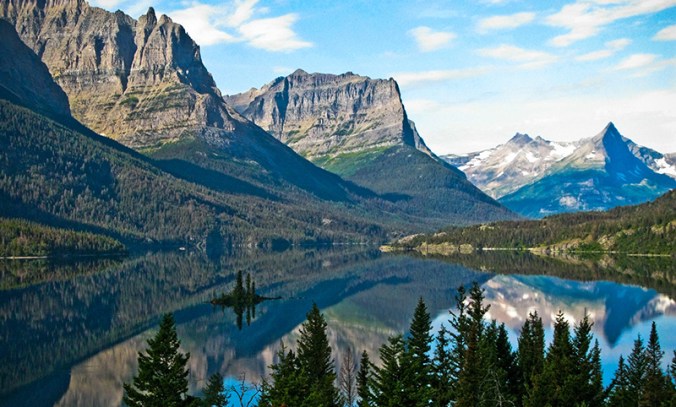
Saint Mary Lake in Glacier National Park, Montana. All images from: Yale News

Thanks to Yale News for a wonderful commemoration to the history and value to the scientific community of the U.S. National Park system – visit our National Parks category page for over a hundred posts on the subject – as we celebrate its centennial today (US time, it’s still August 25th):

As the United States marks the centennial of the National Park Service, which was officially established 100 years ago this week, the nation’s parks are being widely celebrated for their natural grandeur and vistas, their wildlife, and their abundant recreational opportunities.

Far less appreciated though is the critical role that the U.S.’s 59 national parks and hundreds of other park service units play in scientific research, providing unspoiled, protected, and accessible landscapes that host research that can be done few other places. In fact, with a long history of data and field study on everything from wildlife to wildfires, the national parks offer scientists an incredibly rare living outdoor lab. And the high profile of the parks in the American imagination often provides an avenue for conveying that research to the public.

Continue reading

Addressing and Absorbing Oil Spills

salvinia

Water lettuce and aquatic fern are misnomers for the type of task these plants might be used for in the near future. German researchers recently discovered that Salvinia molesta, an aquatic fern, and Pistia stratiotes, a type of water lettuce, have a specialized leaf anatomy that not only repels water and traps air, but also traps a lot of oil. The leaves of these plants are covered with tiny, hairlike structures called trichomes that allow the plant to float on the water surface and when dried, absorb more oil than two commercial oil absorbents used for oil spill cleanup, Duerex Pure and Öl-Ex.

[The] existing methods of dealing with oil spills all have significant drawbacks. Chemical dispersants and burning can spread toxins around, while environmentally friendly materials like sawdust and wheat straw absorb water in addition to oil, making cleanup messy and inefficient.

Continue reading

Some Sea Snakes Lead Dehydrated Lives

Photo © NatGeo

Sea snakes are interesting creatures, and we’ve written about them before, both as heat-stealers in an article on kleptothermy and as victims of uncontrolled fishing for “medicinal” purposes in the Gulf of Thailand. Science writer Ed Yong discusses one particular species of sea snake that lives so permanently in the Pacific ocean that it barely gets to drink fresh water, apart from what it skims off the ocean surface during rains:

If someone asked you to think about a global animal that has spread over much of the earth, you’ll probably think of something like the brown rat, the rock pigeon, or us humans. You probably won’t think about the yellow-bellied sea snake.

It’s a striking animal—two to three feet in length, with a black back and yellow belly. And it is extraordinarily far-ranging for a snake. It lives throughout the Pacific Ocean, which is already more area than all the continents combined, and the Indian Ocean too. Of all the tetrapods—the animal group that includes mammals, birds, reptiles, and amphibians—this little-known snake is one of the most abundant and widespread.

Continue reading

Bikes Starting to be Made in USA Again

This latest post in our common bicycle theme is not about any novel designs or materials being used to make the pedal-powered machines, but rather a feature from The New Yorker website on the new bicycle manufacturing scene in the US, particularly in Detroit, where a crashed automobile industry left a city in dire need of revival. Omar Mouallem writes:

In 1896, the Detroit Wheelmen opened an ornate new clubhouse, complete with an auditorium and a bowling alley. The Detroit Free Press called it “the most modern club house of any cycling organization in the west.” Its forty-thousand-dollar cost (about $1.1 million today) was paid for by the club’s four hundred and fifty members, who included John and Horace Dodge, the co-owners of Evans & Dodge Bicycle Company, one of more than three hundred U.S. manufacturers during the bike boom of the eighteen-nineties.

Continue reading

Upcycling Food Waste

bread_custom-ab4e4080afab7c1e3e53752023eca6d1b512719e-s800-c85

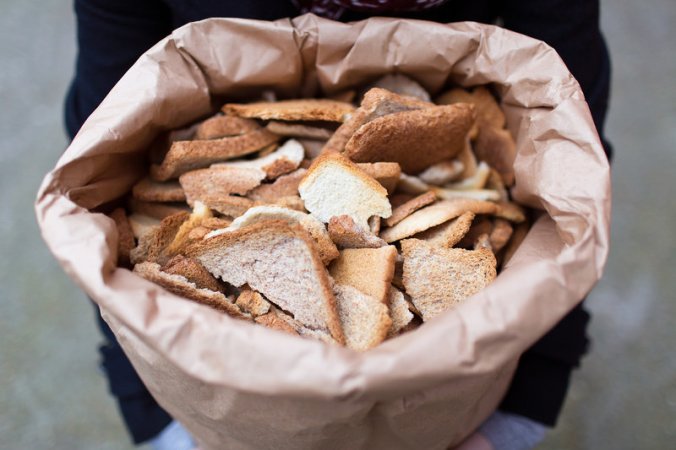
Crusty heels of loaves of bread which are used to make Toast Ale. All photos from: npr.org

We are no strangers to the food waste crisis. We recently wrote about the average landfill contribution per person per state in the U.S. and on prior occasions have shared stories about the severity of poor “waste” management.  At the same time, we acknowledge that there are people who are leading the cause to reduce the amount of food thrown away and salvage the unwanted scraps into healthful and tasty food, or otherwise useful products. It is important for us to share these stories to serve as inspiration for those with an entrepreneurial spirit and to inform citizens how they can support these businesses or organizations.

Toast Ale is a London-based company that sources fresh, surplus bread that would otherwise be thrown out to brew suds and create beer. The company believes it has found an environmentally friendly way to tap into the booming craft beer market. Continue reading

First-ever Electricity Surplus in India

Unregulated coal mining is polluting rivers in Meghalaya, India (Flickr/ECSP via climatechangenews.com)

We’ve covered a couple examples of alternative energy in India, but in general there’s a long way to go towards providing electricity to even most of the population, which generally suffers power outages. Now, the country has a surplus for the first time, but at what cost? Indian energy is still mostly in coal, and six of the country’s cities are in the top ten worst-polluted in the world. Tali Trigg writes for his blog Plugged In on Scientific American:

Like Germany, India has struggled to achieve power selling parity between its southern and northern regions, but is finally starting to see prices close-to-equal across the country. While India’s achievement is remarkable from one point-of-view, the fact remains that 300 million Indians still do not benefit as they have no access to electricity and most of the added capacity is from highly-polluting coal power causing grievous air quality.

Continue reading

Superlens from Spider Silk

(a) Nephila edulis spider in its web. (b) Schematic drawing of reflection mode silk biosuperlens imaging. The spider silk was placed directly on top of the sample surface by using a soft tape, which magnify underlying nano objects 2-3 times (c) SEM image of Blu-ray disk with 200/100 nm groove and lines (d) Clear magnified image (2.1x) of Blu-ray disk under spider silk superlens. Images © Bangor University and Oxford University, via EurekAlert

We’ve seen silk made without spiders, photomicrograph competitions, and the development of a new underwater microscope, but never thought that a strand of spider’s silk could be put under a normal microscope to then magnify an image even more than previously possible with current technology. But biologists from the Department of Zoology at Oxford University provided the silk know-how for engineers at the Bangor University’s  School of Electronic Engineering to create a natural superlens:

Extending the limit of classical microscope’s resolution has been the ‘El Dorado’ or ‘Holy Grail’ of microscopy for over a century. Physical laws of light make it impossible to view objects smaller than 200 nm – the smallest size of bacteria, using a normal microscope alone. However, superlenses which enable us to see beyond the current magnification have been the goal since the turn of the millennium.

Continue reading

Isthmus of Panama Younger than We Thought

Split by the Isthmus of Panama: Species of butterfly fish, sand dollar and cone snail that today live on the Pacific and Caribbean coasts of Central America are very closely related. Genetic sequencing shows that only 4 to 3 million years ago, each pair was a single species, demonstrating that marine connections between the oceans must have existed until that time. (Image by Coppard et al., via The Smithsonian)

It’s probably not something you’ve given much thought to, unless perhaps you’ve visited Central America in the past and experienced first-hand the incredible biodiversity displayed in such a small area. Part of the reason why this little strip of land has so many different species of animals and plants is that it connects two very large continents that used to be separate, but it also has given birth to new aquatic species via evolution, as you can see from the image above. Previous thought on the topic had been that the Isthmus of Panama rose from the ocean roughly between 23 and 15 million years ago, but a very large and very interdisciplinary team of researchers – mostly with some link to the Smithsonian Institution, which has its Tropical Research Institute in Panama City – have reaffirmed that the enormously important geological change occurred around 3 million years ago.

Continue reading