Most Orangutans are Left-handed

Image © playbuzz.com

It may seem like a strange title, but this post, which partly continues our celebration of orangutans (see how you can help the endangered species by avoiding palm oil), comes from this week’s Science Friday segment on whether other animals display a preference for left or right in their daily lives, the way humans do. A couple of our contributors here are lefties, making up a small percentage of the total, while 66% of orangutans are left-handed! Nicole Wetsman writes:

The human tendency to be right-handed is obvious—especially if you’re a lefty, and have to deal with right-handed desks and scissors, not to mention spiral notebooks.

But humans aren’t the only members of the animal kingdom that show handedness, or the preference for one hand over the other. Other primates exhibit right-handed or left-handed proclivities, as do animals that don’t technically have hands. For instance, research has shown that some mice are righties while others are southpaws, and that some tree frogs preferentially jump away from predators in one direction over another.

Continue reading

Keystone, Canary, and Weedy Species

canary_art22-1068x479

Art © US State Dept./Doug Thompson

We wrote on these two biodiversity conservation ideas in the last month, and will continue to develop that theme for some time. Writing for The Guardian, biologist James Dyke explains a recent scientific study he was involved in that divided organisms into three distinct types, with “canary” species being the most important to monitor as indicators for ecosystem health:

The Earth’s biodiversity is under attack. We would need to travel back over 65 million years to find rates of species loss as high as we are witnessing today.

Conservation often focuses on the big, enigmatic animals – tigers, polar bears, whales. There are many reasons to want to save these species from extinction. But what about the vast majority of life that we barely notice? The bugs and grubs that can appear or vanish from ecosystems without any apparent impact?

Continue reading

Getting over “Range Anxiety” and into Electric Cars

electric-car-charger

Source: Conservation Magazine

If you have ever considered buying an electric car but haven’t done so in fear of the car battery dying before getting to a charging station – which is known as “range anxiety” – fear no more. A new study shows that most American drivers do not go beyond the distance that today’s electric cars can go in a single battery charge in one day.

87 percent of the vehicles on the road could be replaced by low-cost EVs on the market today even if they were only charged overnight, say the MIT researchers who conducted the study published in Nature Energy.

If this large-scale swap were to happen, it would lead to roughly 30 percent less carbon emissions even—if the electricity were coming from carbon-emitting power plants.

Continue reading

Obliterating Weeds with Grit

weed-blaster

Source: modernfarmer.com

Herbicides are, unfortunately, a necessary product for most industrial farms, but given the rise in organic farming and the growing number of weeds becoming immune to the chemical poisons, other options have to be considered. Frank Forcella, a USDA agronomist, first had an idea to use apricot pits, considered an “agricultural residue,” as a weed killer when ground up with other waste and inserted in a sand blaster. He turned to his colleague Dean Peterson and together they bought a cheap sand blaster and started some simple experiments in a greenhouse.

Their initial work involved growing weeds next to a corn plant; when the corn was about six inches tall and the weed was about one to three inches tall, the researchers blasted both with a split-second application of grit.

It turned out that only the weeds got hurt. In fact, they vanished, while the corn plant was fine. This prompted a field experiment in 2012 with a bigger sand blaster mounted on an ATV. While Peterson drove, Forcella followed, crouched over with the sand blaster nozzle, blasting pigweed and other pesky sprouts.

Forcella’s “silly” idea turned into a feasible and successful solution for killing weeds.
Continue reading

In the Future, Windows May Be Made of Wood

CREDIT: UNIVERSITY OF MARYLAND AND ADVANCED ENERGY MATERIALS

It seems too weird to be true, but wood can be bleached and then soaked in epoxy to create a material not quite as transparent as glass, but which lets in plenty of non-glare light and insulates far better against heat. Scientists at the University of Maryland have patented the technology and are studying its applications in building for the future. One interesting feature of the wooden window is that it directs the diffused sunlight in the same direction regardless of the angle at which it enters the panel, which, as the lead author Tian Li says, “means your cat would not have to get up out of its nice patch of sunlight every few minutes and move over. The sunlight would stay in the same place. Also, the room would be more equally lighted at all times.” Sounds great!

Continue reading

New Mosquito Trap Tested With Mixed Success

A mosquito trap that runs on solar electricity and mimics human odor as bait. Credit Alexandra Hiscox via NYTimes

We’ve seen solar power used for many things here, but not yet as a source of power for insect trapping.  On the island of Rusinga in Lake Victoria, Kenya, scientists from the Netherlands, Kenya, and Switzerland tested new traps that use electricity from solar panels to release a chemical similar to the carbon dioxide we exhale (which attracts mosquitos) and a blend of chemicals that mimic human odor (which also draws in the blood-suckers) as bait for the disease-bearing biters. From the New York Times:

Although the traps appeared quite effective at lowering mosquito populations, they had some significant drawbacks.

Because they need power from rooftop solar panels, they are relatively expensive. Still, the panels appealed to residents who could also use them to power a light bulb or charge a cellphone.

Continue reading

Interview with a “Trash-Man”

One meter by one meter surface sample at Kamilo Point on the Big Island, Hawaii. More than 84,000 pieces of micro-plastic were counted. (Photo credit: Nick Mallos via GreenSportsBlog)

Plastic polluting the oceans of the world is something we don’t like to report on, but do anyway, since it’s such a widespread and high-impact issue. Below, Lew Blaustein of GreenSportsBlog interviews the Ocean Conservancy’s Director of Trash-free Seas, Nick Mallos. The Ocean Conservancy works toward science-based efforts to protect the ocean and its wildlife, as well as human communities that rely on healthy marine ecosystems.

GreenSportsBlog: Director of Trash Free Seas. That is one cool job title. How did you get to the Ocean Conservancy and the “Trash Man” moniker?

Nick Mallos: I’ve been working on trash in the ocean for the better part of a decade, with the last six years at Ocean Conservancy so “Trash Man” seems to fit perfectly. Before that, while at Dickinson College (Carlisle, PA), where I earned a BS in Biology and Marine Science, I spent a semester in the Caribbean to study lemon sharks. While on the Island of South Caicos, I saw that massive amounts of trash and plastics were washing ashore on its north side. This got me interested in marine debris and what was needed to do to remove it.

Continue reading

Reducing Air-Conditioner Use

10airconditioner-master768

Source: New York Times

More than 90 percent of American homes have air-conditioners, which accounts for approximately 6 percent of all the country’s residential energy use and translates to about 100 million tons of carbon dioxide released every year. To save on energy consumption, one can turn off the AC units while not present in the room or increase the thermostat to a higher temperature so that the AC will not turn on as often. However, another aspect of air-conditioners that is not frequently talked about is the actual chemical compounds in AC systems that are responsible for keeping a room cool on a hot summer day. The compounds are called hydrofluorocarbons (HFCs), and it’s a greenhouse gas that contributes to global warming.

HFCs represent a small portion of total greenhouse gas emissions, but they trap thousands of times as much heat in the atmosphere as carbon dioxide.

Good news: If your air-conditioner is working properly, it won’t release HFCs into the atmosphere. Some HFCs are released during the manufacturing process, if your air-conditioner or refrigerator has a leak, or when you throw a unit away, possibly causing some molecules to escape, especially if it’s disposed of improperly (Here’s some guidance on proper disposal).

Continue reading

Understanding The Limits Of Growth

k10544Compared to birds, jaguars, national parks and such, this book sounds like a snoozer. But as we scan the media for ways to understand the precarious predicament of the natural world, this book sounds worthy of the challenge (thanks to NYRB) as we contemplate the balance between the environmental costs of all that growth versus all the dramatic improvements in health and other welfare:

…a magnificent book on the economic history of the United States over the last one and a half centuries. His study focuses on what he calls the “special century” from 1870 to 1970—in which living standards increased more rapidly than at any time before or after. The book is without peer in providing a statistical analysis of the uneven pace of growth and technological change, in describing the technologies that led to the remarkable progress during the special century, and in concluding with a provocative hypothesis that the future is unlikely to bring anything approaching the economic gains of the earlier period. Continue reading

Architectural Challenge

071416_GSD_268.jpg

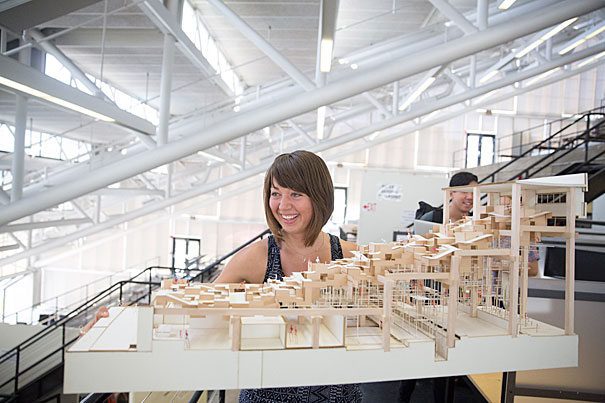
Harvard Graduate School of Design PhD student, Lauren Friedrich’s thesis researched how architecture can facilitate physical well being and what that means for workplace design. Here she is seen in Gund Hall with her model of proposed Gund Hall renovations. Harvard University. Kris Snibbe/Harvard Staff Photographer

Because design is frequently part of the assignments we take responsibility for, we monitor our reading lists for interesting stories about architecture, about interior spaces, about how these impact our experiences; and here is a worthy pick. It reminds us of the creative crew we had with us in India a few years back:

Design for movement

Graduate thesis explores changing relationship between architecture and healthy living

By Christina Pazzanese, Harvard Staff Writer

At a basic level, architecture is like a shoe: a useful tool designed to protect the human body from harm caused by the natural elements.

Yet over time, we can become over-reliant on its comfort, losing our dexterity and our ability to withstand even the slightest discomforts. So what is meant to help us may, in fact, hinder us by making things too easy, removing all physical challenges and other stressors that are essential for optimal health.

It doesn’t have to be that way, says Lauren Friedrich, a 2016 graduate of Harvard’s Graduate School of Design (GSD). What if instead of disconnecting the human body from the man-made landscape, architectural design used creativity and reorientation to create spaces that challenged our physical skills and encouraged, rather than minimized, a range of movements that supported better health?

That’s the question Friedrich set out to explore in her master’s thesis, a project that takes a multidisciplinary approach incorporating insights from experts across Harvard in neuroscience, biomechanics, physical therapy, choreography, and ergonomics, and ideas from people who patronize public spaces. Her thesis also cleverly reimagines GSD’s Gund Hall as a flexible fun house full of passageways that encourage circulation and “resting nets.” The Gazette spoke with Friedrich about her novel research. Continue reading

National Parks Service, Careers Of Import In Important Places

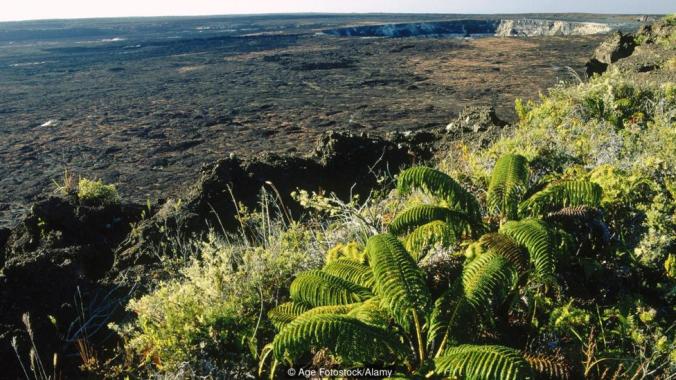
Kilauea, Hawaii Volcanoes National Park. Big Island, Hawaii. USA

Paul Banko bikes through lava flows and fern forests to get to work (Credit: Age Fotostock/Alamy)

Continuing the celebration of the National Parks Service (USA) centenary, thanks to the BBC for this notable story:

In 2002, the last pair of wild ‘alalā disappeared from the forest. Biologist Paul Banko is fighting to return this rare charismatic bird to the wild.

By Shannon Wianecki

Paul Banko has an enviable commute: he rides his bike through cooled lava flows and dense fern forests to reach his office at Hawai‘i Volcanoes National Park. He’s been climbing trees, poking around in nests and rescuing imperilled birds here since his teenage years. Continue reading

New Snake Species Discovered in Mexican Mountains

A specimen of the new species, Geophis loranca, in life. Photo © Miguel Ángel de la Torre Loranca

Last time we mentioned a new species being discovered, it was also long, thin and reddish, but in the form of a toxic cave worm. The freshly-found reptile, which when translated from its scientific name would be called “Loranca’s earth snake,” is a red and black burrowing animal that is only found in a very localized region of east central Mexico, as the collaborative team of Mexican university researchers wrote in their academic journal article published in ZooKeys:

These burrowing reptiles are seldom encountered and, consequently, have been poorly studied. Furthermore, several species have restricted distribution, making them particularly vulnerable to extinction.

Continue reading

Patrimonial Matrimonial Innovation

10tuscany1-master768.jpg

A fort atop the Italian town of Montalcino. In October, residents there and in neighboring San Giovanni d’Asso will vote on whether to merge the two communities. CreditNadia Shira Cohen for The New York Times

Although we appreciate, even adore, the wines and the fungi referenced in this story, it is worth reading for a look at practical issues facing aging towns that possess world class patrimony:

A Merger of Brunello and Truffles? 2 Tuscan Towns May Be Better Together

By

SAN GIOVANNI D’ASSO, Italy — Two small towns in southeastern Tuscany, one famous for red wine, the other for truffles and organic grain, are considering a municipal marriage of convenience that could blur their cherished identities, separately formed over the centuries.

With a population of just 853, San Giovanni d’Asso can no longer deliver basic services to its citizens on a daily basis. Left with only three town officials to do the work, something as simple as getting an identity card drawn up and stamped requires making an appointment days in advance.

So the town’s mayor, Fabio Braconi, picked up the phone back in 2014 and sought help from a neighbor, Montalcino, 10 miles to the south across rolling wheat fields. Continue reading

Horseshoe Crabs in the Delaware Bay

Horseshoe crabs coming ashore in Delaware Bay © Gregory Breese/USFWS

We’ve posted about them before, but did you know that horseshoe crab blood is not only a powder blue color, but also is used in the medical industry to detect any trace of bacterial contamination in humans, even if that infection is only one part per trillion?  And that they are more closely related to scorpions than true crabs? Or that they’ve been having the longest-running mass-breeding efforts on the planet, given that they haven’t changed much in hundreds of millions of years? Marah Hardt writes for The Nature Conservancy on the importance of these crawling Chelicerates to their ecosystem:

The lapping waves and silent dunes of the Delaware Bay shoreline create a perfect backdrop for a moonlit summer stroll. But a few weeks ago, this beach was not nearly so quiet. Instead, the silver light of the full moon shone upon jostling crowds of horseshoe crabs.

“If the crabs were rocks,” says Moses Katkowski, marine conservation coordinator with The Nature Conservancy, “you could walk on their backs the entire stretch of beach and never touch the sand.”

Continue reading

A DIY Desalination Machine

fayez-al-hindi-solar-desalination-3-889x514

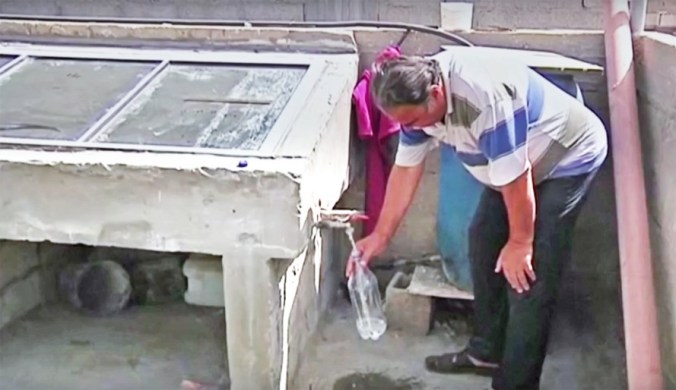
Fayez al-Hindi gathering drinking water from his solar-powered desalination machine Source: Inhabitat.com

We love DIY (Do-It-Yourself) projects, especially when they involve creating a  sustainable mechanism that solves a critical problem. Fayez al-Hindi, a resident of the Gaza region, created a homemade solar-powered desalination machine that can produce 2.6 gallons of fresh water every day. His creation is of particular importance considering that 90 percent of the region’s water supply is unfit for human consumption. Al-Hindi’s distilled water was proven to be safe drinking water by the Coastal Municipalities Water Utility. The most promising part of the story is that he plans to help other local residents build their own distillation systems, making potable water accessible to a greater number of people.

Watch the video on his invention below! Continue reading

Conservationists and Climate Change

Deforestation in Peru, photo via the American Bird Conservancy’s habitat loss webpage

Almost two weeks ago, we shared a story from Conservation Magazine that covered a recent discussion piece published in the academic journal Biological Conservation, which was titled, “From biodiversity-based conservation to an ethic of bio-proportionality.” The author argued that the word ‘biodiversity’ limited conservationists to too small a goal in policy changes; in her opinion, ‘bioproportionality’ would be a better baseline. Today, we consider another contrasting view on conservation and what it should focus on when biodiversity is threatened, this time sourced from a commentary article in Nature, and covered by environmental writer Michelle Nijhuis for the New Yorker:

In January of this year, James Watson, an Australian scientist who works for the Wildlife Conservation Society, noticed an image that had been tweeted by a friend of his, a physician in Sydney. With a chain of progressively larger circles, it illustrated the relative frequency of causes of death among Australians, from the vanishingly rare (war, pregnancy and birth, murder) to the extremely common (respiratory disorders, cancer, heart disease). It was a simple but striking depiction of comparative risk. “I thought, ‘Why hasn’t anyone done something like this for the rest of nature?’ ” Watson recalled.

Continue reading

Figs and Ficus

Photo by Milo Inman

A past employee who used to be a regular contributor here, writing about all things Indian – and in particular, from Kerala – would publish frequently about plants and animals, among other subjects, and once, he wrote three posts in quick succession about three trees in the Ficus genus: the Elephant Ear, the Country Fig, and the Sacred Bodhi. The following month, another author here wrote on his feelings about ficus. This week, journalist Ben Crair writes about figs for the New Yorker:

The produce section of the grocery store is a botanical disaster. Most people know that a tomato is technically a fruit, but so is an eggplant, a cucumber, and a spaghetti squash. A banana, which grows from a flower with a single ovary, is actually a berry, while a strawberry, which grows from a flower with several ovaries, isn’t a berry at all but an aggregate fruit. The most confusing classification, though, will start showing up on American shelves this month. Shoppers will find mission figs with the grapes, kiwis, and other fruit, but a clever botanist would sell them at the florist, with the fresh-cut roses. Although many people dismiss figs as a geriatric delicacy or the sticky stuff inside bad cookies, they are, in fact, something awesome: enclosed flowers that bloom modestly inward, unlike the flamboyant showoffs on other plants. Bite a fig in half and you’ll discover a core of tiny blossoms.

Continue reading