Piezoelectricity Going to California

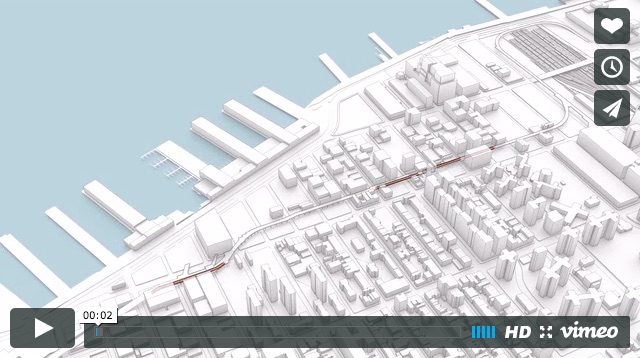
A piezoelectric pad on the Shibuya subway station in Tokyo. Image © Vimeo

We’re always on the lookout for alternative energy options, especially those that are linked with big carbon producers like transportation. But unlike many of the options we’ve shared about before, piezoelectric crystals generate power from mechanical stress, and they can be installed in roads or walkways, as they already have been elsewhere in the world. Now, California is looking to take a step in the same direction with a pilot program, Laura Goldman reports for care2.com:

Energy conservation is probably not the first thing that comes to mind when you think about freeways jammed with idling vehicles.

But in California, which has some of the most congested freeways in the country, that’s about to change. The California Energy Commission (CEC) has approved a pilot program in which piezoelectric crystals will be installed on several freeways.

Continue reading

Pepper’s Historical Place

A painting of Muziris by the artist Ajit Kumar. In 2004, excavations in Kerala sparked new interest in this lost port. Illustration: KCHR

A painting of Muziris by the artist Ajit Kumar. In 2004, excavations in Kerala sparked new interest in this lost port. Illustration: KCHR

Our first exposure to the name Muziris was during the planing stages of the 1st edition of the eponymous Kochi-Muziris Biennale in 2012. The flurry of activity in Fort Kochi not only brought Kochi into the spotlight of the international Art World, but added focus to the archeological works at Kerala’s ancient port.

Lost cities #3 – Muziris: did black pepper cause the demise of India’s ancient port?

Around 2,000 years ago, Muziris was one of India’s most important trading ports. According to the Akananuru, a collection of Tamil poetry from the period, it was “the city where the beautiful vessels, the masterpieces of the Yavanas [Westerners], stir white foam on the Periyar, river of Kerala, arriving with gold and departing with pepper.”

Another poem speaks of Muziris (also known as Muciripattanam or Muciri) as “the city where liquor abounds”, which “bestows wealth to its visitors indiscriminately” with “gold deliveries, carried by the ocean-going ships and brought to the river bank by local boats”.

The Roman author Pliny, in his Natural History, called Muziris “the first emporium of India”. The city appears prominently on the Tabula Peutingeriana, a fifth-century map of the world as seen from Rome. But from thereon, the story of this great Indian port becomes hazy. As reports of its location grow more sporadic, it literally drops off the map.

Continue reading

Breadfruit, Tropical Wonderfood

breadfruit_wide-4cafd8f5b004aa375b43dfd527929b0cc8e60e29-s1400-c85.jpg

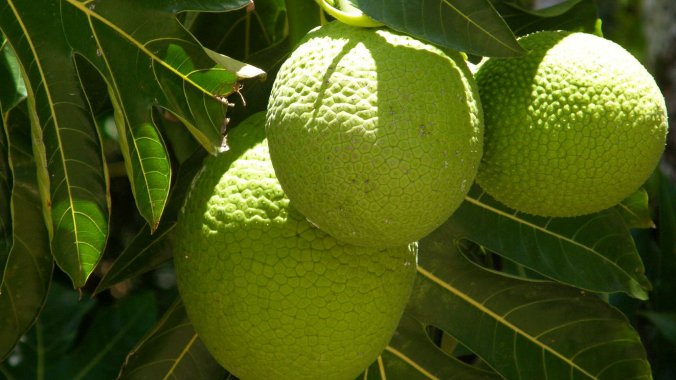
Breadfruit is a protein and nutrient-rich staple in Hawaii and other islands in the Pacific Ocean. Malcolm Manners/Flickr

We have had these trees growing all around us in more than one tropical zone where we operate, but had not realized just how high their nutritional value is, nor their potential for doing more to alleviate hunger (thanks to the folks at the salt, National Public Radio USA):

Productive, Protein-Rich Breadfruit Could Help The World’s Hungry Tropics

Packed with nutrients, easy to grow and adaptable to local cuisines, this tropical superfood could bring more food and cash to poor farmers around the world.

On a muggy morning on Kauai’s south coast, ethnobotanist Diane Ragone inspects a dimpled bright green orb, the size of a cantaloupe. She deems the fruit mature, at its starchy peak. Perfect for frying or stewing. Continue reading

10,000 Suns

We have a long fascination with Land Art Installations and urban land reclamation going back to the earliest days of this site.  Learning about landscape architect Adam E. Anderson’s public art project in Providence, Rhode Island was exciting news.

This summer long “botanical performance” takes land that until recently was covered by an elevated highway system and cultivating it with volunteers into a different sort of public space.

Rather than using high maintenance and energy intensive large swaths of turf grass, the installation uses the bio-accumulating (removes toxins) and habitat creating properties of Helioanthus (aka, Sunflower) planted in rows in a series of large circles, leaving paths in-between for intimate exploration. Continue reading

Watch the Perseids this Week

Photographer Ruslan Merzlyakov captured this spectacular photograph of the Perseid meteor shower filling the Danish sky in the early morning of Aug. 13, 2015. Photo via space.com

Sometimes you should just sit back, relax, and enjoy the show, especially when it’s broadcast by nature itself. This week, between August 11th and 12th, try to find time to stay awake once the moon has set, and a place you can be as far from light pollution as possible, and watch the sky for what promises to be a particularly active meteor shower from the Swift-Tuttle Comet, near the Perseus constellation:

According to NASA meteor expert Bill Cooke, the Perseids are perhaps the most popular meteor shower of the year. They will be in “outburst” in 2016, which means they’ll appear at double the usual rates. Learn more about the 2016 Perseid meteor shower in this video.

“This year, instead of seeing about 80 Perseids per hour, the rate could top 150 and even approach 200 meteors per hour,” Cooke said. It’s the first such outburst since 2009.

Continue reading

National Parks Valorizing Flora & Fauna

5616.jpg

Glad to see chefs in South America leading this innovative form of entrepreneurial conservation, and crossing country borders to do so:

Bolivian national park serving up sustainable ingredients for fine dining

Chefs among travellers proving there is demand for produce from Madidi – and helping communities understand commercial potential of their flora and fauna

Deep in Bolivia’s Madidi national park, Kamilla Seidler – the head chef of the Gustu restaurant in La Paz – was looking at a basket of cusí, the fruit of the babassu palm. An oil processed from the seeds is already marketed as a hair and skin product, but Seidler suspected it could have culinary potential, too.

“Bring me three kilos of it and in a month I can tell you all kinds of things you can do with it,” she told Agustina Aponte, who was representing a group of women from Yaguarú, one of 31 campesino and indigenous communities living within Madidi’s 1.89m hectares.

Continue reading

Bill McKibben Deserves Better

07mckibbenSUB-master768.jpg

We frequently have linked to articles about, and to messages by, this man whenever we see them. It is not surprising to read this, but it is important that we are all aware of this additional price he pays for the actions he takes on behalf of the environment:

MIDDLEBURY, Vt. — THERE are shameful photos of me on the internet.

In one series, my groceries are being packed into plastic bags, as I’d forgotten to bring cloth ones. In other shots, I am getting in and out of … cars. There are video snippets of me giving talks, or standing on the street. Sometimes I see the cameraman, sometimes I don’t. The images are often posted to Twitter, reminders that I’m being watched.

In April, Politico and The Hill reported that America Rising Squared, an arm of the Republican opposition research group America Rising, had decided to go after me and Tom Steyer, another prominent environmentalist, with a campaign on a scale previously reserved for presidential candidates. Using what The Hill called “an unprecedented amount of effort and money,” the group, its executive director said, was seeking to demonstrate our “epic hypocrisy and extreme positions.” Continue reading

The Shed, New York City

Shed.jpg

When we first learned about the High Line it was at a moment in time when we were designing a hotel in a historic section of a south Indian harbor town, with pedestrian zones intersecting with vibrant merchant and other urban realities; the High Line served as an inspirational benchmark for thinking about public spaces creatively.

Just now, for a new project, a colleague referred us to the Rockwell Group’s hospitality practice to see an example of another relevant benchmark, and while exploring their website we came across the project they are engaging in with the designers of the High Line, giving us a new objective for the next visit to New York City:

Currently under construction on the far west side of Manhattan where the High Line meets Hudson Yards, The Shed will be housed in a 200,000-square-foot, six-level structure designed by Diller Scofidio + Renfro in collaboration with Rockwell Group. The radically flexible design of the performative structure can physically and operationally accommodate the broadest range of performance, visual art, music, and multi-disciplinary work. Continue reading

Growing Hops & Crafting Beer

hops_custom-06d73795999a6d93f111680ade5849c244609f3f-s1400-c85.jpg

Ripe summer hops good for making beer. Tim Newman/Getty Images

We are anticipating another post by one of our authors, on a topic related to this news story below (thanks to NPR’s great special section, the salt), so let this serve as a reminder and a harbinger:

Hop Growers are raising a glass to craft brewers. The demand for small-batch brews has helped growers boost their revenues, expand their operations, and, in some cases, save their farms.

“Without the advent of craft brewing, a few large, corporate growers would be supplying all of the hops and local, family owned farms like ours would have gone bankrupt,” says Diane Gooding, vice president of operations at Gooding Farms, a hop grower in Wilder, Idaho. “It’s saved the industry.” Continue reading

USA National Park, Feisty Leadership Outlier

Lake Superior Presque Isle Royale National Park Michigan in USA Great Lakes no not people nobody isolated low angle horizon

Lake Superior Presque Isle Royale National Park Michigan, USA, Great Lakes

We like the idea of a leader of a national park with a “feisty nature,” since sometimes that is exactly what it takes for conservation to succeed, either in the public or the private sector; so this profile from the BBC, in its ongoing appreciation of the National Parks Service’s 100th anniversary, is the kind of story we are especially happy to share:

…Isolated and iconoclastic, Isle Royale National Park is something of an anomaly among US National Parks, with its territory spread over 200 islands and outcroppings emerging from the frigid waters of Lake Superior, part-way between the US state of Michigan and Canada.

Isle Royale’s former Superintendent, Bill Fink (no relation to me), is an iconoclast himself, almost as if the qualities of the archipelago rubbed off on him during his four years running operations there from 1990 to 1993. Continue reading

A Defining Moment In Papua New Guinea

Screen Shot 2016-08-01 at 9.05.37 AM.jpg

Interesting to see, in one publication we depend on for interesting news and commentary related to community and conservation around the world, a bookend to the item just published in another publication we turn to frequently:

Defining Moment: a photographer’s snap decision in the face of danger

Wylda Bayron traveled solo around Papua New Guinea for 18 months. What she found was a nation fraught with violence but also filled with striking beauty Continue reading

Thanks As Usual, Monsanto

img_3117_edited-8ee56f2024cb095b7e2552ed630ec23e085d621b-s1400-c85.jpg

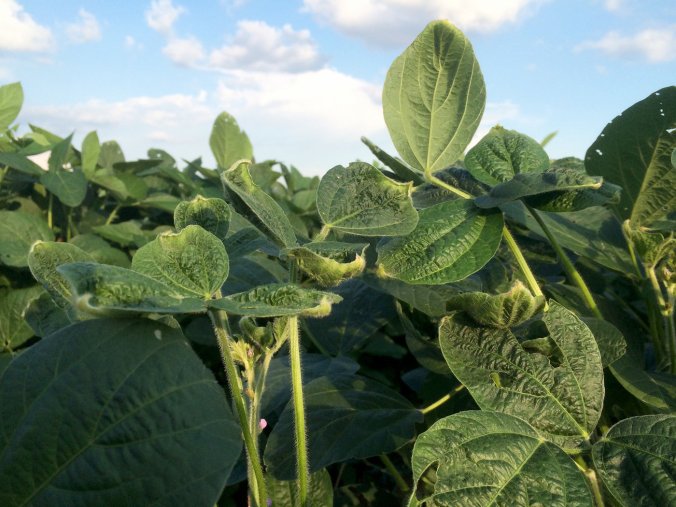
These soybean leaves show evidence of damage from dicamba. It could cut the the harvest by 10 to 30 percent. Courtesy of the University of Arkansas

We live at a time when figuring out how to feed an already-oversized global population (relative to the earth’s natural resources and known agricultural methods) is a monumental task. But Monsanto seems determined to take shortcuts that do as much harm as good. And that is probably putting it too politely, considering the number of times their misdeeds come to our attention (thanks to National Public Radio, USA):

Crime In The Fields: How Monsanto And Scofflaw Farmers Hurt Soybeans In Arkansas

by Dan Charles, August 1, 2016

When agricultural extension agent Tom Barber drives the country roads of eastern Arkansas this summer, his trained eye can spot the damage: soybean leaves contorted into cup-like shapes.

He’s seeing it in field after field. Similar damage is turning up in Tennessee and in the “boot-heel” region of Missouri. Tens of thousands of acres are affected. Continue reading

Indigenous-Outing

160808_r28495-1200

Mr. Anderson’s work is often, like his colleague Elizabeth Kolbert’s, unusually thick in detail, and often kind of heavy. This item is heavy, detailed, but fascinating. His writing is often without illustration yet this piece is reported with abundant and excellent photography. Read a snippet below to get a sense of the interior of the article:

AN ISOLATED TRIBE EMERGES FROM THE RAIN FOREST

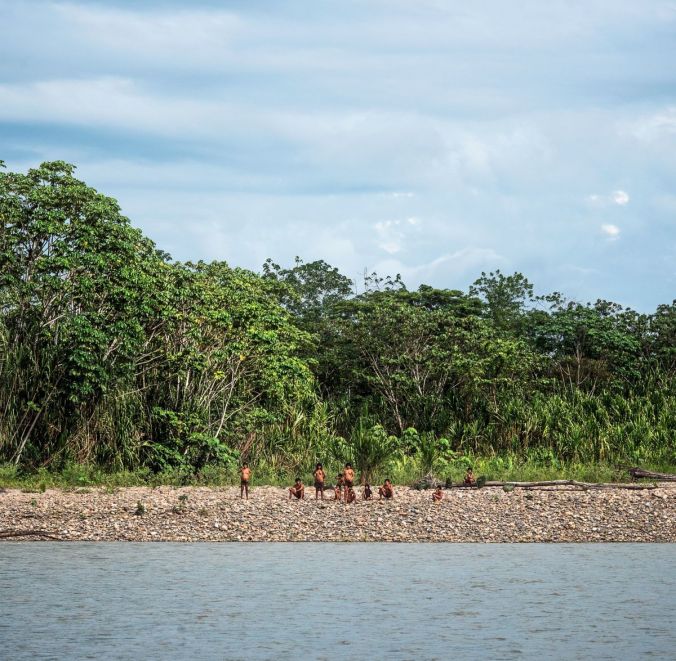
In Peru, an unsolved killing has brought the Mashco Piro into contact with the outside world.

By Jon Lee Anderson

…The Ministry of Culture’s team gathered a few months ago in Cuzco, high in the Andes, where a van was loaded with provisions. The leader was an anthropologist named Luis Felipe Torres, a slim man in his early thirties with an aquiline face and the unassuming manner of a professional observer. He was joined by Glenn Shepard, an American ethnobotanist. A youthful-looking man of fifty, Shepard had lived for a year in the nineteen-eighties among the Matsigenka people, who shared territory with the Mashco; he had learned their language and returned many times since. Shepard worked at the Emílio Goeldi Museum, an Amazonian-research center in Brazil, but he travelled to Peru frequently as an informal adviser to Torres’s department.

Continue reading

National Park Service Service

lead_custom-7aa8c94bf10d83452c0788e0437655e91158e9c4-s1400-c85.jpg

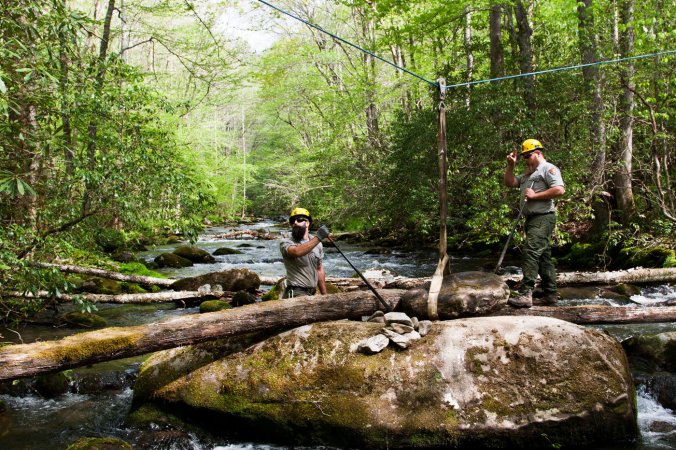
Brad Metler (left) and Mason Phillippi position a rock that will serve as an abutment for a small footbridge across the Oconaluftee River to an old cemetery in Great Smoky Mountains National Park. Both men work for the park’s trail crew, which maintains more than 800-miles of trail in the park. Nathan Rott/NPR

Thanks to National Public Radio (USA):

Life In The Park: Finding Meaning In Park Service Work

There’s a popular refrain among National Park Service employees, one that doubles as a reminder, of sorts, after a long, wearisome day: “We get paid in sunrises and sunsets.”

For many park employees, the pay is seasonal and not great. The hours are long. The question is usually the same (“Where’s the bathroom?”). And no matter how many pamphlets you pass out, instructions you give or “Attention!” signs you put up, people still wander off trails, carve their names in trees and get too close to the bears. Continue reading

Climate Change Deniers Meet Their Match

Oreskes.jpg

Naomi Oreskes. Photograph by Stephanie Mitchell/Harvard Public Affairs and Communications

Thanks to Harvard Magazine for this interview that puts into perspective how science writers can best serve the interest of accurate information about climate change:

Naomi Oreskes on How to Write about Science

HISTORY OF SCIENCE professor Naomi Oreskes talks about climate change the way one might expect of both an earth scientist and a historian. “Science has to be part of the conversation on climate change,” she says, “but it’s not the whole conversation. At this time, I actually don’t think it’s the most important piece. There’s a basic issue of justice here, and we desperately need economists and sociologists and philosophers and artists to be heard.” Her humanist instincts allow her to move a wide audience in a way most scientists never achieve. Her work has helped broaden the public’s acceptance of climate change as an issue of scientific consensus rather than debate, and for taking up this public mantle of climate change advocacy, she will be honored with the Schneider Award for Outstanding Climate Science Communication this winter. Oreskes recently talked to Harvard Magazine about the climate-denial industry, the political role of scientists, and writing about academic research for a wide audience. Continue reading

Biodiversity, Conservation, Questions

natural-history-collection1.jpg

From Conservation, a provocative question answered in the summary of a scientific investigation:

IS BIODIVERSITY THE ENEMY OF NATURE?

It’s easy to use a word so often that its meaning is taken for granted. Nuances are lost, conceptual freight laid aside, assumptions unexamined. Take biodiversity: just a few decades old, the word is now ubiquitous, a default frame for thinking about nature — and that’s not necessarily a good thing. Continue reading

US to Build First Offshore Wind Farm off R.I.

A GE Renewable Energy offshore wind turbine off the coast of Belgium. Photo © GE via Wired.com

Wind power is a recurring subject here, and although there are thousands of turbines across the United States, none so far have been built collectively along the coast. Since so much of the US population is collected in coastal areas, having electricity produced closer to them is key to reduce loss via transportation. Brendan Cole reports for WIRED about the upcoming wind farm in Rhode Island:

BUILDING IN RHODE Island isn’t easy. Hurricanes and tropical storms barrel through its quaint coastline towns, interrupting perfect summer weekends. Freezing winters bring blizzards that can shut down the entire state. And every season features corrosive salty winds, biting at the coast as if sent by a Britain still seething at the first American colony to declare independence.

Continue reading

Can the Cement Industry Reduce CO2 Emissions?

Photo of Blue Circle Southern Cement factory near New Berrima, New South Wales, Australia, by WikiMedia Common contributor AYArktos

Portland cement is named for the area in England where it was first made almost three-hundred years ago, and is the standard ingredient used to create concrete around the world. Despite being a very useful building material that can be applied in a variety of ways without expensive technology, cement production is associated with carbon dioxide emissions, primarily from when the original limestone is decarbonized and from the massive amounts of fuel needed to fire up the kilns to make cement. Robert Hutchinson of the Rocky Mountain Institute writes an informative piece for GreenBiz on how the industry might change, and why:

The toughest climate challenges involve large global industries, with no good substitutes. One of these produces the material literally under our feet — concrete. Every year, each of us in the U.S. uses about one-third of a ton. Fast-growing developing countries use far more. Globally we produce over 4 billion metric tons of Portland cement per year — the key ingredient in concrete and responsible for the majority of its CO2 footprint — driving over 5 percent of total anthropomorphic CO2.

Continue reading

First Solar Plane Voyage Around the World

After a pit stop in Oman Solar Impulse 2 sets off for Ahmedabad, India on 10 March 2015 Photograph: Jean Revillard/Solar Impulse

The strange rear profile you see in the photo above is that of the Solar Impulse 2, a two-ton plane (a Boeing 747 weighs 154 tons) with solar panels on its wings that made history this week as it completed a round-the-globe voyage over the course of roughly three weeks in flight. The Solar Impulse 2 and one of its pilots, André Borschberg, broke the record for the longest nonstop solo flight ever a few weeks ago, when Borschberg flew from Japan to Hawaii. Damian Carrington reports for The Guardian:

The final leg of the feat, aimed at showcasing the potential of renewable energy, was a bumpy one, with turbulence driven by hot desert air leaving the solo pilot, Bertrand Piccard, fighting with the controls.

The plane, which has a wingspan wider than a Boeing 747 and carries more than 17,000 solar cells on its wings, began the circumnavigation in March 2015 in Abu Dhabi. It has since crossed both the Pacific and Atlantic Oceans using no fossil fuel and has spent more than 23 days in the air.

Continue reading