Bernie Krause In Paris

Screen Shot 2016-07-03 at 5.09.00 AM

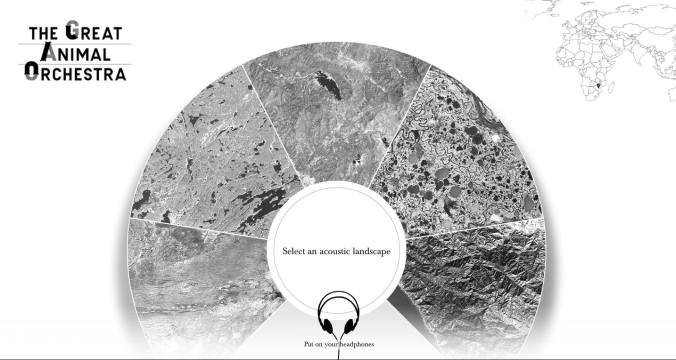
Several members of our circle have enjoyed reading about as well as listening to Mr. Krause since first learning about him. Whether or not you happen to be in Paris, this exhibit is worth a visit (click the image above for the low carbon footprint route)

The New York Times has this to say in a review:

PARIS — The bioacoustician and musician Bernie Krause has been recording soundscapes of the natural world since 1968, from coral reefs to elephant stamping grounds to the Amazonian rain forest.

Now, Mr. Krause’s recordings have become part of an immersive new exhibition at the Cartier Foundation here called “The Great Animal Orchestra.” Named after Mr. Krause’s 2012 book of the same title, the show opens on Saturday and runs through Jan. 8. Continue reading

GreenBiz Interview with CEO of Audubon

We like the Audubon Society, the publications they produce, and of course, the artist himself. Over the last half decade, a new CEO for the Society has rewritten their strategic plan and seen overwhelming success in involvement of all sorts. Elsa Wenzel interviewed this CEO, David Yarnold, for GreenBiz:

The Audubon Society appears to be doing everything right in social media and marketing. It’s got apps, maps, a buzz on social media, an engaging website and a funny blog. It’s hip to crowdsourcing and citizen science: In just one weekend, 163,000 of its volunteers recorded on smartphones their sightings of more than 5,000 bird species. Audubon said its digital platforms reach a million people, a staggering climb from just 35,000 a couple of years ago.

Much credit for this goes to David Yarnold, CEO and president. He joined Audubon in 2010 after a long career in journalism at the Pulitzer-winning San Jose Mercury News, and a stint as president at the Environmental Defense Fund.

Continue reading

Continue Protecting The Boundary Waters Canoe Area Wilderness

02MONDALE-web-master768

Canoeing in the Boundary Waters Canoe Area Wilderness near Ely, Minn.CreditBre McGee/The St. Cloud Times, via Associated Press

None in our immediate circle has been there, but it looks like our kind of place. We hope to see it, to canoe it, to breathe in that clean air. This editorial makes it clear what’s at stake, and what needs to be done. It’s not the messengers, it’s the message (but wow on the messenger front too):

Protect Minnesota’s Boundary Water

MINNESOTA’S Boundary Waters Canoe Area Wilderness is one of America’s most popular wild destinations. Water is its lifeblood. Over 1,200 miles of streams wend their way through 1.1 million acres thick with fir, pine and spruce and stippled by lakes left behind by glaciers. Moose, bears, wolves, loons, ospreys, eagles and northern pike make their home there and in the surrounding Superior National Forest. Continue reading

National Geographic Travel Photography

4010

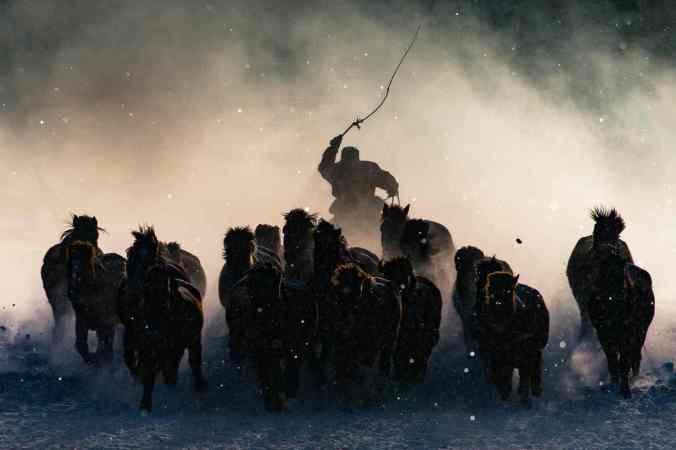
Grand prize winner: Winter Horseman. The Winter in Inner Mongolia is very unforgiving. At a freezing temperature of -20F and lower with constant breeze of snow from all directions, it was pretty hard to convince myself to get out of the car and take photos – not until I saw horsemen showing off their skills in commanding the steed from a distance, I quickly grabbed my telephoto lens and captured the moment when one of the horseman charged out from morning mist. Photograph: Anthony Lau/National Geographic Travel Photographer of the Year Contest

Have a look over at the source:

Winners Announced

The National Geographic Travel Photographer of the Year has been named!

Explore the prize-winning photos and download stunning wallpapers. Share your favorite pictures with your friends and see the judges top picks. Continue reading

Ozone Hole over the Antarctic is Shrinking

Launching an ozonesonde. This balloon transported instrument measures a vertical profile of the ozone layer. Credit: NOAA via Flickr

Thankfully, there’s good news on the atmospheric front from the southern edge of the world, where chlorofluorocarbons released in the seventies and eighties had created a hole in the ozone layer. The seasonal gap in this ultraviolet-blocking layer is not as big this year as others in the past, thanks to prompt and concerted action to prevent release of dangerous chemicals. Alexandra Witze writes for Scientific American:

It’s the beginning of the end for the Antarctic ozone hole. A new analysis shows that, on average, the hole — which forms every Southern Hemisphere spring, letting in dangerous ultraviolet light — is smaller and appears later in the year than it did in 2000.

The 1987 global treaty called the Montreal Protocol sought to reduce the ozone hole by banning chlorofluorocarbons, chlorine-containing chemicals — used as refrigerants in products such as air conditioners — that accelerated ozone loss in the stratosphere. The study shows that it worked.

Continue reading

Conservation Reserve Program

The Hull family has partnered with U.S. Department of Agriculture (USDA) Farm Service Agency (FSA) Conservation Reserve Program (CRP) in Vermont to conserve sensitive riparian areas on their dairy farm by establishing forested buffer zones and installing high-tensile fence, stream crossings and other water handling equipment. Photo © USDA / Flickr through a Creative Commons license

This article by Kris Johnson for The Nature Conservancy is reminiscent of a post on paying for ecosystem services published here five years ago, where watersheds that would otherwise be affected by agriculture are better protected with incentives from conservation programs. From Cool Green Science today:

Ask someone in the rural Midwest what the Conservation Reserve Program (CRP) does, and a likely answer is: “It pays farmers not to farm.” But, research recently published in the journal Ecosystem Servicessuggests a better answer would be: It pays farmers to grow clean water.

It’s a better answer because with nutrient pollution threatening drinking water supplies, impacting boating and fishing on lakes and rivers throughout the Midwest and causing a persistent “dead zone” in the Gulf of Mexico, figuring out how to produce clean water is a critically important challenge. And the Conservation Reserve Program (CRP) is key to solving it.

Continue reading

Recommended Podcast: Food Packaging

Screen Shot 2016-06-30 at 9.51.21 AM

If you are not yet listening to Gastropod, this would be as good a place to start as any:

Outside the Box: The Story of Food Packaging

The invention of food packaging is one of humanity’s greatest achievements. It may seem hard to imagine today, but the first clay pots made the great civilizations of the ancient world possible, while paper’s first use, long before it became a surface for writing, was to wrap food. But packaging’s proliferation, combined with the invention of plastics, has become one of our biggest environmental headaches. In this episode, we explore the surprising history of how our food got dressed—and why and how we might want to help it get naked again.

Continue reading

Phenology Disrupted by Climate Change in the UK

The UK has a rich history of biological recording by scientists and ‘citizen scientists’ who document the first signs of spring. Photograph: Alamy/Guardian

We first heard of the word phenology on this site back in 2012, from writings on a citizen science workshop in the Galápagos. Since then, the term has been linked to citizen science in the context of forest life cycles in England, coffee farming in Costa Rica, and orchids in the United Kingdom. It’s a good thing that there’s a history of normal people collecting information on nature’s timelines in Britain, because that provides rich and deep data on changing phenology with a warming climate. Jessica Aldred reports for the Guardian on a new study published in Nature:

Climate change is disrupting the seasonal behaviour of Britain’s plants and animals, with rising temperatures having an impact on species at different levels of the food chain, new research shows.

The result could be widespread “desynchronisation” between species and their phenological events – seasonal biological cycles such as breeding and migration – that could affect the functioning of entire ecosystems, according to the large-scale study published this week in the journal Nature.

Continue reading

Graylings Recovering

Spawning Arctic Grayling at Green Hollow Genetic Brood Reserve. Photo © Emily Cayer FWP

Graylings sound like wild beings out of a fantasy series, but in fact they’re a type of fish found all over the world in different species, some threatened with population decline, and some stable. The Arctic grayling, found in Russia and Canada but also some areas in Alaska, Montana and Wyoming, has suffered extirpation from certain spots in the latter two states during the last hundred years or so, due to anthropogenic effects. Ted Williams reports for The Nature Conservancy:

The Arctic grayling’s spotted, orange-trimmed dorsal fin looks as if it had been photoshopped. It’s half as long as the body and just as wide; and it glows with impossible shades of violet, green and turquoise. This gaudy trout cousin was deposited by the retreating glacier in the coldest, clearest waters of the contiguous states.

So common was the species in Michigan that a city, Grayling, took its name. And as recently as the early 20th century grayling abounded in the upper Missouri River system. While these fish still thrive in Alaska and Canada, they’ve been wiped out in Michigan and persist only in about 15 percent of their historic range in Montana and Wyoming.

Continue reading

Moringa: Superfood?

A moringa tree (tallest plant in the back left of the photo)

There’s a Moringa tree in the coffee plot at Xandari’s west farm area, and the head gardener José Luis always points it out to guests as a plant with dozens of healthy properties, in addition to its value as a shade-provider to the coffee shrubs. The genus of trees is beginning to be touted as a “miracle tree” and superfood in the United States, but has yet to really catch on among the denizens of developing nations in the dryland tropics, where Moringa grows best. Amanda Little writes for the New Yorker:

On the western margin of Agua Caliente [Mexico], Mark Olson, a professor of evolutionary biology at the National Autonomous University of Mexico, has a farm. “It may look like a shitty little field with runty little trees in a random little town, but it’s an amazing scientific resource,” Olson said, as he led me through the hilly, hardscrabble acre that constitutes the International Moringa Germplasm Collection. This is the world’s largest and most diverse aggregate of trees from the genus Moringa, which Olson believes are “uniquely suited to feeding poor and undernourished populations of the dryland tropics, especially in the era of climate change.”

Continue reading

Use Nature, Not Seawalls, to Defend from Storms

A Living Shoreline replaced a failing bulkhead at the N.C. Wildlife Resource Commission’s Edenhouse boat ramp on the Chowan River. Photo by the North Carolina Coastal Federation

From the Harvard Gazette, an article by Colleen Walsh on the environmental damage and lack of success in general from manmade seawalls:

For years coastal homeowners have tried to beat back Mother Nature with seawalls, imposing structures of wood and/or concrete intended to fend off angry tides and surging storms. But emerging research suggests that in some areas, biological barriers both better protect against erosion and preserve vital ocean habitats.

Not only have seawalls in certain areas been shown repeatedly to fail when tested, but they pose a threat to the delicate ecosystems associated with wetlands and intertidal areas, Rachel Gittman, a postdoctoral research associate at Northeastern University’s Marine Science Center, said during a talk at Radcliffe on Thursday. Instead of absorbing energy generated by wind and waves, seawalls reflect that force back into the water, said Gittman, further eroding the shore and erasing important habitats for fish, crabs, and shore birds.

Continue reading

North American Stretch Goals On Clean Energy

ap_536579746853_wide-2c65268ff1e240e81358570076bd3f5f5ad33056-s1400-c85

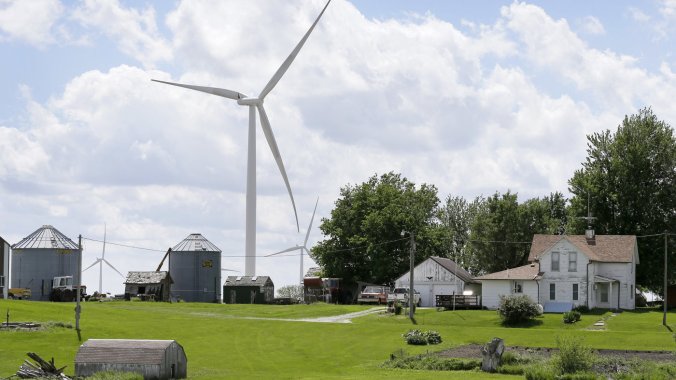
A wind turbine stands over a farmhouse in Adair, Iowa. Charlie Neibergall/AP

Thanks to National Public Radio (USA):

Obama’s New Clean Energy Goal For North America: 50 Percent By 2025

The three leaders are expected to set a target for North America to get 50 percent of its electricity from nonpolluting sources by 2025. That’s up from about 37 percent last year.

Aides acknowledge that’s a “stretch goal,” requiring commitments over and above what the three countries agreed to as part of the Paris climate agreement. Continue reading

Solar for Homes, Empowered by Google

First result when searching “solar power” in Google

We posted about a solar oven yesterday, and today we heard about a less tangible but equally valuable product offered for free by Google: by visiting their Project Sunroof webpage, you can find out in seconds if your roof is suitable for panels, how many panels you’d need, and finally, what your payment options are depending on your location (at the moment it seems focused on the US and the different state and federal tax credits available). From their About page:

Why are we doing this?

As the price of installing solar has gotten less expensive, more homeowners are turning to it as a possible option for decreasing their energy bill. We want to make installing solar panels easy and understandable for anyone.

Project Sunroof puts Google’s expansive data in mapping and computing resources to use, helping calculate the best solar plan for you.

Continue reading

Watch Your Wood, Know Its Origin

2000 (1)

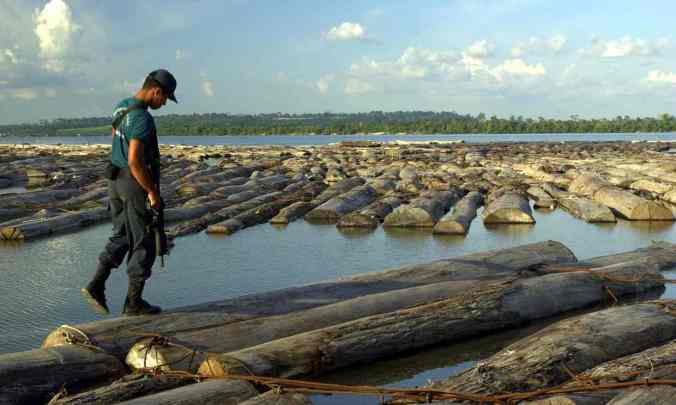
An armed officer inspects a seizure of thousands of illegal mahogany logs in Brazil. Photograph: Dado Galdieri/AP

Thanks to the Guardian for this reminder that we consumers need to do our caveat emptor duties when buying wood products:

Deforestation is rife in the Amazon, Colombia and the Philippines, say environmental groups

British shoppers could be unknowingly buying wooden furniture, flooring and even food items that are byproducts of destructive illegal logging in the Amazon, environmental campaigners are warning.

Friends of the Earth is calling on ministers to make companies reveal the source of their products in order to stop the black market trade. Last week human rights watchdog Global Witness revealed that 185 environmental activists were killed in 2015, many of whom had been trying to stop illegal logging in the Amazon. An estimated 80% of Brazilian hardwood is illegally logged.

Continue reading

Birds Back From Beyond Brink

gettyimages-129031564_custom-0155a178bff9fc85b180038391dbdbe1bf478731-s1400-c85

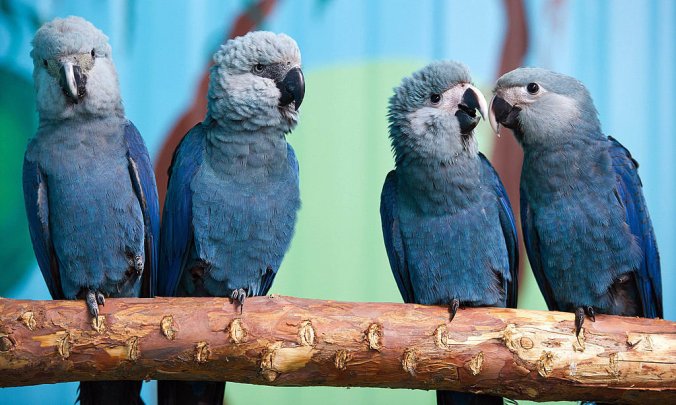
Spix’s macaws (L-R) Felicitas, Frieda, Paula and Paul sit on a branch in their aviary in Germany. The species has not been seen in the wild for 15 years until the recent sighting in Brazil. DPA/AFP/Getty Images

Thanks to National Public Radio (USA):

An Avian Mystery: Rare Parrot Spotted In Wild For First Time In 15 Years

For the last 15 years, Spix’s Macaw has been presumed extinct in the wild. That’s until one of the blue-feathered parrots was spotted and caught on video flying near the town of Curaca, Brazil.

Conservators say the appearance of the mysterious rare bird represents “a new hope” for the area.

The bird was first spotted by a local farmer named Nauto Sergio Oliveira, a government conservation institute said in a statement. Oliviera told his neighbors, and the next day his wife Lourdes Oliveira and daughter Damilys trekked out at dawn in search for the bird.

The rare parrot appeared in a nearby riparian forest and Damilys managed to catch it on video: Continue reading

Creative Solar Cookers from GoSun Stove

Cooking directly with solar power is not something we’ve posted about here before, although it is a pretty important subject when you consider the vast amount of wood, electricity, or natural gas used to cook food around the world. About seven years ago we enjoyed one of our favorite articles from the New Yorker about the effort to perfect solar ovens and reduce smoke-related deaths in developing countries, and it’s clear that the quest to build a better solar oven is still going:

Continue reading

Op-ed: Can Brexit Work for the Environment?

Magazine cover by Barry Blitt

We’ve been reading for several weeks now in The Guardian that leaving the European Union would not be good for the United Kingdom’s air pollution problems, their landfill waste management, their wildlife conservation, and so on. Now that the vote has been made and the break will happen, Craig Bennet, CEO of the environmental justice and advocacy group Friends of the Earth, has written a piece for the British news source pleading with readers to not let a departure from the E.U. start a downward spiral on environmental issues for the U.K:

Friends of the Earth campaigned vigorously to remain in the EU. Membership of Europe has been good for our ‘green and pleasant land’, and the plain truth is that pollution doesn’t recognise national boundaries. It seems obvious to me that the best way of solving anything other than very local environmental problems is for countries to cooperate and develop solutions under a common framework.

Continue reading

Using Soil to Capture Carbon

© NSW Gov, Australia

A few weeks ago several news outlets publicized a new carbon-capture method tested in Iceland, but there’s also a low-tech way of storing carbon in the ground that people can consider, which is restoring degraded lands that once held large amounts of carbon and could become fertile again if we follow certain practices. Stephen Wood reports for Cool Green Science:

Soils have twice as much carbon as the atmosphere. Which means there’s a lot of interest in figuring out if soil can hold even more carbon—to help fight climate change.

Sequestering carbon in soil is like saving money in your bank account—simple in theory, but challenging in practice. If you’re frugal enough you may end up fighting climate change. Spend too much and you could make the situation worse.

Continue reading

Common Ancestor found for Hair, Scales, and Feathers

The dark spots stained blue are placodes, which develop into scales, feathers and hair. The animals from left to right are a mouse, snake, chicken and crocodile. Credit Nicolas Di-Poï, Michel C. Milinkovitch and Athanasia Tzika

For some time now it’s been known that hair and feathers share a root, but the link between scales and feathers was not so clear. New research published in Science Advances shows that all three growths do, in fact, share a common ancestor. Nicholas St. Fleur reports for the New York Times:

Reptiles have scales. Birds have feathers. Mammals have hair. How did we get them?

For a long time scientists thought the spikes, plumage and fur characteristic of these groups originated independently of each other. But a study published Friday suggests that they all evolved from a common ancestor some 320 million years ago.

Continue reading

Fermentation Is Here To Stay

img_4710_edited_custom-418a86e926410db406b761744866d0e208210727-s1400-c85.jpg

The new brewery at Culinary Institute of America in Hyde Park, N.Y. The school now teaches the art and science of brewing, an elective course. Allison Aubrey/NPR

When the Culinary Institute Of America says so, we pay attention. We keep hearing about fermentation from our friends and colleagues in the know. So we watch for these stories. The Salt feature on National Public Radio must be, by now, one of our most go-to sources, and for good reason (considering what we care about):

Fermentation Fervor: Here’s How Chefs Boost Flavor And Health

ALLISON AUBREY

There’s an explosion of interest in friendly bacteria.

Beneficial microorganisms, as we’ve reported, can help us digest food, make vitamins, and protect us against harmful pathogens.

As this idea gains traction, so too does the popularity of fermented foods such as yogurt, sauerkraut and kimchi.

Though the science is tricky, researchers are learning more about how this ancient technique for preserving food may also help promote good health. Continue reading