Digging Deeper, Getting To No

Casa Dominique is an ecolodge on Lanzarote's northern coast. Julie Genicot, a French trekking guide, has lived in Lanzarote since her grandparents opened the Casa Dominique when she was a child. She worries that offshore oil drilling might ruin the natural environment she grew up in. Lauren Frayer/NPR

Casa Dominique is an ecolodge on Lanzarote’s northern coast. Julie Genicot, a French trekking guide, has lived in Lanzarote since her grandparents opened the Casa Dominique when she was a child. She worries that offshore oil drilling might ruin the natural environment she grew up in. Lauren Frayer/NPR

We cannot possibly say that Spain does not need more oil. But we can say that before going to the Canary Islands there should be more effort to use the sun and wind, as at least one European country with less direct sunlight per year than Spain has successfully done. Spain should dig deeper on the alternative energy front before drilling in the sea. Go, Julie, go! Thanks to National Public Radio (USA) for bringing this story to our attention:

An oil rig now floats offshore in one of Europe’s top winter beach destinations — Spain’s Canary Islands. For the first time, Spain has authorized offshore oil drilling there. It’s hoping to reduce its dependence on foreign oil. But the project has prompted massive protests by local residents and environmental groups like Greenpeace.

Julie Genicot is a French trekking guide who’s lived in Lanzarote, one of Spain’s Canary Islands, ever since her grandparents opened an ecolodge there when she was a child.

“We have all the elements. It’s very windy, we have tides, the sun. It’s a very energetic place,” she says, looking out her windows across sand dunes in a protected natural park, backed by the Atlantic Ocean. “You have earth, the fire — we’re surrounded by volcanoes. And the wind, the sea — it’s very powerful.” Continue reading
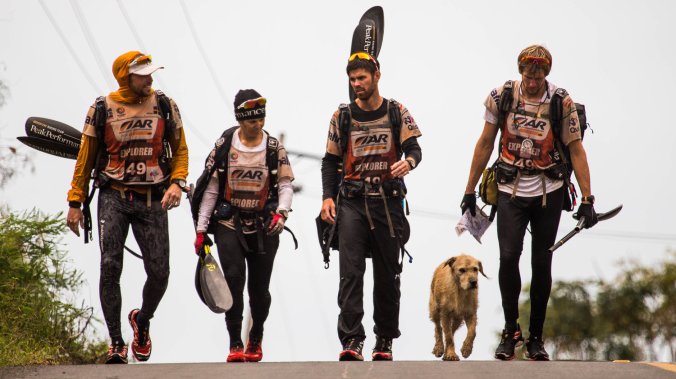
Dog + Humans = Team

Team Peak Performance says that after six days, they "crossed the finish line with 5 members instead of 4 as the 12th top team in the world." Krister Goransson/Peak Performance

Team Peak Performance says that after six days, they “crossed the finish line with 5 members instead of 4 as the 12th top team in the world.” Krister Goransson/Peak Performance

This takes us back to our Patagonia Expedition Race days. Thanks to National Public Radio (USA) for this reminder of what sometimes counts as the secret ingredient of teamwork in situations that require extraordinary endurance:

After a stray dog in Ecuador met a team of Swedish adventure athletes, he grew so attached to the squad that he ran for miles and swam along to keep up with them. Now Arthur the dog is world-famous — and it all started with a meatball.

Continue reading

Joint Ventures In Thanksgiving Cooking

Renee Comet Photography/Restaurant Associates and Smithsonian Institution

Renee Comet Photography/Restaurant Associates and Smithsonian Institution

We had not seen this book when it was first published two years ago, but now will seek it out to authenticate our commemorations for our table mates in distant lands:

The Native American Side Of The Thanksgiving Menu

Everyone knows the schoolhouse version of the first Thanksgiving story: New England pilgrims came together with Native Americans to share a meal after the harvest. The original menu was something of a joint venture, but over the years, a lot of the traditional dishes have lost their native flavor.

For those who want to create a feast that celebrates the flavors that Native Americans brought to the table, Chef Richard Hetzler put together an entire menu of options from his award-winning cookbook,The Mitsitam Cafe Cookbook. The recipes are drawn from the Mitsitam Native Foods Cafe at the Smithsonian National Museum of the American Indian, where Hetzler was lead chef until summer 2014. Since opening the cafe, he told NPR’s Celeste Headlee he observed a growing interest in native cooking.

Continue reading

Thanksgiving, 2014

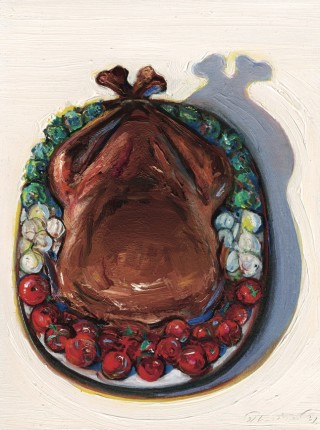
The problem with cooking Thanksgiving dinner abroad is never just the shopping. It’s the local culinary aesthetic. CREDIT WAYNE THIEBAUD

The problem with cooking Thanksgiving dinner abroad is never just the shopping. It’s the local culinary aesthetic. CREDIT WAYNE THIEBAUD

For those whose heritage includes someone who has proclaimed thanks in a land distant from where s/he was born, and/or broke bread with the locals, this day has a particular ring to it. For anyone who has commemorated the specific holiday in lands distant to their own original homes, there is an odd symmetry to the original Thanksgiving event. This New Yorker classic-in-the-making will bring special pleasure to all who have commemorated the Thanksgiving holiday in far off lands:

NOVEMBER 23, 2009 ISSUE

Pilgrim’s Progress

Thanksgiving without borders.

BY

…I am what you might call an amateur of Thanksgiving. My family prefers the phrase “regrettably hospitable,” but I would add strategically hospitable, because Thanksgiving dinner has turned out to be the stealth weapon of my reporting life. Everybody knows something about Thanksgiving, though not necessarily what we eat or why we eat it. Continue reading

Good Writing, According To Steven Pinker

Thanks to Intelligence Squared for the last dozen years of excellent debate, Oxford style, and in particular for this recent conversation that picks up where this last post, and the one before that, left off in terms of making us want to hear more from Steven Pinker:

STEVEN PINKER ON GOOD WRITING

with Ian McEwan

Steven Pinker is one of the world’s leading authorities on language, mind and human nature. A professor of psychology at Harvard, he is the bestselling author of eight books and regularly appears in lists of the world’s top 100 thinkers.

On September 25th he returned to the Intelligence Squared stage to discuss his latest publication The Sense of Style, a short and entertaining writing guide for the 21st century. Pinker argued that bad writing can’t be blamed on the internet, or on “the kids today”. Continue reading

Illegal Wildlife Trade, Quantified

9f71b8b7-4c32-4afe-86e7-2d27c9f6b728-620x372

Photograph: James Morgan/WWF/AFP/Getty Images

The Guardian’s coverage of one of our least favorite but critically important topics is appreciated, as always:

Continue reading

Geckos, A 10th Latitude Lovely

science-take-gecko-sfSpan-v3

Geckos are in most of our favorite places–Kerala, Costa Rica, Ghana–which share some 10th Latitude commonalities in different continents.  They are one tiny example of the commonalities, but one that most of us love, for reasons we cannot begin to explain. So for us this story is a welcome puzzle solver for mysteries we did not know needed explaining, yet enjoy the answers:

SCIENCETAKE

Climbing a Glass Building? Try a Gecko’s Sticky Pads

By JAMES GORMAN

The lizard and, well, Spider-Man, have ideal tools for scaling slippery surfaces. Engineers have copied the gecko’s clingy foot pads.

Ethio-jazz And A Goal For 2015

16ETHIOPIA1-articleInline-v2

Nichole Sobecki for The New York Times. Mulatu Astatke, seen as the father of Ethio-jazz, performs at African Jazz Village, which opened in late 2013.

As we prepare for a scouting trip to Ethiopia for a possible Raxa Collective collaboration with our Ghana colleagues in 2015, we were happy to see this item in the Sunday Travel section of the New York Times last week and just now remember to post this link:

CULTURED TRAVELER

In Ethiopia’s Capital, a Resurgent Jazz Scene

Solar To Take Prime Position On Cost Basis Soon

iHF9w5iJW38M

Thanks to Bloomberg for the surprising news:

While You Were Getting Worked Up Over Oil Prices, This Just Happened to Solar

By Tom Randall

Continue reading

Sea Snakes, Rhinos, And The Close Observation Of Two Tragic Commons

rhino-snake-680x450

Thanks as always to Conservation, and in this case to Jason G. Goldman for the excellent summaries of scientific findings each week. There is not much happy news in this story, but nonetheless it is critical reading because of the detailed observation of the scientists:

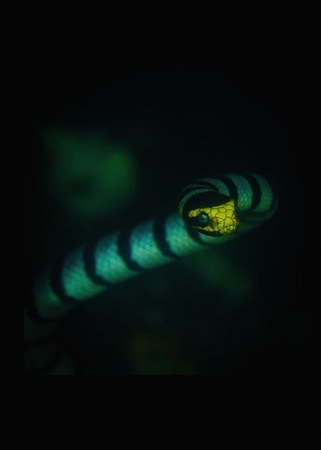
Each month, hundreds of squid fishing vessels return to port in Vietnam loaded not just with squid, but also with sea snakes harvested from the Gulf of Thailand. Each month, the seven major snake processing facilities move an average of 6,500 kilograms of sea snakes, which are sold for between $10 and $40 per kilogram, depending on species. By comparison, squid sell for between $7 and $20 per pound, making sea snakes the more lucrative catch.

In the most recent issue of the journal Conservation Biology, Vietnam Academy of Science and Technology researcher Nguyen Van Cao and colleagues argue that the harvest of sea snakes from the Gulf of Thailand is perhaps the world’s largest systematic exploitation of marine reptiles in the world, but it’s one that is woefully ignored or, at best, underscrutinized. Continue reading

Entrepreneurship In The New India

Recasting India How Entrepreneurship Is Revolutionizing the World's Largest Democracy by Hindol Sengupta Hardcover, 249 pages

I argue that in India you cannot be against the state. That would be madness … But the state should not be running five-star hotels, which it is still doing. – Hindol Sengupta

Thanks to NPR z(USA) for this review of a book that helps those of us working in India get a better grip of what we see around us. It is likewise an invaluable guide for those observing from afar the vibrant new economics of this ancient mix of cultures, all wrapped up in the largest democracy on earth:

It takes almost a month to get permission to start a business in India — a feature of the country’s four-decade experiment with centralized, state-controlled economic planning.

India began moving away from its old policies and opening up to outside investment in the early ’90s — but that movement towards a free market economy has happened in fits and starts, and is far from complete.

Hindol Sengupta is an editor-at-large with Fortune India, the magazine’s India arm, and he’s written a new book about the policy shift: Recasting India. 

When I sat down with him in New Delhi, he told me that India’s greatest economic battles “are being recast, the debate is being reframed” away from the longstanding idea that India’s protracted problems can only be solved by its government.

Continue reading

The Sophie’s Choices Of Conservation

Screen Shot 2014-11-21 at 5.53.37 PM

Life is not fair.  Sometimes it is really unfair, especially when it comes to entire lifeforms disappearing, or not disappearing, subject to choices we humans make, with all our inherent biases. Thanks to Nautilus for bringing this research to our attention:

Which Endangered Species Would You Save?

Conservation is in the eye of the beholder.

BY CARRIE ARNOLD

You have just been appointed Conservation Czar. But there is a catch. You can only save three animals. Look at the 12 animals below and click on the three that you would save. After you make your choices, you will learn about the endangered status of each animal.

Continue reading

Resistance, Change, Art, Words–Liberating

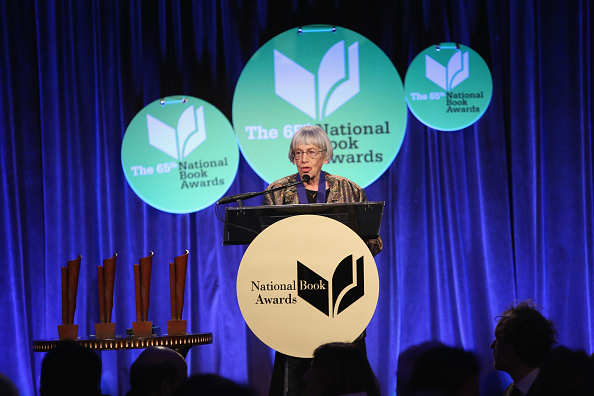
NEW YORK, NY - NOVEMBER 19:  Ursula K. Le Guin attends 2014 National Book Awards on November 19, 2014 in New York City.  (Photo by Robin Marchant/Getty Images)

NEW YORK, NY – NOVEMBER 19: Ursula K. Le Guin attends 2014 National Book Awards on November 19, 2014 in New York City. (Photo by Robin Marchant/Getty Images)

We do not normally pay attention to awards ceremonies, but this one catches our attention. We have said on occasion why we think books matter, why libraries matter, why the fate of publishing matters. On a good day, in our line of work, we approach the same ideal of books: to create experiences different from those encountered in normal, every day lives and by virtue of such experiences, to liberate. Comfort. Beauty. Taste. Wonderment, awe, perspective, yes yes yes.

But going somewhere. And that somewhere is freedom from the confines of norms, from the confines of places devoid of nature. The freedom of the road, a cliche that nonetheless has meaning.  Thanks to the New Yorker‘s Rachel Arons for pointing us to the short, powerful comment from an author who influenced many of us early in life to do what we do for a purpose:

…But it was Ursula K. Le Guin, accepting the Medal for Distinguished Contribution to American Letters early in the evening, who gave the definitive remarks of the ceremony, gliding through the genre debate and the Amazon-Hachette debacle on her way to explaining the crucial role that literature must play in our society.

Continue reading

15 Years, And Counting

monopoly-man-with-green-wings

Click the image above or the title below to go to the summary, thanks as always to Conservation:

THE LOW-CARBON DEAL THAT’S ALMOST TOO GOOD TO BE TRUE

The economics of slashing carbon emissions look significantly better than they did only a few years ago. Continue reading

Foodpreneurship

Revolution Foods makes healthy kids meals for both schools and stores. Co-founder Kristin Richmond says mentoring and support have been key to the success of her business. Shelly Puri/Courtesy of Revolution Foods

Revolution Foods makes healthy kids meals for both schools and stores. Co-founder Kristin Richmond says mentoring and support have been key to the success of her business. Shelly Puri/Courtesy of Revolution Foods

In the past year, with conceptualization and then food trials that led to the opening of 51, this story catches our attention and interest. Thanks to the salt, over at National Public Radio (USA) for the new vocabulary:

Culinary Institute’s School For ‘Foodpreneurs’ To Cook Up Innovation

The Culinary Institute of America may be best known for churning out chefs. And some of its graduates — from Grant Achatz to Roy Choi to Anthony Bourdain — have succeeded in entertaining and inspiring a new generation of foodies.

But not all CIA graduates don chef toques. Continue reading

Origins Of Chocolate In Costa Rica

We had not heard of this series until now, but considering the geographic and foodstuff focus of this current episode, we want to know more, especially considering what we learn in the show’s About section:

Iron Way Films, the creators of Original Fare, has spent the last seven years traversing the globe in search of authentic stories and incredible locations. We’ve explored tropical oceans with musicians & pro-surfers. Road horses through big sky back country with ranch riders. Tasted backyard wine deep in the tiny towns of Provence. We’ve glamped, we’ve camped, we’ve lived on boats and spent far too much time in rental cars.

But we always sought to uncover what makes a place special- and what makes it unique.

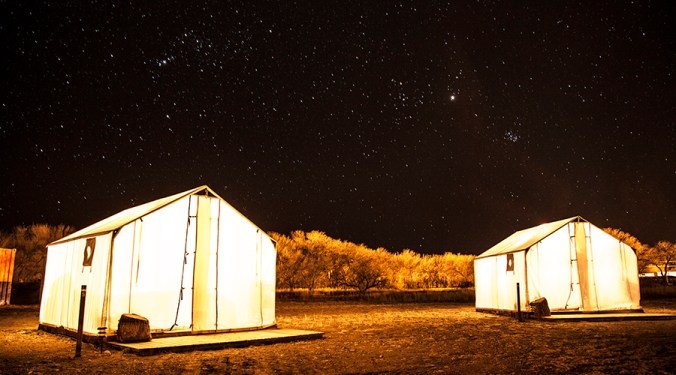
EL-COSMICO-NIGHT-TENT900x5001

Continue reading

Starry Night Bike Path

Artist Dan Roosegaarde pays tribute to Vincent Van Gogh's painting Starry Night by creating this bike path in Van Gogh's hometown of Eindhoven. Courtesy of Studio Roosegaarde

Artist Dan Roosegaarde pays tribute to Vincent Van Gogh’s painting Starry Night by creating this bike path in Van Gogh’s hometown of Eindhoven. Courtesy of Studio Roosegaarde

Thanks to National Public Radio (USA) for this follow up to another recent story from Holland about bike path innovations:

In the Dutch town of Eindhoven, artist Daan Roosegaarde has paid homage to its most famous resident, Vincent Van Gogh, by creating a glowing bike path that relies on solar-powered LED lights and interprets his classic painting Starry Night.

Roosegaarde says he wants his work, illuminated by thousands of twinkling blue and green lights, to speak to everyone. Continue reading