Neighborhood Electric Vehicles

Ecocruise Cruser Sport (Ecocruise Vehicles)

Ecocruise Cruser Sport (Ecocruise Vehicles)

Thanks to the BBC for this new entrant into our vocabulary:

Ecocruise Cruser Sport is the golf cart, accelerated

…Depending on the region in which they are registered, NEVs are limited by law (and usually, by engine output) to speeds below 25mph or 35mph. The best resemble earnest attempts at space capsules, the worst evoke street-legal golf carts (and often because they are, quite simply, street-legal golf carts).
Continue reading

Around The World Of Coffee In One Hour

Screen Shot 2014-11-18 at 11.47.40 AM

Click the image above, or title below, to go to the video:

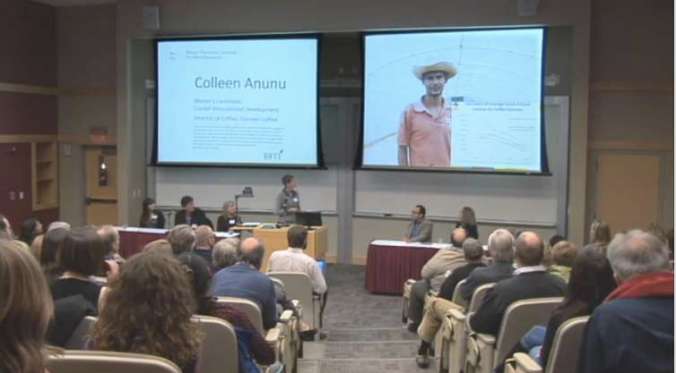
Coffee: From Gene to Bean to Global Scene

Six researchers from the Boyce Thompson Institute for Plant Research, Cornell University’s Lab of Ornithology, Dyson School of Applied Economics and Management, School of Hotel Administration, and College of Agriculture and Life Sciences investigate the culture of coffee, including: consumer tastes and choices, the social impact of development and production, the ecological impacts of coffee farms, and how the plant’s genome sequence can provide insight into this popular beverage.

A Book To Gift The Bird-Lovers In Your Life

raffin_birdsofpandemonium_hc_jkt_rgb_hr-updated

We first heard about it here. This book may be the perfect solution to your next gift-giving occasion for the bird lover(s) in your life. We are still on alert and concerned about Amazon, so if you do not have find this in your local bookstore, please place your order somewhere that supports independent booksellers, or perhaps National Public Radio (USA) for this book. The publisher has this to say about the book:

“A remarkable book. Reading about the birds of Pandemonium will make you laugh and cry; it will make you see more clearly the need to take care of our planet; and it will confirm that one person with a passion can make a difference.” —Jeff Corwin, nature conservationist Continue reading

Farming, Food & Climate Change

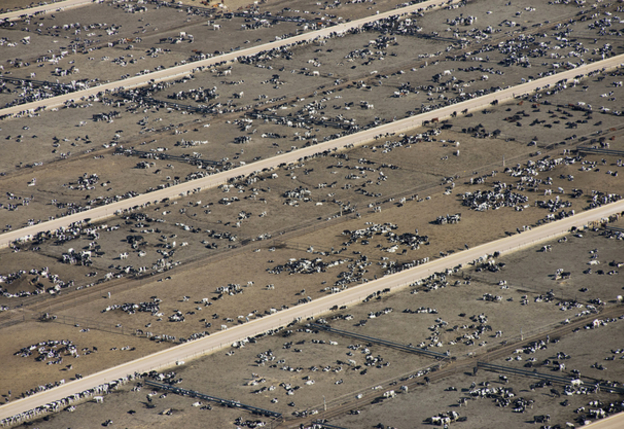
Cattle feedlot, southeastern Colorado. April 2013. 84760. Credit: John Wark

Cattle feedlot, southeastern Colorado. April 2013. 84760. Credit: John Wark

Thanks to Audubon magazine for the interview in their current issue with one of the go-to explainers we most frequently seek out on food sustainability issues:

Food Fight: Reforming the Farm

Celebrated author Michael Pollan talks climate change, and how farming can help stop it.

BY RENE EBERSOLE  Published: November-December 2014

Q: Should we be looking more closely at how the food we eat affects the climate?

A: I think there’s a growing recognition that you can’t really address climate without looking at the food system. Yet exactly how you do that, what that means from a policy point of view, is a lot more complicated than regulating coal-fired power plants.

Agriculture is a large source of global warming emissions. Yet you propose that it can help reverse climate change?

Continue reading

Pachyderm Prowess

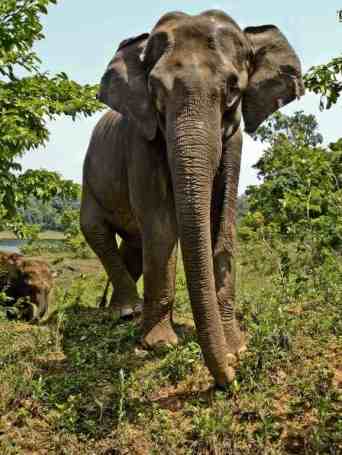
Mother and baby Asian Elephant, Periyar Tiger Reserve. Photo credit: Milo Inman

Mother and baby Asian Elephant, Periyar Tiger Reserve.
Photo credit: Milo Inman

Quite a few La Paz Group contributors are life-long elephant lovers, and we never tire of learning about these amazing members of the animal kingdom. Thanks to TED Ed for giving us more to remember…

It’s a common saying that elephants never forget. But the more we learn about elephants, the more it appears that their impressive memory is only one aspect of an incredible intelligence that makes them some of the most social, creative, and benevolent creatures on Earth… Continue reading

Sidestepping To Success

16innovations_ss-slide-GB8J-sfSpan

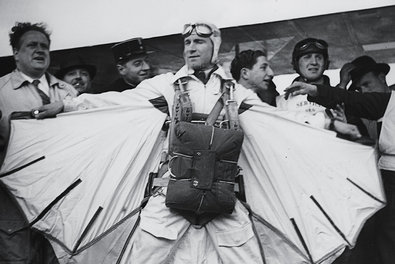
The Estate of André Steiner via Archive of Modern Conflict

This week’s Sunday Magazine in the New York Times has a focus on the role of failure on the path to successful innovation. It is not lost on us, having recently designed, built and opened two properties– one at the beach and the other in a historic cultural urban zone–in the state of Kerala, India that sometimes it seems you take two steps sideways Continue reading

Preparing For Citizen Science

shutterstock_200307821-copy

© kim7 | Shutterstock

Thanks to Roberta Kwok for her ever-clear and concise reviews of important scientific findings in Conservation, this one of particular interest to Raxa Collective contributors Seth Inman for the last few years, and Phil Karp since he started contributing to our blog in 2013:

HOW SHOULD CITIZEN SCIENTISTS BE TRAINED?

The potential power of citizen science is huge: Scientists can enlist smartphone-equipped nature enthusiasts to identify species, monitor ecological trends, and submit photos and other observations on a shoestring budget. But researchers who want to conduct studies over large or remote areas face a problem. If they need to train volunteers in person, their cheap citizen science project suddenly isn’t so cheap anymore.

Now cash-strapped researchers can take heart from a new study in PLOS ONE. Continue reading

Chefs Celebrating Biodiversity

Brazilian fruits, including jambu and tapereba (lower right), displayed for a gathering of chefs in Sao Paolo. Paula Moura for NPR

Brazilian fruits, including jambu and tapereba (lower right), displayed for a gathering of chefs in Sao Paolo. Paula Moura for NPR

Thanks to the salt, as always, for bringing us diverse stories about what we eat, where it comes from, and who is doing what to ensure that our food future is a good one:

Culinary superstars gathered in the Brazilian city of Sao Paulo this month at an event organized by the Basque Culinary Center. But they weren’t there to cook. Instead, the the famous chefs were talking about biodiversity. Continue reading

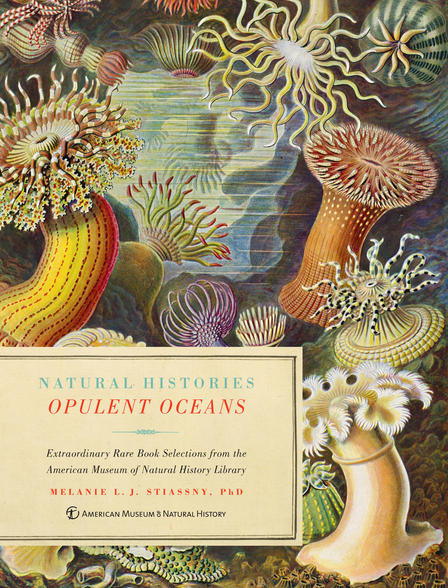
Awesome Oceans, Awesome Curator, Awesome Book

opulent-oceans_imagelarge

The American Museum of Natural History is a favorite childhood and parenthood hangout of many of the readers of these pages and visitors to places where Raxa Collective does its work. Our sense of awe about the natural world often starts in an urban institution like this one. No surprise, its curators are awesome in their own right. Here is one example from the AMNH blog a few weeks back:

Q&A with Curator Melanie Stiassny

This month marks the publication of Opulent Oceans:Extraordinary Rare Book Selections from the American Museum of Natural History Library (Sterling Signature, 2014), the third in a series showcasing the spectacular holdings of the Rare Book Collection in the Museum Library. Written by Curator Melanie L. J. Stiassny, the book includes essays about pioneering biologists who studied marine life. (And like the preceding volumes—Natural Histories (2012), which inspired the current exhibition, and Extraordinary Birds (2013)—it also showcases a variety of scientific illustrations that brought new discoveries to a growing audience of experts and laypeople alike.)

We recently spoke with Dr. Stiassny, who is Axelrod Research Curator in the Department of Ichthyology, about her experiences researching the book. Continue reading

Courtney, Come To Kerala!

3D0A6730-web

We lean to the idea that art can be a nobler calling than other ways of making a living, even in unusual circumstances. After reading the morning news today, one could be forgiven for continuing to think that art is essentially a commercial endeavor, which we would rather not believe in spite of all the evidence:

AUCTION1-thumbStandardThanks to Giacometti, Sotheby’s Hits Its Highest Total Ever at Fall Opening

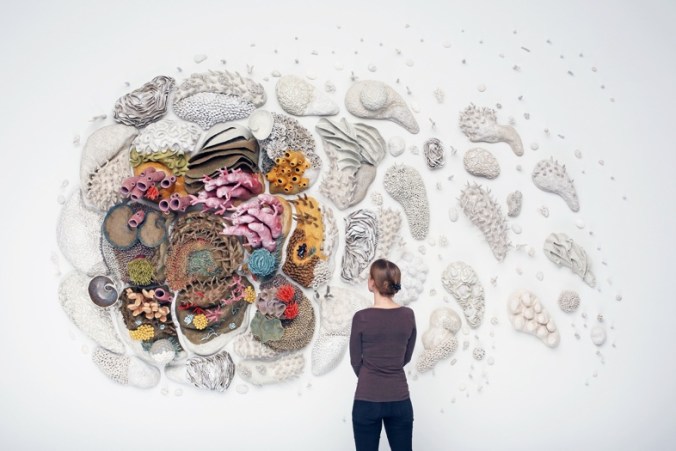
But thanks to Courtney Mattison for hewing to a different road, for which our doors will be open if she chooses to visit: Continue reading

An Artist’s Favorite Points Of View

The sculptor, printmaker and painter tells Charlie McCann about his favourite places—they reveal an eye for beauty as well as a taste for symbolism

The sculptor, printmaker and painter tells Charlie McCann about his favourite places—they reveal an eye for beauty as well as a taste for symbolism

Thanks to the Economist’s “intelligent life” for this briefing on an artist’s favorite visuals:

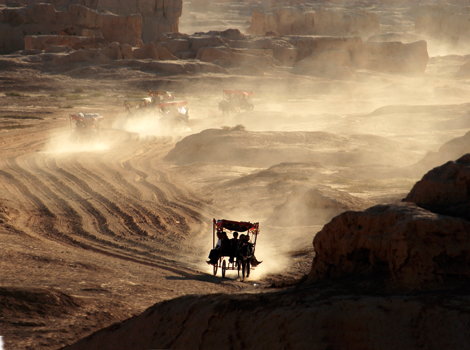
JOURNEY From Beijing to Yining (above)
In 2010, my son Edmund went on his gap year to Yining, in the province of Xinjiang. My wife and I were worried; Edmund was one of only two Europeans in the city and there’d been tremendous unrest in the region. After eight months, we decided to check up on him. We flew to Beijing and got on a train. Our journey inland was really exciting: from our cabin we saw tiny villages, where every little patch had been cultivated, and passed vast deserts where huge dust storms turned the sky black. Eventually we got to Xinjiang. By that time, Edmund could speak rudimentary Mandarin. With him, we ended up travelling to Yining by an overnight coach. It was this mad bus full of chickens, geese and dogs. Continue reading

Sorry To Have Missed It

UeliIce

The Explorer’s Club, last week, hosted a lecture by Ueli Steck, who has had our attention for other reasons, on more than one occasion.  He is in perpetual comeback mode, it seems but after the jump read what Steck did while in New York for this presentation at the Explorer’s Club, which we are sorry to have missed:

World renowned Swiss alpinist and record-breaking rock climber Ueli Steck joins us to present his legendary experiences. In this lecture, the “Swiss Machine” – whose rapid ascents of classic routes are just as demanding as three-minute miles – will share stories of his extreme expeditions all around the world. Join us in listening to tales of his rocky adventures and meet the Swiss Superman in person! Continue reading

That’s What We’re Talking About

Screen Shot 2014-11-13 at 2.39.36 AMAmong the surprising things we have learned from India’s Prime Minister in recent months is that he is appointing a new Minister within this enormous, complex democracy, one that intrigues (Reuters story associated with the headline after the jump):

Screen Shot 2014-11-12 at 9.14.59 PMIndia gets minister for yoga and traditional medicine

BY ADITYA KALRA

Interesting that when we click through to the Department’s website we find that it has a long history predating the Prime Minister (the position, the appointment and the Department are all news to us, but we are not clear on why Reuters and other news agencies suggest that the Prime Minister has created  this new government agency):

Welcome to AYUSH

Department of Indian Systems of Medicine and Homoeopathy (ISM&H) was created in March,1995 and re-named as Department of Ayurveda, Yoga & Naturopathy, Unani, Siddha and Homoeopathy (AYUSH) in November, 2003 with a view to providing focused attention to development of Education & Research in Ayurveda, Yoga & Naturopathy, Unani, Siddha and Homoeopathy systems. The Department continued to lay emphasis on upgradation of AYUSH educational standards, quality control and standardization of drugs, improving the availability of medicinal plant material, research and development and awareness generation about the efficacy of the systems domestically and internationally. Continue reading

Going Crazy The Best Way We Know

9781591846642M

Myths about entrepreneurship are dragons we need to slay every day, just about, and this book is a support.

Listen to the podcast conversation with its author here, and take a look at what the publisher has to say here:

OVERVIEW

“If people aren’t calling you crazy, you aren’t thinking big enough.”

These days taking chances isn’t just for college dropouts in hoodies. Whether you work at a Fortune 500 company, a nonprofit, or a mom-and-pop, everybody needs to think and act like an entrepreneur. We all need to be nimble, adaptive, daring—and maybe even a little crazy—or risk being left behind.But how do you take smart risks without risking it all? That’s Linda Rottenberg’s expertise. As the cofounder and CEO of Endeavor, the world’s leading organization dedicated to supporting fast-growing entrepreneurs, she’s spent the last two decades helping innovators think bold and execute smart.

Continue reading

Fish Have Plenty To Shout About

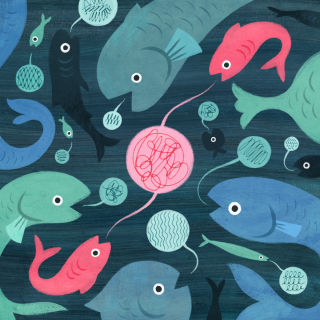
More than eight hundred fish species are known to hoot, moan, grunt, groan, thump, bark, or otherwise vocalize. CREDIT ILLUSTRATION BY KYLE T. WEBSTER

More than eight hundred fish species are known to hoot, moan, grunt, groan, thump, bark, or otherwise vocalize. CREDIT ILLUSTRATION BY KYLE T. WEBSTER

Thanks to Emily Anthes and the Elements section of the New Yorker‘s website for this post expanding our sonic horizons, and especially for the accompanying recordings to assure you that fish can shout:

In 1909, a French doctor named Étienne Lombard discovered something that most people intuitively know: humans raise their voices in noisy environments. Lombard first observed the effect—which came to be named for him—at the Hôpital Lariboisière, in Paris, where he noted that his patients spoke more loudly when he filled their ears with the hiss or crackle of a “deaf-making apparatus.” The patients seemed to adjust the volume of their speech reflexively, and Lombard suggested that the phenomenon could be used to identify malingerers—those who were faking their hearing loss in order to collect workers’ compensation.

Continue reading

Redefining Benefits And Welfare, With Fresh Fruits And Vegetables

These wooden tokens are handed out to shoppers who use SNAP benefits to purchase fresh produce at the Crossroads Farmers Market near Takoma Park, Md. Customers receive tokens worth twice the amount of money withdrawn from their SNAP benefits card — in other words, they get "double bucks." Dan Charles/NPR

These wooden tokens are handed out to shoppers who use SNAP benefits to purchase fresh produce at the Crossroads Farmers Market near Takoma Park, Md. Customers receive tokens worth twice the amount of money withdrawn from their SNAP benefits card — in other words, they get “double bucks.” Dan Charles/NPR

Thanks to the salt, a food-specialized segment on National Public Radio (USA), for this story of one country’s expanding definition and innovative rethinking of welfare, and of the various benefits associated with welfare:

The federal government is about to put $100 million behind a simple idea: doubling the value of SNAP benefits — what used to be called food stamps — when people use them to buy local fruits and vegetables.

This idea did not start on Capitol Hill. It began as a local innovation at a few farmers’ markets. But it proved remarkably popular and spread across the country.

“It’s so simple, but it has such profound effects both for SNAP recipients and for local farmers,” says Mike Appell, a vegetable farmer who sells his produce at a market in Tulsa, Okla.

The idea first surfaced in 2005 among workers at the New York City Department of Health and Mental Hygiene. They were starting a campaign to get people to eat more fresh produce. Continue reading

A National Park Provides The Basis For A Unifying Theory Of Nature And Conservation

213442

Screen Shot 2014-11-11 at 4.41.14 PMThe last time we mentioned him, it was upon discovering a new (to us) resource and today we realize we had not yet taken the opportunity to highlight this book which he published earlier this year. His interview in late May, seen here on the website of another foundation that bears his name, is worth watching to help decide whether this book is for you, or not.

The excellent NHBS, a UK-bsed website, has this to say:

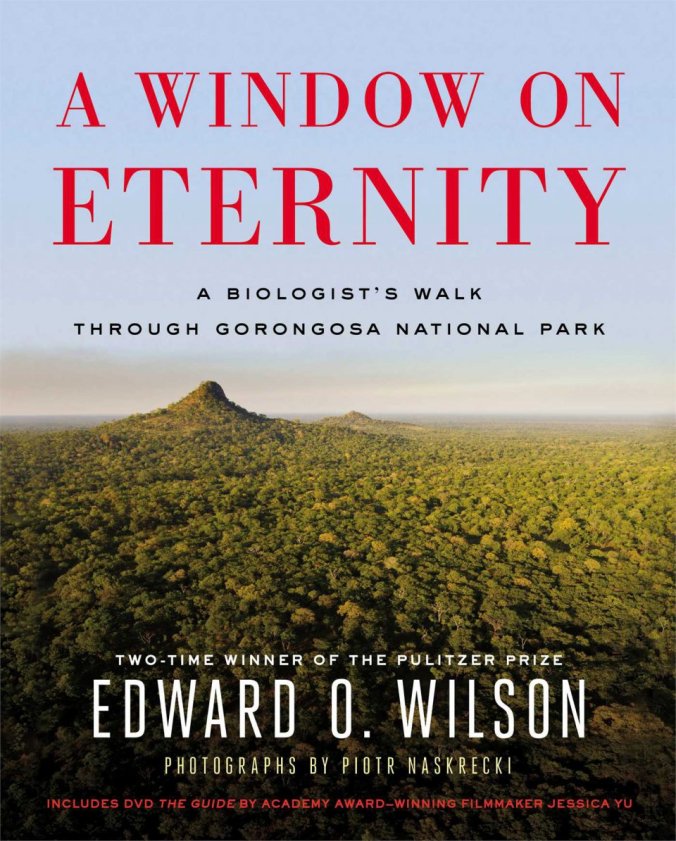
A Window on Eternity is a stunning book of splendid prose and gorgeous photography about one of the biologically richest places in Africa and perhaps in the world. Gorongosa National Park in Mozambique was nearly destroyed in a brutal civil war, then was reborn and is now evolving back to its original state. Edward O. Wilson’s personal, luminous description of the wonders of Gorongosa is beautifully complemented by Piotr Naskrecki’s extraordinary photographs of the park’s exquisite natural beauty. A bonus DVD of Academy Award-winning director Jessica Yu’s documentary, The Guide, is also included with A Window on Eternity…(continued after the jump)

EOWilson

Continue reading

Crowd-sourcing Hacker Help On Behalf Of Natural History

American Museum of Natural History

American Museum of Natural History

Thanks to the Atlantic‘s coverage of the topics we care about, as always:

On a Friday night in New York City you can find just about anything. And this past Friday about 130 hackers gathered in the Hayden Planetarium to participate in the American Museum of Natural History’s very first hackathon.

The premise was simple: The museum handed the huge dataset they call The Digital Universe to the hackers and gave them 24 hours to make something. (Part of what made this hackathon different was the literal universe of data hackers were given. More on that in a minute.) There were some specific challenges and categories (Education, Visualization, Tool Kit, and Wildcard) but the hackers were otherwise free to explore the data and run with it. Continue reading

Starling Murmuration, 2014

c479eabc-4bdf-4157-bdec-f695699a7f49-1020x537

Autumn, near Gretna Green. Dark clouds begin to form in the sky above fields, woodlands and reed beds. But these are no ordinary clouds. They are one of the UK’s most incredible wildlife spectacles.

Thanks to the Guardian for keeping up the tradition of sharing these seasonal photos (click the image above to go to a collection of this year’s contributions from readers).