Bees’ Brains

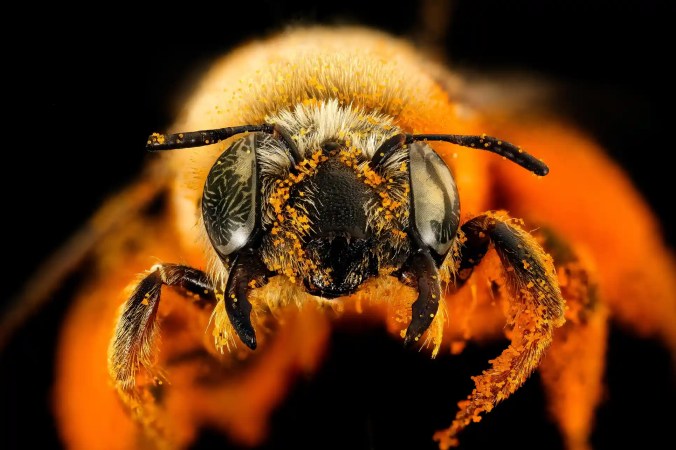
Bees are in a class by themselves as pollinators, a role that requires a sophisticated mind, says one expert. Photograph: Alamy

Stories about bees in our pages are the proverbial bees knees, again, this time with some information on their sense of the world:

‘Bees are sentient’: inside the stunning brains of nature’s hardest workers

‘Fringe’ research suggests the insects that are essential to agriculture have emotions, dreams and even PTSD, raising complex ethical questions

When Stephen Buchmann finds a wayward bee on a window inside his Tucson, Arizona, home, he goes to great lengths to capture and release it unharmed. Continue reading

Yosemite, John Muir & Robert Underwood Johnson

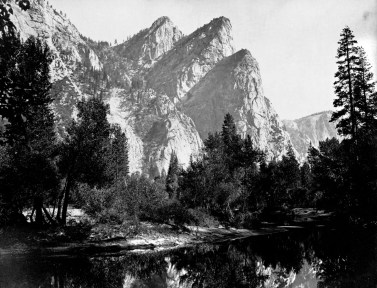
The Three Brothers, taken just east of El Capitan, by Carleton Watkins, ca. 1865. “A sharp earthquake shock at 7:30 a.m.,” Muir wrote in his journal on January 5, 1873. “Rotary motion tremored the river. . . . A boulder from the second of the Three Brothers fell today.” (Courtesy of the Library of Congress)

This book review in the LA Times will be of interest to those who find the history of conservation innovations entertaining:

The odd couple that saved Yosemite

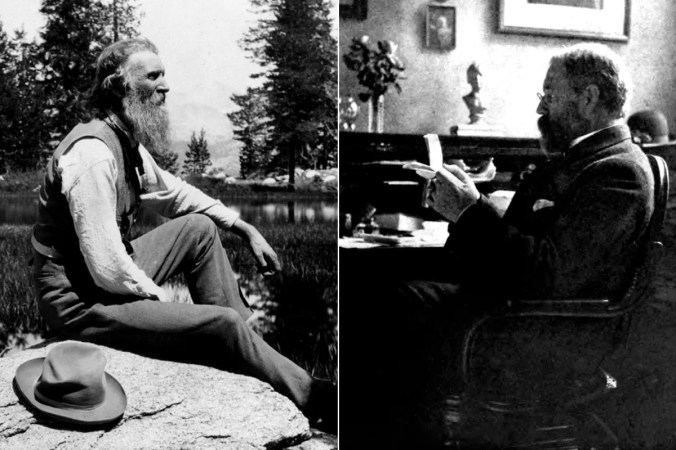
John Muir and Robert Underwood Johnson were unlikely allies in the war to preserve Yosemite. Muir, son of a Scripture-quoting Scottish immigrant father, was raised poor on a Wisconsin farm, but he wrote and spoke with the fervor of a prophet, and his craggy visage, tough constitution and unshakable devotion to the natural world drew admirers like a magnet. The urbane and cultured Johnson was an insider with a vast network of contacts in publishing and politics. The editor of one of the country’s preeminent magazines, Johnson hosted New York literary salons, mingled with America’s elite and eventually became the U.S. ambassador to Italy.

John Muir in California nature, 1902, left, and Robert Underwood Johnson, associate editor of the Century Magazine, at his office on Union Square in New York City. Their complementary skills helped carve out Yosemite National Park.(Courtesy of the Library of Congress; Courtesy of Wikimedia Commons)

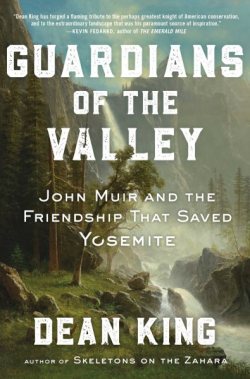
It was improbable that they even met — Muir was on the West Coast, Johnson on the East. But on one memorable journey into the California kingdom now known as Yosemite National Park, the two agreed to pull together to wage the nation’s “first great environmental war,” battling through the administrations of seven presidents to save Yosemite. It’s fair to say that the valley’s matchless terrain and fragile ecosystem would have been logged, plowed and plundered without their relentless efforts. Veteran nonfiction writer Dean King tells their story in “Guardians of the Valley: John Muir and the Friendship that Saved Yosemite.” Continue reading

Taste Of Place & Tofu Love

David Huang

We occasionally post about food, notably during stretches where it intersects with our work. Also when someone brings to our attention something fresh in a fun way. Case in point:

America Doesn’t Know Tofu

China has spent millennia exploring the culinary possibilities of soybean curds. The West has barely scratched the surface.

Guiyang didn’t have many restaurants, per se. The metropolis was more of a city-wide night market. Even in the pre-COVID days, streets like Qingyun Road were only half-filled with cars, to leave room for tents and tables that stretched to the horizon, and for smoke and steam that rose into the clouds. Continue reading

DRC’s Price Paid For Our Electric Future

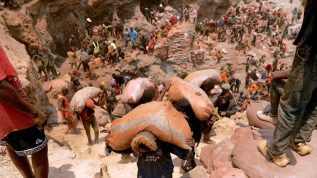
Miners haul sacks of cobalt ore at the Shabara mine near Kolwezi in the Democratic Republic of the Congo. JUNIOR KANNAH / AFP VIA GETTY IMAGES

Jocelyn C. Zuckerman leads a conversation below that puts our electric future in a very particular context:

For Your Phone and EV, a Cobalt Supply Chain to a Hell on Earth

The race for high-tech metals has sparked a cobalt boom in the Democratic Republic of the Congo that has come at a steep human cost. In an e360 interview, author Siddharth Kara talks about the horrific conditions in the mines that are putting thousands of workers at risk.

As countries around the world look to pivot quickly to clean energy, demand for the lithium-ion batteries used to charge our smartphones, laptops, and electric vehicles is booming. Continue reading

Trashy Fashion

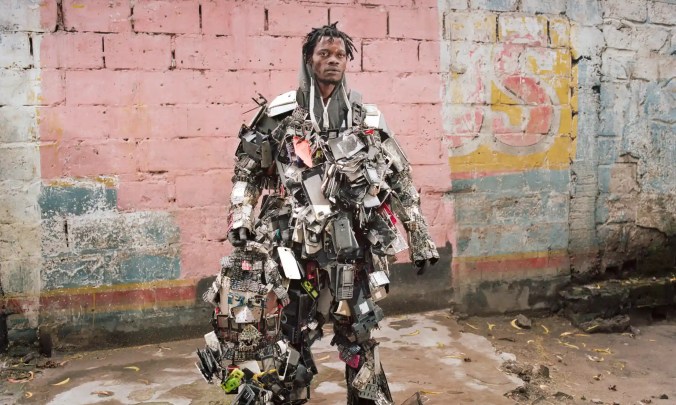
Congolese artist Nada Thsibwabwa photographed by Colin Delfosse wearing a costume made of mobile phones in Matonge district, Kinshasa, Democratic Republic of the Congo. All images © Colin Delfosse
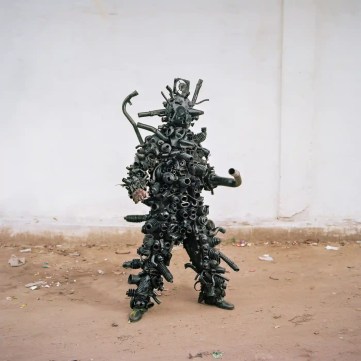
Congolese artist Hemock Kilomboshi posing in his rubber costume in Matonge district, Kinshasa. A member of the Kinact platform, Kilomboshi performs in Kinshasa’s streets to raise issues about globalisation and economic plunder in the DRC.

We featured an African social enterprise in our pages, back in the days of our Ghana work, that today’s story reminds us of. Whether on the streets of Accra, or the streets of Kinshasa, we love the creative approach. Click any image, or the title link below, to see the entire collection in the Guardian:

Rubbish fashion: street art costumes of Kinshasa – in pictures

In his series Fulu Act, Brussels-based documentary photographer Colin Delfosse captures street artists in Kinshasa, who craft striking costumes out of everyday objects found littering the streets, such as discarded wigs, wires, soda cans and bottle lids, to raise awareness of environmental issues facing the Democratic Republic of the Congo. “The statement behind their costumes is to condemn and inform about overconsumption and its side effects, namely pollution, poverty, lack of reliable investments and so on,” says Delfosse. “By capturing these images, I’m giving an echo to their crucial work.”
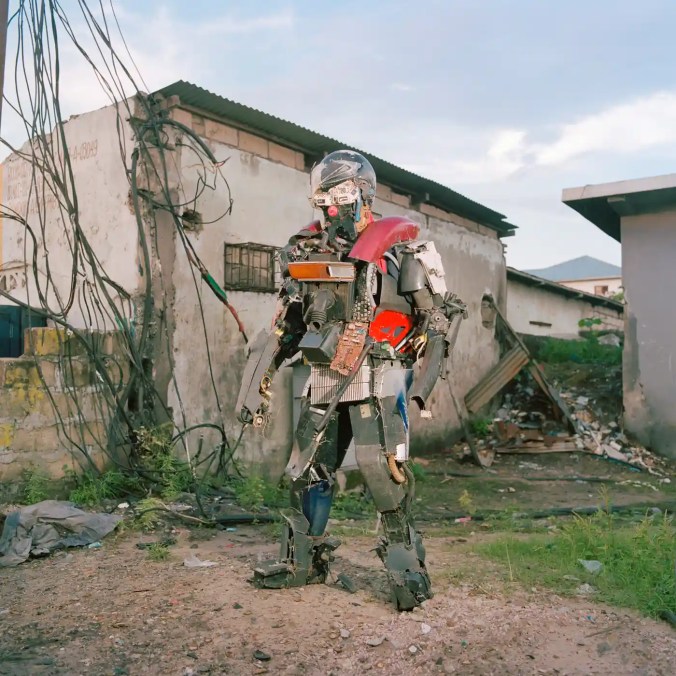
Congolese artist Jean Precy Numbi Samba, AKA Robot Kimbalambala, pictured in his costume made of car spare parts in the Ngiri-Ngiri district, Kinshasa, December 2019. The car market in the capital’s suburbs is mostly made of highly polluting secondhand (or thirdhand) vehicles from Europe.
 

Op-Ed For Amphibians

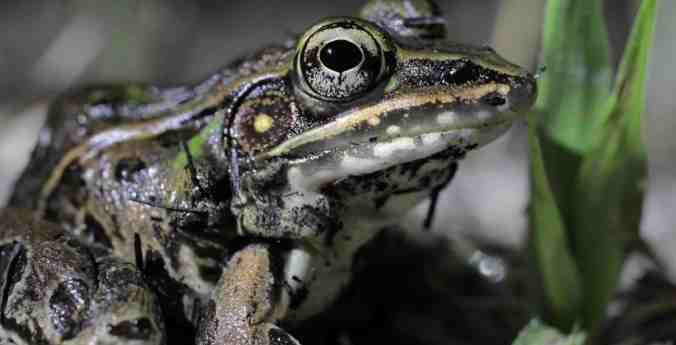
Photographs and video were taken by Bobby Altman at the Francis Marion National Forest, S.C., with assistance from Amphibian and Reptile Conservancy, a national nonprofit.

Every now and then we link to a gem by Margaret Renkl, and these often calm the environmentally-rattled nerves, as is the case today:

Why Tiny Ponds and Singing Frogs Matter So Much

NASHVILLE — I wish you could hear what it sounds like to sleep near an ephemeral pond in early springtime on the Cumberland Plateau, especially on a rainy night. As darkness begins to fall, the small frogs called spring peepers begin to sing. At first their song is the sonic equivalent of the way popcorn pops: each peep a single sound, each sound buffered on either side by silence. Continue reading

Beasts That Bluff

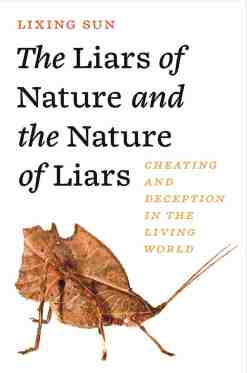
Whether to ward off predators or to exploit their victims, creatures can gain advantage by posing as different creatures. Illustration by Lou Benesch

When Elizabeth Kolbert reviews a book we know that at least the review is a must-read:

Why the Animal Kingdom Is Full of Con Artists

Some crows “cry wolf” to snatch food from their neighbors; some caterpillars trick ants into treating them like queens. What can we learn from beasts that bluff?

On April 20, 1848, Alfred Russel Wallace and Henry Walter Bates set off for the Amazon on a boat named Mischief. The two young men—Bates was twenty-three, Wallace twenty-five—had met a few years earlier, probably at a library in Leicester, in England’s East Midlands. Both were passionate naturalists, and both were strapped for cash. (Neither had been able to afford university.) To finance their adventures, they planned to ship specimens back to London, where they could be sold to wealthy collectors.

For reasons that no one has ever been able to explain—but that many have speculated about—Wallace and Bates separated soon after they reached Brazil. In the decade that followed, Wallace amassed an immense trove of new species; lost most of them in a ship fire; set off again, for Southeast Asia; and, with Charles Darwin, discovered natural selection.

Bates, meanwhile, remained in Brazil. He sailed up the Tapajós, an Amazon tributary, and then up the Cupari, a tributary of the Tapajós. Travel in the region was often agonizingly slow; to get from the town of Óbidos to Manaus, a journey of less than four hundred miles, took him nine weeks. (At some point during the trip, he was robbed of most of the money he was carrying.) Bates would find a congenial town and spend months, even years, there, making daily forays into the surrounding rain forest. He tromped around in a checked shirt and denim pants, an outfit considered outré by the British merchants he encountered in Brazil, who wore their top hats rain or shine. Continue reading

Audubon, The Name

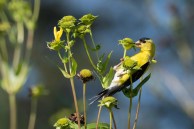
American Goldfinch on cup plant. Photo: Catherine Mullhaupt/Audubon Photography Awards

Elizabeth Gray, Chief Executive Officer and Ex Officio Board Director of Audubon offers this:

Open Letter from the CEO on Audubon’s Name

Hear directly from Dr. Elizabeth Gray on why Audubon is keeping its name.

Dear Flock,

This past year, the National Audubon Society embarked on a process to reexamine the name of our organization, in light of the personal history of the organization’s namesake, John James Audubon.  Continue reading

Who Is Protesting Banks That Fund Oil Companies?

When he points us to people like this, we can only celebrate it and pass it on:

Rock On

So many thanks to all who work for change

BILL MCKIBBEN
MAR 25

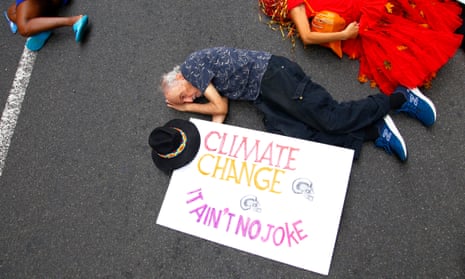
The white-haired woman in the picture above is one of my great heroes in the world. Her name is Heather Booth, she’s 77, and a board member at Third Act, which helped organize last Tuesday’s massive day of protest against the fossil-fueled banks, coordinating 102 demonstrations in 30 states and (see above) the District of Columbia, where the Rocking Chair Rebellion shut down four banks for the day. Continue reading

Small But Meaningful Legal Support Of Protest

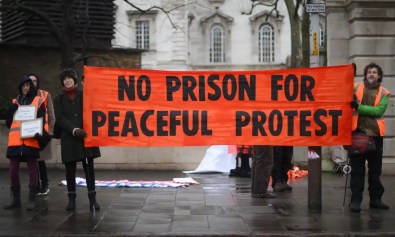
Insulate Britain supporters protesting in London this month. Photograph: Daniel Leal/AFP/Getty Images

Strange that this requires a protest, but that’s how it is. Our thanks to Damien Gayle of the Guardian for this coverage:

Top lawyers defy bar to declare they will not prosecute peaceful climate protesters

Six KCs among more than 120 mostly English lawyers to sign pledge not to act for fossil fuel interests

Leading barristers have defied bar rules by signing a declaration saying they will not prosecute peaceful climate protesters or act for companies pursuing fossil fuel projects. Continue reading

Sailing Cargo Ships, Again

An illustration shows a wind-powered car and truck carrier ship that a Swedish consortium is developing and aiming to launch late 2024. Photograph: Wallenius Marine/Reuters

Old school (sailing cargo ships) becoming the new trend is as good as news gets these days:

Cargo ships powered by wind could help tackle climate crisis

Shipping produces much of the world’s greenhouse gases but new technology offers solutions to cut fuel use

Cars, trucks and planes get plenty of blame for helping drive the climate crisis, but shipping produces a large portion of the world’s greenhouse gases, as well as nitrogen oxides and sulphur pollution because ships largely use cheap heavy fuel oil. Continue reading

Ever-Evolving Puppetry

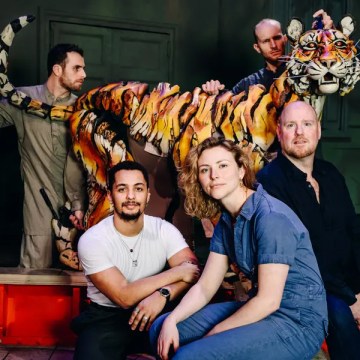
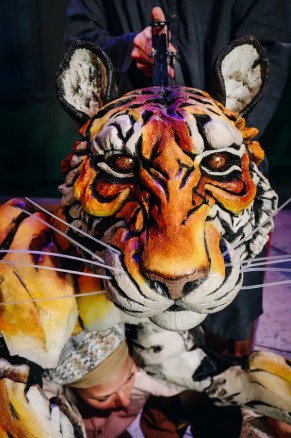
Foreground, from left: Fred Davis, Scarlet Wilderink and Finn Caldwell. Behind the tiger, from left: Andrew Wilson and Rowan Ian Seamus Magee. Nina Westervelt for The New York Times

Puppetry is a rare topic in these pages, but as cultural heritage goes, this ever-evolving form is worth at least a few minutes of reading time related to this new production:

Puppetry So Lifelike, Even Their Deaths Look Real

Members of the puppetry team for “Life of Pi” discuss making the show’s animals seem all-too-real on a very crowded lifeboat.

Richard Parker, the Royal Bengal tiger in “Life of Pi” takes three puppeteers (including Celia Mei Rubin, bottom left) to operate in the production opening at the Gerald Schoenfeld Theater on March 30. Nina Westervelt for The New York Times

Fair warning: This article is riddled with spoilers about puppet deaths in “Life of Pi,” the stage adaptation of Yann Martel’s best-selling novel about a shipwrecked teenager adrift on the Pacific Ocean. He shares his lifeboat first with a menagerie of animals from his family’s zoo in India — large-scale puppets all, requiring a gaggle of puppeteers — and eventually just with a magnificent, ravenous Royal Bengal tiger named Richard Parker that takes three puppeteers to operate.

Now in previews on Broadway, where it is slated to open on March 30 at the Gerald Schoenfeld Theater, the play picked up five Olivier Awards in London last year. Puppetry design by the longtime collaborators Nick Barnes and Finn Caldwell was included with Tim Hatley’s set in one award, and, unprecedentedly, a team of puppeteers won an acting Olivier for playing Richard Parker. Continue reading

The Birds Of Australia, Interactive Exhibition Of John & Elizabeth Gould’s Illustrations

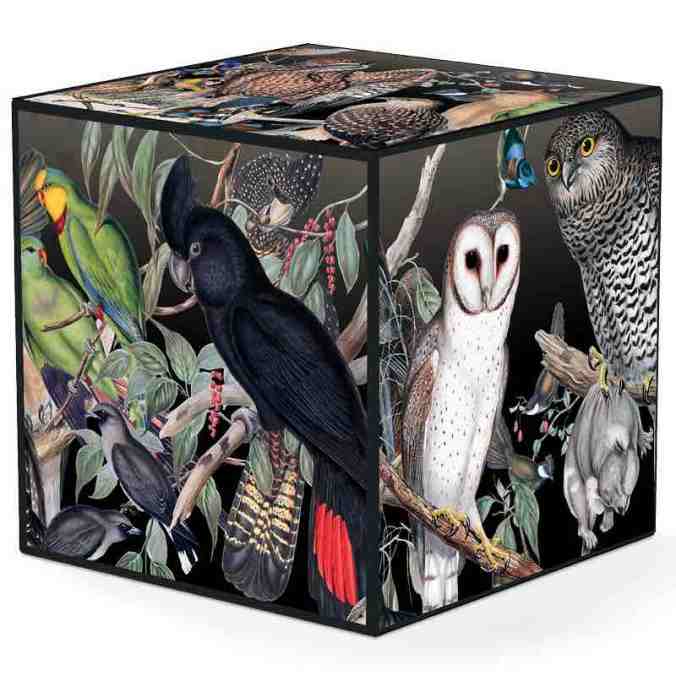
A new exhibition showcasing the incredible world of Australia’s birdlife will launch in Newcastle. Presented on STORYBOX, an interactive storytelling cube, The Birds of Australia, brings to life the iconic bird illustrations of John and Elizabeth Gould together with First Nations storytelling and knowledges.

We have linked to stories about both John Gould and his wife Elizabeth, and now there is a museum exhibition honoring both together, so if you happen to be in Australia:

Touring exhibition: The Birds of Australia

Trace the journey of English ornithologist John Gould and his wife Elizabeth, as they travelled across New South Wales in the 1800s on one of the most significant birding expeditions in history, helping inform contemporary knowledge and conservation of Australian birds. The Goulds described and illustrated over 300 birds that were completely new to science, including the Pied Butcherbird (Cracticus nigrogularis) and the now extinct Paradise Parrot (Psephotellus pulcherrimus). It was an astonishing record of observation and sustained hard work. Continue reading

Golden Oldies

People perform a die-in on Third Avenue in New York during a protest in 2021.

People perform a die-in on Third Avenue in New York during a protest in 2021. Photograph: Michael M Santiago/Getty Images

Thanks to Oliver Milman, as ever:

‘We have money and power’: older Americans to blockade banks in climate protest

Demonstrations at 90 sites are billed as first major action by older activists: ‘It’s not fair to ask 18-year-olds to solve this’

Climate activists across the US will on Tuesday blockade branches of banks that finance fossil fuels, cutting up their credit cards in protest and holding rallies featuring everything from flash mobs to papier-mache orca whales. Unusually for such a spectacle, the protests won’t be led by young activists but those of a grayer hue. Continue reading

Leveraging Guarani Knowhow For Reforestation

A Guarani man walks through a cleared patch of Brazil’s Atlantic Forest that the local Indigenous community is trying to reforest. DIEGO HERCULANO / NURPHOTO VIA GETTY IMAGES

Thanks to Jill Langlois and Yale e360:

How Indigenous People Are Restoring Brazil’s Atlantic Forest

The Guarani Mbya people are working to restore the once-vast Atlantic Forest, which has been largely lost to development. Gaining official tenure of their lands, they hope, will boost their efforts, which range from planting native trees to reintroducing pollinators.

It was 2016 when Jurandir Jekupe noticed the bees were gone.

Their nests were once common in Yvy Porã, the Guarani Mbya village where Jekupe grew up and still lives. Continue reading

The Nature Book, Reviewed

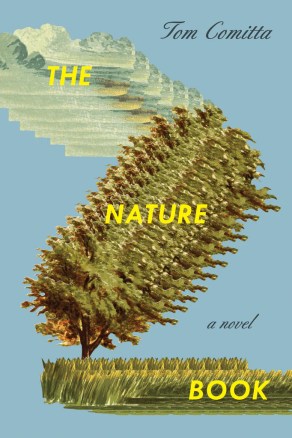
Neither the author of the book,  nor Cara Blue Adams who reviews it in the essay below, is familiar in our pages. But it is an essay that evokes familiar themes, so here goes:

Searching for Unfamiliar Terrain in “The Nature Book”

We go to the wilderness to test ourselves against an environment indifferent to our presence. Can this experience be re-created in fiction?

The Wilderness Act, passed in 1964, established the National Wilderness Preservation System to safeguard federally owned land, beginning with 9.1 million acres, called “wilderness areas,” to be “designated for preservation and protection in their natural condition.” Continue reading

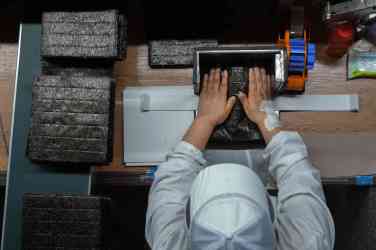
Seaweed, Seafood, Plastics & Fodder

Globally, seaweed production has grown by nearly 75 percent in the past decade.

After news of the blob coming our way, here is another useful seaweed story in excellent interactive format:

Seaweed Is Having Its Moment in the Sun

It’s being reimagined as a plastic substitute, even as cattle feed. But can seaweed thrive in a warming world?

For centuries, it’s been treasured in kitchens in Asia and neglected almost everywhere else: Those glistening ribbons of seaweed that bend and bloom in cold ocean waves. Continue reading

The Great Atlantic Sargassum Belt

A worker removing sargassum with machinery at a resort in Cancun, Mexico, last year. Alonso Cupul/EPA, via Shutterstock

We have seen its beauty and otherwise tended to feature its positive uses, but not all seaweed is created equal; so, our thanks to Livia Albeck-Ripka and Emily Schmall for this news and analysis:

A Giant Blob of Seaweed is Heading to Florida

The mass, known as the great Atlantic Sargassum belt, is drifting toward the Gulf of Mexico. Scientists say seaweed is likely to come ashore by summer to create a rotting, stinking, scourge.

For much of the year, an enormous brown blob floats, relatively harmlessly, across the Atlantic Ocean. Its tendrils provide shelter and breeding grounds for fish, crabs and sea turtles. Spanning thousands of miles, it is so large that it can be seen from outer space. Continue reading

Libraries Old & New

Adults and children in a room of a library with bookshelves, an orange light in the ceiling and an orange wall.

The Adams Street Library in Dumbo, Brooklyn, has a children’s space with hues reminiscent of a Creamsicle. Justin Kaneps for The New York Times

The name Michael Kimmelman is rare in these pages, but in covering one of our favorite topics he gets our full attention again today:

As New York Weighs Library Cuts, Three New Branches Show Their Value

Facing a giant budget deficit, Mayor Eric Adams proposed cuts to New York libraries. But they play an outsize role in the city, offering services and safety.

Adults and children gather in a well-lit children’s room in a library that is filled with bookshelves. One child sits on a color-blocked rug, drawing.

The children’s room at the Macomb’s Bridge branch in Upper Manhattan; below, the entrance and canopy outside refer to the original landmarked architecture. Justin Kaneps for The New York Times Image

A city is only as good as its public spaces. The Covid-19 pandemic was another reminder: For quarantined New Yorkers, parks, outdoor dining sheds and reopened libraries became lifelines.

But now Mayor Eric Adams wants to slash funds for parks ($46 million) and for libraries ($13 million this fiscal year, more than $20 million next), and the City Council is debating the dining sheds. The sheds need regulation and the city budget needs to be cut by perhaps $3 billion. That said, if you don’t find the current political conversation shortsighted, you might want to do what I recently did and check out some of the library branches that have opened since the start of 2020. I visited three of them — each one a boon for its neighborhood, and money well-spent. Continue reading

Realities Of Rewilding

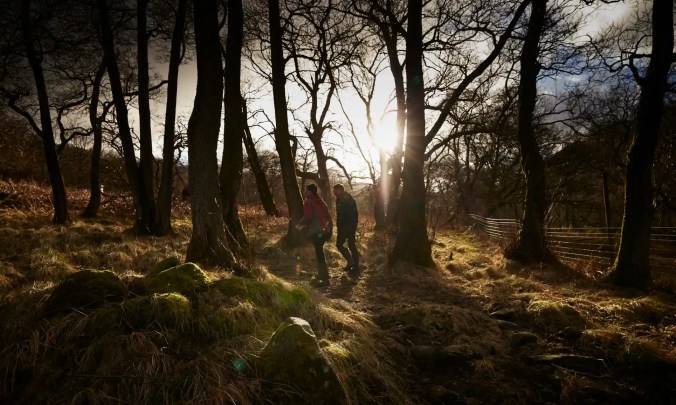
Haweswater in the Lake District where the RSPB is running rewilding projects based around Naddle farm and the surrounding farmland. Photograph: Christopher Thomond/The Guardian

Rewilding has been a favorite topic in our pages for most of the last decade. We appreciate the nuances, described by Ben Martynoga, in this particular community’s efforts and challenges related to rewilding:

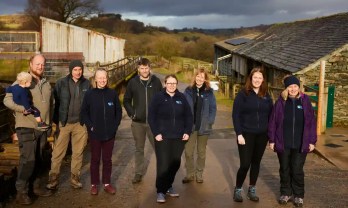
Staff and volunteers at Naddle farm, an ex-sheep barn which is now a tree nursery. Photograph: Christopher Thomond/The Guardian

‘The R-word can be alienating’: How Haweswater rewilding project aims to benefit all

On the Lake District’s north-eastern fringe, two farmsteads are restoring the landscape with a commitment to conservation and providing jobs

Until the last male golden eagle died in 2015, Haweswater, on the rugged north-eastern fringe of the Lake District, was England’s final refuge for the bird of prey. “Even now, whenever I go up Riggindale, it feels like something is missing,” says Spike Webb, a long-serving RSPB warden at its Haweswater site. Continue reading