Waste Is Merely Misplaced Stuff

Click the  banner above to go to the source.  Read it and smile:

August 2012 We have had an extremely busy month or so on the project. For example in addition to using high tech windows and solar panels we are now going to make THTKB out of locally sourced waste material from building sites, recycling centres, Freegle etc. Continue reading

Feathers, Evolution’s Pride And Joy

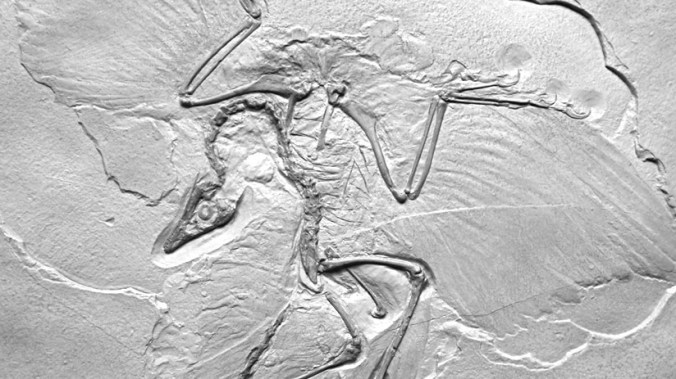
Thor Hanson/Basic Books. Thor Hanson’s own cast of Archaeopteryx lithographica presents what he calls the “ancient wing written in stone.”

Click the image above to go to a podcasted interview with Thor Hanson, author of Feathers:

“To this day, they are the most efficient insulation known. We haven’t been able to match them with synthetics, and I think it boils down to that growth process and the fact that you can make these fine, fine branching structures. The key to insulation is what they call loft — how much air can you hold in a small space? And because feathers are so beautifully and finely branched, they can hold a great deal of tiny, tiny air pockets in that branched structure. And that’s what people try to mimic with synthetics, but haven’t been able to match feathers for that yet, because it’s difficult to manufacture finely branched structures.” Continue reading

Batons Passing, Generation To Generation

Long before Carson and Attenborough, as noted in a post by Meg last year, there were Vedic, Buddhist and Hindu texts; Old Testament scribes, New Testament scribes, great Islamic scholars; but also there were Greek philosophers, Roman thoughts nearly lost; on and on, closer to the present with Thoreau; etc.

All providing us with a sense of reverence for, and a way to understand, the mysteries we will refer to here as Nature.  But what is next?  And who will be our interpreters and scribes?  Anyone following this site will know we are partial to Jad‘s sonically luscious and always surprising approach to making sure we understand and appreciate the world we live in; ditto for Krulwich (whom we have pointed to plenty of times but if you can only focus on one, make it this one).  Thanks to the the latter, we came upon the clip above, and with one viewing we see a possible answer.

Animals We Know, Way Back When

Click the banner for the podcast:
Mammoths and saber-toothed cats may be the most famous beasts of the Ice Age. But they shared the prairie with horses and camels, too—both of which evolved in North America and crossed the ice bridge into Eurasia, before disappearing here. Matthew Kohn (Distinguished Professor, Department of Geosciences Boise State University Boise, Idaho) and Christopher Hill (Associate Dean, Graduate College Associate Professor, Anthropology Boise State University Boise, Idaho) talk about the lesser-known fauna of the Ice Age.

Did Rachel And David Ever Meet?

This particular question clearly does not matter, but if we celebrate Rachel Carson’s contributions and their longevity (not to mention their impact on the next generation) and David Attenborough’s contributions over roughly the same period, it seems reasonable to wonder whether they ever met considering they shared common interest in the wonders of the earth and concern for the its health: Continue reading

If You Happen To Be In London

Much as we love birds, and Mr Audubon’s illustrations, little did we know their value in book form, or that we might have this opportunity to see them on display under one roof (click the museum’s banner to the left or any of the bird images to go to the source):

John James Audubon’s hand-engraved The Birds of America (1827-1838), is the world’s most valuable book. But which page illustration from the book should be shown first in our new Treasures gallery?

Vote for your favourite page from the 4 below and see it in the Treasures gallery when it opens on 30 November 2012.

Anti-gambling though we are, we encourage you to cast a vote on the Natural History Museum’s website for your favorite Audubon illustration, with the chance to win a complete edition of Audubon’s The Birds of America. Continue reading

Naturalist Inmates

Click the image above to go to the website for this unusual linking mechanism and here in particular for the history of the program:

We connect prisons with nature.

Our mission is to bring science and nature into prisons. We conduct ecological research and conserve biodiversity by forging collaborations with scientists, inmates, prison staff, students, and community partners. Equally important, we help reduce the environmental, economic, and human costs of prisons by inspiring and informing sustainable practices.

Silent Spring At 50, Rachel Carson At 105

U.S. Fish and Wildlife Service Photo

The book is as important as ever. Its author, whom we pantheistically canonized once already in advance of this anniversary for the book, is worthy of some background reading. Click the image to the left to go to a post by the New Yorker‘s Archive Editor, which will link you to other pieces in the New Yorker by and about Rachel Carson:

“Silent Spring” has proved to be so important that Carson herself has been a bit overshadowed by it. When she finished “Silent Spring,” Carson was fifty-five. She’d had a lengthy, but nowadays easily overlooked, career as an award-winning, best-selling writer of natural histories—the sorts of books that are written, nowadays, by Richard Dawkins or Bill Bryson.

Oliver Sacks, Come To India!

A letter that touches on a theme close to our hearts.  Any of us could have written a letter with this sentiment (click the banner above for the letter and the link below to Zadie Smith’s article that inspired it) but his way with words is simply more powerful:

IN RESPONSE TO:

North West London Blues from the July 12, 2012 issue

To the Editors:

Seeing the photograph of Willesden Library in Zadie Smith’s powerful article [“North West London Blues,” NYR, July 12] gave me a sudden start, and a rush of intense memories and emotions, for it was here that I spent many of the happiest hours of my growing-up years—our house was a five-minute walk from the library—and where I received my real education. Continue reading

Conservation Measures With Serious Teeth

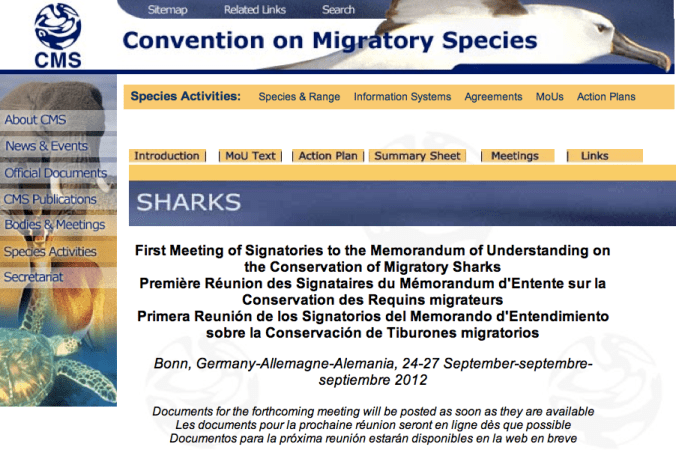
MEMORANDUM OF UNDERSTANDING ON THE CONSERVATION OF MIGRATORY SHARKS

After three meetings – the first in Mahé, Seychelles in December 2007, the second in Rome in 2008 and a third in Manila in February 2010 – the Memorandum of Understanding on the Conservation of Migratory Sharks was negotiated and signed. It commenced on 1 March 2010, the requisite number of signatures (ten) having been achieved in Manila at the end of the negotiations. Continue reading

Trout Threads

Hanging by a thread? A study offers new insights on the greenback cutthroat trout. Image: Fish and Wildlife Service

From the Green Blog in the New York Times, a story about this beautiful creature:

The rare greenback cutthroat trout, Colorado’s state fish, is even more imperiled than scientists thought, a new study suggests. Continue reading

Cats Guarding Treasure

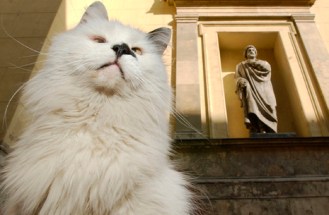
Vaska the cat, one of the Hermitage Museum mice hunters, seen in the museums yard, with an antic statue on the background, in St. Petersburg, in this April 25, 2004 photo. Cats have been part of the Hermitage’s security system since its founding days. (AP Photo/Dmitry Lovetsky)

Winding beneath the magnificent halls of St. Petersburg’s Hermitage Museum, with its Da Vincis, diamonds, Greek statuary, Egyptian parchments, enormous number of paintings, mechanical peacock clock, and other treasures, there is a catacomb of cellars. It was into this windowless nether region—far below the Winter Palace’s expansive view of the waters of the Neva—that Maria Haltunen and I had cautiously descended. As I followed her through a narrow, imperfectly-lit corridor, full of large pipes and jutting wires, Haltunen gasped. “Look!” she said.

In the semi-darkness, a little being had appeared. He perched, a foot-tall shadow, on a water pipe.

“Oh, you are a fat one!” said Haltunen, jangling the chain of her I.D. pass like a talisman as she approached the pointy-eared creature. “How nice you are!”

The cat sat, perfectly still. Then he vanished.

Continue reading

Writers Should Write

Thanks to one of Atlantic Monthly’s most talented writers, who mostly writes on topics unrelated to our site, we came across the above.  For many of us it is the first time hearing Hemingway’s spoken voice–we know only his written voice(s).  The last line says it all.

Rachel’s Place In The Eco-Pantheon

Illustration by Valero Doval

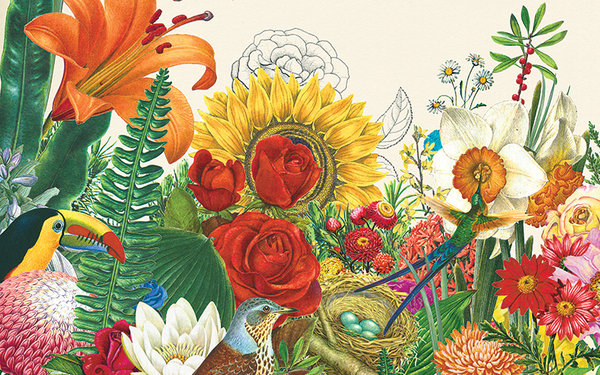
Click the illustration above to go to a great article in this past Sunday’s New York Times Magazine by Eliza Griswold about the historic significance of Rachel Carson’s book:

“Silent Spring” was published 50 years ago this month. Though she did not set out to do so, Carson influenced the environmental movement as no one had since the 19th century’s most celebrated hermit, Henry David Thoreau, wrote about Walden Pond.

Pre-Space Spelunking

Caves.  What have they done for us lately?  According to an article in Phys.Org, for astronauts they do amazingly important things, like providing:

…a taste of working as a safe and effective team during long spaceflights. In particular, they can hone their leadership and group skills while working in a typical multicultural team found on the International Space Station. Course designer Loredana Bessone explains the similarities of caving and working in space: “The ‘cavenauts’ have to adapt to a completely new environment. Working and living underground is both physically and mentally demanding.”

Community. Collaboration. We get it. This team spelunked for six days together and the video of their experience (after the jump) is worth six minutes, especially for any adrenaline junky. Continue reading

Thermal Imaging, Elephant Listening

©Elephant Listening Project. A thermal image of a juvenile forest elephant drinking minerals dissolved in water at the Dzanga Bai, Central African Republic. Different color palettes can be selected for the images (this one used “rainbow”) while the videos and the image at right were captured using the “iron” color palette.

We first saw the photos in a magazine, and then realized two of our own contributors work under the same roof as the Elephant Listening Project.

Click the image to the left to go to their website for photos and videos of the amazing new approach to listening.  We just returned there to see the new photo to the left and listen to some new recordings they have provided.

And then it dawned on us that we are currently identifying the theme of Summer 2013 internships and our related contribution to conservation at the Periyar Tiger Reserve, which has a healthy population of Asian elephants who may benefit from some listening.

Maybe one of our Lab-based contributors will help us with an introduction to their office mates in the Elephant Listening Project?

2012 Ig Nobel Prizes

Ig Nobel Prize Winner Dr. Elena Bodnar demonstrates her invention (a brassiere that can quickly convert into a pair of protective face masks) assisted by Nobel laureates Wolfgang Ketterle (left), Orhan Pamuk, and Paul Krugman (right). Photo credit: Alexey Eliseev, 2009 Ig Nobel Ceremony

Further to the theme started with reference to the book, now: Continue reading

Things You Do Not Need To Know, But What The Heck

If you are a fan of these fun prizes, click the image of the book to go to the publisher’s site:

Marc Abrahams, the founder of the famous Ig Nobel Prize, offers an addictive, wryly funny exposé of the oddest, most imaginative, and just plain improbable research from around the world. He looks into why books on ethics are more likely to get stolen and how promoting people randomly improves their work, to what time of month generates higher tips for Vegas lap dancers and how mice were outfitted with parachutes to find a better way to murder tree snakes in Guam.

Abrahams’ tour through these unlikeliest investigations of animals, plants, and minerals (including humans) will first make you laugh, then make you think about the globe in a new way. Continue reading