Understanding Atlantic Bluefin Declines

An excellent book review in this week’s New Yorker, about a topic we write on and link to from time to time:

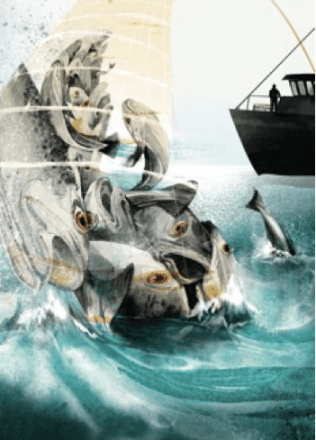
Last year, in an effort to save the Atlantic bluefin from annihilation, Monaco proposed that the fish join animals like the giant panda and the Asian elephant on a list of creatures that cannot be traded—either alive or cut up for parts—across international borders. When the proposal came up for a vote at a U.N. meeting in Doha this past March, the U.S. voted in favor of it. “The science is compelling,” Tom Strickland, the Assistant Secretary of the Interior for Fish, Wildlife, and Parks, told the Times. “That species is in spectacular decline.” Nevertheless, the measure was defeated.
Favored Food Journalism

One of our favorite annual food-related publishing traditions has come to pass, again.
Mark Bittman (“California’s Central Valley is our greatest food resource. So why are we treating it so badly?”) has an excellent contribution.

And Michael Pollan (“Is this the year that the food movement finally enters politics?”) covers a topic that, four years ago, got us thinking he might be tapped for a [Hope + Change] Cabinet position.

Both of these are worth the click (among your 20 free clicks per month if you are not a subscriber) and the read time:

1.  Vote for the Dinner Party

2.  Everyone Eats There

Mysterious Bird, Carefully Studied

This slideshow requires JavaScript.

From Smithsonian‘s website a story about the most mysterious bird in North America:

Black swifts, Cypseloides niger, are among the most enigmatic birds in North America. Continue reading

Carbon Mapping

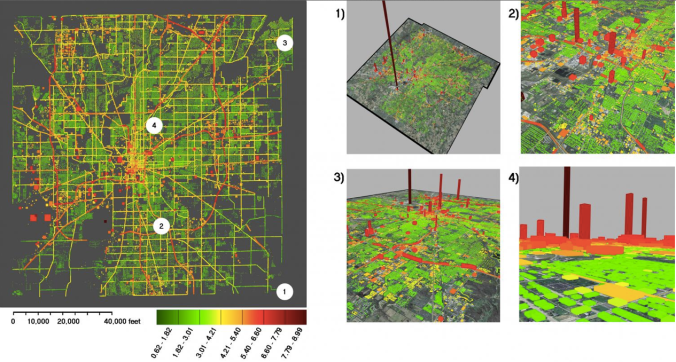
With Hestia, researchers from Arizona State University have a detailed understanding of where CO2 is being emitted from the urban landscape. This map shows where CO2 is emitted across the city of Indianapolis, Indiana, and combines data from sources including factories, automobiles on roadways, homes, and power plants. Credit: Bedrich Benes and Michel Abdul-Massih

Click the image above to read more about this at Phys.org:

Dubbed “Hestia” after the Greek goddess of the hearth and home, researchers presented the new system in an article published October 9 in Environmental Science and Technology. Hestia combines extensive public database “data-mining” with traffic simulation and building-by-building energy-consumption modeling. Its high-resolution maps clearly identify CO2 emission sources in a way that policy-makers can utilize and the public can understand. Continue reading

Cases Illustrating The Value Of Ecosystem Services

This website is on nominally and practically about bird life, but is also more broadly about the health of the planet where birds live.  This is a great resource on how to value the services that ecosystems provide.  Click the banner above to go to the source:

Ecosystem services are the benefits we receive from nature, such as provision of crops or medicinal plants, the control of pests (Birds control insect pests in farmlands and forests), the regulation of climate, the reduction of flood risk (BirdLife Partners are restoring forests that will help buffer communities against climate change), and opportunities for cultural, spiritual and recreational experiences. Continue reading

If You Are Not Sure About The Need For That Meeting In Hyderabad

You must be a subscriber to Science or have access through a library in order to read beyond the Abstract (or you can purchase it here) of what is clearly a good explanation and rationale for the meeting currently under way in Hyderabad:

World governments have committed to halting human-induced extinctions and safeguarding important sites for biodiversity by 2020, but the financial costs of meeting these targets are largely unknown. Continue reading

Really, Cyprus?

100726_r19825_p646.jpgA couple of years ago a powerful essay by Jonathan Franzen in the New Yorker made us aware of and horrified about this practice.

It is so full of disgusting detail related to this practice that, should you survive the nausea you will want to click the banner below and sign the petition.

Better late than never. Exactly six weeks after this petition was started, we have stumbled onto it.  Now, nothing to do but act:

If You Happen To Be In Hyderabad

Inviting film to the table seems like a powerful, creative idea:

The Ministry of Environment and Forests, Government of India, and the National Biodiversity Authority are hosting an International Biodiversity Film Festival and Forum in Hyderabad as part of COP-11 in association with CMS Environment. Continue reading

If You Happen to Be At Cornell: The Colors of Collaboration

This slideshow requires JavaScript.

Eight years of collaboration between Cornell Lab of Ornithology scientist Edwin Scholes and National Geographic photographer Tim Laman have lead them on 18 expeditions to document and photograph all 39 species of the birds-of-paradise for the first time ever. Their work gives people a glimpse into the behavior and habitat of the world’s most “extravagant, beautiful, and bizarre species of birds”.

Continue reading

Nature, Balance & Harmony

Standing for millenia: Reenadinna, an ancient yew woodland in Ireland’s Killarney National Park. Photo by Universal images/Getty

Click the image above to go to the story in Aeon (read the second half for perspective on nature in the Western Ghats):

It is Reenadinna, one of the planet’s few remaining yew woods, a virtual monoculture of coniferous yew trees (Taxus baccata). They grow here on thin mossy soil, though in some places they drape directly over bare limestone bedrock. The light is green-soaked and dim beneath the crowded canopy: it looked no different this summer than it did 30 years before. Of course, three decades is a short time in the life of a yew wood, where an individual tree can live thousands of years. But it looked no different this summer than it would have done in September 1776, when Arthur Young, the great English writer on rural affairs, visited the region and exuberated on the wooded Muckross peninsula. And by the calculation of Fraser Mitchell, a botanist in Dublin’s Trinity College, it has looked that way for millennia. Continue reading

Bioluminescence To Commemorate Columbus In The New World

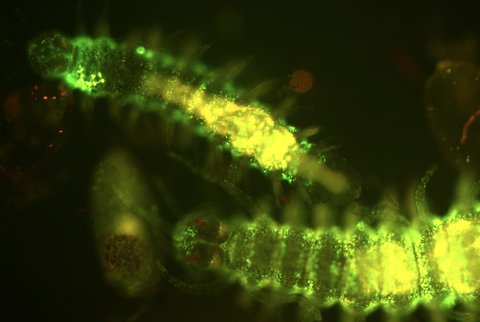
Dimitri Deheyn/Scripps Institution of Oceanography
Columbus may have seen fireworms like these glow green just before making landfall in the Americas.

From today’s Green Blog on the New York Times website a note in honor of Columbus Day (and doctoral student discoveries) click the image above to go to the story:

…At 10 p.m. on Oct. 11, 1492, Christopher Columbus saw a glimmer in the distance as he stood on the deck of the Santa María. The faraway flash was “so small a body that he could not affirm it to be land,” Columbus wrote, referring to himself in the third person. Continue reading

The Noun Project: A Community Of Say Somethings

Click the banner above to go to the source:

I am a design technologist living in San Francisco and I have an affinity for iconography. I strongly believe everyone benefits from free, open source creative output and have created a several free icon sets for that purpose.

Accidental Discovery Of A Great Photographer

This slideshow requires JavaScript.

For more on the book, click here.  To listen to a podcast of the interview with the author, click here:

Photographer Edward Curtis started off his career at the tail end of the 19th century, making portraits of Seattle’s wealthiest citizens. Continue reading

Coffee House-Hunting

This slideshow requires JavaScript.

From the Atlantic‘s blogs, an excellent tour around the world of cafes and coffee houses:

We’ve rounded up some of the most beautiful purveyors of coffee around the world in virtual guide form, meaning not only have we included the eye candy you know and love, but we’ve also added addresses and handy links to Google Maps. Continue reading

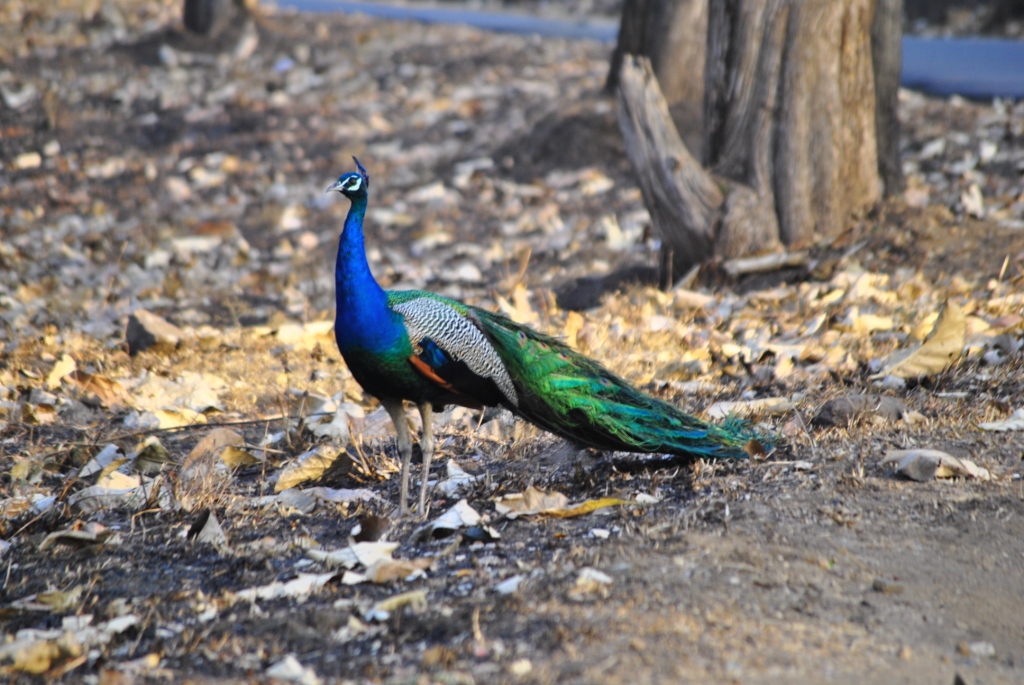
Peacock (Pavo cristatus)

Peacock at Chinnar wild life sanctuary, near Munnar

A symbol of beauty, grace and pride, the Peacock is the national bird of India. It is a large brightly colored bird native to South Asia, but widely found in India. They are mainly found in open forest and farm lands where they feed on berries, grains and also pray on snakes, lizards and small insects. Continue reading

If You Happen To Be In Hong Kong

And if you happen to be a textile-oriented sustainabilist, click the banner above to see more about this event:

This year, Textile Exchange is partnering with EcoTextile News, Messe Frankfurt, and Planet Textiles to bring you the premier 2012 Sustainable Textiles conference in Hong Kong, October 4 and 5. This event will be hosted at the Hong Kong Convention and Exhibition Centre, running in conjunction with Interstoff Asia Essential – Autum Fair.