Nature’s Gravitational Pull

What is it with publications in New York?  They catch our attention most weeks, if not most days, with something that helps us understand our natural and/or cultural world a bit more thoroughly.  Or interestingly.  Click the image above for an example from today’s New York Times.  If the wonders of southern India’s traditions were not enough to get your day going, then the plebeian wonders outside your own window might:

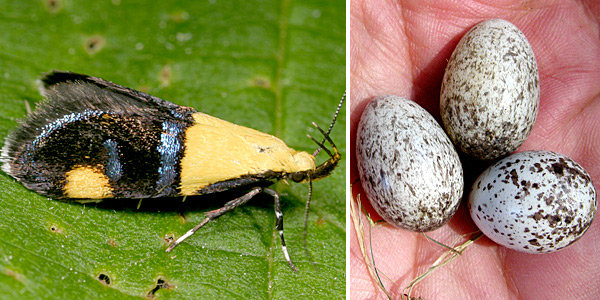
I’ve logged thousands of miles to catch a glimpse of one exotic creature or another, to Costa Rica to be dazzled by the bird known as the resplendent quetzal, to Hawaii to admire sea turtles, to Venezuela to spy man-eating anacondas. So it seemed more than a little odd that the one time I made a sighting worthy of a scientific publication, I was looking out of my living room window.

Continue reading

Khas Khas (Vetiveria zizanioides)

Khas Khas is an aromatic, perennial grass growing in wild planes and lower hills which grows to a height of 2 meter. It is native to the Western Ghats of India and is a common source of the well known oil of Vetiver which is used in medicine and perfumery.

Continue reading

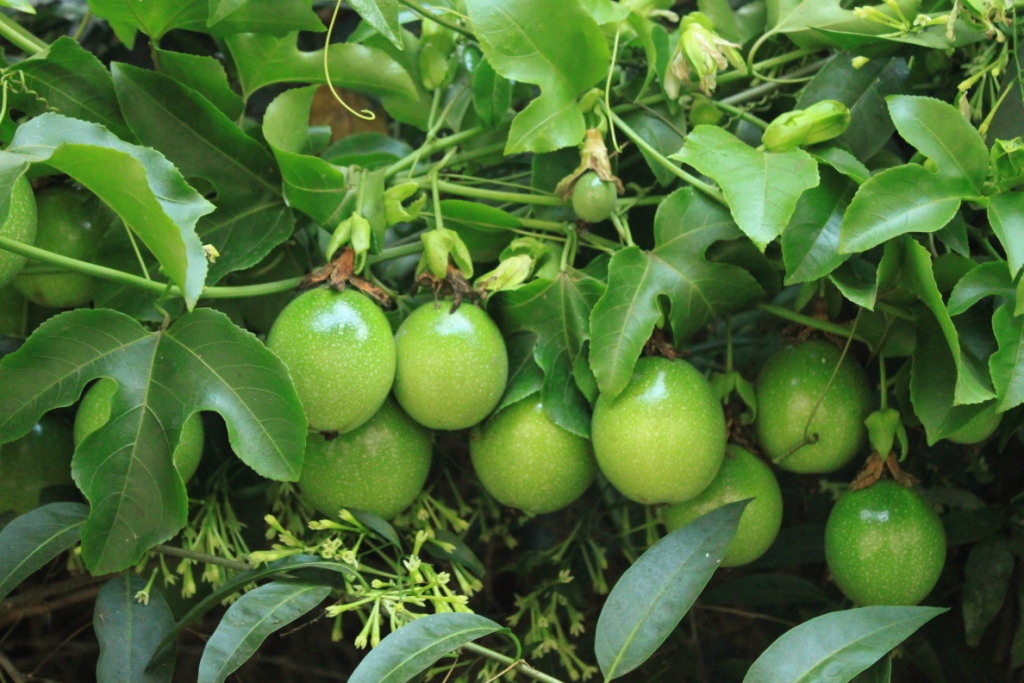
Passion Fruit (Passiflora edulis)

The Passion fruit is a sub-tropical, shallow rooted perennial climber that grows up to 15 to 20 ft tall. It flowers with a flamboyant fragrant blossom, 2 – 3 inches wide which is greenish white on the top and a rich purple color at the base.

Continue reading

Forests Need People

The premise underlying entrepreneurial conservation is that there are good economic reasons to preserve natural and cultural heritage.  And when such good reasons present themselves, opportunity dances with need. With natural heritage in particular, in the interest of introducing the dance partners with neither too much fanfare nor scowling, we have taken a light approach to the concept of biophilia, making reference from time to time.

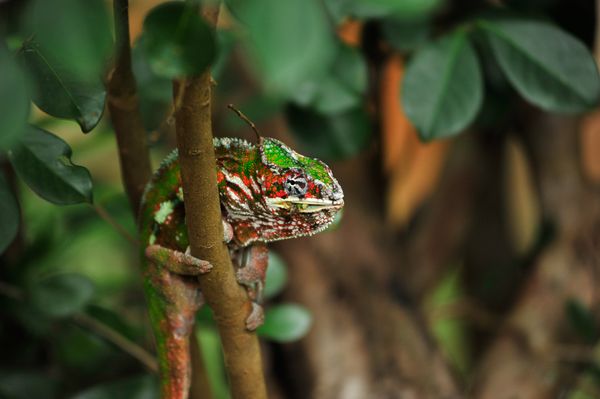
Click the photograph above, by Raul Touzon, to go to National Geographic‘s online coverage of forests under threat, which we link to with entrepreneurial intent.  A bit of fanfare (just look at that creature!) and a hint of scowl are inevitable when you read the sampling in this series: Continue reading

Museum of Innocence: Written, Published, Built, Open

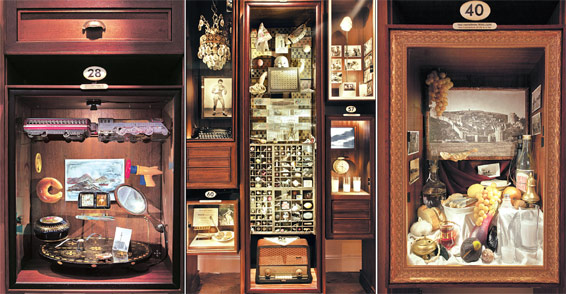
Click the image above to go to the article in Financial Times about a museum inspired by a book, and an author’s life experience:

In a dark-red Ottoman town house in Istanbul’s antiques district, a fast-gentrifying quarter where brassware spills on to steep, cobbled lanes, an idiosyncratic museum has been taking shape. Continue reading

Indian Borage (Plectranthus amboinicus)

Indian Borage (Plectranthus amboinicus) is a perennial herb which grows up to the height of 30 to 60 cm. It is in the coleus family in which the entire plant is succulent and does not become woody. The plant is also known as Mexican mint and Spanish thyme due to its strong flavor and aroma.

Continue reading

Less Light, Please

Click the image to the right to go to the Guardian’s article in today’s paper about a campaign to reduce light pollution.  We tend to like these stories, and that publication, and have been known to support pollution-reducing schemes in our own communities; but quoting our favorite cosmos guru ensures attention: Continue reading

Foodienomics

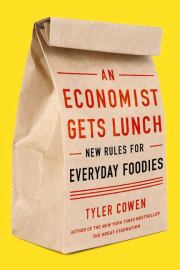
In a world that already has its fair share of freaky explanations for life’s quirks, and where celebrity is built in a day by some of the cleverer writers in that genre, do we really need this?  Hard to say with just a couple of reviews seen so far (click the image to the left to see the Kirkus review or click here to see the New York Times review of the book), but it sounds as though you are more likely to enjoy this if you are of the libertarian persuasion (as the author is touted to be) or a liberal (not the political variety but the curious, open-minded variety).

This snippet from the Kirkus review sums up why and for whom it may be worth the read:

Continue reading

Sweet Sounds

Click the image above for the fourth installment, and best yet, in a series of short posts on Smithsonian’s website, discussing the relationship between food and sound:

The sound of food matters. So does the sound of the packaging and the atmospheric sounds we hear when we’re eating. We’re all synesthesiates when we sit down to dinner.

Continue reading

It Happened In Africa

Click the photo above to go to the original article announcing the creation of the largest wildlife park in the world, which is now a reality:

Five nations that form the central heart of the continent, Namibia, Zambia, Zimbabwe, Angola and Botswana recently signed the final documents to create an enormous conservation zone that encompasses 170,000 sq. miles (44,000 sq. kilometers) or 109 million acres. Altogether, the Kavango Zambezi Transfrontier Conservation Area (KAZA) or KAZA Peace Park, will include 36 game reserves, numerous national parks, forest reserves, conservancies, game and wildlife management areas and communal lands. Continue reading

What Ice Reveals

Good news is meant to be shared., and we are excited to share the achievements of another branch of our company: La Paz Group, Heritage Conservation Project – Mammuthus. (Click on the photo to go to the BBC Nature News link.)

A year and half ago we began discussions with Discovery Channel and BBC, and the first step of our four-year media plan for Mammuthus was set in motion with the airing of “Woolly Mammoth: Secrets from the Ice” in the UK this week. Continue reading

Garlic Vine (Mansoa alliacea)

The Garlic Vine is an ornamental plant with a woody stem growing as either a shrub or vine to a height of 2-3 meters. It has bright green leaves, strong twining tendrils and trumpet shaped flowers. The flowers bloom purple and change to a lighter shade of lavender with age, eventually fading to almost white. This climber is native to the Amazon forest but is currently abundant in southern India.

Continue reading

Why Is Mimicry Funny?

In Latin it’s called Thaumoctopus mimicus, but I’d call it The Master. It’s Meryl Streep in octopus form. There are ocean animals that can change shape, imitate plants, rocks, flora, and I’ve blogged about some of them. But this octopus is special. It seems to study other creatures and then imitate them, copying their moves and their bodies. It can do sea snakes, lion fish, flatfish, giant crabs, seashells, stingrays, jellyfish and weird beings that have no name, and maybe no earthly existence. Is it imagining? I don’t know, but no scientist has ever seen a shaggy sprinting bipedal crab — until our octopus decided to be one.

Click the banner above to go to the remainder of Robert Krulwich’s blog post on this wonder.  A bit more on the same after the jump (click the image to go to the original)… Continue reading

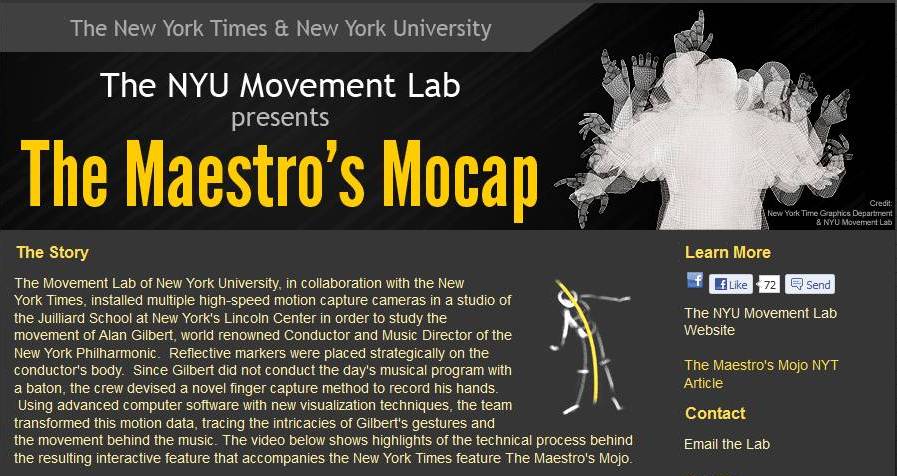
Conducting, Captured

Since we began here last year, we have had some interns, volunteers and employees who graduated from some great programs at some great universities.  But NYU’s Mocap program is unlike any of those programs at any of those universities.  And we do not have anyone on our team who can do this.

Continue reading

Dance Then

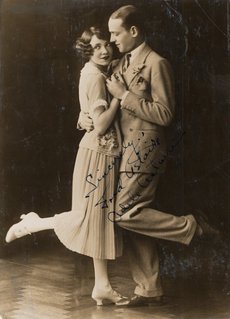
Click the image to the right for a wonderful reminder, in the form of book review, of what makes dance uniquely suited to certain important cultural tasks:

Now that The Artist has whetted our interest in the silent film and the revolutionary impact of sound, it may be time to reconsider the career of the man who made the conversion to sound the basis of a whole new kind of movie, Fred Astaire. The Artist suggests quite accurately that the definitive event of the new sound era was the arrival of the film musical. Sound meant music; music meant jazz. But the technological transition was slow. After the first feature-length sound movie, The Jazz Singer (1927), which starred Al Jolson, it was six years before the advent of the Jazz Dancer proved that talking and even singing mouths were not nearly as expressive in the new medium as dancing feet, especially and almost exclusively the feet of Fred Astaire. Astaire and the difference he made to the film musical add up to more than the story of one career. No other film genre provided as perfect a synchronization of sight and sound or an experience as exhilarating, and that was very largely Astaire’s doing. Continue reading

If You Happen To Be In New York April 10

Seth’s third installment is well timed to coincide with an upcoming event covering similar issues (albeit one is an undergraduate’s ornithology student perspective and the other a Harvard superstar entomology professor’s perspective).  Click the image to the left to go to the New York Public Library’s invitation to visit with one of our favorite scientists.  Click here to read more about his upcoming book (and view the three short videos at the bottom of the front page when you click through).  The promo for the event at NYPL says: Continue reading