New Landscape Vision For Dia Beacon

Rendered view looking north toward the new wet meadow after a big storm. “This will actually be something that you could come to experience in and of itself,” Dia’s director, Jessica Morgan, says of the landscape. Studio Zewde

We are impressed with the new direction that this institution is taking with one of the profession’s rising stars:

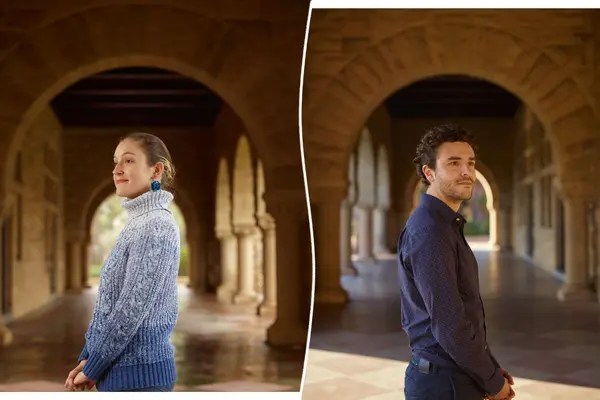
In a high-profile commission, Sara Zewde, a landscape architect, is designing eight acres of varied terrain at Dia Beacon that includes meadowlands, wetlands, rolling topography and pathways for visitors. Rafael Rios for The New York Times

Sara Zewde Sows, and Dia Beacon Reaps

On eight acres, a landscape architect challenges ideas about the legacy of the land, the museum’s history and climate change.

When it is introduced this year, the new and varied terrain of Dia Beacon, with its sculptural landforms, meadowlands and pathways, may surprise and delight.

Sara Zewde, the landscape architect who received the high-profile commission in 2021 to reimagine the museum’s eight back acres, says the goal wasn’t just dressing up Dia’s buildings with attractive plants. She sees her profession as a field “that has the skill set to take ecology, to take culture, to take people and tap into something bigger.” Continue reading

Embodied Carbon

Photo of a polluting factory.

Reporting credit: Ethan Freedman/ChavoBart Digital Media

Thanks to Yale Climate Connections for expanding our vocabulary:

What is ‘embodied carbon’?

It’s a little-known but major factor in the carbon footprint of our buildings.

Buildings can create a lot of global warming carbon pollution, from the electricity for lights and appliances to the oil or gas used to power the furnace.

Holocene Age Prevails

Four people standing on the deck of a ship face a large, white mushroom cloud in the distance.

In weighing their decision, scientists considered the effect on the world of nuclear activity. A 1946 test blast over Bikini atoll. Jack Rice/Associated Press

Yesterday we learned that scientists declined the invitation to officially declare us in a new age:

A panel of experts voted down a proposal to officially declare the start of a new interval of geologic time, one defined by humanity’s changes to the planet.

The Triassic was the dawn of the dinosaurs. The Paleogene saw the rise of mammals. The Pleistocene included the last ice ages.

Is it time to mark humankind’s transformation of the planet with its own chapter in Earth history, the “Anthropocene,” or the human age?

Not yet, scientists have decided, after a debate that has spanned nearly 15 years. Or the blink of an eye, depending on how you look at it. Continue reading

McKibben Discusses The Future With John Kerry As He Moves On

“There’s a lack of knowledge, a lack of due diligence, a lack of basic education on the issue of climate,” John Kerry says.Photograph by Alain Jocard / AFP / Getty

With a transition this important, and especially when McKibben has a conversation like this one it is worth two posts in a row:

John Kerry Thinks We’re at a Critical Moment on Climate Change

As he steps down from office, the first Presidential envoy on the climate says that we have made progress, but we’re not moving fast enough.

He’s been perhaps most closely involved in negotiations with the Chinese government, in particular with his longtime interlocutor Xie Zhenhua, who retired in December at the age of seventy-four. One of Xie’s last encounters with Kerry came last December at the cop28 climate talks in Dubai, where Xie’s eight-year-old grandson presented Kerry with a card for his eightieth birthday. Continue reading

When Embarrassment Really Means Shame

Alex Wong / Getty

The sentiment is appreciated, but we should use the stronger word, shame, in describing the feeling many of us share:

Goodbye to America’s First Climate Envoy

John Kerry believes the world can still limit global warming, even if U.S. climate politics are “embarrassing.”

The smallest hint of frustration had crept into John Kerry’s voice. We were talking about international climate diplomacy, which for the past two years has been Kerry’s job as the U.S. special presidential envoy on climate, a role President Joe Biden created to signal his commitment to the issue. Continue reading

New Ways Of Thinking About Exxon

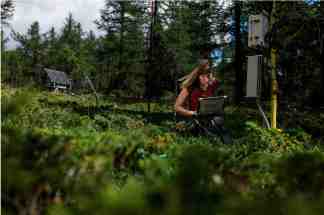
Her work is funded by Exxon, he’s skeptical of industry. Rebecca Grekin, left, and Yannai Kashtan at Stanford, where they study and teach.

We have made our views on Exxon clear, and also been open to new ways of thinking about them. In the spirit of being open to new ways of thinking, without being foolish, this story is worth a read:

He Wants Oil Money Off Campus. She’s Funded by Exxon. They’re Friends.

The two friends, both climate researchers, recently spent hours confronting the choices that will shape their careers, and the world. Their ideas are very different.

Two good friends, Rebecca Grekin and Yannai Kashtan, met up one crisp December morning at Stanford University, where they both study and teach. The campus was deserted for the holidays, an emptiness at odds with the school’s image as a place where giants roam, engaged in groundbreaking research on heart transplants, jet aerodynamics, high-performance computing. Work that has changed the world. Continue reading

Lithium From A Well

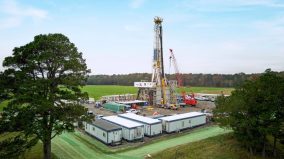
The drilling rig at ExxonMobil’s first lithium well, in southwest Arkansas. EXXONMOBIL

Thank you, Fred Pearce. It is not easy to trust ExxonMobil or any other petroleum company to do the right thing, but this sounds better than most of what we hear about their common practices:

In Rush for Lithium, Miners Turn to the Oil Fields of Arkansas

The Smackover Formation in southern Arkansas was once a major oil producer. Now, companies hope to extract lithium — a key metal for electric vehicle batteries — from its underground brines using technologies they say could reduce mining’s carbon emissions and water use.

The town of Smackover, Arkansas, was founded a hundred years ago when a sawmill operator got lucky: his wildcat oil well yielded a gusher. Continue reading

Climate Change Challenges In Italy’s Food Basket

The inside of a rice plant about to flower. With global heating, farmers fear extreme weather events such as drought will become more frequent

Thanks to Ottavia Spaggiari for this article, and to Marco Massa and Haakon Sand for the photos. We are closer to the challenges coffee faces in the context of climate change, but we know it is a global race to find solutions:

Risotto crisis: the fight to save Italy’s beloved dish from extinction

After drought devastated prized arborio and carnaroli harvests in the Po valley, new rice varieties offer a glimmer of hope. But none are yet suitable for use in the traditional recipe

Biometeorologist Marta Galvagno at work

For most of winter and spring in 2022, Luigi Ferraris, a 58-year-old rice farmer from Mortara, a town in the Po valley, remained hopeful. Rainfall had been down 40% in the first six months of the year, and snow had accumulated thinly in the Alps, prompting an 88% drop in the amount of water coming to the Po River from snow-melt; flow in the river and its connected canals was at a historic low. Continue reading

Arizona Youth Climate Coalition

(Photo credit: kevin dooley / CC BY 2.0)

Thanks to Yale Climate Connections for this:

High schoolers helped develop Tuscon’s climate action plan

They may not be able to vote yet, but they’re already having an influence.

In the past few years, young people have made headlines with their fight against climate change. Continue reading

Costa Rica’s West Valley Coffee Region

Historically the West Valley region of coffee farms were different from other coffee-growing regions of Costa Rica. One of the hallmarks of this country’s coffee farming culture has been the regional cooperative into which virtually all top quality beans get sold to. West Valley also had its own cooperative, but not the type of solidarity typical of Tarrazu.

That has changed recently, as a new generation of farmers have taken over the family enterprise, many educated now not only in agronomy but also entrepreneurship. They see that innovative practices–crop yield and quality improvements–can be advanced in conjunction with those who are otherwise competitors. West Valley farmers learned this and practice it, now making some of the best coffee on hand.

Whales, Big Brains & Codas

Shawn Heinrichs

Marine biologists are full of surprises, and those who study whales sometimes give the best surprises. Thanks to Ross Andersen and The Atlantic for this story:

HOW FIRST CONTACT WITH WHALE CIVILIZATION COULD UNFOLD

If we can learn to speak their language, what should we say?

One night last winter, over drinks in downtown Los Angeles, the biologist David Gruber told me that human beings might someday talk to sperm whales. In 2020, Gruber founded Project CETI with some of the world’s leading artificial-intelligence researchers, and they have so far raised $33 million for a high-tech effort to learn the whales’ language. Gruber said that they hope to record billions of the animals’ clicking sounds with floating hydrophones, and then to decipher the sounds’ meaning using neural networks. I was immediately intrigued. For years, I had been toiling away on a book about the search for cosmic civilizations with whom we might communicate. This one was right here on Earth. Continue reading

AI’s Energy Appetite

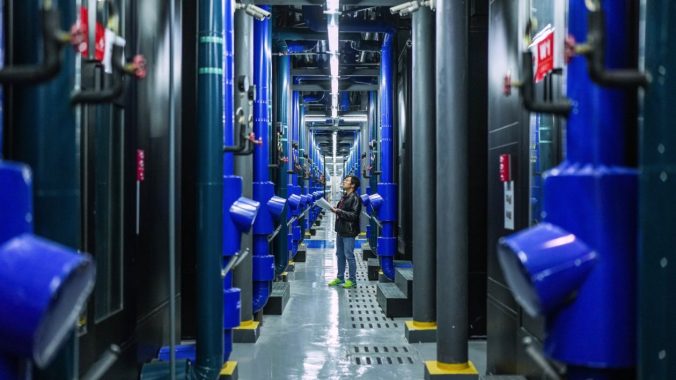
Inside the Guian Data Center of China Unicom, which uses artificial intelligence in its operations. TAO LIANG / XINHUA VIA GETTY IMAGES

For all of technology’s contributions to conservation, energy consumption is one of the downsides. Thanks to David Berreby and Yale e360 for this:

As Use of A.I. Soars, So Does the Energy and Water It Requires

Generative artificial intelligence uses massive amounts of energy for computation and data storage and billions of gallons of water to cool the equipment at data centers. Now, legislators and regulators — in the U.S. and the EU — are starting to demand accountability.

Two months after its release in November 2022, OpenAI’s ChatGPT had 100 million active users, and suddenly tech corporations were racing to offer the public more “generative A.I.” Pundits compared the new technology’s impact to the Internet, or electrification, or the Industrial Revolution — or the discovery of fire.

Time will sort hype from reality, but one consequence of the explosion of artificial intelligence is clear: this technology’s environmental footprint is large and growing. Continue reading

Villa Triunfo, Old Farm & New School

We have shared a few posts in these pages mentioning Villa Triunfo, but now we have designed a new label for it. So, time to celebrate that. What is most important to us about the farm is that it is one of the oldest continuously operating coffee farms in Costa Rica, since its first plantings in the late 1800s.

That, and the fact that today it is also one of the more innovative in terms of pioneering hybrids that help the coffee stay fit in the context of climate change and the various challenges (such as the uniquely problematic mold that is called rust). It is the end of harvest season, when coffees in the West Valley are being processed. The red honey process used for this coffee allows all the sugars from the juicy fruit to absorb into the beans. We look forward to cupping it soon.

Pythons & Captive Breeding Ethics

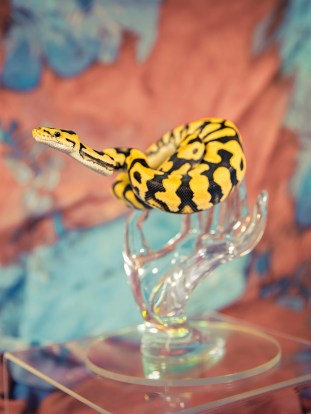
A “leopard blackhead Mojave hypo black axanthic” ball python: what sounds like an incantation is a catalogue of desirable mutations. Photograph by Delaney Allen for The New Yorker

Breeding animals in captivity is a topic we have pointed to in several posts. Sometimes the topic is ethics; other times it is about conservation of a species on the brink of extinction. Pythons somehow show up in our pages more frequently than captive breeding. Almost 15 years since Burkhard Bilger brought to our attention the topic of pythons and other animals invading new habitats that set off our python fascination, here is one at the intersection of captive breeding and ethics:

The Snake with the Emoji-Patterned Skin

In the wild, ball pythons are usually brown and tan. In America, breeding them to produce eye-catching offspring has become a lucrative, frenetic, and—for some—troubling enterprise.

“Sometimes your odds are one in two hundred and fifty-six, or one in five hundred and twelve, to make the snake you’re thinking about,” Justin Kobylka, a trendsetting breeder and the owner of Kinova Reptiles, said. Photograph by Delaney Allen for the New Yorker

On a fall day in Gainesville, Georgia, Justin Kobylka, the forty-two-year-old owner of Kinova Reptiles, was preparing to cut open two clutches of snake eggs. He was hoping to hit upon some valuable, beautiful reptiles. Kobylka is a breeder of designer ball pythons—one-of-a-kind, captive-bred snakes whose skin features colors and patterns not usually found in nature. “I think of myself as an explorer,” he told me. Nicking an egg with a pair of surgical scissors, he exposed a live hatchling in its goo. “Even when they haven’t yet touched air, you can sometimes see the tongue going,” he said, making a flicking gesture with his thumb and fingertip.

Kobylka had been trying to produce a “dreamsicle”—a white ball python with splotches of tangerine—but three of the circular markings on the snake looked like smiley faces. His video of the “emoji python” went viral. Photograph courtesy Kinova Reptiles

We were standing in a six-thousand-square-foot climate-controlled outbuilding that housed some two thousand pythons, which were kept in individual plastic trays slotted into tall metal racks. The space, which cost nearly a million dollars to build and outfit, was immaculate and well lit, with corner-mounted industrial fans and glossy floors. A vague odor of musk and Clorox was all that hinted at the daily chores of snake husbandry. Continue reading

Celebrating KithenAid’s Build To Last Determination

Illustration by The Atlantic. Source: Courtesy of KitchenAid.

Sharing this article is not with the intent to promote KitchenAid, per se. But okay if it does. More to appreciate The Atlantic for bringing your attention to a practice that is in short supply. Some companies do not build for obsolescence. Thanks to Anna Kramer for this:

Modern appliances are rarely built to last. They could learn something from the KitchenAid stand mixer.

My KitchenAid stand mixer is older than I am. My dad bought the white-enameled machine 35 years ago, during a brief first marriage. The bits of batter crusted into its cracks could be from the pasta I made yesterday or from the bread he made then. Continue reading

Capturing Carbon In Trillions Of Tons Of Soil

Thanks to Yale Climate Connections for sharing Max Graham’s article at Grist:

How much carbon can farmers store in their soil? Nobody’s sure.

Advocates say the long-awaited farm bill could help fix that.

Dirt, it turns out, isn’t just worm poop. It’s also a humongous receptacle of carbon, some 2.5 trillion tons of it — three times more than all the carbon in the atmosphere. Continue reading

Is That Safari In Tanzania A Good Use Of Your Money?

Brian Otieno

This guest opinion, written by Professor Robert Williams of the Indigenous Peoples Law and Policy Program at the University of Arizona, and published in the New York Times, should make you think twice about the safari that might be on your bucket list:

Over 600,000 tourists travel to Tanzania’s Ngorongoro Conservation Area each year, and many will catch a glimpse of the Great Migration: the famed trek of more than one million wildebeests and thousands of zebras, gazelles and other animals crossing over the Mara River into Kenya and back again. Continue reading

Mining Is Dirty

image: getty images

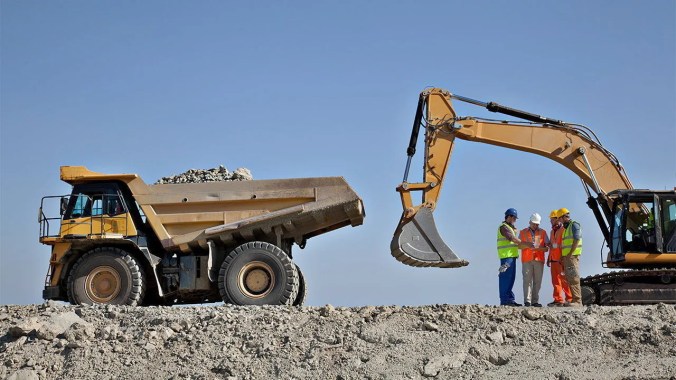
When mining has appeared in our pages it has only rarely been a positive story. Because mining is dirty, by definition. The Economist lays it bare:

Why the world’s mining companies are so stingy

The energy transition requires vast quantities of metals. But miners are reluctant to invest

Mining companies have spent much of the past decade in investors’ bad books. Throughout the 2000s and early 2010s the industry, betting that the surge in commodity prices brought on by China’s economic rise would persist, splurged on investments and racked up hefty debts in the process. Continue reading

Phototropism Better Understood

Illustration by Matteo Giuseppe Pani

Our thanks to Asher Elbein, writing in The Atlantic, for this:

Scientists have discovered that a mysterious behavior might come down to air.

On a shelf lined with terra-cotta pots, herbs bend their stems toward the nearest window. In a field of golden wildflowers, leaves rotate with the path of the sun. In a dappled forest, vines twine up trees, reaching ever upward and away from the dark. Continue reading

A Century’s Evidence On The Benefits Of Planting Trees

People work to reforest Allegheny National Forest in Pennsylvania circa 1934.
Photograph: Universal History Archive/Universal Images Group via Getty Images

Planting trees, we have noted, is smart policy.  Some campaigns may have stretched beyond scientific evidence, but science has given us plenty to go on:

Very cool: trees stalling effects of global heating in eastern US, study finds

Vast reforestation a major reason for ‘warming hole’ across parts of US where temperatures have flatlined or cooled

Civilian Conservation Corps workers plant 15,000,000 trees across the wastelands of southern Mississippi on 11 April 1940. They are part of the United Forest Service which will re-establish forests destroyed by logging and lumbering operations decades ago. Photograph: AP

Trees provide innumerable benefits to the world, from food to shelter to oxygen, but researchers have now found their dramatic rebound in the eastern US has delivered a further, stunning feat – the curtailing of the soaring temperatures caused by the climate crisis.

While the US, like the rest of the world, has heated up since industrial times due to the burning of fossil fuels, scientists have long been puzzled by a so-called “warming hole” over parts of the US south-east where temperatures have flatlined, or even cooled, despite the unmistakable broader warming trend. Continue reading