Big Butterfly Count Coming Up in UK

Photo from bigbutterflycount.org

Starting this Friday and continuing through the first week of August, the largest survey in the world for butterflies and day-flying moths will take place in the United Kingdom. We’ve featured lepidopterists and citizen scientists here before, including today and for last year’s event, which involved over fifty thousand people counting more than half a million lepidopterans.  It’s great to see such a simple yet complete chart/app to ID the more common butterflies that people may encounter –– I would have really appreciated something like that for Costa Rica! Read more about the project below:

Why count butterflies?

Butterflies react very quickly to change in their environment which makes them excellent biodiversity indicators. Butterfly declines are an early warning for other wildlife losses.

That’s why counting butterflies can be described as taking the pulse of nature.

Continue reading

Dawn Rays at Villa del Faro

Yesterday morning I got up early to see the sun rise from the balcony at the hotel, and was pleased to see the full golden orb rise from the watery horizon to the east. While facing the ocean, I heard some distant slaps, like someone smacking their palm against the surface of the water, and looked across the kilometer or so (less, most likely) between the balcony and the shore to see some rays––eagle rays, I think––leaping out of the water, but also just poking the tips of their “wings,” or side fins, into the air without leaving the waves themselves.

Continue reading

Villa del Faro’s Layout

The hotel entrance

There are just over a dozen buildings on property, and most of them are for rent by guests wanting to get away from bustling cities or hectic work environments and come down to Baja for some relaxation and the sound of wind and waves.

Villa del Faro’s website references the architecture and interior design as a blend of Mexican hacienda and Italianate villa, which I think perfectly reflects the feel of the structures and decorations experienced as one wanders through the gardens and arches.

Continue reading

An Introduction to Villa del Faro, via Birds

Screen Shot 2020-08-14 at 10.48.43 AM

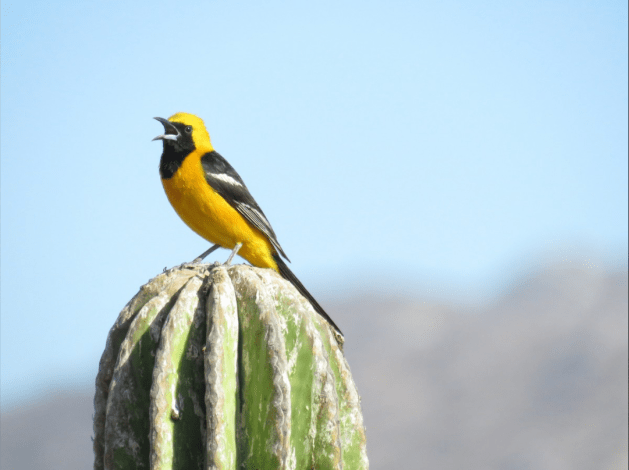
male Hooded Oriole at Villa del Faro

Jocelyn and I are visiting a property on the southern tip of the state Baja California Sur in Mexico, on the long peninsula running from the mainland into the Pacific Ocean, creating the Sea of Cortez. Grey and Humpback Whales use the sheltered and warm waters in the Bay of California to give birth and raise their calfs, but unfortunately for us, we aren’t here at a time during which these marine mammals can be seen from the many patios and balconies at Villa del Faro.

Continue reading

Murphey Candler Park

Not far from where my grandmother lives just outside of Atlanta, there’s a public park with a lake that I have recently visited several times to go birding. On eBird, the park’s hotspot boasts one hundred and fifty-four species of birds, so it was a natural place for me to check out, especially given that the park’s lake might attract some water birds I haven’t seen yet.

In addition to the thirty-eight species I saw myself during three morning walks around the lake–several of which will become Bird of the Day photos over the following months–I also enjoyed the forest scenery in this suburban oasis, and got to see Continue reading

Selling Invasive Species Online

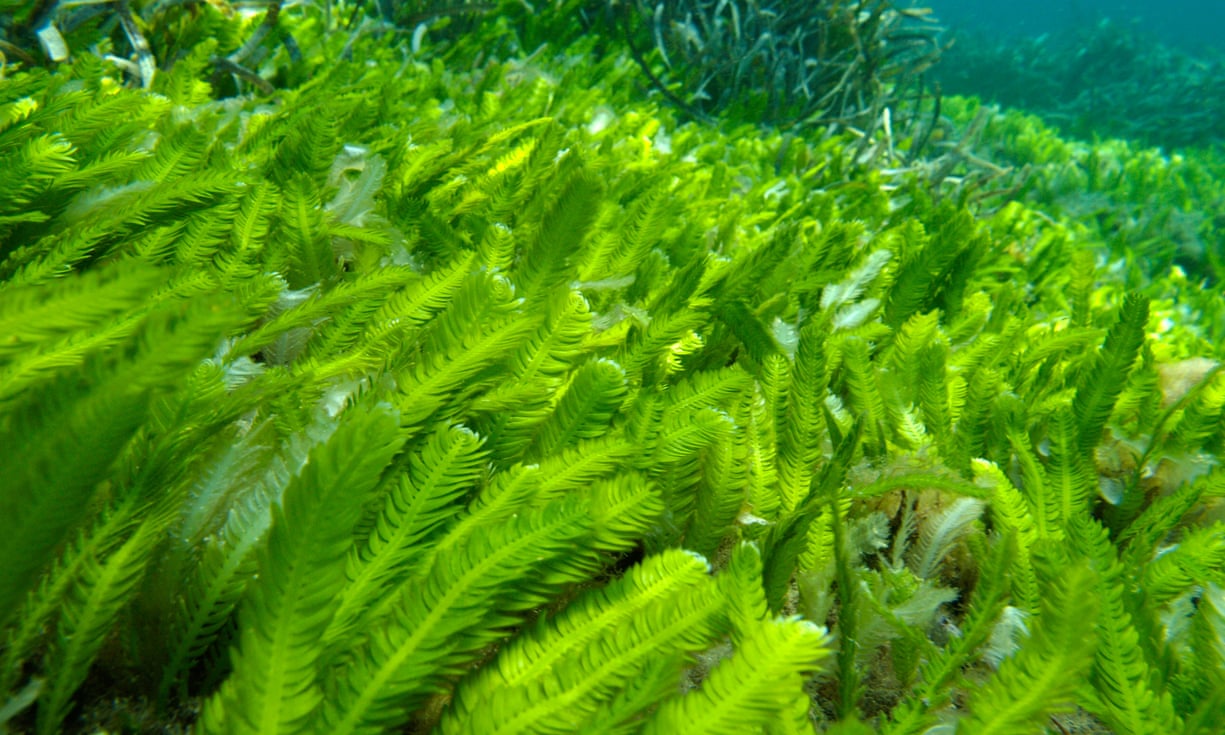
A seller, who was offering to export killer algae (Caulerpa taxifolia) from the UK said he thought it was unlikely that the plants would find their way into the environment if they were disposed of properly. Photograph: Alamy Stock Photo

We report on the problems of invasives pretty often on this blog, whether its herps, plants, fish, or even mammals. Today, I learned that many of the opportunistic organisms creating problems in the US and UK, as well as Australia, are sold online by merchants on eBay and Amazon, often with no legal repercussions despite trading in banned species. In an article written for The Guardian, Karl Mathiesen discusses the issue. After reading it, I thought of the opportunity for citizen scientists to “tip off” their governments after spending a couple minutes online, browsing for internet traders in invasive species. I’ll be looking into that in the weeks to come. For now, Mathiesen reports:

A killer algae, a monstrous pondweed, a tree that has infested the Everglades and a dozen more of the US’s most environmentally destructive plants have been discovered for sale on eBay. Online traders told the Guardian that ignorance of the law led them to create listings that had spread hundreds of illegal specimens across the country.

Continue reading

The King of Sting

I’ve heard about the Schmidt Pain Scale before, having lived and worked in the tropics for long enough to have seen first-hand, and countless times, two of the insects with the most painful stings on his index: the bullet ant and the tarantula hawk. Of course, I haven’t sought out their stings and will actively avoid the two hymenopterans as much as possible, but Justin Schmidt has been doing the opposite with insects around the world for years. From the TNC Cool Green Science blog:

A yellow jacket just stung you. You jump, scream and shout expletives.

Or, if you’re Justin Schmidt, you describe the sting as such: “Hot and smoky, almost irreverent. Imagine W.C. Fields extinguishing a cigar on your tongue.”

Schmidt might be called the King of Sting: He’s spent much of his career researching bees, wasps and ants, including the chemical make-up of their venom. He’s traveled to six continents to track down stinging insects.

Continue reading

Xandari’s 2016 Big Day

A male Red-legged Honeycreeper, the highlight of my 2016 big day

Last year, we shared some details about the Global Big Day, an event that I participated in very casually from Chicago back then, and contributed to more seriously this year, as did the rest of the global birding community, as the data from eBird published today shows. In 2015, 6,158 species were reported on 38,923 complete checklists from 14,787 participants across 140 countries. This year, 6,263 species were reported on 43,848 checklists from 15,953 participants across 145 countries. Every point of comparison displays an increase in participation and effort this time around!

Continue reading

Bad News for European Vultures

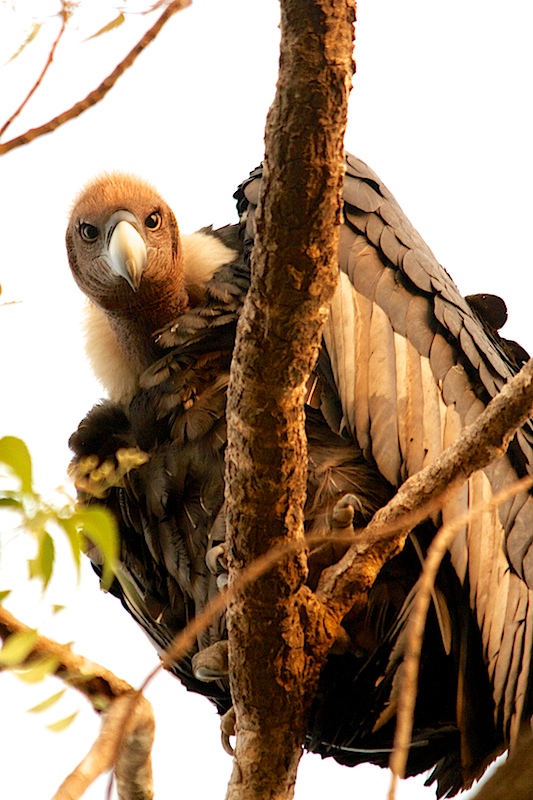
Bird of the Day August 13, 2013: White-rumped Vulture in Ahmedabad, India photographed by Srinivasa Addepalli

Vultures are very important members of many ecosystems in the world as members of a waste-management team, but their role as carrion-feeders is putting them at risk, and has been since the California Condor was endangered in the US (though it’s recovering now). We’ve featured these birds in our daily photo posts quite a bit, even just a week ago, and now there’s news from Scientific American, covering research published in the Journal of Applied Ecology, that European vultures are more threatened than ever, this time by a veterinary drug given to cattle:

A veterinary drug blamed for driving vultures to the brink of extinction on the Indian subcontinent could cause thousands of bird deaths now that it is being used in Spain.

Researchers have expressed concern over use of the anti-inflammatory drug diclofenac in cattle since it was approved for veterinary use in Spain in 2013, as the drug is toxic to vultures who may consume it via dead cows. Now, modelling by Rhys Green, a conservation scientist at the University of Cambridge, UK, and his colleagues suggests that the drug could cause populations of that country’s Eurasian griffon vultures (Gyps fulvus) to decline by between 1–8% each year.

Continue reading