Honeyguide Relationship can Include Talking

Greater Honeyguide specimen used in Cornell’s Ornithology course (photo and handling by a teaching assistant)

When I took Cornell’s course in ornithology, we learned about all the bird families in the world to varying extent, often based on the number of species within each family or how interesting they were to our professor. One family that we did not cover with great depth, but which was considered a “cool” example of evolution that could either make for a fascinating science experiment or just good cocktail-party chatting––we were gently reminded that the latter shouldn’t always revolve around weird bird things––was Indicatoridae, or the honeyguides.

While not all members of this family are literally guides to honey, one species in particular, the Greater Honeyguide, is well known for actually showing (or indicating) the way to beehives, where humans can harvest honey and the birds can eat larvae and wax. In this week’s edition of Science, researchers from Cambridge University and University of Cape Town published a paper revealing that the wild birds can actually be better guides when they receive a certain signal from the human honey-hunters. Nicola Davis reports:  Continue reading →
Boca del Tule, Kayak & Surf

img_9395_zpsmfqybqon

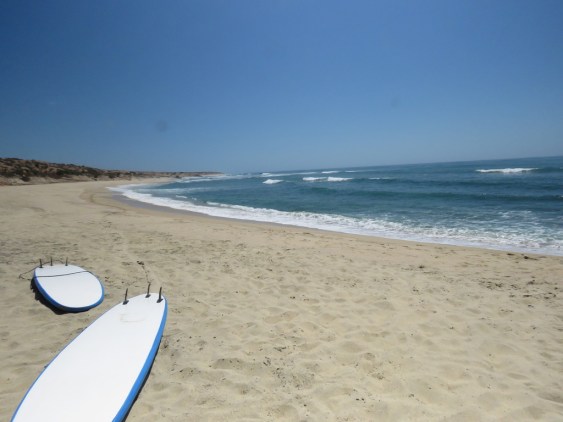
The shore down below Villa del Faro is known as Boca del Tule, since the Tule arroyo –– a seasonal river in the desert –– runs into the ocean at that point (boca means mouth in Spanish). The beach is public but very few people are ever on it, partly because we’re an hour away from the closest city, San José del Cabo, via dirt road. Now and then you’ll see a couple fishermen, or if the waves are good, some surfers. Last week, Jocelyn and I tried surfing both here at Boca del Tule and also at a better-known surfing beach just twenty minutes south called Nine Palms.

Both spots offered fair surfing for either experienced or newbie surfers, since Continue reading →

Video Tour of a Recycling Plant in Brooklyn

My junior year, I founded and sat as president of my high school’s recycling club, which was a fairly simple operation of setting up cardboard boxes in classrooms and asking people to put their plastic or glass bottles and aluminum cans inside – paper recycling was already managed by the school district, but the rest wasn’t. Every Monday I’d go around collecting all that material into the big blue plastic bags sold by the county for residential recycling, normally filling one to two of them a week, and then take them to some neighbor of the school’s gracious enough to loan us their curb space for recycling pickup the next morning. From those big trucks that would load up the blue bags for the county, all the glass, plastic, metal (and garbage people thought was recyclable or didn’t care enough to remove) probably went to a recycling plant a bit like the one in the video below:

Continue reading →

A Dawn Excursion Continued

The main building in dawn light

My last post on this topic involved the ocean, but the bulk of that morning earlier this week was actually spent out in the chaparral: scrubby, thorny, and sparse vegetation in the desert just outside of Villa del Faro. Right before I exited the property I spotted a black-tailed jackrabbit warily watching me as I descended the hill–these hares are a common sight on the side of the dirt coastal road out here.

Continue reading →

What Can Be Done with eBird Data?

Brighter colors indicate higher relative abundance. © Cornell University

The Western Tanager is a species I have yet to see, but which will be unmistakeable once I do, with the male’s red-and-orange head and bright yellow body contrasting with black wings striped with white bars. Based on the animated map above, I expect to spot some of them down in Baja California Sur by September or October, and I look forward to it. As I’ve written here before in the case of another moving map, citizen science makes this sort of illustrative prediction of a species’ moving presence possible, and it’s one of the reasons why I contribute to eBird as often as I can.

A paper titled “Using open access observational data for conservation action: A case study for birds” was published in the scientific journal Biological Conservation by a team of researchers at the Cornell Lab of Ornithology, several of whom I was just down the hallway from when I worked there. Although I haven’t gotten through their findings yet myself, Victoria Campbell chose nine interesting examples of how eBird data created tangible conservation in several countries.  Continue reading →

Big Butterfly Count Coming Up in UK

Photo from bigbutterflycount.org

Starting this Friday and continuing through the first week of August, the largest survey in the world for butterflies and day-flying moths will take place in the United Kingdom. We’ve featured lepidopterists and citizen scientists here before, including today and for last year’s event, which involved over fifty thousand people counting more than half a million lepidopterans.  It’s great to see such a simple yet complete chart/app to ID the more common butterflies that people may encounter –– I would have really appreciated something like that for Costa Rica! Read more about the project below:

Why count butterflies?

Butterflies react very quickly to change in their environment which makes them excellent biodiversity indicators. Butterfly declines are an early warning for other wildlife losses.

That’s why counting butterflies can be described as taking the pulse of nature.

Continue reading →

Dawn Rays at Villa del Faro

Yesterday morning I got up early to see the sun rise from the balcony at the hotel, and was pleased to see the full golden orb rise from the watery horizon to the east. While facing the ocean, I heard some distant slaps, like someone smacking their palm against the surface of the water, and looked across the kilometer or so (less, most likely) between the balcony and the shore to see some rays––eagle rays, I think––leaping out of the water, but also just poking the tips of their “wings,” or side fins, into the air without leaving the waves themselves.

Continue reading →

Villa del Faro’s Layout

The hotel entrance

There are just over a dozen buildings on property, and most of them are for rent by guests wanting to get away from bustling cities or hectic work environments and come down to Baja for some relaxation and the sound of wind and waves.

Villa del Faro’s website references the architecture and interior design as a blend of Mexican hacienda and Italianate villa, which I think perfectly reflects the feel of the structures and decorations experienced as one wanders through the gardens and arches.

Continue reading →

An Introduction to Villa del Faro, via Birds

Screen Shot 2020-08-14 at 10.48.43 AM

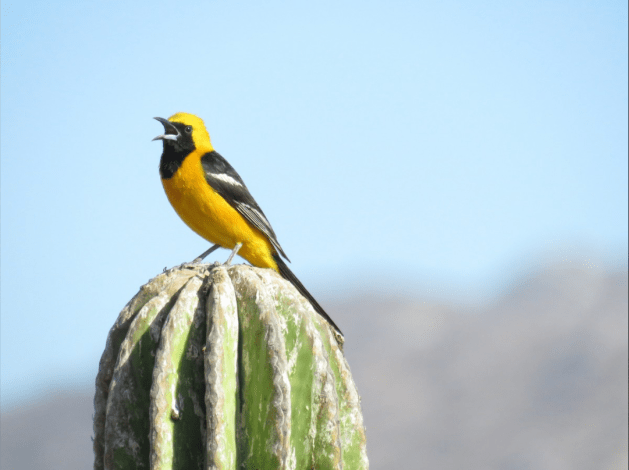
male Hooded Oriole at Villa del Faro

Jocelyn and I are visiting a property on the southern tip of the state Baja California Sur in Mexico, on the long peninsula running from the mainland into the Pacific Ocean, creating the Sea of Cortez. Grey and Humpback Whales use the sheltered and warm waters in the Bay of California to give birth and raise their calfs, but unfortunately for us, we aren’t here at a time during which these marine mammals can be seen from the many patios and balconies at Villa del Faro.

Continue reading →

Murphey Candler Park

Not far from where my grandmother lives just outside of Atlanta, there’s a public park with a lake that I have recently visited several times to go birding. On eBird, the park’s hotspot boasts one hundred and fifty-four species of birds, so it was a natural place for me to check out, especially given that the park’s lake might attract some water birds I haven’t seen yet.

In addition to the thirty-eight species I saw myself during three morning walks around the lake–several of which will become Bird of the Day photos over the following months–I also enjoyed the forest scenery in this suburban oasis, and got to see Continue reading →

Selling Invasive Species Online

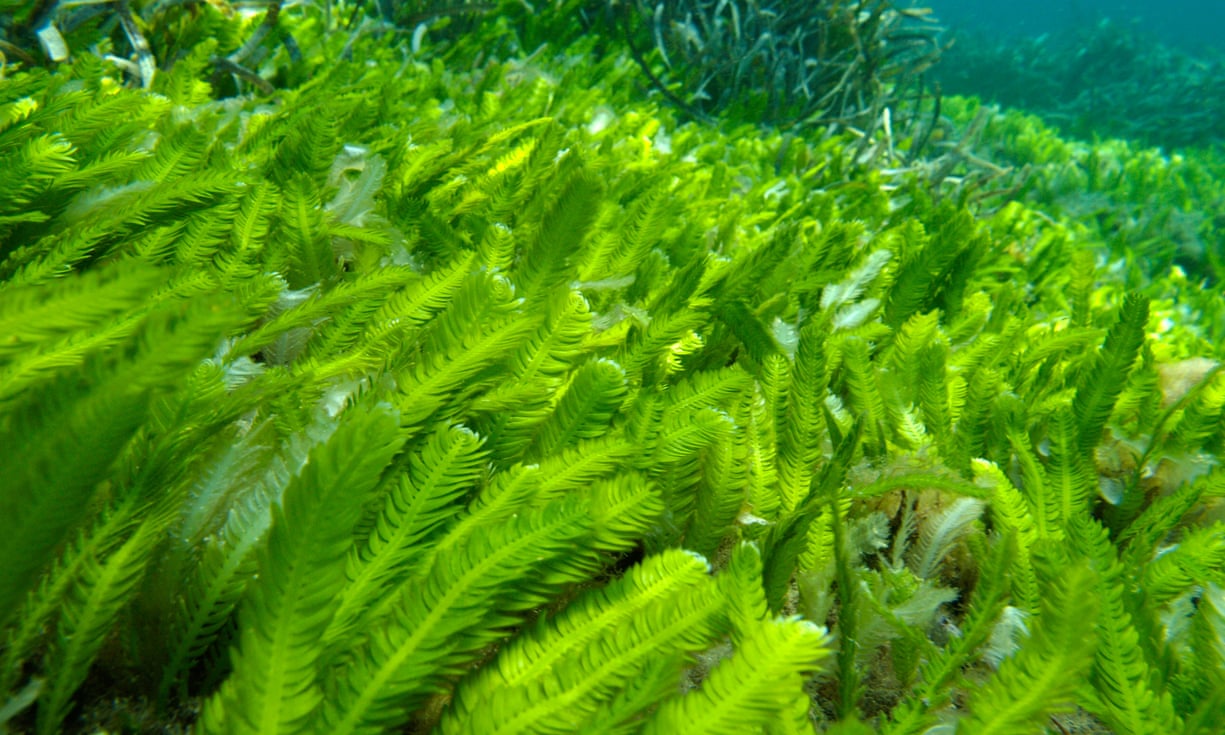
A seller, who was offering to export killer algae (Caulerpa taxifolia) from the UK said he thought it was unlikely that the plants would find their way into the environment if they were disposed of properly. Photograph: Alamy Stock Photo

We report on the problems of invasives pretty often on this blog, whether its herps, plants, fish, or even mammals. Today, I learned that many of the opportunistic organisms creating problems in the US and UK, as well as Australia, are sold online by merchants on eBay and Amazon, often with no legal repercussions despite trading in banned species. In an article written for The Guardian, Karl Mathiesen discusses the issue. After reading it, I thought of the opportunity for citizen scientists to “tip off” their governments after spending a couple minutes online, browsing for internet traders in invasive species. I’ll be looking into that in the weeks to come. For now, Mathiesen reports:

A killer algae, a monstrous pondweed, a tree that has infested the Everglades and a dozen more of the US’s most environmentally destructive plants have been discovered for sale on eBay. Online traders told the Guardian that ignorance of the law led them to create listings that had spread hundreds of illegal specimens across the country.

Continue reading →

The King of Sting

I’ve heard about the Schmidt Pain Scale before, having lived and worked in the tropics for long enough to have seen first-hand, and countless times, two of the insects with the most painful stings on his index: the bullet ant and the tarantula hawk. Of course, I haven’t sought out their stings and will actively avoid the two hymenopterans as much as possible, but Justin Schmidt has been doing the opposite with insects around the world for years. From the TNC Cool Green Science blog:

A yellow jacket just stung you. You jump, scream and shout expletives.

Or, if you’re Justin Schmidt, you describe the sting as such: “Hot and smoky, almost irreverent. Imagine W.C. Fields extinguishing a cigar on your tongue.”

Schmidt might be called the King of Sting: He’s spent much of his career researching bees, wasps and ants, including the chemical make-up of their venom. He’s traveled to six continents to track down stinging insects.

Continue reading →