Summing Up Summer

During the past two and a half months in Nicaragua I was mostly working at Morgan’s Rock Hacienda & Ecolodge, exploring the property through nature tours as well as hiking by myself. I accompanied the local guides on their excursions with guests, offering constructive criticism based on my previous ecotourism experience and feedback gleaned from the tourists I joined. I wrote over 27,500 words and compiled a couple hundred pictures to publish around 26 posts directly related to Morgan’s Rock, and 20 others from locations around Nicaragua. Combined with the ever-growing variety of fellow contributors to this blog, I hope my posts have educated or at least entertained readers interested in wildlife, sustainability, and conservation.

I arrived in the States about ten days ago, and starting this Wednesday I’ll be back studying at Cornell University’s College of Arts & Sciences. During the Fall semester I expect to continue sharing on Raxa Collective, since several of my courses cover relevant topics within environmentalism. Although I may not be able to include the exotic sort of posts that include photos of amazing animals or my translation of an ex-vice-president’s opinion on reading, Ithaca is well known for its sustainably-oriented citizens, so I’m sure I’ll have enough local material to include on the blog. Until then!

It Takes a Thief. And 50 Million Years of Practice

Roughly 50 million years before the first Neolithic human  grain in the ground on purpose, three insect groups—ants, beetles, and termites—evolved the ability to practice agriculture with fungi. When humans started planting nearly 12,000 years ago, it changed the trajectory of life on earth, and today our species dominates its environment with a visible sense of superiority. Insects have been at agriculture for tens of millions of years longer than we have, and we are just beginning to understand their tools and traditions. We don’t know have a sense of their own purpose or not, but we do know that their collective act has had consequences that are still playing out today. Humans may seem to rule the planet, but hidden from their eye most of the time there are insects that dominate the undergrowth.

Fungiculture originated in the beetle family tree at least seven independent times (by comparison, it only originated once each in ant and termite lineages), which Dr. Ulrich Mueller of the University of Texas at Austin says is “perhaps not surprising, given the sheer diversity of beetle species and given the importance of feeding specializations in beetle diversification.” [1]

About 40% of all insect species are in the family Coleoptera, more commonly known to us as beetles. Fungiculture is carried out by the 3,400 species of beetles known as ambrosia beetles, which line the wooden walls of their burrows, or galleries, with fungi that absorb nutrients from the wood. The various fungi strains have been called ambrosia since the late 19th Century.

The black stains that the fungal growths leave on wood are Continue reading →

Where the Sidewalk Ends

During my two final years of high school, I became involved with the Dunwoody Community Garden (previously mentioned here). We joined the group while the Garden was still in the process of being set up, and my family would help out on weekends, digging holes or laying out lines to create a grid for the 4×8 foot garden plots. At some point around this time, I became one of the officers for Dunwoody High School’s National Honor Society (NHS). Since the officers were always looking for community service projects to suggest to NHS members, I recommended sending Dunwoody NHS students to help build the Community Garden during a time when so much grunt-work was needed.

A handful of high school students was exactly what was needed to speedily complete the garden. A good adult leadership team was already in place, and energetic teenagers were eager to help, spreading newspaper and mulch to lay the foundation for fertile land. Once the plots were all set out, NHS purchased one so that students could raise flowers and vegetables to give away.

Since then, the Garden has only grown. Over 3,200 square feet have been added to the original land, creating more than 25 new plots for Dunwoody community members. In addition to the privately owned plots, DCG maintains several plots for economically stressed families (10% of the cultivable garden), and gives away another 10% of produce to the Atlanta Community Food Bank. To learn more, I’d recommend visiting DCG’s blog or the DunwoodyPatch.

This slideshow requires JavaScript.

In the next few days I’ll try to learn more about what Dunwoody High School has done to stay involved with the Community Garden.

Volcano Sandboarding Update: Part 1

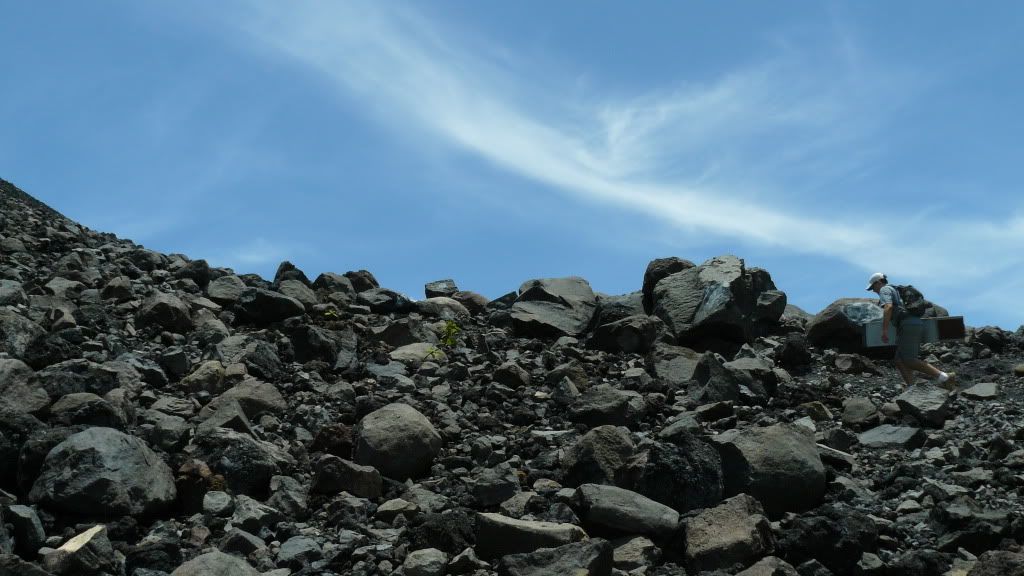
As promised, I have more photos of Volcán Cerro Negro (I’m still looking for some video). The photo below shows the variety of rock size on the hike up the volcano, as well as the underside of the sleds.

P1040541

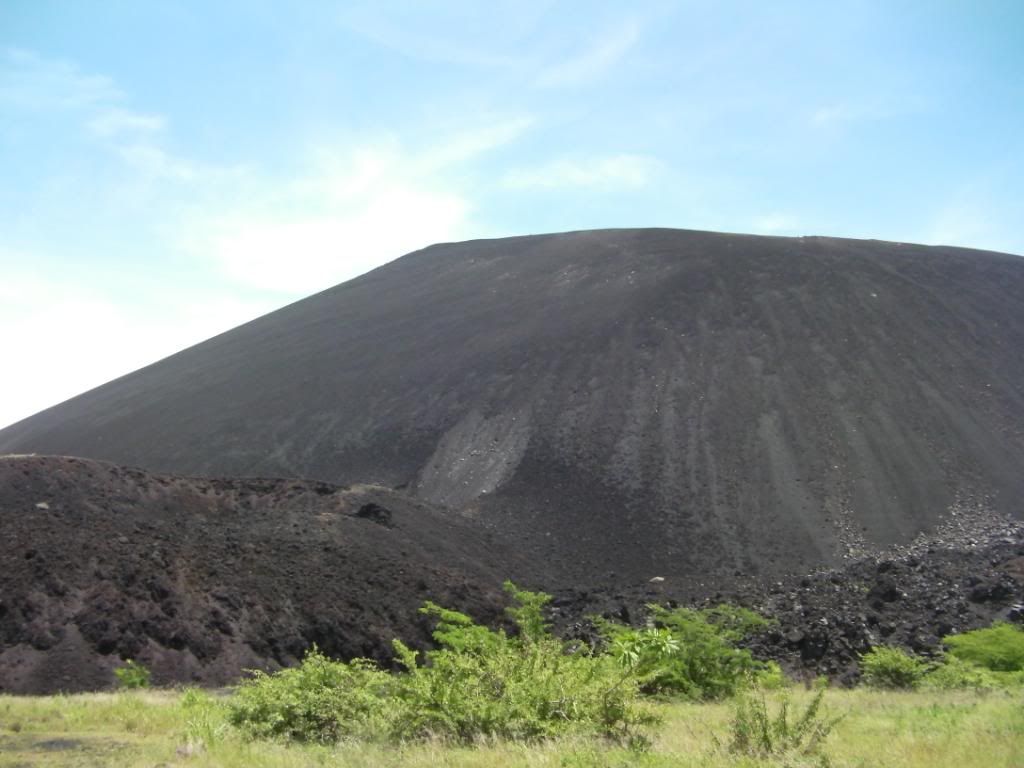
Unfortunately, Pierre and I didn’t take many pictures of the actual descent, since we were preparing ourselves and didn’t think we’d be able to safely use our cameras while sledding. What we did photograph was the natural beauty of the volcano and its surroundings. 

This slideshow requires JavaScript.

Here’s a more full explanation of how the sledding ended: The transition from the slope to level ground wasn’t as jolting as I’d feared, and I skidded to a stop just a meter or two from the slope without wiping out. Standing up, I shook the gravel out of my shorts and shirt, looking around for Pierre, who was pouring stones out of his shoes nearby. As long as you can sit straight in the middle of a sled, it seems that you can slide down the volcano with only basic protection and get away with only having to wash up afterwards.

Volcano Sandboarding

Note: More photos of the experience are in my first and second updates to this post.

Volcán Cerro Negro, the youngest volcano in Central America, last erupted in 1999. Less than twenty miles from León, a city that I will be posting about soon, the volcano’s main attraction isn’t the crater itself, although the powerful opening to the center of the Earth–which in the past three decades has spewed columns of ash and gas up to 24,000 feet high–is not unimpressive. Instead, most people climb Cerro Negro just to descend it. Why? Because its steep slopes, almost 2,400 feet high, consist of black volcanic stones, which are finer than normal gravel and heavily mixed with ash and dust. How do visitors get from top to bottom? Many locals do it by foot, running down in great leaps. Most tourists rent a wooden board with a metal underside: either a snowboard or sled design depending on their experience and daring.

SANY0001

The volcano and its surroundings, together known as the Reserva Natural Complejo Volcánico Pilas El Hoyo, amount to a protected area of 2,140 hectares that includes at least five different types of ecosystem. Entrance fees, as well as the rental of sleds and protective gear, somewhat help incentivize the conservation of the volcanic complex by surrounding communities, mostly farmers (cattle, peanuts, eucalyptus, corn, etc.).

Having only snowboarded once before, I opted for the sled, and Pierre did the same. We hiked up the volcano on the larger rocks (fist-sized to full boulders) for maybe fifty minutes, pausing to take photos of the beautiful hills that starkly contrasted with Continue reading →

Seaweed Sunset

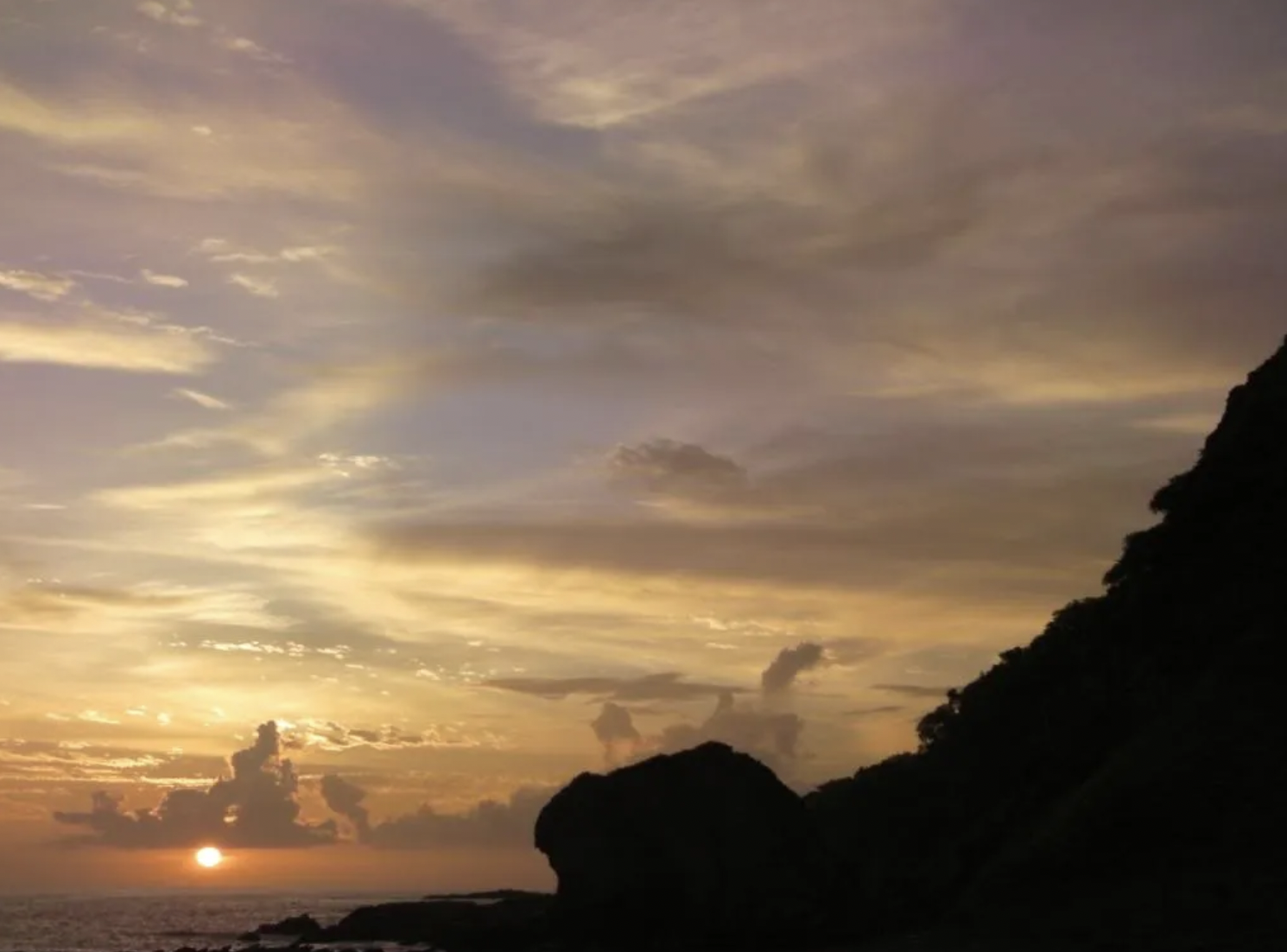
A couple days ago the tides at Morgan’s Rock had shifted a couple hours apart, so that during the sunset, which is normally at full high tide, the waves were absent, leaving a surprising amount of the sand and rocks bare.

This cloud, backlit by the setting sun, offers itself up to the traveler’s imagination

These rocks, which I’d noticed from Sunset Hill before, were now accessible by foot, so instead of hiking to the summit, which I had done several times, I climbed over the rocks until I had a good angle of the sunset as well as waves crashing violently into the rocks (video to come). Since they are so often under water, these formations are covered in sheets of seaweed and house sea urchins. This makes the surface of the rocks look like a fluffy duvet and the tidal pools a bed of nails.

To Morgan’s Rock guests: When the tides are right and you have strong shoes, Continue reading →

Staff Profile/More About Those Superstitions

Harvey Lopez, until two years ago, was a student at the Universidad National Autónoma de Nicaragua (UNAN) in Managua, studying English on a scholarship. He came to work at the Morgan’s Rock reception at the recommendation of a friend working there at the time, but after one year he became a guide when the position became available. Nowadays he spends his time taking guests on tours or studying the various wildlife books to build his knowledge of local species. These are the same guidebooks that I’ve been using to identify some of the animals in my photographs.

Harvey enjoys sharing popular Nicaraguan countryside myths during nature tours; Latin American lore equivalent to, but a bit less ubiquitous than, the infamous chupacabra. Night walks are especially good tours to tell the tales, since the only illumination comes from flashlights, stars, and reflections in animals’—especially spiders’—eyes, and the stories’ topics fit the dark and quiet atmosphere.

He presents these myths as “creencias,” or beliefs, from small towns like the one he grew up in (Tola, 13km from Rivas):

  • Cadejos are a pair of dogs that appear to travelers at night. One is huge and black, and follows you till it finds an opportunity to attack. The white dog is more of a guardian and is supposed to protect you from the evil one. These cadejos commonly appear to men who are walking at night in dark streets, especially those traveling in a state of fear or inebriation.
  • Lechuzas, or owls (Harvey says screech owls in particular) are omens of death. When their cry is heard in a village, one is supposed to say “en la otra esquina,” or “on the other block,” to ward the bad fortune off to another area so that one doesn’t wake up dead.
  • A duende, which translates as elf, troll, goblin, and sprite, is a supernatural creature that when seen by adults (an uncommon occurrence) appears only as a shimmer in the air. They play with children, specifically those who misbehave, and lure them to their own land (considered by some to be hell). These children are stolen and never seen again. This portrayal of elves or fairy-folk might be as common elsewhere around the world as the chupacabra, but has less of a presence in tabloids and a more mythological nature.
  • The ceibón tree, Bombax emarginatum, is a mysterious and often spiny tree that houses Continue reading →

Omens of Fortune

I am not superstitious. But I am also not exactly non-superstitious. I love black cats (my grandmother has two, named Helios and Selini after the sun and moon, in Greek). Sometimes I have to pass under a ladder to get something done. No problem. And in the spirit of declaring my semi-agnosticism in that domain, I also think insects have had a bad rap for way too long. With all due respect to arachnophobes (and I really mean that), I always find encounters with spiders fascinating. Today, it went beyond empirically verifiable fascination; I found myself feeling positively superstitious, if I may say so with the dual meaning of the adverb.

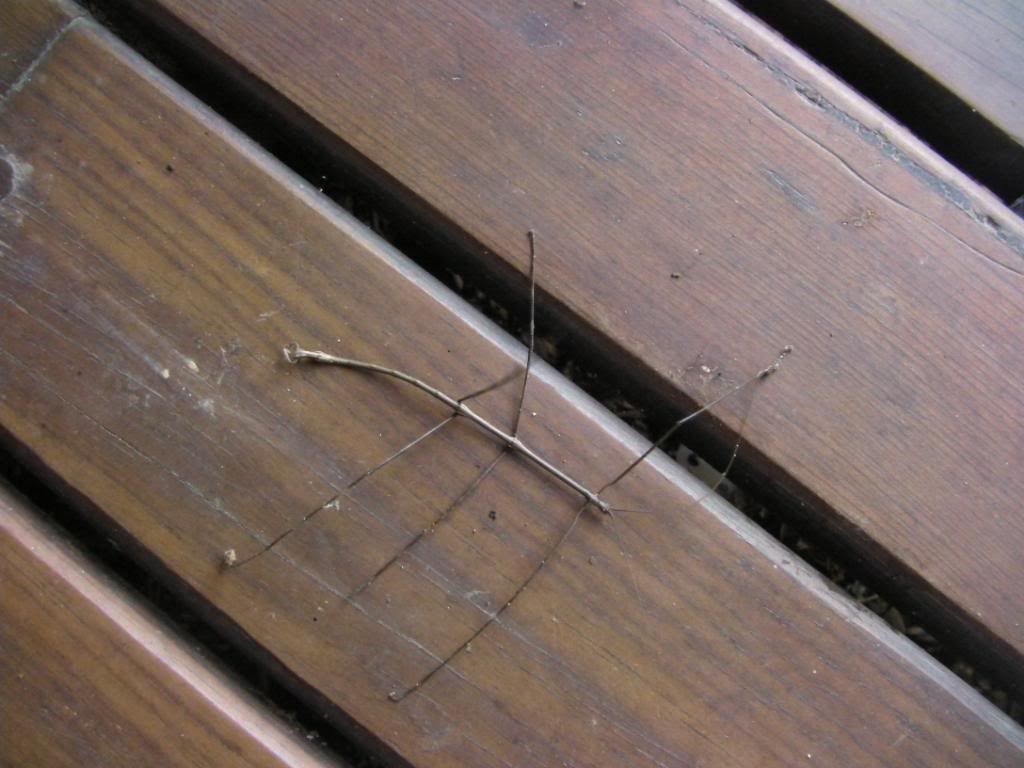
In the morning when I exited my room in the little house not too far from the Morgan’s Rock lobby, this spider was waiting for me outside. After I showered and got ready to leave, I passed a frantic walking stick attempting to find a tree, perhaps having fallen from the ceiling earlier. As I walked to the restaurant for breakfast, I considered these two arthropods good omens of the sightings I would have on my forest walk later in the day.

When I departed on the trail to find wildlife to photograph, I passed near some weeds on the side of the path that had been ravaged by some insect. I crouched and looked closely at all the leaves to detect the culprit, but found no obvious caterpillar or beetle munching on the foliage. Bending closer, I scanned the plants with a patient eye and finally noticed something that stood out. Continue reading →

Da’ Flying Frog

When guests at Morgan’s Rock want to have the experience of zooming over the tops of trees, they normally can’t make it all the way to Café Las Flores’ Mombo Canopy Tour at Mombacho Volcano, which is over an hour away. Instead guests almost always go to Da’ Flying Frog, a canopy tour just 25 minutes away in the hills overlooking San Juan del Sur. At a cattle ranch with a nice amount (acreage unknown) of uncut forest on the property, this series of 17 zip lines includes several practice platforms that prepare you for greater heights by starting over dirt paths. Their longest zip line is 400 meters long, a distance that is fun and exhilarating to complete.

Biodiversity Buffers

Private reserves have been established in many countries around the world, dramatically expanding the conservation provided to biodiversity in public parks by voluntarily protecting buffer zones. Despite their smaller size (relative to public parks) on an individual basis, in aggregation these private reserves are significant providers of environmental services.

So far the Nicaraguan Red de Reservas Silvestres Privadas includes 50 private reserves that protect 7,467 hectares—18,453 acres—of various ecosystems. Each one has renewable status as a reserve for ten years at a time, and is exempted from income taxes for ten years, property taxes for whatever amount of time the land is a private wildlife reserve, and retail sales taxes on goods that contribute to the reserve.

The Nicaraguan Ministry of Environment and Natural Resources (MARENA) supports certification of conservation activities, includes the private reserves in sustainability workshops, and helps bring teams of scientist investigators to the reserves to conduct studies like the one done at Morgan’s Rock/El Aguacate. Among other things, the reserve owners must make a yearly management plan, comply with environmental norms, and protect the wildlife inside their property. Some of the required contents of a management plan include Continue reading →

Post-Estuarial Paddling +

In “Kayak Surfing with a Friend,” I described the surfing in words and included a short video. Here is some longer and better footage of the experience, this time including Pierre (brown hair), me (black hair), and Bismar (green shirt). We have concluded, after experimentation with the paddles and waves, that this activity would be a great post-estuary kayak experience if the tide is right. Since I had mentioned this to Bismar (a Morgan’s Rock guide) he decided to join Pierre and me after completing his estuary tour with some guests, so that he could see for himself.

Continue reading →

Reserve @ Morgan’s Rock

El Aguacate, the protected forest at Morgan’s Rock, is part of the Nicaraguan network of private reserves, or La Red de Reservas Silvestres Privadas. Over the past two days, a team of three biologists (one botanist in this forties and two zoologists in their twenties) has been walking through the reserve, photographing and documenting the wildlife they encounter in order to perform a sort of valuation study of the natural resources at El Aguacate. For the past week this team has been in the Rivas/San Juan del Sur area qualitatively assessing the floral and faunal density and diversity at around thirteen different private reserves; similar teams around the country are doing the same according to region.

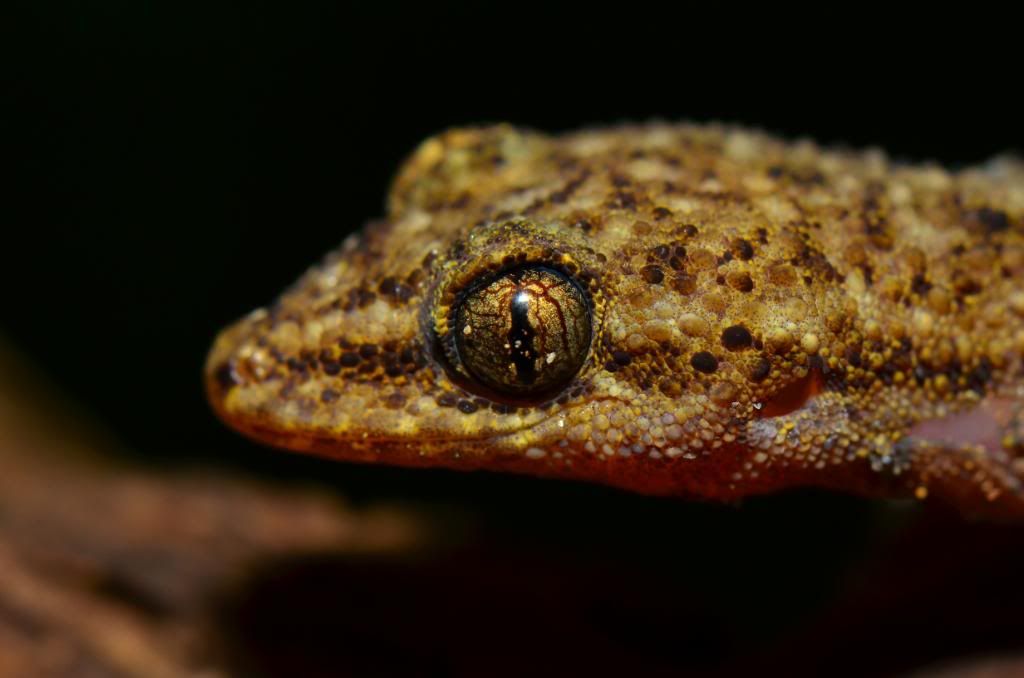
Gecko; species to be identified

José Gabriel Martínez Fonseca, one of the zoologists who also sports a Nikon camera that seems to have a telephoto lens (it looks almost a foot long), calls his photography enterprise Svaldvard Ink., after watching a show on the Svalbard archipelago in Norway on the Discovery Channel as a kid. Interested in the polar bears, he wrote down what he heard and years later preferred his own spelling of the word, adopting it as a username/alias for business. With his camera and skill as a biologist whose job it is to document species of reptiles, amphibians, birds, and mammals, José was able to photograph animals that have evaded my lens during my time at Morgan’s Rock. He was happy to share his images with me, so now I can share some of the best of them: all the photos in this post are his. Continue reading →

Anteating Howler Butterflies

While walking to Morgan’s Rock’s lobby yesterday morning, Pierre heard some rustling in the bushes on our right. We looked for the source and were stunned to see an anteater standing on its hind legs, spreading its arms and swaying about like a drunkard but in fact trying to dissuade us from attacking it by trying to appear larger (it was bigger than a very fat house cat, but not by much). I immediately pulled my video camera from my pocket and started filming, and although the anteater had ceased his humorous movements and started climbing a very thin sapling, the footage was incredibly fortunate and very entertaining.


Since the tree he decided to grasp was so young, it started to bend as he climbed higher, reminding me of cartoons where characters are catapulted out of the branches after a certain point. The anteater was less than a meter away and at times looked like a teddy bear, but as a wild animal—and one with claws in full display at that—we refrained from touching him and were satisfied with a video. Eventually, the formicary raider descended the sapling and chose a better escape tree (in a pose reminiscent of the boa’s in a previous post), and we left happy with the sighting of what I thought I’d only be able to see in the summer when foliage was less dense. Continue reading →

The Oldest City in Central America

Pierre and I took a walk around Granada today with Mombotour guide Gustavo, a native of the colonial city. Our first stop was the San Francisco Monastery and Church, the oldest church in Central America, which has been converted (aha) into a museum of colonial and pre-Colombian history. Probably built on the site of an indigenous temple, the monastery later became a school, then the museum. It also recently underwent a restoration project, since earthquakes have especially strong effects on such old architecture as Granada’s churches.

Gustavo led us through each of the rooms containing an exhibit, such as ancient pottery, contemporary art replicating historical or cultural scenes, and zoomorphic stone statues. He explained some of the beliefs held by the indigenous groups, which were often influenced by northern tribes (Mayans, Toltecs, and Aztecs) and South American indigenous nations, as well as the Spaniards’ opinions of them. For example, the rain god was considered to have four sons at the cardinal points. Ritual offerings such as those depicted in this painting were thought to bring fertility to the soils. Spaniards were also quite surprised to see the symbol at the base of this statue, not knowing that it represented the cardinal points and not the savior. Continue reading →

Sweet NicarAgua

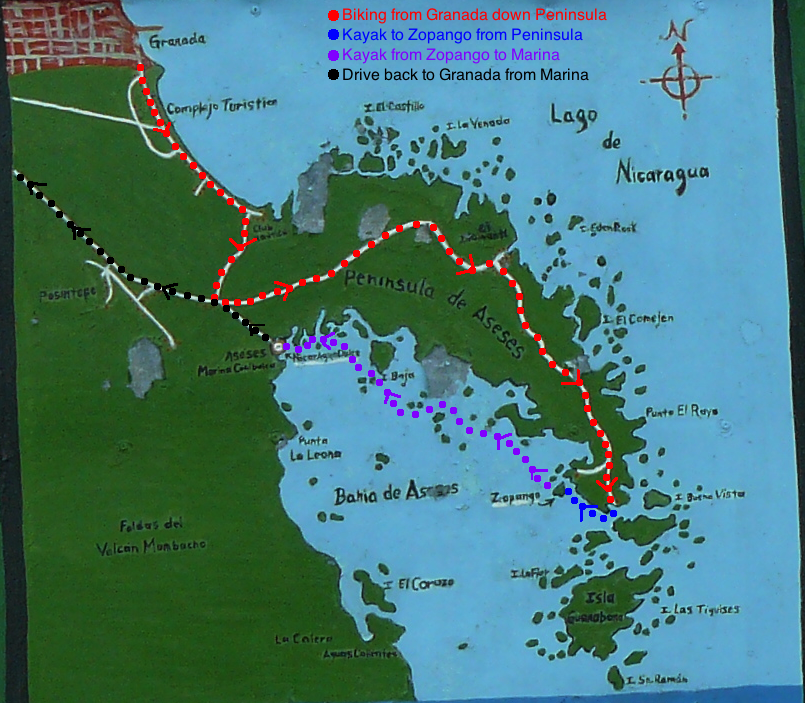
This morning Pierre and I went on a trip facilitated by Mombotours, using Detour bikes and NicarAgua Dulce kayaks. Eddy, our guide from Mombotour, arrived after breakfast and drove us to Detour, the bike rental shop. We picked up three bikes and left Granada’s hub towards the shore of Lake Cocibolca. The Mombotour driver followed behind in the truck in case we had any bike problems or accidents. We hadn’t gone more than two or three kilometers when the truck’s presence became needed. I’d accidentally driven over some glass, and punctured my tire in two places with tiny shards. With the tools and spare tube in the truck we were able to fix this unfortunate damage within twenty minutes, and Eddy’s training made my negligible REI workshop experience unnecessary.

The rest of the bike trip, which lasted about an hour and a half, was without further perforations, and we enjoyed riding up and down muddy dirt roads, dodging stones and chickens along the way. The mountain bikes performed very well and changed gears fluidly, which is always a nice surprise. We rode down along a peninsula till Continue reading →

Mombo Jombo

Early this morning Pierre and I set out from Morgan’s Rock towards Granada, which is maybe two and a half hours away. Before reaching the city, we turned onto a road that led to Mombacho Volcano, an inactive peak with several extinct (and some fully collapsed) craters. The volcano is protected by the Mombacho Volcano Nature Reserve, created in 1996 by the several local fincas on the volcano’s foothills that comprise the NGO Cocibolca Foundation. Our time at Mombacho, described in the rest of this post, is part of the exploratory trip that Pierre and I are taking over the next three days, assessing the possibility of connecting Morgan’s Rock’s tour offerings with other operators in the area.

The day’s activities started at the Mombacho Volcano Nature Reserve (MVNR), where we met our guide Jennifer. We decided to take the longest trek, called the Puma Trail, so named because there are some big rocks and even caves that pumas are said to live in, although none have been sighted in a decade. Prior to starting this four-hour hike we stopped by an area called Los Fumalores where Jennifer had fun by daring us to put our hands in a small hole next to the trail, reassuring us that no snakes would be inside. As we placed our hands near the opening in the ground, we could immediately feel a stunning temperature difference. The place is called Los Fumaroles because sulfuric gases rise from volcanic holes and crevasses in hot gushes, heating the surrounding stone to a surprising degree. This area also provides a nice view of Las Isletas, which are known as children of Mombacho because they are islands initially created from a volcanic eruption. I mentioned Las Isletas very briefly here.

The Puma Trail’s path is very well maintained, Continue reading →

How Smart Can Wood Be?

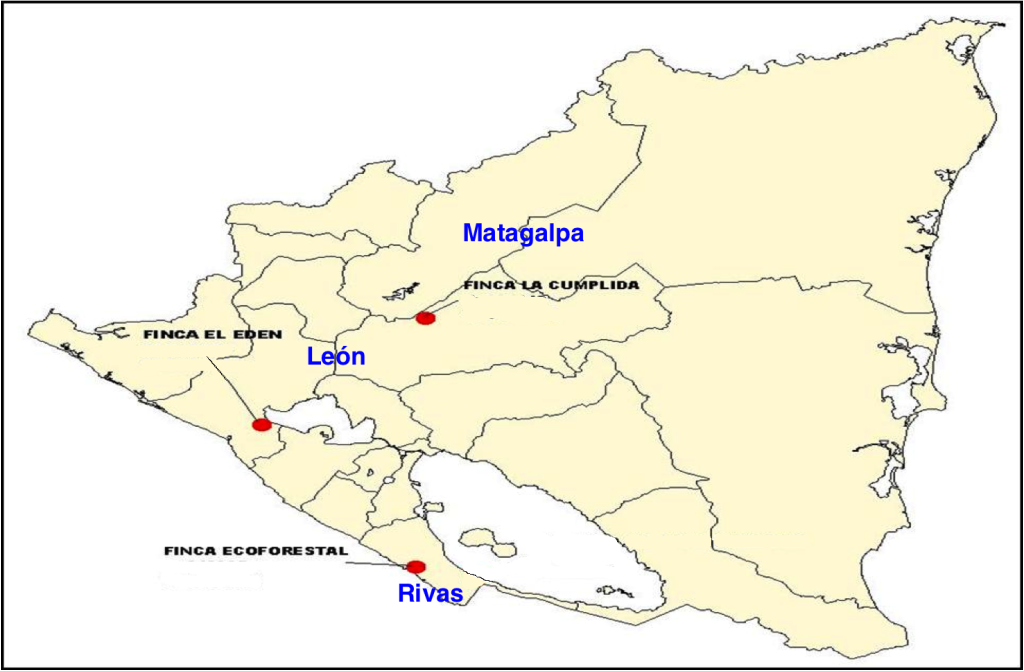
Yesterday I met with Javier López, the forestry engineer for Agroforestal, S.A. This company covers the tree plantations at La Cumplida, Ecoforestal/El Aguacate (Morgan’s Rock’s finca), and El Eden; it is not to be confused with Cafetalera Nicafrancia, which manages the coffee (and the planted trees growing in the coffee fields) at La Cumplida, or MAPIINIC S.A., which administers the forests felled by Hurricane Felix in 2007 at a finca called Rosita.

Javier, often known simply as “Prófe,” [PRO-feh] which translates as “Prof” (a nickname for Professor), has worked to get certification from Rainforest Alliance’s forestry auditor SmartWood (and by association the FSC and RA itself)

In 2009 Agroforestal became certified for forest management. To do so the company had to go through the same continuous improvement process that I described a bit in my post about coffee certification. An initial evaluation is made, and subsequent audits over the next 5 years that the certification is valid provide the certifier with evidence of progress and room for improvement. From what I saw of a couple examples, SmartWood seems to emphasize explicit documentation, which makes sense given the nature of the forestry industry: extractive at its most basic, but also focusing on replanting trees as long-term investments.

Some of SmartWood’s requirements are as simple as Continue reading →

Ramírez, Reading & Responsibility

The presenter introduced Sergio Ramírez with all the formal flourish that the Spanish language provides for; a laudatory salute that seems unique to places where poets serve as public servants.  The presenter mentioned the publications Ramírez has contributed to; the number of his essays, short stories, and novels; told of his political history and his creation of Nicaraguan publications and organizations of reform. The presenter was obviously very proud of having such an influential man in the room, and finally said, “I give you, author, poet, thinker, ex-president Sergio Ramírez!”

(c) Overdue Media LLC, used with permission

The man who has given talks at over forty academic institutions around the world (including Cornell University) took the podium. “Thank you for the very generous introduction,” he started.  And what he said next illustrates the difference between poets and politicians. Continue reading →

Nicaraguan 1st Graders Book It to 25wpm

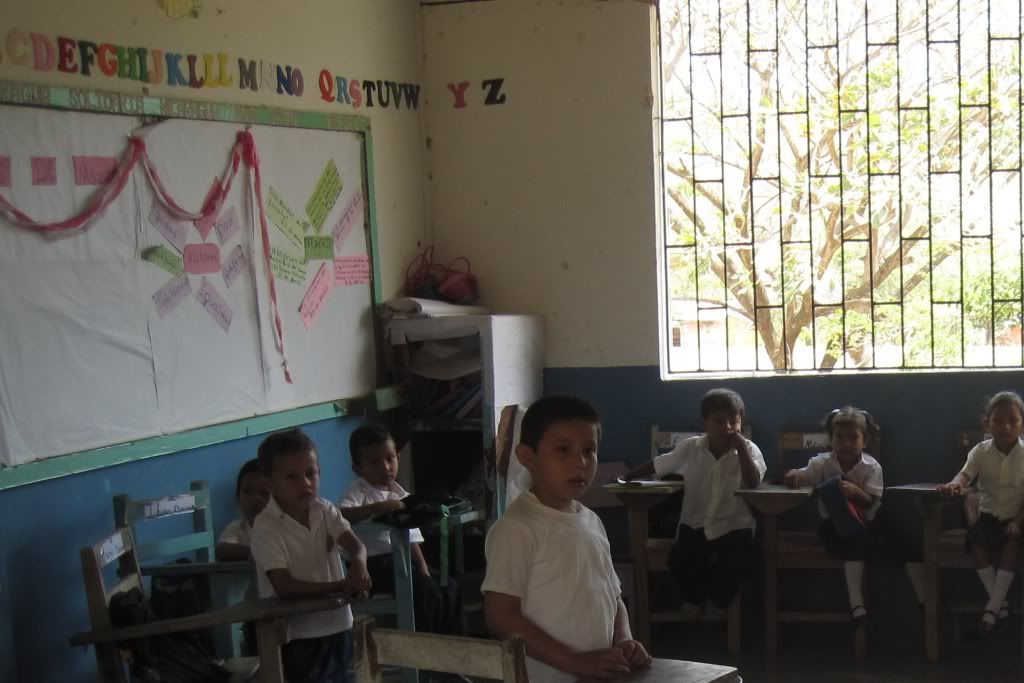
The José Dolores Estrada School, named after one of the military heroes who fought against William Walker’s army in the mid-1800s, is located only five or six kilometers away from Morgan’s Rock. JDE is a small public school with three teachers and around sixty to seventy students (the numbers vary widely each year or even by semester) that sit in mixed-grade classrooms to learn from whatever textbooks become available. On the walls, hand-made posters read, “What is a fable?” or give the definition of “traba-lenguas” (tongue-twisters) along with several examples. Cut-outs of volcanoes, whales, and ducks rest above a student’s project on “The Land of Lakes and Volcanoes.”

The three teachers responsible for the colorful and educational decorations came with José Tomás Gómez Valdivia (Nicafrance Foundation) and other teachers from La Cumplida for three days in Managua to attend the congress. I joined the delegation in their final day of sharing and learning and took notes on the conferences.

“The Situation of Reading in Nicaragua and Initiatives for Improvement” was the title of the first talk that José Tomás and I attended (the teachers went to whatever conference or workshop was most interesting or valuable to them). It was given by Vanessa Castro, a PhD from the Harvard Graduate School of Education. Dr. Castro has worked alongside the World Bank, IADB, UNESCO, and AED, and is now one of the leading investigators for the Nicaraguan group CIASES (Centro de Investigación y Acción Educativa).  Continue reading →