Paleo-ethical Questions

young-tyrannosaur-990x664

Scientists, like all others, are faced with puzzling  ethical questions from time to time. Questions where there is no right or wrong answer, but for which “do the right thing” is the imperative. We like to think we know exactly how we would answer such a question, but sometimes the questions (or answers) are dark grey or light grey rather than black and/or white, as various characters referred to in this blog post make clear (click the image above to go to the original post):

On November 19th, science may lose a pair of dinosaurs. Preserved next to each other – and given the dramatic title the “Dueling Dinosaurs” – the tyrannosaur and ceratopsid are going up for auction at Bonham’s in New York City. The two are expected to rake in around nine million dollars, with no guarantee that the fossils will go to a museum or that their beautiful bones will even have the chance to be rigorously studied by scientists. That’s exactly why paleontologists were aghast when the auction block tyrannosaur made an appearance at the Society of Vertebrate Paleontology annual meeting yesterday afternoon. Continue reading

Todd Bretl, Come To Kerala!

This slideshow requires JavaScript.

We have been linking photographers with wildlife since the inception of Raxa Collective. We believe that the more amazing photographs of nature people are exposed to, the more they will care about the need for conservation of wildlife habitat. From organizing nature photography workshops, to sharing the photographs of friends and members of our team in our outreach, we embrace the medium’s power to motivate.

While most of his photographs are underwater, and most photography we have promoted so far is not, Todd Bretl is definitely worthy of the same kind of invitation we have extended to other masters of their domain (whatever form it might take, whether the person is famous or not as famous as they should be, even surprising ones). It is not just his obvious talent, but his sense of purpose. According to the bio on his website:

Raised on a boat in Bermuda, Todd grew up with the ocean as his playground and constant companion. Continue reading

Good Idea, So Go Out And Make Him Do It

After meeting with Obama, one activist felt challenged to make the case “why this pipeline is not in our country’s best interest.” Illustration by Paul Rogers.

After meeting with Obama, one activist felt challenged to make the case “why this pipeline is not in our country’s best interest.” Illustration by Paul Rogers.

Ryan Lizza, the New Yorker‘s Washington correspondent, published an article last month that explained the defining environmental of the current generation of US citizens, according to one of our heroes. The article is mostly about a wealthy, possibly powerful financier who our hero has influenced on this issue.  But it is also a good primer on the issue itself.  If you do not have time for the whole article, an even more efficient primer is this podcast interview with Lizza, late in which the activist’s challenge becomes mantra; but read the article if possible. Then, if you are a citizen of the USA, go make Obama do it:

On the day of his second Inauguration, in January, Barack Obama delivered an address of unabashed liberal ambition and promise. As recently as early April, before the realities of the world and the House of Representatives made themselves painfully evident, the President retained the confidence of a leader on the brink of enormous achievements. It seemed possible, even  Continue reading

Rainforests, Primary And Otherwise

Thanks to the Guardian for bringing this to our attention:

At an age when freedom passes allow pensioners to take on the challenge of clambering to the top deck of a bus, Dr Francis Hallé is more likely to be found perched at the top of a tree.

The retired professor of botany is 75 and has just completed his first film. In it he can be seen standing, without a safety rope, on a branch of a massive moabi tree 230 feet above the forest floor. Continue reading

Jack London & Literature’s Role In Environmental History

Caleb Crain‘s book review of this biography will no doubt be of interest to any of our readers who follow Seth’s work on the history of environmentalism.  Subscription to the New Yorker is required, and worth it, but here is the blurb available to all prior to passing the pay wall:

Jack London never felt that he got enough meat. When he was seven, he stole a piece from a girl’s basket—an incident that he called “an epitome of my whole life.” Although his mother claimed that “he didn’t go hungry in our house!” and a childhood friend recalled being served steak during a visit, London insisted that he had been deprived. “It has been hunger,  Continue reading

Fellow Travelers

We pointed to this interview he gave some time back, in which he talks about how his company came to be, and what it has meant to him personally. We have enjoyed news stories in the last couple years covering some of his company’s innovative approaches to making their business model viral–not only so consumers are more hooked, but so that other entrepreneurs get hooked on their business model.  In our own small way we are fellow travelers, at La Paz Group, with Patagonia’s much older, established business; we hew to the same path even as our particulars could not be more different.

This letter by Patagonia’s founder provides his simple explanation of what this new initiative of the company is all about. The website’s FAQ section explains it all in a nutshell:

…What are the responsibilities of Patagonia Works as the holding company?

The Responsibilities of Patagonia Works:

  •   Nurture entrepreneurial ventures
  •   Incubate environmentally responsible companies
  •   Diversify corporate holdings
  •   Extend the reach and the influence of the brand to new markets
  •   Influence the global business paradigm
  •   Offer a new way to measure return on invested capital
  •   Provide long-term economic health with consideration of environmental and social risk
  •   Promote The Responsible Economy, Patagonia’s ongoing environmental campaign
  •   Provide best-quality shared services and allow each business to focus on product, quality, sales and customer experience

Continue reading

Enough Dancing Bears, Already

Patrick Barkham’s editorial in the Guardian does not sufficiently consider the occasional good that a zoo can do for the charismatic felines, but my sentiments are generally the same as those he expresses here:

The Zoological Society of London is an august, enlightened charity, which carries out wonderful scientific work. London Zoo, created in 1826 as a rebuke to the cruel and squalid menageries of the day, makes the most of its limited space on the edge of Regent’s Park. So why on earth is it caging tigers? Does it really believe it is important conservation work? Continue reading

A 3-Way Intersection As Puzzle: Property Rights, Community Rights, Conservation

We will leave surfing topics to the resident expert, Jake. But this short documentary poses a conundrum that, while we instinctively side with the surfers, challenges us as stewards of property on India’s coast line. We want everyone to have access to the beach, but we want to prevent the kind of “tragedy of the commons” that is evident when no one has clear responsibility and authority for stewardship.

As we prepare to open Pearl Beach in a few months on a pristine section of Kerala’s coast, we have taken an approach that minimizes our footprint on the land while allowing us to do what we do, hosting guests from around the world, giving them an authentic taste of local nature and culture, and channeling the profits to conservation.

Continue reading

If You Happen To Be In Middlebury (Vermont, USA)

Mostly, when we have been thinking of Middlebury lately, it has been in relation to the College there, and one of its favorite sons.  But there are plenty of other reasons for a visit:

InSite is a home for local living. Our design was inspired by our hometown of Middlebury, VT where the community is friendly, approachable, and engaging. Team Middlebury believes that towns such as ours can contribute to social, economic, and environmental sustainability. Continue reading

Support WWF Today!

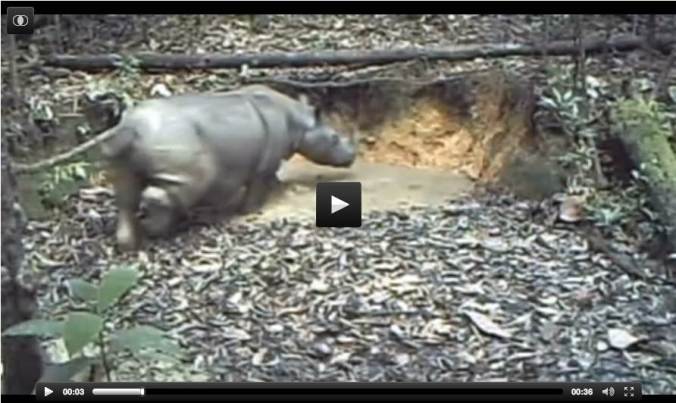
Scientists have captured video of a Sumatran rhino, once thought to have been wiped out, in the Kalimantan forest in Indonesia. In footage captured by the WWF, the animal can be seen bathing in a puddle and scurrying among trees. The video proves the charity's efforts to preserve the species have had some impact

Scientists have captured video of a Sumatran rhino, once thought to have been wiped out, in the Kalimantan forest in Indonesia. In footage captured by the WWF, the animal can be seen bathing in a puddle and scurrying among trees. The video proves the charity’s efforts to preserve the species have had some impact

We have been thrilled by the increasing velocity with which camera-trapped images and video of endangered animals get hurled across the wired world. The video above (click to go to the Guardian‘s host site for that half minute of pleasure). Back in March, WWF released this news release and at the time we did not link to it because it seemed premature; now, read it and weep:

Found! Traces of Sumatran Rhinos in Indonesian Part of the Heart of Borneo

Sendawar, East Kalimantan, March 28, 2013. A team from WWF-Indonesia has found fresh footprints resembling those of a rhino in the Heart of Borneo (HoB) area of East Kalimantan, Indonesia. Continue reading

Gandhi’s Deep Ecology

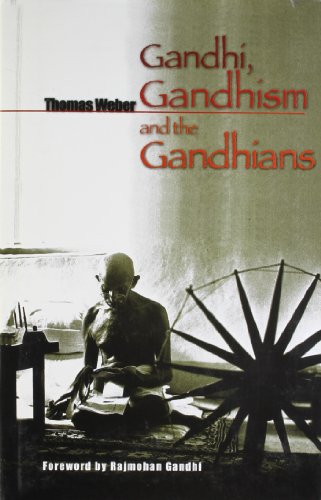
Among the many writings about Gandhi, Thomas Weber’s books seem to be held in esteem in India, with the book to the right being the most recent:

Mahatma Gandhi and his philosophy of truth and non-violence have intrigued the world for decades. Looking at the Western and Indian influences that had gone into making Gandhi the Mahatma, and the central importance of Gandhi to non-violent activism, these essays reclaim the power of truth and non-violence, which can still change the destinies of people and nations. In this collection, Weber discusses Gandhi, his ideology, and how India and the rest of the world is interpreting and reinterpreting the Mahatma. The doctrine of conflict resolution theory, new environmentalism, peace research, deep ecology, and Buddhist economics based on Gandhian principles renews the world`s belief in Mahatma and his teachings for our lives and our times.

One of the most visible and active Gandhi-focused websites posted an essay by Weber* about Gandhi’s influence on what eventually came to be known as deep ecology, and that seems a fitting reference on our site to commemorate this year’s birthday, which is also a national holiday in India.  A few snippets: Continue reading

Happy Birthday, Mahatma, And Thanks Also For The Mangos

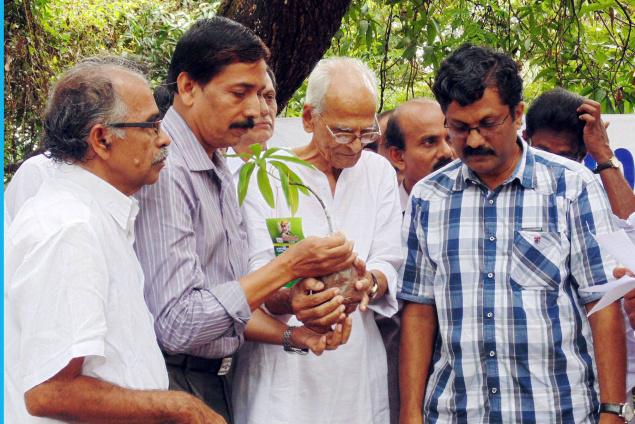
The freedom fighter Appukuttan Poduval handing over mango tree grafts cultivated from shoots of the historic mango tree planted by Gandhiji at Payyannur in 1934.


Nonviolence. India. Artisanal salt. Artisanal everything else. Among the many reasons to celebrate his birthday today, Raxa Collective is pleased to have learned and is happy to share:

Planting saplings grafted from twins detached from a Malgoa mango tree planted by Gandhiji at Payyannur nearly eight decades ago is a novel way of celebrating Gandhi Jayanthi. Continue reading

The Big Thaw

2009 Jökulsárlón, Iceland. Destined to melt, an 800-pound chunk of ice glows in moonlight, from the National Geographic story “Meltdown.”

2009 Jökulsárlón, Iceland. Destined to melt, an 800-pound chunk of ice glows in moonlight, from the National Geographic story “Meltdown.”

On our pages we like to narrate stories, sometimes stories that people would rather not hear. If a “picture is worth a thousand words” then James Balog’s images for National Geographic tell a poignant narrative.

The pictorial language has the unique ability to penetrate the human heart and mind and photography has the power to alter the course of civilization through perception. My main subject has been the collision between human needs and nature, it’s always seemed to me that’s one of the pivotal issues of our moment in history Continue reading

Orangutans Will Appreciate Your Support

The well-known supporters of World Land Trust make a strong case for all of us to to our part during this upcoming campaign:

Big Match Fortnight

Date and Time: 2 – 16 October 2013

Big Match Fortnight is World Land Trust‘s (WLT) major fundraising effort for 2013. During the fortnight all donations to WLT will be matched making them go further.  Continue reading

Cats And Dogs And The Golden Rule


This slideshow requires JavaScript.

When we posted about a unusual collaboration between cheetahs and shepherd dogs, we started watching for more news on the same.  This website tells a different story about feline-canine common interests, with a clear reminder about the human interest in behaving more empathetically toward our neighbors:

CHEETAH AND AFRICAN WILD DOGS NEED LOTS OF SPACE: Of all the large carnivores of Africa cheetahs and wild dogs need lots of space. Recognition of this led to the RANGE WIDE CONSERVATION PLANNING PROCESS bringing together all sectors of society to develop frameworks under which all stakeholders – government, community and private – can work together to ensure the survival of these iconic species. Use this website to learn more about this innovative approach, the distribution of the two species, who is working to help them and what is being done on the ground. Continue reading

Hoteliers, Collective Action, And Outcomes As Yet Unwritten

CheHotelUnion

Raxa Collective has a commitment to the locations in which we operate our hotels, resorts and houseboats: we strongly prefer to hire, train and employ local community members.  Recently this sign has been visible in Thekkady, near Cardamom County.  It is meant to attract hotel workers to join the union representing the hospitality labor force across the state, and hangs in front of one of that union’s offices.  Without any irony or sarcasm, this photo was snapped by one of our contributors to stimulate conversation among several other contributors. Continue reading

Popularity Contests Some Will Never Win

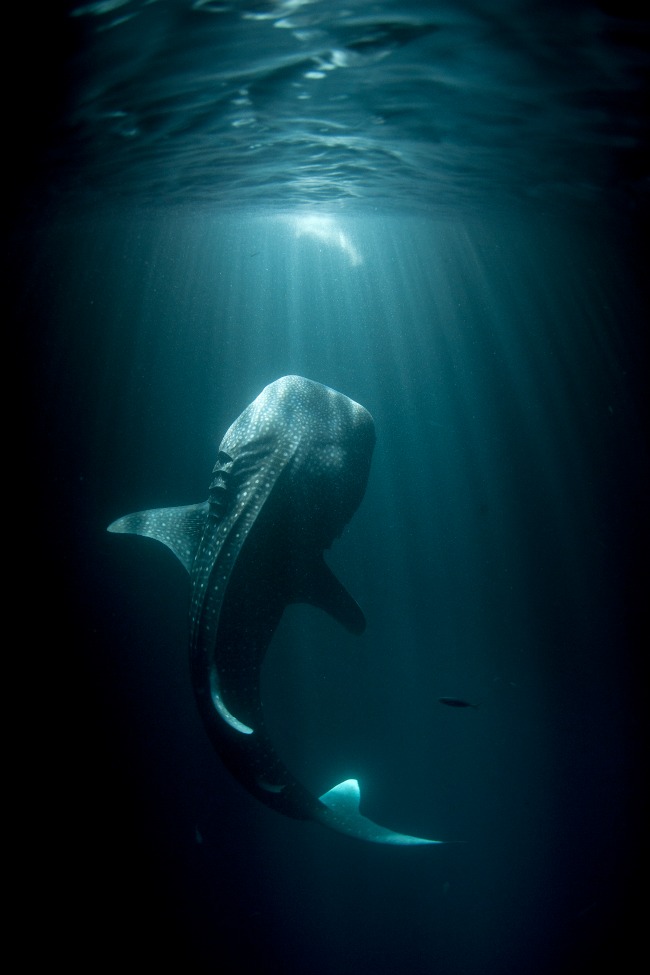
05SharksPeople@Thomas P. Peschak

Whale shark. (Thomas Peschak / University of Chicago Press)

We note from time to time the tallies of our most popular posts and writers. Seth still has the record for “most instantaneously viral” with Volcano Sandboarding (3,000+ views in the first couple days after it was posted); Tim’s Carbon Emissions Series: Vacationers’ Diets is by far the most viewed with nearly 9,000 readers to date; Salim is by far the most widely read of our contributors, just having passed the 50,000 mark for views of his daily series on the natural and cultural heritage of south India (Thiruvathira Kali (Traditional dance of Kerala) being the most popular with nearly 3,000 views).

Phil’s most recent post has been a runaway hit, and rapidly approaching 1,000 views within a couple weeks it is on pace to put him in the ranks of our most popular contributors.  So when we saw the photo above, we thought of Phil’s series with the hope he contributes another post soon. Dr. Tenner’s book review, from which that photo comes, provides an essential reminder of facts, as well as visual testament to the beauties and tragedies associated with sharks, to counter whatever perverse attention those Shark Week shows purvey:

…Thomas Peschak makes an eloquent visual case for the sublimity of sharks—and also for their conservation. He notes that the media still devotes far more attention to rare shark attacks than to the urgent need to protect them from human depredation, especially the shark fin trade. He might have noted that Peter Benchley, who became wealthy through the 1970s novel and film Jaws, regretted the fear he had sown and became a shark advocate. In the long run, though, China’s removal of Mao Tse-Tung’s ban on shark fin soup as bourgeois decadence in 1987 may have resulted in more shark slaughter than all the horror books, films, and news items together. Great conservation photography like Peschak’s, one must hope, will have the power to change attitudes globally…

Continue reading

Localism, Activism And The Future Of Retail In The Bay Area

San Francisco, California, USA --- A view of the city lights of San Francisco, just after dusk, from Yerba Buena Island. --- Image by © Ed Darack/Science Faction/Corbis

San Francisco, California, USA — A view of the city lights of San Francisco, just after dusk, from Yerba Buena Island. — Image by © Ed Darack/Science Faction/Corbis

An important word on localism and activism, combined, in a post on the New Yorker‘s website about a San Francisco effort to support local retailers and resist formula retailers:

Jefferson McCarley, a forty-two-year-old San Francisco resident, used to work at Gap’s headquarters, coördinating the logistics of moving merchandise to the shelves of Gap and Old Navy stores. Like the city itself, he has a knack for reinvention. He told me that when Gap laid him off during the recession, he became the general manager of a sleek independent bike shop in the city’s Mission District. Soon, he was voted vice-president of the local merchants association, and joined a group of mom-and-pop-business owners called Keep Valencia Local, which works to stop chain stores from opening locations on the street of that name. Back in 2009, merchants on Valencia Street had helped to kill American Apparel’s bid to move in. Continue reading

Education, Social Entrepreneurship, And The Next Wave Of Innovation

Entrepreneur Offers India’s Aboriginal Children Opportunity to Attend School

From the transcript of a segment on a PBS (USA public television) program some months back (click above to go to the video) that gets us thinking about our outreach programs in south India:

FRED DE SAM LAZARO: Here, education begins with meeting the most basic needs on an industrial scale and free of charge to the students.

ACHYUTA SAMANTA: Now they’re going for lunch.

FRED DE SAM LAZARO: How many students?

ACHYUTA SAMANTA: It is approximately now 8,000-plus are going for lunch. Continue reading