WED 2013: Europe dumps fish dumping

WED 2013 - Raxa Collective

On June 5, we’ll celebrate World Environment Day. This year UNEP focuses on the theme Food waste/Food Loss. At Raxa Collective we’ll be carrying out actions and sharing experience and ideas. Come and join us with your ideas and tips to preserve foods, preserve resources and preserve our planet.
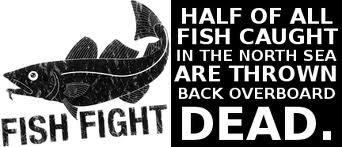
www.fishfight.net

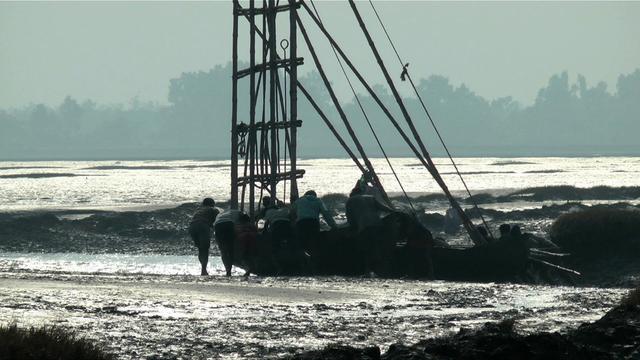
…and about 80 per cent of Mediterranean stocks and 47 per cent of Atlantic stocks are overfished. It may seem rather odd but the European Union’s policy to avoid overfishing consists in tossing dead fish back in the sea if a fleet exceeds its quota.

For decades industrial fleets have been subsidised to plunder the European waters working under the rules of the  Common Fisheries Policy devised in the 1970s. And the rule of ‘discards’ has been let’s say counter-productive in reviving the fish stock. The practice allows fleets to net quantities of fish exceeding their quota, then simply throw any unwanted dead fish overboard.

Continue reading

Midway – a transmedia project by Chris Jordan

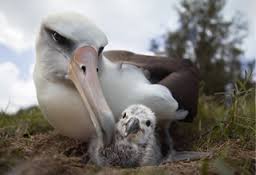
imagesThis morning’s post about the Smithsonian Ocean Portal featuring one of Chris Jordan‘s pictures from his exhibit Midway reminded me to check on his current work on the atoll. On one of the remotest islands on our planet, tens of thousands of albatrosses lie on the ground, their bodies filled with plastic from the Pacific Garbage Patch.

Returning to the island over several years, Chris Jordan and his team witness the cycles of life and death of these birds. He will release in late 2013, his first documentary feature Midway, message from the gyre.

See the  trailer after the jump. Continue reading

Community, Collaboration, Career

If you spend five minutes listening to Gerald Chertavian in the video above, and it resonates in any manner, then you should learn more about the organization he formed.  It came to our attention, as many other great stories have recently, thanks to From Scratch, Jessica Harris’s radio show and podcast repository. Continue reading

TED talk Majora Carter : Greening the Ghetto, how entrepreneurial conservation and urban regeneration lead to more social justice

This seminal talk from 2006 by Majora Carter, founder of the Majora Carter Group, introduced me to entrepreneurial conservation. So you can say it kind of led me here.

It is unfortunate how the reputation of a neighbourhood may reflect on its inhabitants. In french the silly expression “C’est le Bronx” refers to a messy room. People from the Bronx, Majora Carter included, decided to change this image. In fact, they decided to reclaim their rivers, their air, their land while creating jobs, leisure activities for local families, a safer gentler environment for children to grow up in.

It’s a story I’d like to hear about in many neighbourhoods around the world.

Indonesia’s Tipping Point

A Sumatran tiger, one of thousands of species threatened by palm oil plantations and paper and timber businesses. Photograph: Allan Baxter/Getty Images

Photograph: Allan Baxter/Getty Images. A Sumatran tiger, one of thousands of species threatened by palm oil plantations and paper and timber businesses.

A recent headline in the Guardian‘s Environment section was titled:

Indonesia’s tropical forests set to benefit from further clearing ban

Susilo Bambang Yudhoyono expected to sign extended deal to help restore habitat of tigers and orangutans

This was bound to get our attention, especially after a series of articles in recent months showing that this could go in either direction, not only for Indonesia but any number of countries in the region.  Indonesia is a developing country whose fulcrum might allow market forces to push (or pull?) it to ecological dystopia, or toward some more sane ecological outcome.

Continue reading

For Bees, Europe Does The Right Thing

A bee collects pollen from a sunflower in Utrecht, the Netherlands. EU states have voted in favour of a proposal to restrict the use of pesticides linked to serious harm in bees. Photograph: Michael Kooren/Reuters

A bee collects pollen from a sunflower in Utrecht, the Netherlands. EU states have voted in favour of a proposal to restrict the use of pesticides linked to serious harm in bees. Photograph: Michael Kooren/Reuters

At a time when news out of Europe often points to political dysfunction, on at least one front we can point to some good news for these creatures who need help perhaps more than ever, and deserve it; they are finally getting it in at least one part of the world:

Europe will enforce the world’s first continent-wide ban on widely used insecticides alleged to cause serious harm to bees, after a European commission vote on Monday.

The suspension is a landmark victory for millions of environmental campaigners, backed by the European Food Safety Authority (EFSA), concerned about a dramatic decline in the bee population. The vote also represents a serious setback for the chemical producers who make billions each year from the products and also UK ministers, who voted against the ban. Both had argued the ban would harm food production. Continue reading

The Bishnois of Rajasthan: The First Environmentalists

Khamu Ram Bishnoi fights against the pollution carried by discarded plastic bags in India since 2005. Every year during Mukam festival, the Bishnois, his community, must bring sand on top of dunes to solidify them and block the advance of the desert.  Lately pilgrims had taken the habit of collecting the sand in plastic bags, causing a widespread pollution in the Thar desert. To protect the landscapes and the animals who regularly ate plastic bags, Khamu Ram started to demonstrate noisily to educate his community about alternatives to plastic bags.

In 2008, he was invited to talk at a series of environmental conferences in  France. When looking at the street dustbins in Paris, Khamu Ram had the idea of a mobile public dustbin.  Since 2010, he installs these dustbins complete with jute bags in public places, during festivals, pilgrimages, and organizes their collection. Last February Khamu Ram Bishnoi received the award of “Extraordinary man of India” in Jaipur, Rajasthan.

If Khamu Ram Bishnoi is an extraordinary man, he’s also part of an extraordinary community. He is a bishnoi. Continue reading

Documentary: Shunte ki pao! (Are you listening), the life of a family of climate refugees in Bangladesh

Shunte ki pao (Are you listening) (c) Beginning Production

When introducing his documentary at the Paris International Documentary festival, Cinéma du Réel, director Kamar Ahmad Simon said to the audience: “Thank you for being here. I will be back at the end of the screening to discuss the film with you. I’d like to know your opinion and to answer any questions you may have, whether you liked the film or not, so I can go forward and progress.” If I had to sum up the response from the audience and jury it would be something like: “Please keep going. We’ll follow.”

Click here for the  trailer  of Shunte Ki Pao ! (Are you listening)

Rakhi and Soumen are a beautiful couple, they are young, in love and are the happy parents of little Rahul. You could say they have it all. That’s if their region of the coastal belts of Bangladesh had not been wiped out by the tidal in 2009. Rakhi and Soumen are climate refugees. A couple among  almost a million homeless, stranded under the open sky on an ancient dyke. They now live in a small village named Sutarkhali. Rakhi and Soumen were from the middle-class, today three years after the tidal, they buy fruits by the unit, fish for their meal and line-up on neverending queues for food aid. And life goes on.  Shunte Ki Pao ! (Are you listening) is not about disaster, it tells how people build a life afterwards. Continue reading

If You Happen To Be In Ithaca

Not sure what to do this upcoming Earth Day?  If you happen to attend Cornell University here’s a suggestion: If “Nature never stands still”, taking an interdisciplinary approach toward her recovery and restoration seems like a logical step.

We especially like the circular nature of choosing Dr. Kareiva to give the 2013 Iscol Distinguished Environmental Lecture. Kareiva received his PhD in Ecology and Evolutionary Biology from Cornell University in 1981 and after serving on the faculties of Brown University and University of Washington he is now the Chief Scientist for The Nature Conservancy. Continue reading

2013 Goldman Award Winner

2013_azzamalwash_profile

Recently brought to our attention due to a short documentary, today’s news puts new wind in his sails with the award of this much-deserved prize (click the image to the right to go to the website):

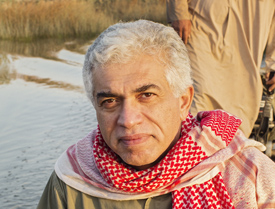
Giving up a comfortable living and family life in California, Azzam Alwash returned to war-torn Iraq to lead local communities in restoring the once-lush marshes that were turned to dust bowls during Saddam Hussein’s rule.

The Mesopotamian marshlands in southern Iraq are known by many as the birthplace of civilization. Situated between the Tigris and Euphrates rivers, the area was once an oasis of aquatic wildlife filled with lush reed beds, water buffalo, lions, foxes and otters. It was also one of the world’s most important migratory flyways for birds.

In the mid-1990s, Saddam Hussein burned, drained and poisoned the area in retaliation of Shiite Arabs, who had staged uprisings following the Kuwait invasion and fled to the marshes for refuge. The wetlands once known as the Garden of Eden turned to dust bowls, driving out the descendants of ancient Sumerians who had inhabited the area for thousands of years. Continue reading

Earth Day In Historical Context

Earth Day began as a minimally organized teach-in.

Earth Day began as a minimally organized teach-in.

Those who do not know their environmental history may or may not be doomed, but they are missing something. Knowing the history is a pleasure in itself, as this article in the current issue of the New Yorker demonstrates.  Know this:

…Earth Day’s success was partly a matter of timing: it took place at the moment when years of slowly building environmental awareness were coming to a head, and when the energy of the sixties was ready to be directed somewhere besides the Vietnam War and the civil-rights movement. A coterie of celebrated environmental prophets—Rachel Carson, David Brower, Barry Commoner, Paul Ehrlich—had already established themselves, and Rome reminds us of  Continue reading

Ecology’s Social Enterprise

ESA


This organization (click the banner above to go to the site), new to us but working its way to a centennial birthday (click the banner below to go to that section on the website)–

ESA History


A meeting was held at Columbus, Ohio, on December 28th, 1915, at which it was decided to organize the Ecological Society of America….The interests and activities of this society will be of the broadest character, embracing every phase of the relation of organisms to their environmental condition…–The Geographical Review 1916–

About the Ecological Society of America

1914: The beginning…

–is as modern and practical as one could want, including this section on its website titled Explore Ecology As A Career with a wealth of links and related resources:

Ecology As A Career

What Do Ecologists Do? Continue reading

Reviving an Iraqi Oasis

This slideshow requires JavaScript.

Thirty years ago, Iraq’s Mesopotamian Marshes were referred to by biblical scholars as the Garden of Eden. Fed by the iconic Tigris and Euphrates rivers, for more than 7,000 years this enormous marshland of over 6,000 square miles (twice the size of the Everglades National Park) provided a bountiful home for both wildlife and humans. A large population of indigenous people, the Ma’dan Tribes known as Marsh Arabs, had thrived there for centuries. But in the political conflicts of the 1990s, Saddam Hussein attempted to eradicate them by destroying the marshes on which they depended for survival. The canals and embankments that both diverted the river water away from and prevented it from entering the area caused the marshes to shrink to less than 10% of its original size, transforming the remainder into a parched, lifeless desert; forcing the wildlife and the people to leave.

We are happy to write that the story doesn’t end there. Continue reading

Echoes Of Net Impact 2010

AlexCountsAlex Counts spoke at the Net Impact Conference in 2010, which took place at Cornell University during the spring semester, while I was teaching a course there. I had the good fortune of being recommended to listen to his talk.  Today I had the good fortune of encountering him again, on this podcast series that I have so far been batting 1,000 with:

Microfinance lending, the practice of making small loans to individuals who would otherwise not qualify for traditional loans, has been a proven method of nurturing entrepreneurship in developing countries. As a college student, Alex read about the work of Noble Prize winning Dr. Muhammad Yunus and his efforts in microfinance. Continue reading

Gliding In Utah, And Protesting Strip-Mining

Click the image above to go to the full post by James Fallows at Atlantic Monthly‘s website:

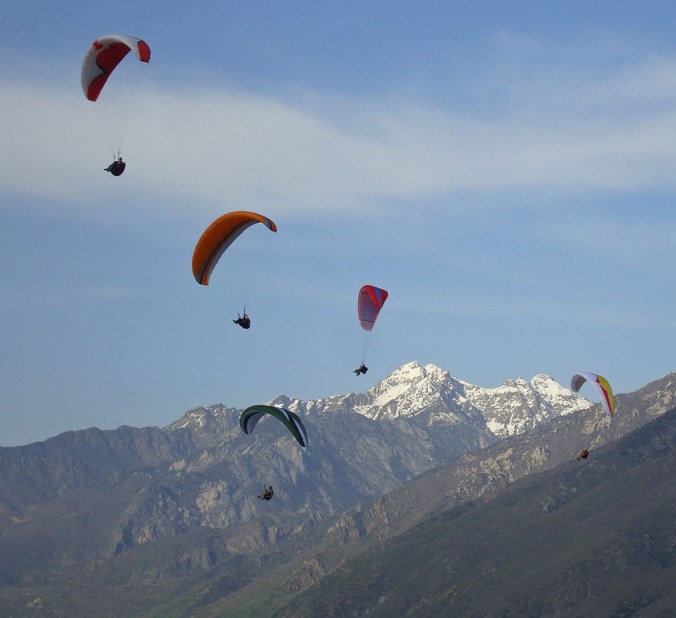
Short version: a unique natural mountain configuration has made a site in Utah the best place in America for one particular pursuit. The pursuit is paragliding, and the location, Point of the Mountain south of Salt Lake City, has a very unusual combination of topography and natural windflow that makes it a perfect soaring spot. Point of the Mountain has attracted devotees from around the world, as shown below, and built a substantial tourist economy. But to get more gravel, a mining company has for the past ten days been bulldozing away the very ridgeline that is the basis for this world-renowned activity — as if earth-movers started chewing up a famous skiing slope or dredging sand from Malibu or Waikiki. It’s the familiar story of mountain-top removal mining, in a new setting with new effects.

Continue reading

Sharks As Charismatic Megafauna

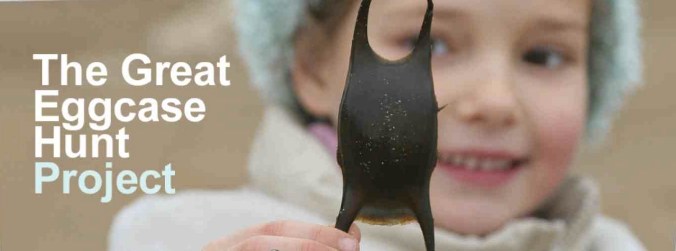
If you are like most people, the words shark and trust do not normally work well together in the same sentence. Sharks are predators, and predators predate. So unless you are a professional you should not take anything for granted when in their waters. But the two words work together well in a sentence about this organization, and the project they have launched to help sharks is intriguing. Entrepreneurial, even.  Click the image above to read more about this initiative:

With over 600 species of skate and ray worldwide, at least 16 species have been regularly recorded in UK coastal waters; most of these species reproduce by laying tough leathery eggcases on the seabed. Of more than 30 species of British sharks, only two species lay eggcases that are commonly found on our beaches; the Smallspotted Catshark and the Nursehound. Continue reading

Rainbow Warrior, Greenpeace And New Zealand

Our hope is that it is a peaceful vessel, bringing justice in a tough world for marine ecosystems:

The new Greenpeace Rainbow Warrior ship sailed into Melbourne’s Port Phillip Bay this week ahead of a six-week tour that aims to highlight the planned coal expansion projects that threaten the survival of Australia’s Great Barrier Reef

Gangsta Guerilla Gardening

Food activist Ron Finley campaigns to “change the composition of the soil” in his hometown of South Central LA. In place of the “food desert” made up of liquor stores and fast food (not to mention drive-by shootings) he and his volunteer organization LA Green Grounds plants “food forests” in abandoned lots, traffic medians and sidewalk parkways.

Finley’s point of view is a call to arms to change our conversation about food.

The city of LA leads the United States in vacant lots. They own 26 square miles in vacant lots. That’s the equivalent of 20 New York Central Parks. That’s enough space to plant 724,838,400 tomato plants.

As a combination vegetable graffiti artist and gardening gangster, Continue reading

Conservation Literacy

Photo Credit: John Mason

Photo Credit: John Mason

We’ve mentioned how an interpretive guide can bring the rainforest to life before. We’ve even touched on the fact that sometimes the best of those guides have “poacher” on their resumés, which follows a similar logic to the observation that often the most devoted practitioners of a religion are the newly converted. Here I’d like to point out a recent study by researchers from Wageningen University, along with Kenyan and British colleagues, published in a recent article in the journal Biological Conservation that correlates the levels of literacy and education with general conservation and the long-term protection of local wildlife.

The team of ecologists evaluated the number of elephants across Africa’s continental range, irrespective of political boundaries. The analysis included the numbers of individual elephants and determined the relation with 19 ecological variables, including rainfall, forage and water availability, and 15 human variables, including human density, welfare, literacy rate, and habitat fragmentation.

Although environmental factors such as the availability of food and water were obviously important, it appears that human factors—including policies, corruption, or the country’s economy—are even more important than environmental factors.

The authors write that:

…even for such charismatic species as the African elephant (Loxodonta africana)…we show through continent-scale analysis that ecological factors, such as food availability, are correlated with the presence of elephants, but human factors are better predictors of elephant population densities where elephants are present. These densities strongly correlate with conservation policy, literacy rate, corruption and economic welfare, and associate less with the availability of food or water for these animals. Continue reading

Happy Birthday, Douglas Adams

One year ago today I posted this to make sure that anyone who loves this author would be aware that there are still opportunities to celebrate his life in tangible, meaningful ways that he would have appreciated.  I encourage anyone and everyone to continue to do so because the conservation needs have grown rather than diminished.  You might also enjoy his final public appearance above, which will give you 90 minutes of intense amusement and learning.   Continue reading