Giants Known And Unknown

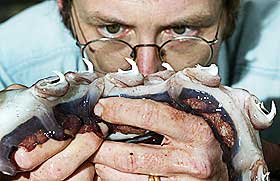
me 2 - CopyWe have posted a few times about awesome oceanic creatures, and their literary impacts, and lots of times about the heroes working to save whales in particular, so when this decade-old but still-fresh article on the giant squid we had missed came to our attention just now, we had to share it:

…Though oceans cover three-quarters of the Earth—the Pacific alone is bigger than all the continents put together—the underwater realm has remained largely invisible to human beings. For centuries, there was no way for scientists to peer into the depths, no telescope that could gaze into the abyss. (A pearl diver can venture down no more than a hundred feet.) Until the nineteenth century, most scientists assumed that the deepest parts of the ocean—where the temperature was frigid, the pressure intense, and the light minimal—contained no life. Continue reading

Conquering Iceland’s Mountains: The Alpine Club (Part 3)

“Turquoise Falls, Bruarfoss” © Jerome Berbigier

Continued from Part 2.

As it turned out, it was a British law student, William Lord Watts, who became the first man to truly answer Longman’s call and embark on some serious exploring. In the introduction to his book Across the Vatna Jökull; or, Scenes in Iceland; Being a Description of Hitherto Unknown Regions, Watts started by taking issue with the concerned British subject at home who saw the exploration of wilderness as a waste of “money, time, and labour,” or “utter folly,” explaining that everyone had a mania for something or other, and his own “may be to wander amongst unknown or unfrequented corners of the earth.” Calling for “a truce to critical stay-at-homes,” Watts advanced to the meat of his trip itself.

In his descriptions of his several expeditions, Watts usually employed a calm, scientific and lawyerly tone that make his bursts of romantic and athletic enthusiasm in certain scenes all the more exciting and believable. Nodding to his biggest audience, he also used some of the Continue reading

Conquering Iceland’s Mountains: The Alpine Club (Part 2)

Continued from Part 1.

If Longman’s unorthodox address is interesting as a sign of Iceland’s attractiveness to the middle-class British authentic-seeking traveller, the responses to his suggestions are even more so. In a May 18 article The Critic wrote a review of the Longman’s address that effectively summed up the perceived position of Iceland in the global context of travel and exploration. The author suggested that any adventurous Briton who had already “used up Ireland and Scotland” and “[did] not care to ascend Mont Blanc for the dozenth time” might turn to Iceland for their future travels, as it had spectacular scenery equal to Switzerland and critics were growing tired of “oft-repeated tales” in countries they knew intimately through so many books. The contributor continued by explaining that:

Aerial view of Iceland © Sarah Martinet

We do not ask the good-natured traveller to kill gorillas in Africa after Mr. Du Chaillu’s fashion, or hunt bisons on the American prairies with Mr. Grantley Berkeley. Our request is much more reasonable. Iceland may be reached by the expenditure of a single five-pound note: and in that uncockneyfied land a solitary Englishman may pay all his daily travelling expenses, including those which will be entailed on him by a retinue of three horses and a guide, for twenty shillings.

Continue reading

Conquering Iceland’s Mountains: The Alpine Club (Part 1)

Aerial view of Iceland © Sarah Martinet

It has been months since I’ve mentioned Iceland on the blog, partly because I was exhausted with the subject after completing my thesis in mid-April, but also because I’ve been occupied with less academic matters over the summer. Another reason for revisiting the topic is that over the summer I had the honor of learning that my thesis was added to the Kroch Library Rare and Manuscript Collections–hopefully somebody will find it useful eventually! Now that the volcanic dust has settled and the borrowed library books have been returned, I feel there are a couple facets of nineteenth-century British travel to Iceland left to explore here.

I’ve written about some of the qualities exhibited by British travelers to Iceland before, but Continue reading

The Marari Fruit Diaries

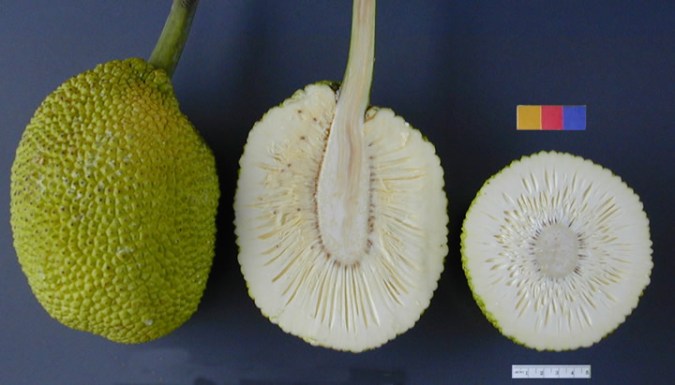
This is a picture of breadfruit, which actually tastes like freshly baked bread

This is a picture of breadfruit, which actually tastes like freshly baked bread

I’ve been writing about the exciting biodiverse varieties of plants at the new property, Marari Pearl. I want to point out though that even before we started, the land has hundreds of coconut trees on it, as well as dozens of mango and cashew trees, which is exciting in its own right.

One thing about the coconut trees that makes them a win-win, is that it helps provide local jobs. There is a certain group of people whose legal right it is in Kerala to do the job of tending to coconut trees. Before Marari Pearl was there, no one was hiring them to take care of the trees. Now that we are utilizing them to provide coconuts for our properties, they get jobs and we get fresh coconuts.

We are adding a cornucopia of other fruits, both local and exotic. I mentioned that we have pomelos, rambutans, tamarinds, several types of jackfruit,  lovi-lovis, mangos, and oranges as well as the infamous miracle fruit. There is also the hong kong guava, burmese grape bud, pomegranate, sapota, malayalam champa fruit, abiu fruit, jaboticaba fruit, langsat tree, and several varieties of avocados or ‘butter fruit’ as its called here. There are breadfruit trees as well as peanut butter trees. There is karonda fruit, nelli puli fruit, mangosteen, and mooty fruit. There are five pages of names, some I know, some I don’t, and some I can’t understand because it’s a handwritten list. Continue reading

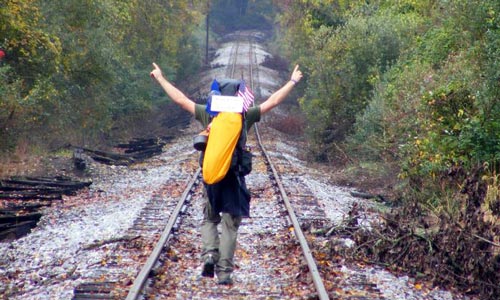
Andrew Forsthoefel, Come To Kerala!

AndrewSlider

Andrew Forsthoefel. Photo by Therese Jornlin, Andrew’s mom. Chadds Ford, PA.

The interns we have had the honor of hosting since setting up shop in Kerala a few years ago have all shared in the responsibility to communicate their experiences in writing on this blog. We are committed to the written word, but not Ludditically opposed to other forms of communication. We have barely put a toe in the water with video, and not even thought about radio as an option, even though we consider Jay Allison an epic hero of good, important communication.

Because of him, we know alot of worthy things that otherwise would have escaped our attention; most recently we learned of and from Andrew Forsthoefel, whose radio story is worth an hour of your time. After which, if you are like us, you will want to know where he is now, and what he is doing. We hope Andrew will see our shout out here and consider our welcome mat in Kerala. Here is his introduction to the podcast when it originally aired nearly 17 months ago: Continue reading

The Sense in Sustainability

adak-fish-farm-krishnankotta-mala

Today we went to  a 68 acre fish farm in Thrissur called ‘Haya Poya’. They were using a traditional box system (the local name is petty para) to collect fish and manage the water level. We went to learn about implementing aquaculture at Kayal Villa, a newer property.

By using this traditional method, they do not have to introduce new varieties of fish in order to farm. They do this mainly because it is less costly to collect the fish naturally than to artificially introduce fish. Also, since it is all local varieties, it limits the possibility of messing up the natural ecosystem with foreign invasive species.

During our ride home, the agronomist, Mr. Deyal, and I continued the conversation about doing what’s ecologically beneficial is actually easier and more cost-efficient. He said

“Only an ecologically viable system will be economically viable. When we fight against the environment, the environment will go against us and we will have to invest more money to protect against it.”

This reminds me of a conversation I had with an oil driller recently. When I asked him what the most challenging thing about his job was, he said ‘going against nature,’ and then proceeded to tell me how rebellious nature was to the oil drilling process and how costly it is. I found it interesting that although their career choices were the antithesis of each other, the conversations I had with them had parallel messages: going against nature is costly.  Continue reading

Indian Independence Day at Spice Harbour

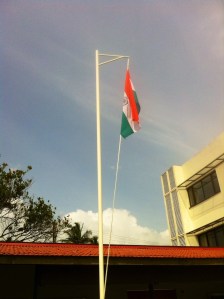
10355655_10201665725084704_4823049703076743324_oYesterday at Spice Harbour I got to participate for the first time in an Independence Day flag raising ceremony.
It’s a good time to tip our hats to history. On August 15, 1947, after centuries of British imperialism, India gained independence. I am no expert on the Indian Independence movement so I won’t speak to it too much, but I know there were many political organizations and philosophies behind it that were united by their desire to end British rule. Mohandas Gandhi’s nonviolent philosophy and civil disobedience is what led the final parts of the struggle for independence that prompted the eventual withdrawal of the British. Since we’re talking about colonial India, we can put Kerala and Spice Harbour into historical context. Continue reading

Seeing in the Dark

7296_591181947589412_1926452569_n

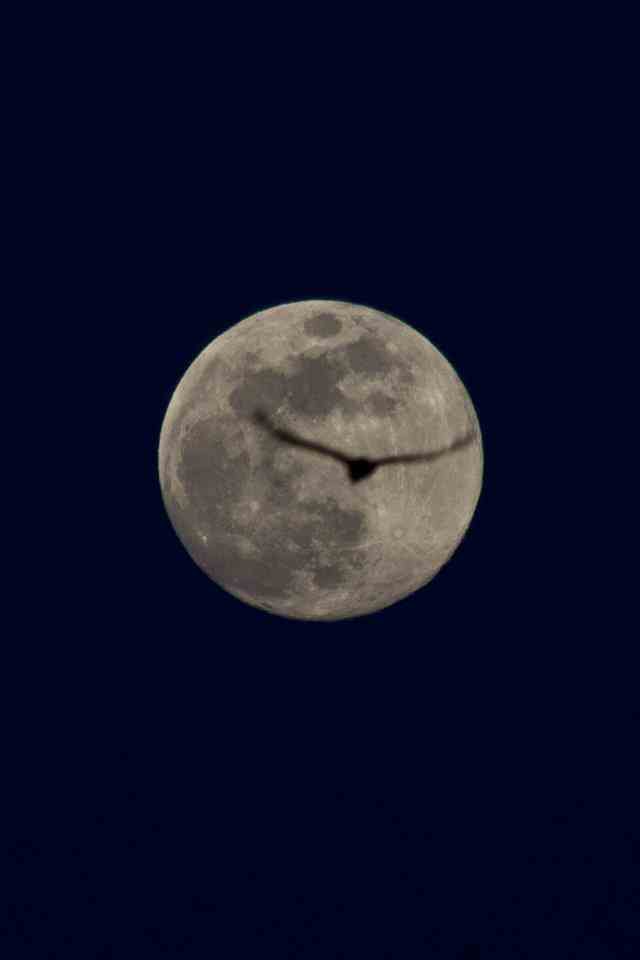
Full moon shot Kayal Villa. Photo: Milo Inman

That traveling state of mind woke up a part of my brain that’s been sleeping for a while. I’ve been feeling my grey matter stretch as a fellow Raxa friend put it. An idea I’ve been thinking about started while on the Camino de Santiago pilgrimage when a man told my friend and me not to walk the Camino at night. He said, “If God wanted us to walk the Camino at night, he would have put a light in the sky so we could see the Camino’s beauty”.

We were confused- why didn’t he see beauty in walking at night under the full moon and stars? After that, my friend and I began to contemplate how darkness has been associated in both sacred and secular literature with the lack of spiritual enlightenment, lack of awareness; in our language, to say something is dark has bad connotations. We felt more motivated than ever to walk at night.

We began to question how a society’s aversion to darkness could inform everything. We considered how the aversion to darkness could be a deeper layer to the resistance to female equality and even environmental understanding of the interdependency of nature and cycles of dark and light.

Continue reading

Reflecting: Half-a-World Away

Cardamom Siesta

Cardamom Siesta

Five months have elapsed since my departure from Cardamom County and Raxa Collective in Kerala — sufficient time, in my opinion, to think back on my experience and growth during my adventures there, as well as the time I have spent back in the United States.

Words cannot express how thankful I am for having been given the opportunity to travel farther and live longer away from home than I ever have before, and in a truly amazing, diverse, and different region of the world than I could ever imagine.  The head honchos, Crist and Amie Inman, have an ethos rooted deeply in progressive ecological conservation that is truly admirable, and for the area they are established, borderline revolutionary.

Continue reading

Visiting Madurai Meenakshi Amman Temple

madurai_temples

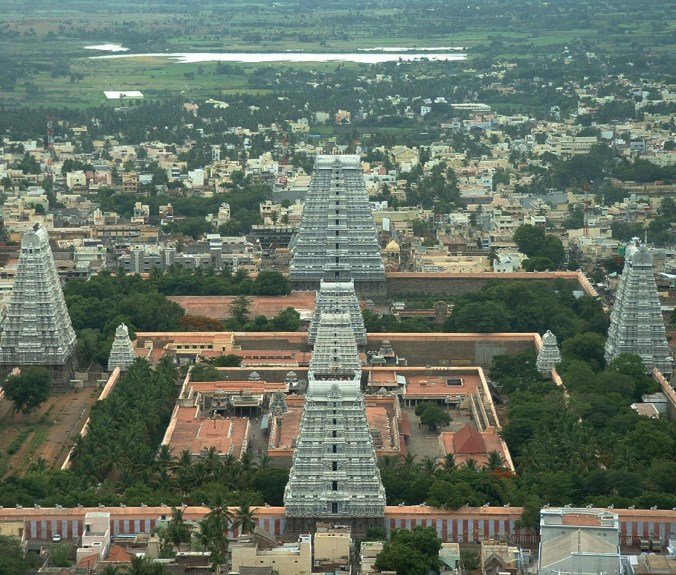
Upon visiting the Meenakshi Temple, I removed my shoes, checked my bag at the door and proceeded my barefoot adventure through the eastern tower of the temple city. Maduri is known as temple city because of how vast the Meenakshi temple is. There are 12 towers, the four larger ones face each of the directions North, East, South, and West. We explored the 1000 pillar hall, the holy pond, and many other parts of the ancient temple.  It seemed like every corridor and wall had some sort of sacred art or story to it. The history of the temple is as vast as temple city itself. The temple dates back at least 2500 years. In 1310, the temple was almost completely destroyed by an Islamic conqueror and so many of the important sculptures were destroyed. It was restored in the 14th century though by Hindu kings who regained power.

Continue reading

Edakkal Caves – Wayanad

Photo credits : Ramesh Kidangoor

Photo credits: Ramesh Kidangoor

Edakkal Caves  are situated in Wayanad district near Sulthan Bathery. This prehistoric rock shelter made up of natural rock formations includes a massive boulder wedged in between two huge vertical outcroppings, forming a large cave. Petroglyph writing inside the cave form inscriptions of human and animal figures with peculiar headdresses as well as drawings of wheels, bows, knives and trees. Continue reading

Nilgiri Railway – Ooty

Photo credits : Ramesh Kidangoor

Photo credits: Ramesh Kidangoor

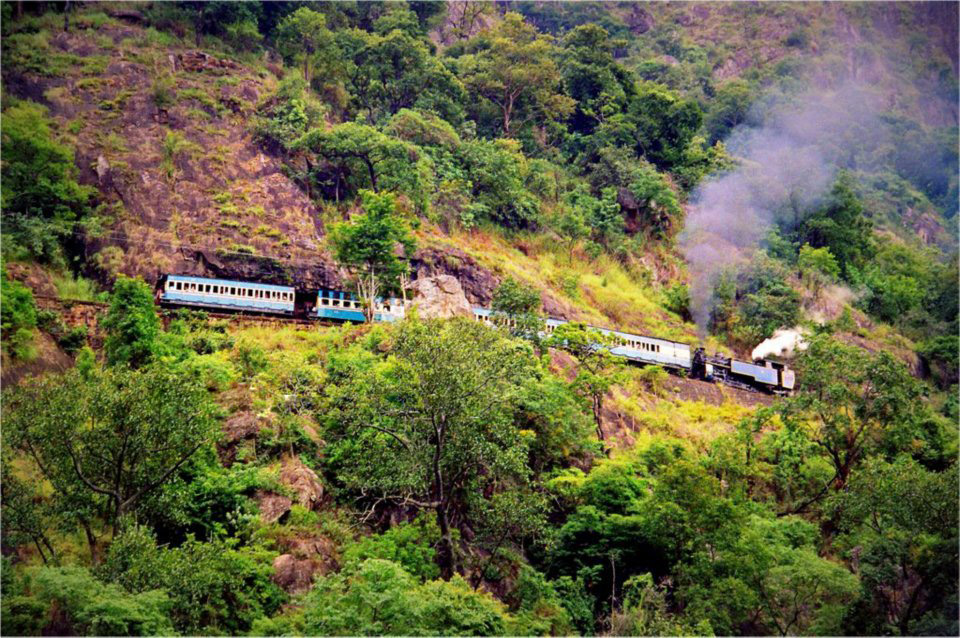
The Nilgiri Mountain Railway was built by the British in 1908. The railway line lies between the hill ranges of Mettupalayam and Ooty, with a 46km-long track that passes over 26 viaducts and through 16 tunnels, as well as tall girder bridges. This mountain rail is particularly picturesque because of the rocky surroundings and forested hills. Continue reading

Camino de Santiago Adventure: Paris, not quite like I planned

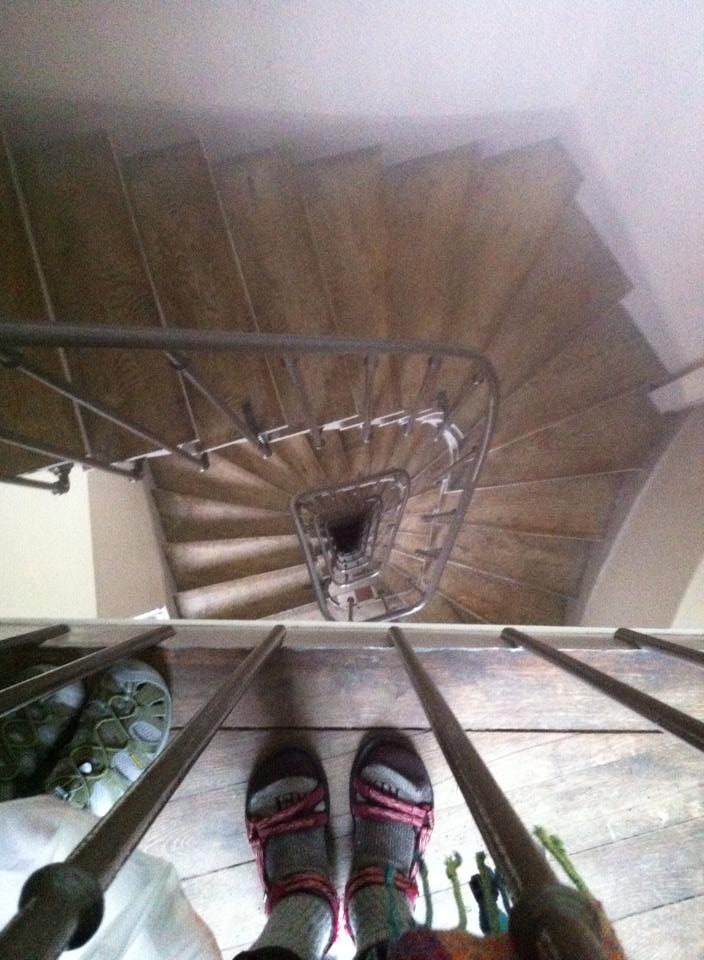
We walked up this very skinny, tall staircase to our microscopic abode that night.

We walked up this very skinny, tall staircase to our microscopic abode that night.

One of my biggest lessons on the Camino was in planning. My friend and I arrived in Paris with no plan, or a very loose one that failed as soon as we looked at what time it was. We were going to just find a train upon arrival to reach the starting point in our pilgrimage: St. Jean Pied de Port. If there were no trains, we were going to find a cheap hostel. Our plane arrived around 8 PM. There goes the plan.

Paris is the most visited city in the world. We just figured the infrastructure for tourists would be obvious. Upon exiting the airport we realized that it’s far from obvious. We didn’t even know which train station we were looking for. There was no wifi around and figuring out all these things would be much more difficult as daylight slipped from us.

A man who spoke English noticed our obvious “lost-ness” and ended up being our angel of the night. He let us use his smart phone to look up which train station we needed to go to, how to get there, and what hostels were nearby. Turns out all the hostels we found were way out of our price range. Along the Camino- albergues were 10 euros, tops. Since we weren’t planning on staying in Paris, we didn’t realize how expensive they were. This was happening at a bus station, and when his bus arrived we just followed him on with no ticket and ended up taking that all the way to the train station. Continue reading

That Traveling State of Mind

10437354_10201362789791511_7388278044108926240_n

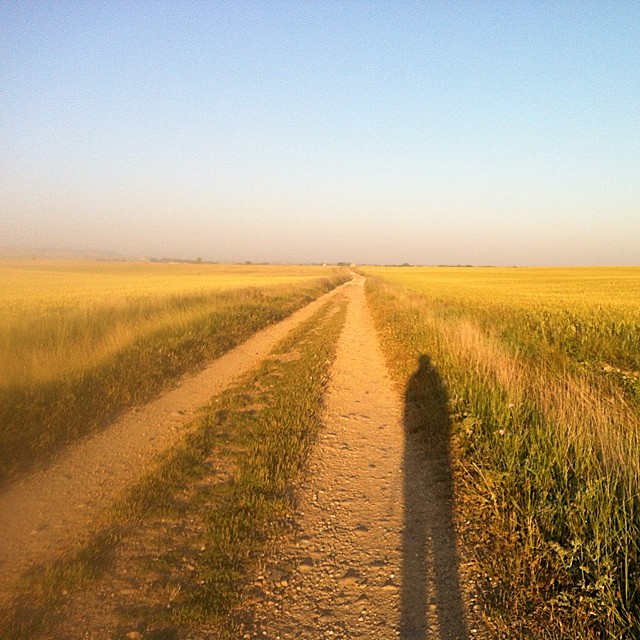
I took this while backpacking across this very empty and flat part of the Camino in Spain called the Meseta.

In my daily life, I flee myself in sneaky ways. I flip on a movie. I hang out with friends. I have habits when I am at home. There are these creature comforts that become little patterns that can give me an easy way out. Since I’ve been traveling, different parts of myself have surfaced. And if I don’t like those parts, tough luck. There is no easy way out, only a way forward. To just be with what I am experiencing, as it is.

The culture of the different places I have been and the range of different things I see activate streams of thought and states of mind I do not find myself in from my experiences at home. I really appreciate this about the traveling state of mind.

I think this is a different kind of tourism. Visiting different parts of myself inspired by different parts of the world.

Continue reading

Xandari’s Trails

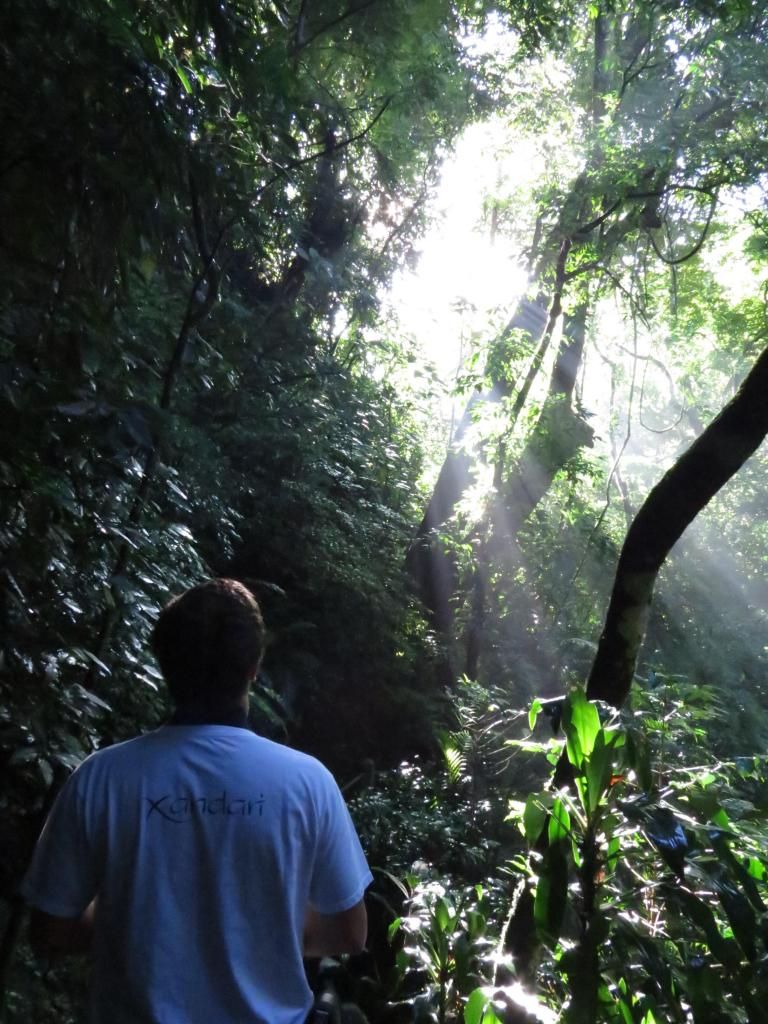
With our daily walks around Xandari to build the resort’s checklist of resident birds and take photos of as many species as possible, James and I are taking full advantage of the remarkable trail system. It allows us to travel several miles around the thirty-odd acres of private reserve in Xandari’s property without tracing back over our steps at all, which would have negative implications on the eBird data that we submit for every outing (we don’t want to increase the chances of counting a bird twice!). Descending from about ~1,150m (~3,800ft) to ~1,080m (~3,550ft), on woody switchbacks that give us vantage points over the surrounding forest and allow views into the canopies of the trees below, James and I walk through many types of bird habitat, which both in theory and in practice yields us a higher species count than if we were to simply walk around the gardens right outside any of Xandari’s villas – though I don’t mean to imply that the gardens aren’t home to quite a few species here!

This slideshow requires JavaScript.

Continue reading

Notes from the Garden: Mango Hunting

photo 4

The mango has its ancestral roots in India, so something felt really right about shaking mangoes out of the trees today in Cardamom County. Right now I’m reading this delicious book called The Fruit Hunters, written by Adam Leith Gollner. Since I have started it, I have had a whole new context to put my experience of fruit in! Turns out there are over 1,100 varieties of mangoes. The ones I know and love from supermarkets back in the United States are the Tommy Atkins mangoes, which are more common in international commerce.

photo 2Indian mangoes apparently weren’t allowed into the states for almost thirty years due to “pest concerns.” Actually, it was more like, nuclear trade concerns. India and Canada had a nuclear trade relationship in which Canadian nuclear reactors were being used to build a nuclear arsenal. In 2007 though, India signed a nuclear treaty with the United States, only under the condition that India’s mangoes be allowed back in the states. Later when President Bush flew to India to discuss the deal, he announced, “the U.S. is looking forward to eating Indian mangoes.” Continue reading
Camino de Santiago Part 1

10394480_10201305461438338_2752454523553822119_n

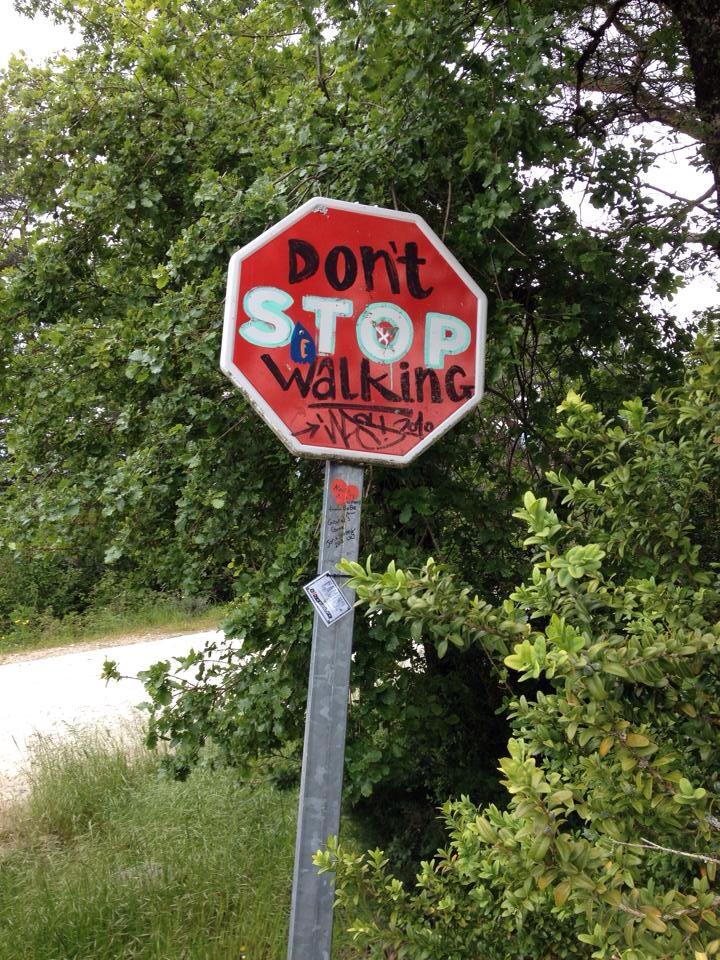
There are good signs everywhere along the Camino. Photo Credit: Kayleigh Levitt

Before coming to India, I was traveling for a month in Spain, walking the Camino de Santiago, an ancient pilgrimage to the cathedral of Santiago, where the apostle Saint James is said to be buried. Nowadays, people walk the Camino for a range of reasons including the traditional Catholic. Everyone I met was walking for a different, personal reason, but many fell into similar and overlapping categories of health, spirituality, personal journey, and cultural experience.

Many of us on the Camino were far from home, but the shared intention of being there was this thread that bound us all together, beyond language barriers and cultural differences. The Camino has its own culture and so we shared that. There were lots of people who were alone, but we were together.

The most popular part of the pilgrimage to walk is the Camino Frances, from St. Jean Pied de Port, France to Santiago de Compostela, Spain. Traditionally, people walked from their house. Although that is less common now, people do still start from their own doorway. There are many places people start the Camino besides St. Jean Pied de Port (as well as many places to end it- there is a walk to Finisterre, the coast of Spain and through Portugual, the Camino Portugués as well). I have been told there are fewer way markers- which are yellow arrows and scallop shells- before the Camino Frances.

Part of the fun of the Camino is hearing about the different ways people have done their journey. I heard of a woman walking alone, starting in Switzerland, with only a compass to guide her (there are fewer albergues too when you start from that far). I met several people who walked 1000 kilometers by the time they reached St. Jean Pied de Port, where I was starting.

I started in St. Jean, which is right at the border of France and Spain. Photo Credit: http://www.caminoguides.com/route.html

At the first albergue I stayed in, which are essentially hostels for pilgrims, our French hospitalera described it something like this: The Camino is not about walking. Walking helps you do the camino, but the camino is an inner camino, when you walk inside yourself.

Continue reading

Trekking through Periyar Tiger Reserve

Today I was fortunate enough to get to walk through one of the most biodiverse areas in the world second to the Amazon: Periyar Tiger Reserve.

I understand why people travel from all of the world to experience this place. In the United States, we are very proud of our national parks for their diversity and beauty. However, this park feels more untouched than the ones I have been to in the states. It kind of absorbs you. The paths in the forest seem less traveled. Honestly, it feels less touristy and more wild. We only trekked on the periphery of the jungle really. The center of the jungle truly is preserved and only certain people are able to go deep inside.

Continue reading

Kolukkumalai – Munnar

Photo credits : Unni Pillai

Photo credits: Unni Pillai

Located in the upper reaches of Kerala at the border with Tamil Nadu, at an elevation of 7,900 feet above sea level, Kolukkumalai offers a fantastic view of the neighboring state of Tamil Nadu. Kolukkumalai is famous for one of the highest tea estates in the country, and is among the most popular tourist spots in Munnar. Continue reading