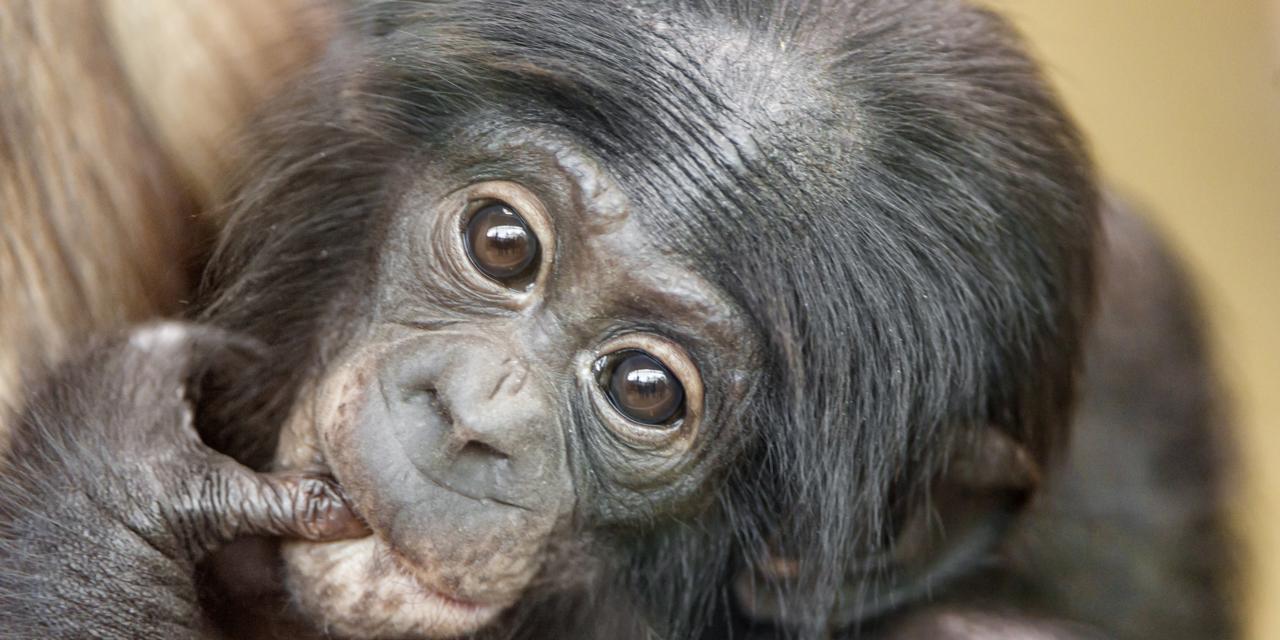
First Witnessed Bonobo Birth

© BBC

Bonobos are the smaller and less researched species of chimpanzee, and just a few days ago the first birth witnessed in the wild by a human took place in the Democratic Republic of the Congo. The three main discoveries that primatologist Pamela Heidi Douglas made while observing the birth were: the mother bonobo gave birth in a tree, rather than on the ground; the mother had two other females present at the birth, who may have served as midwives or at least supporters; and the mother and her female friends all ate the placenta after the birth. Matt Walker reports for the BBC:

For almost two years, Douglas has followed and studied the bonobos at Luikotale, as part of her research towards her PhD.

“One component of my Ph.D. research is the study of reproductive endocrinology in female bonobos,” she told BBC Earth.

To do this, Douglas regularly collected urine samples from Luna and other females in the community on a regular basis.

These were tested with human pregnancy kits, which can detect pregnancy in bonobos as well as other non-human primates.

Continue reading

Giraffes Deserve Science As Much We Need Good Science Writers

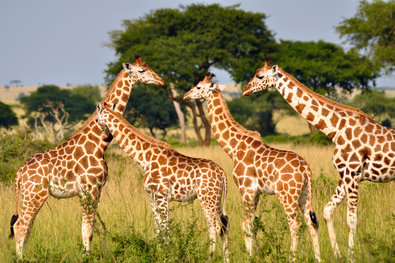
Julian Fennessy. Giraffes are the “forgotten megafauna,” said the  executive director of the Giraffe Conservation Foundation.

Julian Fennessy. Giraffes are the “forgotten megafauna,” said the executive director of the Giraffe Conservation Foundation.

We have been highlighting science writers since our outset as a blog, following a longstanding respect from our contributors for their particular talent, which has made us richer by reaching fruit that is sometimes too high on a tree to reach and bringing it where we can reach it.

From the current New York Times weekly section highlighting and explaining scientific matters of interest to us with one of the greatest writers in the genre, we now turn our attention to giraffes for the first time in our several years sharing (and as pointed out in the article we can only wonder why we have not paid more attention to such a creature prior to now):

SCIENCE TIMES: OCT. 7, 2014

Our Understanding of Giraffes Does Not Measure Up

By NATALIE ANGIER

Giraffes may be popular — a staple of zoos, corporate logos and the plush toy industry — but until recently almost nobody studied giraffes in the field so there is much we don’t know about them.

Giant of Africa

Nigeria is known as the Giant of Africa and that’s where I’m currently based. I was looking for a change in my life, so promptly accepted the position when it was offered. Most of you must be wondering why I’m here, and that’s one question I don’t have a clear answer to. Perhaps it’s the adventure and the challenge that comes along with moving into a territory. The nature of the job is different from the regular office administration job that I was used to so that was new as well.

So I packed my bags along with words of advice from family and friends – “don’t mingle too much”; “don’t be over friendly”; “do your work and go directly home”; “don’t get into any unnecessary relationships” etc. etc. It’s not surprising that a woman about to embark on this type of adventure should receive advice like this, so I thanked everyone and was on my way. The journey had it’s challenges, none of which were surprising. I was carrying heavy luggage and changing planes in Mumbai was the toughest. I promised myself that I’ll be taking a different route when I visit India next – not just a different route, I intend to fly Business class! Continue reading

Animals Out Of Place

zebra_ozy_2_wide-db72ef84345cb602749821526cdb930e0e4ee129-s4-c85

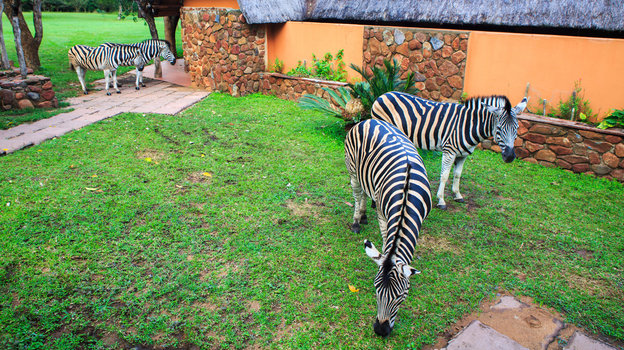
Sure, they’re cute. And owning them is legal in more places than you might think. That doesn’t mean buying a zebra is a good idea. Ozy.com

National Public Radio (USA) shares a story about animals in places where they do not belong:

It’s a hot, dry day in Kerrville, Texas, and more than a hundred people have gathered in a small circular barn. The crowd is mostly men, tan and weathered from working outdoors, but three little girls perch on a bench in the front. The littlest, who wears a Frozen T-shirt emblazoned with Elsa’s face, leans forward, her eyes wide, and announces to her friends: “I really want a zebra!” Continue reading

Listen, Learn, Elephants

Thermal imaging on an elephant in the Dzanga clearing. Photo by Peter Wrege

Thermal imaging on an elephant in the Dzanga clearing. Photo by Peter Wrege

Way back when, we first shared what we had read and visually devoured about this project, and the last line of our post at that time asked if “one of our Lab-based contributors will help us with an introduction to their office mates in the Elephant Listening Project?”. Not until now were we nudged to think again and do something about it. Stay tuned…

Meanwhile, thanks to the folks at Science Friday and the donor-listeners and producers of the amazingly diverse public radio networks in the USA, tune in to learn more:

Elephants have different rumbles and roars for how they greet each other, warn about danger, and even to show that they’re annoyed. Peter Wrege, director of The Elephant Listening Project, recorded an event called “mating pandemonium,” where a group of elephants roar after a pair of elephants mate. Wrege discusses the possible reasons for this pachyderm party.

Continue reading

Nature Has The Long View

MobiusII

When you love what you do, the hope is that you will do it indefinitely. E.O. Wilson shows little sign of slowing down any time soon, and his new book is the best evidence to date. Not exactly light weekend reading, nor summer beach fare, but from the sound of this review, worth the effort:

LOOKING FOR ETERNITY? LOOK TO NATURE

A Review of “A Window on Eternity” by E.O. Wilson

By Bill Chameides

To say that E.O. Wilson, arguably the greatest living biologist, is prolific is a bit of an understatement. At 84, Wilson continues to churn out books at a rate of one to two each year. Yesterday, Earth Day 2014, marks the release of his latest book, A Window on Eternity: A Biologist’s Walk Through Gorongosa National Park  (Simon and Schuster), and a DVD companion titled “The Guide.” Continue reading

Microchipping Rhinos In Kenya

Click above to go to the video, on the Guardian‘s website courtesy of WWF:

In a dawn operation, rhinos in the Mara region of Kenya are tranquilised by rangers. A multidisciplinary team of researchers, vets and technicians take over to drill a tiny hole in the horn to insert a microchip. Another is implanted in the body and a unique pattern is put on the rhino’s ears. Microchipping, conservationists say, is essential to protect the endangered black rhinos. ‘If Kenya loses its rhinos, it will lose its heritage,’ says Robert Nedeti, species manager at WWF Kenya.

Food Futures

No one would mistake this for entertainment.  It is two hours of research findings, all wrestling over complex food issues. No gastronomic delights. Rather, the puzzle over how to feed a rapidly multiplying human population.  Click the screen above to go to the video:

By 2050, 2 billion more people are expected to be vying for food and energy. Access to fresh water and arable land will be heavily constrained. And the food supply for the world’s 9 billion people will be increasingly produced under flood conditions, drought or both, as climate change accelerates. Continue reading

Cats And Dogs And The Golden Rule


This slideshow requires JavaScript.

When we posted about a unusual collaboration between cheetahs and shepherd dogs, we started watching for more news on the same.  This website tells a different story about feline-canine common interests, with a clear reminder about the human interest in behaving more empathetically toward our neighbors:

CHEETAH AND AFRICAN WILD DOGS NEED LOTS OF SPACE: Of all the large carnivores of Africa cheetahs and wild dogs need lots of space. Recognition of this led to the RANGE WIDE CONSERVATION PLANNING PROCESS bringing together all sectors of society to develop frameworks under which all stakeholders – government, community and private – can work together to ensure the survival of these iconic species. Use this website to learn more about this innovative approach, the distribution of the two species, who is working to help them and what is being done on the ground. Continue reading

Farm Fresh From Ghana

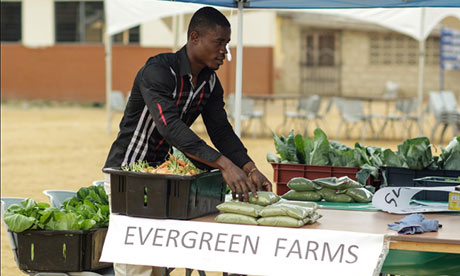
Accra Green Market Photo Courtesy of The Guardian

Accra Green Market
Photo Courtesy of The Guardian

Recently Ghana had its first ever farmer’s market in its capital of Accra, featuring locally grown, sustainable, and organic produce. This is a big step for the organic farmers in the area to expose their products to the local people. According to an article in The Guardian,

The only space we (the farmers) usually get to market our products are at the bazaars of international schools, where we sell to a lot of expats, but we need more markets like this – the best feedback we have had for our products is from Ghanaians.

Continue reading

Charisma & Conservation

The video above stands on its own, worthy of a few minutes, but it brings to mind the role of charisma in conservation. We find it easier to worry about large, iconic species. Some creatures are brought back from the brink of extinction, only to experience the same fear and hatred, or worse, fate that brought them to that brink in the first place.  The editorial below, from today’s Guardian, reminds us that the uniquely human form of charisma called celebrity plays its own role, raising interesting questions.  Why celebrate not vultures and their mostly unknown guardians? Adam Welz has a few relevant thoughts:

My last post was about the need to reduce demand for rhino horn and ivory in Asia to stem Africa’s current poaching crisis. This week my inbox bulged with photos of mega-celebs trying to do just that.

Actor Edward Norton filmed a couple of public service announcements in New York on Tuesday to raise awareness of the illegal ivory trade, and yesterday Prince William, David Beckham and basketball player Yao Ming got together in London to film another brace of spots about rhino and elephant killing. The ads will go out this year as part of campaigns put together by the nonprofit WildAid, working in conjunction with other organisations. Continue reading

Cheetahs And Shepherd Dogs, Partners In Entrepreneurial Conservation

Thanks to a friend’s travels to the southern tip of Africa, a story from the field about colleagues we hope to meet soon. The friend learned of this program during a visit to a Cape Town winery (cheers to them and that; click the logo to the right to read more than we can share here):

Cheetah Outreach

Promoting the survival of the free ranging, Southern African cheetah through environmental education and delivering conservation initiatives.

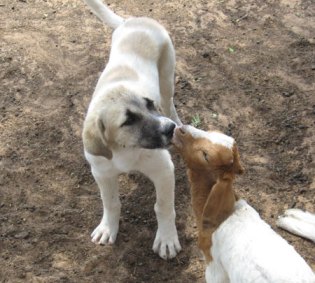
As a result of the success of Cheetah Conservation Fund’s livestock guarding dog programme in Namibia, a trial programme was launched by De Wildt’s Wild Cheetah Management Project (WCMP) and Cheetah Outreach in 2005 to introduce the Anatolian shepherd to serve farmers in South Africa. To give this trial the best possible chance of success, farmers  Continue reading

Those Fabulous Buffett Boys

It sure sounds like a great way to pass time, giving away billions of dollars. The fact that they seem to think deeply about the implications of their wealth, as well as their methods of getting and giving, makes them even more noteworthy. Thanks to tax-payer, and listener-supported National Public Radio in the USA for bringing the other brother/son to our attention with this story:

Get Howard Buffett into the cab of a big ole’ farm tractor and he’s like a kid — albeit a 58-year-old, gray-haired one. He’s especially excited when it comes to the tractor’s elaborate GPS system, which he describes as “very cool.”

“I’m driving hands-free,” says Buffett, the son of billionaire investor Warren Buffett. Continue reading

Natural Resources, Economic Development, And Fair Play

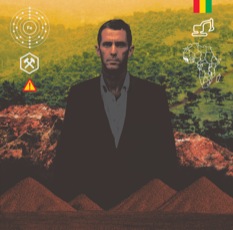
Guinea, in West Africa, is one of the world’s poorest countries. The iron ore buried inside the Simandou range may be worth a hundred and forty billion dollars.

Guinea, in West Africa, is one of the world’s poorest countries. The iron ore buried inside the Simandou range may be worth a hundred and forty billion dollars.

An article in this week’s New Yorker documents the challenges of sustainability in resource-rich developing economies with a history of political instability:

One of the world’s largest known deposits of untapped iron ore is buried inside a great, forested mountain range in the tiny West African republic of Guinea. In the country’s southeast highlands, far from any city or major roads, the Simandou Mountains stretch for seventy miles, looming over the jungle floor like a giant dinosaur spine. Some of the peaks have nicknames that were bestowed by geologists and miners who have worked in the area; one is Iron Maiden, Continue reading

Metro Travelers Meet Mega-Fauna

Buying Illegal Ivory is Killing Me’: One of the posters from the Shanghai campaign. Credit: UNEP

Shanghai is famous as China’s “City of the Future” and in collaboration with this United Nations-backed campaign metro travelers are finding large-screen displays and posters of endangered animal species during their daily commute.

Public awareness was a key factor behind the reduction in the demand for ivory in North America and Europe in the 20th century, and it can play its part in reducing the illegal wildlife trade today as demand moves to emerging markets. Continue reading

Really, Bechstein?


Beauty is in the eye of the beholder.  Disgust seems to us the only appropriate response to this seemingly beautiful, ultimate craft luxury.  We appreciate craft, but not when ivory is part of it.  It does not matter how the ivory was sourced: at this moment in time there is no justification for supporting the notion that ivory is still an acceptable definition of luxury. Shame on Bechstein, and more so to anyone who purchases their musical instrument made with elephant body parts. We try to keep it positive on this site, but with stories like this who can possibly contain the outrage? Continue reading

My First Periyar Tiger Reserve Experience

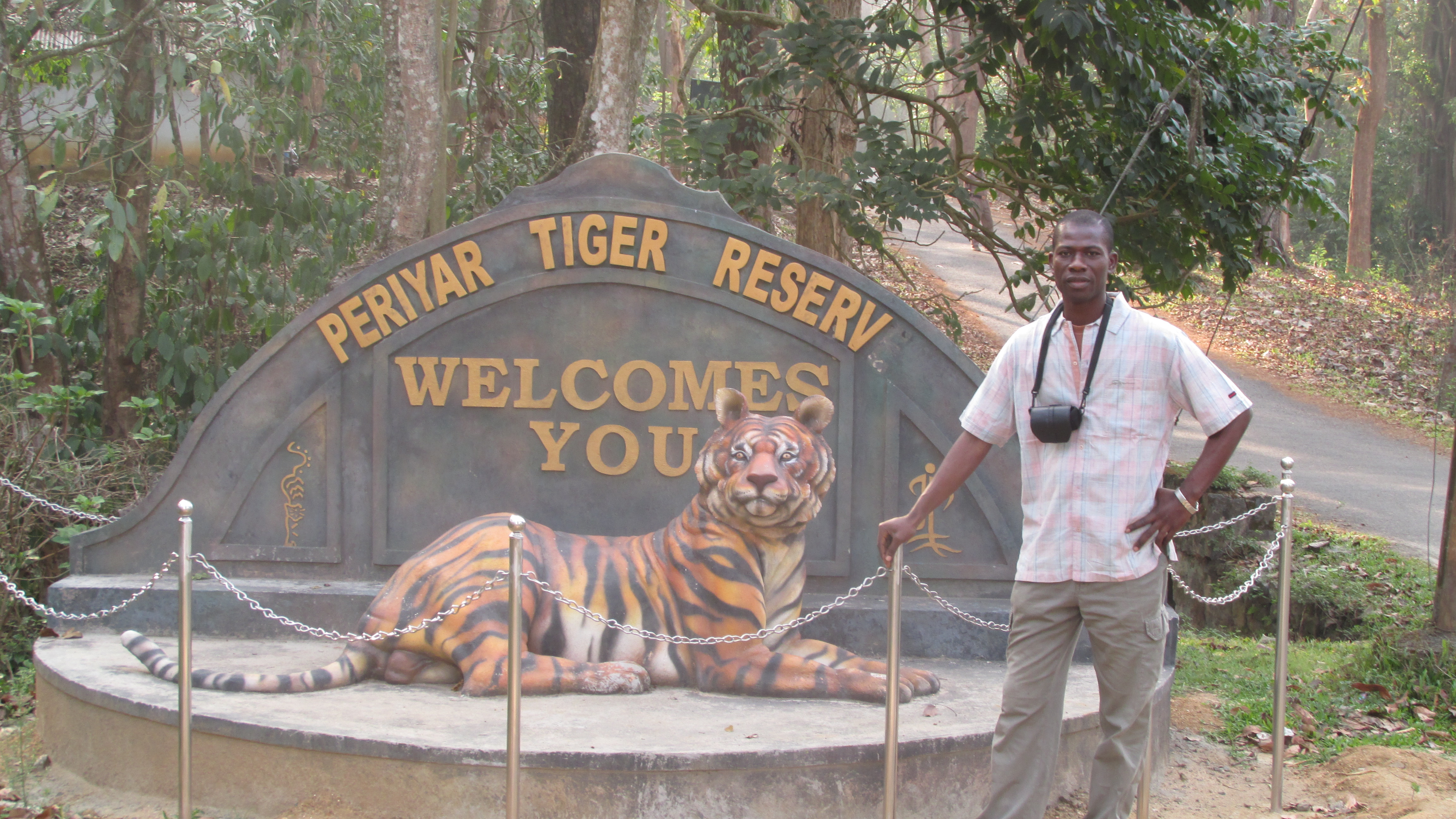
At the Periyar Tiger Reserve

I’ve been in Kerala 10 days now and in Thekkady about a week of that time. After all the orientation, yesterday was my first opportunity to explore the Periyar Tiger Reserve, the Kerala national park located right across the street from Cardamom County where I’m spending the next 2 months. As a management  trainee with Raxa Collective my responsibilities are to develop the tools that I’ll implement in what will be the best lodging within Ghana’s Mole National Park. (In fact, my day off actually began the evening before by experiencing Earth Hour at the hotel as well as with a candlelight procession with other hoteliers and townspeople.)

Earth Hour at Cardamom County

Earth Hour at Cardamom County

Continue reading

Ghana, Canopy Walkways, Conservation

TNC Green Science Blog


Click the banner above to go to the blog, and the image below to go to the most recent post:

Boucher’s Birding Blog: Mamba Meets Bushbaby

MARCH 15, 2013  |  by: Timothy Boucher
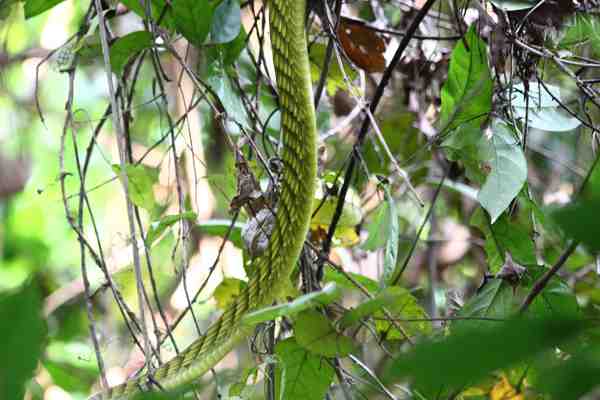
Many visitors see the canopy walkway as a low-tech amusement ride. But look closely, and wonders await: like this green mamba slithering past. Tim Boucher/TNC

Many visitors see the canopy walkway as a low-tech amusement ride. But look closely, and wonders await: like this green mamba slithering past. Tim Boucher/TNC

Sometimes when you go birding, you can’t help but see other animals – elephants, army ants, beautiful butterflies.

Occasionally, if you get out early (as birders always do), you can get to a park before the crowds and you might see something really special (and, in this case, gruesome).

In January, we traveled to Ghana for some superb birding. Our visit included the famous canopy walkway at the Kakum National Park near the Ivory Coast. The seven bridges strung high up in the trees usually teem with visitors who have no appreciation of the amazing birdlife. Continue reading

End This Bling Now

Carl Safina. In Amboseli National Park in Kenya, a herd of savanna elephants moved toward hills where they would spend the night.

What words might make us care enough to take action on behalf of these animals?  Perhaps the words of those in the field, watching the paramilitary-style poachers, and who have traced the value chain for which those killers kill. From today’s New York Times a powerful editorial from two such people:

…In China and other countries in the Far East, there has been an astronomical rise in the demand for ivory trinkets that, no matter how exquisitely made, have no essential utility whatsoever. An elephant’s tusks have become bling for consumers who have no idea or simply don’t care that it was obtained by inflicting terror, horrendous pain and death on thinking, feeling, self-aware beings…

Continue reading

Conservation Literacy

Photo Credit: John Mason

Photo Credit: John Mason

We’ve mentioned how an interpretive guide can bring the rainforest to life before. We’ve even touched on the fact that sometimes the best of those guides have “poacher” on their resumés, which follows a similar logic to the observation that often the most devoted practitioners of a religion are the newly converted. Here I’d like to point out a recent study by researchers from Wageningen University, along with Kenyan and British colleagues, published in a recent article in the journal Biological Conservation that correlates the levels of literacy and education with general conservation and the long-term protection of local wildlife.

The team of ecologists evaluated the number of elephants across Africa’s continental range, irrespective of political boundaries. The analysis included the numbers of individual elephants and determined the relation with 19 ecological variables, including rainfall, forage and water availability, and 15 human variables, including human density, welfare, literacy rate, and habitat fragmentation.

Although environmental factors such as the availability of food and water were obviously important, it appears that human factors—including policies, corruption, or the country’s economy—are even more important than environmental factors.

The authors write that:

…even for such charismatic species as the African elephant (Loxodonta africana)…we show through continent-scale analysis that ecological factors, such as food availability, are correlated with the presence of elephants, but human factors are better predictors of elephant population densities where elephants are present. These densities strongly correlate with conservation policy, literacy rate, corruption and economic welfare, and associate less with the availability of food or water for these animals. Continue reading