Evolution Of Eating & Adaptation Of Dining

A photo illustration showing watermelon and other fruits cut up and stacked in a precarious tower.

Alma Haser

We recommend two recent op-eds from the New York Times, starting with this one by David Wallace-Wells:

From the vantage of the American supermarket aisle, the modern food system looks like a kind of miracle. Everything has been carefully cultivated for taste and convenience — even those foods billed as organic or heirloom — and produce regarded as exotic luxuries just a few generations ago now seems more like staples, available on demand: avocados, mangoes, out-of-season blueberries imported from Uruguay…

A photo illustration of a squash in the desert, with a hose above it dripping water.

Photo illustration by Scott Semler

And if time allows after reading that, continue on with today’s essay by Aaron Timms, a cultural critic whose upcoming book about modern food culture we hope to preview in these pages soon:

Popcorn’s Origin Story

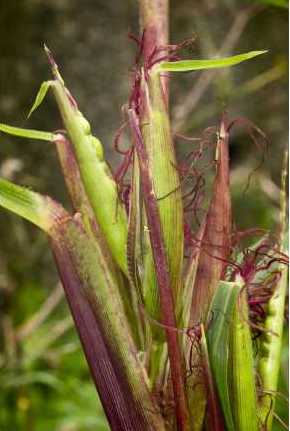
(Credit: vainillaychile/iStock via Getty Images Plus) The ancestor of maize was a grass called teosinte.

Since it is one of my go-to snacks, I frequently wonder about this, and appreciate the sleuthing by Sean Rafferty at SUNY Albany, and Discover magazine for publishing it:

How Was Popcorn Discovered?

Could a spill by the cook fire have been popcorn’s eureka moment?

You have to wonder how people originally figured out how to eat some foods that are beloved today. The cassava plant is toxic if not carefully processed through multiple steps. Yogurt is basically old milk that’s been around for a while and contaminated with bacteria. And who discovered that popcorn could be a toasty, tasty treat?

pile-of-popcorn

(Credit: Yeti studio/Shutterstock)

These kinds of food mysteries are pretty hard to solve. Archaeology depends on solid remains to figure out what happened in the past, especially for people who didn’t use any sort of writing. Unfortunately, most stuff people traditionally used made from wood, animal materials or cloth decays pretty quickly, and archaeologists like me never find it.

We have lots of evidence of hard stuff, such as pottery and stone tools, but softer things – such as leftovers from a meal – are much harder to find. Sometimes we get lucky, if softer stuff is found in very dry places that preserve it. Also, if stuff gets burned, it can last a very long time. Continue reading

Greenhouse Reflective Effects

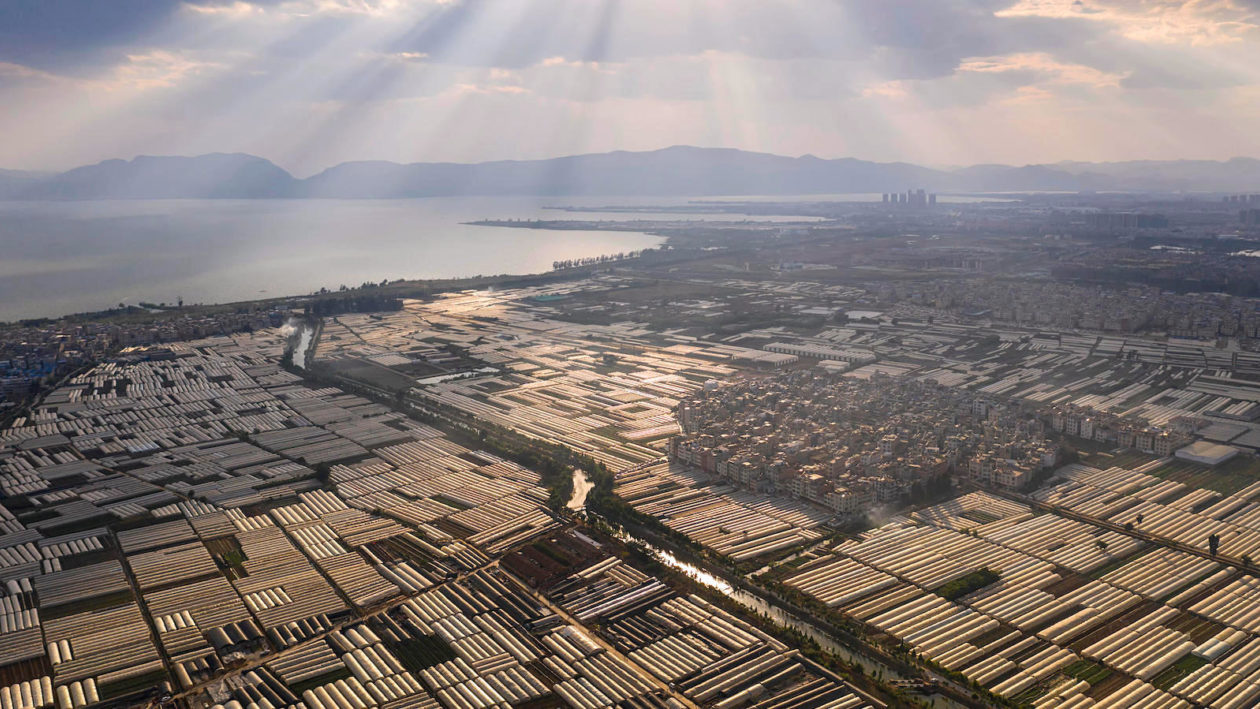
Greenhouse roofs reflect sunlight in Kunming, China. FABIO NODARI / ALAMY STOCK PHOTO

Fred Pearce, in Yale e360, offers reason to further consider the greenhouse:

Could the Global Boom in Greenhouses Help Cool the Planet?

As agricultural greenhouses proliferate, researchers are finding that their reflective roofs are having a cooling effect. Some experts see this as an unintended experiment with lessons for cooling cities, but others point to the environmental damage that greenhouses can cause.

The world is awash with greenhouses growing fresh vegetables year-round for health-conscious urbanites. There are so many of them that in places their plastic and glass roofs are reflecting sufficient solar radiation to cool local temperatures — even as surrounding areas warm due to climate change. Continue reading

Genetically Modified Rice

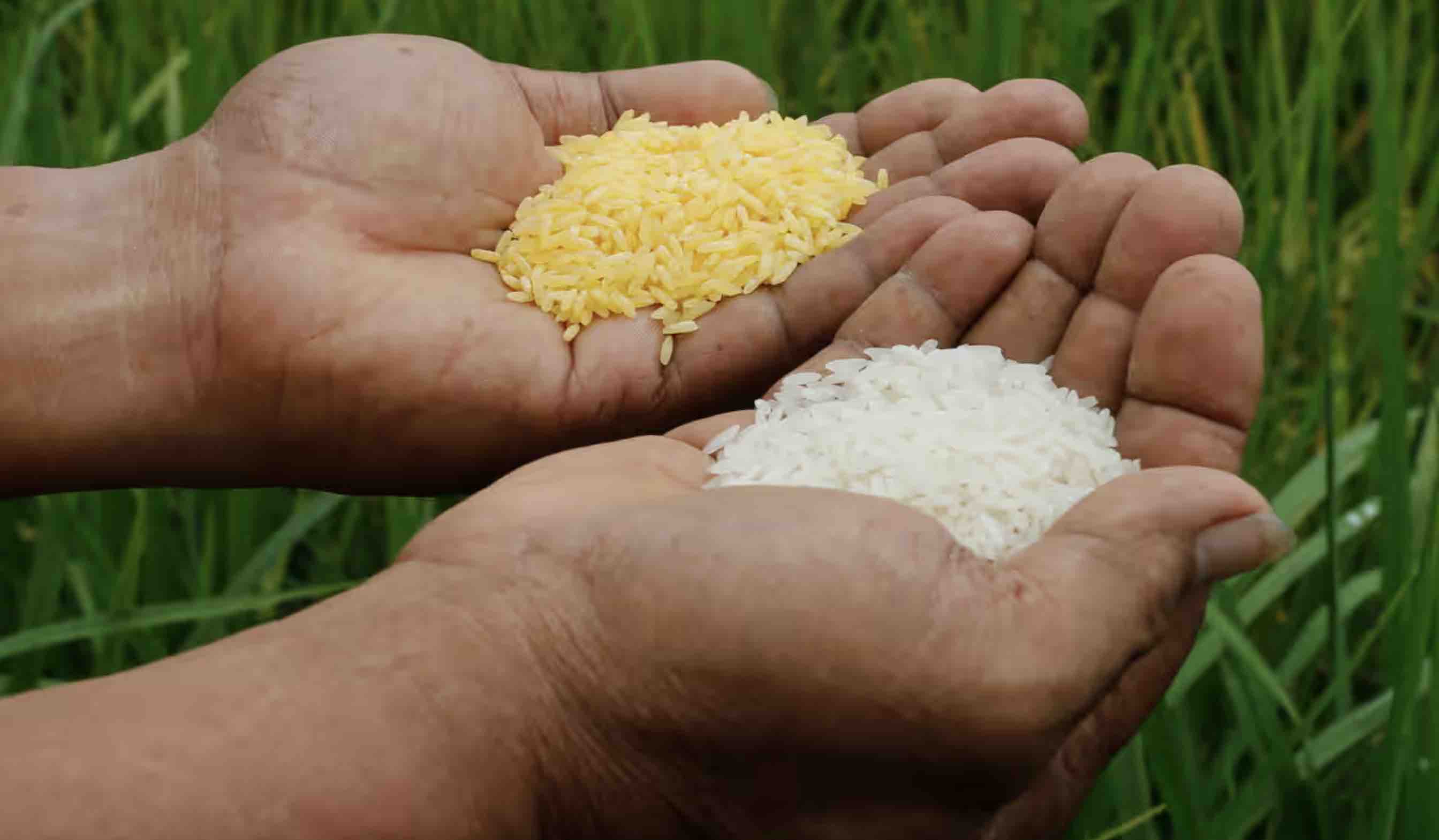
A scientists compares vitamin-A enriched Golden Rice and ordinary rice in Manila, the Philippines. Photograph: Erik de Castro/Reuters

Our thanks to Robin McKie, the Guardian’s science editor, for this news:

Thousands of children could die after court backs campaign group over GM crop in Philippines, scientists warn

Scientists have warned that a court decision to block the growing of the genetically modified (GM) crop Golden Rice in the Philippines could have catastrophic consequences. Tens of thousands of children could die in the wake of the ruling, they argue. Continue reading

If You Eat Beef, Track Its Origins

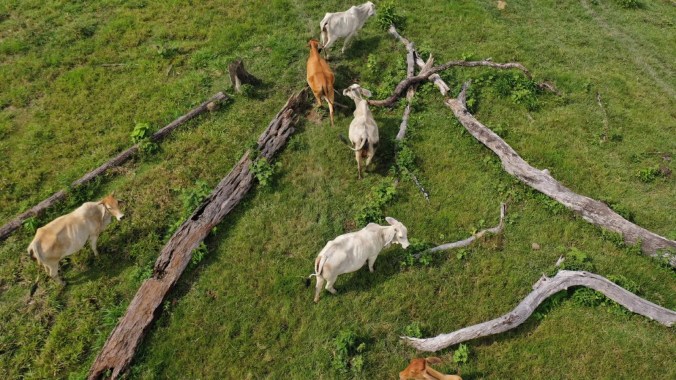
A JBS facility in Tucuma, Brazil. JONNE RORIZ / BLOOMBERG VIA GETTY IMAGES

Reducing meat in our diet was easier living in India, and we committed specifically to cutting beef consumption. This effort has been assisted by awareness of this issue. Thanks to Yale e360 for bringing the work of this team to our attention:

Marcel Gomes (center) with colleagues at Repórter Brasil’s offices in São Paulo. GOLDMAN ENVIRONMENTAL PRIZE

Tracking Illicit Brazilian Beef from the Amazon to Your Burger

Journalist Marcel Gomes has traced beef in supermarkets and fast food restaurants in the U.S. and Europe to Brazilian ranches on illegally cleared land. In an e360 interview, he talks about the challenges of documenting the supply chains and getting companies to clean them up.

Investigative journalism can be a very deep dive. By the end of his probe into the supply chain of JBS, the world’s largest meat processing and packing company, Marcel Gomes reckons he and his team at the São Paulo-based nonprofit Repórter Brasil knew more about the origins of the beef it supplies from the Amazon to the world’s hamburger chains and supermarkets than the company itself. Continue reading

First Nations’ Food Sovereignty

Delphine Lee

Thanks to Mother Jones for this:

Tribal Nations Are Taking Back Their Food Systems

A new farm bill program aims to undo centuries of federal mismanagement.

The farm bill is one of the most important but least understood pieces of US legislation, and it’s overdue for renewal. Continue reading

Climate Change Challenges In Italy’s Food Basket

The inside of a rice plant about to flower. With global heating, farmers fear extreme weather events such as drought will become more frequent

Thanks to Ottavia Spaggiari for this article, and to Marco Massa and Haakon Sand for the photos. We are closer to the challenges coffee faces in the context of climate change, but we know it is a global race to find solutions:

Risotto crisis: the fight to save Italy’s beloved dish from extinction

After drought devastated prized arborio and carnaroli harvests in the Po valley, new rice varieties offer a glimmer of hope. But none are yet suitable for use in the traditional recipe

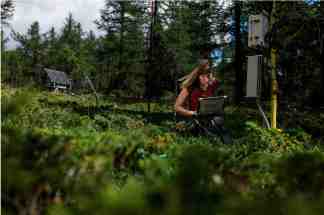
Biometeorologist Marta Galvagno at work

For most of winter and spring in 2022, Luigi Ferraris, a 58-year-old rice farmer from Mortara, a town in the Po valley, remained hopeful. Rainfall had been down 40% in the first six months of the year, and snow had accumulated thinly in the Alps, prompting an 88% drop in the amount of water coming to the Po River from snow-melt; flow in the river and its connected canals was at a historic low. Continue reading

Capturing Carbon In Trillions Of Tons Of Soil

Thanks to Yale Climate Connections for sharing Max Graham’s article at Grist:

How much carbon can farmers store in their soil? Nobody’s sure.

Advocates say the long-awaited farm bill could help fix that.

Dirt, it turns out, isn’t just worm poop. It’s also a humongous receptacle of carbon, some 2.5 trillion tons of it — three times more than all the carbon in the atmosphere. Continue reading

Central Valley Reserve

Central Valley coffee farms produce reliably high quality beans. A few farms produce beans of unusual quality, and we source from these farms to create a blend worthy of the name Reserve. Unlike the chocolate notes typical of a Los Santos coffee, or more fruity or floral notes from other regions, here we find a special toasted nut sensation.

The “architecture of coffee heritage” caption for the image on this label refers to the fact that this building from the 1990s pays tribute to the history of coffee in Costa Rica. It was built within a coffee hacienda, and this year thousands of coffee plants are being replanted on the property. If you have an interest in the feeling of a coffee plantation, and plan to visit Costa Rica, you could not do better than spend a few days here.

Dickson D. Despommier Discussing The New City Concept

The vertical farming part of this concept is one we have linked to many times. The appeal is not difficult to grasp even if sometimes the concept is stretched. This is different and worth hearing him out:

Dickson Despommier Wants Our Cities to Be Like Forests

A leading proponent of vertical farming discusses how urban areas should adapt to a perilous environmental future.

Illustration by Daniele Castellano

In 2000, Dickson D. Despommier, then a professor of public health and microbiology at Columbia University, was teaching a class on medical ecology in which he asked his students, “What will the world be like in 2050?,” and a follow-up, “What would you like the world to be like in 2050?” As Despommier told The New Yorker’s Ian Frazier in 2017, his students “decided that by 2050 the planet will be really crowded, with eight or nine billion people, and they wanted New York City to be able to feed its population entirely on crops grown within its own geographic limit.” Continue reading

Avocados & Michoacán

An avocado farm in Yoricostio, Michoacán. All photographs from Mexico, August 2023, by Balazs Gardi for Harper’s Magazine © The artist

A decade ago we thought we should source from Harper’s more, but its blog no longer exists to read the whole story that prompted that idea. Still going strong after 173 years of publication, this recent article in the magazine helps us understand what is wrong with one of our favorite farm products:

Forbidden Fruit
by Alexander Sammon

The anti-avocado militias of Michoacán

Phone service was down—a fuse had blown in the cell tower during a recent storm—and even though my arrival had been cleared with the government of Cherán in advance, the armed guard manning the highway checkpoint, decked out in full fatigues, the wrong shade to pass for Mexican military, refused to wave me through. My guide, Uli Escamilla, assured him that we had an appointment, and that we could prove it if only we could call or text our envoy. The officer gripped his rifle with both hands and peered into the windows of our rental car. We tried to explain ourselves: we were journalists writing about the town’s war with the avocado, and had plans to meet with the local council. We finally managed to recall the first name of our point person on the council—Marcos—and after repeating it a number of times, we were let through. Continue reading

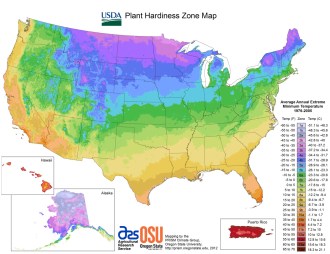
Newly Revised For Planting Plans

Source: U.S. Department of Agriculture

The topics of what to plant, when to plant, where to plant are constantly with us in Costa Rica.  Thanks to Julia Simon at National Public Radio (USA) for this note on gardeners in the USA using an online resource to rethink their planting plans:

‘It feels like I’m not crazy.’ Gardeners aren’t surprised as USDA updates key map

A newly updated government map has many of the nation’s gardeners rushing online, Googling what new plants they can grow in their mostly warming regions. Continue reading

Industrial Meat, Fascinating & Disgusting

The “cultivation room” at Upside Foods in Emeryville, California. The company is one of two now approved to sell lab-grown meat to U.S. consumers. Upside Foods

We appreciate Garth Brown writing in New Atlantis for this rather disgusting explanation of one big part of our industrial meat system:

Oiling the Chicken Machine

Queasy about lab-grown meat? Too bad — you’ve pretty much been eating it for decades.

In her community, it’s common knowledge that my mom is a soft touch when it comes to chickens. She maintains a motley flock of adoptees — backyard hens whose owners have moved, scrawny layers too old to be worth their feed, the pets of children who never much wanted them in the first place. She knows most of the people who donate the birds, or at least knows how they connect to her capacious social circle. Continue reading

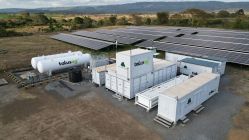
Fossil Fuel-free Ammonia

A fossil fuel-free ammonia plant at the Kenya Nut Company, near Nairobi. TALUS RENEWABLES

Alternative fertilizer has been something of an environmental holy grail, and this technology looks to be large step in the right direction. Have a look at the two companies mentioned in this Yale e360 news short:

Farm in Kenya First to Produce Fossil-Free Fertilizer On Site

The Kenya Nut Company, near Nairobi, will be the first farm in the world to produce fertilizer, on site, that’s free of fossil fuels.

small fertilizer plant, built by U.S. startup Talus Renewables, will use solar power to strip hydrogen from water. Continue reading

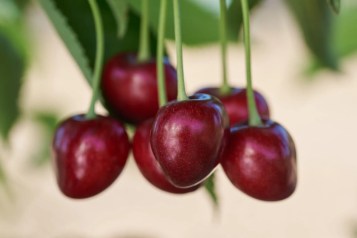
Future Fruits & Vegetables

The Cheery line of cherries has been developed to do well even if temperatures rise. BLOOM FRESH

Agricultural adaptation to a changing climate has caught our attention frequently with regard to wine grapes. Thanks to Kim Severson for this look at other fruits and vegetables:

Hot-weather cherries, drought-resistant melons and six other crops in the works that could change how we eat in a fast-warming world.

The Cosmic Crisp was bred at the University of Washington with a changing climate in mind. Credit…Ines Hanrahan/Washington Tree Fruit Research Commission

Plant breeders, by nature, are patient people. It can take them years or even decades to perfect a new variety of fruit or vegetable that tastes better, grows faster or stays fresh longer.

But their work has taken on a new urgency in the face of an increasingly erratic climate. Recent floods left more than a third of California’s table grapes rotting on the vine. Too much sunlight is burning apple crops. Pests that farmers never used to worry about are marching through lettuce fields.

Breeding new crops that can thrive under these assaults is a long game. Continue reading

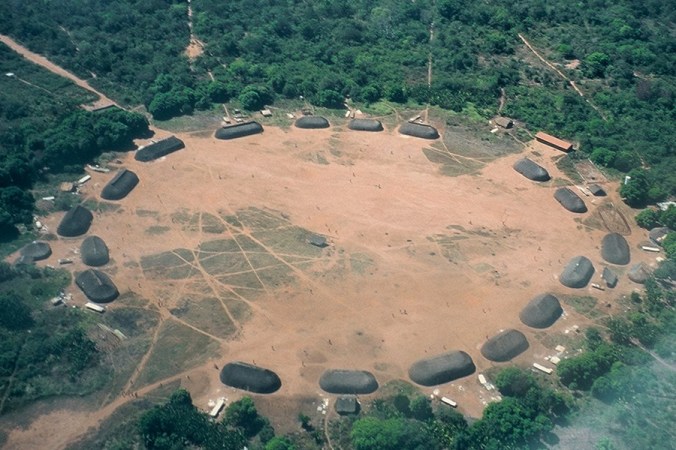
Ancient Amazon Carbon Capture

A Kuikuro village in the southeastern Amazon. JOSHUA TONEY

Thanks to Yale e360 for this one:

How Ancient Amazonians Locked Away Thousands of Tons of Carbon in “Dark Earth

A new study reveals how, by cultivating fertile soil for farming, ancient Amazonians locked away thousands of tons of carbon that have stayed in the ground for centuries. Continue reading

Reminder Primer On Meat & Dairy

Raul Arboleda / AFP via Getty Images

We have been preaching, and practicing, reduction in the consumption of meat and dairy for as long as we have been sharing on this platform. Reminders of why are always welcome. Our thanks to Max Graham, a Food and Agriculture Fellow at Grist for this reminder-primer:

What would happen if the world cut meat and milk consumption in half?

Agricultural emissions would fall by almost a third. But getting there wouldn’t be easy.

Cows are often described as climate change criminals because of how much planet-warming methane they burp. Continue reading

Subsidy Absurdity

Sprinklers water a field on Sept. 28, 2022 near Yuma, Arizona. Photo by David McNew/Getty Images.

This article by Stephen Robert Miller in the New Republic tells a story that is simultaneously inconceivable and yet perfectly explanatory of humanity’s contribution to climate change:

Why are we paying for crop failures in the desert?

Taxpayers are on the hook for heat-related crop losses in parched states like Arizona. That needs to change.

In mid-July in Phoenix, a man demonstrated to a local news station how to cook steak on the dashboard of his car. The city sweltered through a nearly monthlong streak of 110-degree temperatures this summer, while heat records are tumbling across the Southwest. Continue reading

Insect Respect

Agronomist Caterina Luppa watches black soldier flies reproduce at Bugslife, a firm in Perugia, Italy, that is turning fly larvae into animal feed. LUIGI AVANTAGGIATO

We have featured this subject a few times over the years, especially once we started showcasing one such product. I acknowledge I am still not a total convert to an insect-centric diet, but every story like this draws me in, however slowly:

Edible Insects: In Europe, a Growing Push for Bug-Based Food

Marco Meneguz, an entomologist with BEF Biosystems in Casalnoceto, monitors black soldier flies as they mate. During mating, “the males gather in a courtship ritual characterized by fights and competitive displays,” he says. The blue light helps the flies see each other better. LUIGI AVANTAGGIATO

To rein in emissions, the E.U. is looking to insects as an alternate source of protein for livestock and people and is easing regulations and subsidizing makers of insect-derived food. In a photo essay, Luigi Avantaggiato explores the emerging bug food industry in northern Italy.

The European Union recognizes it has a meat problem. The bloc has no easy way to curb the climate impact of its livestock, which eat soybeans grown on deforested lands and belch heat-trapping gas. According to one estimate, Europe’s farm animals have a bigger carbon footprint than its cars.

Trent Barber, a technician at BEF Biosystems, vacuums up 200 pounds of fly larvae that are plump after two weeks of feeding on food scraps. The remaining food waste, now rich in excrement, will be sold as compost to farms. LUIGI AVANTAGGIATO

In this photo essay, Luigi Avantaggiato explores an unusual solution to this dilemma that is now gaining traction — feeding insects to livestock and, potentially, people. The European Commission says that insects could replace soy-based animal feed, helping to slow deforestation, or even supply an alternate source of protein for humans. Studies show that insects can furnish the same amount of protein as livestock while using as little as 10 percent of the land and producing as little as 1 percent of the emissions. Continue reading

The Price Is Not Right For Groundwater

Not all natural resource utilization problems are simply a matter of pricing the resource correctly. But clearly it matters. Water hogging is apparently more widespread than we thought, and the price is clearly not right on this resource. This first in a series on the causes and consequences of disappearing water, by Mira Rojanasakul, Christopher Flavelle, Blacki Migliozzi and Eli Murray, has excellent interactive features to help understand these challenges:

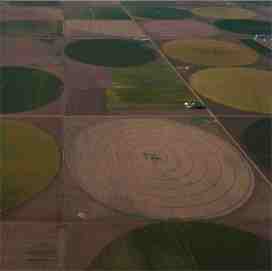
Center-pivot irrigation. Farming is a major groundwater user. Loren Elliott for The New York Times

America Is Using Up Its Groundwater Like There’s No Tomorrow

Overuse is draining and damaging aquifers nationwide, a New York Times data investigation revealed.

GLOBAL WARMING HAS FOCUSED concern on land and sky as soaring temperatures intensify hurricanes, droughts and wildfires. But another climate crisis is unfolding, underfoot and out of view.

Most American communities also rely on wells for tap water. Rebecca Noble for The New York Times

Many of the aquifers that supply 90 percent of the nation’s water systems, and which have transformed vast stretches of America into some of the world’s most bountiful farmland, are being severely depleted. These declines are threatening irreversible harm to the American economy and society as a whole.

The New York Times conducted a months-long examination of groundwater depletion, interviewing more than 100 experts, traveling the country and creating a comprehensive database using millions of readings from monitoring sites. Continue reading