The Elusive Uniform Crake

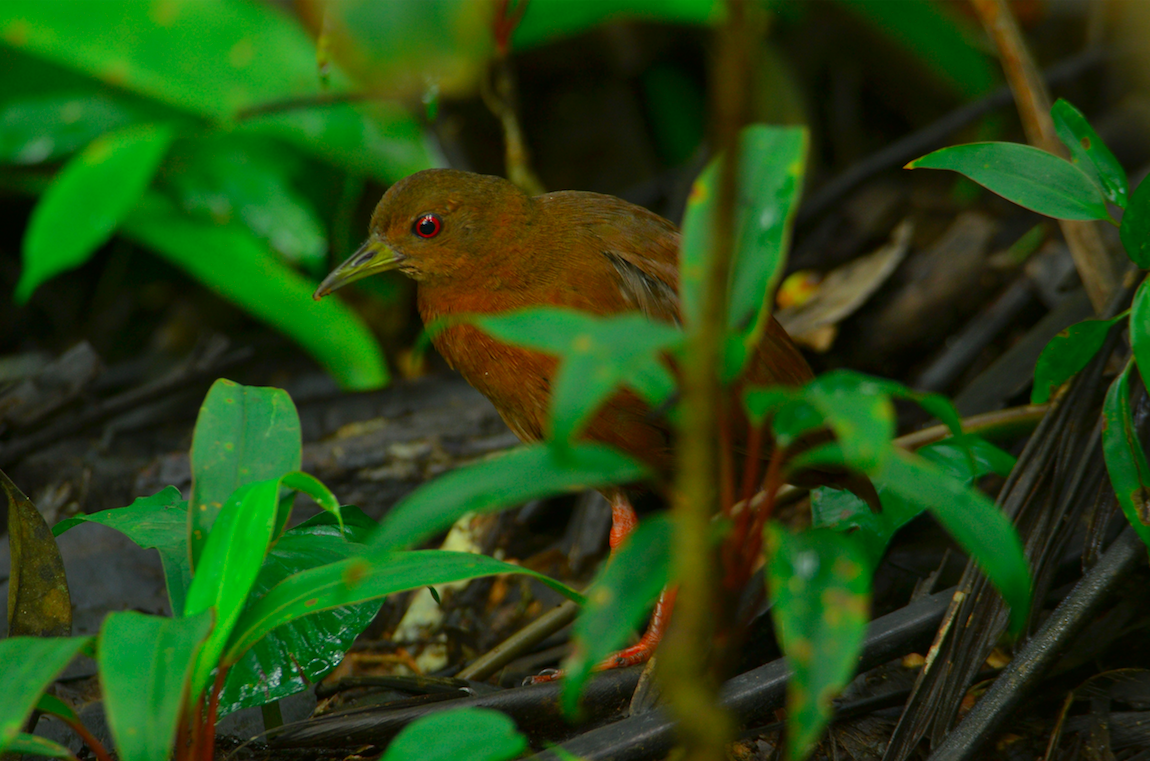
Uniform Crake by Beto Guido - La Paz Group

Photo credit: Beto Guido

On the morning of May 9 during Global Big Day 2020 an unfamiliar whistle resounded in the grasslands and bushes along the edge of the huge garden of Macaw Lodge. I would never have imagined that it was a Uniform Crake, but thanks to the keen hearing of guides Beto Guido and Marco Umaña, we were able to register this species for the first time in the Macaw Lodge Private Forest Reserve. The record was made only by the bird song, and despite the team’s effort to try to spot it, we could only hear it.

This elusive and shy crake (Amaurolimnas concolor) has rarely been sighted in the Costa Rican Central Pacific, so this record was of great importance to the region. Because it prefers to inhabit dense undergrowth thickets, it is usually identified by  its sound rather than by actual sightings. Continue reading

Sleuthing The Breeding Of Rare Birds

Thanks to Brendan Borrell for sleuthing this through to publication, with evocative illustrations, in Audubon Magazine:

THE PARROT KING
OVER THE PAST 14 YEARS, MARTIN GUTH HAS BUILT A MONOPOLY ON SOME OF THE WORLD’S RAREST BIRDS. WILL HIS SECRETIVE ORGANIZATION ULTIMATELY HELP PUT MORE PARROTS IN THE WILD, AS HE SAYS—OR PUSH THEM CLOSER TO EXTINCTION?

For Stephen Durand, March 16, 2018, began like most other days—with an inordinate amount of squawking. Durand lives on the Caribbean island of Dominica and oversaw the federal aviary that houses rescued parrots, including casualties of Hurricane Maria. Six months earlier, the storm had leveled large numbers of the island’s trees and stripped many more of their fruit and foliage, threatening two endemic parrot species. Continue reading

Scientific Expeditions Then, Considered Now

p08j9wrd

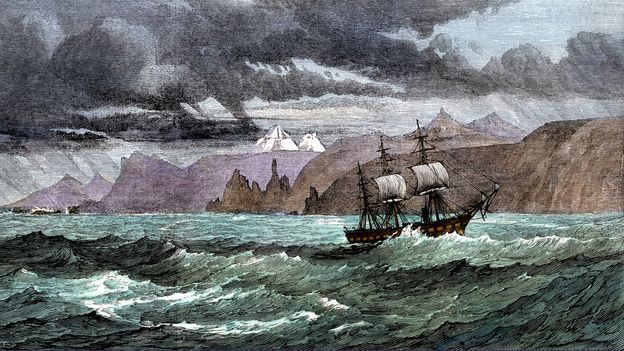
The HMS Challenger set sail from England in 1872 and changed the course of scientific history (Credit: North Wind Picture Archives/Alamy)

Thanks to the BBC for reminding us of the value of such voyages in earlier centuries, and their contributions to science, among other things:

HMS-Challenger: The Voyage That Birthed Oceanography

The 3.5-year voyage to the furthest corners of the globe reshaped marine science and permanently changed our relationship with the planet’s oceans.

p08j9wr9

During the four-year journey, the ship uncovered many new species and shaped our understanding of the seas (Credit: LeeYiuTung/Getty Images)

In the foyer of the National Oceanography Centre in Southampton, England, stands a ship’s painted figurehead. It towers well above head height and depicts an armoured knight with a silver chest plate, a raised visor and a thick handlebar moustache. The knight’s eyes have a faraway gaze in them – and well they might. This wooden statue is the sole remnant of a square-rigged ship that once embarked on a three-and-a-half-year voyage to the furthest corners of the globe, reshaping marine science, unearthing all manner of underwater oddities and permanently changing our relationship with the planet’s oceans. The vessel’s name was HMS Challenger. Continue reading

Mangroves for the Win

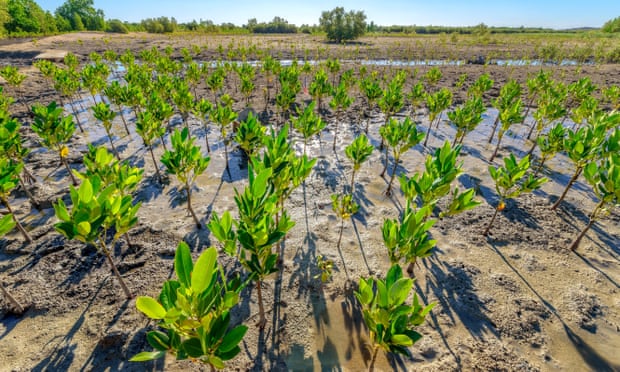
Mangrove restoration in Madagascar. Photograph: Alamy

Our previous posts about the multiple positives of planting trees in response to climate change and toward the goal of economic recovery didn’t take coastal ecosystems into account. These regions tend to be extra vulnerable to the increased pressures of extreme weather, not to mention being the home of many vulnerable populations.

This type of investment seems like a win/win.

Oceans panel presses coastal states to invest in ‘blue recovery’

Report says there are substantial economic benefits to be had from ocean conservation

Investing in the marine environment offers many coastal states the possibility of a “blue recovery” from the coronavirus crisis, according to a report setting out substantial economic benefits from ocean conservation.

Ending overfishing and allowing stocks to recover while ensuring fish farms operate on a sustainable basis would generate benefits of about $6.7tn (£5.3tn) over the next 30 years, according to an assessment of ocean economics by the High Level Panel for a Sustainable Ocean Economy.

This would require reforming perverse subsidies that encourage overfishing, and better regulation of fish farming, but the returns on such investment would repay the outlay 10 times over, the report says.

Mangrove restoration on tropical coastlines offers a quick way to generate jobs in seeding and planting, and returns of about $3 for every $1 spent, in the form of more productive fisheries as well as storm protection.

The costs of offshore wind energy generation have plummeted in recent years, making clean energy generation at sea a viable prospect for many countries for the first time. The UK has long been a pioneer in the field, but many other countries have been slow to take it up.

The report found that the technology has matured so quickly that investors can generate returns of up to $17 on each $1 spent, opening up a potential bonanza globally of $3.5tn by 2050 if governments put the right conditions in place.

Ngedikes Olai Uludong, Palau’s ambassador to the UN and one of the panel members, said offshore wind energy could spell an explosion in highly skilled green jobs. “Technologies like offshore wind offer a rate of return that makes more and more sense,” she told the Guardian. “It looks like it is taking off. I’m seeing interest from countries that I’ve never seen interested before.”
Continue reading

Rewilding, A Good Idea Scaling

5000 (1)

Hugh Somerleyton, right, and Argus Hardy on the Somerleyton estate in Suffolk. Photograph: Si Barber/The Guardian

This idea has caught on, spreading like a good alternative to wildfire:

Farmers hatch plan to return area the size of Dorset to wild nature

WildEast aims to convince farmers, councils and others across East Anglia to pledge land to wildlife

5000 (2)

View over the Somerleyton estate. Photograph: Si Barber/The Guardian

Returning an area the size of Dorset to wild nature, reintroducing extinct lynx, pelicans and beavers and championing regenerative farming to restore soil health are the radical aims of a new charitable foundation.

But the most revolutionary feature of WildEast may be that it is founded by three farmers in the most intensively farmed region of Britain.

Hugh Somerleyton, Argus Hardy and Olly Birkbeck, who own more than 3,200 hectares (8,000 acres) on their family farms in Suffolk and Norfolk, are seeking to persuade farmers and also councils, businesses, schools and ordinary people across East Anglia to pledge a fifth of their land to wildlife. Continue reading

2020 Audubon Photo Contest

original (5)

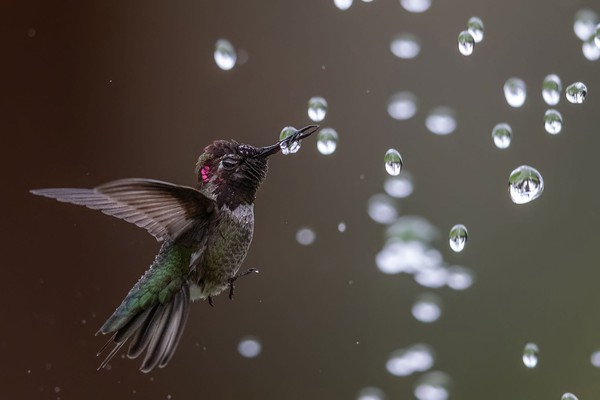
An Anna’s hummingbird, Amateur Honorable Mention, photographed on the Ardenwood Historic Farm in California #
Bibek Ghosh / 2020 Audubon Photography Awards

Alan Taylor has been a go-to visual explainer on our platform for years. He also led us to this contest in 2016. By the time of the 2019 contest we were linking directly from the source but here we give him credit for reminding us it is that time of the year again:

The winners of the the 11th annual Audubon Photography Awards competition were recently announced. Photographers entered images in four categories: professional, amateur, youth, and plants for birds. More than 6,000 images depicting birdlife from all 50 states and seven Canadian provinces and territories were judged. The National Audubon Society was again kind enough to share some of this year’s winners and runners-up with us below. You can also see all of the top 100 entries on the Audubon website.

grid_web_pfb_02_natalierobertson_tennesseewarbler_plantsforbirds_highres

The 2020 Audubon Photography Awards: Winners

This year’s top shots delight with dazzling colors and fresh perspectives.

Every spring, the judges of the Audubon Photography Awards gather at Audubon’s headquarters in Manhattan to review their favorite images and select the finalists. But as with much of life in 2020, this year’s awards had to be handled differently due to pandemic-related travel, work, and social-distancing restrictions. Continue reading

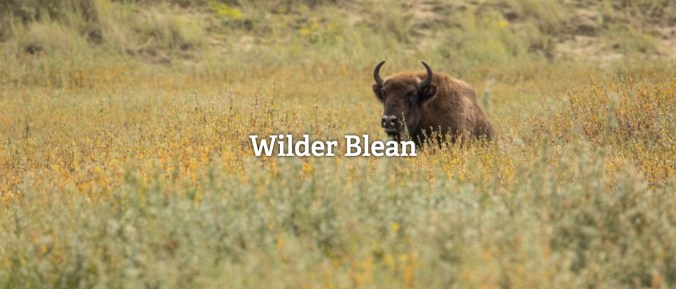
Rewilding & The Wilder Blean Project

WilderBlean

Credit: Evan Bowen-Jones

Rewilding started featuring in our pages with a bison story in 2013, and one year later a book review made the concept clearer. Since then dozens of related stories have fueled our imaginations, and understanding of how this makes sense.

3872 (3)

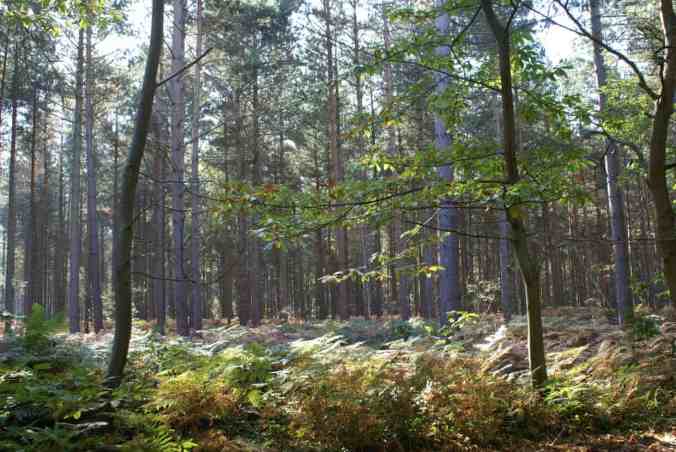
Blean woods, near Canterbury. The Wilder Blean project aims to restore the ecosystem of the area’s ancient woodlands. Photograph: Ray Lewis/Kent Wildlife Trust

Thanks to the Guardian’s Environment editor, Damian Carrington, for bringing this new initiative to our attention:

Wild bison to return to UK for first time in 6,000 years

Release of a small herd of endangered animals in Kent is planned for spring 2022

5252

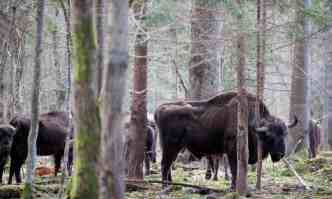
A herd of wild bison is seen in the Białowieża forest, Poland. Photograph: David Levene/The Guardian

Wild bison are to return to the UK for the first time in 6,000 years, with the release of a small herd in Kent planned for spring 2022.

The £1m project to reintroduce the animals will help secure the future of an endangered species. But they will also naturally regenerate a former pine wood plantation by killing off trees. This creates a healthy mix of woodland, scrub and glades, boosting insect, bird and plant life.

During the initial release, one male and three females will be set free. Natural breeding will increase the size of the herd, with one calf per year the norm for each female. The bison will come from the Netherlands or Poland, where releases have been successful and safe. Continue reading

Backyard Birding & Organikos

ViviBirding

Education Images/Universal Images Group/Getty Images

Thanks to the folks at Short Wave for this brief tutorial on backyard birding, featuring a scientist from the Cornell Lab of Ornithology. For those fortunate enough to be able to use some of their time in recent months for this purpose, the tutorial may resonate. A total novice like me finds it useful so I recommend it to others.

SETarrazuLabelI especially appreciated the advice of paying attention to the coffee that you purchase, because it can have significant impact on migratory birds. The new series of Organikos labels are almost ready for print-testing. One of the final decisions made in the last month was to let the label on the bag focus on the coffee and keep the bird-habitat mission messaging on the website and in places like this. A key part of that message is that the particular coffee offered matters most. We believe that if we start with the highest quality green beans, apply the perfect level of heat, and deliver them at the fairest price we will get what we need to plant more trees. So, the Tarrazu single estate is the second label I will share here. Along with the Hacienda la Amistad single estate organic, this is some of the most spectacular coffee grown in Costa Rica. And for every bag sold, the difference between what we pay to get this to you, and what you pay to Organikos, goes to bird habitat regeneration.

Bee Surprises

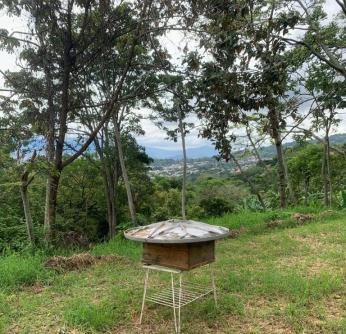
HiveOur bee obsession on this platform has many explanations, but my personal motivation for following the science of bees goes back to a summer in the late 1970s when I worked for a beekeeper. I cleared brush and vines from the forest edge to make way for more bee-friendly plantings. I worked within sight of a dozen active bee colonies in boxes where I could see buzzing swarms constantly. I learned to be calm around them from the man who tended them. He used a poncho, a mask, and a smoker when opening the boxes to remove honey, but other times walked among them with no protective gear. To my surprise the resins from Toxicodendron radicans–poison ivy, poison oak and poison sumac–did more harm to me than the bees I worked around. In fact, I was never stung by those bees. Not once.

Which explains why when we finally had the chance to start our own bee colony I was all in. Above is a bee box, with found objects inside, above and below it. The bees inside had nested at the top of our house so we had a beekeeper extract them. He gave them this new home in a location where we have been clearing brush to make way for coffee planting. The old table had been in the chicken coop and the mysterious disk was on the roadside headed for recycling. One month later now, very happy bees.
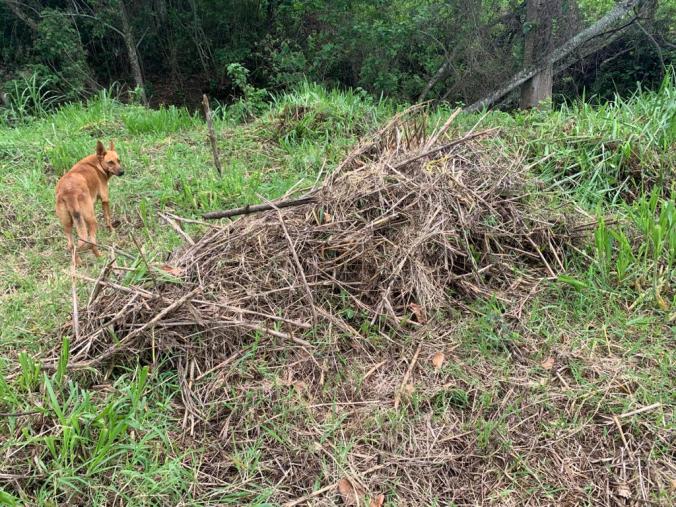
Brush

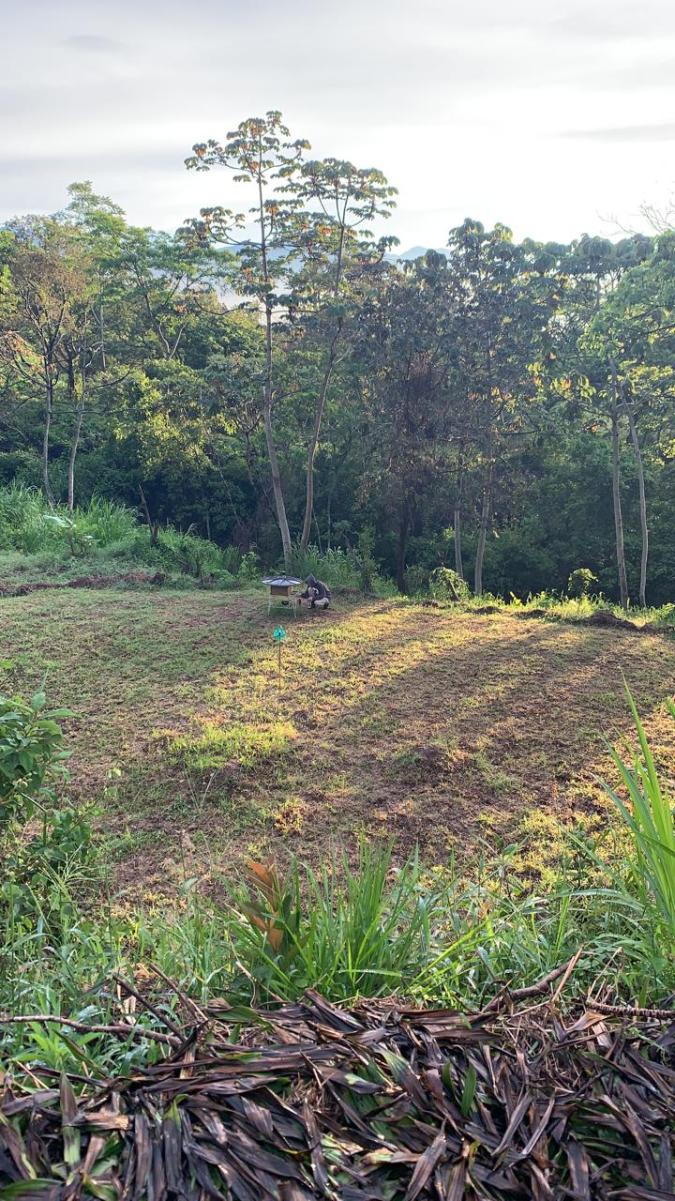
Above is a small sampling of the vines and brush I have been clearing from the land near that hive. History may not repeat, but sometimes it rhymes. As it happens, on my arm I have some of the same toxins from vines like those 40 years ago. The clearing work started in March and is nearing completion to make way for several hundred shade trees and several thousand coffee plants.
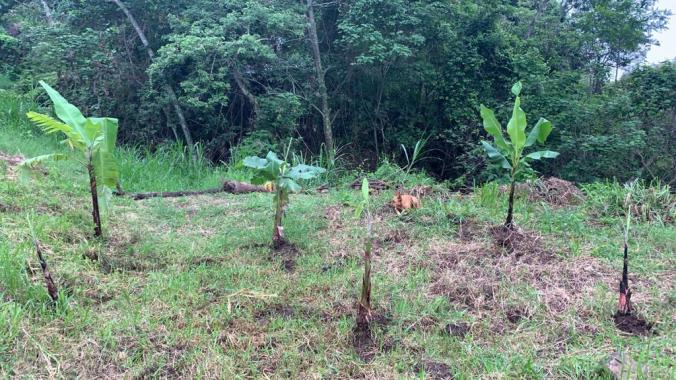
Bananas

One section of this clearing has already received twenty banana plants, based on the practice of our friends at Hacienda la Amistad. These make excellent companions to the coffee and are pollinated by bats, so provide another kind of ecological service too complex to discuss in a post primarily about bee surprises.

So, with all that in mind I was very happy to come across the story below by Cara Giaimo. Her work first appeared in our pages last October, then again a few months ago–both times related to birds. Somehow I missed this short article on bees from earlier this year, and I thank her for it now for making me laugh when there is not enough other news to laugh about:
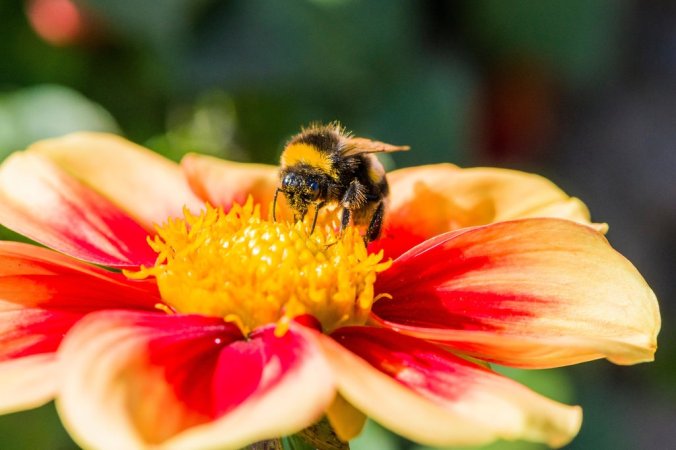
22TB-BEES-jumbo

Frank Bienewald/imageBROKER, via Alamy

Bumblebee Vomit: Scientists Are No Longer Ignoring It

Regurgitation is an important consideration when it comes to the process of pollination.

The bumblebee is a discerning nectar shopper. When choosing which flowers to gather the sticky substance from, it might consider a plant’s distance, the shape of the petals and how sugar-rich the nectar is. Continue reading

My Backstory With Coffee

SethMombachoThe image to the right is from twenty years ago, during my first foray into the world of coffee. It is not the most flattering photo, but it will do. I was eight, on location with my brother and parents at a worksite in Nicaragua. One part of the project was the development of a coffee tour, and my brother and I were tasked with testing how a young person might react to that experience. The expression on my face was, I suppose, a slightly embarrassed result of how little coffee I had managed to pick relative to the basket’s capacity. There was plenty of coffee to be picked, but these 20 years later I still remember how hard that work was.

SethGalapThe second foray was in 2011, back in the same region of Nicaragua, but as an intern documenting the coffee growing and maintenance process, as well as having the pleasure of zooming over a coffee plantation on a canopy tour zip line.

Just a year later, my third foray came when I spent the summer living on an organic farm freshly planted with coffee. What made it special, even spectacular, was that the farm was one of the rare private properties in the Galapagos Islands and was situated in the vicinity of the forests where the giant tortoises roam.

The fourth foray, which I wrote about in these pages, was between 2014 and 2016. I participated in each step from germination, to planting, harvesting, processing, roasting and cupping. I created a coffee tour on property that was an echo of the work done 15 years earlier in Nicaragua.

My fifth and most recent foray, over the last few years, has been the start up of Organikos. During the months leading up to starting graduate school I developed a plan with my parents to launch the coffee business as part of their Authentica venture. That brick and mortar retail approach worked out very well, until the world changed a few months ago. So now online and onward…

Citizen Science: 89 Years Old and Counting

Microscopic plankton: they provide a food source for fish, seabirds and other marine life, as well as absorbing CO2 emissions

Although we’ve highlighted citizen science so many times on these pages, it never occurred to me that some of these projects have spanned nearly 9 decades.This particular project’s device is called a continuous plankton recorder (CPR). An apt acronym, indeed.

Tiny plankton tell the ocean’s story – this vast marine mission has been listening

Since 1931 ‘citizen scientists’ on ships have enabled data collection on the tiny building blocks of the sea. Now this research could shape how we tackle the climate crisis

On a clear day, from their small, unassuming warehouse on the south Devon coast, Lance Gregory and Dave Wilson can see right across Plymouth Sound to the Eddystone lighthouse. Today, they’re watching a ferry from Brittany, the Armorique, pull into dock.

Behind it, the ferry is towing a one-metre-long device shaped like a torpedo. It doesn’t look like much, but it’s part of the planet’s longest-running global marine survey.

The device is called a continuous plankton recorder (CPR), and it’s one of 53 such devices that Gregory and Wilson manoeuvre using forklifts in their warehouse, surrounded by racks of distinctive yellow boxes and clipboards covered in spreadsheets.

They dispatch these CPRs in bright yellow boxes to “ships of opportunity” – ferries, cargo or container vessels that have agreed to volunteer for the mission. Once a ship leaves port, the crew attach the device to the stern using steel wire, then toss it overboard.

Trailing along behind the ship, it collects data for the CPR survey. The mission is vast but the subject is minuscule: plankton, the tiny organisms that drift in the ocean. Every marine ecosystem relies on plankton for its basic food source, and it generates half the oxygen we breathe. Perhaps more than any other organism, it is crucial to all life on our planet.

The CPR survey is the longest-running marine science project of its kind. It began in 1931 when the scientist Sir Alister Hardy investigated how herring were influenced by plankton in the North Sea. This month the distance surveyed will reach an impressive 7m nautical miles, equivalent to 320 circumnavigations of the Earth.

Since that first tow from Hull to Germany 89 years ago, the equipment has hardly changed. So far a quarter of a million samples have been analysed, representing a vast geographical spread over the course of the past century. The immense scope has allowed scientists to see dramatic patterns in ocean health, across both time and space, building a much clearer picture of how our marine environments are changing.

It is also, says Gregory, “one of the oldest citizen science projects in the world”. Continue reading

Removing Constraints On Natural Aquatic Migrations

osprey11_wide-f3647cbcd0535446dda9272b7d69c1c7f60f4168-s1300-c85

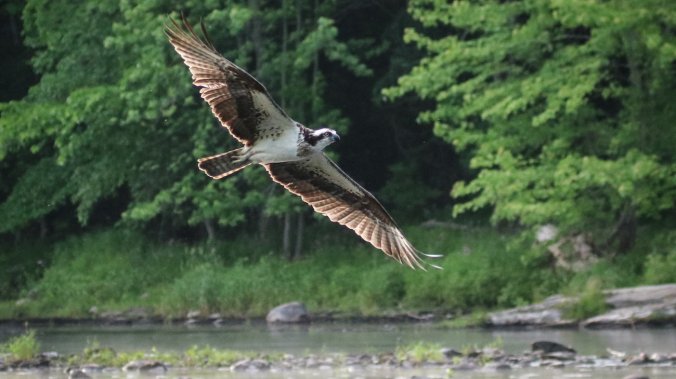
Osprey looking for alewives along the Sebasticook River in Maine. The removal of two dams has allowed migratory fish to return. Murray Carpenter

Migration, an ageless natural phenomenon, can be all the more spectacular when we remove its constraints:

‘One Of The Best Nature Shows’: A River Transformed After Dams Come Down

lamprey2_wide-35396af290da823652ad903769c1b404a48123b0-s1300-c85

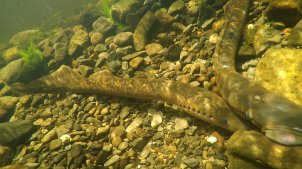
Sea lamprey making a spawning nest in the Sebasticook. Murray Carpenter

Along central Maine’s Sebasticook River, the first thing you’ll notice are the birds. Eagles are everywhere, wading on gravel bars and chattering from the trees.

“A whole bunch of birds, they’re bald eagles, those are all bald eagles!” says conservationist Steve Brooke.

eagle-with-alewife-copy_wide-6b0c286a64e59fc4a2a227d596ebd5e49983b3dc-s1300-c85

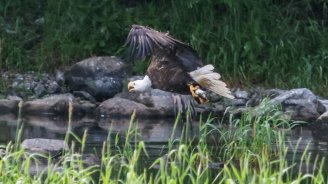
A recent count found nearly 200 bald eagles along the Sebasticook. This one has caught an alewife. Murray Carpenter

It’s a dramatic sight, as the bald eagles swoop to catch fish from the river. And it’s a sight that Brooke predicted for this region, more than 20 years ago. That’s when he began advocating for the removal of a large hydroelectric dam downstream, on the Kennebec River. The Edwards Dam came down in 1999 after the federal government ordered its removal, saying the ecological costs outweighed the benefit of the power it provided. Continue reading

BirdsCaribbean Global Big Day in a Big Way

Birders, in general, tend to be an enthusiastic bunch – and the constraints of the current circumstances actually added extra incentive to find creative problem solving solutions, in finding new birding locations or ways to be safely be in familiar ones.

The BirdsCaribbean Global Big Day video compilation provides proof positive. Enjoy!


Counting Turtles


Great Barrier Reef LogoAt first glance, it looks like art. As most great nature photography, whether amateur or taken by professionals, often does. But this is tech-driven professional science. Thanks to the Great Barrier Reef Foundation for this primer:

COUNTING TURTLES IS A SCIENCE

So how do you count more than 64,000 turtles at once?

With drones – and now we have the science to prove it.

Our Raine Island Recovery Project researchers are investigating the best way to count all the turtles at the world’s largest green turtle nesting area. The highly respected PLOS ONE journal has just published their findings (see the paper). Continue reading

Re-Opening, Regeneration & Restoration

BeesAmie

Friday, one of the hotels where we operate Authentica re-opened. With not much exaggeration I can say that for hotel staff, for Amie and me, and for the Costa Rican guests we interacted with, seeing tourism start up again after three months felt emotionally kind of like this, only with serious social distancing.

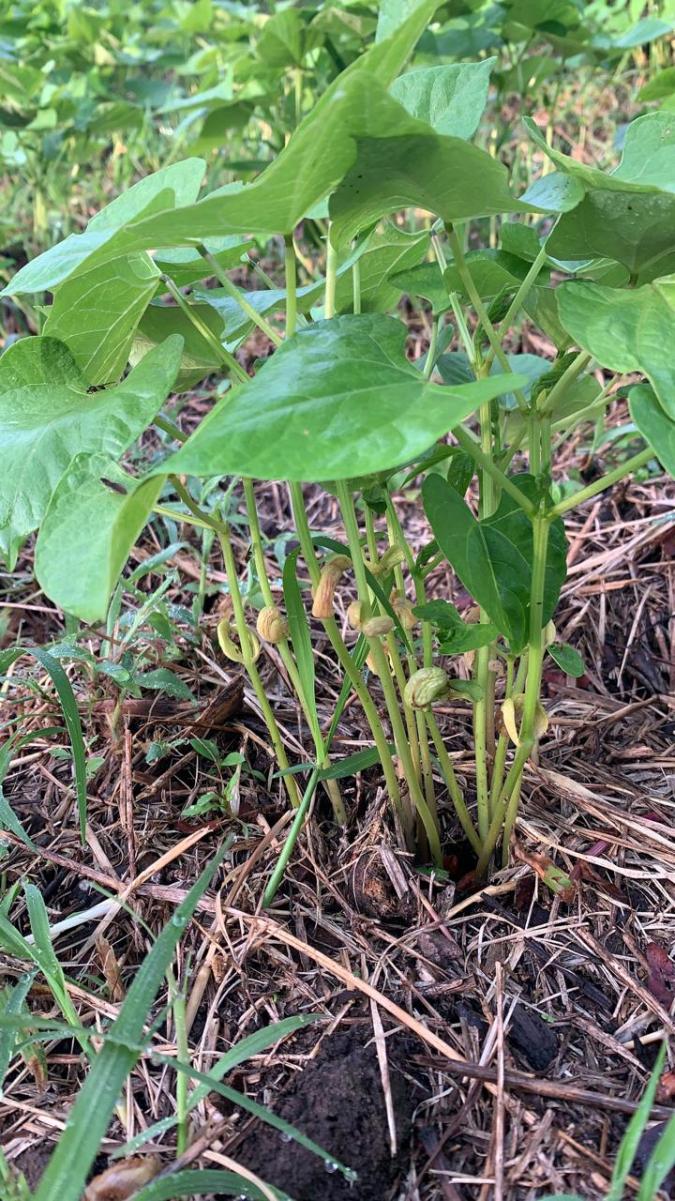
Yesterday, day 2 of this experiment in moving forward, before going to greet guests at the shops we began on the land. Above is the first of what we expect to be a larger set of honey bee colonies that will pollinate our coffee and fruit trees. Amie is in beekeeping tutorial mode and after a few weeks in place it seems to my untrained eye that the bees are happy with her progress. The land surrounding the hive, and other parts of the property, have been planted with beans common to the Costa Rica diet–mostly black and red–and some special varieties that we favor, such as white and butter varieties. Those we planted first, as you can see below, are already sprouting.

BeansSprouting

While we look forward to their eventual edible state, the primary purpose of these legumes is to fix nitrogen in the soil in advance of planting when our coffee seedlings are ready. Regeneration of the nutrients will allow the soil to host the coffee we are preparing for the microlot restoration project, planned long before current crises and to bear fruit some time after we have figured out how to move on with life. For now, seeing guests again, having beans sprout and bees buzzing is good enough.

Akira Miyawaki, More On Small Forests

2048 (1)

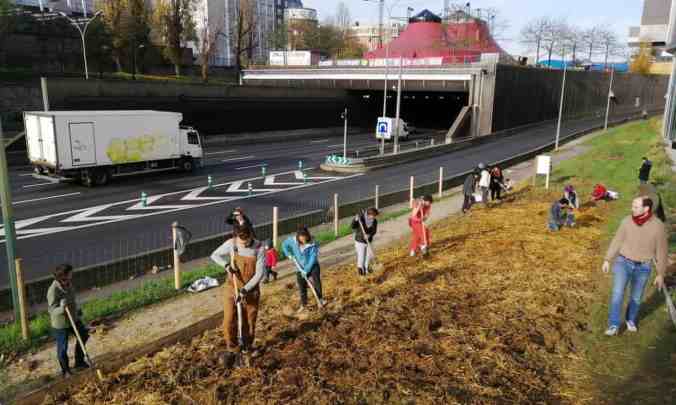
A Miyawaki forest being planted on the outskirts of Paris, France. Photograph: Courtesy of Boomforest

We knew from a recent post about the importance of small tracts of tree cover, based on reporting in the USA. Here is more from Europe, and about the botanist inspiring an acceleration of planting:

Fast-growing mini-forests spring up in Europe to aid climate

Miyawaki forests are denser and said to be more biodiverse than other kinds of woods

4608 (2)

A three-year-old forest in Ormeignies, Belgium. Photograph: Urban Forests

Tiny, dense forests are springing up around Europe as part of a movement aimed at restoring biodiversity and fighting the climate crisis.

Often sited in schoolyards or alongside roads, the forests can be as small as a tennis court. They are based on the work of the Japanese botanist Akira Miyawaki, who has planted more than 1,000 such forests in Japan, Malaysia and elsewhere. Continue reading

Oceans’ Call to Action

© Alexis Rosenfeld

We’re a day behind on World Oceans Day, but John Tanzer’s words are lasting, despite the date.

Don’t Waste A Crisis – A World Oceans Day Call to Action.

By John Tanzer, Oceans Practice Leader, WWF International

It was early March when the realization hit. Our Year of Ocean Action wasn’t going to happen — at least not in the way so many had been planning. 2020 would be extraordinary, but for all the wrong reasons. Our Super Year was meant to be the launch platform for a decade of strong global efforts to restore the ocean. Clearly, the attention and resources we had hoped to harness have been in much demand elsewhere.

I was not looking for a “silver lining” to the suffering and loss caused by the coronavirus, but somewhere in the back of my mind was a quote about not letting a crisis go to waste. Was it Winston Churchill who said it? Or a contemporary politician?

It turns out, it was not Churchill, and it wasn’t even a politician. The line can be traced back at least as far as 1976, to M. F. Weiner’s article in the journal Medical Economics, “Don’t Waste a Crisis — Your Patient’s or Your Own.” Weiner apparently meant that a medical crisis can be used to improve all aspects of a patient’s well-being.

So, it wasn’t a callous sentiment about seizing the upper hand in a moment of chaos. It was an acknowledgement that a crisis may arise which so disrupts the norm that all preconceptions are set aside, and all solutions are on the table.

Continue reading

Fixing Farms In Ireland

4494

Michael Davoren with his cattle in the Burren, Co Clare. Photograph: Eamon Ward/Burrenbeo Trust

Thanks to Ella McSweeney for this story about a young academic’s hands on, entrepreneurial approach to solving problems caused by Ireland’s farmers, who had followed incentives to their economically logical but environmentally disastrous conclusions:

‘Life attracts life’: the Irish farmers filling their fields with bees and butterflies

Rewarding positive environmental impact has revitalised an area of west Ireland. Is this a solution to the country’s ‘acute’ nature crisis?

2848

In late spring, the Burren is transformed into an explosion of colour. Photograph: Burrenbeo Trust

Michael Davoren shudders when he thinks of the 1990s. He’d been in charge of his 80-hectare farm in the Burren, Co Clare, since the 1970s, and the place was in his blood. The Davorens had worked these hills for 400 years.

But growing intensification fuelled by European subsidies meant that most farmers in this part of Ireland were having to decide between getting big or getting out. Hundreds were choosing the latter.

2848 (1)

Hundreds of farmers have signed up to a scheme that pays them to create healthier fields and clean waterways. Photograph: Burrenbeo Trust

Davoren followed the advice to specialise and chase the beef markets. “The more animals I kept, the more money I got,” he says. “I put more cattle out, bought fertiliser, made silage. Slurry run-off was killing fish. But if I kept fewer animals I’d be penalised 10% of my subsidy.”

The austere appearance of the Burren landscape belies its rich diversity. The thick rocks were laid down 300 million years ago when warm tropical seas covered the area, and the bodies of billions of marine creatures cascaded to the sea floor to form the Burren limestone. Continue reading

Virtual Ocean Dialogues

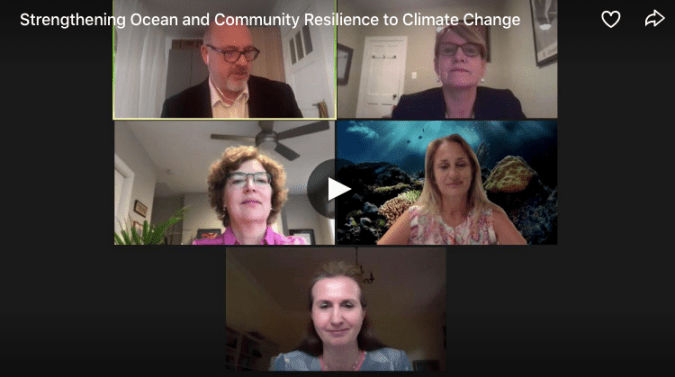
Another example of Costa Rican leadership and team action. The Virtual Ocean Dialogues, held by the World Economic Forum, “bring to light ambitious and inspiring solutions as well as tangible opportunities for positive change, and galvanize urgent global action for a healthy ocean. It will also spotlight some of the solutions that emerged as critical for the recovery from the COVID-19 crisis, including the role of the ocean in building the resilience that our economies and communities need to recover and eventually face other potential future shocks.”

The opening address by Costa Rica’s President Carlos Alvarado Quesada included statements about present and future actions.

“Costa Rica has historically been a leader in conservation,” Quesada says. It has doubled forest coverage in recent years and is aiming for a zero-emission economy by 2050.

Now it wants to turn its attentions to the sea. “We are working towards a sustainable approach for ocean management,” he says.

It is “committed to promoting a global blue economy transformation”, prioritizing mangrove forests, aquaculture and coastal biodiversity.

Continue reading

Alladale’s Entrepreneurial Conservation Accomplishments

Alladale first came to my attention in 2017, several years after I had started reading about rewilding. It came to my attention because of an introduction, through a mutual friend, to the founder of Alladale. I recall finding his description of what he was doing as identical to our own work in entrepreneurial conservation. I cannot recall why we have only two prior links to Alladale in our pages, but here is one more, in the form of a 30 minute podcast and its descriptor page:

How to bring back a forest, and a Scotland of the past, one tree at a time

Listen to the latest episode of THE WILD with Chris Morgan!

7ad379620abc8aceddf0b11e06e91ce4

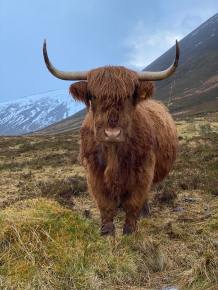
Scottish cow at the Alladale Wilderness Reserve.

The wind is really ripping through this valley in the remote Scottish Highlands as I’m zipping along in an ATV. I’m with highlander Innes MacNeil. He’s showing me a few remaining big old trees in the area.

The trees appear like something from a Tolkien novel — remnants of a forgotten time, like a magical connection to the past. There used to be a lot more trees like these across the Highlands. These are anywhere from 250-400 years old — and many are too old to reproduce.

“So these, we would describe them as granny pines,” MacNeil says. “The ones down here in front of us are about 250 to 300 years old, just sat in the bottom of the glen.” Continue reading