Cleaning Up Productivity

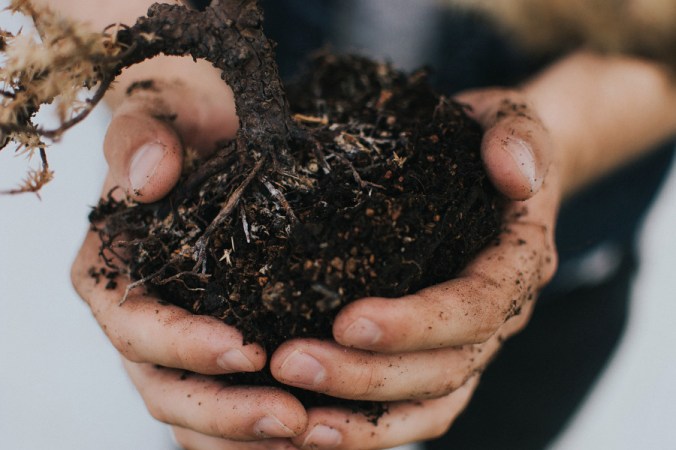
kyle-ellefson-Y6T1a4gU4ss-unsplash2500.jpg

Harvard scientists and landscapers are testing a new fertilizer that could reduce pollution in water supplies. Unsplash

Thanks to Caitlin McDermott-Murphy for this story about cleaning up our growing systems:

Ending ā€˜dead zones’

How a biofriendly fertilizer could offer a greener way to grow plants

Every year, a ā€œdead zoneā€ the size of Massachusetts sprawls across the Gulf of Mexico. The Mississippi River, which travels through the nation’s farm belt, sweeps excess fertilizer and dumps the chemicals into the Gulf, where they feed rampant algae, deplete oxygen, and kill marine life.

Across the U.S., smaller versions of similar dead zones infect lakes, ponds, and rivers. In years with higher rainfall — like 2018 — Massachusetts’ Charles River collects enough pollutants from surrounding city streets, parking lots, and landscaped campuses to cause theĀ water quality to drop. Unchecked algae growth, often the result of excess fertilizer, canĀ damageĀ marine, human, and even pet health: This year, severalĀ dogs diedĀ after swimming in water choked with toxic blue-green algae. Continue reading

A Different Kind Of Getting Clear

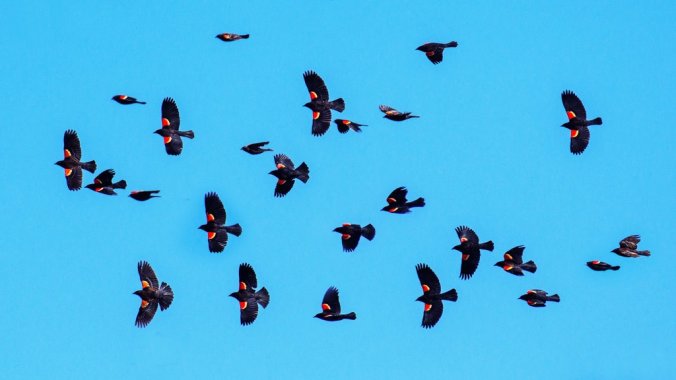
A flock of red-winged blackbirds over Long Island, N.Y.CreditCreditVicki Jauron, Babylon and Beyond Photography/Moment, via Getty Images

Thanks to the authors of this op-ed for a bit of clear thinking:

The Crisis for Birds Is a Crisis for Us All

The mass disappearance of North American birds is a dire warning about the planet’s well-being.

ByĀ John W. FitzpatrickĀ andĀ 

Dr. Fitzpatrick is the director of the Cornell Lab of Ornithology. Dr. Marra is the director of the Georgetown Environment Initiative.

19Fitzpatrick2-jumbo.jpg

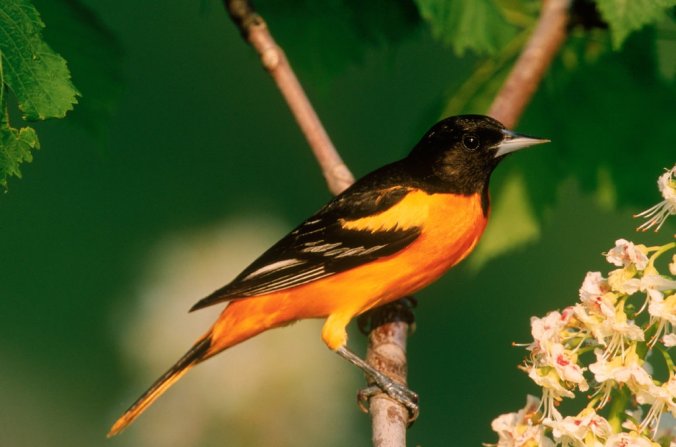
Steve Maslowski/Science Source, via Getty Images Plus

Nearly one-third of the wild birds in the United States and Canada have vanished since 1970, a staggering loss that suggests the very fabric of North America’s ecosystem is unraveling.

The disappearance of 2.9Ā billionĀ birds over the past nearly 50 yearsĀ was reported todayĀ in theĀ journal Science, a result of a comprehensive study by a team of scientists from seven research institutions in the United States and Canada.

As ornithologists and the directors of two major research institutes that directed this study, even we were shocked by the results. We knew of well-documented losses among shorebirds and songbirds. But the magnitude of losses among 300 bird species was much larger than we had expected and alarmingly widespread across the continent. Continue reading

From Primatologist To Crusader

merlin_157327443_3fb44fa9-9947-42a4-a2ca-730ecedbb181-superJumbo (2)

Guerin Blask for The New York Times

We became fansĀ when I was in graduate school, and have never stopped admiring her, so this interview is an especially easy read:

Jane Goodall Keeps Going, With a Lot of Hope (and a Bit of Whiskey)

During her girlhood, Tarzan was her role model. When she realized how chimpanzee habitats were being destroyed, she turned into a crusader. At 85, she’s still preaching.

Jane Goodall nursed a glass of neat Irish whiskey. It was the end of a long day of public appearances, and her voice was giving out.

That’s what Ms. Goodall does these days. She talks. To anyone who will listen. To children, chief executives and politicians. Her message is always the same: The forests are disappearing. The animals are going quiet. We’re running out of time. Continue reading

If You Must Bet, Bet On This

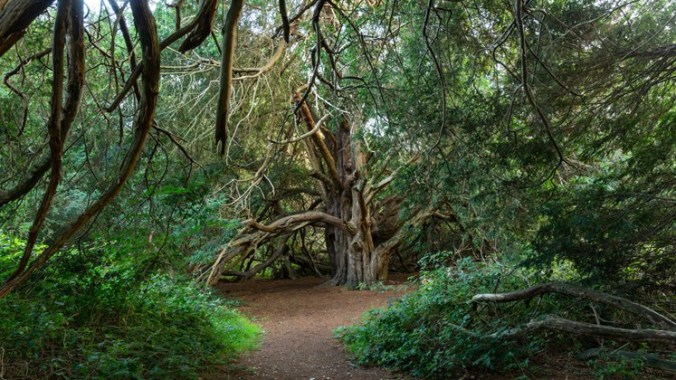
great-yew-kingley-vale-edward-parker.jpg

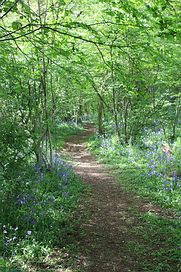
Woodland Trust has not been mentioned in these pages before, surprisingly. Its origins and its missionĀ make us feel at home:

Stand up for trees

We want to see a UK rich in native woods and trees, for people and wildlife.

But we can’t achieve our vision without you.

And its accomplishments are awesome:

43,069,424
trees planted,
1089 woods saved,
34,075 hectares of ancient
woodland under
restoration.

And now it is possible to place a bet on their behalf in a fun contest:

Now is your chance to vote for your favourite trees in England, Scotland, Wales and Northern Ireland as we reveal the shortlists in our Tree of the Year contest. Continue reading

Camera Trap Treasure

triplets-1260x708.jpg

A black bear mother with three cubs. Photo Ā© TNC

Camera trapsĀ have proven valuable in the work we have been doing in Belize, India and elsewhere in the wilderness areas of the developing world. But equally important are the photos captured in areas closer to urban settlements. Thanks to The Nature Conservancy’s publication of these photos with the article below:

As a Nature Conservancy forester inĀ Pennsylvania, Mike Eckley spends a lot of time assessing the health of woodlands. That means he spends as much time thinking about white-tailed deer as he does trees.

Many conservation biologists consider over-abundant deer to beĀ an even bigger threat to eastern forests than climate change. Deer can fundamentally change the forest ecosystem, threatening everything from rare wildflowers to migratory songbirds. These deer also can cause deadly vehicle collisions, increase risk of Lyme disease, and cause significant agricultural and property damage.

MOULTRIE DIGITAL GAME CAMERA

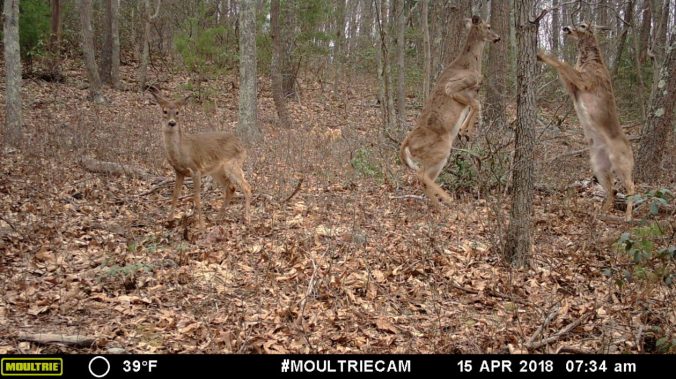
Two white-tailed deer boxing. Photo Ā© TNC

Eckley educates hunting clubs and landowners on deer management issues, and recentlyĀ co-edited a book on the topic. He also works to make sure the deer herd is healthy on Conservancy projects like theĀ West Branch Forest Preserve, a 3,000-acre preserve in north central Pennsylvania. Continue reading

Barn Owls Throw Shade

merlin_159945324_2f097416-2cc6-4128-9773-b37c448e7324-jumbo.jpg

Arterra/Universal Images Group, via Getty Images

Thank you, as always,Ā Mr. Gorman:

White Barn Owls Thrive When Hunting in Bright Moonlight

Something about the light from a full moon shining on the frightening face of a barn owl makes voles freeze a bit too long.

When the moon hits your eye like a big pizza pie, it may not be amore at all, but a ghostly white barn owl about to kill and eat you.

If you’re a vole, that is.

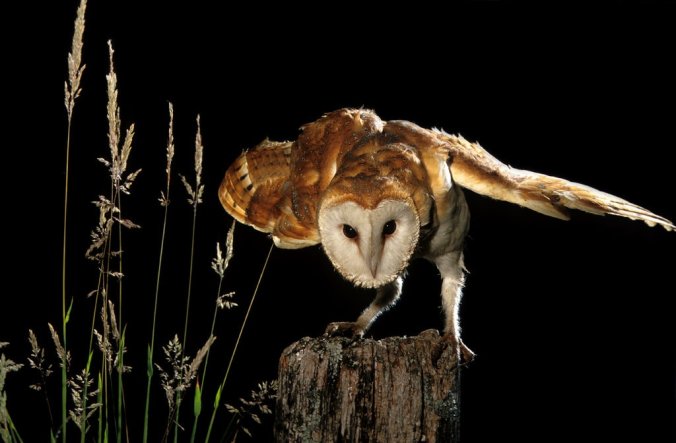
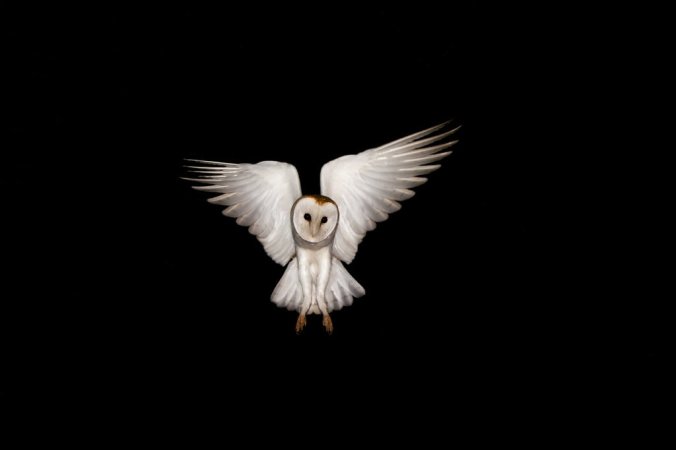
Voles are a favorite meal for barn owls, which come in two shades, reddish brown and white. When the moon is new, both have equal success hunting for their young, snagging about five voles in a night. But when the moon is full and bright, the reddish owls do poorly, dropping to three a night.

02TB-OWLS2-jumbo.jpg

Education Images/Universal Images Group, via Getty Images

Barn owls with white faces and breasts do as well as ever, however, even though they should be more easily spotted than their reddish relatives when the lunar light reflects off their feathers. Continue reading

Warndon Woodlands Local Nature Reserve’s Bat-Friendly Lighting

3623.jpg

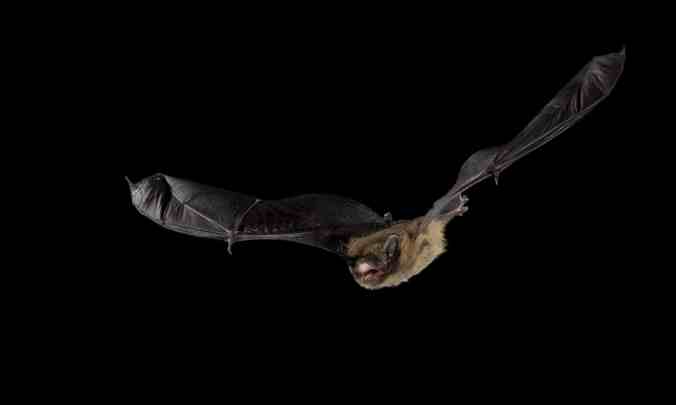
A common pipistrelle in flight at night. Photograph: FLPA/Alamy

IMG_1145.JPG.jpgThe title of this post is a mouthful, and is a bit of a random walk. We had not heard of Warndon Woodlands Local Nature Reserve before today. But now that we have been to their website we are happy to imagine a walk in the woods in that part of the UK. It seems a civil place, perhaps a refuge from all sorts of noise invading our lives these days:

Access: Pedestrian entrances from Parsonage Way, public footpaths through adjacent fields.

Site Facilities:
waymarked trail, public footpaths, interpretation board

Open:Ā Pedestrian access 24hrs.

Dogs:Ā Well behaved dogs welcome, please be aware there may be cattle in the fields nearby.

Habitat:Ā Ancient Semi-natural Woodland,Ā Recent SecondaryĀ Woodland, Hedgerows

Notable Wildlife: Great Spotted Woodpecker, Jay, Bluebell, Buzzard, Sparrowhawk, Muntjac deer.

Other features:Ā Original bank and ditch boundaries of the wood are still visible today.

And we are happy to read about their care for bats.Thanks to the Guardian for this small item from Worcester:

How did the bat cross the road? By going to a safe red-light area

Worcester is putting LED lighting to innovative use to protect white-light-shy locals

Bats in Worcester are to get their own red-light area. LED bulbs that emit a red glow will provide bats with a 60-metre-wide crossing area on the A4440, near to Worcester’sĀ Warndon WoodlandsĀ nature reserve. Continue reading

Trees Breathe in Brooklyn

Using new technology, researchers can watch as trees grow, shrink, drink, and breathe. Illustration by Christelle Enault

When we start reading about using transducers to create precision dendrometers to see how a tree grows in Brooklyn, we know we are out of our league. But surprisingly readable, this story tells why it is important to be able to measure tree growth in real time:

A Day in the Life of a Tree

One morning earlier this summer, the sun rose over Brooklyn’s Prospect Park Lake. It was 5:28Ā a.m., and a black-crowned night heron hunched into its pale-gray wings. Three minutes later, the trunk of a nearby London plane tree expanded, growing in circumference by five-eighths of a millimetre. Not long afterward, a fish splashed in the lake, and the tree shrunk by a quarter of a millimetre. Two bullfrogs erupted in baritone harmony; the tree expanded. The Earth turned imperceptibly, the sky took on a violet hue, and a soft rain fell. Then the rain stopped, and the sun emerged to touch the uppermost canopy of the tree. Its trunk contracted by a millimetre. Then it rested, neither expanding or contracting, content, it seemed, to be an amphitheater for the birds.

ā€œI wonder about the trees,ā€ Robert Frost wrote. Monumental in size, alive but inert, they inhabit a different temporality than ours. Some species’ life spans can be measured in human generations. We wake to find that a tree’s leaves have turned, or register, come spring, its sturdier trunk. But such changes are always perceived after the fact. We’ll never see them unfold, with our own eyes, in human time.

To understand how trees transform, dendrochronologists, researchers who study change in trees, have developed a few techniques. They cut trees down to analyze their rings, which have been created by the seasonal formation of new cells, but this terminal strategy can provide only a static overview of the past. They ā€œcoreā€ living trees, using bores to extract trunk tissue; this technique, however, can stress trees and sometimes, though rarely, wound them fatally. They measure tree girth with calipers and tape—a less invasive means of studying growth that is also frustratingly intermittent.

Once we had read to this point the following paragraph led to an image search. What does this thing look like? The story did not show it, only described it, so our image search led here:
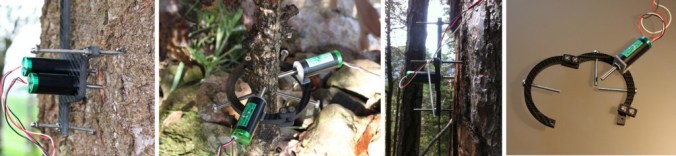
DendroCollection_2014-1024x237

Figure M1 Collection of point dendrometers (natkon.ch). The carbon frames are either T-shaped (for large stems) or O-shaped (for small stems or branches) and are anchored in the stem with stainless steel rods. Up to three sensors are attached to the different type of frames in order to measure different expositions at the stem or to measure stem radius fluctuations over bark and on the xylem separately.

And those images helped the following make a bit more sense:

In the early two-thousands, a new technique emerged that changed the field. It relies on low-cost transducers: equipped with a tiny spring, a transducer—which converts, or ā€œtransduces,ā€ physical motion into an electrical signal—can rest on the bark of a tree, sensing and logging tiny changes in pressure. Instruments that use this approach, known as precision dendrometers, allow scientists to do something entirely new: watch how trees change and respond to their environments on an instantaneous scale.

This spring, I walked along the eastern edge of Prospect Park Lake with Jeremy Hise, the founder of Hise Scientific Instrumentation, a company that sells affordable precision dendrometers to scientists, students, and members of what Hise called the ā€œD.I.Y. makerspace.ā€ Bearded and affable in jeans and a blue sweatshirt, Hise explained that his dendrometers could now deliver their measurements wirelessly to a cloud-based platform called the EcoSensor Network. Users of the network can monitor a tree’s growth, generate graphs, and correlate them with meteorological data. Together with Kevin Griffin, a professor of earth and environmental sciences at Columbia University, Hise is planning to build the largest network of dendrometers in the world, generating millions of data points each year. ā€œWe’re looking to be the Weather Underground of trees,ā€ Hise said.

Continue reading

If Those Fires Are Disturbing You, Read This

merlin_159715152_7ddac8a4-f80a-4074-834c-ac0fc2b7302a-jumbo.jpg

ictor Moriyama/Getty Images

Roberto Mangabeira UngerĀ was responsible for Amazonian policy from 2007 to 2009. We assume he knows what he is talking about, and so it is worth reading his recommendation:

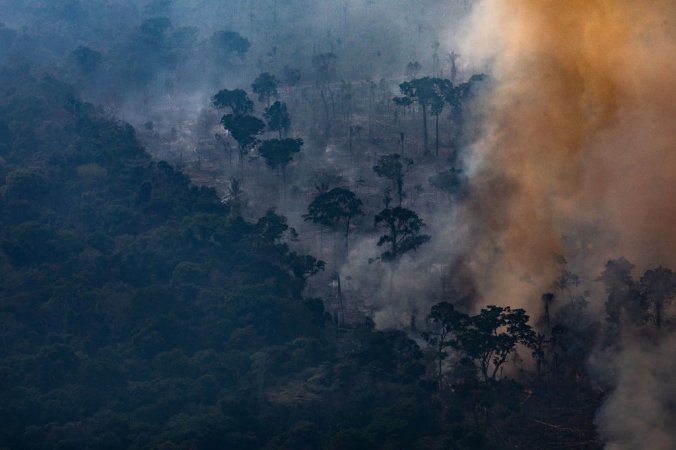
The Amazon Is Still Burning. Here’s How You Can Save It.

We need to figure out how to sustainably use the rain forest for the benefit of its inhabitants and the world. Give Brazil a hand without disrespecting its sovereignty.

The Amazon, the greatest reservoir of fresh water and biodiversity on the planet,Ā is burning. Its degradation, which threatens to reach a catastrophic tipping point, means less oxygen and rain as well as warmer temperatures. Human actions have been the driving cause. In Brazil, which holds 60 percent of the Amazonian rain forest, wildcatĀ land grabbersĀ and ranchers, who set fires to clear land in implicit partnership with a lenient government, are the main culprits.

We have been here before.Ā In 2004 deforestation rates wereĀ much worseĀ than they are today. In the last years of that decade Brazil stepped back from the brink and imposed constraints on what had been a free-for-all in the region. We now need to be more ambitious than we were then. Continue reading

Urban Avian Satisficing

web_kma9100.jpg

These owls have adoring human neighbors. Their burrow is dug on the lawn of a couple who, along with their grandson, delight in seeing the birds nest year after year on the property; they even intentionally leave one of their cars parked outside the garage, to offer the tiny owls shade. This year the owl pair had six chicks, five of which survived to fledge. Photo: Karine Aigner

Thanks to Audubon’s great team for this story of urban adaptation:

Burrowing Owls Are the Family Next Door in this Florida Boom Town

Locals and researchers are working to keep Marco Island hospitable to the birds, which are declining across the state, as development devours the vacant lots where they make their homes.

web_kma9100q

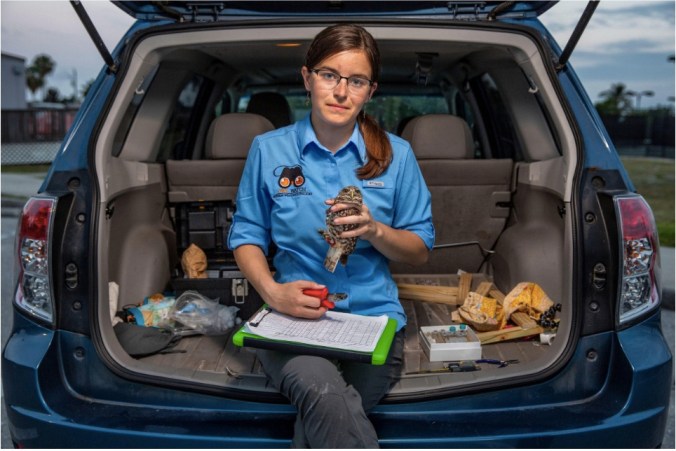
Biologist Allison Smith’s car serves as a mobile workspace for monitoring owls on Marco. She temporarily transfers birds she captures to the back, where she weighs, measures, and bands them before returning them to their burrows. Photo: Karine Aigner

Fate would not smile kindly on the six feathered inches of furious resignation splayed belly up in the left hand of Allison Smith. Wings slightly spread, the young Florida Burrowing Owl’s penny-wide green eyes remained unblinking at the indignity of such a position. Intent on banding and measuring the chick before taking a blood sample from an under-wing vein, Smith couldn’t foresee its future.

Neither could volunteer Jean Hall. She was helpingĀ Smith, a graduate student in wildlife ecology at the University of Florida, band several offspring from the same family as part of Owl Watch, a community-scientist research collaboration funded byĀ Audubon of the Western Everglades.

The Gulf Coast barrier island of Marco, a 7,700-acre dry-land dollop of one-time mangroves lying in turquoise and azure waters south of Naples, is now thick with houses, condominiums, strip malls, resort hotels, marinas, and golf courses, along with 18,000 year-round residents. The population swells to some 40,000 each winter. Continue reading

Saving Sea Snakes

00SCI-SEASNAKES5-jumbo.jpg

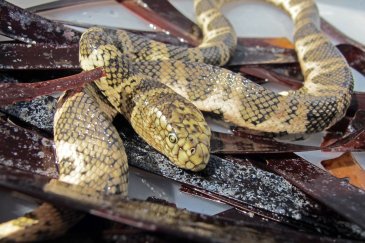
An olive sea snake, Aipysurus laevis, is returned to its home in Shark Bay, western Australia. Blanche D’Anastasi

Devi Lockwood, who we first linked out to years ago, and only once, has finally reappeared with an awesome story. We look forward to seeing more like this:

She Studies Sea Snakes by the Seafloor

Sea snakes are the most diverse group of marine reptiles in the world, but they are poorly understood and threatened by development. Blanche D’Anastasi is among the scientists working to save them.

SeaSnakesSix to eight million years ago, a snake related to swamp snakes or tiger snakes slithered into the sea. Over evolutionary time, descendants of that snake developed flattened paddle tails, an ability to breathe through the skin and a valve to stop water from entering the lungs. Today these creatures live their entire lives in the water. Clad in spots, triangles and stripes, they undulate across coral reefs or meadows of sea grass.

00SCI-SEASNAKES4-jumbo.jpg

An olive-headed sea snake caught by Ms. D’Anastasi. Blanche D’Anastasi

There are some 70 species of sea snakes in the world; they live in the Indian and Pacific oceans, in water less than 600 feet deep. Half of all species can be found in Australia, and they are particularly visible during their mating period, in July and August.

But sea snake populations have been declining rapidly for the last 20 years worldwide, as a result of climate change, pollution, fishing, habitat loss, mining exploration and disease. Although sea snakes are the most diverse group of marine reptiles — they outnumberĀ sea turtle speciesĀ by 10 to one — less is knownĀ about their ecology thanĀ that ofĀ any other group of reptiles.

This is because the research is difficult. If you want to find a sea snake, you have to go out searching for one.

00SCI-SEASNAKES2-jumbo.jpg

Tara Fullston

Blanche D’Anastasi, a sea snake researcher at James Cook University in Queensland, Australia, travels to remote regions like Exmouth Gulf, on the country’s northwest coast, to find sea snakes in the wild. Sometimes she scuba dives or snorkels, but the most efficient technique is to be towed behind a boat while wearing a snorkel. When she spots a snake, Ms. D’Anastasi dives down to catch it in a bag. Continue reading

Therapeutic Noise

a1_4025_2_sedge-wren_ben_cvengros_kk.jpg

Sedge Wren. Photo: Ben Cvengros/Audubon Photography Awards

Thanks to Audubon for pointing us in this direction:

Around the World, the Soothing Sounds of Birdsong Are Used as Therapy

The natural tunes decrease stress while possibly invigorating the mind.

This audio story is brought to you byĀ BirdNote, a partner of The National Audubon Society. BirdNote episodes air daily on public radio stations nationwide.

Transcript:

This is BirdNote.

In a children’s hospital in Liverpool, England, the sweet sounds of birdsong carry along the hallways. It’s a recording of the dawn chorus from a nearby park, and the intent is to calm the anxious young patients…

Fishermen Helping to Protect Fish

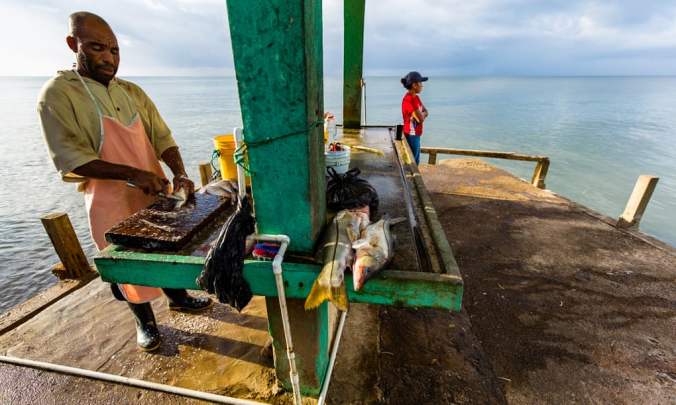
Belize’s system gets fishermen on side in helping to maintain the health of the ocean. photo credit: Tony Rath

Thanks to the Guardian for this story about Belize’s marine conservation efforts and how they can serve as a model for other countries.

Why tiny Belize is a world leader in protecting the ocean

Fish stocks are stable and reef health improving, in part thanks to Belize’s substantial ā€˜no-take’ zones. Now greater legislation is needed to secure progress

Across the turquoise water by the mangrove, forest ranger Allan Halliday spots a fishing skiff. ā€œWe’re going over to say hello,ā€ he says, before abruptly changing the boat’s direction. But his real task is to check the couple on board have the license to fish in this part of the Port Honduras Marine Reserve, one of nine designated zones in Belize.

ā€œWe aren’t complaining but others do,ā€ says Alonzo Reymundo, of the rules that now restrict Belize’s 3,000 commercial fishers to two geographic areas each. He and his wife Anselma have been fishing off southern Toledo for 30 years and their boat is laden with 50 or so pounds of shrimp – more than enough, he says, flashing his license. Today’s catch will be sold as bait and fetch around 330BZ$ (Ā£135), he says.

But not all encounters are as friendly for the rangers from the Toledo Institute for Development and Environment (Tide), whose job includes enforcing theĀ managed access (MA) programme that since 2016 has given traditional fishers the rights to secured grounds if they obtain licenses and report their catch. Illegal fishing has declined, says Halliday, but at night there are illicit incursions from Guatemala and high-speed chases around the reserve’s 500-square miles of pristine sea – a vast space to monitor for just four rangers alternating shifts at their station on Abalone Caye.

Covering all of Belize’s waters, the MA scheme is unique, says fisheries administrator Beverly Wade. ā€œBelize is the only country in the world that has successfullyĀ divided all its territorial waters, including functional fishing waters. We direct all fishermen into two of nine areas to build an architecture from the ground up, where a constituent takes ownership of resources because their livelihood depends on it.ā€

The programme is just part of a groundbreaking approach to ocean protection that has won the tiny country in Central America a reputation as a world leader. Continue reading

Perennial Grain’s Future

Field-Work-July-2019-11_web.jpg

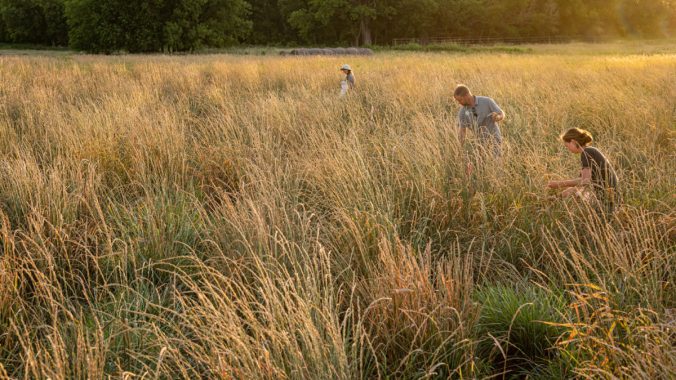
Harvesting heads of Kernza, a newly developed perennial grain, on a research plot in Salina, Kansas. THE LAND INSTITUTE

Thanks to Jim Robbins, as always, and Yale e360 for brightening our day just a bit:

With New Perennial Grain, a Step Forward for Eco-Friendly Agriculture

A cereal and beers are now being made with a new variety of perennial grain known as Kernza. Proponents say this marks a significant advance for a new agriculture that borrows from the wild prairie and could help ensure sustainable food production in a warming world.

Tractor-Tilling_Washington_BF2X7Y_web.jpg

A tractor plows a field of wheat stubble on a traditional farm near Pullman, Washington. RICK DALTON/ALAMY

Some 40 years ago, Wes Jackson, a plant geneticist, foundedĀ The Land InstituteĀ on the prairie near Salina, Kansas. Concerned that modern agriculture destroyed native grasslands, he asked a question that came to define his life: How can we harness the inherent strengths of the prairie ecosystem — the natural resistance of native plants to insects and weeds, the ability of those plants to grow perennially, and their evolved resistance to cold and drought — and marry those traits to the task of growing domesticated crops for food?

Kernza-Roots-Sept-2017-2_web.jpg

Kernza’s long roots stabilize soil and prevent erosion. THE LAND INSTITUTE

Jackson, the recipient of a 1992 MacArthur ā€œgenius grant,ā€ set out to create a new kind of farming he called ā€œnatural systems agriculture,ā€ which has the ā€œecological stability of the prairie and a grain and seed yield comparable to that from annual crops.ā€

After four decades of breeding and testing, the institute has introduced its first commercial grain, a trademarked variety calledĀ Kernza, a domesticated wild grass — intermediate wheatgrass — that has a long, slender head that resembles wheat seeds. Described as sweet and nutty, it is now being made into a cereal called Honey Toasted Kernza by Cascadian Farms, andĀ Patagonia Provisions — an offshoot of the clothing company — has brewed it into beers, including Long Root Pale Ale. Both are being produced now in limited runs.

Kernza-Seeds-and-Milled-Flour-Oct-2017_web.jpg

The perennial grain is currently being used to make small batches of cereal and beer. THE LAND INSTITUTE

The development of Kernza is being held out as a prime example of a new way of doing agriculture that borrows from the perennial nature of the wild prairie. ā€œThe goal is to mitigate a lot of the problems inherent in annual grain farming systems,ā€ said Tim Crews, research director at The Land Institute. For example, he noted, ā€œFarmers write off 50 percent of their fertilizer as not being taken up by the crop.ā€ Continue reading

Co-habitation Questions Down Under

A platypus in Tasmania. Photo Ā© Klaus /Ā FlickrJustine E. Hausheer

Thanks to TNC’s Justine E. Hausheer for this story:

Can Platypus Persist Alongside People?

Most of us are familiar with the bizarre and improbable platypus: a mammal that lays eggs, secretes milk from its skin, and defends itself with a venomous spur on its hind leg.

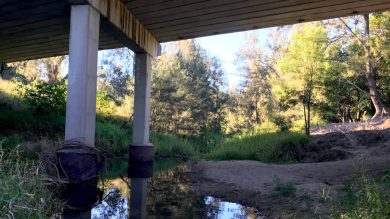
Urban platypus habitat. Photo Ā© Justine E. Hausheer / TNC

But the incredible little mammal wriggling in the net at my feet is all too real, and — like much of Australia’s iconic wildlife — it’s also in deep trouble. As urban development alters waterways, platypus populations are declining and their range is shrinking, putting the future of this wildlife wonder at risk.

ā€œAn Animal of All Timeā€

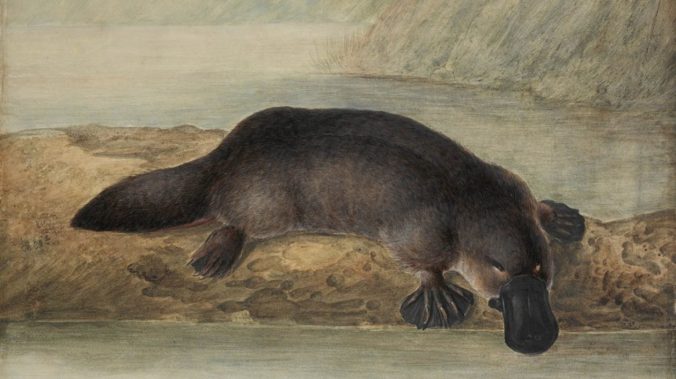
One Aboriginal story says that platypus originated from the union of a duck and a water-rat, which is rather apt. British naturalist George Shaw infamously thought the first platypus specimens sent back from Australia were a hoax,Ā cutting the taxidermied corpseĀ apart to try and find the stitching.

A painting by of a platypus by John Lewin, 1808. Photo Ā© State Library of New South Wales / Wikimedia Commons

But the animal’s oddity afforded little protection from European settlers. Continue reading

Our Favorite Form Of Prospecting

web_madagascar_highres_spinski_576.jpg

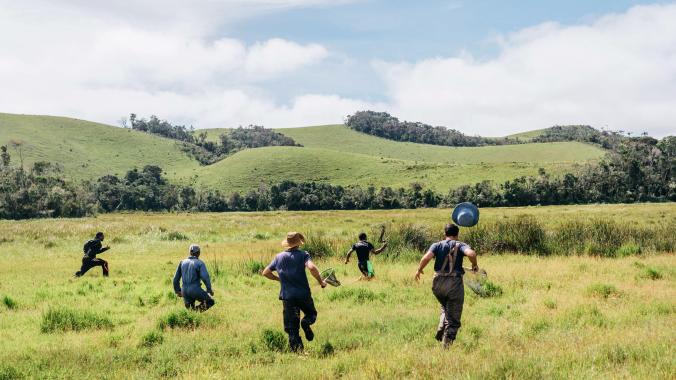
Expedition members sprint to flush Slender-billed Flufftails, among the world’s most elusive birds, in a marsh in Bemanevika reserve.Ā Photo:Ā Tristan Spinski

Bioprospecting, a topic we have not posted enough about, came to our attention in the mid-1990s throughĀ Costa Rica’s National Institute of Biodiversity. Kimon de Greef, writing for Audubon Magazine, offers an inside view of a prospecting expedition in one of the most wondrous, and at-risk natural habitats on the planet:

Scientists Race to Uncover the Secrets of Madagascar’s Treasure-Filled Forests

The rediscovery of a long-lost duck spurred the creation of two protected areas in the country. Now researchers are scouring these spots for other endemic species before it’s too late.

web_madagascar_highres_spinski_227

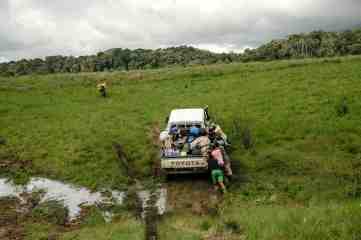
With only a few kilometers to go during day-long to Bemanevika, challenging road conditions forced the group to disembark from the two Toyota Land Cruisers and push them through the deep mud. Much of the terrain required the forest technicians to utilize the wench, which they fastened to tree stumps to wind the vehicles up the muddy mountain roads. Photo: Tristan Spinski

We had come this far and now we were stuck, dug in on a dirt track high above the plains. It was monsoon season in Madagascar, and thunderstorms had laid waste to the deeply rutted road. Already we had traversed seemingly unnavigable passes on our way to the remote northern mountains, mud churned to slurry by each passing set of wheels. Almost 24 hours later, this slope flanked by agave plants had defeated us. Our drivers took up shovels: There were ruts to flatten, boulders to excavate and heave into the bushes. As the workers toiled, cicadas hissed from the treetops.

web_madagascar-map.jpg

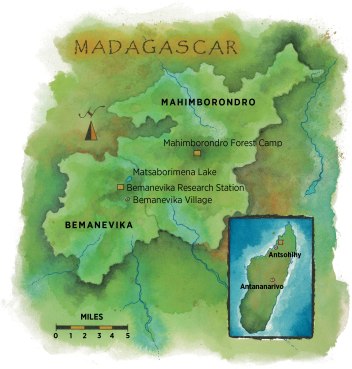
Map: Mike Reagan

For the field biologists I was accompanying, this breakdown of rural infrastructure held great promise. They were on their way to survey some of the island’s last remaining virgin rainforests—shrinking havens of exceptional biodiversity, including some of Earth’s rarest birdlife. ā€œThere’s definitely a correlation with how hard it is to get in,ā€ said John Mittermeier, an expedition leader, ornithologist, and geography Ph.D. student at Oxford University, ā€œand how likely you are to find new stuff.ā€

madagascar3

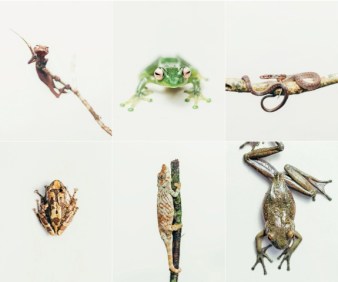
Clockwise from top left: Spearpoint leaf-tail gecko; Andreone’s tree frog; Compsophis fatsibe snake; Boophis goudot frog; Calumma nasutum chameleon; Spinomantis nussbaumi frog. Photos: Tristan Spinski

Now a cry went up among the team. A snake was moving its way through the undergrowth, and with abandon they leapt after it. Luke Kemp, the herpetologist on the expedition, crouched beside the bushes, poking around but coming up empty. ā€œIt’s like an addiction,ā€ he told me. ā€œI can’t stop.ā€

The biologists had congregated from four countries, united by a relentless, even maniacal fascination with wildlife. They wore faded shirts from scientific conferences and were never without their binoculars. Instead of making small talk, they discussed bird calls and sampling methods, animated by purpose and shared expertise. In unison, like meerkats, Mittermeier and the other two birders swung their binoculars from side to side, trying to glimpse what sounded to them like an endemic robin. The two entomologists swept the air with butterfly nets; they would not hesitate, when their hands were full, to pop wriggling insect specimens between their lips. Continue reading

Bats as Climate Change Canaries

Illustration by Edward Steed

The impact of changing weather patterns becomes particularly evident when looking at the interrelationships of animal life cycles based on season. When it comes to habitat, conservationists are winning some battles, but climate change will require longer range goals.

The Changing Climate Inside the World’s Largest Bat Colony

The migration patterns of the Bracken Cave bats are changing, adapting to the rapid rate of warming, but experts say these adaptations won’t be enough to counter the effects of climate change.

Continue reading

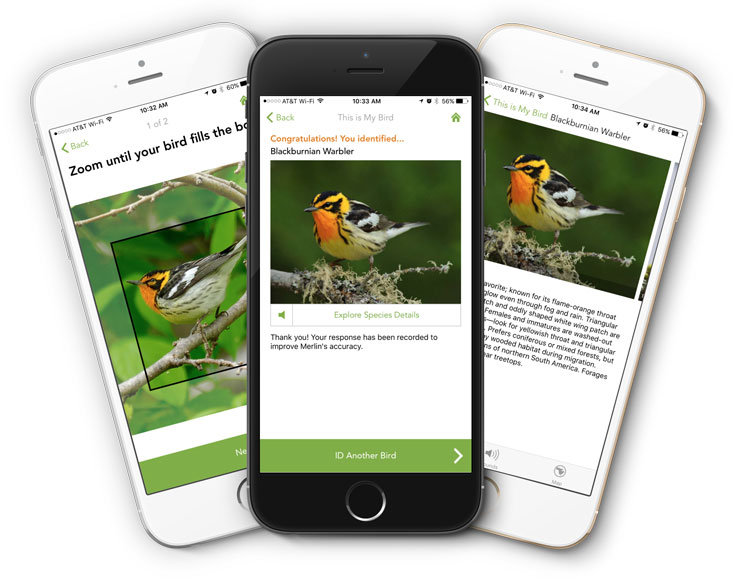
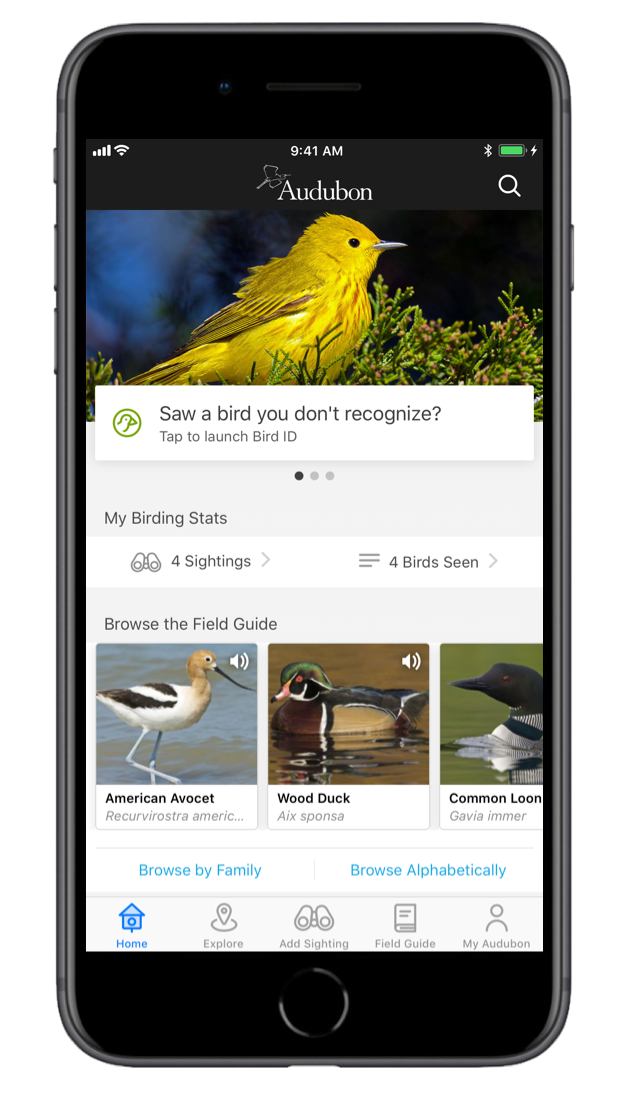
A Comparison of Audubon and Merlin Bird

Merlin Bird and Audubon Bird Guide are both amazing resources and are well maintained and updated. They are both free and have a lot of the same features. At first, these apps might seem very similar. However, there are some big differences. I’ll start off with Merlin Bird. The Cornell Lab of Ornithology’s birding app has a couple of standout features. The app has a much cleaner interface with a simpler bird ID feature. You’ll answer five basic questions and it gives you a list of possible birds. It is very easy to use and is perfect for novices that do not have a lot prior knowledge about birds.

Another point for Merlin Bird is the variety of regions covered from all over the globe. They also let you download these regions individually, so you don’t have to fill up your device with information you don’t need. Merlin bird has a unique feature that allows you to take a photo of a bird and it will attempt to identify it. While it isn’t always accurate (or easy to get a good photo of a bird!) I am impressed by how often it gets it right. Even with photos I’ve taken at a distance the app has managed to identity the bird correctly.

Another nice feature is that the app integrates with Cornell’s other app, eBird. If you have a bird in eBird that you’ve identified it will display that in the Merlin app. It also has a nice ability that shows you a list of birds based on how likely it is that you’ll see them in your area.

Continue reading

Wild Cats And The Activists Who Work For Their Protection

SnowLeopard_Mongolia_alamy_T8JMBM_web.jpg

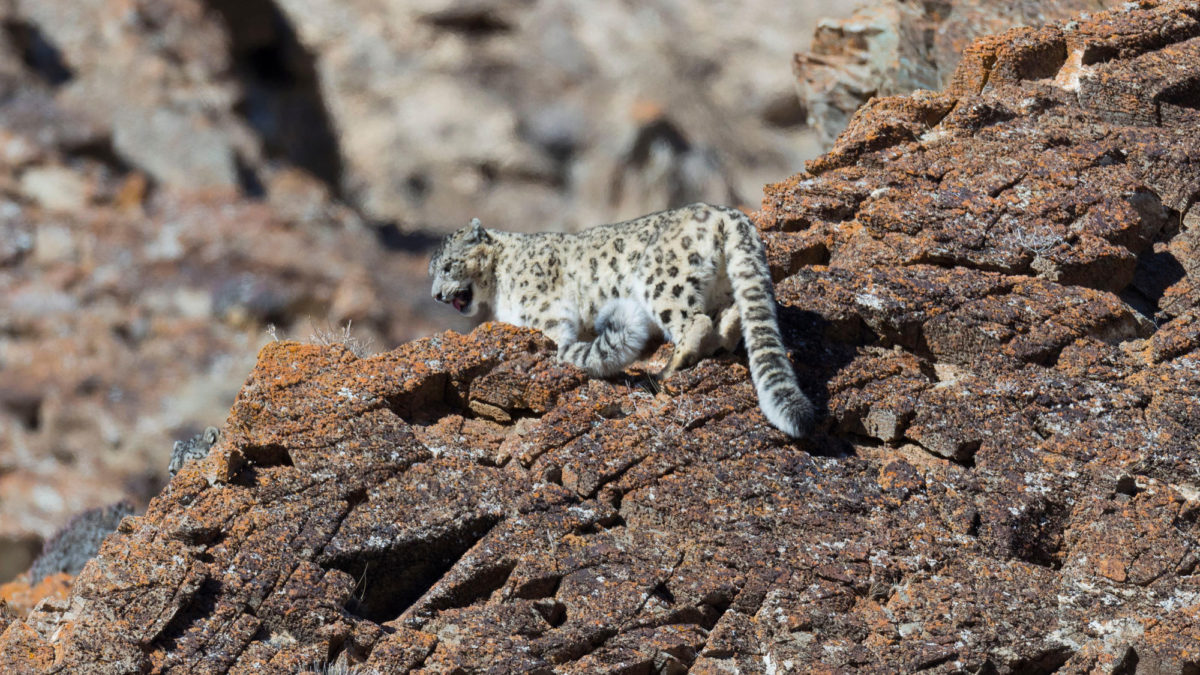
There are an estimated 1,000 snow leopards in Mongolia. HEMIS / ALAMY STOCK PHOTO

Our thanks to the activists who take on the cause of endangered wild cats around the world, and to Fred PearceĀ and Yale e360 for bringing them to our attention:

How a Mongolian Activist Is Helping Snow Leopards and Herders Coexist

Mongolian activist Bayarjargal Agvaantseren spearheaded the creation of the world’s first reserve for endangered snow leopards. In anĀ e360Ā interview, she describes how she helped win over the local herders who once sought to kill the leopards but now patrol the reserve to protect them.

Bayara-banner-2_web

Bayarjargal Agvaantseren. GOLDMAN ENVIRONMENTAL PRIZE

Bayarjargal Agvaantseren has spent 20 years traveling to remote regions of Mongolia’s Gobi Desert, fighting to protect native snow leopards. The 50-year-old teacher-turned-activist persuaded Mongolia’s parliament in 2016 to create the world’s first national reserve specifically for the endangered animal. It links two existing protected areas to create a continuous safe zone for the species covering 31,000 square miles, where over a third of the country’s estimated 1,000 snow leopards live.

The creation of the reserve led to the banning of all mining in one of the animal’s key habitats. In a country so dependent on extractive industries — coal and minerals make up 85 percent of exports — her achievement is astounding. She attributes it to the support of remote goat-herding communities, people who she converted from regarding leopards as their enemies to patroling the reserve to protect them. Continue reading

Tiger Census as Bright Star


photo credit: Dr. Eash Hoskote

Tigers and other megafauna felines have frequently held pride of place on this site, beginning long before our company was based in India.

Thank you to NPR for reporting on the good news of this census, although in full disclosure their choice of cover photos is quite disappointing and we are happy to highlight a stunning photo by Dr. Eash Hoskote, one of our regular nature photography contributors instead.

Census Finds Nearly 3,000 Tigers In India

In 2010, India sought to double its tiger population by 2022. But on International Tiger Day, the country announced it met its goal four years earlier than expected.

Nearly 3,000 tigers now reside in India, that’s more than 70% of the world’s tiger population.

Prime Minister Narendra Modi released the 2018 All India Tiger Estimation count on Monday, attributing the figures to India’s hardworking wildlife officials and advocates.

“Once the people of India decide to do something, there is no force that can prevent them from getting the desired results,” ModiĀ announced at a news conference. “Today we reaffirm our commitment towards protecting tigers.”

He added that India now takes the lead in being the biggest and safest habitat in the world for tigers. The population, now at 2,967, is up from 2,226 since 2014.

“There are several plants and animals out there that need our help,” Modi said. “What is it that we can do? Either through technology or human action to give them … a life so that they can add beauty and diversity to our planet.” Continue reading