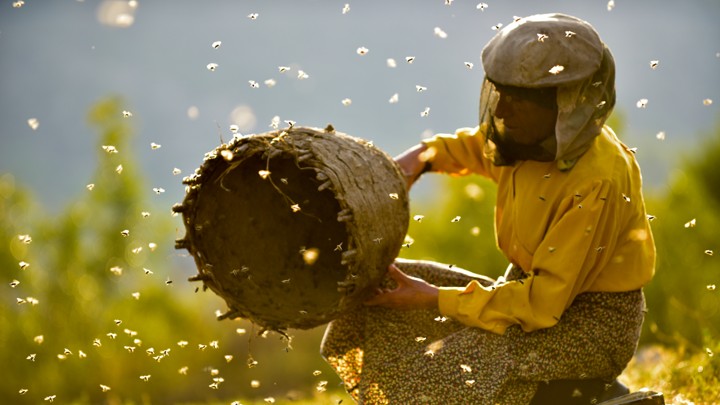
Honeyland, Reviewed

New Zealand’s Minister of Conservation Shares Surprising Good News

When the Minister of Conservation speaks, we listen:

orange-fronted-parakeet-chick.jpg

We came to this news through the story below by National Public Radio (USA):

Rare New Zealand Parakeet Population Doubles After ‘Epic’ Breeding Season

orange-fronted-parakeet-chick-with-transmitter-doc-c9811c0f185647851facaa77fc88d87cd8614f8f-s1200-c85.jpg

The small bird was believed to have gone extinct but after a bumper crop of beech seeds this year, conservationists estimate the orange-fronted parakeet population has likely doubled.
Department of Conservation

One of the rarest birds in New Zealand is having its best breeding season in decades, potentially doubling the population.

The orange-fronted parakeet, known locally as the kākāriki karaka, is in the midst of a prolonged mating season due to a beech seed bonanza, Conservation Minister Eugenie Sage said in a statement on Wednesday.

“It is great news that this year there are more than three times the number of nests compared to previous years,” Sage said.

She added that at least 150 wild-born chicks have been born so far this season…

Read the whole story here.

The Corn Of The Future Is Valuable Patrimony From Mexico

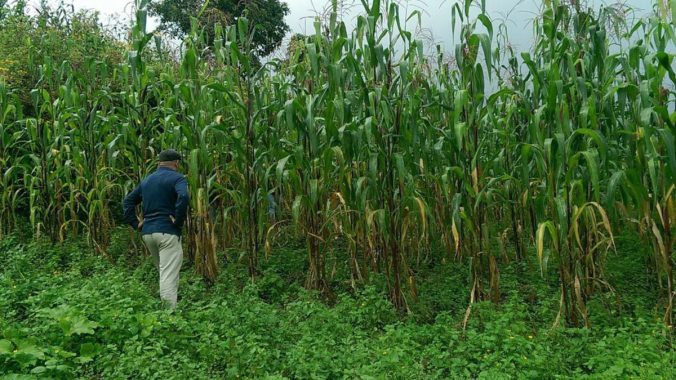
corn-field-sierra-mixe-uc-davis_web

A Mexican scientist inspects a field of olotón maize near Oaxaca, Mexico. ALLEN VAN DEYNZE/UC DAVIS

Thanks to Martha Pskowski and Yale e360 for this:

Indigenous Maize: Who Owns the Rights to Mexico’s ‘Wonder’ Plant?

A nitrogen-fixing maize grown in an indigenous region of Mexico has the ability to fertilize itself, recent research shows. Now, as a global company and U.S. scientists work to replicate this trait in other corn varieties, will the villages where the maize originated share fairly in the profits?

In a 1979 visit to Totontepec, a small town in Oaxaca, Mexico, naturalist Thomas Boone Hallberg marveled at the local maize. The plants grew nearly 20 feet high in nutrient-poor soil, even though local farmers did not apply any fertilizer.

Aerial_Roots_small_web.jpg

MARS, INCORPORATED & JEAN-MICHEL ANE/UC DAVIS

The maize had aerial roots that grew a mucous-like gel just before harvest season. It seemed impossible, but Hallberg wondered if the maize was fixing its own nitrogen: extracting it from the air and somehow making it usable for the plant. He had visited countless towns since moving to Oaxaca in the 1950s, but what he saw in Totontepec stuck with him.

aerial-roots-sierra-mixe-corn-uc-davis_0_web.jpg

The maize variety olotón has aerial roots that produce a mucous-like gel that fixes nitrogen, meaning that it can effectively fertilize itself. MARS, INCORPORATED & JEAN-MICHEL ANE/UC DAVIS

In 1992, Hallberg returned with a group of Mexican scientists. The maize, known as olotón, was almost ready for harvest and its aerial roots glistened with gel. Ronald Ferrera-Cerrato, a microbiologist, took samples back to his lab outside Mexico City to test the bacteria in the gel. His preliminary results, published in a 1996 report, showed that the maize received nitrogen from the air, through its aerial roots, meaning that it effectively had the ability to fertilize itself.

At the time, scientists around the world were puzzling over similar questions. In a 1996 paper in Plant and Soil, microbiologist Eric Triplett, then at the University of Wisconsin, described the possibility of corn plants that fix nitrogen as “the ‘holy grail’ of nitrogen fixation research” because of the potential to reduce fertilizer demand. Continue reading

Rewilding’s Latest Live Case Study

3500c.jpg

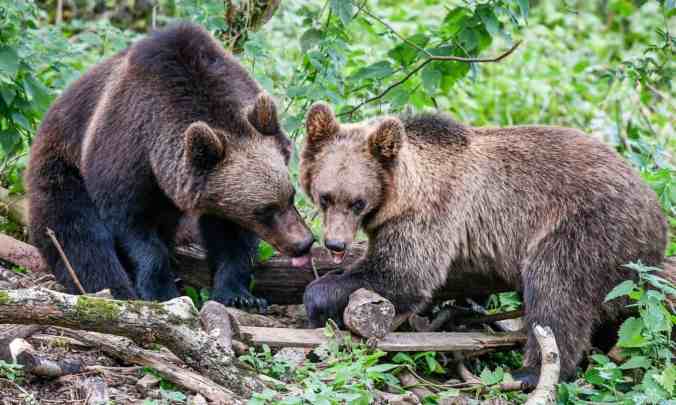
European brown bears, thought to have become extinct in the UK in the Middle Ages, will share a paddock with wolves, lynxes and wolverines. Photograph: Ben Birchall/PA

Thanks to Steven Morris (yet again) for another excellent nature story in the Guardian:

Bears and wolves to coexist in UK woods for first time in 1,000 years

Bear Wood near Bristol aims to spark debate about rewilding of ancient woodlands

For the first time in more than 1,000 years native bears and wolves are coming snout to muzzle with each other among towering oaks and ashes in a slice of British woodland.

European brown bears, thought to have become extinct in the British wilds in medieval times, and grey wolves – which roamed free until the 17th century – are to coexist in a project called Bear Wood near Bristol.

The idea of the scheme – which is part of Bristol Zoological Society’s Wild Place Project – is to give visitors a glimpse into life in the woods and forests that used to cover much of the UK.

It is also intended to initiate a debate about rewilding schemes, which could reintroduce animals such as lynxes – and perhaps wolves and bears. Continue reading

Audubon’s 2019 Photography Awards Winners

Red-winged Blackbird. Photo: Kathrin Swoboda/Audubon Photography Awards

Thanks to the judges who chose the Grand Prize Winner (above) in this year’s contest, among an impossibly great selection. (Not to mention an extra applause to Audubon for adding the Citizen Science centric Plants for Birds category.

Birds make fascinating subjects, as the winners and honorable mentions of this year’s contest, our 10th, make clear. They’re at once beautiful and resilient, complex and comical. It’s no wonder why we love them so.

The images that won the 2019 Audubon Photography Awards, presented in association with Nature’s Best Photography, are as impressive as ever, but attentive readers might notice a few more images than usual. That’s because we’ve added two awards. The Plants for Birds category is inspired by Audubon’s Plants for Birds program, supported by Coleman and Susan Burke, which provides resources for choosing and finding plants native to zip codes in the United States. This category poses a new challenge to photographers: Don’t just capture an incredible moment—make sure it also features a bird and plant native to the location in which the photo was taken in order to highlight the critical role native habitat plays in supporting bird life. And in the spirit of Kevin Fisher, Audubon’s longtime creative director who recently retired, the Fisher Prize recognizes a creative approach to photographing birds that blends originality with technical expertise. The winning image, which Kevin himself selected from among the finalists, pushes the bounds of traditional bird photography.

We want to extend a heartfelt thank you to all 2,253 entrants, hailing from all 50 U.S. states, Washington, D.C., and 10 Canadian provinces and territories. Your dedication to appreciating, celebrating, and sharing the wonder of birds and the landscapes they inhabit inspires us now and throughout the year.

The 2019 APA Judges

Steve Freligh, publisher, Nature’s Best Photography

Melissa Groo, wildlife photographer and winner of the 2015 contest’s Grand Prize

Kenn Kaufman, bird expert and Audubon magazine field editor

Sabine Meyer, photography director, National Audubon Society

Allen Murabayashi, chairman and co-founder, PhotoShelter

John Rowden, director of community conservation, National Audubon Society

Judging criteria: technical quality, originality, artistic merit

Continue reading

Climate Change, Coffee & Solutions

GettyImages-1146667212_ColombiaCoffee_web.jpg

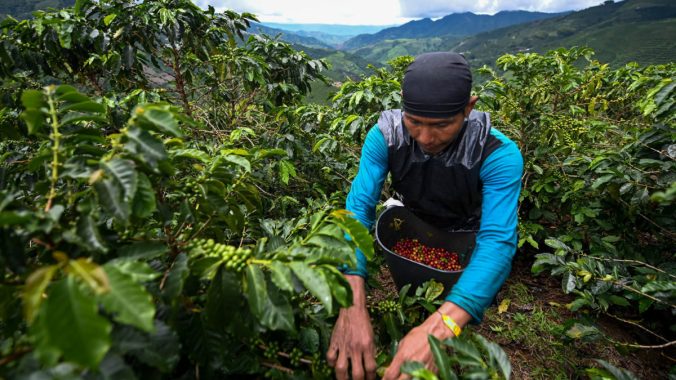
A worker harvests coffee near the town of Santuario, Risaralda department, Colombia in May. RAUL ARBOLEDA/AFP/GETTY IMAGES

In Costa Rica, where we have been paying attention to the plight of coffee farmers in the last year, there are numerous scientific and sectoral organizations dedicated to assisting with the impact of climate change.  Richard Schiffman, who last appeared in our pages nearly a year ago, has this about Colombia’s approach:

As Climate Changes, Colombia’s Small Coffee Farmers Pay the Price

Hundreds of Colombia’s small coffee growers have stopped cultivating the bean in the face of low prices and reduced harvests linked to a shifting climate. As farmers struggle, the nation’s scientists are seeking to develop new varieties that will flourish in a changing environment.

Finca-Ocaso_IMG_6054_web.jpg

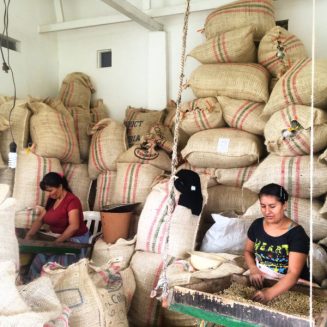
Women sort coffee beans at the 44-acre Finca El Ocaso farm, near Salento, Colombia. COURTESY OF FINCA EL OCASO

At first glance, Finca El Ocaso, located in the hills outside Salento, Colombia, could be mistaken for a natural forest: rows of squat Arabica coffee trees are interspersed with plantain, banana, and lime and shaded by towering nogal cafatero trees, whose high canopy hosts flocks of chattering parrots and other birds. The 44-acre coffee plantation has been certified by international organizations for being sustainable, climate-friendly, and fair to its workers.

But Finca El Ocaso is struggling under the weight of intensifying economic pressures.

Finca-Ocaso-Farm_Tradicion-cafetera_web1000.jpg

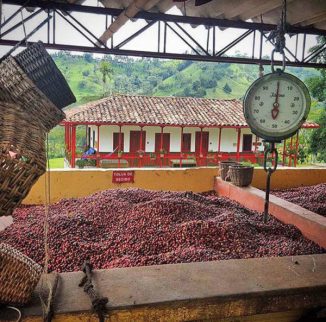
A coffee weighing station at Finca El Ocaso. Coffee prices have dropped so low that the family-run farm has started hosting tourists to make extra money. COURTESY OF FINCA EL OCASO

“Lots of smaller farms near us have gone out of business,” said farmer Gustavo Patiño. “It is no longer sustainable to have a medium-size farm that pays high taxes and expensive production costs, when in the end they may get paid less for their coffee than their expenses.”

Several years ago, in an effort to keep the plantation afloat, Patiño’s eldest daughter, Carolina, opened the farm to foreign and Colombian tourists. The plantation now attracts more than 1,000 visitors a year. “Our farm can only survive because we offer tours and sell our coffee to the tourists,” Patiño said.

GettyImages-1146667271_ColombiaCoffee_web.jpg

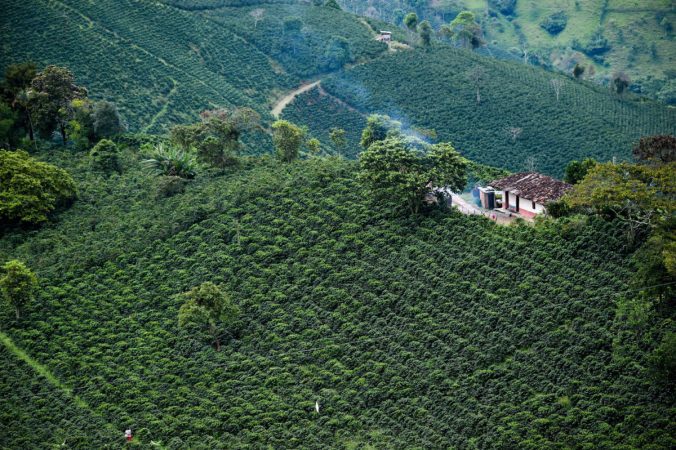
An aerial view of coffee plantations in Santuario, Colombia in May. Small farms such as these have been hit hardest by climate change and low coffee prices. RAUL ARBOLEDA/AFP/GETTY IMAGES

In the last 18 months, Colombia has lost nearly 100,000 acres of coffee plantations, more than 4 percent of the land under coffee cultivation, according to a statement issued last week by Colombia’s National Federation of Coffee Growers (Fedecafé). Continue reading

Blueprint For Planting Trees

3000 (7)

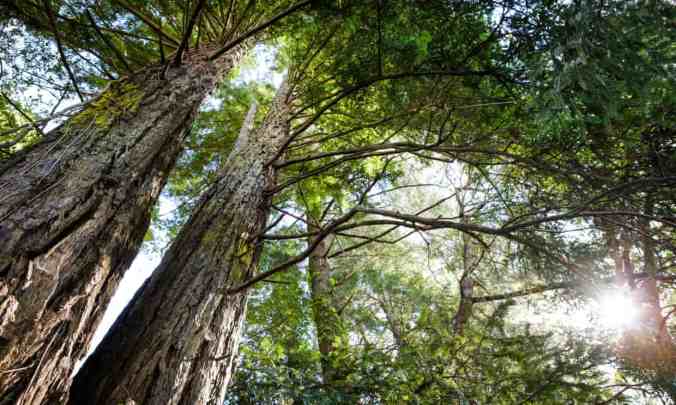
Redwood trees in Guerneville, California. Photograph: Gabrielle Lurie/The Guardian

Damian Carrington, the Guardian’s Environment editor, shares a report on the value of reforestation for carbon sequestration:

Tree planting ‘has mind-blowing potential’ to tackle climate crisis

Research shows a trillion trees could be planted to capture huge amount of carbon dioxide

MapTree1

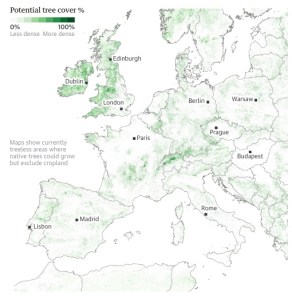
The potential for new forests that do not encroach on cropland is high in the UK, Ireland and central Europe. Guardian graphic. Source: Bastin et al, Science, 2019

Planting billions of trees across the world is by far the biggest and cheapest way to tackle the climate crisis, according to scientists, who have made the first calculation of how many more trees could be planted without encroaching on crop land or urban areas.

As trees grow, they absorb and store the carbon dioxide emissions that are driving global heating. New research estimates that a worldwide planting programme could remove two-thirds of all the emissions that have been pumped into the atmosphere by human activities, a figure the scientists describe as “mind-blowing”.

MapTree2.jpg

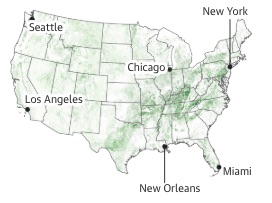
The potential for new forests that do not encroach on cropland is high in the UK, Ireland and central Europe

The analysis found there are 1.7bn hectares of treeless land on which 1.2tn native tree saplings would naturally grow. That area is about 11% of all land and equivalent to the size of the US and China combined. Tropical areas could have 100% tree cover, while others would be more sparsely covered, meaning that on average about half the area would be under tree canopy. Continue reading

Mammals of Akagera National Park

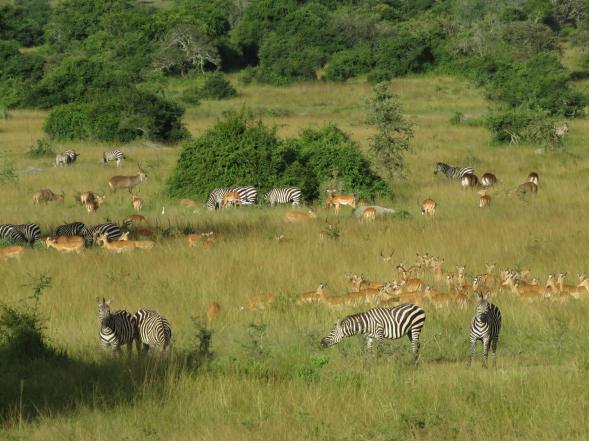
Impala, zebras, topi, and waterbuck share this savanna scene in Akagera National Park

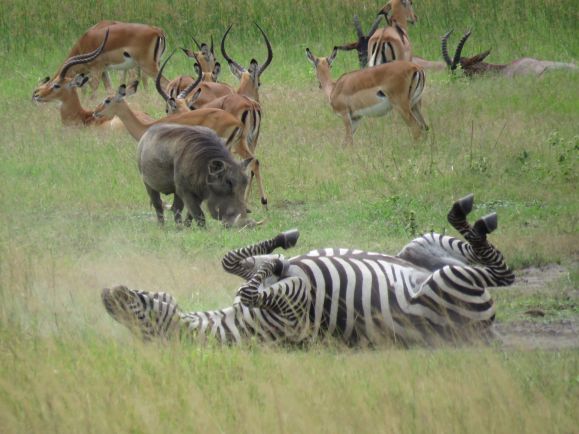
The next park we visited on the Rwanda Study Tour after Nyungwe was Akagera National Park. Although the park was created in 1934, it’s only been run by a partnership between the Rwandan government and an NGO called African Parks—which helps manage about fifteen parks on the continent—since 2010. At this point, a change in operation style and protection started to help wildlife bounce back as well as increase visitation to the park. Back in 2010, the park hosted around fifteen thousand visitors per year and only made about $200,000 (while losing money), but last year the park received thirty-six thousand visitors and made $2,000,000 (getting out of the red for the first time).

A zebra gives itself a dustbath while a impala, two topi, and a warthog watch on

Continue reading

A Daily Grind Unlike Yours

33a8ae702.jpg

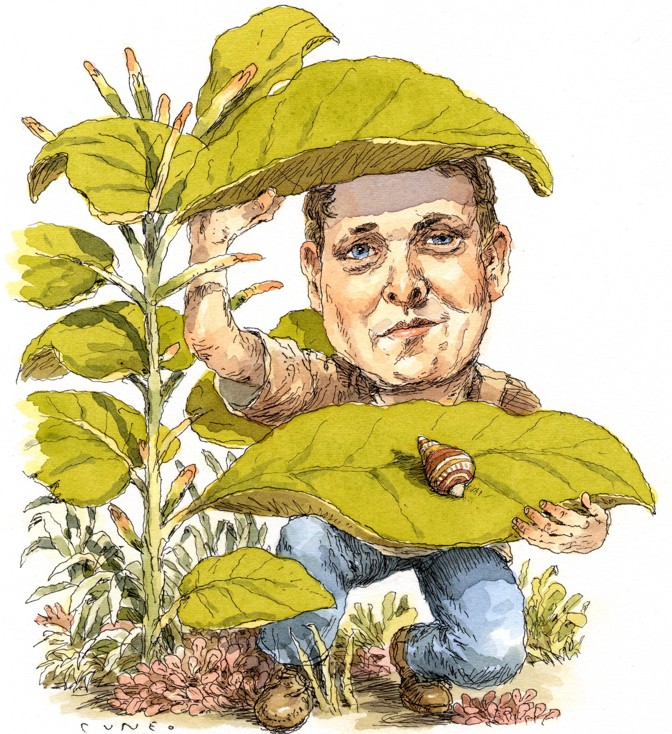
JOHN CUNEO

Ed Yong, one of the excellent science writers who does not shy away from troubling findings–but mostly amazes us with pure inspiration about how nature works–has a real downer of a career for us to contemplate today. It is a long read, less dark than it first sounds, and worth the read:

The Last of Its Kind

The biologist David Sischo has a tragic assignment: keeping vigil over a species’ sole survivor, then marking its extinction in real time.

Sometime on new year’s day, as the people of Hawaii recovered from a night of revelry, in a trailer on the outskirts of Kailua, Oahu, a 14-year-old snail named George died. David Sischo, who works in the trailer but was taking a rare day off, found out at 7 o’clock the next morning, when a colleague discovered George’s limp body and texted him. “I usually don’t hear from her that early, so before I even read the text, I felt that something bad had happened,” Sischo told me. Continue reading

My Summer Research Project: Bird Diversity in Gishwati Forest, Rwanda

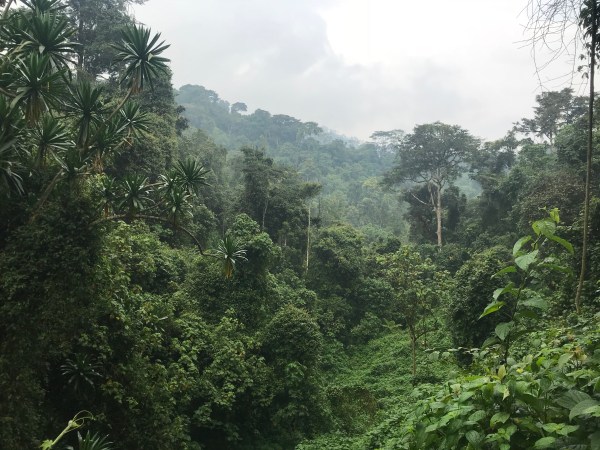
Gishwati Forest of Gishwati-Mukura National Park

Two weeks ago I promised an update from the field, and after completing the necessary government permits and preparing for work in the forest, I’m finally ready to write about the summer project that the Yale School of Forestry and Environmental Studies requires of its Master of Environmental Management candidates. We can choose between completing an internship or independent research, and I opted for the latter, since I wanted the experience of designing my own field season and collecting data for scientific analysis for peer-reviewed publication, pursuing a subject that I’m both personally and academically interested in: tropical bird conservation. Now, with the generous support I’m grateful to receive as a fellow of the Yale Institute for Biospheric Studies (YIBS), Yale’s Tropical Resources Institute (TRI), and the University of Rwanda’s Center for Excellence in Biodiversity and Natural Resource Management (CoEB), I’ve started my project exploring a subset of montane avifauna distribution in the Albertine Rift.

Continue reading

Tropical Wetlands Offer Another Surprise

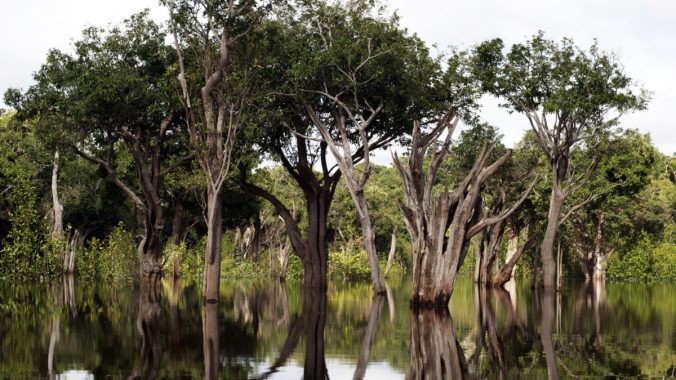
TupanaBrazil_MultipleTrees_AmauriAquiar_flickr_web

A wetland forest in Tupana, Brazil. AMAURI AGUIAR/FLICKR

Tropical wetlands have been a source of wonder, due to their biodiversity, since we started paying attention along time ago. Fred Pearce offers another of his surprises here:

Scientists Zero in on Trees as a Surprisingly Large Source of Methane

Recent research is showing that trees, especially in tropical wetlands, are a major source of the second most important greenhouse gas in the atmosphere, methane. The knowledge that certain woodlands are high methane emitters should help guide reforestation projects in many parts of the world.

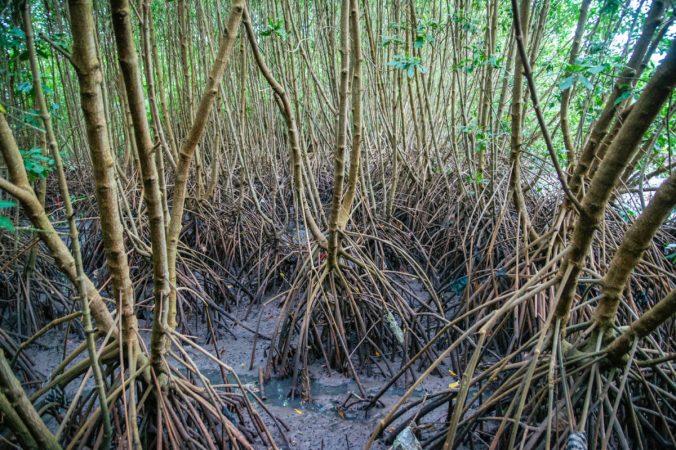
MangroveRoots_Bali_Alamy_web.jpg

Tropical wetlands, such as this mangrove forest in Bali, give off the most intense tree-based emissions of methane. ALAMY

There are many mysteries in the Amazon. Until recently, one of the most troubling was the vast methane emissions emerging from the rainforest that were observed by satellites but that nobody could find on the ground. Around 20 million tons was simply unaccounted for.

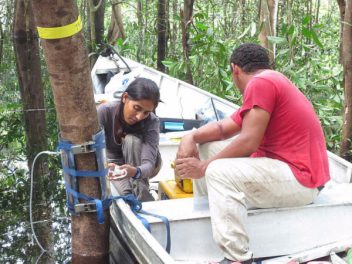
Sunitha_SamplingAmazon_web.jpg

Sunitha Pangala installs a device that measures a tree’s methane emissions, in the Amazon. COURTESY OF SUNITHA PANGALA

Then Sunitha Pangala, a British post-doc researcher, spent two months traveling the Amazon’s waterways strapping gas-measuring equipment to thousands of trees. She found that trees, especially in the extensive flooded forests, were stimulating methane production in the waterlogged soils and mainlining it into the atmosphere.

Her 2014 expedition plugged a gaping hole in the planet’s methane budget. And she had discovered a hitherto ignored major source of the second most important greenhouse gas in the atmosphere. It now seems that most of the world’s estimated 3 trillion trees emit methane at least some of the time. Continue reading

Biophilia via Oliver Sacks

Hortus Botanicus in Amsterdam. CreditKaren Massier/E+, via Getty Images

Being a daily reader of the NYTimes it’s surprising that I missed the publication of this posthumous essay by neurologist and author Dr. Oliver Sacks, who died in 2015. This is especially notable related to biophilia, a subject that means a great deal to all of us on this site, in fact, as Dr. Sacks states, it is an essential part of the human condition.

Oliver Sacks: The Healing Power of Gardens

Even for people who are deeply disabled neurologically, nature can be more powerful than any medication.

This is an excerpt from “Everything in Its Place,” a posthumous collection of writings by Dr. Sacks.

As a writer, I find gardens essential to the creative process; as a physician, I take my patients to gardens whenever possible. All of us have had the experience of wandering through a lush garden or a timeless desert, walking by a river or an ocean, or climbing a mountain and finding ourselves simultaneously calmed and reinvigorated, engaged in mind, refreshed in body and spirit. The importance of these physiological states on individual and community health is fundamental and wide-ranging. In 40 years of medical practice, I have found only two types of non-pharmaceutical “therapy” to be vitally important for patients with chronic neurological diseases: music and gardens.

The wonder of gardens was introduced to me very early, before the war, when my mother or Auntie Len would take me to the great botanical garden at Kew. We had common ferns in our garden, but not the gold and silver ferns, the water ferns, the filmy ferns, the tree ferns I first saw at Kew. It was at Kew that I saw the gigantic leaf of the great Amazon water lily, Victoria regia, and like many children of my era, I was sat upon one of these giant lily pads as a baby.

As a student at Oxford, I discovered with delight a very different garden — the Oxford Botanic Garden, one of the first walled gardens established in Europe. It pleased me to think that Boyle, Hooke, Willis and other Oxford figures might have walked and meditated there in the 17th century.

I try to visit botanical gardens wherever I travel, seeing them as reflections of their times and cultures, no less than living museums or libraries of plants.

Continue reading

Native Prairie & Savanna In The USA

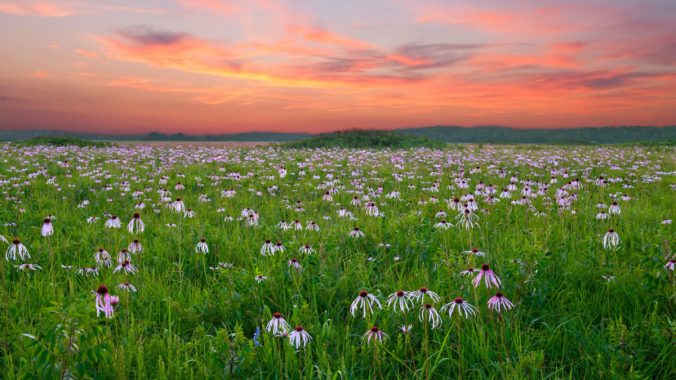
CherokeePrairie_Arkansas_WilliamDarkPhotography_web.jpg

Cherokee Prairie Natural Area near Fort Smith, Arkansas. WILLIAM DARK PHOTOGRAPHY

Janet Marinelli, according to her author’s bio, is an award-winning independent journalist who was director of scientific and popular publications at Brooklyn Botanic Garden for 16 years; according to our read of her work over the last two years she is also a perfect fit with our mission to find at least one story every day that explains the natural world, illuminates the possibilities of entrepreneurial conservation or challenges us to be more careful with natural resources. She brightens our day:

Forgotten Landscapes: Bringing Back the Rich Grasslands of the Southeast

Native prairie and savanna once covered vast areas of the U.S. Southeast from Maryland to Texas, but agriculture and sprawl have left only small patches remaining. Now, a new initiative, driven by scientists and local communities, is pushing to restore these imperiled grassland habitats.

american-chaffseed_USFWS_web

Southeastern grasslands have some of the highest plant richness in the world, home to rare species such as American chaffseed. COURTESY OF TIM MARTIN & USFWS

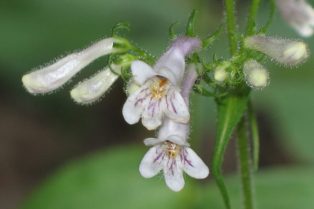
Dwayne Estes pulls over to the side of a rural road in Franklin County, Tennessee, about 20 miles from the Alabama border. He hops out of his truck and points out a small plant with dainty, trumpet-shaped white flowers with purple-streaked throats. “This is Penstemon kralii,” says Estes, a 40-year-old, 6-foot-3-inch-tall professor sporting a baseball cap and beard, the twin badges of honor for many field botanists. The plant is found almost exclusively at the base of the Cumberland Plateau escarpment, where it survives precariously in narrow, grassy roadside fringes with other rare and threatened species, including a sunflower and a blue-eyed grass yet to be named and described by scientists.

Krals-Penstemon_CumberlandPlateau_TimMartin_web.jpg

Kral’s penstemon. COURTESY OF TIM MARTIN & USFWS

We continue to the top of the steep, densely forested escarpment. Below, a checkerboard of croplands and pastures stretches as far as the eye can see. “Before 1840, those agricultural fields were prairies covering half a million, maybe 750,000 acres,” Estes says. “They were maintained by frequent fires and bison.” The wildfires probably swept up the base of the adjacent escarpment, he adds, keeping it open and sunny oak savanna where the penstemon and its companions could thrive. Like so many southern grassland denizens, they are vestiges of a lost botanical world that once covered as many as 120 million acres from Maryland to East Texas, caught in a vise between habitat loss to agriculture and urban sprawl on the one hand, and encroaching fire-suppressed forest on the other. Continue reading

Animal Migration In A New Light

merlin_156362529_47a2db4e-d836-4699-8d02-37e00fe5d64f-jumbo.jpg

Craig K. Lorenz

It’s been a while, Carl Zimmer! Welcome back to our pages and thanks for this new consideration of what is included in the definition of animal migration, a pair of words normally associated with big mammals and birds:

These Animal Migrations Are Huge — and Invisible

Swarms of insects move across continents each year. Scientists used radar to track one species and discovered a vast ecological force.

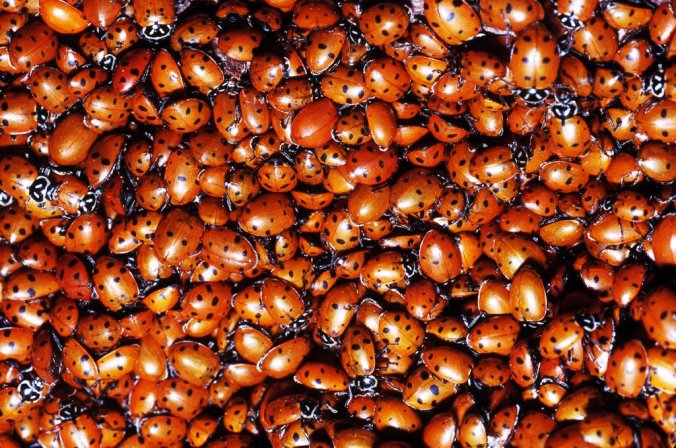
Ladybugs briefly took over the news cycle.

merlin_156000429_463fb5a1-9dad-4f60-bf89-582b1439d20c-jumbo.jpg

In this radar image, green indicates a swarm of ladybugs over Southern California. National Weather Service, via Associated Press

Meteorologists at the National Weather Service were looking over radar images in California on the night of June 4 when they spotted what looked like a wide swath of rain. But there were no clouds.

The meteorologists contacted an amateur weather-spotter directly under the mysterious disturbance. He wasn’t getting soaked by rain. Instead, he saw ladybugs. Everywhere.

Radar apparently had picked up a cloud of migrating ladybugs spread across 80 miles, with a dense core ten miles wide floating 5,000 feet to 9,000 feet in the air. As giant as the swarm was, the meteorologists lost track of it. The ladybugs disappeared into the night. Continue reading

Racing to Save Earth’s Rarest Eagle

Our long history with the Cornell Lab of Ornithology keeps their initiatives on our radar, and their films hold a very special place.

Sales from this award-winning documentary will benefit bird conservation.

World-renowned wildlife cinematographer, Neil Rettig, embarks on the most challenging assignment of his career: to find and film the rarest eagle on the planet.  An expertly woven tale with stunning cinematography, Bird of Prey journeys deep into the vanishing world of the Great Philippine Eagle and reveals an inspiring group of people that are determined to save the world’s most critically endangered eagle species from extinction.

Click here for more information on streaming options.

Cyprus & the Right Side of Conservation


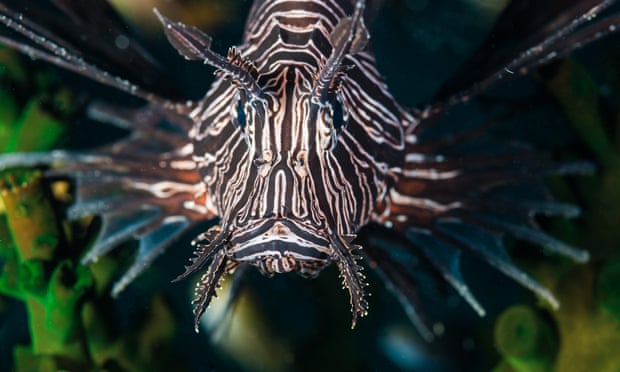
Lionfish, armed with venomous dorsal spines that enable them to deter predators, are more normally associated with warm tropical waters. Photograph: Arno Enzerink /www.stockphotogr/Arno Enzerink

After writing about some of Cyprus’ environmentally destructive actions, it feels good to hear about these positive organized efforts to eradicate this marine threat. Lionfish have long been on our radar, but this is the first we’ve heard of their spread through European waters.

Perhaps a new venue for eradication idea exchange is in order!

Cyprus begins lionfish cull to tackle threat to Mediterranean ecosystem

Cyprus  has held its first organised cull of lionfish after numbers of the invasive species have proliferated in recent years, threatening the Mediterranean ecosystem and posing a venomous danger to humans.

“They’re actually very placid,” said Prof Jason Hall-Spencer, a marine biologist, after spearing 16 of the exotic specimens in the space of 40 minutes in the inaugural “lionfish removal derby” off the island’s southern coast. He added: “The problem is they are not part of the natural ecosystem and we are seeing them in plague proportions.”

Lionfish, armed with venomous dorsal spines that enable them to deter predators, are more normally associated with warm tropical waters of the South Pacific and Indian Ocean. Almost two decades ago the non-native tropical fish began to enter US waters, appearing in the Atlantic after pet owners started releasing outsized lionfish from home aquariums into the sea. Now they have reached Europe. In 2012, after initial sightings off Turkey, Israel and Lebanon, they were spotted off Cyprus. Three years later they had appeared further south in Greece, Italy and Tunisia, testimony, scientists say, to their ability to both enter new territories and spawn at record rates.

As numbers proliferate, so have fears of the flamboyantly coloured fish posing the biggest ecological setback to ecosystems in the Mediterranean – which is already under pressure from pollution, tourism and over-exploitation. In the EU, Cyprus has become “the first line of defence” against the lionfish invasion. Continue reading

Free The Seed

Seeds.jpg 

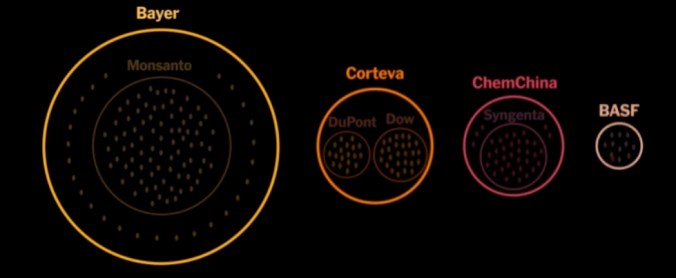
Today, just four giant companies control more than 60 percent of all the world’s seed sales.


Thanks to the New York Times for this opinion:

Save Our Food. Free the Seed.

By Dan Barber

Additional reporting and graphics by Ash Ngu. Photographs by Ruth Fremson

Kale.jpg

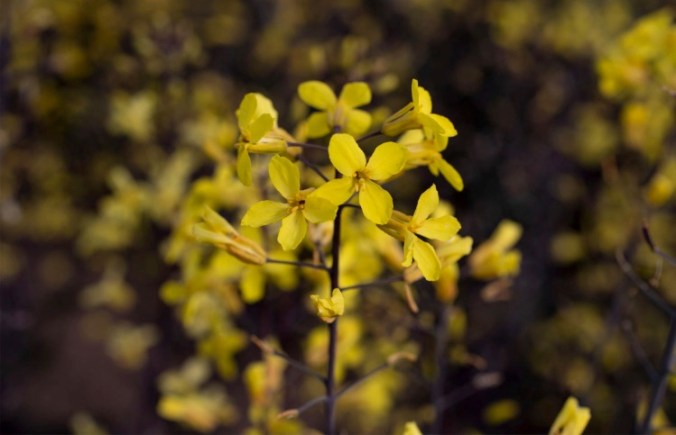
Flowering curly kale, a variety called Baltisk Rod Purpurkal, being grown for seed at Fresh Roots Farm in Montana. The farm is collaborating with the Organic Seed Alliance on a toolkit for farmers who want to produce seed.

Not long ago I was sitting in a combine tractor on a 24,000-acre farm in Dazey, N.D. The expanse of the landscape — endless rows of corn and soybeans as precise as a Soviet military parade — was difficult to ignore. So were the skyscraper-tall storage silos and the phalanx of 18-wheeled trucks ready to transport the grain. And yet what held my attention were the couple of dozen seeds in my palm — the same seeds cultivated all around me.

We are told that everything begins with seed. Everything ends with it, too. As a chef I can tell you that your meal will be incalculably more delicious if I’m cooking with good ingredients. But until that afternoon I’d rarely considered how seed influences — determines, really — not only the beginning and the end of the food chain, but also every link in between.

The tens of thousands of rows surrounding me owed their brigade-like uniformity to the operating instructions embedded in the seed. That uniformity allows for large-scale monoculture, which in turn determines the size and model of the combine tractor needed to efficiently harvest such a load. (“Six hundred horsepower — needs a half-mile just to turn her around,” joked the farmer sitting next to me.) Satellite information, beamed into the tractor’s computer, makes it possible to farm such an expanse with scientific precision.

The type of seed also dictates the fertilizer, pesticide and fungicide regimen, sold by the same company as part of the package, requiring a particular planter and sprayer (40 feet and 140 feet wide, respectively) and producing a per-acre yield that is startling, and startlingly easy to predict.

It is as if the seed is a toy that comes with a mile-long list of component parts you’re required to purchase to make it function properly. Continue reading

Trick Question From Rwanda

Fruit.jpeg

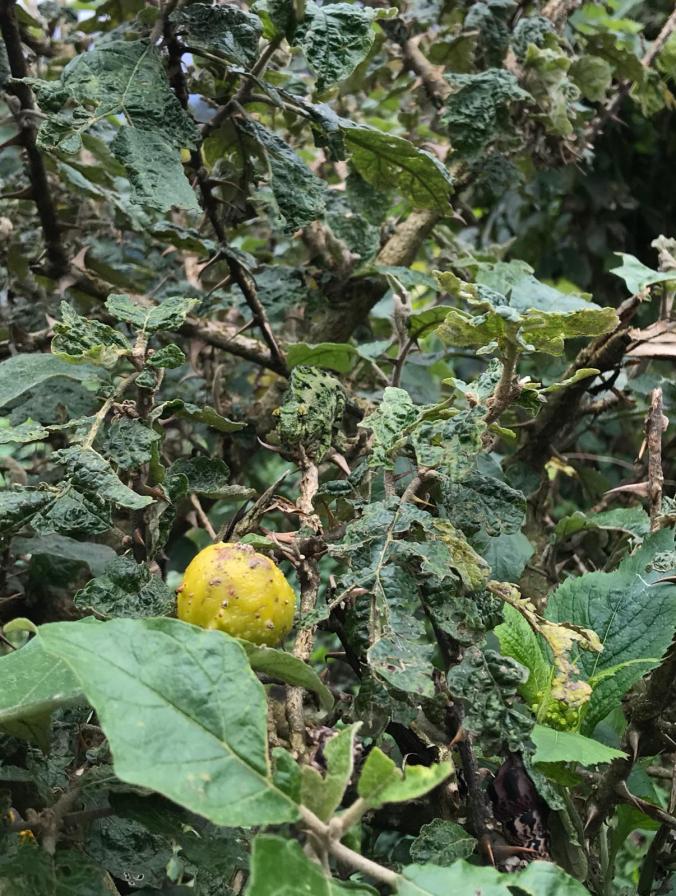
A recent message from Rwanda, in spite of what I said about Seth being plenty verbal, was as quiet as what you see above. Amie, whose eye inclines this way and makes sure our platform shares stories like this, thought it was the fruit we were supposed to guess the identity of. Because of my coffee focus of the last year, and Seth’s experience planting coffee, I immediately thought it was about whatever pest might be ravaging the leaves. Neither. Continue reading

Creative Canine Collaboration

A team of specially-trained hunting dogs has been helping conservationists and researchers find rare turtles in Iowa. KATE PAYNE/IPR

Thanks to Iowa Public Radio for some good conservation news from the Heart Land.

Specially Trained Dogs Help Conservationists Find Rare Iowa Turtles

An eastern Iowa conservation group is taking an unconventional approach to tracking rare turtles on its land. Iowa Public Radio tagged along with a man who’s trained his hunting dogs to find the reptiles for researchers. Counting the creatures will help conservationists manage the land better.

It’s a cool morning on a nature preserve owned by Bur Oak Land Trust in Johnson County. I’m scouring a shady hillside with John Rucker and his four Boykin spaniels, looking for turtles.

“Find turtle, find turtle,” Rucker calls to his dogs. He turns to me and says, “did I tell you I’m the only person in the world that does this?”

When he’s not living off the grid in rural Montana, Rucker travels the country with his specially-trained hunting dogs, helping scientists and conservationists find turtles.

“This is Rooster,” John says, introducing the dogs. “This is Jenny Wren. She’s the one that gives me my litters. And that’s Mink. No, that’s Jaybird, and that’s Mink.”

We make our way through the undergrowth, checking in brush piles and under old logs. When the dogs find a turtle, they’ll pick it up and bring it back to be counted.

“You will notice that as soon as they strike a scent trail their tails will start wagging furiously, and then their whole demeanor becomes extremely excitable,” Rucker explains.

Citizen conservationist Judy Felder is one of the volunteers out hunting today.

“It’s sort of like a religion for me,” Felder says. “Nature is important and somebody has to defend it, protect it, preserve it.” Continue reading

Rewilding in an Unexpected Landscape

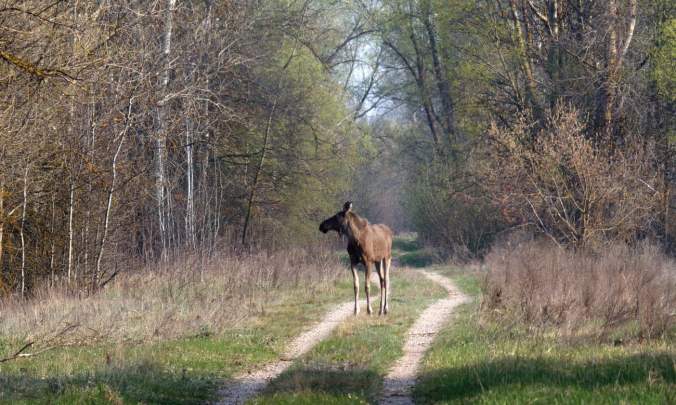
Elk are the most common mammals at the reserve. Photograph: Valery Yurko

Most examples of rewilding are defined as human intervention to return wildlife back into habitats where they’ve long disappeared. Thanks to the Guardian for this highly unusual one where the human population are the ones who have left – due to bizarre circumstances, to be sure – and the wildlife have slowly returned to reclaim the habitats left behind.

It’s heartening to believe that the animals may illustrate Nature’s power to heal where human’s have so severely faltered.

Chernobyl: the wildlife haven created when people left

Rare and endangered animals have thrived in the Chernobyl disaster zone since it was evacuated in 1986, as a new wildlife tour in southern Belarus shows

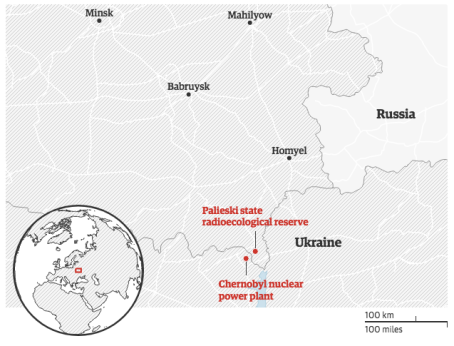
It is 5.30am in southern Belarus. A pink moon hangs over flat fields tinged with frost, and as we arrive at the checkpoint on the edge of the Chernobyl Exclusion Zone, five hours’ drive south of the capital, Minsk, a dawn chorus of cranes and hoopoes is in full swing.

This may seem an unlikely place to come wildlife watching, but I’m here with the first eco-tour of the Palieski state radioecological reserve (as the Belarusian section of the zone is called).

It was in April 1986 that probably the world’s worst nuclear accident happened, just over the border in northern Ukraine – a dramatisation of the disaster is currently showing on Sky Atlantic. Chernobyl town was evacuated and the exclusion zone today covers 2,600 sq km in Ukraine and 2,100 sq km in Belarus.

Ukraine turned its part of the zone into a tourist attraction several years ago – 50,000 people visited the nuclear reactor and ghost town of Pripyat last year, and it has even hosted a rave. But Belarus didn’t open its Palieski reserve to visitors until last December.

The Ukrainian site is now popular for its eerie ghost town and reactor ruins, but on this side of the border it’s all about the wilderness, and our tour will be a nature-watching trip like no other. The reserve claims to be Europe’s largest experiment in rewilding, and the unlikely beneficiaries of nuclear disaster have been the wolves, bison and bears that now roam the depopulated landscape, and the 231 (of the country’s 334) bird species that can also be found here. Continue reading