Bayer, Bees Beware

lucyhulmes_osmiabicornis-rufa_dsc_0165_custom-d84c4a4f48bda66e294b71b7c4601fffd31e43f7-s1300-c85.jpg

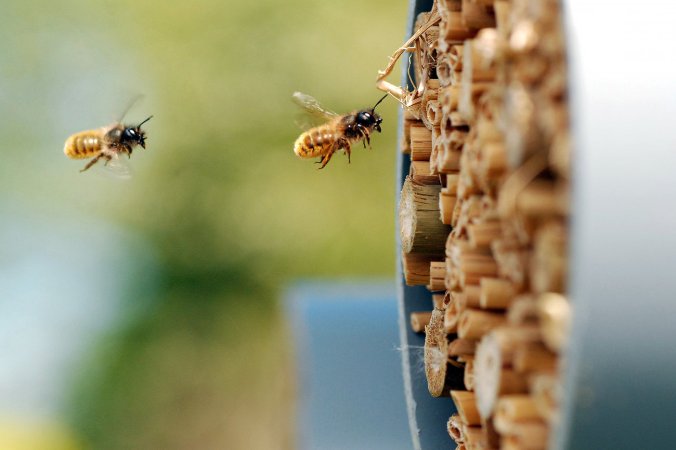
Researchers monitored the health of these wild bees, from the species Osmia bicornis. They nest inside small cavities, such as hollow reeds. Courtesy of Centre for Ecology & Hydrology

Thanks to National Public Radio’s special forces, aka the salt, for their ongoing search for interesting news and stories related to the intersection of nature and food:

Pesticides Are Harming Bees — But Not Everywhere, Major New Study Shows

In the global debate over neonicotinoid pesticides, the company that makes most of them has relied on one primary argument to defend its product: The evidence that these chemicals, commonly called “neonics,” are harmful to bees has been gathered in artificial conditions, force-feeding bees in the laboratory, rather than in the real world of farm fields. That company, Bayer, states on its website that “no adverse effects to bee colonies were ever observed in field studies at field-realistic exposure conditions.” Continue reading

Beware, Brazil

4368

Thanks as always to the Guardian for coverage of environmental crises in the making:

The Amazon’s new danger: Brazil sets sights on palm oil

Brazil’s ambition to become a palm oil giant could have devastating social and environmental impacts if the move is not carefully managed, say experts Continue reading

Birds Banging On Drums

29tb-cockatoos01-superJumbo.jpg

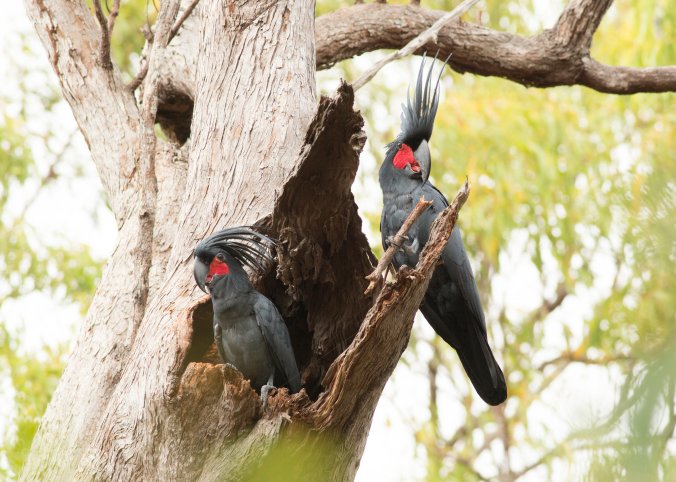
A male palm cockatoo, right, drumming with a stick for a female. Credit Christina Zdenek

Todd Rundgren, a musical talent better known to an earlier generation, had an oddball hit song about banging on drums. It came to mind immediately when reading this oddball story about cockatoos. If you do not already know the song, you might want to find it to accompany your reading of this story:

Whales and songbirds produce sounds resembling human music, and chimpanzees and crows use tools. But only one nonhuman animal is known to marry these two skills.

Palm cockatoos from northern Australia modify sticks and pods and use them to drum regular rhythms, according to new research published in Science Advances on Wednesday. In most cases, males drop beats in the presence of females, suggesting they perform the skill to show off to mates. The birds even have their own signature cadences, not unlike human musicians. Continue reading

Nature Needs More Good Ideas

5000d.jpg

There is no known vaccine against temptation to harness nature. There is not enough nature left on the planet to allow this temptation to spread. But bad ideas are infectious:

Tanzania presses on with hydroelectric dam on vast game reserve

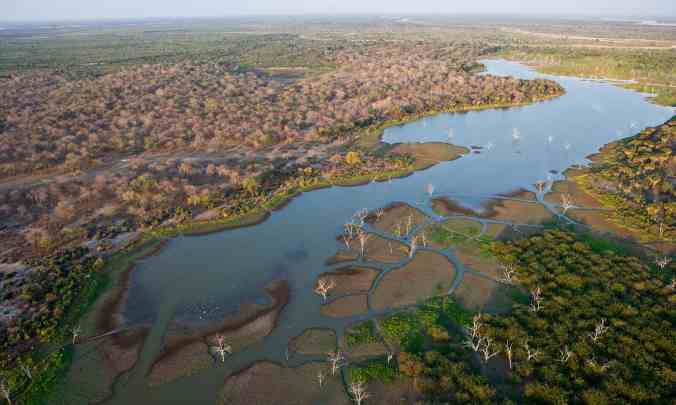
Stiegler Gorge dam on the Selous park, a world heritage site listed as ‘in danger’, will cause irreversible damage, say conservationists Continue reading

Mangrove Mathematics

Mangroves play an essential role in maintaining healthy life on earth, and we’ve been privileged to work in many locations where we’ve seen their impact on biodiversity levels first-hand, including India.

Frequently these ecosystems are under threat of habitat loss, whether for agricultural or land development. Thanks again to Anthropocene for adding up the facts in such clear terms.

Intact mangroves worth twice as much as rice paddies

Conservationists frequently say that ecosystems are worth more when they’re left untouched. But to whom? Local communities who could potentially farm the land might wonder, what’s the real benefit of leaving wild areas intact?

In the Bhitarkanika mangrove in Odisha, India, a group of Indian researchers grappling with this question have arrived at a surprising answer. By leaving the mangrove intact, they say, Bhitarkanika’s surrounding communities can in fact reap almost double the economic benefits they’d get from simply converting the mangrove to crops. Continue reading

Egg Evolution

lead_960 (9).jpg

Egg-scuse me?

Thanks as always to Ed Yong:

Why Are Bird Eggs Egg-Shaped? An Eggsplainer

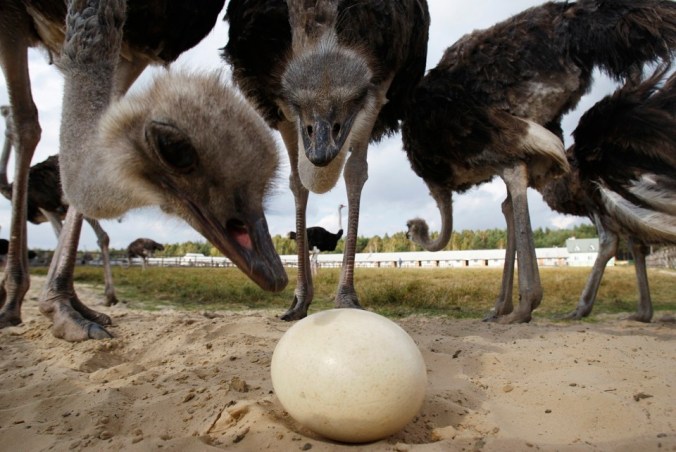
A new study points to a surprising reason for the varied shape of bird eggs—and shows that most eggs aren’t actually egg-shaped. Continue reading

Moths, Inspiring Innovation

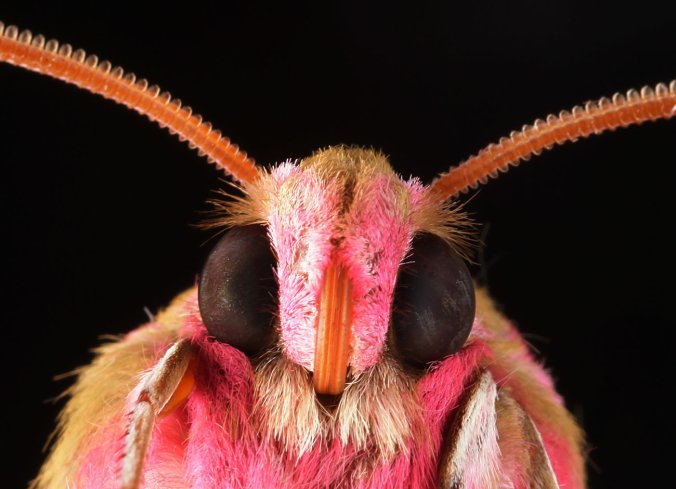
gettyimages-548205455_custom-1db34a79eea572396473d1ee197099398efc1c89-s1300-c85

Deilephila elpenor, commonly called the elephant hawk-moth, has specialized eyes that don’t reflect light. Such moths inspired scientists to invent an anti-glare coating for smart screens. Ullstein Bild/Getty Images

We have lots of reasons to believe in biodiversity, and here is one more important case in point. Thanks to Madeline K. Sofia at National Public Radio (USA) for this:

If you’re standing in the blazing sun struggling to read this on your cellphone, there may be some relief in sight.

And you’ll have a moth to thank. Continue reading

Investing In Cultural Heritage

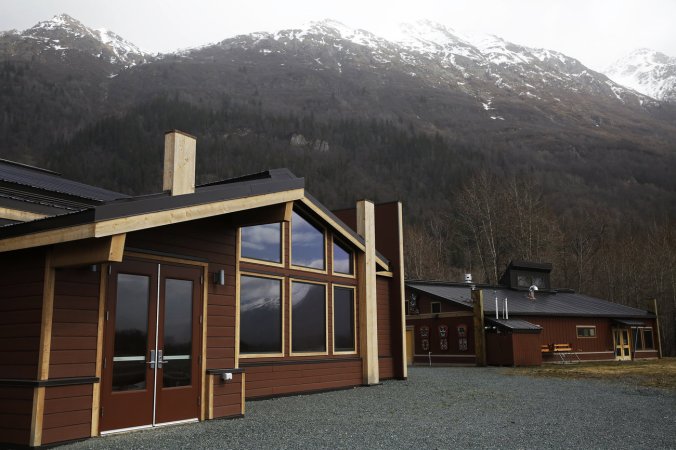
170427klukwan_nadworny0252_slide-169e39b0465578c5ad3fac34dc804d2779806ab6-s1300-c85.jpg

The Cultural Heritage Center is an $8 million investment in the community. Elissa Nadworny/NPR

It is not a question I have had to ponder (the opening line of the story below) for myself, but I get it. Losing the land, through battle, through treaties that are not honored, or otherwise, is an obvious existential threat for any community, and has been since the dawn of civilization. Invisible assets such as language, like any cultural heritage, also called intangible patrimony, are less obviously existentially important. But anyone who ponders it realizes that the loss of a language or another intangible component of cultural heritage matters to all of us, not only those who are at immediate and direct risk of its extinction. In the same way biodiversity matters, so does this.

And it is an underlying logic and motivator of our initiative with Ramon tree and its role in Mayan foodways. In earlier posts on the subject that I emphasized the environmental wonder of Ramon, but it is really a cultural heritage story, still to be told at Chan Chich Lodge. Meanwhile thanks to Melissa Block at National Public Radio (USA) for this story about one communities efforts along a related path:

A Native Village In Alaska Where The Past Is Key To The Future

What does it mean to lose your land, your language, and your heritage?

For Alaska Natives, these are existential threats.

On a trip to Southeast Alaska, I traveled to one village that is finding new ways to survive: Klukwan, ancestral home of the Tlingit tribe. Continue reading

Investigator Of The Abyss

csiro-blue-water-research-vessel-investigator_image-csiro-marine-national-facility-84122ca6688b9466b61bb23f977447c7262cdf3d-s1300-c85.jpg

Courtesy of Museums Victoria / CSIRO

Thanks to National Public Radio (USA) and Kat Lonsdorf for a brief look into the deep work of Tim O’Hara:

Explorers Probing Deep Sea Abyss Off Australia’s Coast Find Living Wonders

Far below the surface of the ocean, off the coast of eastern Australia is an area simply known as “the abyss.” The largest and deepest habitat on the planet, the abyssal zone stretches well beyond Australia’s waters and spans half the world’s oceans — but it remains largely unexplored. Continue reading

Nature Photographers Make Our Lives Richer

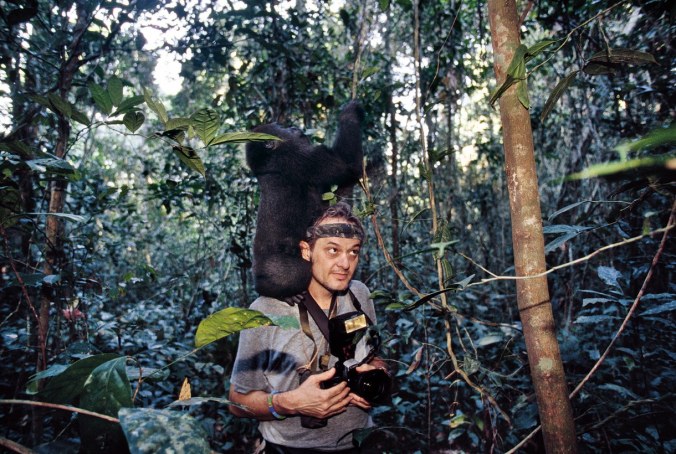
Canby-A-Wild-Life-6.jpg

Michael Nichols with an orphaned gorilla, Gabon, 1999. PHOTOGRAPH BY STEVE GULLICK

 Thanks to the New Yorker for this review, reminding us of what lengths photographers go to in order for us to have a closer look at wildlife than we ever would otherwise:

Nick Nichols’s Arresting Intimacy with the Wild World

By Peter Canby

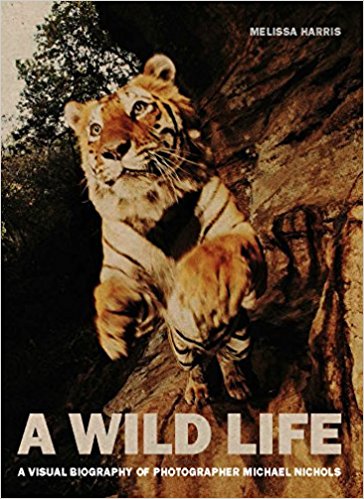
71VOnwn5vML.jpgThe work of the wildlife photographer Michael (Nick) Nichols is widely admired for the intimacy he achieves with his animal subjects—an intimacy that allows the subjects to become wild individuals rather than generic wildlife. As Melissa Harris, the author of “A Wild Life: A Visual Biography of Photographer Michael Nichols,” puts it in her book, “Nichols intently focuses on specific characters and always there’s a sense of parity with himself.” Continue reading

Rabbit Returning

Released_NEC_TomBarnes_USFWS1-1260x708.jpg

Zoo-bred New England cottontail being released. Photo © Tom Barnes / USFWS

Thanks to Ted Williams at Cool Green Science for this story:

Recovery: Second Chance for Yankee Cottontails

Stunned but delighted is how Dr. Robert McDowell, Director of Wildlife at the University of Connecticut, sounded when I arrived at his office to learn about New England cottontail rabbits.

Finally someone other than himself was interested in these vanishing natives. We pored over skulls and skins and vainly patrolled early successional woods for live specimens. McDowell seethed about the mindset of state fish and game bureaucrats: we can’t waste time on a few native rabbits when we have so many look-a-like non-natives and when license buyers want more pheasants, ducks and deer. Continue reading

Lost & Found, Lizard Edition

Holloway-Lizard-1200

For nearly two centuries, Varanus douarrha was an enigma. Now it has been resurrected. PHOTOGRAPH COURTESY VALTER WEIJOLA

In our book, lost and found is normally half glass full (versus half empty) new that we enjoy sharing, and this one counts as more than half full due to the intrigue of the history and the odd charisma of the creature:

A LIZARD LOST AT SEA MAKES ITS RETURN

By Marguerite Holloway

On June 27, 1824, a trading vessel en route from Mauritius to England was caught in a powerful gale. For ten days, winds pounded the King George IV until it could no longer hold together. In three perilous traverses, a small rescue boat shuttled those aboard to a beach near the Cape of Good Hope. “Neither myself nor the passengers have saved a single article,” the captain later wrote. “Probably they may cast up in time.” Amid the lost cargo—mostly sugar, cotton, and cloves—were three cases of scientific specimens. Continue reading

Paul Nicklen Way North & Way South

PhotogArctic.jpg

Paul Nicklen/Paul Nicklen Gallery

I listened to this interview while walking the trails at Chan Chich Lodge this morning, so had no photos to look at. And yet, it was vivid. And highly relevant to what we do here. I will let you listen to get what I mean.

Six photos accompany this story on the Fresh Air website, and those are curated for the podcast. If you only have time for photos click over to Paul Nicklin’s website, but the interview with him is worth every one of the 48 minutes. If you only have ten minutes to listen, go to 22:30 and if you do not find yourself bursting into a mix of laughter and other unidentified emotions, let me know; it means one of us may need some professional help:

Polar Photographer Shares His View Of A Ferocious But Fragile Ecosystem

Conservation photographer Paul Nicklen has spent more than two decades documenting the ice and wildlife in some of the most inhospitable places on Earth — the Arctic and the Antarctic. Continue reading

Blue Heart of the Planet

The United Nations Ocean Conference is underway to support the implementation of Sustainable Development Goal 14: Conserve and sustainably use the oceans, seas and marine resources for sustainable development.

The importance of collaboration between public and private sectors to brainstorm innovative solutions to environmental issues is becoming increasingly clear, as is the reality that states and local governments will be the stronger voices for climate activism.

The health of the planet and our oceans are interchangeable, and Sylvia Earle has been the spokesperson for that truth for decades.

Take the extra 18+ minutes to listen to her 2009 TED Prize Talk here.


Sea Shepherd & Cuvier’s Beaked Whales

It has been a long while since our last link to Sea Shepherd news, shame on us, but today we rectify it with news from Seth and Jocelyn’s neighborhood–actually on the Pacific side of Mexico’s Baja California Sur but as close as most people get:

Sea Shepherd Records Never Before Seen Footage of Rare Cuvier’s Beaked Whales During Expedition in Mexico

Sea Shepherd’s research vessel the R/V Martin Sheen returned to Mexico’s Guadalupe Island to continue its study of Cuvier’s beaked whales, capturing never before seen drone footage of these rare and elusive cetaceans.

During the two-week expedition, Mexican lead-scientist Gustavo Cardenas Hinojosa and American collaborator Jenny Trickey, deployed various acoustic devices to compare their effectiveness. The scientists will return and leave these devices for a longer period of time. Continue reading

The Wonders Of Trees Never Cease

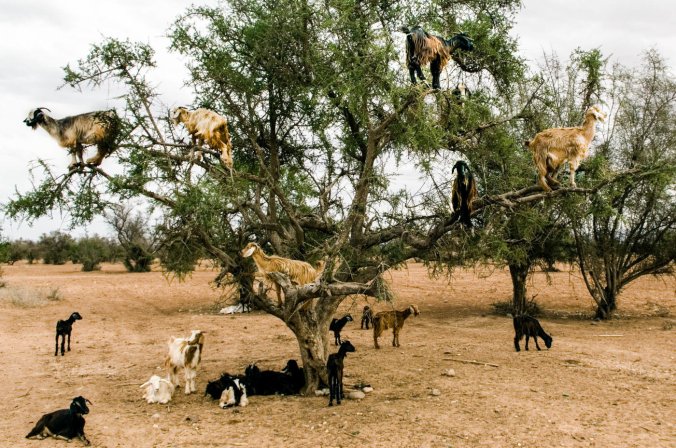
goat-02_custom-060bac4eeff1a0b290ff201210009e650a2025d0-s1400-c85.jpg

Goats climb an argan tree in Morocco to dine on its fruit. Jeremy Horner/Getty Images

At Chan Chich Lodge we are just embarking on a tree-related culinary journey, so any counterintuitive story about trees is likely to catch my attention these days.

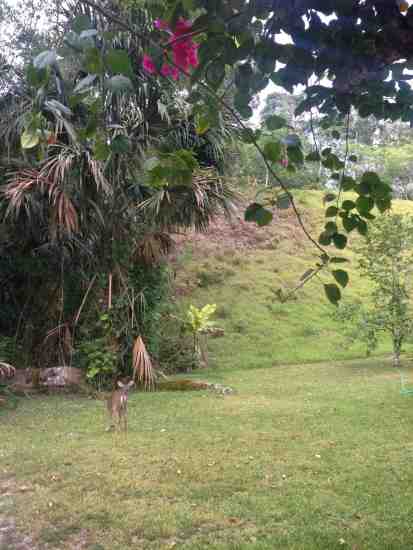
FigDeer.jpg

Thanks to Marc Silver at National Public Radio for the story about the picture above, Do Tree-Climbing Goats Help Plant New Trees? It is a short read and worth every second of your attention if you are interested in arboreal foodstuff.

This image to the left, while not as amusing as the one above, shows a deer doing the same thing with less panache. That deer will spread the seeds of that wild fig far and wide in the forest, increasing food supply. Continue reading

When Life Gives You Lionfish…

Market-based approaches to controlling invasive lionfish populations were highlighted at a recent GEF event in Grenada.

La Paz Group contributor Phil Karp has long been our guide into marine ecosystems, with both citizen science and social entrepreneurship posts on his work with groups in Belize and other parts of the Caribbean focused on these goals.

This collaboration with Sarah Wyatt,  a colleague from the Global Environment Facility, illustrates the on-going market-based approaches to managing the invasive species while creating new cottage industry opportunities.

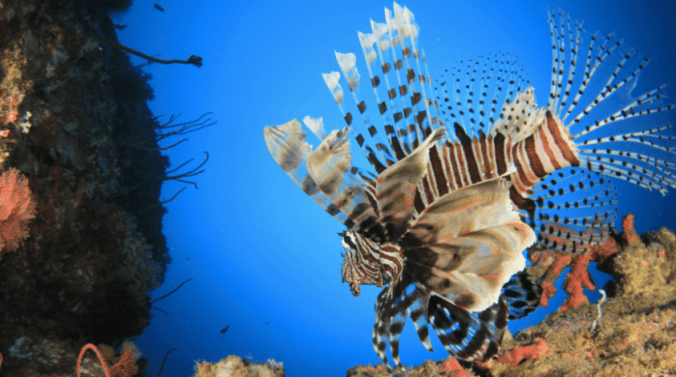
Seeing a lionfish while diving in the Caribbean is a cause for mixed emotions.  On the one hand, one marvels at the exquisite beauty of the fishes’ flowery fins and its amazing adaptability to a range of habitats, from shallow estuaries with low salinity to deep reef environments. But then you remember that these fish don’t belong in the Caribbean, and that the very versatility noted above makes them an invasive menace. Indeed, if the fish you are looking at is a female, she may be carrying up to 30,000 eggs, and may have thirty or more native fish or crustaceans in her stomach.

One of the many impacts of the Anthropocene era on global biodiversity is the increased spread of invasive species, like the lionfish, due to rapid globalization. With the United Nations Ocean Conference taking place in New York next week, the conservation and sustainable use of the oceans and marine resources is high on the international agenda.  While long recognized as an environmental and biodiversity threat, invasive species also pose a threat to livelihoods, particularly in developing countries where incomes may be heavily dependent upon a single sector or product.

Traditionally, efforts to eradicate or control invasive species have been focused on public sector interventions.  But control efforts are often expensive and are either out of reach, or pose severe strains on limited budgets of developing countries.  Hence there has been growing attention to identification of market-based control approaches which create commercial incentives for removing the invaders, providing a financially sustainable means of control… Continue reading

Richard O. Prum’s Beauty Challenge

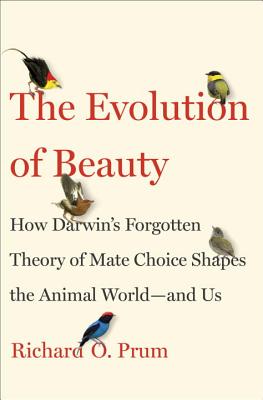
EvolutionBeautyFor evolutionary biology, on this platform we have favored E.O. Wilson because of his biophilia ideas (about which, plenty). For ornithology, we have leaned heavily on the Lab at Cornell and its many wonderful folks. Now, a scientist at Yale combines both of those fields and takes on the topic of beauty in a challenging manner–I am looking forward to this.

Click the book image at the left to go Indie Bound, a community of independent local bookstores, or if you need more convincing, read the beautifully illustrated Challenging Mainstream Thought About Beauty’s Big Hand in Evolution by James Gorman in the Science section of the New York Times. It is as much profile as review and asks:

Are aesthetic judgments about mates invariably tied to traits we see as adaptive and worth passing on Or, does beauty just ‘happen’?

Not long ago, a physicist at Stanford posed a rhetorical question that took me by surprise.

“Why is there so much beauty?” he asked.

Beauty was not what I was thinking the world was full of when he brought it up. The physicist, Manu Prakash, was captivated by the patterns in seawater made as starfish larvae swam about. But he did put his finger on quite a puzzle: Why is there beauty? Why is there any beauty at all? Continue reading

Food Sleuthing

00Apples-2-superJumbo.jpg

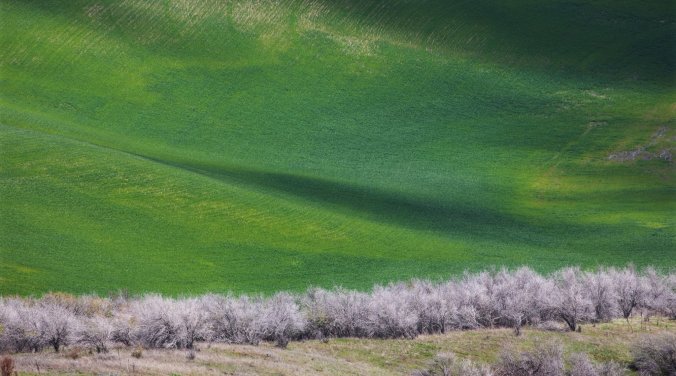
The remnant of an old apple orchard among wheat fields in Steptoe Butte State Park in Washington. Credit Ruth Fremson/The New York Times

Yesterday magic happened. After sharing in the morning a quick mention of why my thoughts are on agriculture, I was walking with a member of Chan Chich Lodge’s groundskeeping team to review some work he had completed. On the way, we encountered a tree showering small fruits onto the ground. Fragrant. I asked him what it was and he said a word I did not recognize that sounded like “yo”.

About the size of a blueberry but not a berry, nor resembling anything I could identify. Until I opened it and its inside looked exactly like that of my favorite fruit. And then I realized my colleague had said higo, the Spanish word for fig. He then told me that in his village the old Mayans use this to make a flour, something they have done since olden times. He paused a moment, a bit of reverie I could tell, and then he continued about how the tortilla made from this is the best. It’s got me thinking. Thanks to Kirk Johnson for this second unexpected pleasure of a story:

Hunting Down the Lost Apples of the Pacific Northwest

STEPTOE, Wash. — David Benscoter honed his craft as an investigator for the F.B.I. and the United States Treasury, cornering corrupt politicians and tax evaders. The lost apple trees that he hunts down now are really not so different. People and things, he said, tend to hide in plain sight if you know how and where to look. Continue reading

Rewilding, Panthers & People

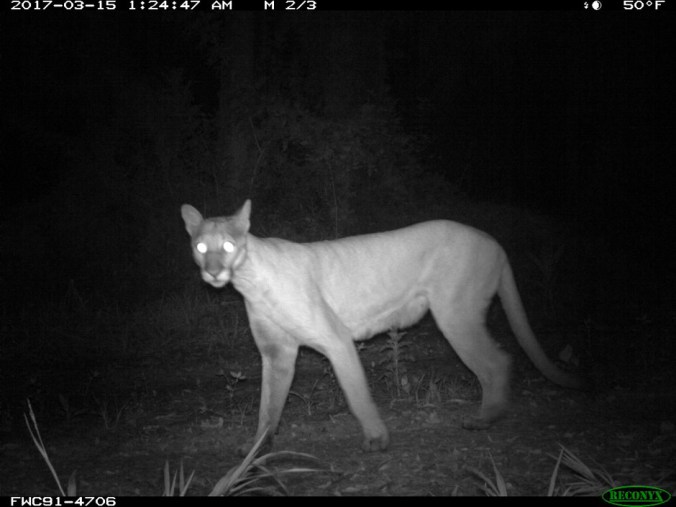
Filkins-The-Return-of-the-Florida-Panther.jpg

As Florida panthers have begun to multiply, they’ve been forced to search for new home ranges. PHOTOGRAPH COURTESY FLORIDA FISH AND WILDLIFE / FLICKR

Rewilding is a topic I started linking to as a matter of solidarity. While based in south India, I had plenty of exposure to residual evidence of the complicated–sometimes resplendently beautiful and other times brutally tragic–relationship between mankind and wild animals as played out over millennia, and still evolving. So I have kept an eye open for these stories, and have posted so many times on the topic that it might give the impression that it is a thing. As if it is happening more or better than it is really happening. But it is happening so I will keep the links coming.

Now I am in Belize most of the year, where the man-cat relationship is also millennia old, and as constant challenge as ever. But I am seeing it from well within the confines of Chan Chich Lodge and its surrounding hundreds of thousands of acres of healthy cat habitat. I know there are big cats in the USA, but not enough. That is why this story is a thrill. Dexter Filkins, never yet cited in these pages but whose reporting I depend on for other kinds of stories, was not a byline I expected to see on this story, but thanks to him for it:

For years, the Florida panther, a majestic creature that lurks in and around the forests of the ovbnm,./, has teetered on the edge of permanent disappearance. Closely related to the mountain lion, the panther once roamed across much of the South, but the ever-advancing modern world pushed it into a tiny corner of Southwest Florida. By the late nineteen-seventies, fewer than thirty survived.

Since then, the panther has been coming back, helped by a government- and privately backed expansion of its habitat. Florida panthers are now thought to number around two hundred. Indeed, there are so many big cats in the Everglades that they are venturing out in search of new territory. Continue reading