Fascinating Feathers

Starting in late November, 2013 and ending in mid-January, 2014, the CUBs Fascinating Feathers Challenge received six hundred submissions, and we selected around fifty of those entries as award-winners in their distinct categories.

Best Dressed was the most popular category for participants, leading us to believe that people find birds beautiful! And rightly so. Out of the stunning array of well-dressed bird photos and pieces of art that are shared in the category, we saw both common and less-known birds, with colorful and monochromatic plumage patterns, but all with a great sense of style and a pleasure to look at!

Much harder to see were the entries in our Best Camouflaged category — these inconspicuous fellows were often feathered to perfection when it came to blending in with their surroundings and fooling us into thinking they were just another rock, or a pile of leaves, or a stump on a tree! Just as the Best Dressed birds are emblematic of the sexual selection that takes place throughout much of the animal kingdom, the Best Camouflaged appropriately illustrate the importance of adapting to the environment over the course of evolution and becoming better predators or luckier prey as a species. Continue reading

Signs of Spring: The Latest CUBs Challenge!

On Saturday, Celebrate Urban Birds started its latest Challenge, called Signs of Spring, to welcome the (in many cases impending) return of sunnier days, greener grasses, and most importantly, migratory birds. For those of you wondering what ever happened with our Fascinating Feathers Challenge from the holiday season, check out this post.

Photo © Cornell Lab. Individual photos by T. Grange, V. DuBowy, P. Siegert, and Z. Boles.

Continue reading

Xandari’s Great Backyard Bird Count

This slideshow requires JavaScript.

When you walk into the reception area at Xandari, the first thing you will see is an invitation to join into the count underway across North America and a few international locations, including India and Costa Rica. Raxa Collective properties are all in. Xandari is in perfect form, with excellent weather, and the birds are out in full force. And what a backyard it is…


Calling On Solomon In A Birds-Versus-Science Conundrum

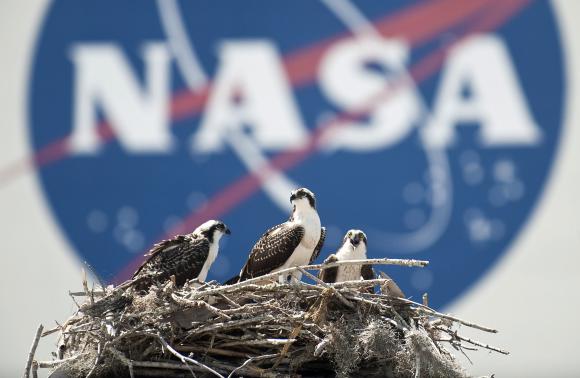
A family of Osprey are seen outside the NASA Kennedy Space Center Vehicle Assembly Building in Cape Canaveral, Florida in this file photo taken May 13, 2010. CREDIT: REUTERS, BILL INGALLS, NASA/HANDOUT/FILES

A family of Osprey are seen outside the NASA Kennedy Space Center Vehicle Assembly Building in Cape Canaveral, Florida in this file photo taken May 13, 2010. CREDIT: REUTERS, BILL INGALLS, NASA

Anyone who has been following Raxa Collective’s blog for more than a day is probably aware that we pay close attention to birds.  We do this because many of the places where we operate conservation-focused lodging are also exceptionally biodiverse bird habitats. Most of the travelers who visit our properties are at least interested in birds, and many are serious bird-watchers. But we also pay attention to birds for the same reason we pay attention to science in general: they are an indicator of the health of our planet and we want to both pay attention to the indicators and understand them better. Science matters. So, in general, we are NASA fans.  But the story here makes us wonder what Solomon’s wisdom might advise:

Florida’s plan to build a commercial space launch complex in a federal wildlife refuge surrounding the Kennedy Space Center drew sharp words from environmentalists and strong support from business boosters during the project’s first public hearing on Tuesday.

Advocates say the proposed spaceport is needed to retain and expand Florida’s aerospace industry, which lost about 8,000 NASA and civilian jobs after the shutdown of the space shuttle program in 2011.

Opponents of the plan to carve out about 200 acres from the 140,000-acre (57,000-hectare) Merritt Island National Wildlife Refuge cite concerns over protecting the refuge’s water, seashore, plants and wildlife, which include 18 federally listed endangered species. Continue reading

Citizen Science Democratizing Research

New technology is dramatically increasing the role of non-scientists in providing key data for researchers. In an interview with Yale Environment 360, Caren Cooper of the Cornell Lab of Ornithology talks about the tremendous benefits — and potential pitfalls — of the expanding realm of citizen science.

Most of our ornithological attention these days is on the bird count just getting under way, but citizen science is never far from our minds, so thanks to Yale 360 for this article that combines both interests:

When biologist Caren Cooper carries out her avian studies, she’s aided by thousands of assistants, none of whom are paid for their work. That’s because Cooper, a research associate at the Cornell Lab of Ornithology, relies on the help of so-called citizen scientists, volunteers from across the country who contribute data to her research projects. These lay people provide information that enables her and other scientists to study bird life in ways that would otherwise be impossible.

But, as Cooper notes in an interview with Yale Environment 360contributor Diane Toomey, the uses of citizen science now go way beyond events like the National Audubon Society’s Christmas Bird Count. Continue reading

Kadalundi Bird Sanctuary

Photo credits : MN Shaji

Photo credits: MN Shaji

Located near Kozhikode, Kadalundi Bird Sanctuary spreads over a cluster of islands in a scenic area surrounded by hillocks where the Kadalundi River flows into the Arabian Sea. Continue reading

Snowy Owls

We first shared news of this fascinating species’ strange movements late last year, and since then the unusual Bubo scandiacus behavior has only been more eye-catching.

Last week, the New York Times reported that the Boston area is “seeing the largest number of snowy owls ever recorded,” and that birdwatchers had even spotted a Snowy Owl in Bermuda. See the excerpt from John Schwartz’s article below:

01-SNOWY-1-master675

Norman Smith releasing a snowy owl in Duxbury, Mass., that had recently been captured at Logan airport in Boston. Photo by Gretchen Ertl for The New York Times

“This year’s been bizarre,” said Dan Haas, a birder in Maryland. “The numbers have been unprecedented. Historic.”

No one is sure why so many snowies are showing up in so many places — whether it can be attributed to more food in their Arctic habitats than usual, or climate change at the top of the world. “Think about the canary in the coal mine,” said Henry Tepper, the president of Mass Audubon, “you think about the snowy owl in the Arctic.” Continue reading

Starling Murmuration Season

This slideshow requires JavaScript.

Thanks to the Guardian for this photographic spread on one of our favorite bird phenomena:

From October to March thousands of starlings flock together to perform extraordinary displays across the UK. This gallery captures the murmurations of starlings as they swirl in the sky above reed beds where they roost at night. Some of the pictures were sent to us by our readers via GuardianWitness and via Guardian Environment desk’s Flickr group Green Shoots.


From Arctic to Oceania in Eight Days

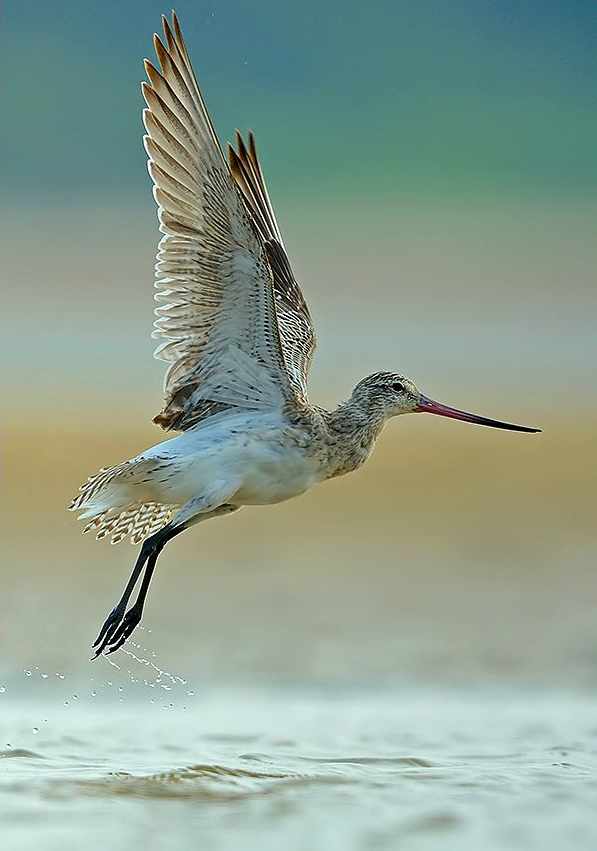
Migrating Bar Tailed Godwit – Mulki, India

Every autumn the Bar-tailed godwit undertakes an eight-day journey from Alaska to New Zealand. The bird flies non-stop, rarely breaking the whopping 11,000 kilometer journey to rest or eat.

This wading bird is far superior to all aircraft constructed by humans when it comes to the art of flying for a long time without a break; unlike seabirds, they can neither rest on water nor feed at sea. Continue reading

Windows For Bird Conservation


Thanks to Conservation Magazine‘s weekly newsfeed for this briefing on bird-friendly building practices:

The infrastructure that provides people with essential services sometimes has a surprisingly large side effect on other species. Seemingly benign buildings may be one of the deadliest serial killers.

People have long observed birds collide with windows at their home or office. The cumulative effect of all those collisions across America has previously been estimated to range widely from 100 million to 1 billion birds killed a year. A new study to be published in  The Condor analyzed previous studies and datasets for a clearer consensus. The result, even with some uncertainty remaining, was still a whopping 365 to 988 million birds. Continue reading

Bald Eagle Encounter In Paonia, Colorado

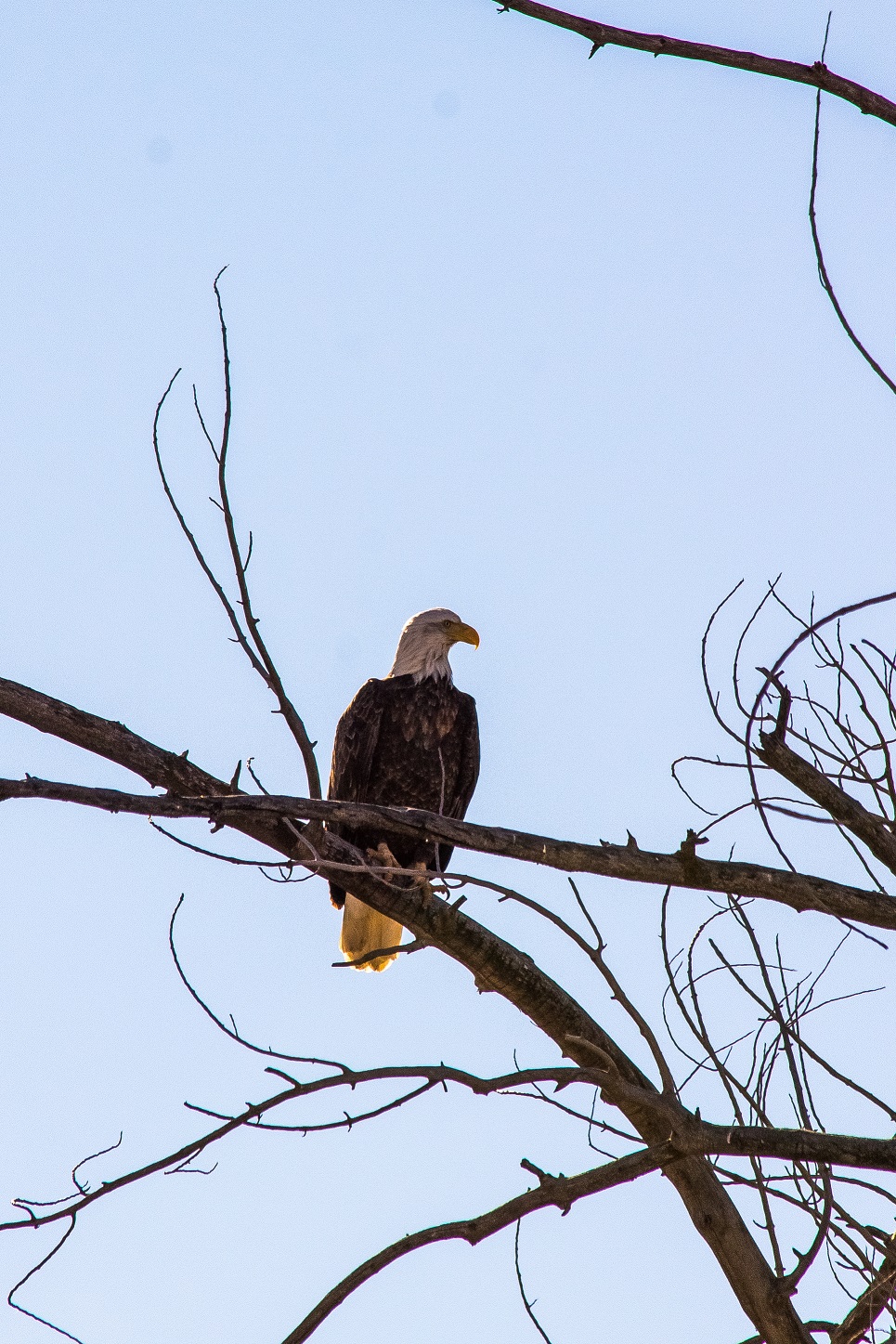
Sitting

This Bald Eagle is one of at  least two that fly through the valley where I live in the Rocky Mountains of Colorado. This one surprised me by swooping down meters away from me as I read a book outdoors on a warm winter day. Springing from my post on the roof of my house, I scrambled down onto  the deck and into my kitchen in a mad dash for a camera. The eagle had thankfully not left its position in a tree barely thirty feet from my house in that time. With a harsh glare radiating from the sun just short of dead center behind the eagle Continue reading

Bird Sightings and Ecology in the PTR

A White- or Woolly-necked Stork carrying nest material to a large tree. Photo © author.

A White-necked Stork carrying nest material to a large tree.

A few days ago we went for a two or three hour hike in the Periyar Tiger Reserve and saw a multitude of avian species that make Kerala a great place for both the amateur and ardent birder. I was also able to see very tangible examples of two related concepts that I’d learnt in my ecology and ornithology classes at Cornell: mixed-species foraging flocks and the ecological niche.

The American ecologist Robert MacArthur, in his seminal dissertation on five insectivorous species of warbler, noticed that  Continue reading

Sleuthing for Birds

Next to my Celebrate Urban Birds student work-desk at the Lab of Ornithology, team members of the inquiry-based science program called BirdSleuth are always busy developing new curriculum plans in avian education for K-12 students and instructors to learn more about birds and the local environment through citizen science and discovery driven by curiosity.

Photo © Shailee Shah / Lab of Ornithology

Originally called “Classroom BirdWatch,” the program provides training, kits, and other resources to encourage investigation and data collection among youth. Although it started in 2004 under a National Science Foundation grant in the US, about five years ago Continue reading

Ornithologically Challenged

In his new book about the passenger pigeon, the naturalist Joel Greenberg sets out to answer a puzzling question: How could the bird go from a population of billions to zero in less than fifty years? Painting by Walton Ford.

In his new book about the passenger pigeon, the naturalist Joel Greenberg sets out to answer a puzzling question: How could the bird go from a population of billions to zero in less than fifty years? Painting by Walton Ford.

No sooner had we completed our reading of this article in the last issue of 2013 when the New Yorker‘s first issue of 2014 arrived with a practically unbelievable account of the history of passenger pigeons, which we know many of our readers will appreciate this link to (note to the man behind the illustration: Walton Ford, the welcome mat is still out for you in Kerala, and we extend it to welcome you in Costa Rica now as well; plenty of interesting creatures in either place to captivate your fertile imagination):

Imagine that tomorrow morning you woke up and discovered that the familiar rock pigeon—scientifically known as Columba livia, popularly known as the rat with wings—had disappeared. It was gone not simply from your window ledge but from Piazza San Marco, Trafalgar Square, the Gateway of India arch, and every park, sidewalk, telephone wire, and rooftop in between. Would you grieve for the loss of a familiar creature, or rip out the spikes on your air-conditioner and celebrate? Perhaps your reaction would depend on the cause of the extinction. If the birds had been carried off in a mass avian rapture, or a pigeon-specific flu, you might let them pass without guilt, but if they had been hunted to death by humans you might feel honor-bound to genetically engineer them back to life. Continue reading

Opposable Thumbs Are Great, But What About Flexible Memory?

Robert Krulwich/NPR

Robert Krulwich makes us wonder, as always:

What Chickadees Have That I Want. Badly

First I look in my right coat pocket. Nothing. Then my left. Nothing. Then my pants, right side — no. Then my pants, left side — yes! This is me at my front door, looking for my keys. Every day.

Continue reading

Cooperation And Exploitation In Bird Communities


In a story about the co-evolution of two sides of the “kindness of strangers” coin Ed Yong, one of the most readable of the current pantheon of great science writers shares some scientific findings that we consider to be heartening:

The common cuckoo is famed for its knack for mooching off the parental instincts of other birds. It lays its eggs in the nests of at least 100 other species, turning them into inadvertent foster parents for its greedy chicks. For this reason, it’s called a brood parasite. Continue reading

Borneo, Birds And The Field Method Of Learning Science

This slideshow requires JavaScript.

More than one contributor to this site has been a fan of the Cornell Laboratory of Ornithology for several decades. During graduate school, for example, when Sapsucker Woods provided more than just a walk in the woods.  The Lab’s fan base is global, for good reason, both among casual bird lovers and more serious bird watchers. The Lab became the focus of professional interest to several of us when we began managing lodges in the rain forests of Central America, and we discovered what we had not known while at Cornell: it has the largest collection of field recordings of bird songs in the world.  Guests at our lodges were awed by this resource when it was pointed out to them. The images above reflect more recent appreciation we have for the Lab. Continue reading

Sea Eagle Selfie

Caught red-beaked: This eagle grabbed a small wildlife camera in western Australia, flew away with it and then pecked away at the lens.

Caught red-beaked: This eagle grabbed a small wildlife camera in western Australia, flew away with it and then pecked away at the lens.

Thanks to National Public Radio in the USA for this story, which looks like it could be product placement (for Bushnell, to whom we can only say bravo even if we are not generally thrilled by the blurring of journalism and commerce) disguised as oddball news:

We’ve been fascinated by an “eagle cam” trained on a nest in Iowa and been thrilled by the view from a camera attached to an eagle that soared above Chamonix, France.

If you liked those, you’ll likely be interested in this, too:

Earlier this year, a young sea eagle picked up a small wildlife camera from the banks of western Australia’s Kimberley Margaret River, rangers tell the Australian Broadcasting Corp. Continue reading

New CUBs Challenge: Fascinating Feathers

As of this week, the latest Celebrate Urban Birds challenge is up and running! Called Fascinating Feathers, this multi-media competition is designed to get you thinking about the most defining feature of birds — their plumage.

Whether you’re out shooting video of a Herring Gull at the beach getting disheveled by a buffeting wind, taking a photo of puffed-up chickadees at the bird-feeder from your porch, writing/recording a poem or story about the down that keeps you warm in the winter, or painting plumes floating in the ether, we want to see what you can say about feathers from the world around you!

With categories for Best Camouflaged, Best Dressed, Most Bizarre, and Most Functional, you’ll have different ways to frame your work and share it with us and other participants; on January 15, 2014 we’ll close the contest  and begin reviewing submissions to select award-winners. Prizes include Opticron binoculars, Pennington bird feeders, bird sound CDs, waterproof bird foldout guides, and more!

Check out the challenge homepage

or

Read the Lab of Ornithology’s press release on the challenge