Green Is The New Black & Costa Rica Is Evergreen

merlin_151348896_9c4c515c-54c6-4612-a114-deaec4c35159-jumbo

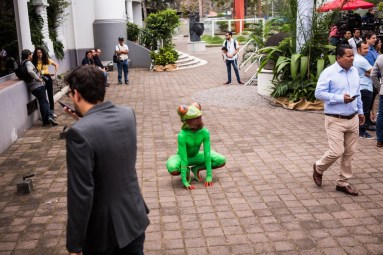
Costa Rican wildlife was the theme of reception in February to formally introduce the government’s decarbonization strategy.

Somini Sengupta and her colleague Alexander Villegas published a story yesterday that resonates with the explanations Amie and I gave friends and family about our original decision to live in Costa Rica. It also resonates with the decision we made recently to return. In 2010 when we moved to Kerala it was not clear when, or even if, we would be back here. But our work in India was intertwined with Costa Rica’s evergreen pioneering role in the global conversation about conservation. So we are back. And the evergreen is appreciated, especially in the way Costa Rica’s president and his wife tell the story within a story.

A diesel commuter train in San José. The government plans to replace older trains with electric models.

Despite it’s diminutive size, Costa Rica been at the forefront of the climate change conversation. While the country has only about 0.25% of the world’s landmass, it contains almost 5% of the world’s biodiversity. These statistics give both an added incentive to focus energies on shifting the juggernaut of climate change and the ecological soapbox from which to be heard.

Costa Rica has an infrastructural uphill climb, most specifically with transportation as is illustrated below, but the country has stood its ground successfully in the past. When we think of the country’s road network in the mid-1990s relative to the roads today, it gives one of many reasons to be optimistic:

Tiny Costa Rica Has a Green New Deal, Too. It Matters for the Whole Planet.

SAN JOSÉ, Costa Rica — It’s a green big deal for a tiny sliver of a country. Costa Rica, population 5 million, wants to wean itself from fossil fuels by 2050, and the chief evangelist of the idea is a 38-year-old urban planner named Claudia Dobles who also happens to be the first lady. Continue reading
In Case Of Emergency, Plant Trees

Fox-Maple-Woods_Wisconsin_JoshuaMayer_web.jpg

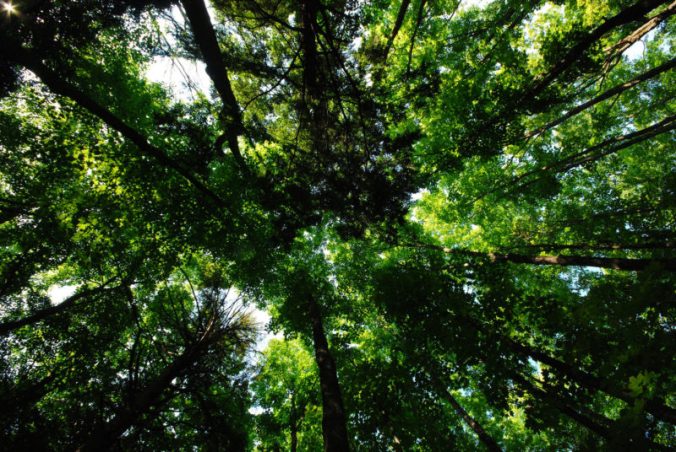
Fox Maple Woods in Wisconsin. JOSHUA MAYER / FLICKR

Emergency? The evidence is clear in the case of the environment, and it is a global emergency with a global solution. Thanks to Yale e360 for this summary of a new finding:

Planting 1.2 Trillion Trees Could Cancel Out a Decade of CO2 Emissions, Scientists Find

There is enough room in the world’s existing parks, forests, and abandoned land to plant 1.2 trillion additional trees, which would have the CO2 storage capacity to cancel out a decade of carbon dioxide emissions, according to a new analysis by ecologist Thomas Crowther and colleagues at ETH Zurich, a Swiss university. Continue reading
The Power Of Panic

merlin_150201243_6e45f17e-9e07-4df5-96e6-a96f9afa878b-jumbo.jpg

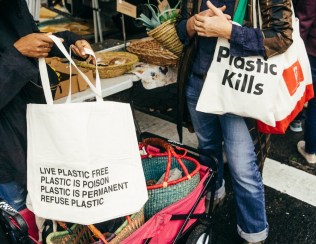
Ms. Cohen favors vendors who don’t use plastic. Credit Adam Amengual for The New York Times

When I started my Saturday morning reading it was just prior to our weekly visit to the farmer’s market and there was visual resonance with our own experience eliminating, or trying to eliminate plastic:

You’re Addicted to Plastic. Can You Go Cold Turkey?

Going plastic free starts with cloth bags and straws. Suddenly, you’re … making your own toothpaste?

merlin_150201240_ff27ccbe-4e4a-4550-81e5-99cbc3e11a81-jumbo.jpg

Reusable cloth bags are a must. Credit Adam Amengual for The New York Times

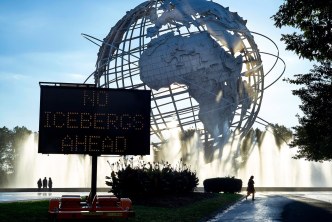
Like most people, resonance is always welcome in my reading. But like a second cup of coffee to really get the day going, there is nothing like cognitive dissonance. I can think eliminating plastic from our lives is a big deal one moment, and then the next it is clear that it is not enough, that it is like tinkering. Or as the punchy cliche puts it, like arranging deck chairs on the Titanic. David Wallace-Wells is a skilled dissonance artist in this vein. He can make your best efforts suddenly seem pathetic; not in a snarky way and if you listen to him explain his work you will realize resistance is futile; you cannot look away from what he is saying, even if you want to.

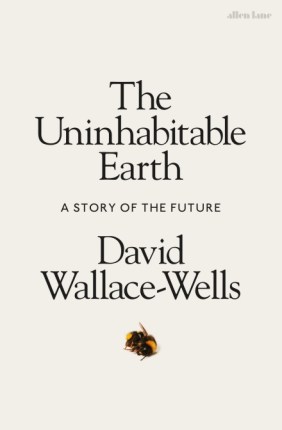
WellsBook.jpg

‘A profound book, which simultaneously makes me terrified and hopeful about the future’ Jonathan Safran Foer
A Times and FT Most Anticipated Book 2019

His book will not likely be damned by faint praise; its look at our future prospects will more likely draw extreme responses in favor of the intensity of his alarm, and claims of alarmism from the usual suspects. He is catching up to Elizabeth Kolbert in balancing our preference for optimism with extreme realism. His op-ed on Saturday tipped the balance for me quite like a second, maybe third cup of coffee:

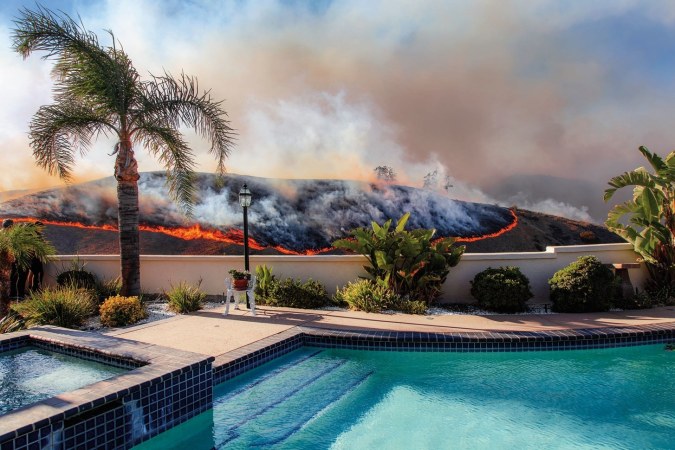
The age of climate panic is here. Last summer, a heat wave baked the entire Northern Hemisphere, killing dozens from Quebec to Japan. Some of the most destructive wildfires in California history turned more than a million acres to ash, along the way melting the tires and the sneakers of those trying to escape the flames. Pacific hurricanes forced three million people in China to flee and wiped away almost all of Hawaii’s East Island.

We are living today in a world that has warmed by just one degree Celsius (1.8 degrees Fahrenheit) since the late 1800s, when records began on a global scale. We are adding planet-warming carbon dioxide to the atmosphere at a rate faster than at any point in human history since the beginning of industrialization. Continue reading
The Most Interesting News Today

17mag-climeworks-image2-jumbo-v2.jpg

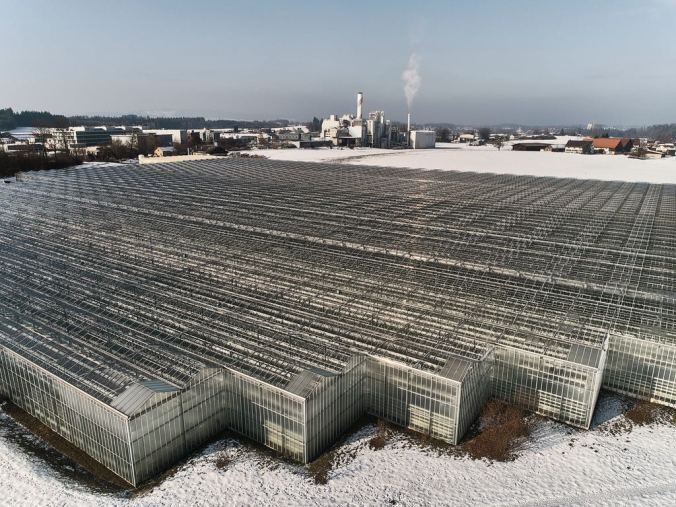
The greenhouse in Hinwil where Climeworks uses carbon dioxide pulled from the air to grow fruits and vegetables. Luca Locatelli for The New York Times

When this platform started in 2011 it was two young men, one a senior at Amherst College and the other a sophomore at Cornell University, who thought it would be useful to share their experiences with other students. It continued beyond their summer internships. At some point, hard to pinpoint the date, it started serving as a daily exercise for me. It became an exercise in finding something in the world that is worthy of attention, as much as possible something that inspires hope rather than reinforces dread (though that has been unavoidable from time to time).

The title I give to today’s post is impossible to justify with any metrics, but read on and you may see my point. Jon Gertner, for this first time featured in our pages, and for what is likely the longest of any longform treatments of any topic in the New York Times, thank you for making it about this:

17mag-climeworks-image1-jumbo.jpg

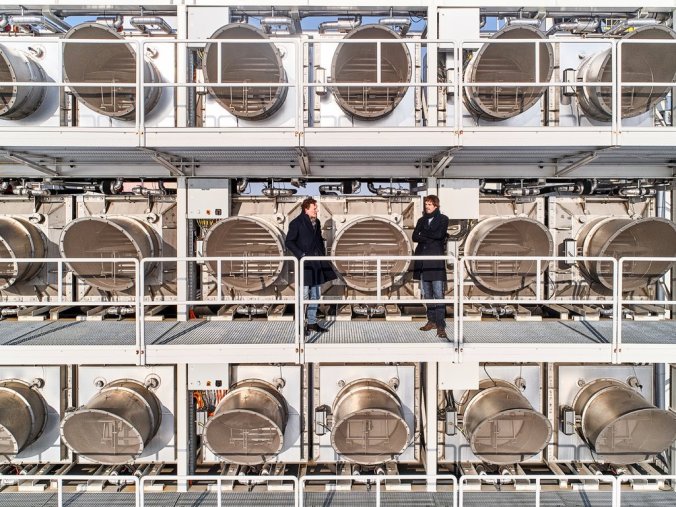
Christoph Gebald, left, and Jan Wurzbacher, the founders of Climeworks, at their plant in Hinwil, Switzerland. Luca Locatelli for The New York Times

The Tiny Swiss Company That Thinks It Can Help Stop Climate Change

Two European entrepreneurs think they can remove carbon from the air at prices cheap enough to matter.

17mag-climeworks-image3-jumbo

A pilot project at a Swiss university that uses Climeworks equipment to make methane out of airborne CO₂. Luca Locatelli for The New York Times

Just over a century ago in Ludwigshafen, Germany, a scientist named Carl Bosch assembled a team of engineers to exploit a new technique in chemistry. A year earlier, another German chemist, Fritz Haber, hit upon a process to pull nitrogen (N) from the air and combine it with hydrogen (H) to produce tiny amounts of ammonia (NH₃). But Haber’s process was delicate, requiring the maintenance of high temperatures and high pressure. Bosch wanted to figure out how to adapt Haber’s discovery for commercial purposes — as we would say today, to “scale it up.” Anyone looking at the state of manufacturing in Europe around 1910, Bosch observed, could see that the task was daunting: The technology simply didn’t exist.

Over the next decade, however, Bosch and his team overcame a multitude of technological and metallurgical challenges. He chronicled them in his 1932 acceptance speech for the Nobel Prize for Chemistry — an honor he won because the Haber-Bosch process, as it came to be known, changed the world. His breakthrough made possible the production of ammonia on an industrial scale, providing the world with cheap and abundant fertilizer. The scientist and historian Vaclav Smil called Haber-Bosch “the most important technical invention of the 20th century.” Bosch had effectively removed the historical bounds on crop yields, so much so that he was widely credited with making “bread from air.” By some estimates, Bosch’s work made possible the lives of more than two billion human beings over the last 100 years. Continue reading
Epic Waste, Cowboys & Spaceships

190204_r33673

Slat cares deeply about the environment, but, for him, the appeal of cleaning the oceans is also about puzzle solving. Illustration by Cristiana Couceiro

In the pantheon of writers we have linked out to since 2011, of those who focus on science and/or environmental issues Carolyn Kormann is a relatively recent arrival. Since I started noticing her work three years ago she has started 2019 with an especially strong duo of stories. One is a longform profile and a must-read if you have been even just glancing at the headlines about giant garbage patches swirling in the ocean. How to deal with epic waste after the fact, after the out-of-sight-out-of-mind approach that has been building this mess for decades, is no simple matter. Nor is the man she introduces us to.

Kormann-Cost-of-Climate-Change

Last year, the U.S.’s carbon-dioxide emissions increased by an estimated 3.4 per cent, the second-largest gain in the past two decades.Photograph by Fernando Moleres / Panos Pictures / Redux

The profile of Slat is compelling, disturbing and inconclusive–hallmarks of the type of profile I most appreciate when the subject involves seemingly intractable environmental challenges. The other item is shorter, with a pair of metaphors for economic periods that I wish I had known earlier. If you only have time for one, read about William Nordhaus’s many contributions to the otherwise dismal science, especially his description of the economic transformation from my lifetime to that of the next generation:

The False Choice Between Economic Growth and Combatting Climate Change 

In 1974, the economist William Nordhaus described the transition from a “cowboy economy” to a “spaceship economy.” In the former, he wrote, “we could afford to use our resources profligately,” and “the environment could be used as a sink without becoming fouled.” But, in the spaceship economy, “great attention must be paid to the sources of life and to the dumps where our refuse is piled.” He added, “Things which have traditionally been treated as free goods—air, water, quiet, natural beauty—must now be treated with the same care as other scarce goods.” Toward the end of his landmark paper, “Resources as a Constraint on Growth,” Nordhaus discussed the possible adverse effects of energy consumption, most notably the “greenhouse effect.” Continue reading
Electrical Generation Can Look Like Sausage When Visualized Just So

Electric.jpg

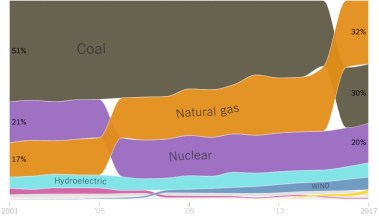
How the United States generated electricity from 2001 to 2017. Percentage of power produced from each energy source

America isn’t making electricity the way it did two decades ago: Natural gas has edged out coal as the country’s leading generation source … and renewables like wind and solar have made small yet speedy gains. But, each state has its own story.

Electric2

Nadja Popovich an explainer of complicated things with visualization techniques that have impressed us so far, now has this.

In Nevada, natural gas surpassed coal as the top source of electricity generation in 2005, earlier than in many other states. Coal’s role in the state’s power mix has continued to decline since then.

We cannot do justice to it, other than suggest you go see it for yourself. A state by state graphic representation of electrical generation methods:

How Does Your State Make Electricity?

Overall, fossil fuels still dominate electricity generation in the United States. But the shift from coal to natural gas has helped to lower carbon dioxide emissions and other pollution. Last year, coal was the main source of electricity generation for 18 states, down from 32 states in 2001.

A Blue Carbon Sink In Australia’s Midst

gettyimages-454427891_custom-36d471720410cb6431d89e0c31878279437006c1-s1400-c85

Researchers studied the carbon storage of deep-water seagrasses living at Lizard Island, Australia. Education Images/UIG via Getty Images

Thanks to National Public Radio for this:

Amid a sea of dire climate change news, researchers say they’ve found a rare bright spot.

A meadow of seagrass among Australia’s Great Barrier Reef — estimated to be twice the size of New Jersey — is soaking up and storing carbon that would otherwise contribute to global warming.

Scientists call this carbon-removal powerhouse a “blue carbon sink.” The term refers to an ocean or coastal ecosystem — including seagrasses, salt marshes and mangrove forests — that captures carbon compounds from the atmosphere, effectively removing carbon dioxide, a known greenhouse gas that contributes to climate change. Continue reading
Is Neutrality The Best Option?

lead_720_405A.jpg

A rending of Powerhouse Brattørkaia, an “energy-positive” building that will open to the public next year in Norway SNØHETTA

Thank you Norway, for demonstrating that we can do better than neutrality:

Norway Is Entering a New Era of Climate-Conscious Architecture

The country now has a suite of buildings that generate more energy than they use.

The European Union has a target of making all new buildings zero-energy by 2020, but in Norway, carbon neutrality isn’t enough.

A consortium in Oslo made up of architects, engineers, environmentalists, and designers is creating energy-positive buildings in a country with some of the coldest and darkest winters on Earth. “If you can make it in Norway, you can make it anywhere,” says Peter Bernhard, a consultant with Asplan Viak, one of the Powerhouse alliance members. Continue reading

Part Of The Solution

06CLI-AGRICULTURE1-jumbo.jpg

Harvesting soybeans in Mato Grosso, Brazil. Credit Yasuyoshi Chiba/Agence France-Presse — Getty Images

Thanks to Brad Plumer, whose reporting on environmental issues has been illuminating, for this fifth feature in our links out to stories that help us understand what we might do to be part of the solution:

Can We Grow More Food on Less Land? We’ll Have To, a New Study Finds

06CLI-AGRICULTURE2-jumbo

A farm in the Pays de la Loire region of France. Cows have an especially large environmental footprint. Credit Loic Venance/Agence France-Presse — Getty Images

WASHINGTON — If the world hopes to make meaningful progress on climate change, it won’t be enough for cars and factories to get cleaner. Our cows and wheat fields will have to become radically more efficient, too.

That’s the basic conclusion of a sweeping new study issued Wednesday by the World Resources Institute, an environmental group. The report warns that the world’s agricultural system will need drastic changes in the next few decades in order to feed billions more people without triggering a climate catastrophe.

The challenge is daunting: Agriculture already occupies roughly 40 percent of the world’s land and is responsible for about a quarter of humanity’s greenhouse gas emissions. But with the global population expected to grow from 7.2 billion people today to nearly 10 billion by 2050, and with many millions of people eating more meat as incomes rise, that environmental impact is on pace to expand dramatically. Continue reading

The Technology Of Negative Emissions

ClimeWorks_20170510DSC_6501_PhotosbyJuliaDunlop_web2.jpg

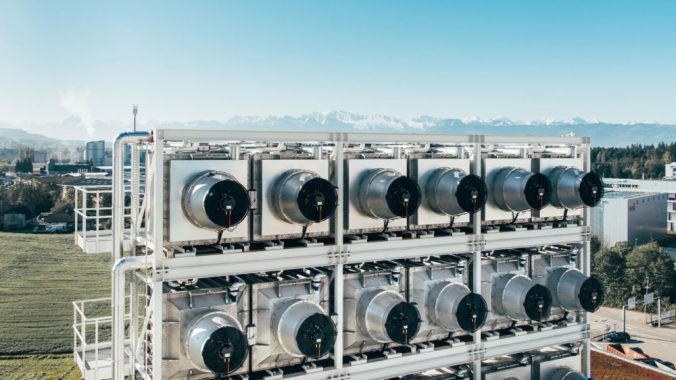
A direct air capture facility in Zurich, created by the Swiss-based technology company ClimeWorks. JULIA DUNLOP / CLIMEWORKS

I was not aware that Elizabeth Kolbert has been writing for Yale e360 for the entire time we have been linking to her New Yorker work on this platform. And then some, because she started publishing there ten years ago. This is her 17th publication for Yale e360 and it can help a layperson understand in a relatively short read whether technology has any chance of accelerating our progress on climate change mitigation:

Climate Solutions: Is It Feasible to Remove Enough CO2 from the Air?

A U.S. scientific panel reports that technologies that take CO2 out of the atmosphere could be a significant part of a strategy to mitigate global warming. In an e360 interview, Stephen Pacala, the panel’s chairman, discusses how these fast-developing technologies are becoming increasingly viable.

Is there still time to avoid runaway climate change? To a large degree, the answer depends on the feasibility of “negative emissions” — techniques or technologies that suck CO2 out of the air. In the latest report from the Intergovernmental Panel on Climate Change (IPCC), all scenarios for limiting warming to 1.5 degrees Celsius depend on negative emissions technologies, or NETs. Most 2-degree scenarios also rely on negative emissions; many call for removing billions of tons of CO2 per year by mid-century.

NETs_NationalAcademies_web.jpg

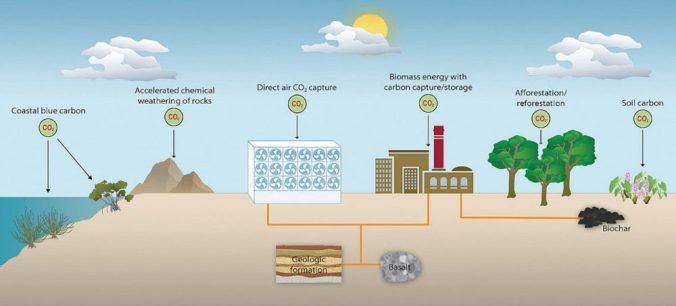
Negative Emissions Technologies (NETs) range from low-tech, such as planting more trees, to more high-tech options, such as developing machines to scrub CO2 from the air. NATIONAL ACADEMY OF SCIENCES, 2018

Yet most NETs remain either untested or unproved. To help bridge this gap, the National Academies convened a panel of scientists and asked it to propose a research agenda. The panel considered several possible techniques, ranging from the low-tech — planting more trees — to the high-tech — developing machines to scrub CO2 from the sky. It also looked at a hybrid technology that has become known as bioenergy with carbon capture and storage, or BECCS. The panel recommended several billion dollars be directed to research on NETs. Such technologies, it suggested, ought to be viewed as a “component of the mitigation portfolio,” rather than as a futuristic, last-ditch effort to reduce atmospheric CO2.

Pacala_IsometricStudios_web.jpg

Stephen Pacala. CREDIT: ISOMETRIC STUDIOS

Stephen Pacala, a professor of ecology and evolutionary biology at Princeton University, chaired the panel. In an interview with Yale Environment 360, he talks about why NETs are needed, what should be done to advance them, and why he believes that “direct air capture” technologies could come into widespread use within the next decade. Continue reading
News & Perspective

lead_720_405 (4).jpg

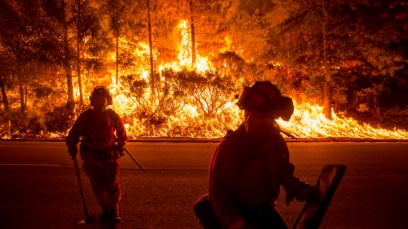
Firefighters battle the King Fire near Fresh Pond, California, in September 2014. NOAH BERGER / REUTERS

Posts like this one tend to not fare as well with readers visiting our platform. Whoever makes their way here is normally looking for what we normally offer, stories about entrepreneurial conservation. Which we believe can be a winning formula for the challenges at hand. But from time to time, we must acknowledge that the odds look grim.

merlin_146590158_372cbff0-acb2-4bf5-8308-f9b1c200405d-jumbo.jpg

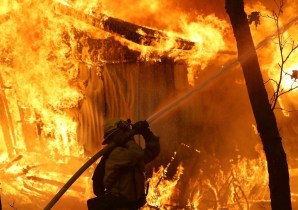
Fighting the Camp Fire this month in Magalia, Calif. Credit Justin Sullivan/Getty Images

Two articles, both very well written, about the report warning of the dangers of climate change to the US economy, note that the report is not likely to have much impact. Because of Black Friday? No, because the forces behind willful ignorance have been at it for a long time, with plentiful resources to strengthen their game. This cartoon says more in fewer words than either article on why. Nathaniel Rich’s short essay, dark and stark and alarming, is akin. Bill McKibben, though, once again hits the nail squarely and firmly, and more effectively than news, because of his trench-based perspective:

181126_r33282.jpg

California is currently ablaze, after a record hot summer and a dry fall set the stage for the most destructive fires in the state’s history. Above: The Woolsey fire, near Los Angeles, seen from the West Hills. Photograph by Kevin Cooley for The New Yorker

How Extreme Weather Is Shrinking the Planet

With wildfires, heat waves, and rising sea levels, large tracts of the earth are at risk of becoming uninhabitable. But the fossil-fuel industry continues its assault on the facts.

Thirty years ago, this magazine published “The End of Nature,” a long article about what we then called the greenhouse effect. I was in my twenties when I wrote it, and out on an intellectual limb: climate science was still young. But the data were persuasive, and freighted with sadness. We were spewing so much carbon into the atmosphere that nature was no longer a force beyond our influence—and humanity, with its capacity for industry and heedlessness, had come to affect every cubic metre of the planet’s air, every inch of its surface, every drop of its water. Scientists underlined this notion a decade later when they began referring to our era as the Anthropocene, the world made by man.

I was frightened by my reporting, but, at the time, it seemed likely that we’d try as a society to prevent the worst from happening. Continue reading
The Climate Museum’s Climate Signals


My only wish is to have been able to share this earlier, during the exhibition’s run. But better late than never.

Kormann-Queens-Climate-Signals.jpg

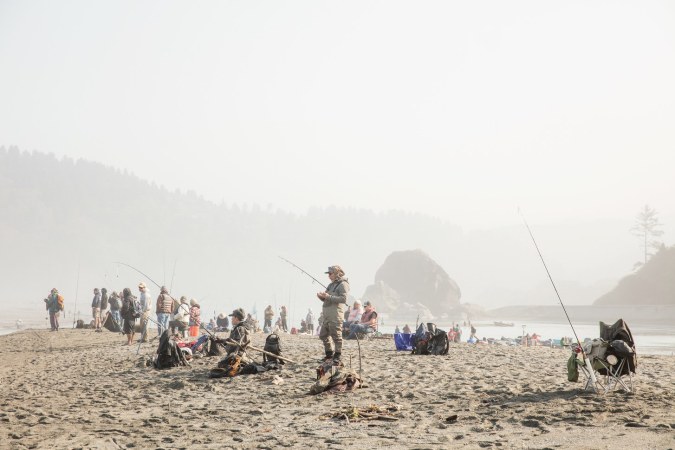
The “Ask a Scientist” event gives curious passerby the chance to pose their climate-related questions to scientists stationed around New York City. Photograph by Justin Brice Guariglia

Thanks to Carolyn Kormann for another fresh dose of creative rational thinking, with her short piece Ask a Scientist: How to Deal with a Climate-Change Skeptic:

When Alarmism Is Required

Greenpeace_IllegalLoggingBrazilIndigenousLands_web.jpg

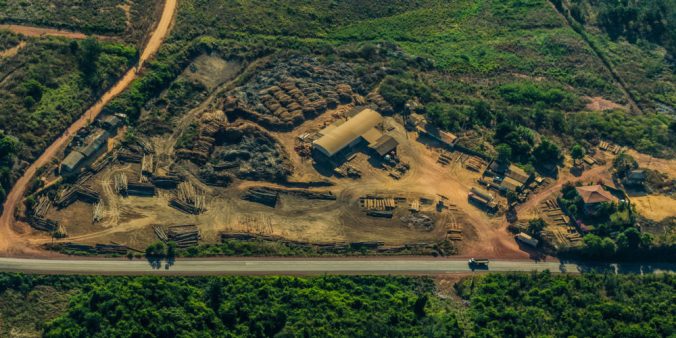
An illegal logging in the Alto Turiacu indigenous territory in Brazil’s Maranhão State in 2015. FÁBIO NASCIMENTO / GREENPEACE

Trust, a kind of social glue, keeps us from having to think nonstop about worst case scenarios. We trust that those with authority, whether intellectual or political, will use it responsibly. Thinking about this recently, I have been adjusting where I have least and greatest trust that responsible environmental actions are taken. Today I have made an adjustment on the former. The USA’s political leadership has been at the forefront of my thought when it comes to least responsible, least trustworthy actions. Philip Fearnside, an ecologist at the National Institute for Research in Amazonia (INPA) in Brazil, studies the consequences of deforestation in the world’s largest tropical forest, so his word carries scientific weight for me. He has put in perspective why I should turn my attention to Brazil:

Why Brazil’s New President Poses an Unprecedented Threat to the Amazon

Newly elected Jair Bolsonaro, an authoritarian nationalist sometimes called the “tropical Trump,” has staked out an environmental agenda that would open the Amazon to widespread development, putting at risk a region that plays a vital role in stabilizing the global climate.

BrazilElection2018_IndigenousProtester_Getty_web.jpg

An indigenous woman protests against then-candidate Jair Bolsonaro, who has promised to ban the creation of new protected areas or indigenous territories, in Sao Paulo in October. NELSON ALMEIDA/AFP/GETTY IMAGES

For people concerned about the environment and climate change, U.S. President Donald Trump has proven to be as bad, or worse, than feared. He is in the process of pulling the United States out of the Paris Agreement, continues to flatly dismiss the science of human-caused global warming, and has worked ceaselessly to undo environmental regulations and weaken environmental agencies.

JairBolsonaro_Getty_web.jpg

Brazil’s president-elect, Jair Bolsonaro, has pledged to dismantle the country’s environmental regulations. MIGUEL SCHINCARIOL/AFP/GETTY IMAGES

Now, however, a new leader has emerged on the world stage who is poised to do even more global environmental damage than Trump. He is Jair Bolsonaro, the recently elected president of Brazil, and his extreme views on the environment, coupled with his control of nearly all the country’s levers of power, means that he is now in a position to do unprecedented harm to the Amazon and the international battle to slow climate change.

Not for nothing is Bolsonaro known as the “tropical Trump.” The parallels are many, including their embrace of the far right and their inflammatory rhetoric. And among their similarities is the way that a constant barrage of outrageous comments diverts discussion from the environmental damage that their policies portend. Continue reading
Forests, Deforestation & Climate Change

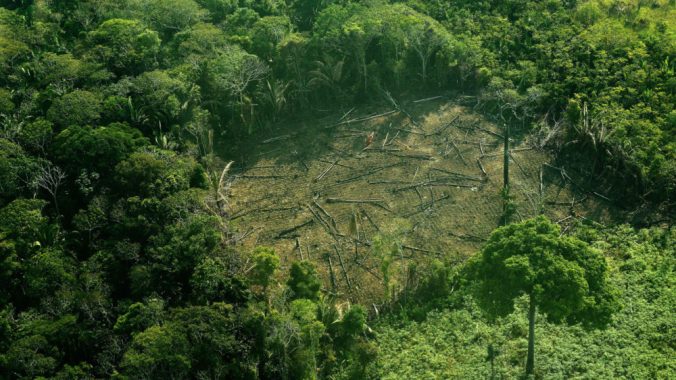
Trees cleared in the western Amazon region of Brazil in September 2017. CARL DE SOUZA / AFP / GETTY IMAGES

If you have been following the news recently, you may have noticed a report that indicates the urgency from climate change is greater than scientists previously thought. Everyone who cares has been digesting the science and we appreciate every effort to clarify what the science is saying. Fred Pearce, writing for Yale e360, has this:

Conflicting Data: How Fast Is the World Losing its Forests?

GP0STRVIX_PressMedia_web.jpg

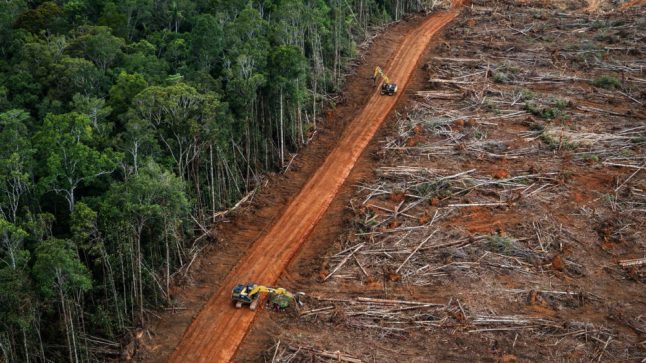
Forest cut to make way for an oil palm plantation in Papua, Indonesia in April 2018. ULET IFANSASTI / GREENPEACE

The latest UN report on climate says reducing deforestation is crucial to slowing global warming. But researchers must first reconcile two contradictory sets of statistics on tree loss in order to determine whether promises made by nations to protect and restore forests are on target.

The world is losing trees faster than ever. An area the size of Italy disappeared last year. Or did it? New research suggests three-quarters of those lost forests may already be regrowing. That hardly means we are out of the woods. Fighting climate change and protecting biodiversity still needs a global campaign to reforest the planet. But it does suggest that, given the chance, nature will do much of the work. Continue reading

Carbon Insurance As Heritage Insurance

Kormann-YurokCarbonCredits-Primary.jpg

A carbon-offset project, the first of its kind in the United States, has become the Yurok’s main source of discretionary income, helping the tribe buy back thousands of acres of land. Photograph by Joel Redman

Carbon trading has featured, or at least been mentioned, only rarely on this platform, now that I stop to check. That seems impossible. But the scheme with so much promise has simply not taken off. Indigenous heritage, on the other hand, has featured in dozens of stories here since we started in 2011. Thanks to Carolyn Kormann for bringing this story to my attention, helped by two captivating photos and the fact that it highlights the approach of the Yurok Tribe (a community I had not heard of before):

Kormann-YurokCarbonCredits-Secondary2

“I think we did a good thing by saving the trees, but I’m not happy with it,” Jene McCovey, a tribal elder, said. “It’s not viable. It allows polluters to pollute.” Photograph by Joel Redman

How Carbon Trading Became a Way of Life for California’s Yurok Tribe

When Marty Lamebear is not fighting fires, he is starting them. In the past few years, as a member of the Yurok Tribe Forestry Program’s fire department, he has been helping revive the controversial practice of prescribed burns to protect and restore the coastal redwood forests of northern California. Lamebear is also a hunter, fisherman, and dancer. In his free time, he makes tribal regalia for ceremonial dances from parts of elk, deer, minks, and porcupines, which he shoots or finds already dead, and from frozen eagles that he orders from the U.S. Fish and Wildlife Service. A prescribed burn, what Lamebear calls a culture burn, creates prairies within the forest, which attract those animals. “At first, we couldn’t really tell its effects,” he said. “But, after about six years now, we can honestly start seeing the landscape open up, animals come around.” They also serve another purpose, he said. “It’s insurance for our carbon.” Continue reading
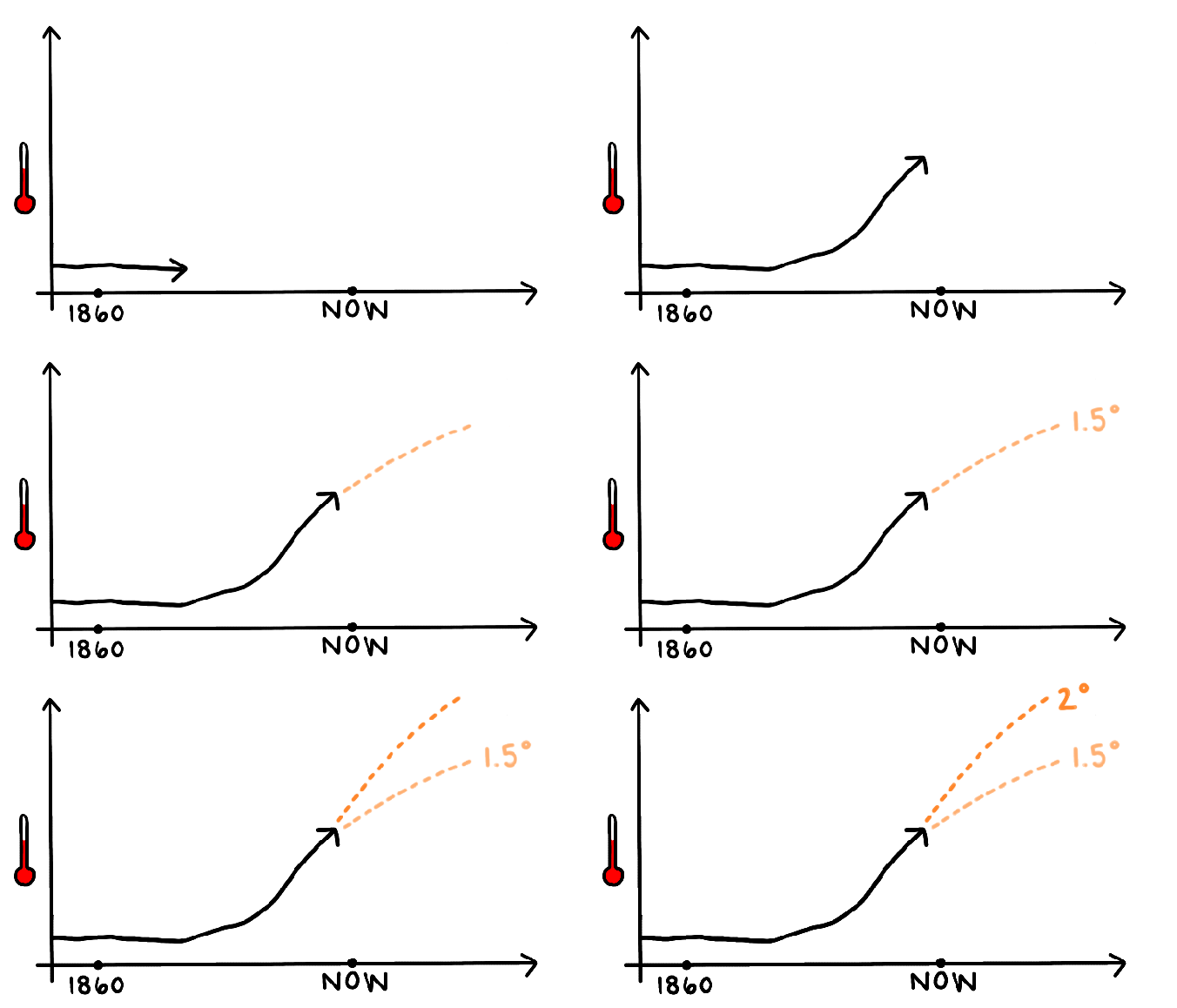
The Picture From The Recent Climate Change Report Is Now More Clear

Chart_lg.gif

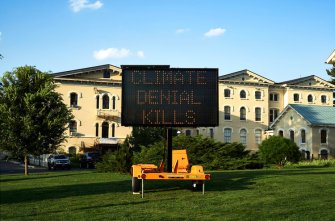
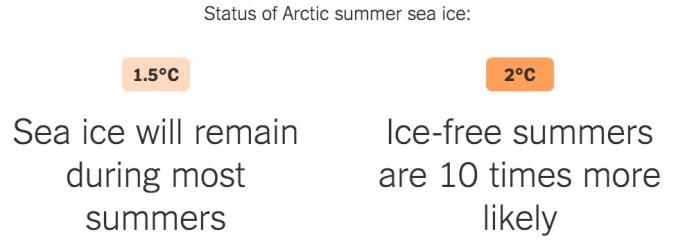
Deniers, we already know you will find a way to see this from some other perspective, and we have given up trying to understand why you do that. But for everyone else, there is still time to understand the implications of this science. And there is no shame in using props to help learn. Thanks to Brad Plumer and Nadja Popovich for making sure we get the point, with clear graphical illustration, about what this recent study is saying and why every one of us should care:

Heat

Extreme heat will be much more common worldwide under 2°C of warming compared to 1.5°C, with the tropics experiencing the biggest increase in the number of “highly unusual” hot days.

Read the rest of this graphics-rich story here.

Trees, Cities & Happiness

merlin_144034221_4ee0b063-798b-4669-80dc-817bcbc10dfe-superJumbo.jpg

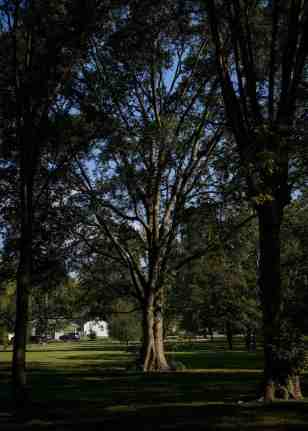
A tree in Riverfront Park competes for grandeur with Nashville’s iconic At&T building. Credit William DeShazer for The New York Times

PlantTreeCity.jpgI just learned of an urban tree-planting initiative on a day when the news shows purposeful indifference about climate change on the part of a powerful country’s elected leader, on the same day when the news also shows that an economist considered a pioneer of environmental economics is receiving a prestigious prize and what he said when he learned of his being awarded the prize:

“Once we start to try to reduce carbon emissions, we’ll be surprised that it wasn’t as hard as we anticipated. The danger with very alarming forecasts is that it will make people feel apathetic and hopeless.

“One problem today is that people think protecting the environment will be so costly and so hard that they want to ignore the problem and pretend it doesn’t exist. Humans are capable of amazing accomplishments if we set our minds to it.”

PlantTreesCity2Let’s decide together to do something, seems to be his message. I learned about this urban tree-planting initiative, news of a president’s abdication of responsibility, and this economist’s optimistic message on the same day I read about a 15-year old climate activist who has decided to do something where she sees her government failing to take action. She has decided at a very young age to do what she can regardless of the daunting odds. So thanks to Margaret Renkl a Nashville-based contributing opinion writer for The New York Times, for bringing this initiative to my attention, as a reminder to do something:

More Trees, Happier People

When cities grow, green space dies. Replanting it has been shown to lift the human spirit.

merlin_144034215_0e5eb0e9-e3ad-4046-b39b-a6189d715df7-superJumbo

A tale of two trees in Nashville. A mature tree in England Park, left, and a newly planted tree at Wright Middle School.

NASHVILLE — The scene in a tiny pocket park outside Plaza Mariachi here on Nolensville Pike last Wednesday was like a tableau from a Norman Rockwell painting, 21st-century style. Surrounded by signs advertising the Hispanic Family Foundation, Dubai Jewelry, the Dominican Barber Shop and restaurants offering Peruvian, Chinese, Mediterranean and Indian food — as well as a Game Stop franchise and H&R Block — was a small sign that read, “Today: Free trees.”

merlin_144034152_9a1c43d3-ccb7-42c0-bfd7-979917608536-superJumbo

Photographs by William DeShazer for The New York Times

The arrow on the sign pointed to a pop-up canopy where the Nashville Tree Foundation was hosting its fourth tree giveaway of October. A family standing under the canopy was posing for a photo with the sapling they had just adopted. Carolyn Sorenson, executive director of the foundation, was taking the picture: “Say ‘trees’!” she said.

The tree giveaway at Plaza Mariachi happened to fall on the very day that Nashville’s mayor, David Briley, announced a campaign to restore and enlarge the city’s tree canopy. The effort, called “Root Nashville,” will be overseen by the city and the Cumberland River Compact, an environmental nonprofit, and funded through a combination of public, corporate, foundation and private dollars. Together with several municipal departments and other nonprofit organizations, the initiative aims to plant 500,000 trees in Davidson County by 2050.

Many of these newly planted saplings will replace very large, very old trees that have been lost to Nashville’s meteoric growth — a population increase of more than 45 percent since 2000. As the city has grown, the city’s trees have fallen: deliberately felled by developers to make room for new construction or unintentionally killed as a side effect of nearby building. Just since 2008, the tree canopy in the urban core has dropped from 28 percent to 24 percent, a loss of roughly 9,000 trees a year. Continue reading

Analyzing Local Sources Of Big Carbon Footprints

lead_720_405.png

GOOGLE

What gets measured gets managed. In the realm of climate science, national governments have the scale and responsibility to be involved in measurement. But if a skeptic is in charge of the government apparatus, good luck with that. With the national government of one of the big carbon footprint countries abandoning science and dropping out of the fight to reduce climate change, one of that country’s biggest companies is stepping up to offer an alternative. It may be too little too late but under the circumstances we may have no choice but to cheer it on:

Google’s New Tool to Fight Climate Change

The company will begin estimating local carbon pollution from cities around the world.

In the next decade or so, more than 6,000 cities, states, and provinces around the world will try to do something that has eluded humanity for 25 years: reduce their emissions of greenhouse gases, which warm the atmosphere and cause climate change.

The city-level leaders overseeing this task won’t have the same tools available to their national peers. Most of them won’t have an Environmental Protection Agency (or its equivalent), a meteorological bureau, a team of military engineers, or nasa. So where will they start? Never mind how to reduce their city’s greenhouse-gas emissions; how will they know what’s spewing carbon dioxide in the first place?

Maybe Google will do it for them. Or, at least, do it with them.

Google has started estimating greenhouse-gas emissions for individual cities, part of what it recently described as an ambitious new plan to deploy its hoard of geographic information on the side of climate-concerned local leaders. Continue reading
The Camera’s Gift To The Task Of Documenting Climate Change

main_900 (3).jpg

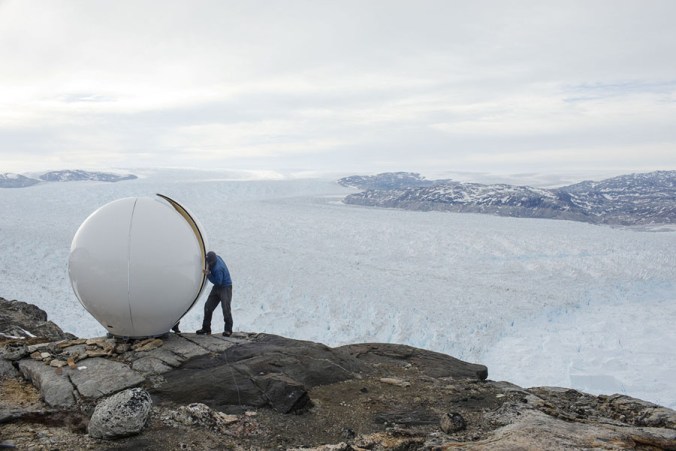
The safety officer Brian Rougeux assembles a radar dome while working at the research camp above Helheim Glacier near Tasiilaq, Greenland, on June 20, 2018. 
Lucas Jackson / Reuters

Alan Taylor, who  compiles and edits the news photo blog “In Focus” for the Atlantic, shares 21 spectacular images with captions that help even a lay person understand better the science of climate change:

Studying Greenland’s Ice to Understand Climate Change

main_900 (4).jpg

An iceberg floats in a fjord near Tasiilaq on June 16, 2018. # Lucas Jackson / Reuters

Earlier this year, Lucas Jackson, a photographer with Reuters, joined a team of scientists affiliated with a NASA project named Oceans Melting Greenland (OMG) and traveled with it to the Greenland ice sheet and fjords. Jackson photographed the researchers as they set up their scientific equipment and took readings to help understand the ongoing impact of the melting glaciers and map out what to expect in the future. Jackson says: “For both journalists and scientists, climate change is difficult to document. It most often happens imperceptibly—a tenth of a degree increase in temperature, a few less inches of rain, a slowly melting ice sheet.” Continue reading

Sustainability & Land-Use Choices

e5ff336b-bd2f-4ce2-a2ba-2b4dfcc82edc-3944c6eeace218b5f8c8a63c4fa8191550f3f63c-s1400-c85.jpg

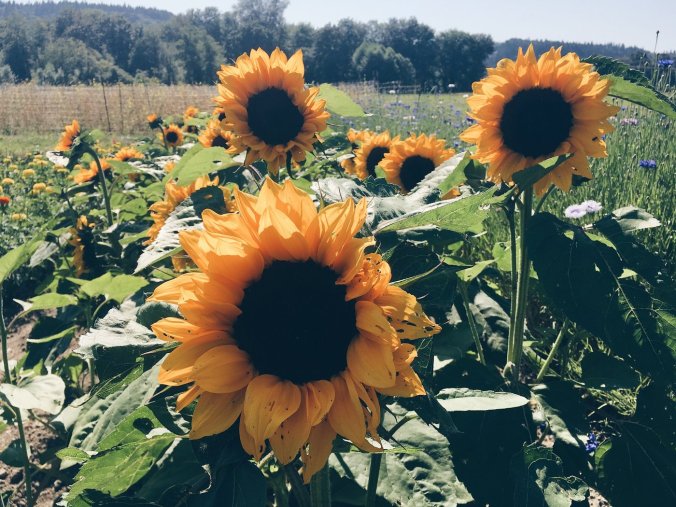
Along the back of this field of sugar snap peas, sunflowers and bachelor buttons at Oxbow Farm & Conservation Center is a buffer of maturing big-leaf maples and red-osier dogwoods. It’s a combination of forest and thicket that the farm has left standing to help protect water quality in the river and aquifer. Oxbow Farm & Conservation Center

Another day, another sunflower because, why not? But this story is about much more than the overwhelming attractiveness of sunflowers:

Which Vision Of Farming Is Better For The Planet?

OxbowFarmers face a growing dilemma. Specifically, a food-growing dilemma.
How do you feed an increasing number of people without harming the environment?

As it turns out, growing as much food as possible in a small area may be our best bet for sustainably feeding the world’s population, according to new research.

It all comes down to how we manage greenhouse gases and climate change. Continue reading