Preparing For Citizen Science

shutterstock_200307821-copy

© kim7 | Shutterstock

Thanks to Roberta Kwok for her ever-clear and concise reviews of important scientific findings in Conservation, this one of particular interest to Raxa Collective contributors Seth Inman for the last few years, and Phil Karp since he started contributing to our blog in 2013:

HOW SHOULD CITIZEN SCIENTISTS BE TRAINED?

The potential power of citizen science is huge: Scientists can enlist smartphone-equipped nature enthusiasts to identify species, monitor ecological trends, and submit photos and other observations on a shoestring budget. But researchers who want to conduct studies over large or remote areas face a problem. If they need to train volunteers in person, their cheap citizen science project suddenly isn’t so cheap anymore.

Now cash-strapped researchers can take heart from a new study in PLOS ONE. Continue reading
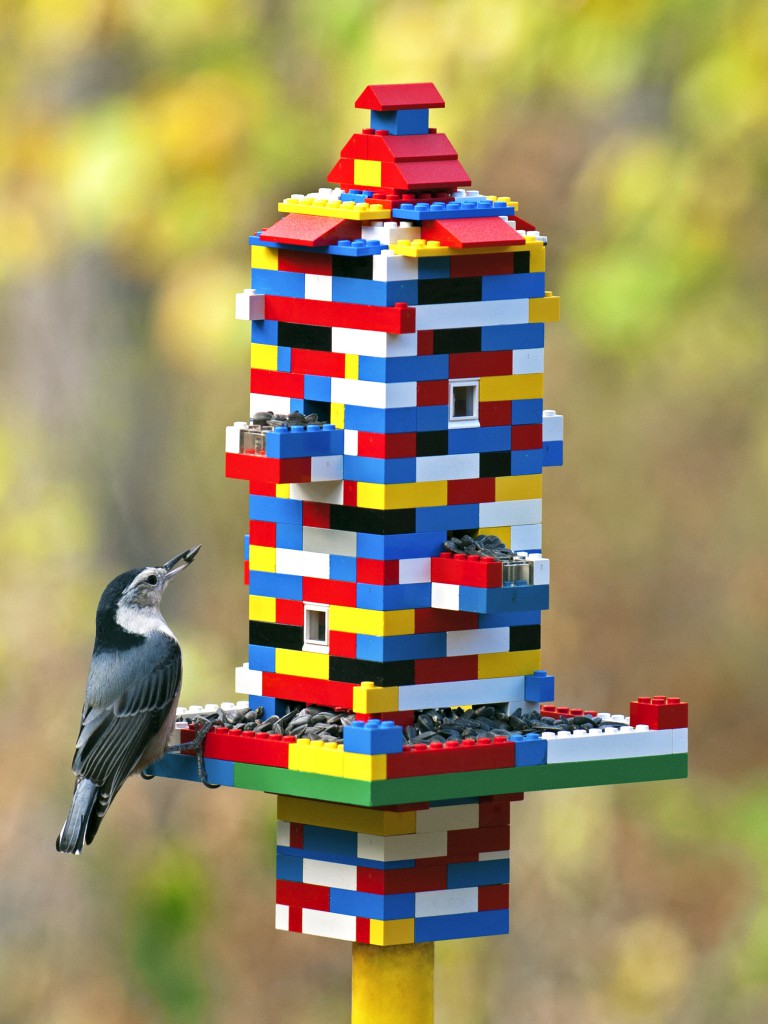
FeederWatch BirdSpotter 2014

White-breasted Nuthatch feeding at LEGO Feeder. Photo by Gary Mueller submitted to Project FeederWatch 2014 BirdSpotter contest.

Project FeederWatch was one of my other neighbors back at the Lab of Ornithology when I worked for Celebrate Urban Birds. This year, FeederWatch is working on a photo contest with the optics company Vanguard, and it looks like they have some amazing prizes, and therefore some stunning contest entries! The 2014-15 BirdSpotter contest will run from November 5th to February 23rd, and the main goal of the contest is to increase project membership to 25,000 participants for the year.

The FeederWatch mission is pretty straightforward: if you live in North America and have a feeder in your neighborhood (yard, park, etc.), watch it during the winter (November-April) and count the different birds that visit it. Like other citizen science projects that the Cornell Lab of Ornithology is involved with, the data you send in becomes valuable input for scientists in their research!

Continue reading

Crowd-sourcing Hacker Help On Behalf Of Natural History

American Museum of Natural History

American Museum of Natural History

Thanks to the Atlantic‘s coverage of the topics we care about, as always:

On a Friday night in New York City you can find just about anything. And this past Friday about 130 hackers gathered in the Hayden Planetarium to participate in the American Museum of Natural History’s very first hackathon.

The premise was simple: The museum handed the huge dataset they call The Digital Universe to the hackers and gave them 24 hours to make something. (Part of what made this hackathon different was the literal universe of data hackers were given. More on that in a minute.) There were some specific challenges and categories (Education, Visualization, Tool Kit, and Wildcard) but the hackers were otherwise free to explore the data and run with it. Continue reading

If You Happen to Be in Washington, DC

Photo by Wikipedia User “The High Fin Sperm Whale”

For over a year, we have been happy and fortunate to host Phil’s writings on the lionfish invasion and what entrepreneurial means might be taken to mitigate it. Next Tuesday, if you happen to be in the DC area and are looking for an educational way to spend your evening, consider going out for a happy hour lecture at Rosemary’s Thyme Bistro.  Continue reading

Migration Celebration

When I graduated from Cornell not too long ago, I drew a bird on my graduation hat. It was a stylized yellow-bellied sapsucker, a symbol I encountered almost every day in my four years as an undergraduate as I studied, worked and conducted research at the Cornell Lab of Ornithology. The Lab shaped my undergraduate experience and inspired my love of science and multimedia. This past weekend I had the gratifying opportunity to give back a little and pass on the inspiration.

As the Autumn chill set in – which in Ithaca means grey skies and a constant drizzle of rain – the Lab opened its doors to the community for a day of Migration Celebration. It was a day to celebrate birds: their fascinating behaviors, plumages, songs, migrations, habitats and ability to bring together people from all walks of life. The event was mainly geared towards children, with innovative educational activities organized by all Lab departments:

“What’s your favorite bird? A sandpiper? Can you draw it? Cool! Now let’s put it on a map and look up where it spends the winter.” Continue reading

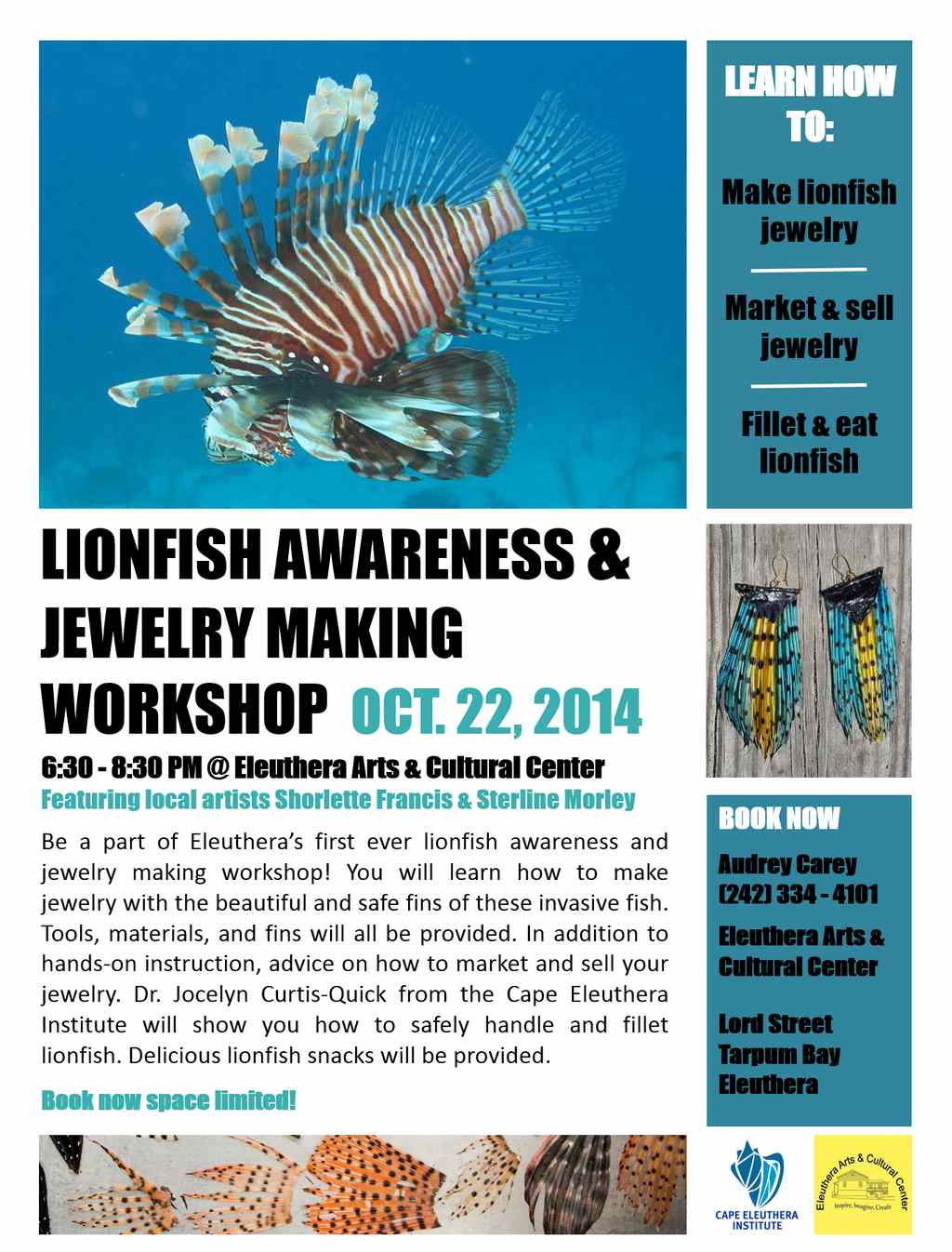
If You Happen To Be In Eleuthera…

Bahamas-Lionfish-Jewelery

Regular readers of this site are familiar with contributor Phil Karp’s wonderful posts about this invasive species. He’s been advising this group in Eleuthera for several months. We wish we could be there!

Can you?

Sovereign Lepidoptera

This slideshow requires JavaScript.

The seasonal migrations that occur in the animal kingdom annually vary in scale on many levels and cover nearly all classifications and all ecosystems of land, sea and air. Climactic conditions and other environmental changes impact these movements on a regular basis. In the case of the monarch butterfly migrations from North America to Mexico, the fragile balance is especially evident as populations are noticably dropping due to habitat loss, insecticide/herbicide use and extreme weather. (An interesting note in this case is that the migration itself was initially caused by human impacted landscape changes when the great North American forests began to be cleared for agriculture in the 1600s.)

Milkweed is the sole food plant for the monarch caterpillers. Continue reading

Lionfish, Prized Case Study In Innovative Environmentalism

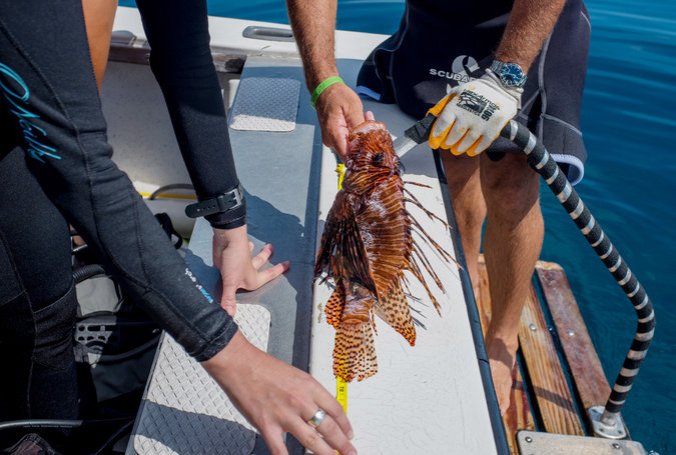
A lionfish caught near Homestead, Fla., by researchers for the Reef Environmental Education Foundation, which is trying to curb the species’ proliferation. Credit Angel Valentin for The New York Times

A lionfish caught near Homestead, Fla., by researchers for the Reef Environmental Education Foundation, which is trying to curb the species’ proliferation. Credit Angel Valentin for The New York Times

We have hosted a series of posts from Raxa contributor Phil Karp, with citizen science and entrepreneurial conservation angles to the story; and now the New York Times considers the story fit to print in a well-detailed reportage:

A Call to Action Against a Predator Fish With an Import Ban, an App and Even Rodeos

Continue reading

Birds Are Barometers, Among Other Things

12348-v1-490x

A recent study projects that the summer range of the Allen’s hummingbird will shrink by 90 percent by 2080. Photo by Loi Nguyen/Audubon Photography Awards

One more story related to the centenary mentioned here, this time with a podcast interview with  to accompany our previous post linking to his editorial in the New York Times:

It’s been 100 years since the last passenger pigeon died. Would we have been able to save the bird today? What is the state of bird conservation in North America? Gary Langham of the National Audubon Society and Ken Rosenberg from the Cornell Lab of Ornithology discuss which species are under threat and how climate change might affect birds in the future.

eBird Expansion

Including historical data since 1810 and extending into checklists from December of last year, eBird’s Observational Dataset just hit a milestone of 500 million records, making eBird the largest repository of biodiversity information that is freely accessible.

24/7 Birdwatch

Ezra, a red-tailed hawk, perches outside Schoellkopf Stadium. Photo credit, Christine Bogdanowicz.

Ezra, a red-tailed hawk, perches outside Schoellkopf Stadium. Photo credit, Christine Bogdanowicz.

In the interest of what we consider essential news about environmental or conservation issues we occasionally share an article in its entirety here, with the encouragement to give the source its due. The nature of blogging is to be quick but not sloppy, brief but clear, and missionary but unorthodox.

The link to this article is deeply missionary, in that our blog has more bird-related content than any other type of content; birds are both a metric for and icon of our conservation mission; quoting the article in entirety is our unorthodox way of getting the writer’s attention (and if he or the publication prefers we will be happy to reduce our republishing of this article to the normal “fair use” excerpt standard) because his article is about the topic Seth has been working on for the last several years at the Cornell Lab of Ornithology and its far reaches.  We think he might find the work Seth and James are doing at Xandari an interesting extension of this article’s focus:

Thanks to Cornell Lab of Ornithology webcams and local bird enthusiasts, anyone in the world can see into the lives of a family of red-tailed hawks that resides on a light-pole about 80 feet above an athletic field on campus.

More than five million viewers across 200 countries have been following the exploits of Ezra (father) and Big Red (mother) and their offspring since in 2012. This year three nestlings hatched.

Continue reading

¿Por Qué Pajarear en Xandari?

Cada día, miles de personas alrededor del mundo están visitando un sitio de web, usando un app en su celular, o escribiendo en su cuaderno para documentar las aves que han visto en algún lugar. Algunos son científicos. Algunos simplemente están interesados en anotar la diversidad de sus patios. Varios tienen equipamiento sofisticado para ayudarles ver de lejos o tomar imágenes de las maravillas aladas que buscan.

En países como los Estados Unidos e Inglaterra, el pasatiempo de observar aves es Continue reading

Citizen Science in Belize – Update on Lionfish Jewelry: Part 2

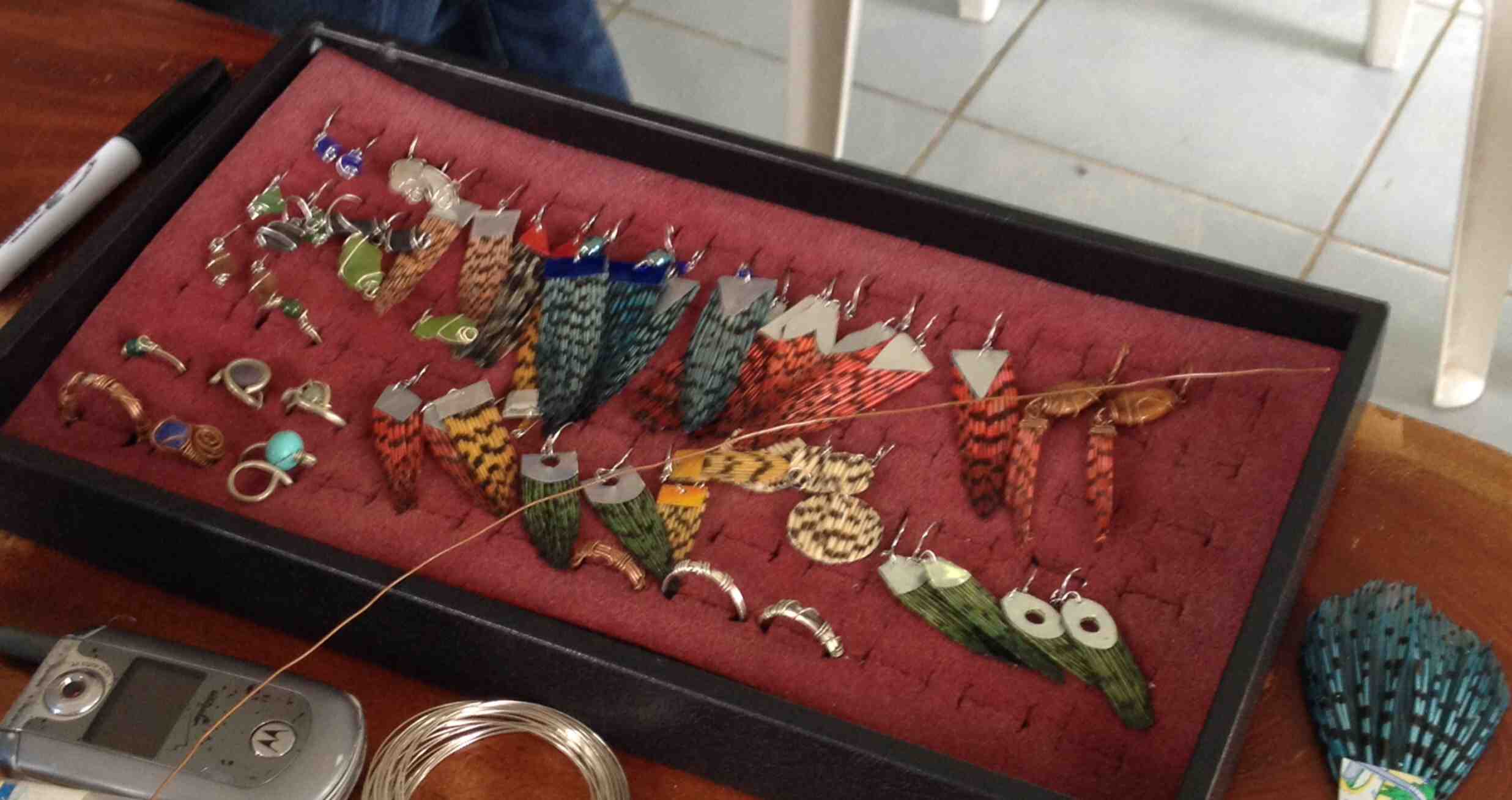
Assorted lionfish jewelry from Palovi Baezar, Punta Gorda, Belize

Assorted lionfish jewelry from Palovi Baezar, Punta Gorda, Belize

In Part 1 of this post I wrote about my recent visit to Belize to help with further development of the nascent  market for lionfish jewelry; one of several market-based approaches to addressing the threat to Southwest Atlantic marine ecosystems posed by the invasion of this non-native species. I noted that the market is most advanced in the area around Punta Gorda, in Southern Belize, in large measure due to the support provided by ReefCI which has provided training on jewelry making to a group of local women and is supplying them with lionfish spines, fins, and tails as well as marketing assistance.

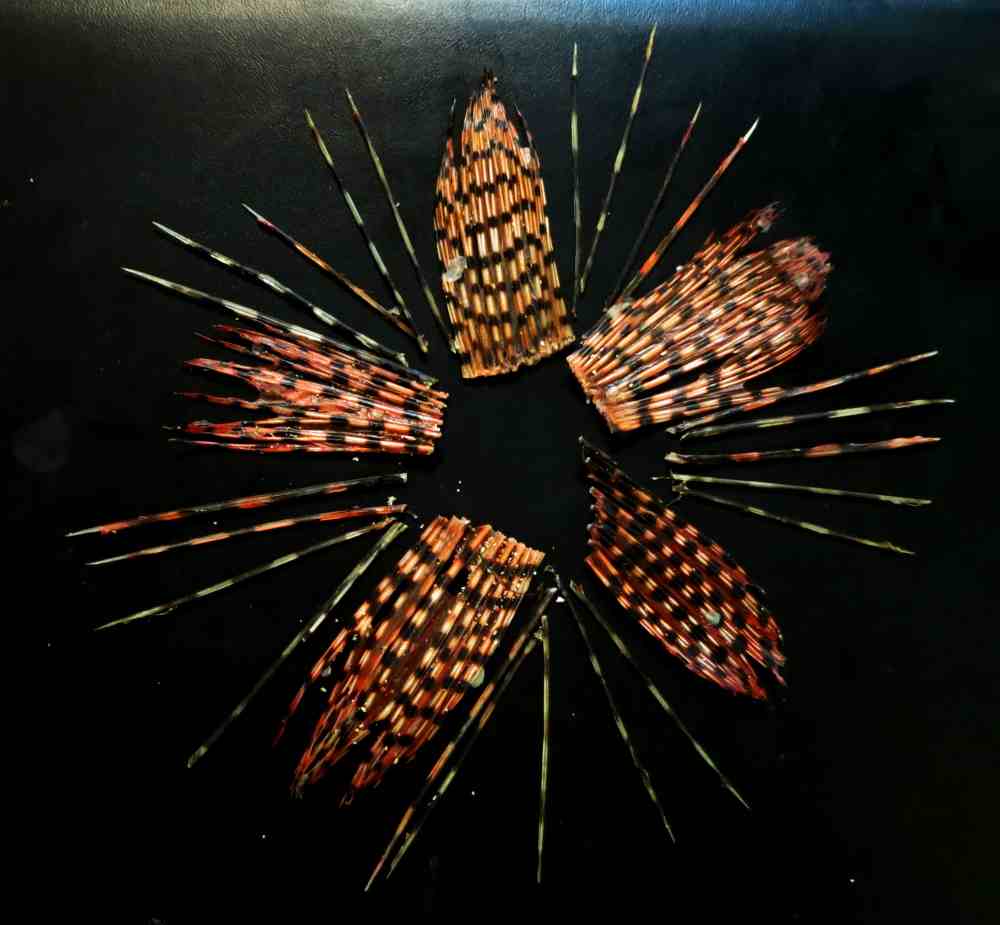
Lionfish spines, fins, and tails ready for jewelry

Lionfish spines, fins, and tails ready for jewelry

While ReefCI’s involvement has been instrumental in getting things started, further development and expansion of the market will require engagement with artisans and women’s groups in other parts of the country, particularly areas closer to major tourist markets. Interventions are also needed to develop a reliable and sustainable supply chain for lionfish jewelry production and sales. I was pleased to hear from one of the jewelry makers in Punta Gorda that a local fisherman had approached her about selling lionfish tails. This was music to my ears, as one of the motivations behind the lionfish jewelry idea has been to up return to fishers in order to create added commercial incentive for them to hunt lionfish (the fish cannot be caught using conventional fishing methods such as hook and line or nets, but must instead be speared or hand-netted by diving). Continue reading

Citizen Science in Belize – Update on Lionfish Jewelry: Part 1

Freshly dried lionfish fins and tails. Photo: Polly Alford, ReefCI

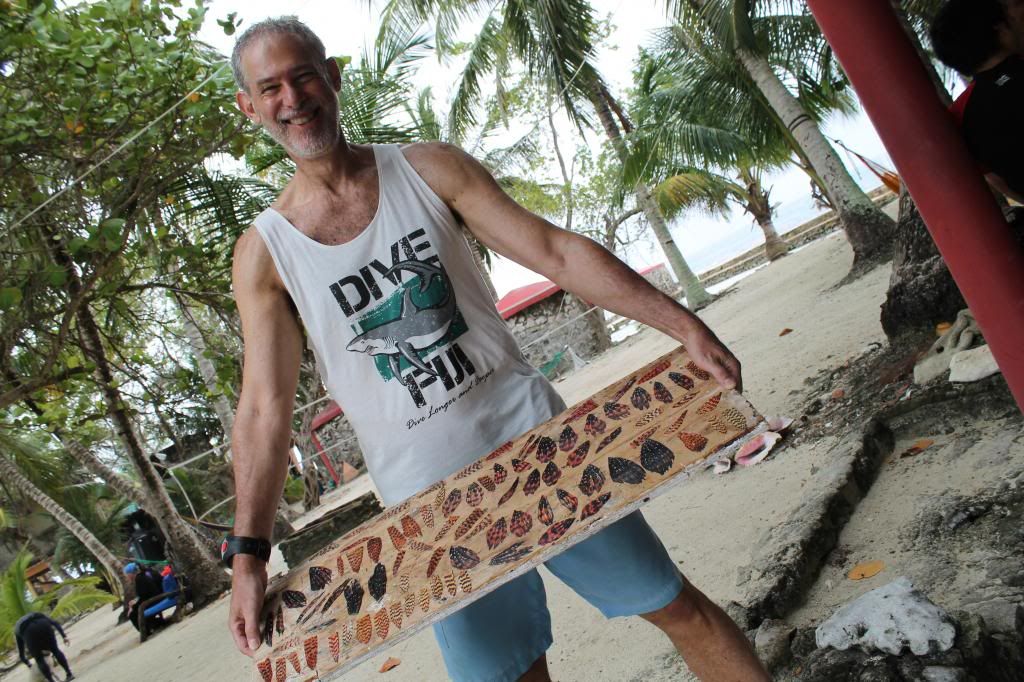
I’ve written in previous posts about the initiative to develop a market for lionfish jewelry as one of a number of commercially sustainable approaches to fighting this invasive species that is threatening marine ecosystems throughout the Caribbean, the Gulf of Mexico, and the Southern Atlantic seaboard of the United States. In my last post, I mentioned that the idea is beginning to take off in Belize.  I was able to observe this first-hand last month, spending two and a half weeks in the country.  During my stay I had the opportunity to meet local artists who are making lionfish jewelry and to participate in several workshops to share techniques and designs.  Continue reading

Fiji Shark Dive

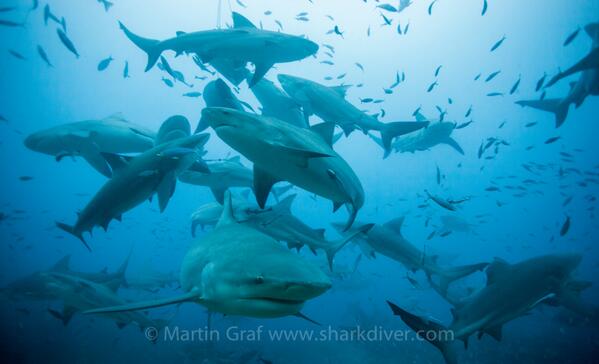
Photo Credit: Martin Graf, Sharkdiver.com

Photo Credit: Martin Graf,  Sharkdiver.com

In an earlier post I wrote about how more and more countries are waking up to the benefits of preserving natural capital, in recognition of the economic value that can be derived through ecotourism. I noted, in particular, the value that can be generated through ecotourism ventures focused on iconic species such as sharks, manta rays, and sea turtles. I cited a number of studies and calculations that demonstrate that the ecotourism value of these animals far outweighs their one-time economic value if harvested for food or body parts.

Earlier this week, I had an opportunity to experience one such venture first hand, via the famous Fiji Shark Dive. Over the course of two dives I was treated to the spectacle of 40+ Bull Sharks and dozens of Blacktip and White Tip Reef Sharks, up close and personal!  What an amazing experience to see these magnificent animals – some upwards of 8 feet long –swimming only inches away.  Click here for a video (check out the background music!) courtesy of Martin Graf, one of the pioneers of the Shark Diving industry, who just happened to be in Fiji this week and was along on my dives. Continue reading

Building An Invasivore Economy

wild-city-pigeon Since Phil first started posting his series on possible solutions to invasive species last year, in conjunction with the theme of citizen science that Seth has been writing about for the last couple years, we have been on the look out for citizen solutions to environmental challenges–stories that match our interest in entrepreneurial conservation. Phil’s series suggests that citizen science may be the best path to building what might be called an invasivore economy. As it happens, just after his first couple posts there was an article in Conservation that dealt with this very issue:

SEND IN THE INVASIVORES

Recipes for Ecosystem Recovery By Sarah DeWeerdt

“We’re trying to be unsustainable,” says University of Vermont conservation biologist Joe Roman. And he says it with glee. Roman runs www.eattheinvaders.org, a compendium of invasive species recipes. He is one of a growing number of people who advocate controlling invasives by eating them. Instead of relying on toxic pesticides, expensive eradication campaigns, or risky introductions of biological control agents, “why not use our own appetites to good advantage?” he suggests.

Continue reading

Controlling Invasive Lionfish – Update on Market Solutions: Part 2/2 — Lionfish Art

spines and tails-photo3

Array of dried lionfish spines and tails -ready for jewelry use Credit: ReefCI

In Part 1 of this post regarding market-based solutions to fighting the lionfish invasion that is threatening coral reef and other marine ecosystems throughout the Caribbean, Gulf of Mexico, and Southern Atlantic Seaboard of the United States, I wrote about the challenge of developing commercially sustainable strategies for undertaking the systematic removals that are needed to keep lionfish populations under control. I discussed the need to develop a series of vertical markets, pointing to promotion of lionfish as a seafood choice as the most obvious of these. Capture of juvenile lionfish for the aquarium trade as another.  A third market, and one in which I’m personally involved, is use of lionfish spines and tails for jewelry and other decorative items.  Continue reading

The Canopy Is A Portal

When we first met Dr. Meg Lowman last year we were already familiar with the use of tree climbing techniques for forest biology research. But the pioneer of canopy ecology includes an additional dimension to her REU (Research Experiences for Undergraduates) by acknowledging that physical mobility has little to do with being an effective field biologist. “To explore the canopy we climb ropes not trees, and in the lab we use microscopes, computers and minds, which have no limits.”

The Baker University program had been open to eight students, half of whom had ambulatory disabilities. All eight students were professionally trained to ascend into the canopy to collect moss, lichen and leaves to measure the impact of the invertebrates like tardigrades (water bears) on the habitat. Continue reading

Citizen Science Democratizing Research

New technology is dramatically increasing the role of non-scientists in providing key data for researchers. In an interview with Yale Environment 360, Caren Cooper of the Cornell Lab of Ornithology talks about the tremendous benefits — and potential pitfalls — of the expanding realm of citizen science.

Most of our ornithological attention these days is on the bird count just getting under way, but citizen science is never far from our minds, so thanks to Yale 360 for this article that combines both interests:

When biologist Caren Cooper carries out her avian studies, she’s aided by thousands of assistants, none of whom are paid for their work. That’s because Cooper, a research associate at the Cornell Lab of Ornithology, relies on the help of so-called citizen scientists, volunteers from across the country who contribute data to her research projects. These lay people provide information that enables her and other scientists to study bird life in ways that would otherwise be impossible.

But, as Cooper notes in an interview with Yale Environment 360contributor Diane Toomey, the uses of citizen science now go way beyond events like the National Audubon Society’s Christmas Bird Count. Continue reading

Snowy Owls

We first shared news of this fascinating species’ strange movements late last year, and since then the unusual Bubo scandiacus behavior has only been more eye-catching.

Last week, the New York Times reported that the Boston area is “seeing the largest number of snowy owls ever recorded,” and that birdwatchers had even spotted a Snowy Owl in Bermuda. See the excerpt from John Schwartz’s article below:

01-SNOWY-1-master675

Norman Smith releasing a snowy owl in Duxbury, Mass., that had recently been captured at Logan airport in Boston. Photo by Gretchen Ertl for The New York Times

“This year’s been bizarre,” said Dan Haas, a birder in Maryland. “The numbers have been unprecedented. Historic.”

No one is sure why so many snowies are showing up in so many places — whether it can be attributed to more food in their Arctic habitats than usual, or climate change at the top of the world. “Think about the canary in the coal mine,” said Henry Tepper, the president of Mass Audubon, “you think about the snowy owl in the Arctic.” Continue reading