The Refuge Of Family Forests

Popkin_Tim-Leiby-2_web

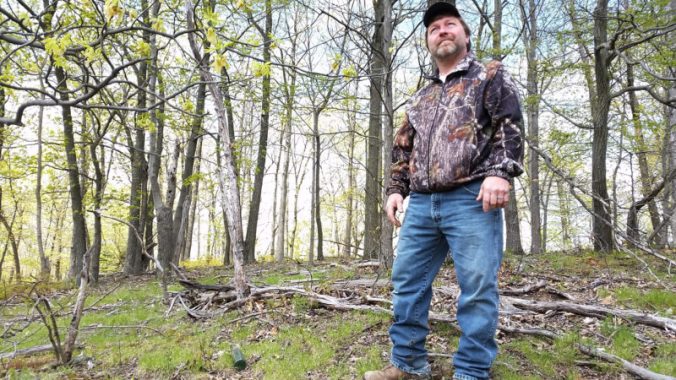
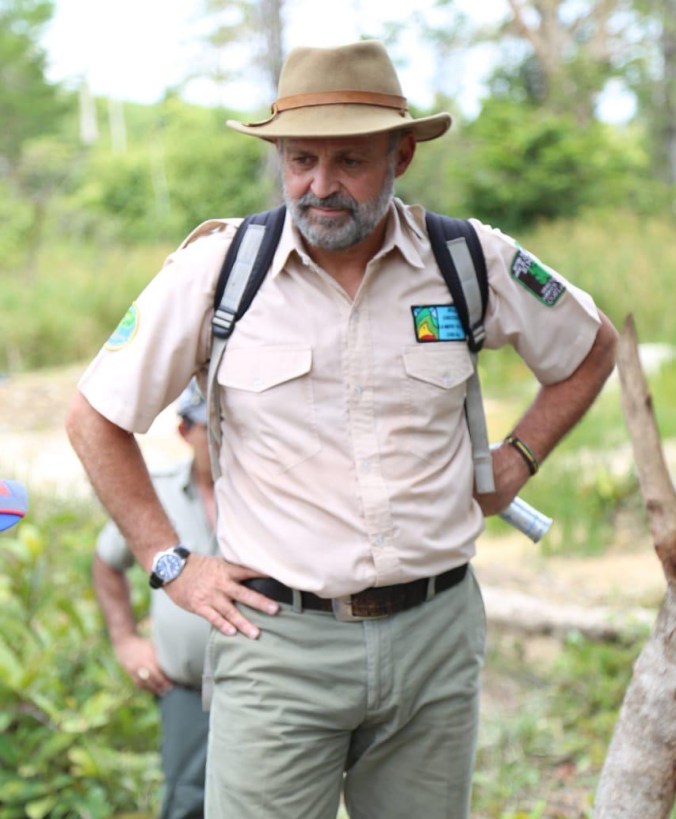
Tim Leiby co-owns his 95-acre forest near Blain, Pennsylvania with eight other families. GABRIEL POPKIN / YALE E360

Gabriel Popkin takes a “who knew?” topic and brightens up the day:

How Small Family Forests Can Help Meet the Climate Challenge

As efforts grow to store more CO2 emissions in forests, one sector has been overlooked — small, family-owned woodlands, which comprise 38 percent of U.S. forests. Now, a major conservation initiative is aiming to help these owners manage their lands for maximum carbon storage.

Popkin_hickory-leaf-recently-emerged_web_web2

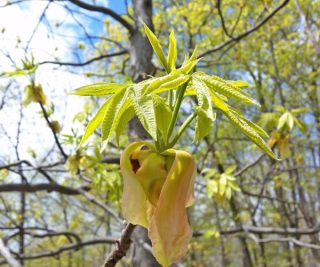
Hickory leaves emerge on Tim Leiby’s forest, a sign of progress toward bringing back native hardwoods. GABRIEL POPKIN / YALE E360

Tim Leiby had wrapped up a fun but fruitless early-morning turkey hunt and was enjoying an old John Wayne flick when I arrived at Willow Lodge near Blain, Pennsylvania. A few flurries drifted down on this unseasonably cold May morning. After a quick scan of antlers mounted on virtually every wall of the cozy hunting lodge, we headed out for a socially distanced stroll through what Leiby calls “our little piece of heaven.”

This 95-acre woods in south-central Pennsylvania’s ridge-and-valley country is a hunting and hiking refuge co-owned by eight families. Continue reading
Costa Rican To Lead GEF

carlos_manuel_rodriguez_2

Some happy news:

Carlos Manuel Rodriguez named new CEO of Global Environment Facility

Costa Rican Environment and Energy Minister Carlos Manuel Rodriguez has been selected as the next CEO and Chairperson of the Global Environment Facility, the largest multilateral trust fund supporting environmental action in developing countries and the main financing mechanism for multiple United Nations environmental conventions. Continue reading

Crickets, Food For Thought

Cricket

ANNALS OF OBSESSION

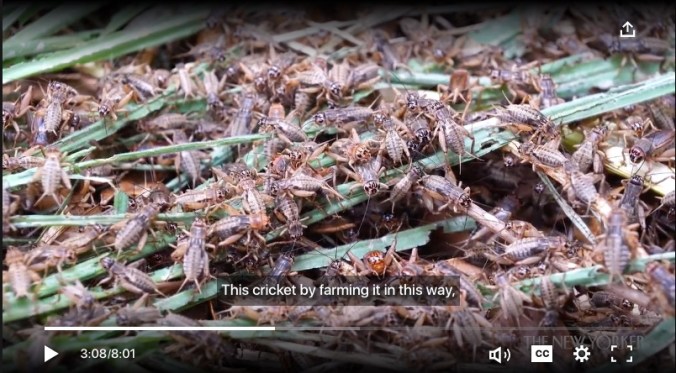
WHY YOU SHOULD ADD CRICKETS TO YOUR DIET

As climate change, disease, and political instability loom, the cricket farmers Adam Brody and Jude Tallichet, of Brooklyn and Queens, respectively, find comfort in the insects they’ve raised in their homes.

When we started carrying nutrition bars made from cricket meal in our shops earlier this year, I was not prepared for how well they would catch on. We started with a small, exploratory inventory. They sold out quickly, and when we reordered more they sold out again. I had not had cricket in my diet previously, and I am still not fully there (Gricket bars being my only foray to date), but I appreciate the efforts of those entrepreneurs making the case.

What To Do With Expired Trees

USDA_USFS_Sierras_web

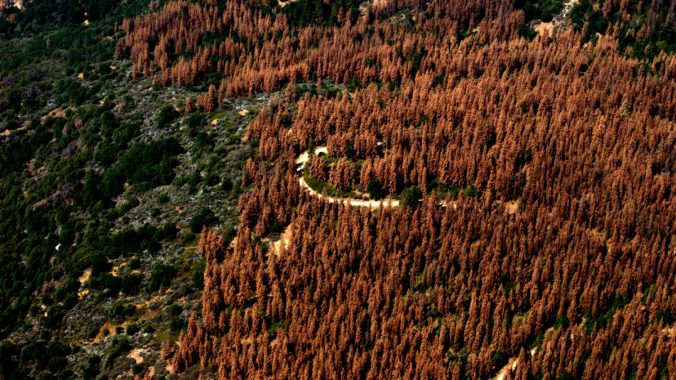
Dead trees in a California forest in August 2016. U.S. FOREST SERVICE

It sounds like the inverse of rewilding’s restorative approach, when there is a large patch of expired trees; decisions must be made. Thanks to Jane Braxton Little for laying out the questions:

In California, A Push Grows to Turn Dead Trees into Biomass Energy

As forests in California and the Western U.S. are hit by rising numbers of fires and disease outbreaks related to climate change, some experts argue that using dead and diseased trees to produce biomass energy will help to restore forests and reduce CO2 emissions.

Jonathan Kusel owns three pickups and a 45-foot truck for hauling woodchip bins. He operates a woodchip yard and a 35-kilowatt biomass plant that burns dead trees, and he runs a crew marking trees for loggers working in national forests. Those are a lot of blue-collar credentials for a University of California, Berkeley PhD sociologist known for his documentation of how the decline of the timber industry affects rural communities. Continue reading

Tech for Trees

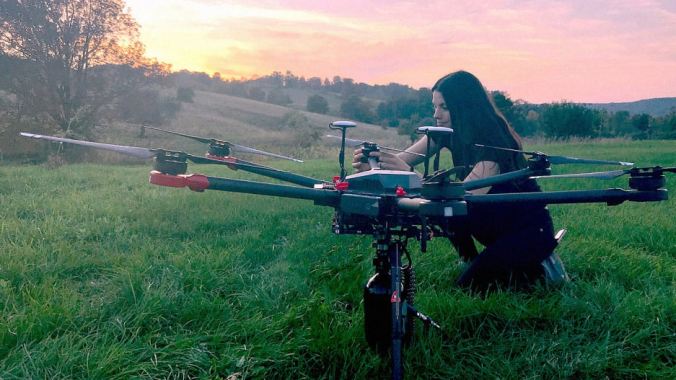
[Photo: courtesy Flash Forest] One of Flash Forest’s prototype drones

And speaking of trees, here’s an example of small tech stepping in when political leadership wavers. The good news is there is ample room for both, and we hope that both systems receive the support they need.

Here’s to a billion trees!

These drones will plant 40,000 trees in a month. By 2028, they’ll have planted 1 billion

We need to massively reforest the planet, in a very short period of time. Flash Forest’s drones can plant trees a lot faster than humans.

This week, on land north of Toronto that previously burned in a wildfire, drones are hovering over fields and firing seed pods into the ground, planting native pine and spruce trees to help restore habitat for birds. Flash Forest, the Canadian startup behind the project, plans to use its technology to plant 40,000 trees in the area this month. By the end of the year, as it expands to other regions, it will plant hundreds of thousands of trees. By 2028, the startup aims to have planted a full 1 billion trees.

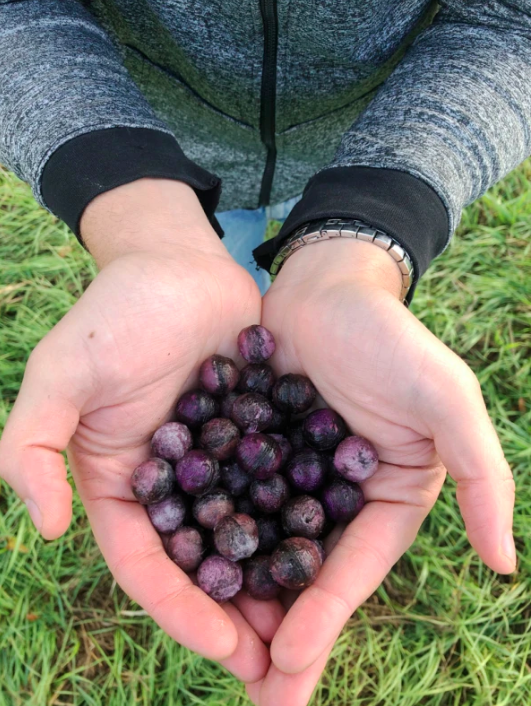
[Photo: courtesy Flash Forest]

The company, like a handful of other startups that are also using tree-planting drones, believes that technology can help the world reach ambitious goals to restore forests to stem biodiversity loss and fight climate change. The Intergovernmental Panel on Climate Change says that it’s necessary to plant 1 billion hectares of trees—a forest roughly the size of the entire United States—to limit global warming to 1.5 degrees Celsius. Existing forests need to be protected while new trees are planted; right now, that isn’t working well. “There are a lot of different attempts to tackle reforestation,” says Flash Forest cofounder and chief strategy officer Angelique Ahlstrom. “But despite all of them, they’re still failing, with a net loss of 7 billion trees every year.”

Drones don’t address deforestation, which is arguably an even more critical issue than planting trees, since older trees can store much more carbon. But to restore forests that have already been lost, the drones can work more quickly and cheaply than humans planting with shovels. Flash Forest’s tech can currently plant 10,000 to 20,000 seed pods a day; as the technology advances, a pair of pilots will be able to plant 100,000 trees in a day (by hand, someone might typically be able to plant around 1,500 trees in a day, Ahlstrom says.) The company aims to bring the cost down to 50 cents per tree, or around a fourth of the cost of some other tree restoration efforts.

When it begins work at a site, the startup first sends mapping drones to survey the area, using software to identify the best places to plant based on the soil and existing plants. Next, a swarm of drones begins precisely dropping seed pods, packed in a proprietary mix that the company says encourages the seeds to germinate weeks before they otherwise would have. The seed pods are also designed to store moisture, so the seedlings can survive even with months of drought. In some areas, such as hilly terrain or in mangrove forests, the drones use a pneumatic firing device that shoots seed pods deeper into the soil. “It allows you to get into trickier areas that human planters can’t,” Ahlstrom says. Continue reading

Cars & Carbon

5750

A Mini Electric car next to the production line at the BMW plant in Cowley, near Oxford. Photograph: Tolga Akmen/AFP via Getty Images

When the smoke clears, we will need to get back to key environmental issues. Thanks to the Guardian for this news, in that regard:

Electric cars produce less CO2 than petrol vehicles, study confirms

Finding will come as boost to governments seeking to move to net zero carbon emissions

Electric vehicles produce less carbon dioxide than petrol cars across the vast majority of the globe – contrary to the claims of some detractors, who have alleged that the CO2 emitted in the production of electricity and their manufacture outweighs the benefits.

The finding is a boost to governments, including the UK, seeking to move to net zero carbon emissions, which will require a massive expansion of the electric car fleet. A similar benefit was found for electric heat pumps. Continue reading

Coal’s Final Days

GettyImages-1197377139_Germany-power-plant_web

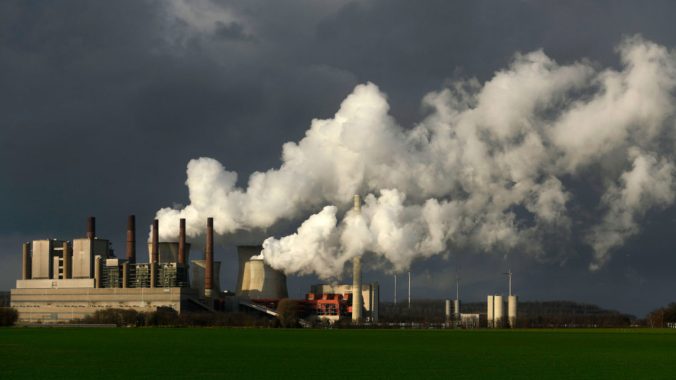
A coal-fired power plant in Neurath, Germany. The country has pledged to phase out coal by 2038. INA FASSBENDER/AFP VIA GETTY IMAGES

Thanks to Fred Pearce, as always for his environmental reporting, and to Yale e360 for this unexpected news that coal is not headed for a renaissance (as some politicians would have us believe):

As Investors and Insurers Back Away, the Economics of Coal Turn Toxic

Coal is declining sharply, as financiers and insurance companies abandon the industry in the face of shrinking demand, pressure from climate campaigners, and competition from cleaner fuels. After years of its predicted demise, the world’s dirtiest fossil fuel may finally be on the way out.

AP_18080022826346_coal-plant-demo_web

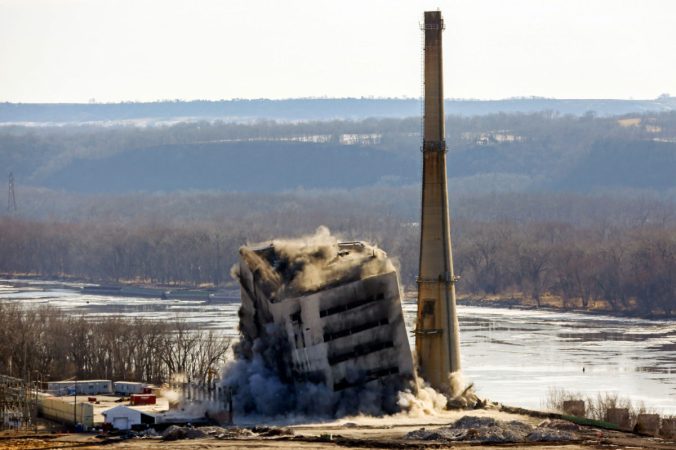
Demolition of the coal-fired Nelson Dewey Generating Station in Cassville, Wisconsin in December 2017. The power plant closed in 2015. NICKI KOHL/TELEGRAPH HERALD VIA AP

Any day now, New York State will be coal-free. Its last coal-fired power station, at Somerset on the southern shore of Lake Ontario, will shut for good as the winter ends. Remember when Donald Trump promised to bring back coal? Well, three years on, coal’s decline is accelerating — in the United States and worldwide. Continue reading

Solar Canoe As Protest

3610

Sunkirum, one of the solar-powered canoes, sails on the Pastaza river. Photograph: Pablo Albarenga

Thanks to the Guardian, and specifically to Francesc Badia i Dalmases in Kapawi, Ecuador, for this story:

Here comes the sun canoe, as Amazonians take on Big Oil

Ecuadorian indigenous groups hope innovation will reduce amount of oil taken from forest only to be brought back as pollution

6000 (3)

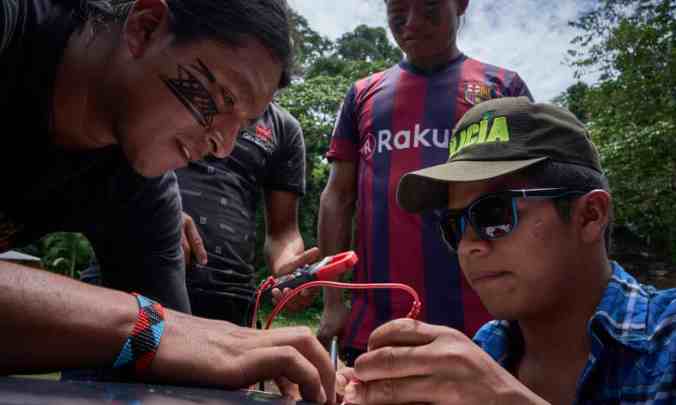
Nantu and his colleagues check the state of a canoe’s solar panels. Photograph: Pablo Albarenga

A canoe slides noiselessly upstream through a landscape of luminous bright clouds reflected in the water. A team of young indigenous people are onboard.

Such vessels are an essential and ubiquitous part of life in the Ecuadorian Amazon, but this one boasts a hugely symbolic difference from its predecessors. It is powered by the sun.

The nine members of the Achuar indigenous group on board are returning home after learning about solar power and installation. It is a technological development they hope to use in their battle with a more traditional power source that threatens their very existence. Oil. Continue reading

A Bright Spot On The Horizon

2586

Some times those bright spots on the horizon are more welcome than they might merit, and today we will take what we can get:

Wind and solar plants will soon be cheaper than coal in all big markets around world, analysis finds

Report raises fresh doubt about viability of Australia’s thermal coal export industry

Building new wind and solar plants will soon be cheaper in every major market across the globe than running existing coal-fired power stations, according to a new report that raises fresh doubt about the medium-term viability of Australia’s $26bn thermal coal export industry. Continue reading

Salmon & Earth’s Fate

9780593293843

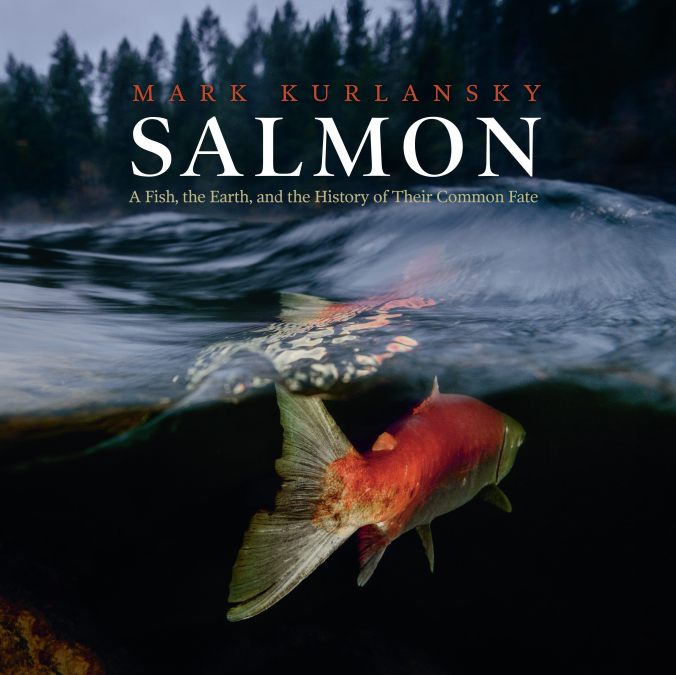
Mark Kurlansky first came to my attention thanks to Seth, whose post I riffed on.  Then Seth pointed this out, and I have been on the lookout ever since. And today I was rewarded when listening to the author discuss his new book. Click any image below to go to that interview.

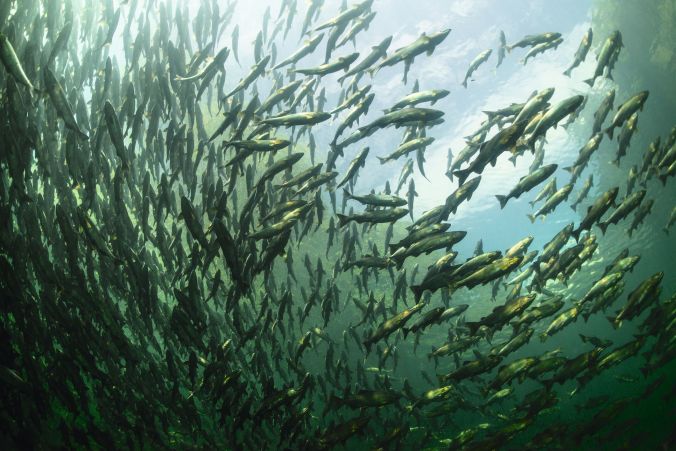
Web_Large-SALMON_006_campbell Pink salmon school in the deep pools of the Campbell River, before venturing farther upstream to the spawning beds. British Columbia. (Credit: Tavish Campbell) Continue reading

Leadership, Prepping For Change

IMG_3276_Swinomish_clam-garden_web

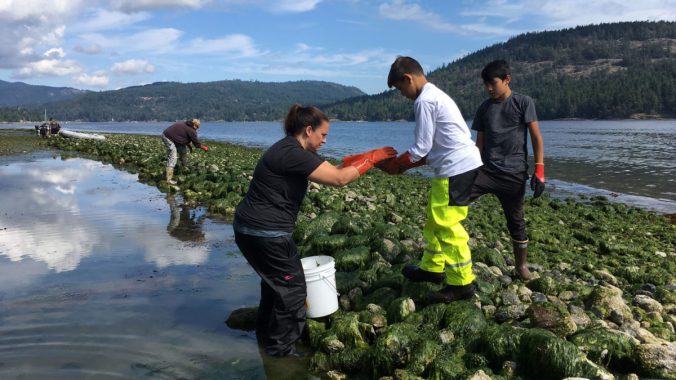
Swinomish tribal members from Washington state participate in a clam garden restoration in British Columbia. PHOTO COURTESY OF SWINOMISH INDIAN TRIBAL COMMUNITY

Thanks to Nicola Jones for this:

How Native Tribes Are Taking the Lead on Planning for Climate Change

With their deep ties to the land and reliance on fishing, hunting, and gathering, indigenous tribes are especially vulnerable to the impacts of climate change. Now, native communities across North America are stepping up to adopt climate action plans to protect their way of life.

GettyImages-1175044784_whiteback-montana_web

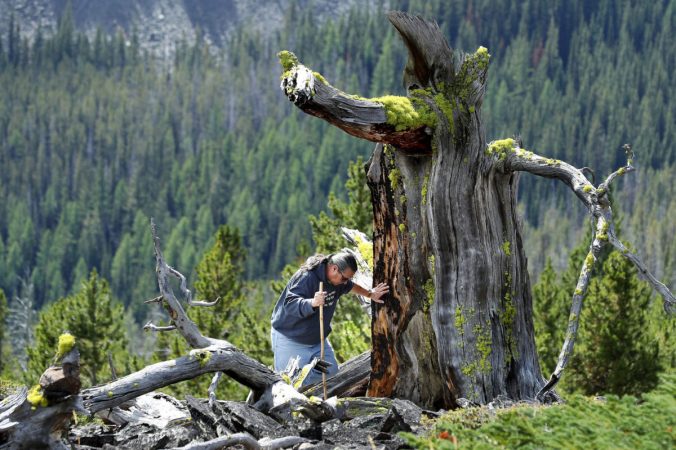
Tribal program manager Mike Durglo Jr. examines what remains of a 2,000-year-old whitebark pine on the Flathead Indian Reservation in Montana, where trees are dying from warming-related diseases. CHIP SOMODEVILLA/GETTY IMAGES

On a hot summer’s day, marine ecologist Courtney Greiner walks the shore of a rocky Washington beach at low tide with a handful of staff and interns. They stake out the ground and hunch down, digging up the top two inches of mud, silt, and gravel looking for baby clams.

For thousands of years, the indigenous peoples of the West Coast would build rock walls at the low tide line, allowing sand to pile up behind them, making the slope of the beach gentler, and expanding the area of the intertidal zone that clams like to call home. These simple clam gardens are effective at boosting shellfish numbers, and have long been used to improve food security for traditional peoples. Continue reading
Changing Tides

SIERRA-body-WB_2Thanks to Sierra for publishing In Pursuit of an Ecological Resilience in the Anthropocene, an excerpt from Alejandro Frid’s “Changing Tides”:

The birth of my daughter, in 2004, thrust upon me a dual task: to be scientifically realistic about all the difficult changes that are here to stay, while staying humanly optimistic about the better things that we still have.

By the time my daughter turned eleven, I had jettisoned my nos­talgia for the Earth I was born into in the mid-196os—a planet that, of course, was an ecological shadow of Earth 100 years before, which in turn was an ecological shadow of an earlier Earth. Continue reading

McKibben’s Latest Venture

McKibben-ClimateNewsletter1

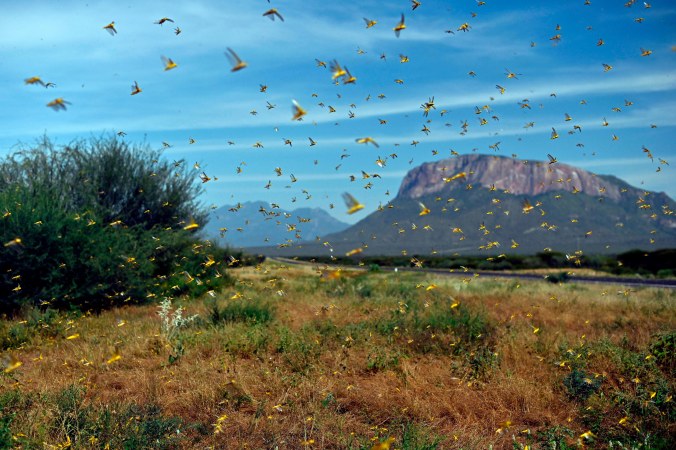
A swarm of locusts north of Nairobi, Kenya, in January. The U.N. described an outbreak of desert locusts as a threat to food security. Photograph by Tony Karumba / AFP / Getty

We need more information, better quality information, and the most relevant information on climate issues. A newsletter, maybe? Bill McKibben is on it:

WELCOME TO THE CLIMATE CRISIS NEWSLETTER

We’re eight weeks into the new decade, and, so far, we’ve had the warmest January ever recorded. (Indeed, researchers at the National Oceanic and Atmospheric Administration said that 2020 is more than ninety-eight per cent likely to be one of the five warmest years ever measured, with a nearly forty-nine-per-cent chance to set a new annual record.) We’ve seen the highest temperature ever measured on the Antarctic continent, and also record swarms of locusts descending on the Horn of Africa, a plague which scientists assure us will “become more frequent and severe under climate change.”

I’m calling this new newsletter—and welcome aboard—The Climate Crisis because this is what a crisis looks like. Continue reading

Do Not Count Out The Sun

WI020120_MG_Heliogen_01_numbered

1. Collected heat can also be transferred into gas and shot down ducts into manufacturing plants. 2. The 3.5-square-foot receiver takes in 400 kW of light, 1,200 times denser than direct sunlight. 3. Each heliostat gets realigned every few seconds so maximum light hits the receiver all day. PHOTOGRAPH: CINEATRA MEDIA

After nearly nine years of monitoring the mainstream and more scientific news for evidence that harnessing the sun is one of our highest potential solutions to climate change, and considering all the noise that comes from climate change skeptics and deniers, it is easy to lose track of whether solar has what it takes. Laura Mallonee shares this brief in Wired:

Automated Solar Arrays Could Help Incinerate Global Warming

Software-driven systems can produce enough searing heat to power manufacturing processes that now gorge on fossil fuels.

Plenty of days, temperatures in California’s Mojave Desert climb above 120 degrees Fahrenheit. A measly figure. These 400 silvered glass panels, tucked into the western edge of that hot, hot desert, are there to generate heat 15 times that amount. And, ideally, to help cool the planet too. Continue reading

A Wonky Yet Infectious Hopefulness

cover.1262163.2400x600

.The title of today’s post comes from a book review that serves me well after reading yesterday, then re-reading just now, about the conversation between a journalist I respect and a conservationist I admire. Since I am stuck in this myopic debate, a bookend to that conversation is the best I can hope for today. I do not yet have a copy of this book, but I hope to review it in these pages soon. For now, thanks to Hua Hsu for bringing it to my attention in THE SEARCH FOR NEW WORDS TO MAKE US CARE ABOUT THE CLIMATE CRISIS:

The reason we find ourselves verging toward planetary extinction is fairly simple: for quite some time, it’s been profitable for humans to behave this way. For business and government, it’s always been easier to toggle between plunder and neglect than to mind long-term, civilizational time lines. The actual conspiracy is that we are made to feel as though humanity’s fate were purely a matter of personal choice—our desire to buy this, that, or nothing at all, our collective willingness to recycle or compost. This isn’t to say that we possess no power at all. But the scale of the problem is difficult to comprehend, and discussions leave many of us feeling overwhelmed and paralyzed, reduced to myopic debates about whether we are too scared or not scared enough. Continue reading

Field Expeditions, Panama, Ferns

200126PanamaExp10-1

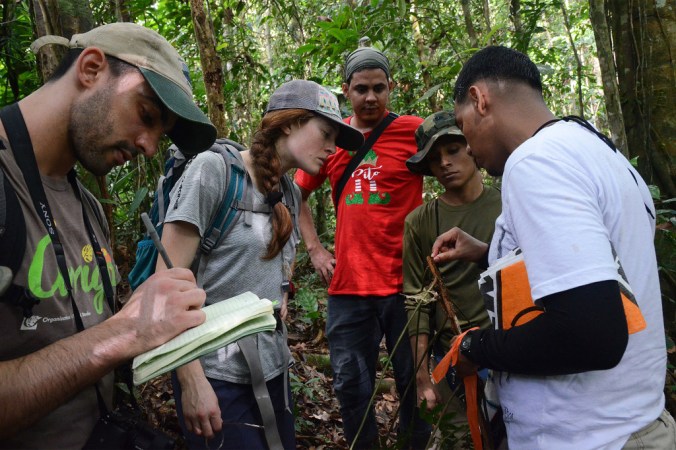
Student members of the Mamoní Valley Preserve Natural History Project, Jacob Suissa (left), Sylvia Kinosian, Brian Vergara, Jose Palacios, and Christian López examine the rhizome vasculature of a fern species during their first collection trip in the rainforest.

While most of our work between 1999 and 2019 was field work, once this platform started we distinguished field expeditions from our “regular work,” and Seth’s posts have dominated the expedition realm here. Today, with Seth in wintry New Haven in desk mode, my expeditionary imagination is instead fueled by the field expedition described below, on a topic not featured in these pages for seven years, so I am correcting the neglect:

Going where the diversity is

200126PanamaExp8

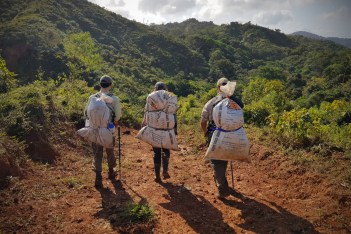
Student researchers Ben Goulet-Scott (left), Sylvia Kinosian, and Jacob Suissa, reach the crest of a hill overlooking the Mamoní Valley Preserve while carrying 90 species of ferns on their backs.
Photos by Ben Goulet-Scott/Harvard University Department of Organismic and Evolutionary Biology

Last month, two graduate students from the Arnold Arboretum of Harvard University traveled to one of the most species-rich landscapes in the world: a remote strip of tropical rainforest at the narrowest point in the Central American country of Panama.

Ben Goulet-Scott, a Ph.D. candidate in the Graduate School of Arts and Sciences’ Department of Organismic and Evolutionary Biology (OEB) and a fellow in the Arboretum’s Hopkins Lab, and Jacob Suissa, OEB Ph.D. candidate in the Friedman Lab at the Arboretum, hope their research in the Mamoní Valley Preserve in Panama will increase our understanding of how biodiversity can persevere in the face of climate change, deforestation, and human disturbance.

200126PanamaExp26The 20-square-mile land conservancy on the isthmus separating Central and South America teems with life, making the condensed rainforest habitat a perfect location for their research project because of the vast number of known and potentially undiscovered species living there, Goulet-Scott said. Continue reading

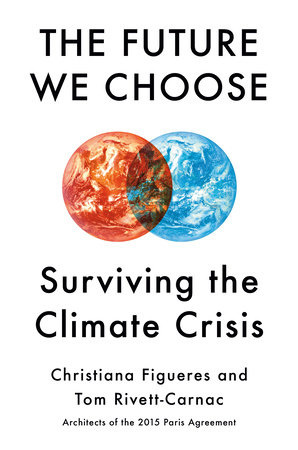
The Future We Choose

9780525658351It is nearly five years since I last posted anything related to her, but the time has come again. The Guardian’s interview below is in advance of the upcoming publication of the book to the right:

Christiana Figueres is a founder of the Global Optimism group and was head of the UN climate change convention when the Paris agreement was achieved in 2015.

Your new book is called The Future We Choose. But isn’t it too late to stop the climate crisis?
We are definitely running late. We have delayed appallingly for decades. But science tells us we are still in the nick of time. Continue reading

Conformity & Climate

0320_DIS_Frank_LeadClimate [Print]_12983983.indd

PHOTO RENDERING BY PATRICK WHITE

The essay below addresses some of the themes in essays and books we pointed to in the last year. Robert H. Frank, Economics professor at Cornell University, has not appeared in our pages before, which is just plain wrong, as Thy Neighbor’s Solar Panels makes clear:

When our peers take actions to preserve the planet, we’re more likely to follow suit. How the human instinct to conform could help us address the climate crisis.

It is worse, much worse, than you think,” reads the frightening first sentence of The Uninhabitable Earth, David Wallace-Wells’s comprehensive account of what researchers have discovered about our planet’s climate trajectory. The severity of the crisis, he goes on to note, has made some climatologists reluctant to describe its full extent, fearing that such candor might make the challenge we face seem hopeless. The concern is understandable: Previous warnings of impending peril have done little to alter either individual behavior or public policy. Continue reading

Listen To Workers, Especially On This Topic

3600

Amazon workers lead a walk out to demand that leaders take action on climate change in September. Photograph: Jason Redmond/AFP via Getty Images

We hope someone in the upper ranks of Amazon is listening:

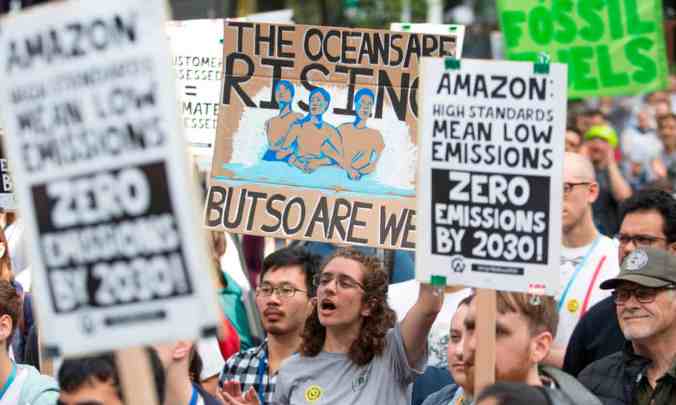
Hundreds of workers defy Amazon rules to protest company’s climate failures

Employees ‘needed to stand up for what’s right’ despite policy barring workers from speaking about business

Hundreds of Amazon employees defied corporate policy to publicly criticize the company for failing to meet its “moral responsibility” in the climate crisis.

More than 340 tech workers at Amazon used the hashtag #AMZNSpeakOut in public statements that condemn the company for not taking sufficient action on the climate crisis. Continue reading

Add Global Worming To Your List Of Concerns

An illustration of a mass of worms beneath a forest.

Myriam Wares

Thanks to Julia Rosen, writing in the Atlantic, I am reading for the second time about worms as a radically different creature than I had assumed for my entire life:

Cancel Earthworms

The “crazy worms” remaking forests aren’t your friendly neighborhood garden worms. Then again, those aren’t so great either.

On a sweltering July day, I follow Annise Dobson down an overgrown path into the heart of Seton Falls Park. It’s a splotch of unruly forest, surrounded by the clamoring streets and cramped rowhouses of the Bronx. Broken glass, food wrappers, and condoms litter the ground. But Dobson, bounding ahead in khaki hiking pants with her blond ponytail swinging, appears unfazed. As I quickly learn, neither trash nor oppressive humidity nor ecological catastrophe can dampen her ample enthusiasm. Continue reading