Feeding Protesters

We were wondering how this worked. Thanks to Dan Hancox and the Economist for showing us how:

How to feed a protest movement: cooking with Extinction Rebellion

A peek inside the “Rebel Kitchen”

Taste the difference A view of Extinction Rebellion’s catering tent in Trafalgar Square, London

Running a kitchen in the middle of a protest camp presents some unusual operational challenges. “We’re cooking most of the hot food offsite at the moment,” says George Coiley, as he leads me past boiling stove-top kettles, catering-sized saucepans and two volunteers preparing a fruit salad of epic proportions. “The police keep taking our stuff…”

This is Coiley’s fourth Extinction Rebellion kitchen. Staffed by a rotating squad of around 30 volunteers, it serves food and hot drinks 24 hours a day to protesters and anyone else who needs it. All the food is vegan or vegetarian and is assembled from donations. Continue reading

Mourning In The New Timeframe

Johnson-DeathofAGlacier-1.jpg

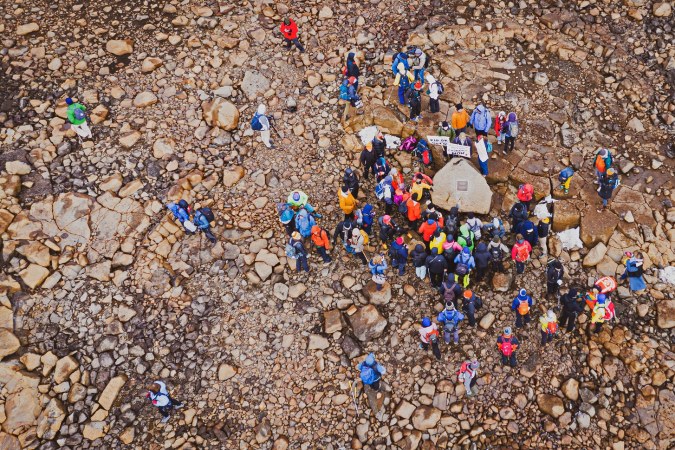
The crowd moments after the plaque placement ceremony. The monument is within a few hundred feet of the remaining glacial ice, and is the largest rock in the area. Photograph by Josh Okun

I have always been a morning person. It has something to do with birdsong as a great way to start the day. Now I realize that mourning becomes me as well. Will I tire mourning the loss of nature? Not anytime soon, if I am a practical person. Loss will be the gift that keeps giving, so I may as well develop coping strategies, and share them. In that interest let me recommend a brief eulogy instruction manual.  Midway through, sharing the text on the plaque in the image above:

…“A letter to the future,” the plaque reads in both Icelandic and English. “Ok is the first Icelandic glacier to lose its status as a glacier. In the next 200 years, all our glaciers are expected to follow the same path. This monument is to acknowledge that we know what is happening and what needs to be done. Only you know if we did it.”…

Johnson-DeathofAGlacier.jpg

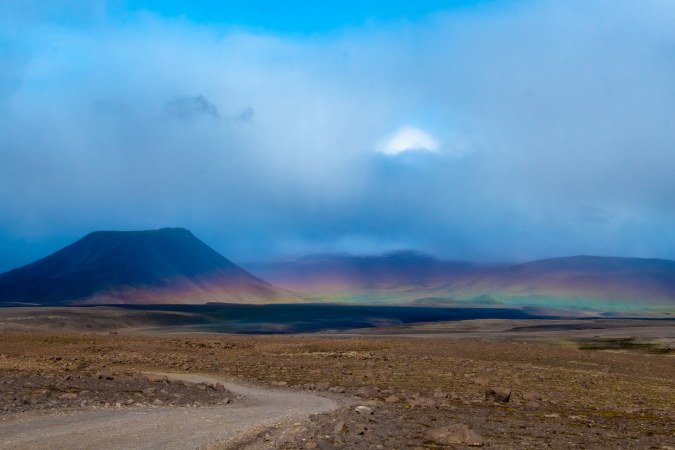
A rare ground rainbow in the Kaldidalur. Photograph by Josh Okun

A punchline follows soon after: “…we are witnessing geologic time collapse on a human scale.”

Lacy M. Johnson has captured my attention with a mix clear, crisp writing, first person perspective, and collaboration on visuals that complement her work perfectly. Near the end of the essay:

…We paused for lunch before the final leg of the hike, and Magnason instructed us to approach the caldera with reverence and humility. Elsewhere in Iceland, he explained, climbing to the summit of a mountain in silence and without looking back is said to grant the hiker three wishes. Wishes are sometimes too grand to be of use, Howe added, but it can be useful to imagine the future we hope to see…

Read the whole essay here.

Citizen Science Deepdive

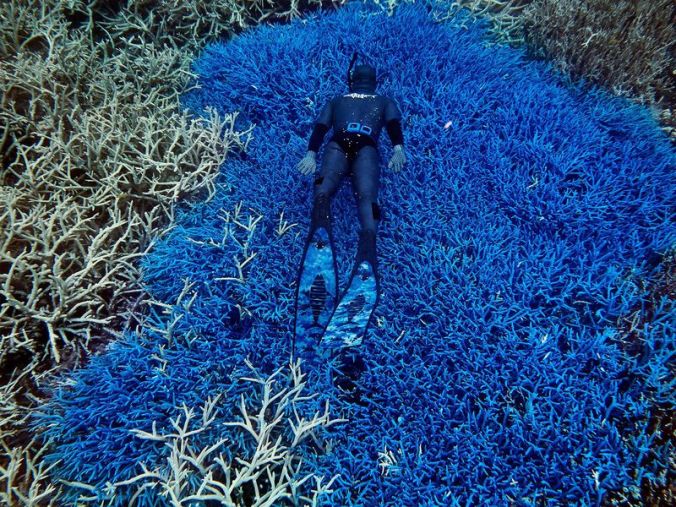
By collecting images and GPS data from citizen divers, scientists can get a better sense of the health of the entire Great Barrier Reef. (Damian Bennett)

Citizen Science has been a common thread for us on this site, linking creatures of land, sea and air as subjects of study. Marine Ecosystem citizen science has especially  fascinated us in terms of the creative thinking applied to problems of invasive species.

The collaborative goal of documenting such a vast ecosystem as the Great Barrier Reef, and using creative solutions to combat threats to this wonder of the natural world is inspiring, to say the least.

Massive Citizen Science Effort Seeks to Survey the Entire Great Barrier Reef

Only about 1,000 of 3,000 individual reefs have been documented, but the Great Reef Census hopes to fill in the gaps

The majority of individual reefs that make up the Great Barrier Reef have not been directly surveyed. (Damian Bennett)

In August, marine biologists Johnny Gaskell and Peter Mumby and a team of researchers boarded a boat headed into unknown waters off the coasts of Australia. For 14 long hours, they ploughed over 200 nautical miles, a Google Maps cache as their only guide. Just before dawn, they arrived at their destination of a previously uncharted blue hole—a cavernous opening descending through the seafloor.

After the rough night, Mumby was rewarded with something he hadn’t seen in his 30-year career. The reef surrounding the blue hole had nearly 100 percent healthy coral cover. Such a find is rare in the Great Barrier Reef, where coral bleaching events in 2016 and 2017 led to headlines proclaiming the reef “dead.”

“It made me think, ‘this is the story that people need to hear,’” Mumby says.

The expedition from Daydream Island off the coast of Queensland was a pilot program to test the methodology for the Great Reef Census, a citizen science project headed by Andy Ridley, founder of the annual conservation event Earth Hour. His latest organization, Citizens of the Great Barrier Reef, has set the ambitious goal of surveying the entire 1,400-mile-long reef system in 2020.

“We’re trying to gain a broader understanding on the status of the reef—what’s been damaged, where the high value corals are, what’s recovering and what’s not,” Ridley says. Continue reading

Proforestation & The Value Of Mature Forests

Trees_shutterstock_142702201_web.jpg

Thanks to Yale e360 for this interview that helps us understand the dynamics and differences between mature forests and newly planted forests in terms of carbon sequestration:

Why Keeping Mature Forests Intact Is Key to the Climate Fight

Preserving mature forests can play a vital role in removing CO2 from the atmosphere, says policy scientist William Moomaw. In an e360 interview, he talks about the importance of existing forests and why the push to cut them for fuel to generate electricity is misguided.

Berkshires_forest_web.jpg

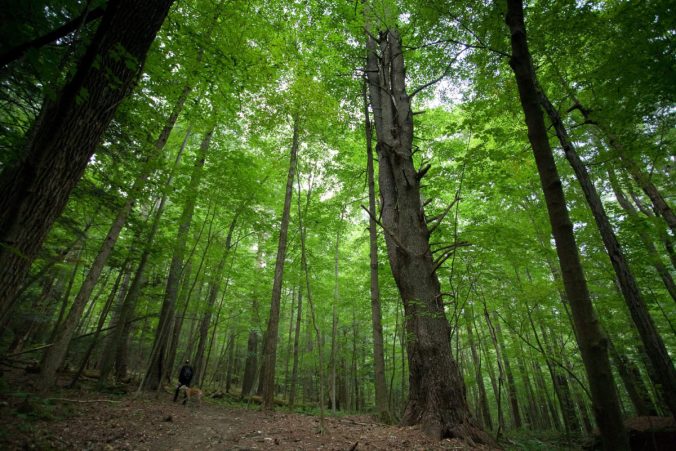
A mature forest in the Berkshire Hills in western Massachusetts. LIZA DALY/FLICKR

William Moomaw has had a distinguished career as a physical chemist and environmental scientist, helping found the Center for International Environment and Resource Policy at Tufts University’s Fletcher School and serving as lead author on five reports of the Intergovernmental Panel on Climate Change (IPCC). In recent years, Moomaw has turned his attention to working on natural solutions to climate change and has become a leading proponent of what he calls “proforestation” — leaving older and middle-aged forests intact because of their superior carbon-sequestration abilities.

While Moomaw lauds intensifying efforts to plant billions of young trees, he says that preserving existing mature forests will have an even more profound effect on slowing global warming in the coming decades, since immature trees sequester far less CO2 than older ones. In an interview with Yale Environment 360, Moomaw explains the benefits of proforestation, discusses the policy changes that would lead to the preservation of existing forests, and sharply criticizes the recent trend of converting forests in the Southeastern U.S. to wood pellets that can be burned to produce electricity in Europe and elsewhere.

2019-overhead_DogwoodAlliance_web

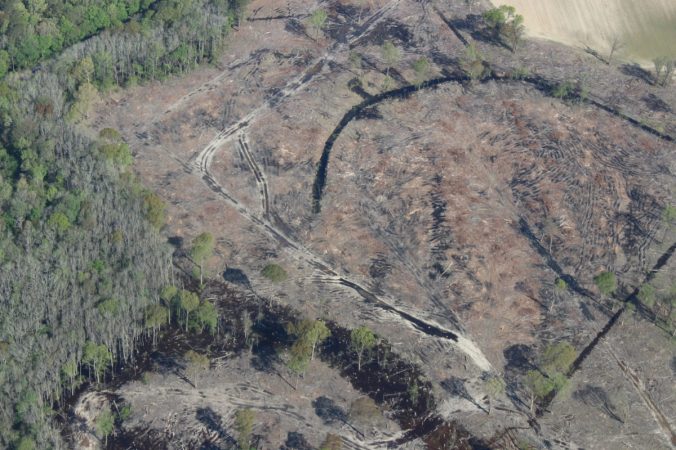
An area of clearcut forest in the Tar-Pamlico River basin in northeastern North Carolina. DOGWOOD ALLIANCE

“The most effective thing that we can do is to allow trees that are already planted, that are already growing, to continue growing to reach their full ecological potential, to store carbon, and develop a forest that has its full complement of environmental services,” said Moomaw. “Cutting trees to burn them is not a way to get there.”

Yale Environment 360: How do you define proforestation?

William Moomaw: So I began looking at some of the data and some of the papers that had come out recently, and I found that if we managed our forests and grasslands in a different way they could be sequestering twice as much carbon dioxide from the atmosphere as they currently do. Continue reading

Sumatra & Creative Conservation

merlin_158633856_04c0cbda-34a4-4ee4-bdb8-5eb8a97b742b-jumbo.jpg

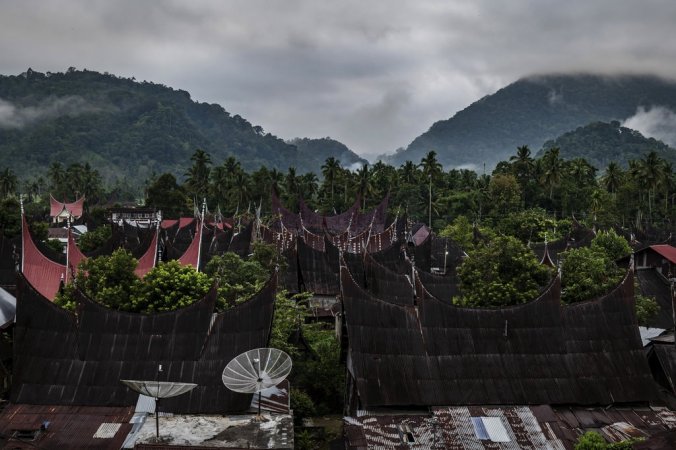
Traditional houses in West Sumatra. Ulet Ifansasti for The New York Times

Finding this story by Mike Ives, with Topher White getting up into the trees for a good purpose, brightens the day just a little bit:

Using Old Cellphones to Listen for Illegal Loggers

merlin_158633796_0015aced-a89f-4c3e-a120-91137af3e642-jumbo

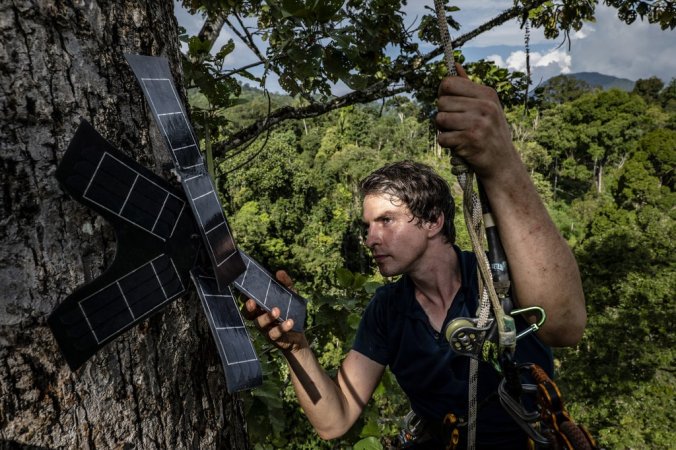
Topher White installing a solar-powered listening unit in a rainforest on the Indonesian island of Sumatra in July. Ulet Ifansasti for The New York Times

PAKAN RABAA, Indonesia — This village in West Sumatra, a lush province of volcanoes and hilly rain forests, had a problem with illegal loggers.

They were stealing valuable hardwood with impunity. At first, a group of local people put a fence across the main road leading into the forest, but it was flimsy and proved no match for the interlopers. Continue reading

Climate, Wine & Adaptation

merlin_152272566_ff8c054a-7459-4402-96ec-cf6860c71b29-master1050

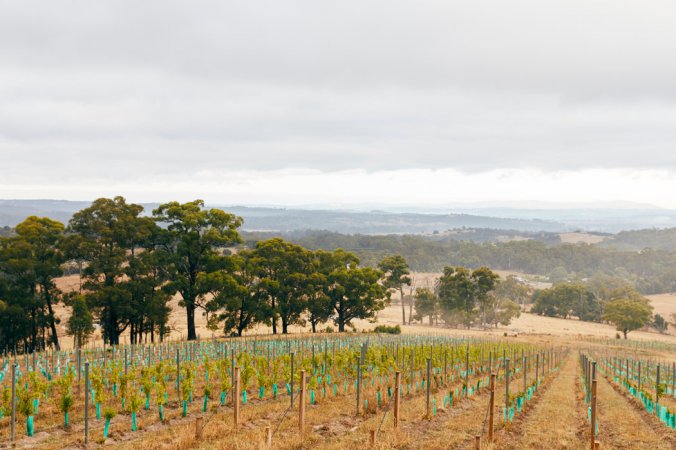
Don Valley, Australia John Laurie for The New York Times

Eric Asimov, wine critic, is also a pretty good explainer of the practical implications of climate change:

merlin_103882060_b8179995-39ed-4c48-ab8b-72e9da980df2-master1050

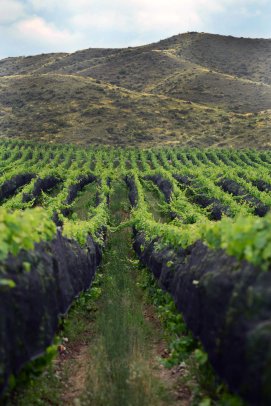
Catena Zapata, Argentina Horacio Paone for The New York Times

Wine, which is among the most sensitive and nuanced of agricultural products, demonstrates how climate change is transforming traditions and practices that may be centuries old.

Around the wine-growing world, smart producers have contemplated and experimented with adaptations, not only to hotter summers, but also to warmer winters, droughts and the sort of unexpected, sometimes violent events that stem from climate change: freak hailstorms, spring frosts, flooding and forest fires, just to name a few.

Farmers have been on the front line, and grape growers especially have been noting profound changes in weather patterns since the 1990s. In the short term, some of these changes have actually benefited certain regions.

Places, like England, that were historically unsuited for producing fine wine have been given the opportunity to join the global wine world, transforming local economies in the process. Continue reading

Greta’s Generation Says Stop Digging

5283.jpg

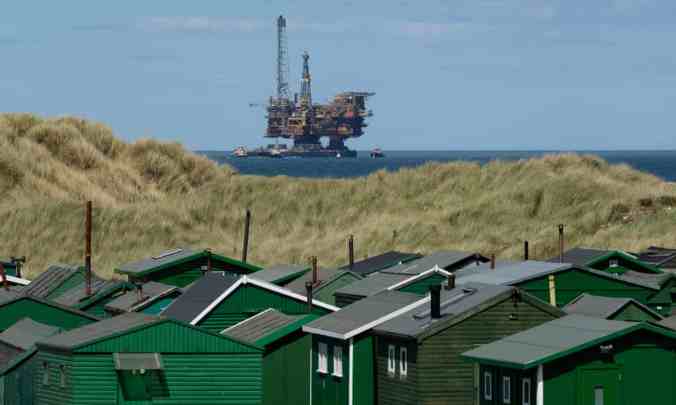
Shell said last year that divestment had become a material risk to its business.’ Shell’s Brent Bravo oil rig arrives on Teesside for decommissioning, June 2019. Photograph: Ian Forsyth/Getty Images

Bill McKibben explains the movement and its best chance of success:

Divestment works – and one huge bank can lead the way

On 15 October, the European Investment Bank meets to decide its policy on fossil fuels. The hand of history is on its shoulder

Millions of people marched against climate crisis over the past two weeks, in some of the largest demonstrations of the millennium. Most people cheered the students who led the rallies – call them the Greta Generation. But now we’ll start to find out if all their earnest protest actually matters.

Continue reading

When A Company Says One Thing And Does Another

4000n

Eric Schmidt being interviewing on Bloomberg in 2014. Photograph: Bloomberg via Getty Images

We usually introduce a story for context. No introduction needed (or possible) in this case, just thanks to the Guardian for sharing it:

The obscure law that explains why Google backs climate deniers

Company wants to curry favour with conservatives to protect its ‘section 230’ legal immunity

Revealed: Google made large contributions to climate change deniers

When Eric Schmidt was asked on a radio show in 2014 why Google was supporting an ultra-conservative climate-denying pressure group in Washington, the then chairman of the internet giant offered an unequivocal response: it was wrong and Google was not going to do it again.

Continue reading

Organikos, 100% Forward To 1,000,000

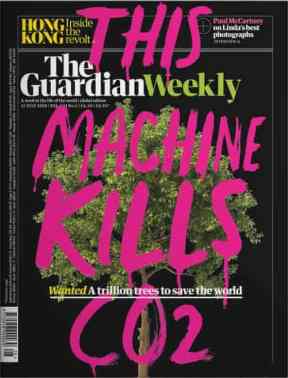
6555On July 5th I first read the news about what planting a trillion trees might do for the fight against climate change. One week later this magazine cover drove the point further home for me with the Woody Guthrie reference. Organikos already had ideas and imagery for the commitment of 100% of its profits to conservation, and by the time I saw this cover I knew our focus would be on planting treesComing back to this magazine cover now, I am struck by the power of the number referenced in the scientific study.

One trillion.

1,000,000,000,000.

How long would it take Organikos to plant one million of those trees?

Elderberries, Up & Coming From The Past

20191003_bite-elderberries_2000.jpg

Heiko Wolfraum/dpa/AP

Thanks to Marisa Endicott at Mother Jones for this:

This Ancient Fruit Holds Secrets for How to Farm in Climate Change

Respect your elder-berries.

Cloverleaf Farm, a small produce operation in Davis, California, managed to do okay during the extreme drought that lasted from 2012 to 2016. But in the first wet year after the long dry period, the farm lost its entire apricot crop to disease—$40,000 to $50,000 down the drain.

Researchers predict that as climate change worsens, there will be more frequent shifts between extreme dry spells and floods. As Cloverleaf learned the hard way, the phenomenon is already taking a toll on growers in the country’s largest food producing state. During the drought, California’s agricultural and related industries lost $2.7 billion in one year alone. Big cash crops like almonds and grapes are at particular risk in the future, unnerving farmers and vintners already taking hits from erratic and extreme weather. Continue reading

Kids Saying It The Way Kids Say Things

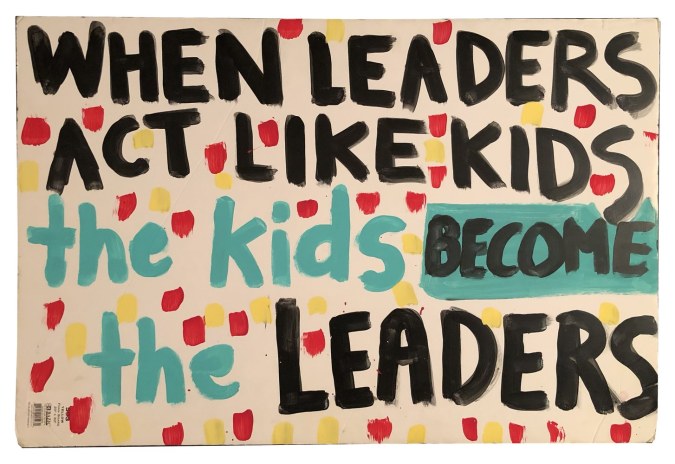
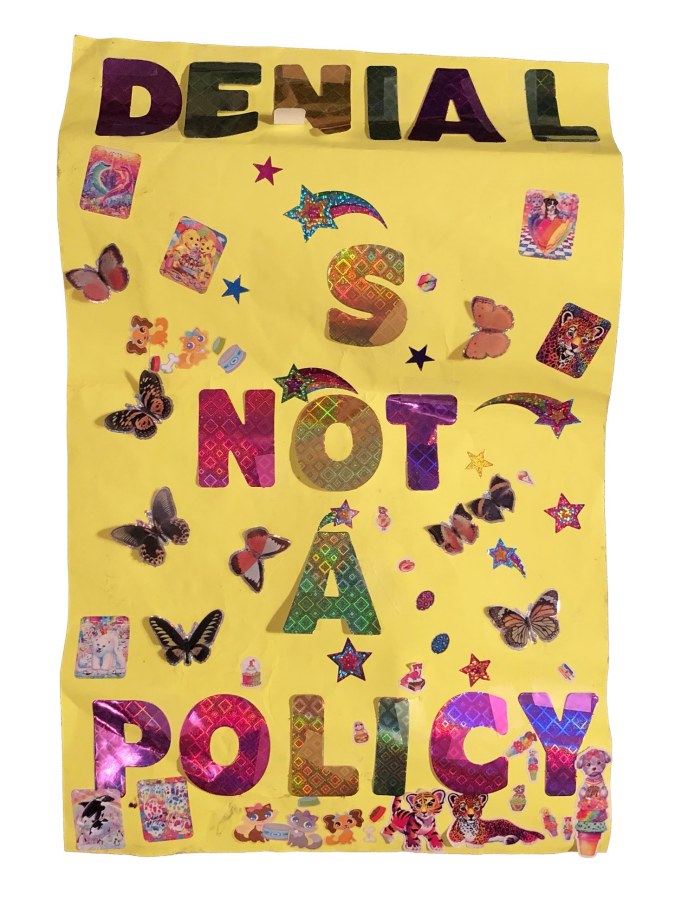
signs-3-LEADERS.jpg

Thanks to Alex Kalman for the story and to Mmuseumm for the photos:

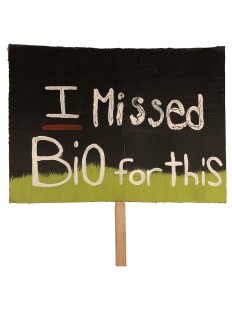
Children Lead the Way: A Gallery of Youth-Made Climate-Strike Signs

signs-4-BIO.jpgWhen is skipping school more important than attending? When is a child’s design more effective than a professional’s? When are children more responsible than adults? On September 20th, millions of children, led by the activist Greta Thunberg, took to the streets to protest the world’s inaction on climate change. Here are some of the signs made by children who participated in the New York City march. Inspiring and confrontational, these signs provide a visual counterpoint to the individual voices of our children as they plead with the powers that be to act, and act responsibly.

Signs-2-DENIAL.jpg

See the entire collection here.

Impossible This & That

190930_r35026.jpg

Pat Brown, Impossible’s founder, argues that we can’t fight climate change unless we get rid of cows. The Voorhes for The New Yorker

What can you not live without? Better yet, what might we live without that would have a positive impact on climate change? The answer to that is Pat Brown’s mission. And his story is better told in the story below than any other place where I have read about impossible this, and impossible that. I am heartened to read of Impossible’s progress as much as I am embarrassed by my own failure to cut meat consumption more than I have. My reduction has been dramatic, but not radical. Compared to my most meat-intensive eating days I have reduced animal protein intake by at least 70%; until I get to 100%, I will remain embarrassed. Thanks to Tad Friend for cheering me on with this longform view into Impossible this and that:

Can a Burger Help Solve Climate Change?

Eating meat creates huge environmental costs. Impossible Foods thinks it has a solution.

Cows are easy to love. Their eyes are a liquid brown, their noses inquisitive, their udders homely; small children thrill to their moo.

Most people like them even better dead. Americans eat three hamburgers a week, so serving beef at your cookout is as patriotic as buying a gun. When progressive Democrats proposed a Green New Deal, earlier this year, leading Republicans labelled it a plot to “take away your hamburgers.” The former Trump adviser Sebastian Gorka characterized this plunder as “what Stalin dreamt about,” and Trump himself accused the Green New Deal of proposing to “permanently eliminate” cows. In fact, of course, its authors were merely advocating a sensible reduction in meat eating. Who would want to take away your hamburgers and eliminate cows?

Well, Pat Brown does, and pronto. A sixty-five-year-old emeritus professor of biochemistry at Stanford University, Brown is the founder and C.E.O. of Impossible Foods. By developing plant-based beef, chicken, pork, lamb, dairy, and fish, he intends to wipe out all animal agriculture and deep-sea fishing by 2035. His first product, the Impossible Burger, made chiefly of soy and potato proteins and coconut and sunflower oils, is now in seventeen thousand restaurants. When we met, he arrived not in Silicon Valley’s obligatory silver Tesla but in an orange Chevy Bolt that resembled a crouching troll. He emerged wearing a T-shirt depicting a cow with a red slash through it, and immediately declared, “The use of animals in food production is by far the most destructive technology on earth. We see our mission as the last chance to save the planet from environmental catastrophe.” Continue reading

A Thoughtful Discussion On The Green New Deal

20-green-new-deal.w700.h700.2x

Photo: Michael Reynolds/EPA-EFE/Shutterstock

Thanks to Sarah Jones for The Future Is Ours for the Taking, an updated primer on the big policy bundle proposed to make the USA economy greener, healthier and more prosperous than ever:

In New York City and around the world, millions of people took to the streets on Friday morning. A single demand unified them: Leaders must act, and act now, to stop climate change from getting any worse. “I want you to unite behind science. And then I want you to take real action. Thank you,” Greta Thunberg, the teen climate-change activist from Sweden, told Congress on Wednesday.

And a growing number of climate-change activists have coalesced around an answer to this imperative, a Green New Deal. The proposal, which would transition the U.S. economy to clean energy and create millions of new jobs, has become a rallying cry for organizations like the Sunrise Movement and left-wing Democrats like Representative Alexandria Ocasio-Cortez. Although Ocasio-Cortez helped popularize the Green New Deal, and so has her fellow congressional democratic socialist, Senator Bernie Sanders of Vermont, the basic concept is at least 12 years old. Not long after New York Times columnist Thomas Friedman called for a “Green New Deal” in 2007, a group of British academics and activists began drafting a substantive proposal that was published in July 2008.

20-ann-pettifor.w700.h467.2x.jpg

Photo: Simone Padovani/Awakening/Getty Images

Why do you think it has taken this long for the Green New Deal to catch fire in the public imagination?

For several reasons. Really, it takes an American, doesn’t it? I mean, when the Americans decide something is important, then it suddenly becomes important, and that’s fantastic. But I think what happened back in 2008 was that we were going through this grim financial crisis and London was at the heart of it already thanks to the City of London. We were writing [the British Green New Deal] after the date that I called Detonation Day — on the ninth of August 2007, when interbank lending froze and the system blew up. Continue reading

Are Strikes Going To Get Us To A Solution?

190930_r35037web

Illustration by João Fazenda

During last week my attention has been commanded more than at any other time by the increased attention to the perils of climate change and the clamor for action. I do not tire of reading on this subject, in the hope that one day I will read something that will give some hope of progress. Thanks to Elizabeth Kolbert for weighing in on the debate over whether we should admit defeat, or instead insist on finding another way out of the pending doom, in the manner prescribed by a former Vice President of the USA (a country now officially leading a race to the bottom on this issue):

Summits, Strikes, and Climate Change

There are positive signs that the politics of climate change are changing in America. And giving up isn’t really an option.

Late last month, Greta Thunberg, the sixteen-year-old climate activist from Sweden, arrived in New York. Thunberg, who is sometimes compared to Joan of Arc and sometimes to Pippi Longstocking, doesn’t fly—the emissions from aviation are too high—so she’d spent two weeks sailing across the Atlantic in a racing boat. When she reached New York Harbor, she told Trevor Noah, on “The Daily Show,” the first thing she noticed was “Suddenly, it smells.”

Thunberg doesn’t adhere to social niceties. (She’s spoken openly about having Asperger’s syndrome.) She began her crusade last year, sitting outside the Swedish parliament building, in Stockholm, handing out flyers that read “I am doing this because you adults are shitting on my future.” It’s a trait particularly well suited to the cause she’s taken up: on no other issue is the gap between what’s politically acceptable and what’s scientifically necessary wider than it is on climate change. In an address to the French parliament, in July, Thunberg put it this way: “Maybe you are simply not mature enough to tell it like it is, because even that burden you leave to us children. We become the bad guys who have to tell people these uncomfortable things, because no one else wants to, or dares to.” Continue reading

A Few Sane Words From Al Gore

There are some excellent graphics in this op-ed, but the words are better, and a fitting third entry of the last week on this topic:

Al Gore: The Climate Crisis Is the Battle of Our Time, and We Can Win

We have the tools. Now we are building the political power.

Things take longer to happen than you think they will, but then they happen much faster than you thought they could.

The destructive impacts of the climate crisis are now following the trajectory of that economics maxim as horrors long predicted by scientists are becoming realities.

More destructive Category 5 hurricanes are developing, monster fires ignite and burn on every continent but Antarctica, ice is melting in large amounts there and in Greenland, and accelerating sea-level rise now threatens low-lying cities and island nations.

Tropical diseases are spreading to higher latitudes. Cities face drinking-water shortages. The ocean is becoming warmer and more acidic, destroying coral reefs and endangering fish populations that provide vital protein consumed by about a billion people…

A Different Kind Of Getting Clear

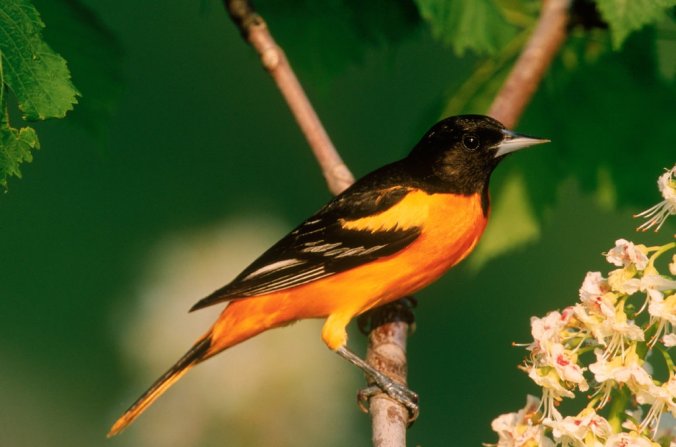
A flock of red-winged blackbirds over Long Island, N.Y.CreditCreditVicki Jauron, Babylon and Beyond Photography/Moment, via Getty Images

Thanks to the authors of this op-ed for a bit of clear thinking:

The Crisis for Birds Is a Crisis for Us All

The mass disappearance of North American birds is a dire warning about the planet’s well-being.

By John W. Fitzpatrick and 

Dr. Fitzpatrick is the director of the Cornell Lab of Ornithology. Dr. Marra is the director of the Georgetown Environment Initiative.

19Fitzpatrick2-jumbo.jpg

Steve Maslowski/Science Source, via Getty Images Plus

Nearly one-third of the wild birds in the United States and Canada have vanished since 1970, a staggering loss that suggests the very fabric of North America’s ecosystem is unraveling.

The disappearance of 2.9 billion birds over the past nearly 50 years was reported today in the journal Science, a result of a comprehensive study by a team of scientists from seven research institutions in the United States and Canada.

As ornithologists and the directors of two major research institutes that directed this study, even we were shocked by the results. We knew of well-documented losses among shorebirds and songbirds. But the magnitude of losses among 300 bird species was much larger than we had expected and alarmingly widespread across the continent. Continue reading

Imagination At Scale Is Our Only Recourse

190923_r34982

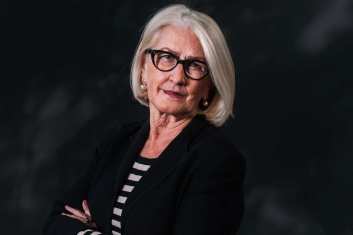
A journalist and novelist for more than fifteen years, in 2012 Ledgard began to refashion himself as both an evangelist of radical thinking and a prophet of specific doom. Photograph by Rafal Milach / Magnum for The New Yorker

Jonathan Franzen’s relatively short, but powerful essay got my thoughts well-prepared to digest this profile of Jonathan Ledgard. The implication of Franzen’s essay struck me more clearly when Ledgard–having quit his career in journalism in favor of deeper exploration for answers to the most intractable challenges–was quoted saying “Imagination at scale is our only recourse.” Neither the essay nor the profile is comforting; but by embracing uncomfortable conclusions maybe possibilities open up:

…“You have to acknowledge that the probability of success is vanishingly small,” he said. “But if just one of these ideas came off in the next twenty years, in some form, and in a really significant way—and it improved the lives of poor people, or helped save other life-forms from extinction—then that would be really worth your time.” He added, “My main point is to move the conversation in a more imaginative direction.”…

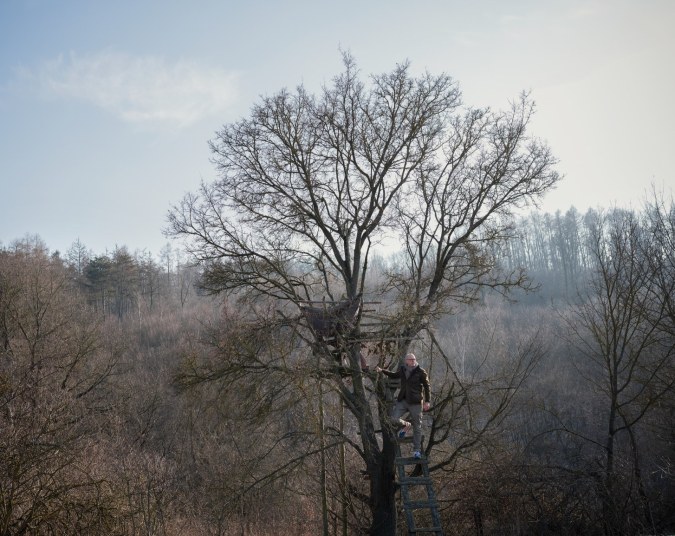
We had heard of the drone-delivered medical services thanks to Seth’s work in Rwanda, but frankly I was not convinced back in May that it was yet in the realm of possibility. Now I am. To see the man behind it in a photo like this, which at first glance might make you think he is a bit off his rocker, is refreshing.

190923_r34999

Outside a Czech village, Ledgard searched for wild boar, which he is studying for an immersive art exhibit. Photograph by Rafal Milach / Magnum for The New Yorker

Maybe that is what it takes to say something so clear:

“There’s a significant minority—or maybe a majority—of human beings who are biophiliac. They like living things. And that hasn’t been priced correctly.”

In The Spirit Of These Times

Franzen-ClimateChange

Illustration by Leonardo Santamaria

The last time Jonathan Franzen appeared in our pages he was watching birds, which he has a habit of doing. But he has the power of the pen, more than most, to wield on topics related to the environment. At the core of his argument in this essay below he makes a point that has been the point of this platform since it started: since major environmental issues are difficult if not impossible for individuals to effect change on, we must each carry out our small, singular deeds. Highlighting good acts is an important element of that.

What If We Stopped Pretending?

The climate apocalypse is coming. To prepare for it, we need to admit that we can’t prevent it.

“There is infinite hope,” Kafka tells us, “only not for us.” This is a fittingly mystical epigram from a writer whose characters strive for ostensibly reachable goals and, tragically or amusingly, never manage to get any closer to them. But it seems to me, in our rapidly darkening world, that the converse of Kafka’s quip is equally true: There is no hope, except for us. Continue reading

Resilient Forests & Reduced Fossil Fuel Dependency

chip3-34dd33bf87ddebe5ee3f5be798599246cc35c655-s1400-c85.jpg

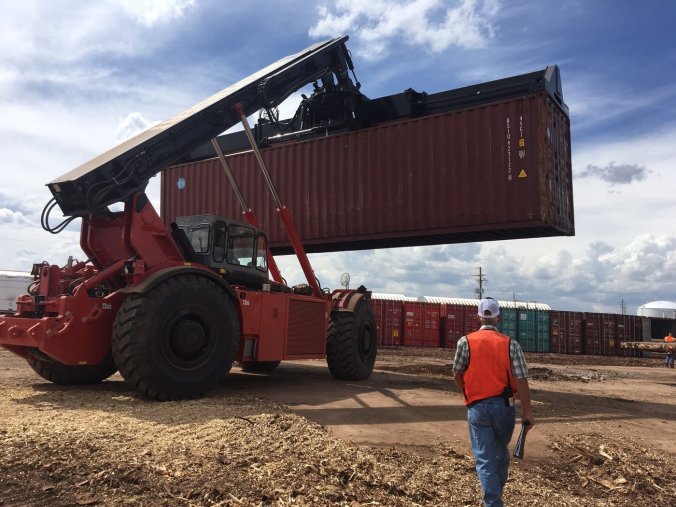
A Rough Terrain Container Handler, or RTCH, moves a shipping container full of about 40,000 pounds of wood chips to a nearby railcar. Ryan Heinsius/KNAU

National Public Radio (USA) shares a story that links forest management techniques in Arizona to fossil fuel use-reduction in Korea:

Chip-And-Ship Forest Clearing May Help Prevent Wildfire Disasters

A huge mechanical claw scoops up several ponderosa pine logs and feeds them into an industrial chipper. Thousands of wood chunks are then blasted into a large shipping container.

“It goes anywhere from one to four to three up to seven small ones can just kind of throw in that little jaws there,” explains Jeff Halbrook, a research associate with Northern Arizona University’s Ecological Restoration Institute. Today he’s overseeing what’s fondly known as the chip-and-ship pilot project about 20 minutes west of Flagstaff.

These trees being fed into the chipper were recently cut from the nearby Coconino National Forest. A crew of six has been working for days to pack the shipping containers as tightly as possible, stuffing each one with about 40,000 pounds of chipped wood. Then another machine hoists the container onto a nearby railcar. In about two weeks, nearly 60 containers will arrive at a port in South Korea. Continue reading

Camera Trap Treasure

triplets-1260x708.jpg

A black bear mother with three cubs. Photo © TNC

Camera traps have proven valuable in the work we have been doing in Belize, India and elsewhere in the wilderness areas of the developing world. But equally important are the photos captured in areas closer to urban settlements. Thanks to The Nature Conservancy’s publication of these photos with the article below:

As a Nature Conservancy forester in Pennsylvania, Mike Eckley spends a lot of time assessing the health of woodlands. That means he spends as much time thinking about white-tailed deer as he does trees.

Many conservation biologists consider over-abundant deer to be an even bigger threat to eastern forests than climate change. Deer can fundamentally change the forest ecosystem, threatening everything from rare wildflowers to migratory songbirds. These deer also can cause deadly vehicle collisions, increase risk of Lyme disease, and cause significant agricultural and property damage.

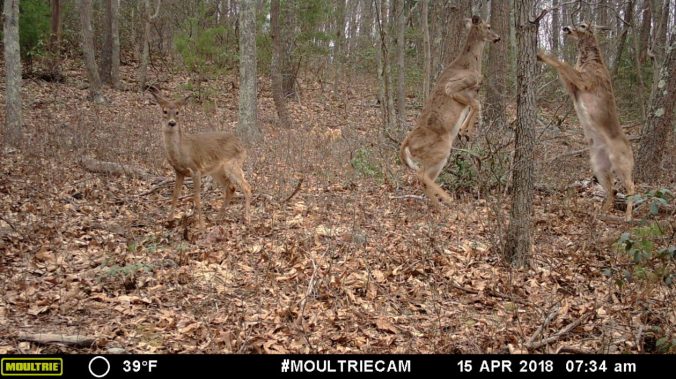
MOULTRIE DIGITAL GAME CAMERA

Two white-tailed deer boxing. Photo © TNC

Eckley educates hunting clubs and landowners on deer management issues, and recently co-edited a book on the topic. He also works to make sure the deer herd is healthy on Conservancy projects like the West Branch Forest Preserve, a 3,000-acre preserve in north central Pennsylvania. Continue reading