Questions Science Forces Us To Consider

Michael Specter has written on more than one occasion on topics that are of concern to any environmentally sensitive reader, but with an unexpected twist.  Not unexpected in a “denier” sense, nor in the typical skeptic‘s perspective.  A few months back he wrote a blog post on GMOs that caught our attention for its simple explanation of a piece of legislation, and then surprised us with the notion that the proponents of that legislation (including a food writer we point to frequently) might have it all wrong. Here is another:

It has been more than fifteen years since companies like Monsanto began intense efforts to export agricultural biotechnology from the United States to the fields of Europe and the United Kingdom. The battle continues to this day. Few opponents have been more militant or effective than Mark Lynas, one of the first people to break into fields that scientists had planted with genetically modified test crops—and then rip them out of the ground. Continue reading
Rendering Climate Change With A Camera

This slideshow requires JavaScript.

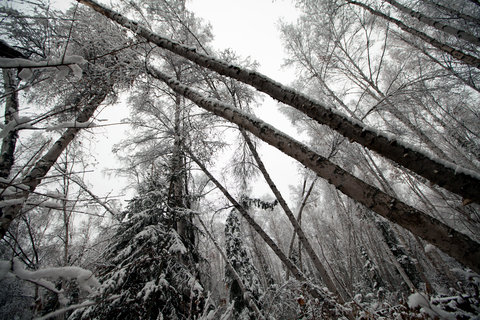
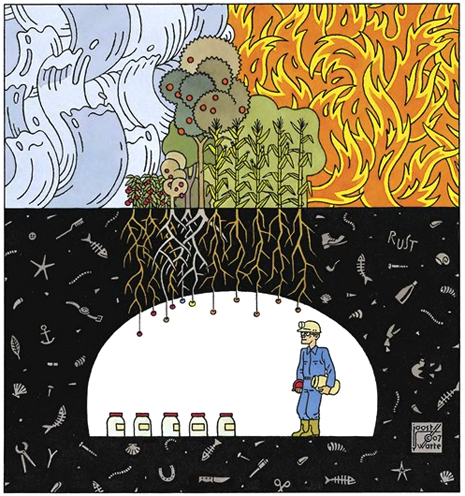
Climate change is not only a major issue for scientists and politicians but for artists as well. Here are ten examples of photographers and other visual artists who are challenging viewers to consider the dangers of inaction by capturing the effects of extreme weather and a warming world.

Read the text to this slideshow, valuable for understanding the context, at the New Yorker website.


Final Thoughts On Oysters, Dunes And Conservation

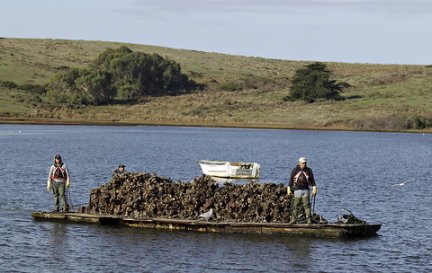
Photo: Associated Press. Workers from Drakes Bay Oyster Company bring in a load of freshly harvested oysters at Point Reyes National Seashore. Interior Secretary Ken Salazar announced last week that the operation would have to shut down.

Thanks to our oft-linked to favorite writer on such topics — Felicity Barringer — for the follow up on this story from a few days ago:

In the end, after all the money spent on the science — on cameras whose images were not carefully examined, on reports that misrepresented scientific studies, and on repeated investigations of flawed scientific work — the Interior Department’s decision not to renew an oyster company’s lease to operate within Point Reyes National Seashore largely sidestepped any scientific issues. Continue reading

Sometimes Only The Impossible Will Do

Journalists are trained to investigate and report facts; when the occasion merits, we might want them to advocate.  This writer does her reporting and then some.  This particular advocacy will be ignored, derided as another “dead on arrival” idea, blah blah blah.  But the fiscal cliff will be a picnic compared to the other cliff we are headed toward:

It’s been almost a century since the British economist Arthur Pigou floated the idea that turned his name into an adjective. In “The Economics of Welfare,” published in 1920, Pigou pointed out that private investments often impose costs on other people. Consider this example: A man walks into a bar. Continue reading

Do Not Look Away


Click the image above to go to this important report, as described in Green Blog.  It would seem more pleasant to look away, but we cannot.  Anyone who has been to Siberia knows what this is about.  If you have not been to Siberia, read on:

The greatest single uncertainty about climate change is how much the warming of the planet will feed on itself.

As the temperature increases because of human emissions, feedbacks could cause new pools of carbon to be released into the atmosphere, magnifying the trend. Other types of feedbacks could potentially slow the warming. Over all, climate scientists have only best guesses about how these conflicting tendencies will balance out, though most of them think the net result is likely to be a substantial rise in the planet’s average temperature. Continue reading

Art & Climate Change

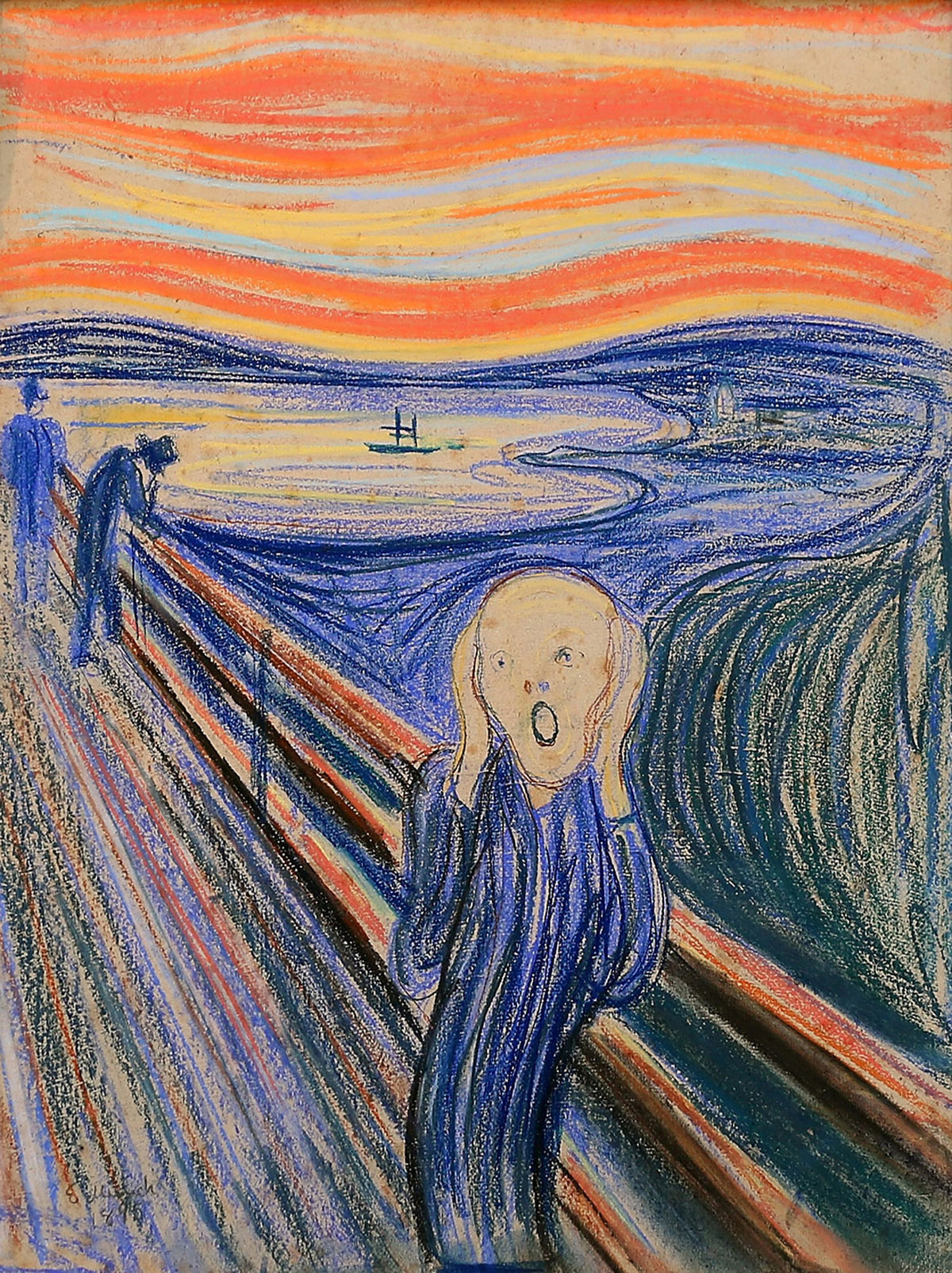
‘The Scream’ at MoMA. (Spencer Platt/Getty Images)

Click the image above to go to the article in full:

Until visiting The Scream two weeks ago at the Museum of Modern Art, to which it has been loaned for six months by its new, anonymous owner, I had forgotten that it has three figures: besides the alarmed man who gets all of the attention, there is another man in a top hat, his head bowed as if in deep despair, and a third man, further in the distance, who stares out at the landscape, strangely unaware—or in denial—of the fact that the world is coming undone around him. Factoring in those other two, it’s easier to follow Mr. Olsen’s thinking: when it comes to the effects that humans are having on nature, most of us are the second or third person.

In the United States, at least, most politicians and even many businesspeople (who would seem to have a vested, profit-driven interest in staving off climate change) have been incapable of addressing, or even acknowledging, the problem.

Connect The Dots

We find the simplicity–analyze the evidence; note the danger; take action–compelling.  A sister organization here in India takes a similar approach.  Click the banner above to add your dot-connecting to the collective action:

We’re connecting the dots between extreme weather and climate change.

Stay up to date with rapid-response campaigns by signing up at 350.org, submit your local stories to the Connect the Dots Tumblr, and find out if there’s a local 350 group in your area.

More On Birds In Storms

We have learned plenty of new things about birds in the wake of recent storm news, and today yet more from one of our favorite science writers.  Click the image to go to her story in the New York Times:

…biologists studying the hurricane’s aftermath say there is remarkably little evidence that birds, or any other countable, charismatic fauna for that matter, have suffered the sort of mass casualties seen in environmental disasters like the BP oil spill of 2010, when thousands of oil-slicked seabirds washed ashore, unable to fly, feed or stay warm. “With an oil spill, the mortality is way more direct and evident,” said Andrew Farnsworth, a scientist at the Cornell Lab of Ornithology. Continue reading

From the 2012 Net Impact Conference, Part 1

A couple weekends ago, I attended the 2012 Net Impact Conference, which was hosted by the University of Maryland in Baltimore this year. If you’re unfamiliar with Net Impact, it is a 30,000-member nonprofit focused on mobilizing students and professionals to solve the world’s most pressing environmental and social problems through the public and private sector. I would personally describe Net Impact as an organization dedicated to mobilizing young professionals to make impacts with their careers. It’s an awesome organization.

Continue reading

Another Good Reason To Reduce Your Carbon Footprint

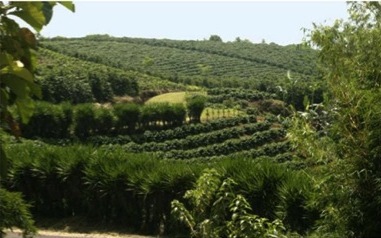
Coffee plantations surrounding Xandari, Costa Rica.
Photo: Emilia Ferreira

It is not a journal we regularly read, but the topics in this particular study–coffee and climate change–we follow closely.  Click the banner above to read the (accessible to non-scientists) article:

Coffee (Coffea L.) is the world’s favourite beverage and the second-most traded commodity Continue reading

Birds, Birders & Megastorms

Watch also for our 2PM eBird story with final predictions and strategy recommendations for birding Sandy.

If there is a silver lining to every cloud–even the most unwanted clouds–birders will always find them. We appreciate the “safety first” approach as much as the sense of dedication to the craft. Click the image above to go to the story:

…this is a going to be a wet, messy, and dangerous storm that affects a wide swath of the Eastern Seaboard! Occurring on a full moon, the storm surge is likely to be huge–very damaging and very dangerous. Given that, we implore exuberant birders to think about safety first, and don’t take risks!  Continue reading

Shrinking Antarctic Ozone Hole?

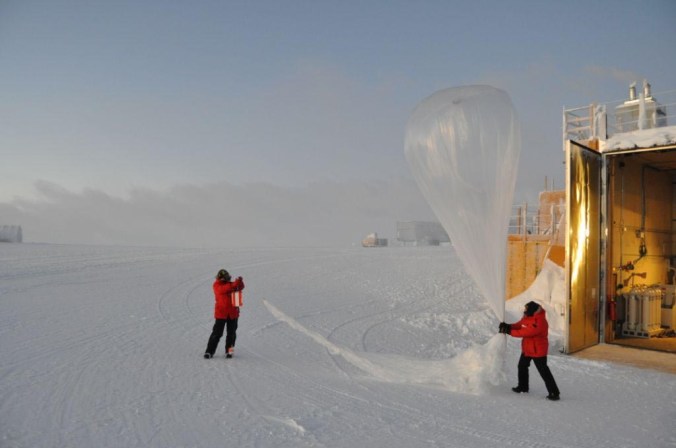
Staff at the South Pole get ready to release a balloon that will carry an ozone instrument up to 20 miles in the atmosphere, measuring ozone levels all along the way. NOAA image from 2011.


Click the image above to go to the story:

Warmer air temperatures high above the Antarctic led to the second smallest seasonal ozone hole in 20 years, according to NOAA and NASA satellite measurements. This year, the average size of the ozone hole was 6.9 million square miles (17.9 million square kilometers). The ozone layer helps shield life on Earth from potentially harmful ultraviolet (UV) radiation that can cause skin cancer and damage plants. Continue reading

Really, Exxon?

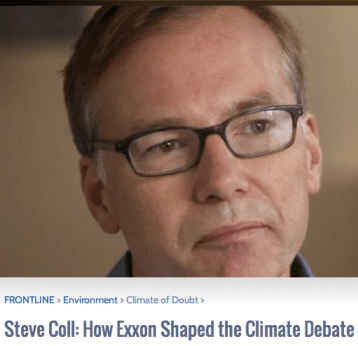
Okay, we admit that Exxon fails the Really? test.  Little about them shocks us at this point. We have highlighted examples of passing that test with flying colors, looking no further than our living room and even in our favored reading materials.  But thanks to one of the best investigative journalists out there, a writer at The New Yorker and author of Private Empire: ExxonMobil and American Power, we find we still have a bit of shockability. Steve Coll, interviewed for a Front Line series on Climate Change (caveat emptor: that documentary film series is exhaustively full of Really? revelations; for a smaller dose, click the image above for the transcript of the Coll interview, or here for a podcast of an interview he gave about the book on Fresh Air):

In some ways, it’s kind of a no-brainer that Exxon would go after climate science on a very superficial level. It’s sort of in their self-interest to keep government away from fossil fuels, right? Is that how it began? Continue reading

Novel Approaches To Environmental Concern

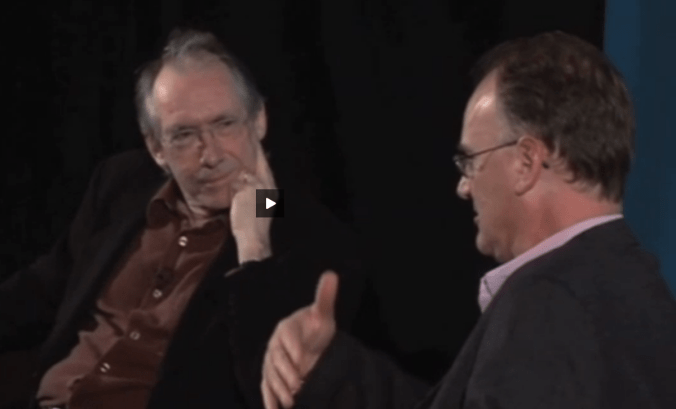
Click the image below to go to the interview, in two parts, with one of the English language’s best living writers, who with this other great writer shares a deep concern for issues facing our planet’s environment and that writer’s uncanny ability to personalize it, as he talks about

the inspiration for Michael Beard, the anti-hero in his comic novel Solar about climate change. The idea came to McEwan when he attended a gathering of 35 Nobel prizewinners, all men of a certain age, ‘big beasts’ in the scientific world who were nevertheless ‘living in their own shadow’ with their most creative years behind them.

Part-Time Vegetarianism

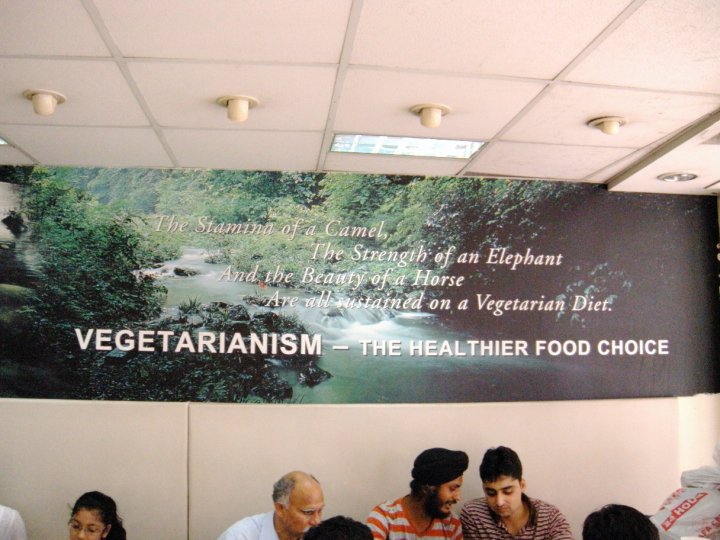
Always willing to join a conversation about (or over) food, I’ve been reminded by recent posts by Timothy and Crist of an interesting dietary strategy I discovered while living in Singapore: Meatless Mondays. I watched it as a news story over a year ago, around the same time I watched a TED talk by Graham Hill entitled Why I’m a Weekday Vegetarian. Both of these programs helped me to find a compromise that reconciles the cognitive dissonance I have as a meat-eater aware of the environmental implications of the livestock industry. 

It’s simple: Eat less meat. Continue reading

Climate & Civilization

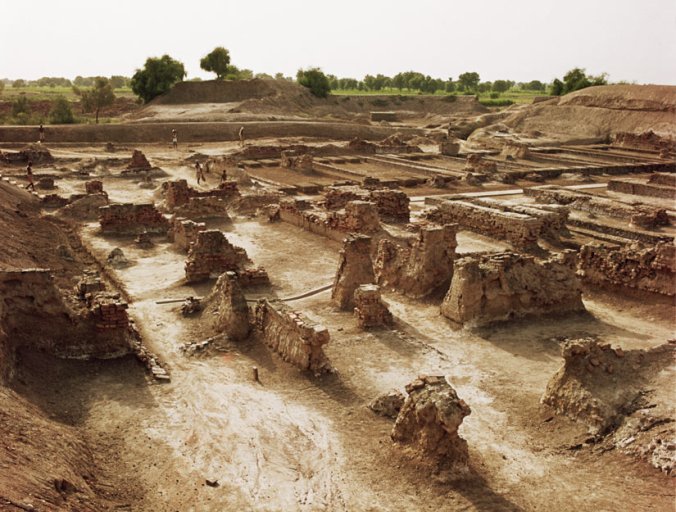
On a Monday morning, probably the last thing you want to hear about is how climate changed wiped out a civilization.  And one of our objectives on this site is to not merely serve as a feed for depressing news.  Yet this story, for all its dark implications (especially for the billion+ of us living in the region discussed in the piece) is not merely a bummer.  It also inspires on at least two levels, both related to science as it intersects with conservation. For those of us still young enough to follow in the footsteps of Jared Diamond and his many fellow scientific-discoverers, what better illumination (in a gloomy sort of way) of a potential career path?  For those of us of a certain age, with perspective already focused on future generations beyond our own, it provides fuel to the fire of our determined efforts not to ignorantly or lazily replicate age-old human errors…

Click the image to go to the story in Discovery‘s news website:

THE GIST

  • The Harappans enjoyed plumbing, complex trade routes and a system of writing.
  • The civilization built up in a “goldilocks” period when the rivers flooded often enough to support agriculture.
  • As the climate changed, so did the monsoon season, lowering the floods and support for their cities.

___________________________________________________

The mysterious fall of the largest of the world’s earliest urban civilizations nearly 4,000 years ago in what is now India, Pakistan, Nepal and Bangladesh now appears to have a key culprit — ancient climate change, researchers say.

News From Rio

After more than a year of negotiations and a 10-day mega-conference involving 45,000 people, the wide-ranging outcome document – The Future We Want – was lambasted by environmentalists and anti-poverty campaigners for lacking the detail and ambition needed to address the challenges posed by a deteriorating environment, worsening inequality and a global population expected to rise from 7bn to 9bn by 2050.

Click the image above for the coverage in The Guardian.

Commoner’s Dilemma


A Perfect Moral Storm: The Ethical Tragedy of Climate Change 
by Stephen Gardiner, Oxford, 512 pp, £22.50, July 2011, ISBN 978 0 19 537944 0
 

Click the LRB banner above to go to the review of this important book, which starts:

For the benefit of anyone who has spent the past decade or so on a different planet, the most frequently asked questions about climate change on this one are as follows. Is it getting warmer? Yes, surface temperatures have risen by 0.8°C from pre-industrial levels. Are humans causing it? Almost certainly.