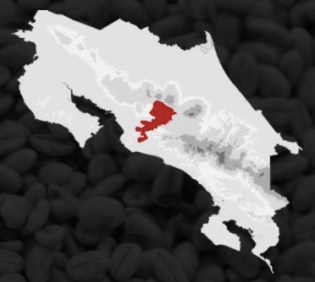
Costa Rica Coffee Terrain: Turrialba

From the Central Valley, go due east. You will cross into Cartago province and go through one of the most verdant agricultural zones in the country. If you are lucky to have a sunny day, the variations on green will dazzle you. Irazu volcano will be on your left, due north. When you have driven for about two hours you will arrive in Turrialba:

TurrialbaCoffeeIn this beautiful valley, the early ripening of coffee, extended by multiple flowerings resulting from constant rains, provides special conditions for the bean, which is characterized by its large size. Turrialba coffee is cherished because it supplies both the national and international markets early. The cup is characterized by a mild acidity, light body, and a delicate and soft aroma. Continue reading

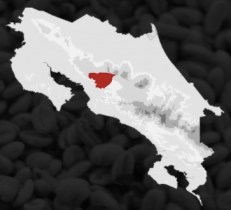
Costa Rica Coffee Terrain: Central Valley

Organikos, the enterprise and its first regenerative agriculture project, is located in Costa Rica’s Central Valley. Also, one of the two Authentica shops is located on a Central Valley coffee hacienda, so we have multiple reasons to favor this region over others. But, no. It is just one more important part of the mix that makes up this country’s remarkably diverse coffee terrain:

CentralValleyCoffeeIn general, Central Valley beans produce well-balanced cups, with flavors such as chocolate and fruits and aromas including honey , among others. Its intensity varies depending on the altitude where the crop is established and may be medium to strong.

The Central Valley is composed of the provinces of San José, Heredia and Alajuela. It is the most highly populated region of Costa Rica, where the capital, San José, is located. Here, coffee plantations were first established and were then taken to the other seven coffee growing regions. Continue reading

Costa Rica Coffee Terrain: West Valley

When we talk of shade-grown coffee terrain, the Western Valley of Costa Rica has the classic look that would come to mind for many, as per the video above. The Costa Rica Coffee Institute describes the coffee from this region, which recently has been the “hot stuff” among coffee specialists, in this way:

WestValleyCoffeeFlavors range from traditional and beloved chocolate notes to a more complex selection, where good tasters can find citrus-like flavors such as orange, in addition to peach, honey and vanilla, among others. This is all in line with good fruit harvesting and processing practices.

Inhabitants of San Ramón, Palmares, Naranjo, Grecia, Atenas, Valverde Vega and Alfaro Ruiz in the province of Alajuela, in the Western Valley, enjoy a pleasant climate throughout the year, with well-defined dry and rainy seasons. Continue reading

Costa Rica Coffee Terrain: Guanacaste

The Costa Rica Coffee Institute, we believe, is a very important factor in the success of the country’s coffee sector, with the Tarrazu region leveraging the Institute’s resources more effectively than most. This, in turn, has played a role in Tarrazu’s exceptional success with its own regional cooperatives. Good growing conditions, of course, are the most important factor. But why else do some regions do so much better than other regions? What explains our neglect of the Orosi region during the first year of Organikos operations?

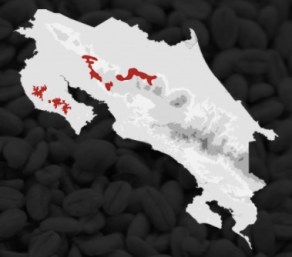
We have also neglected Guanacaste coffee region, but this seems more obviously based on its geography. If you have been to Costa Rica, as a statistical fact it is very likely you spent some of your time in the northwest of the country. Most visitors spend at least part of their vacation in this zone due to the exceptional beauty of the Pacific coast, especially as contrasted to the arid conditions just inland. It does not sound like coffee country. Read the Institute’s own description, where the bold section might throw off anyone, but the nuances that follow help understand why a closer look makes sense:

GuanacasteCoffeeHigh temperatures and a dry climate result in a bean that is long and soft when roasting. The drink is soft, full-bodied and lightly acid, with well-defined salty and bitter notes.

The Guanacaste region is characterized by the exploitation of coffee crops in small areas, distributed in the provinces of Guanacaste, Puntarenas and Alajuela (Sarapiquí and San Carlos). Coffee plantations are located between mountainous areas with the cool temperatures of the Central Volcanic and Guanacaste mountain ranges. Continue reading

Platform Name Change

La Paz Group, having sponsored and administered this site since its inception, was the name up top until yesterday. Now the name Organikos makes more sense up there. For those of you who have been following us for any length of time, this probably does not come as a surprise. We have been talking about Organikos more and more frequently in the last two years. In late August, 2019 La Paz Group opened two Authentica shops in Costa Rica and that is when and where Organikos started selling coffee. As Organikos prepares to sell coffee in both the USA and Costa Rica with its own virtual shop, sponsorship of this platform makes sense. The themes–entrepreneurial conservation especially, and you can see the others on the right column–remain the same. Thanks for visiting.

Costa Rica Coffee Terrain: Orosi

One year ago, when we had completed all the cupping sessions, farm visits and decision-making about the 12 coffees we would start with, a couple regions were left out of our mix. One of them was Orosi, and there was no good reason other than our shelf space considerations. We will resume our search and find a coffee to represent Orosi in our offering soon.

Costa Rica Coffee Terrain: Tarrazu

Costa Rica has a remarkably diverse landscape for such a small country. And that diversity translates into an excellent variety of high quality coffees, each unique according to the region of origin, and the particular farms within those regions. We have chosen twelve coffees from the regions that international tasting competitions have consistently prized the most, including four single estate coffees that stand out for their quality. Continue reading

Curvy Berms, Seedlings & Fertile Earth

OrgLand3

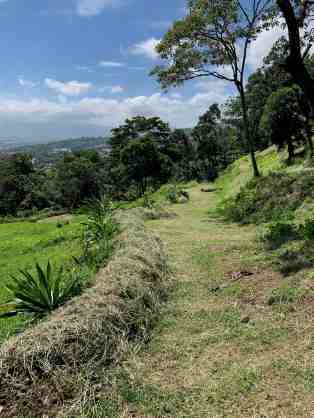
Curvy berm

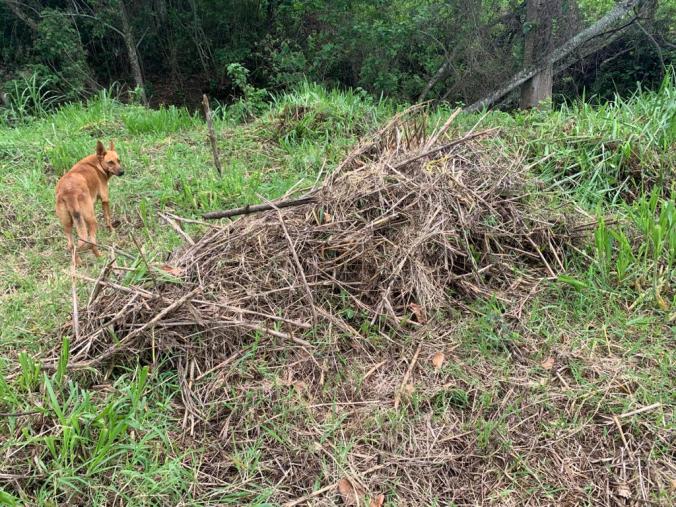
What looks like an elongated haystack curving downslope in this photo we call a berm. No hay there, just a mix of cut grass covering branches, logs, and such. The purpose of a berm, diagonally traversing this hill, is explained better by others. When we prune trees and bushes, cut grass, and find old logs on the land their biomass help build this berm. Recently we trimmed all our vetiver grass, a soil retention ally that grows waist-high in rows throughout our hills. We cut it back twice a year, and added it to the  top of the curvy berm.

PoroSeedlings

Poro seedlings

To the left of that berm are re-plantings of a type of palm that we had growing on the property already, which birds love for the orange fruit it provides and for nesting. Those 20 palms join the 30 banana and plantain trees on the flat area below, and the dozen or so citrus trees recently planted. The shade-providing and nitrogen-fixing tree called poro will be planted during the next waning moon cycle.

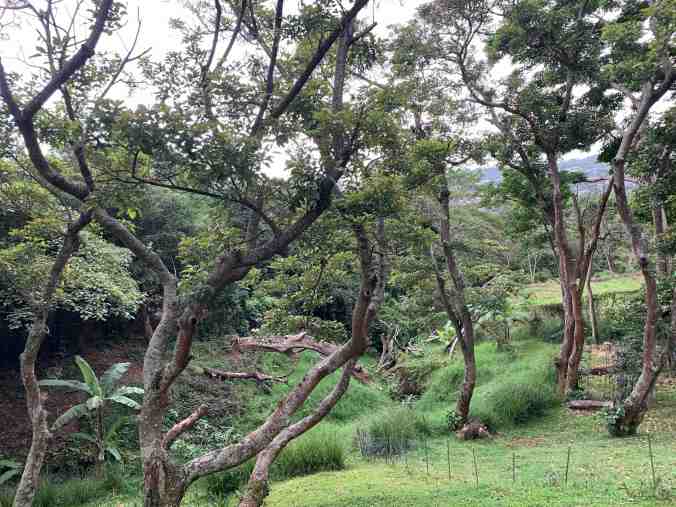
Poro

Poro trees, parents of the seedlings, with vetiver grass downslope

We have collected hundreds of seedlings from the poro trees originally planted when this land was part of a coffee farm.

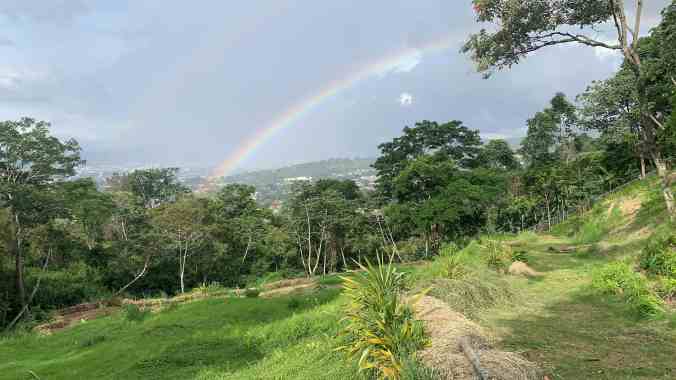
OrgLand2

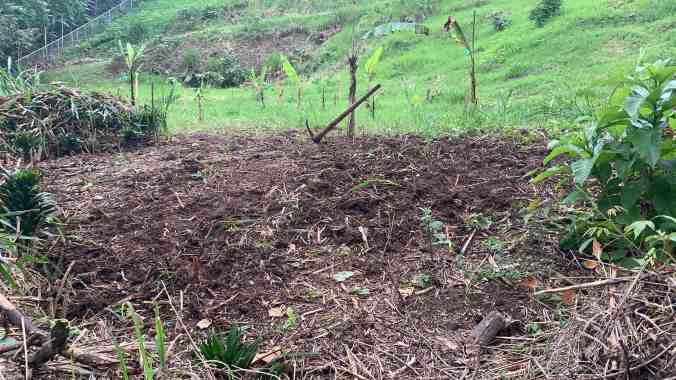
This rainbow reminded me to document the work on the land where the bees are, and where the coffee will be. For now, just a quick note. On the lower left of the photo above you can see where I have been using a pickax to loosen soil, dark and rich and teeming with earthworms, for planting in between the rows of bananas. I last cleared this space before we moved to Croatia in 2006. The grasses and vines that occupied this space for the intervening years until recent months, now our enemy for growing plants we favor, have performed an amazing ecosystem service. The earthworms and smell of the soil tell me that.

OrgLand4

End of day, sunset time, back on the terrace of our home, an unexpected spectacle. In the photo below, which is looking due east, the sun is coming from the west, hitting Irazu volcano and lighting it up in such a way that it almost looks like golden lava is flowing down its cone. I’ll take that view, with thanks to whatever caused it.

OrgLand1

Sunset-illuminated Irazu volcano in the distance

Backyard Birding & Organikos

ViviBirding

Education Images/Universal Images Group/Getty Images

Thanks to the folks at Short Wave for this brief tutorial on backyard birding, featuring a scientist from the Cornell Lab of Ornithology. For those fortunate enough to be able to use some of their time in recent months for this purpose, the tutorial may resonate. A total novice like me finds it useful so I recommend it to others.

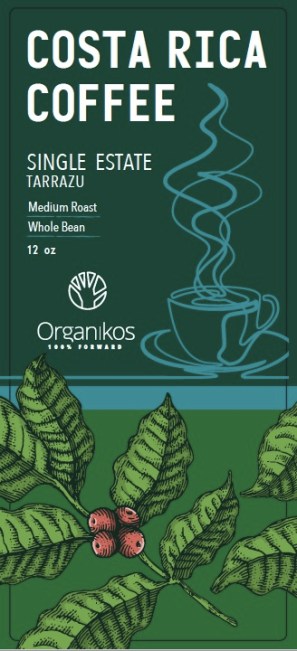
SETarrazuLabelI especially appreciated the advice of paying attention to the coffee that you purchase, because it can have significant impact on migratory birds. The new series of Organikos labels are almost ready for print-testing. One of the final decisions made in the last month was to let the label on the bag focus on the coffee and keep the bird-habitat mission messaging on the website and in places like this. A key part of that message is that the particular coffee offered matters most. We believe that if we start with the highest quality green beans, apply the perfect level of heat, and deliver them at the fairest price we will get what we need to plant more trees. So, the Tarrazu single estate is the second label I will share here. Along with the Hacienda la Amistad single estate organic, this is some of the most spectacular coffee grown in Costa Rica. And for every bag sold, the difference between what we pay to get this to you, and what you pay to Organikos, goes to bird habitat regeneration.

Bee Surprises

HiveOur bee obsession on this platform has many explanations, but my personal motivation for following the science of bees goes back to a summer in the late 1970s when I worked for a beekeeper. I cleared brush and vines from the forest edge to make way for more bee-friendly plantings. I worked within sight of a dozen active bee colonies in boxes where I could see buzzing swarms constantly. I learned to be calm around them from the man who tended them. He used a poncho, a mask, and a smoker when opening the boxes to remove honey, but other times walked among them with no protective gear. To my surprise the resins from Toxicodendron radicans–poison ivy, poison oak and poison sumac–did more harm to me than the bees I worked around. In fact, I was never stung by those bees. Not once.

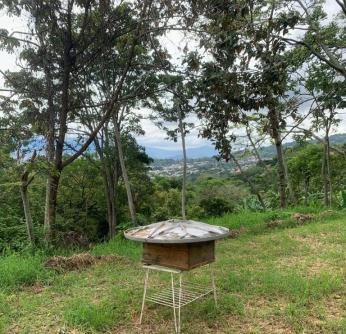
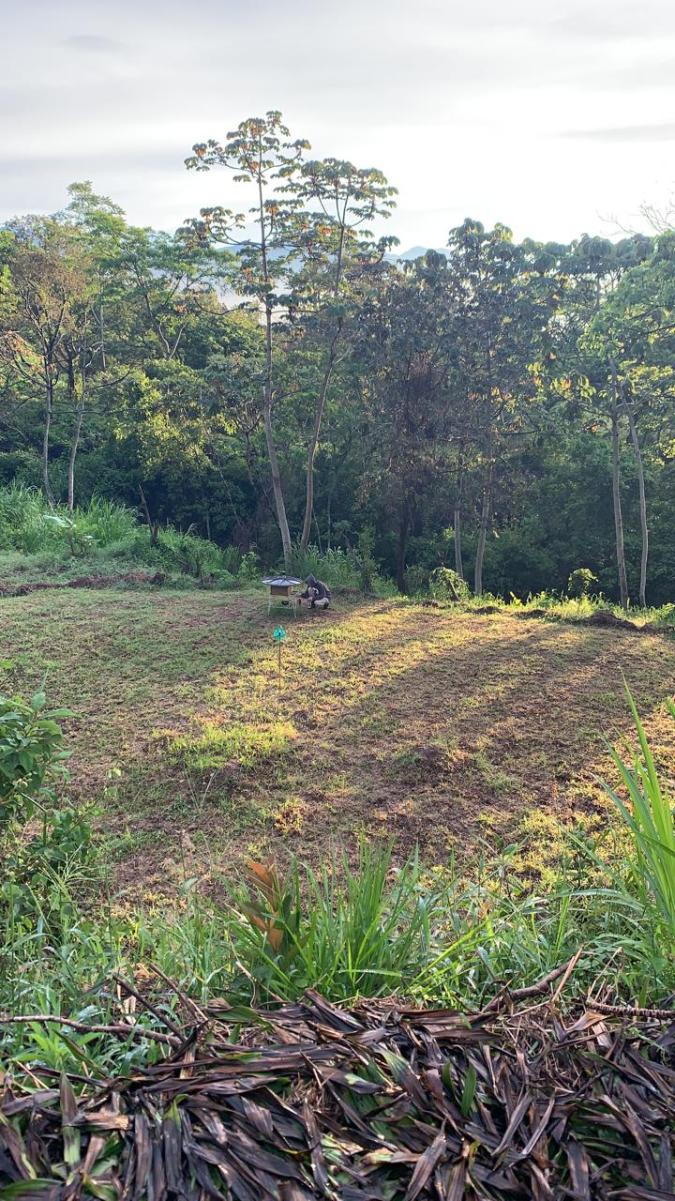
Which explains why when we finally had the chance to start our own bee colony I was all in. Above is a bee box, with found objects inside, above and below it. The bees inside had nested at the top of our house so we had a beekeeper extract them. He gave them this new home in a location where we have been clearing brush to make way for coffee planting. The old table had been in the chicken coop and the mysterious disk was on the roadside headed for recycling. One month later now, very happy bees.

Brush

Above is a small sampling of the vines and brush I have been clearing from the land near that hive. History may not repeat, but sometimes it rhymes. As it happens, on my arm I have some of the same toxins from vines like those 40 years ago. The clearing work started in March and is nearing completion to make way for several hundred shade trees and several thousand coffee plants.

Bananas

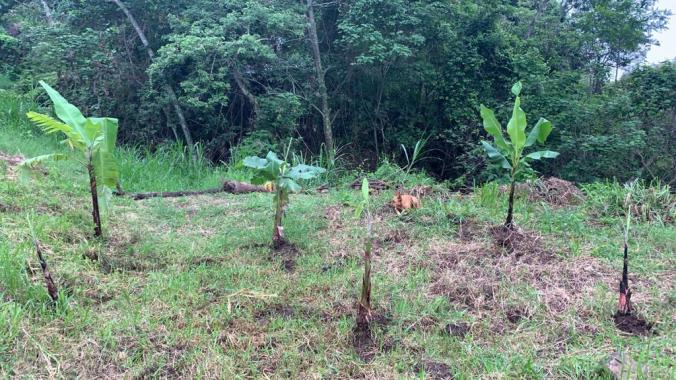
One section of this clearing has already received twenty banana plants, based on the practice of our friends at Hacienda la Amistad. These make excellent companions to the coffee and are pollinated by bats, so provide another kind of ecological service too complex to discuss in a post primarily about bee surprises.

So, with all that in mind I was very happy to come across the story below by Cara Giaimo. Her work first appeared in our pages last October, then again a few months ago–both times related to birds. Somehow I missed this short article on bees from earlier this year, and I thank her for it now for making me laugh when there is not enough other news to laugh about:

22TB-BEES-jumbo

Frank Bienewald/imageBROKER, via Alamy

Bumblebee Vomit: Scientists Are No Longer Ignoring It

Regurgitation is an important consideration when it comes to the process of pollination.

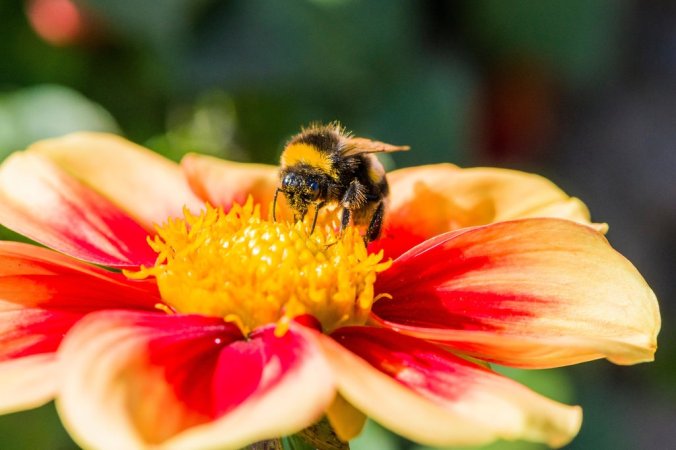
The bumblebee is a discerning nectar shopper. When choosing which flowers to gather the sticky substance from, it might consider a plant’s distance, the shape of the petals and how sugar-rich the nectar is. Continue reading

My Backstory With Coffee

SethMombachoThe image to the right is from twenty years ago, during my first foray into the world of coffee. It is not the most flattering photo, but it will do. I was eight, on location with my brother and parents at a worksite in Nicaragua. One part of the project was the development of a coffee tour, and my brother and I were tasked with testing how a young person might react to that experience. The expression on my face was, I suppose, a slightly embarrassed result of how little coffee I had managed to pick relative to the basket’s capacity. There was plenty of coffee to be picked, but these 20 years later I still remember how hard that work was.

SethGalapThe second foray was in 2011, back in the same region of Nicaragua, but as an intern documenting the coffee growing and maintenance process, as well as having the pleasure of zooming over a coffee plantation on a canopy tour zip line.

Just a year later, my third foray came when I spent the summer living on an organic farm freshly planted with coffee. What made it special, even spectacular, was that the farm was one of the rare private properties in the Galapagos Islands and was situated in the vicinity of the forests where the giant tortoises roam.

The fourth foray, which I wrote about in these pages, was between 2014 and 2016. I participated in each step from germination, to planting, harvesting, processing, roasting and cupping. I created a coffee tour on property that was an echo of the work done 15 years earlier in Nicaragua.

My fifth and most recent foray, over the last few years, has been the start up of Organikos. During the months leading up to starting graduate school I developed a plan with my parents to launch the coffee business as part of their Authentica venture. That brick and mortar retail approach worked out very well, until the world changed a few months ago. So now online and onward…

Re-Opening, Regeneration & Restoration

BeesAmie

Friday, one of the hotels where we operate Authentica re-opened. With not much exaggeration I can say that for hotel staff, for Amie and me, and for the Costa Rican guests we interacted with, seeing tourism start up again after three months felt emotionally kind of like this, only with serious social distancing.

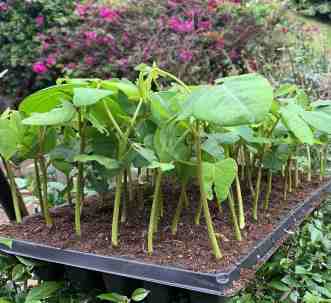
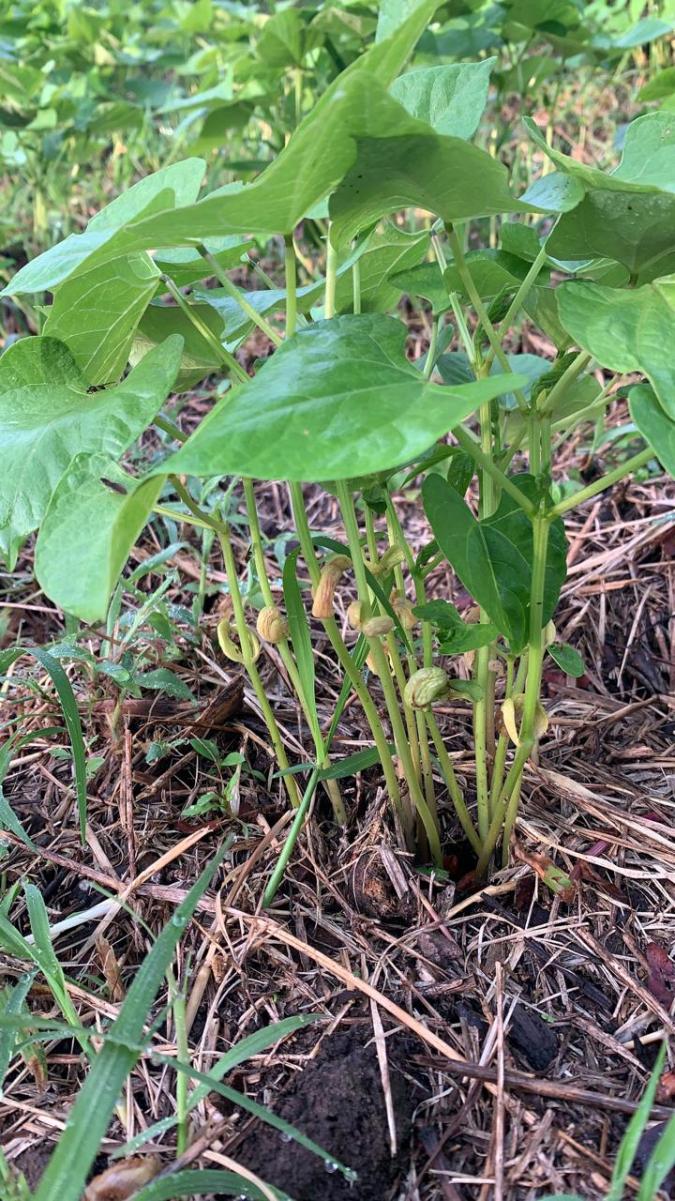
Yesterday, day 2 of this experiment in moving forward, before going to greet guests at the shops we began on the land. Above is the first of what we expect to be a larger set of honey bee colonies that will pollinate our coffee and fruit trees. Amie is in beekeeping tutorial mode and after a few weeks in place it seems to my untrained eye that the bees are happy with her progress. The land surrounding the hive, and other parts of the property, have been planted with beans common to the Costa Rica diet–mostly black and red–and some special varieties that we favor, such as white and butter varieties. Those we planted first, as you can see below, are already sprouting.

BeansSprouting

While we look forward to their eventual edible state, the primary purpose of these legumes is to fix nitrogen in the soil in advance of planting when our coffee seedlings are ready. Regeneration of the nutrients will allow the soil to host the coffee we are preparing for the microlot restoration project, planned long before current crises and to bear fruit some time after we have figured out how to move on with life. For now, seeing guests again, having beans sprout and bees buzzing is good enough.

Organikos Coffee

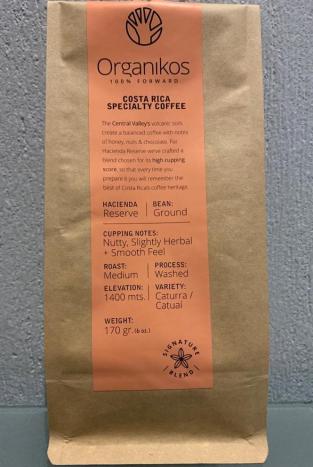
OrganikosNewLabelAmistadSince mentioning the new Organikos labeling and upcoming delivery of coffee in the USA we have progressed enough to predict that by sometime in August we will be shipping. The label to the left is mostly the same as three weeks ago, but now highlights the two general categories of coffee we offer. We knew one year ago that we would be featuring single estate and single region coffees from Costa Rica, but our labels did not focus attention on that as clearly as we now will. Organic, as well as Fair Trade and Decaffeinated were treated as their own categories, even though our organic is at least as special because it is a single estate. The same can be said for the two single region coffees–special for that reason but also due to their fair trade practices and decaffeination processing–so we decided to simplify the format as you see here, and can also see in the example below.

OrganikosNewLabelWhile we wait for our coffee to germinate, and for our graphic designer to complete the remaining sketches that accompany the twelve coffees, we are also finishing the structure of the e-commerce platform where the coffee can be purchased.

We started receiving requests last year from people who had bought our coffee while in Costa Rica about how to buy more and have it delivered to them. Not all of those queries were from the USA but under current circumstances it happens that fulfilling the requests in the USA is most feasible. So, we will be roasting weekly and coffee will arrive to those who order it within a few days.

If you are in the USA and you are interested in learning more about this option, please leave a message in the comment section here, or send an email to me at crist@organikos.com

13,832 Seeds To Germinate

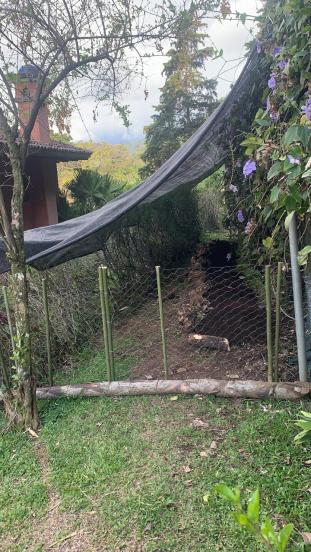
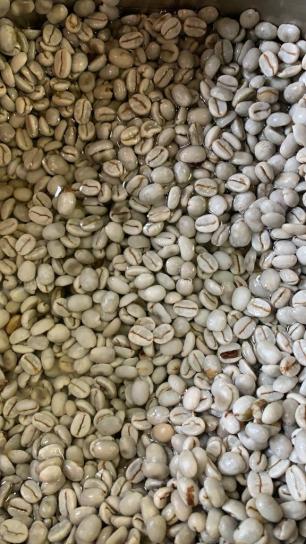
CoffeeClean5Time to see what our coffee is capable of. After cleaning the last parchment off, hundreds of beans unsuitable for planting were removed. For germination we took the path with a ratio of lowest cost to highest probability of success. On the spectrum of possibilities is no seedlings in August, or more than the few thousand we expect. The area in this photo, normally with no chicken wire or covering, has for two decades served no other purpose than for our dogs to run along the ivy-covered fence line on the right, chasing the occasional passing horse or cow or car. All that running has packed the earth pretty well so we built up a base of compost and potting soil, about two feet wide and thirty feet long. Diagonally above it all is agricultural mesh, to shade the seeds and to keep the rain from washing the seeds away.

Glowing & Growing

CoffeeClean1

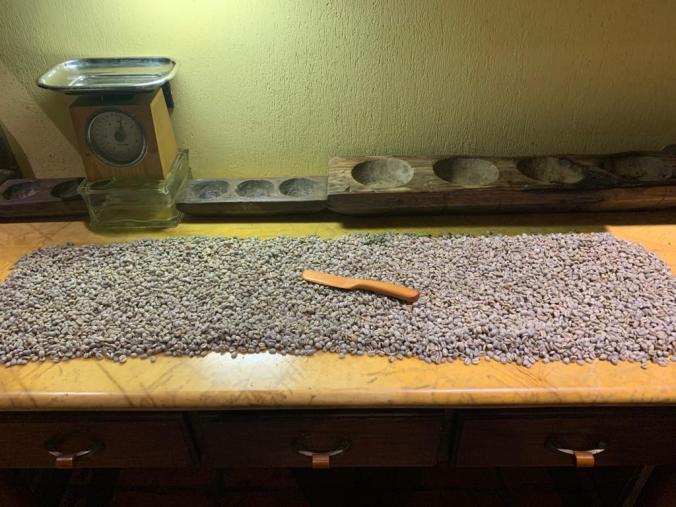
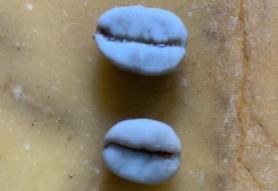
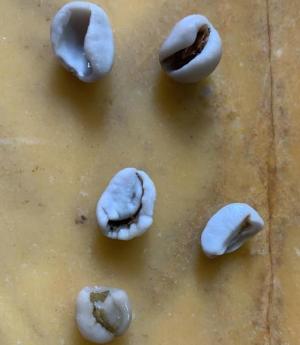
CoffeeClean2As we prepare to plant coffee Amie and I yesterday completed washing 14,000 beans, give or take, from the most recent harvest of coffee from this land where we live. As big as that number sounds, it is just a few pounds of green beans, picked from several trees that have held on over the years.

CoffeeClean3

In previous years this would provide a month’s drinkable coffee, but this year we will germinate the beans instead. We selected the fully formed, unbroken beans like those above, separating out the small percentage of broken or misshapen beans like those to the right. After germination, by August we expect to have between 3,000 and 4,000 viable seedlings we will keep in a nursery. One year from now those will be saplings ready to plant in the ground.  We are approaching this task traditionally, by hand, sight of eye, and a few simple analog tools.

CoffeeClean4This morning we will dig holes for the first of the shade trees going onto that land where the coffee will be planted. But first, the news. The best I could find, for motivation, involves a man temporarily in New York City, working in a museum. His work, and the exhibition he is tending to, provides me context for the countryside as it still is for many coffee farmers here, and the technology transforming the countryside for future generations. Already plenty of coffee farmers are using technology as advanced as that of the tomato man in the story below. Without romanticizing the hard labor of traditional coffee farming, the work we are doing makes me more appreciative of the coffee farmers we source from. Thanks to Elizabeth A. Harris for this story:

The Museum Is Closed, but Its Tomato Man Soldiers On

Although the Guggenheim’s “Countryside” show was shuttered by the pandemic, its crop of cherry tomatoes is still growing, and feeding New Yorkers.

merlin_172484226_e841d84e-bb0a-47af-8329-6efdd50ef85c-jumbo

Jeenah Moon for The New York Times

17tomatoes8-superJumbo-v2

Jeenah Moon for The New York Times

The halls of the Guggenheim Museum are pretty quiet these days, with mostly just its ghosts and some security guards as company for the art.

Oh, and there’s the guy who takes care of the tomatoes.

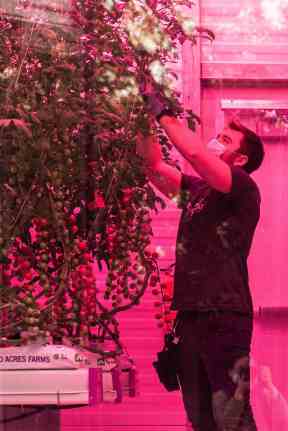
David Litvin, an indoor crop specialist, tends the plants in a temporarily shuttered exhibition, “Countryside, The Future.” He moved to New York from Tel Aviv in February, along with his wife, Stefanie, and their Dutch shepherd, Ester, with a plan to stay six months harvesting the Guggenheim tomatoes. He was going to see the city, too.

“I went out once to a comedy bar, but that’s it,” he said.

The museum has been closed since March 13, but Mr. Litvin still walks across Central Park every day around noon from his rental on the Upper West Side to tend to his flock. “When you grow tomatoes on Fifth Avenue, you want to have the perfect tomatoes, there’s no room to mess up,” he said. “If I have ugly plants, I’ll hear it from the neighbors.” Continue reading

If You Drink Organic Coffee, Consider 100% Forward

B48D6CF4-8DC4-4222-B550-6BA976D449B6

The 12 selections of Organikos specialty coffees had enough time on display at the Authentica shops, prior to current circumstances in Costa Rica and everywhere else, to establish the organic selection as a top seller.

AmistadNewDuring those months–the shops fully opened in late November and until early March were nonstop full of guests–I had hundreds of conversations with travelers.

I got excellent feedback on our original coffee packaging. Briefly stated, the recurring message was that people wanted to “see more Costa Rica” on the package. They also wanted to know more about what our 100% Forward commitment meant. We have used the time since travel halted to work with our graphic designer to begin addressing that feedback.

We also have used this time to prepare a virtual approach to the business, focused on coffee at the outset. We will start with the organic, due to its performance during the shops’ peak operations. We will offer this for home delivery in the USA soon…

Pep Shot Is The New Bee’s Knees

original

For those who can afford it, culinary experimentation could become a practical hobby.HERITAGE / BETTMANN / GEORGE MARKS / AFP / GETTY / PROZHIVINA ELENE / SHUTTERSTOCK / KATIE MARTIN / THE ATLANTIC

$_35Dalgona is a name I did not know until five minutes ago. But I intimately knew the thing itself ages ago. For the 1981-82 academic year I worked with a tutor in Athens to learn my mother’s first language.  Her aunt, who I lived with, had only one way to prepare coffee, using this device to the left. Greek coffee, aka Turkish coffee, was fine.

m-6D-MUyWNCFYE0NFBe6z9wBut I did not love it. My cousin showed me an alternative, cautioning me that our great-aunt did not allow this foreign product in her home. So, I bought the contraband and each morning before she awoke I mixed the instant coffee with the milk and sugar and shook it in a jar and gulped it. It was a brief love affair. Instant coffee is not in our cupboard these days, but I have a fond memory of that fling. I appreciate Shirley Li’s article for reminding me of it.

Current circumstances are pushing us all in new directions of food and beverage production and consumption and for me, for now, the Pep Shot is the new bee’s knees:

In 1950, Americans Had Aspic. Now We Have Dalgona Coffee.

Unlike food innovations from crises past, coronavirus-inspired recipes are more about stress relief than survival.

Allison Ward used to grab coffee during her commute to work. The 34-year-old, a project manager for the McMaster Institute in Hamilton, Ontario, told me she needs caffeine every day, and that ever since the coronavirus pandemic put the city on lockdown, she’s been missing her Starbucks fix.

Then she learned about dalgona coffee. Continue reading

Immunity Boost Pep Shot

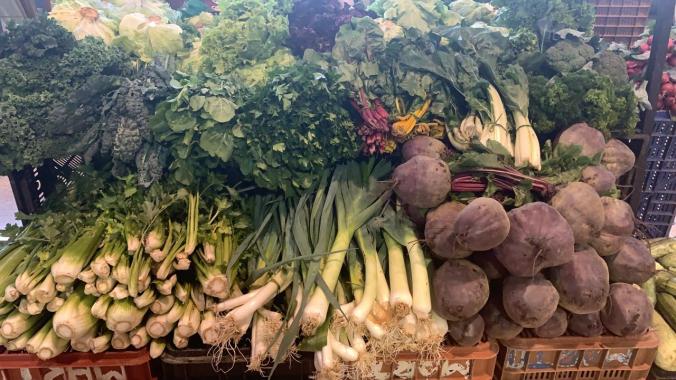
5084bce2c484b_170546bWhen Amie and I visited the Greek island of Ikaria in the autumn of 2013, it was years after we had first read about Blue Zones. We were there for work reasons, looking to identify a new location for Xandari. We learned plenty, though Xandari Ikaria never happened. Hortopita, for one. Not only spinach, but all kinds of greens, both cultivated and wild, can make a dish both healthier and more interesting than the spanakopita I had grown up with. For several weeks now, while investigating ways in which the ferias of Costa Rica might adapt to the new health protocols, and whether we might assist family farms in any way, we took a hiatus from attending the one in our town. I am happy to report that our municipality has made adjustments, and so we attended a new, smaller gathering of family farms this last week. Now that the feria is twice a week, the number of people shopping at either one is effectively halved.
4ae28a27-003e-45c4-9a4c-ed63067f9c2d

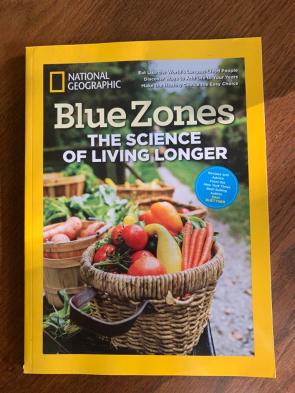
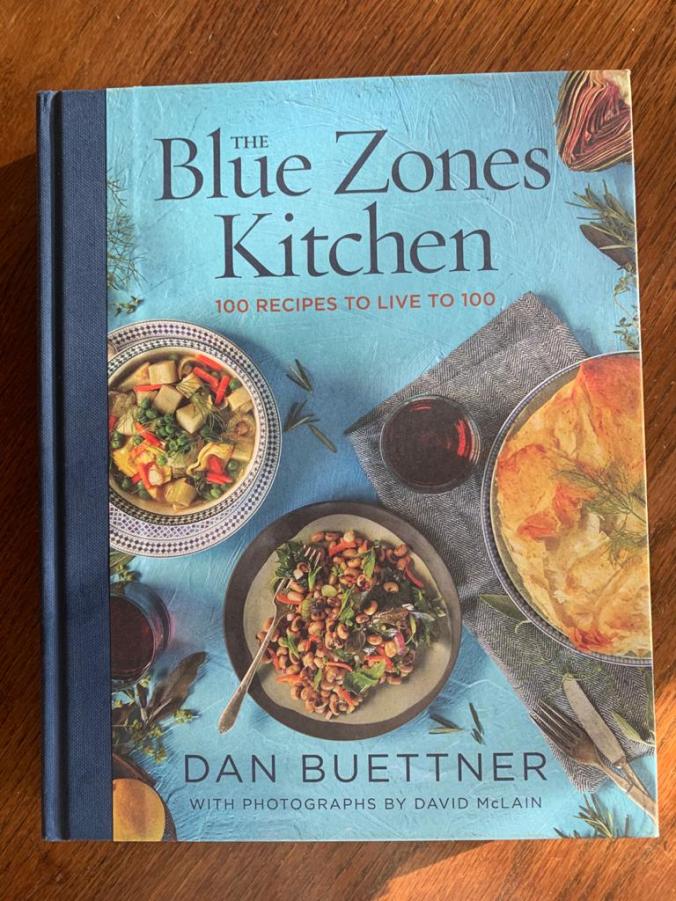
b6cbd244-7cad-4258-bd6a-7293eb55a5b4I bought beets and broccoli and various greens from the stall above a few days ago with no other shopper in close proximity. Good start. And plenty of other distancing measures in place, plus an abundance of soap and sinks and disinfectant sprays at every place where you can enter or exit the feria. Also good. But we remain convinced that a new social enterprise might help these farmers, and shoppers, more. And for that, our kitchen has been a laboratory for generating ideas, with various reading materials to assist. The Blue Zones Kitchen has been especially helpful.
c49f854e-24a9-4859-8432-58321c878bf3

While the “it” social enterprise is elusive, the meals have been nutritious and tasty. This experimentation has converged with my coffee tests, and my 3-year near-obsession with how to bring Maya nut to a wider audience, so this is what I will report on today.
9e3815f9-9c67-4b44-9c7f-8e8917fefeaf

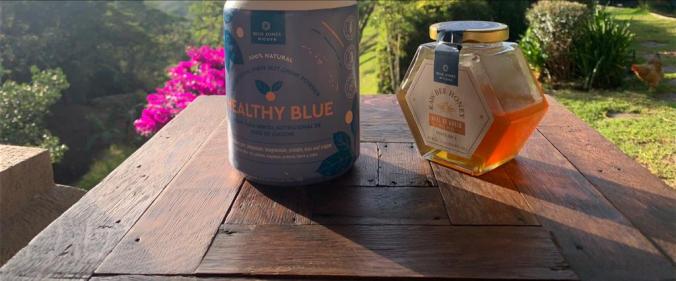
I have been combining a couple Blue Zones products with slow brew coffee, thinking of a drink that can add pep to the day and at the same time add other value, nutritional and otherwise. Honey is part of the recipe for its antioxidant properties as much as its sweetness. And the ojoche (aka Maya nut) to the left in the image above is there for its own nutritional reasons, which will require a post of its own.
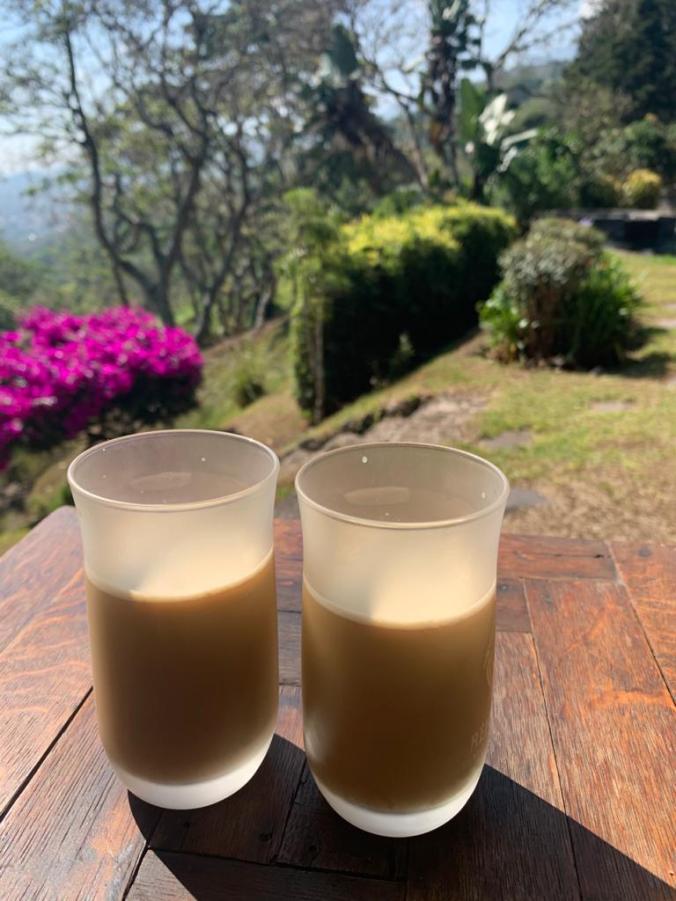
d99afbe5-7706-4663-9112-3e501b121fb6

But to get this drink just right, sweetly combining pep + immunity, the ingredient that comes from our feria is the magic touch.
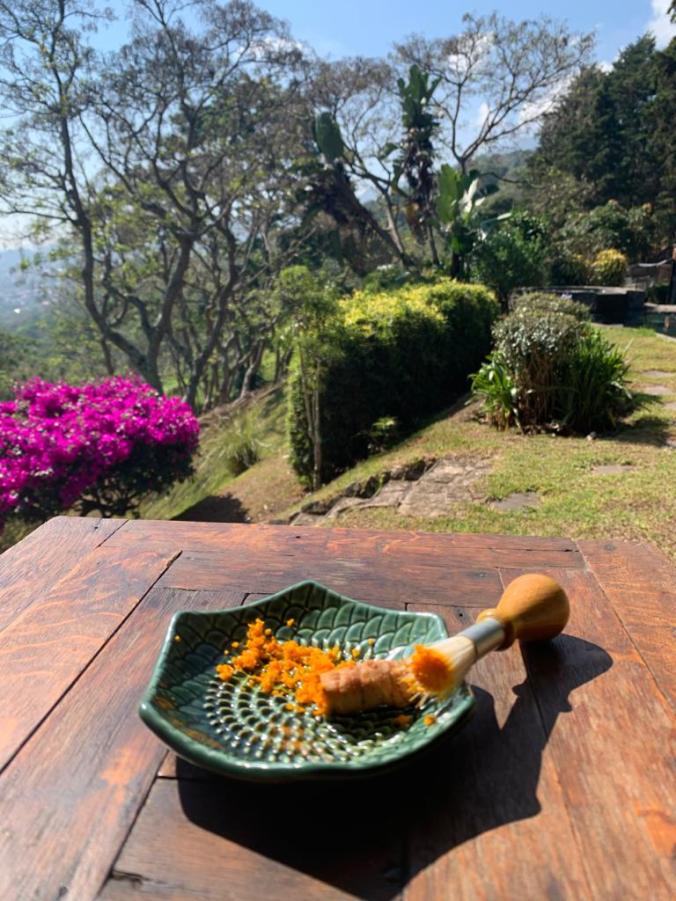
e86c32dd-186b-4ee8-b23e-4a10180a410d

Turmeric became an important part of our diet while living in India. And so it came to be again last month when, just prior to the closure of Costa Rica’s borders, a friend from India visited us. He is a medical doctor, not prone to folk remedies, but under the circumstances we all found ourselves suddenly in, looking for ways to boost our bodies’ immunities–he recommended something simple to us: have some turmeric every day. He specifically recommended combining it with milk, honey and freshly ground black peppercorn. Which we started doing, immediately. And day after day, one thing led to another. So now we have a slow brew coffee with these ingredients, plus some ojoche for good measure.

Slow Brew Coffee Variations

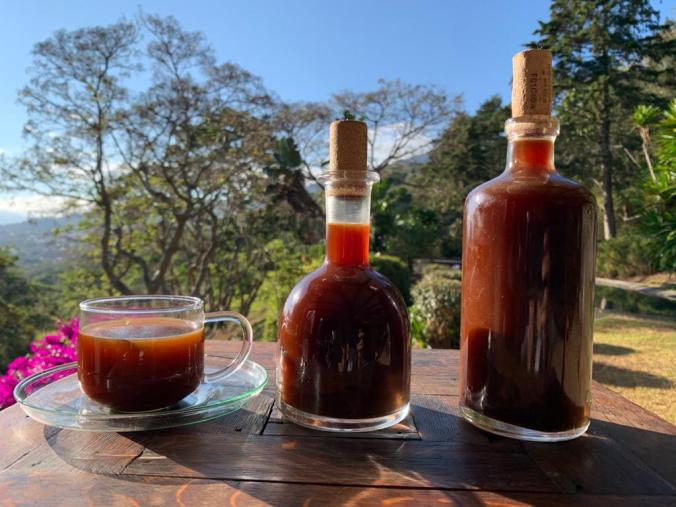
SlowBrew3SlowBrew2For four decades I heated water to draw out coffee’s flavors. I varied the use of hot water through drip machines, espresso machines, pod machines, v60 cones, French presses and an AeroPress. I also varied the coffee, sampled from around the world. Nine days into an experiment, I have simplified. No more heat. No more machines. Only coffees from Costa Rica. This week I have moved to a third variety of coffee, and it is living up to its 87 cupping score. Tested against the Tarrazu and the House, both high quality blends of specialty coffee from two of the best growing regions in Costa Rica, the Reserve tastes like what its name implies.

SlowBrew4While everyone must come to their own conclusion, for me the slow brew draws out that taste as well as any hot brew method. We have more blends, an espresso roast, and three single estates yet to be tested with the slow brew method, and I enjoy variation so I look forward to testing.  But once the Reserve stood out as the best of the first three, it got me thinking about how to use the remaining portions of the first two slow brew blends. And I took a path that will horrify purists, but I am happy to report on the result.
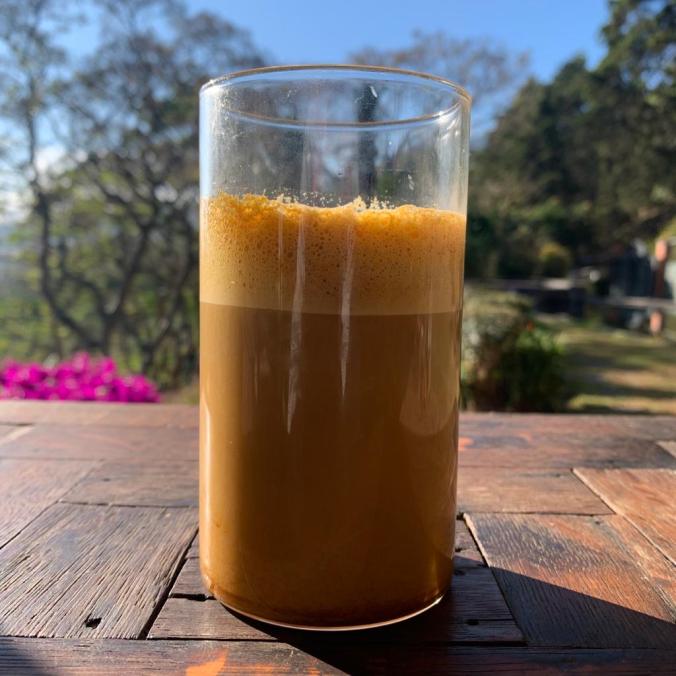
SlowBrew5The recipe for this will follow soon, because I have been varying it slightly each of the last few days, but as you can see there is a head on it, and there is a golden hue.
 

A Corrective History Of Coffee

200427_r36287

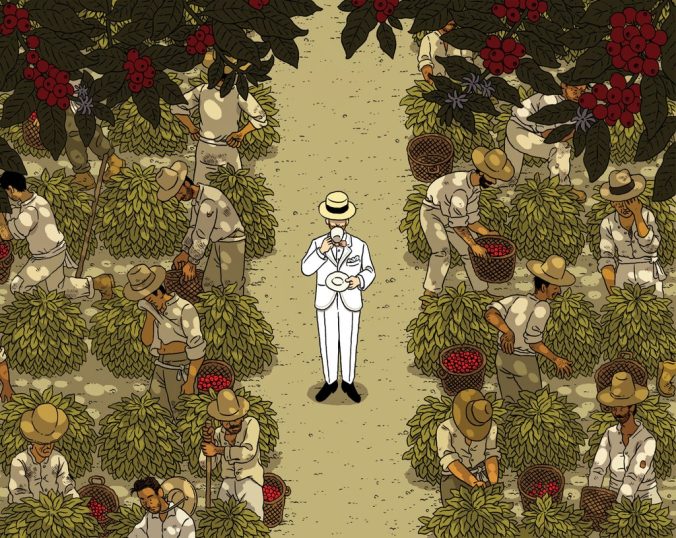
The literature of coffee has produced a new genre: corrective history. Illustration by Ilya Milstein

An essayist‘s review on one of our favorite topics is a nice surprise for a start to a new week:

The War on Coffee

The history of caffeine and capitalism can get surprisingly heated.

What would life be without coffee?” King Louis XV of France is said to have asked. “But, then, what is life even with coffee?” he added. Truer, or more apt, words for the present moment were never spoken, now usable as a kind of daily catechism. At a time when coffee remains one of the few things that the anxious sleeper can look forward to in the morning (What is life without it?), giving as it does at least an illusion of recharge and a fresh start, the charge has invariably slipped away by the time the latest grim briefing comes (What is life even with it?). Imagining life without coffee right now is, for many of us, almost impossible, even though the culture of the café that arose in America over the past couple of decades has, for some indefinite period, been shut down.

The growth of coffee as a culture, not just as a drink, can be measured in a unit that might be called the Larry, for the peerless comedy writer Larry David. In “Seinfeld,” which he co-created in 1989, coffee came as a normal beverage in a coffee shop—bad, indistinct stuff that might as well have been tea. (Paul Reiser had a nice bit about the codependency of coffee and tea, with tea as coffee’s pathetic friend.) Then, on “Friends,” the characters gathered in a coffee-specific location, Central Perk, but the very invocation of a percolator, the worst way to brew, suggested that they were there more for the company than for the coffee. Six or so Larrys later, by 2020, the plotline of an entire season of David’s own “Curb Your Enthusiasm” turned on a competition between Mocha Joe’s and Latte Larry’s—the “spite store” that Larry opens just to avenge an insult over scones, with many details about a specific kind of Mexican coffee bean he means to steal. The audience was expected to accept as an obvious premise the idea that coffee was a culture of devotion and discrimination, not just a passable caffeinated drink.

This change is real, and is reflected in the numbers. As Jonathan Morris documents in his recent book, “Coffee: A Global History” (Reaktion), epicurean coffeehouses in the United States numbered in the hundreds in 1989, and in the tens of thousands by 2013. Continue reading