A Change Of Tone

EnvPod

Usually his writing voice sounds like he is frustrated, and his spoken voice can sound like he is feeling headed for defeat. Today there is a different sound and it is worth listening to:

PoliticsAndMore-McKibbenSCRulingThis week, the Supreme Court rejected the Trump Administration’s request to expand construction on the Keystone XL oil pipeline, and the climate-change task force formed by Joe Biden and Bernie Sanders urged politicians to “treat climate change like the emergency that it is.” Bill McKibben, an activist in the environmental movement for three decades, joins Dorothy Wickenden to discuss whether the United States has hit a turning point in the battle against global warming.


Your Participation Is Important

640t

Do you plan to fly less when coronavirus travel restrictions ease? Photograph: Alamy

Our business, entrepreneurial conservation, has been fully dependent on air travel for more than two decades, and we have had plenty of indicators before now that something must change. We want to know what others think about this. The Guardian is performing an important service for all of us, so please consider participating:

A new normal: will you stop flying?

We would like to hear from Guardian readers for a video series about what’s next for travel and the environment

In our video series A new normal, we ask Guardian readers what they want a future shaped by Covid-19 to look like. Our next episode will look at air travel and its environmental impact.

Has the pandemic affected your thoughts about the way you will travel for leisure and work in the future? Would you consider giving up flying to offset your carbon footprint? Or do you miss overseas holidays, need to travel internationally for work or have you already booked a flight abroad? Continue reading

Caring About Quiet

lerivera-yale-e360_web

Point well taken. We came to believe in the importance of efforts to reduce noise pollution while living in southern India, a noisy place indeed. Thanks to Dr. Morber for adding the soundscape to this story:

SoundSilence

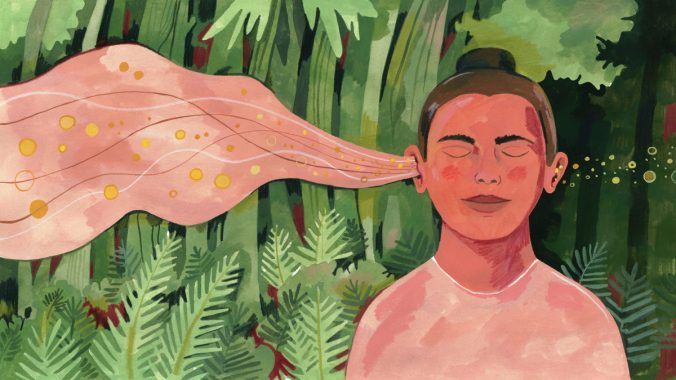
Listening to Silence: Why We Must Protect the World’s Quiet Places

As more people push into once-remote areas, truly quiet spots — devoid of the noise of traffic or crowds of tourists — have become increasingly scarce. Now, a coalition of activists, scientists, and park officials are trying to preserve the last quiet places on the planet.

It is a frosty March morning in the Hoh Rainforest, deep within Olympic National Park in Washington state. The forest is full of Jurassic ferns, hanging moss, and towering spruce and cedars, but what I hope to find is an absence. I seek a spot known as the “One Square Inch of Silence” — one of the quietest places in the contiguous United States, free from chattering people, humming power lines, and the whoosh of cars. Continue reading

No Place Like Home

NoPlace

Thanks as always to Bill McKibben, in particular this time for disguising a podcast recommendation (click the image above to go to the website of the podcast) as a recommendation for regulating Facebook:

What Facebook and the Oil Industry Have in Common

Why is it so hard to get Facebook to do anything about the hate and deception that fill its pages, even when it’s clear that they are helping to destroy democracy? And why, of all things, did the company recently decide to exempt a climate-denial post from its fact-checking process? The answer is clear: Facebook’s core business is to get as many people as possible to spend as many hours as possible on its site, so that it can sell those people’s attention to advertisers. (A Facebook spokesperson said the company’s policy stipulates that “clear opinion content is not subject to fact-checking on Facebook.”) This notion of core business explains a lot—including why it’s so hard to make rapid gains in the fight against climate change. Continue reading

Bureo & Tin Shed Ventures

tsv-main-logoBureo is news to us, and we like good news. We are always on the lookout for fellow travelers, and while Tin Shed Ventures is by no means new it is news to us. And newsworthy based on the partners they have chosen:

Tin Shed Ventures is Patagonia’s corporate venture capital fund, which invests in start-ups that offer solutions to the environmental crisis. Originally launched as $20 Million and Change in May 2013, Tin Shed Ventures partners with businesses focused on building renewable energy infrastructure, practicing regenerative organic agriculture, conserving water, diverting waste and creating sustainable materials. Continue reading

Backyard Birding & Organikos

ViviBirding

Education Images/Universal Images Group/Getty Images

Thanks to the folks at Short Wave for this brief tutorial on backyard birding, featuring a scientist from the Cornell Lab of Ornithology. For those fortunate enough to be able to use some of their time in recent months for this purpose, the tutorial may resonate. A total novice like me finds it useful so I recommend it to others.

SETarrazuLabelI especially appreciated the advice of paying attention to the coffee that you purchase, because it can have significant impact on migratory birds. The new series of Organikos labels are almost ready for print-testing. One of the final decisions made in the last month was to let the label on the bag focus on the coffee and keep the bird-habitat mission messaging on the website and in places like this. A key part of that message is that the particular coffee offered matters most. We believe that if we start with the highest quality green beans, apply the perfect level of heat, and deliver them at the fairest price we will get what we need to plant more trees. So, the Tarrazu single estate is the second label I will share here. Along with the Hacienda la Amistad single estate organic, this is some of the most spectacular coffee grown in Costa Rica. And for every bag sold, the difference between what we pay to get this to you, and what you pay to Organikos, goes to bird habitat regeneration.

Bee Surprises

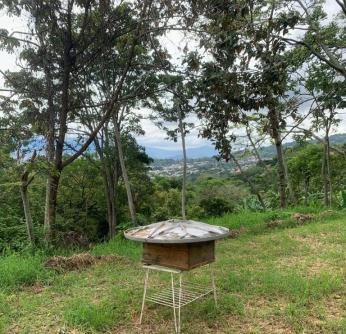
HiveOur bee obsession on this platform has many explanations, but my personal motivation for following the science of bees goes back to a summer in the late 1970s when I worked for a beekeeper. I cleared brush and vines from the forest edge to make way for more bee-friendly plantings. I worked within sight of a dozen active bee colonies in boxes where I could see buzzing swarms constantly. I learned to be calm around them from the man who tended them. He used a poncho, a mask, and a smoker when opening the boxes to remove honey, but other times walked among them with no protective gear. To my surprise the resins from Toxicodendron radicans–poison ivy, poison oak and poison sumac–did more harm to me than the bees I worked around. In fact, I was never stung by those bees. Not once.

Which explains why when we finally had the chance to start our own bee colony I was all in. Above is a bee box, with found objects inside, above and below it. The bees inside had nested at the top of our house so we had a beekeeper extract them. He gave them this new home in a location where we have been clearing brush to make way for coffee planting. The old table had been in the chicken coop and the mysterious disk was on the roadside headed for recycling. One month later now, very happy bees.
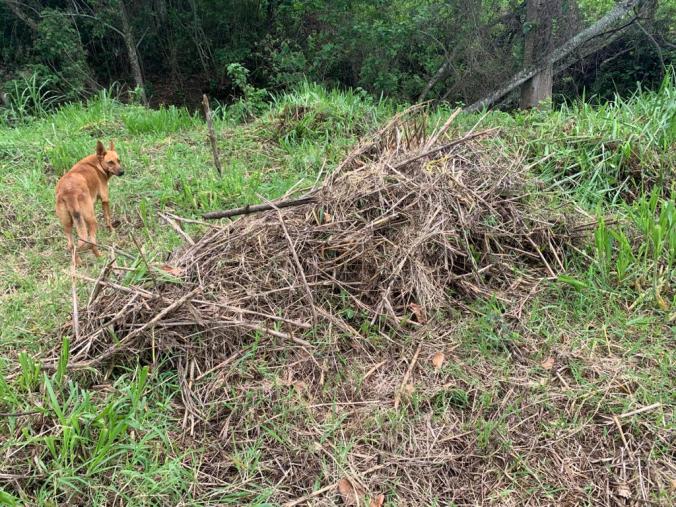
Brush

Above is a small sampling of the vines and brush I have been clearing from the land near that hive. History may not repeat, but sometimes it rhymes. As it happens, on my arm I have some of the same toxins from vines like those 40 years ago. The clearing work started in March and is nearing completion to make way for several hundred shade trees and several thousand coffee plants.
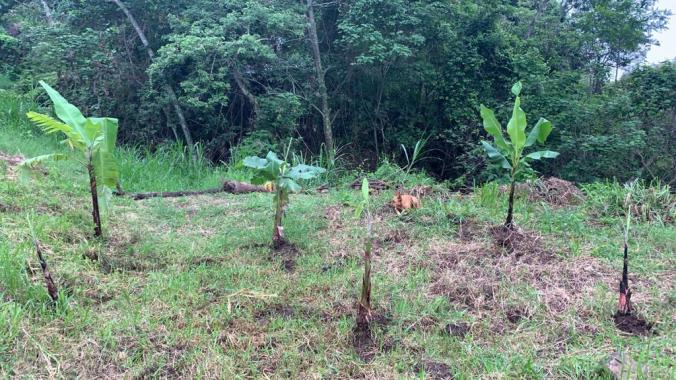
Bananas

One section of this clearing has already received twenty banana plants, based on the practice of our friends at Hacienda la Amistad. These make excellent companions to the coffee and are pollinated by bats, so provide another kind of ecological service too complex to discuss in a post primarily about bee surprises.

So, with all that in mind I was very happy to come across the story below by Cara Giaimo. Her work first appeared in our pages last October, then again a few months ago–both times related to birds. Somehow I missed this short article on bees from earlier this year, and I thank her for it now for making me laugh when there is not enough other news to laugh about:
22TB-BEES-jumbo

Frank Bienewald/imageBROKER, via Alamy

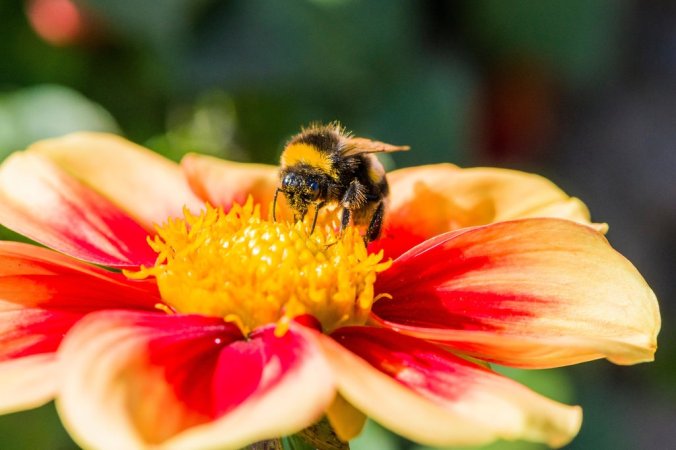
Bumblebee Vomit: Scientists Are No Longer Ignoring It

Regurgitation is an important consideration when it comes to the process of pollination.

The bumblebee is a discerning nectar shopper. When choosing which flowers to gather the sticky substance from, it might consider a plant’s distance, the shape of the petals and how sugar-rich the nectar is. Continue reading

Onon’s Epic Journey

1501

Onon returned after a 26,000km round trip that took in 27 border crossings and 16 countries. Photograph: Mongolia Cuckoo Project/Birding Beijing

Thanks to ornithologists like Dr Hewson, and to scientific instruments like the tracking device on Onon, we can see that Onon the cuckoo has made one of the longest migrations recorded by any land bird:

OnonMap

Guardian graphic. Source: The Mongolia Cuckoo Project

Cloud cuckoo land? How one bird’s epic migration stunned scientists

When Onon the common cuckoo took off from Mongolia last June no one expected him to make a 26,000km round trip to southern Africa

768

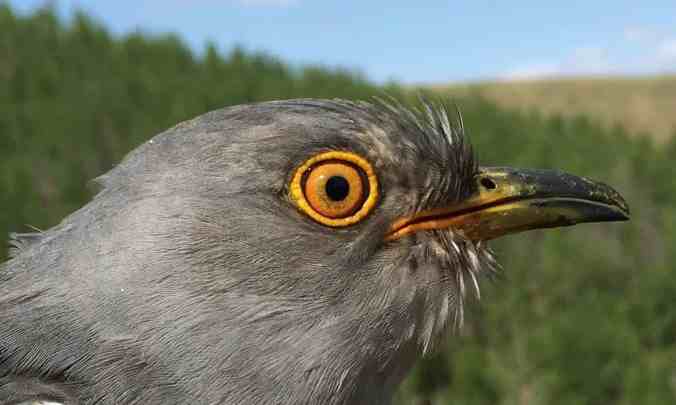
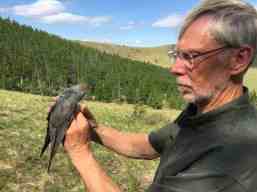
Onon moments before he was released on 8 June 2019. Photograph: Mongolia Cuckoo project/Birding Beijing

When Onon took off above the rolling hills of the Khurkh valley in Mongolia last June, researchers had no idea if they would see him alive again. Along with one oriental cuckoo and three other common cuckoos, each fitted with a tiny tracking device, he was about to embark on an epic journey to southern Africa.

Last month, he was the only bird to return safely with his tracker intact.

“It’s an amazingly long migration,” says Dr Chris Hewson, senior research ecologist at the British Trust for Ornithology, who said Onon’s 26,000km round trip was one of the longest journeys recorded by any land bird. Continue reading

Citizen Science: 89 Years Old and Counting

Microscopic plankton: they provide a food source for fish, seabirds and other marine life, as well as absorbing CO2 emissions

Although we’ve highlighted citizen science so many times on these pages, it never occurred to me that some of these projects have spanned nearly 9 decades.This particular project’s device is called a continuous plankton recorder (CPR). An apt acronym, indeed.

Tiny plankton tell the ocean’s story – this vast marine mission has been listening

Since 1931 ‘citizen scientists’ on ships have enabled data collection on the tiny building blocks of the sea. Now this research could shape how we tackle the climate crisis

On a clear day, from their small, unassuming warehouse on the south Devon coast, Lance Gregory and Dave Wilson can see right across Plymouth Sound to the Eddystone lighthouse. Today, they’re watching a ferry from Brittany, the Armorique, pull into dock.

Behind it, the ferry is towing a one-metre-long device shaped like a torpedo. It doesn’t look like much, but it’s part of the planet’s longest-running global marine survey.

The device is called a continuous plankton recorder (CPR), and it’s one of 53 such devices that Gregory and Wilson manoeuvre using forklifts in their warehouse, surrounded by racks of distinctive yellow boxes and clipboards covered in spreadsheets.

They dispatch these CPRs in bright yellow boxes to “ships of opportunity” – ferries, cargo or container vessels that have agreed to volunteer for the mission. Once a ship leaves port, the crew attach the device to the stern using steel wire, then toss it overboard.

Trailing along behind the ship, it collects data for the CPR survey. The mission is vast but the subject is minuscule: plankton, the tiny organisms that drift in the ocean. Every marine ecosystem relies on plankton for its basic food source, and it generates half the oxygen we breathe. Perhaps more than any other organism, it is crucial to all life on our planet.

The CPR survey is the longest-running marine science project of its kind. It began in 1931 when the scientist Sir Alister Hardy investigated how herring were influenced by plankton in the North Sea. This month the distance surveyed will reach an impressive 7m nautical miles, equivalent to 320 circumnavigations of the Earth.

Since that first tow from Hull to Germany 89 years ago, the equipment has hardly changed. So far a quarter of a million samples have been analysed, representing a vast geographical spread over the course of the past century. The immense scope has allowed scientists to see dramatic patterns in ocean health, across both time and space, building a much clearer picture of how our marine environments are changing.

It is also, says Gregory, “one of the oldest citizen science projects in the world”. Continue reading

Citizen Farming & Victory Gardens, 2020

WW1-and-WW2-posters

LEFT: “War gardens over the top. The seeds of victory insure the fruits of peace,” Maginel Wright Enright, National War Garden Commission, 1919 (Library of Congress). RIGHT: “War gardens for victory—Grow vitamins at your kitchen door,” lithographed by the Stecher-Traung Lithograph Corporation, Rochester, New York, between 1939 and 1945 (Library of Congress).

In the latest Gastropod episide, Dig for Victory, we get some new background on an old topic that has been on our minds lately:

VicGarden

You’ve seen the news: vegetable seeds are selling out. All that quarantine ennui has combined with anxiety about the gaps on supermarket shelves to create a whole new population of city farmers in backyards and windowsills across America. And everyone from the Los Angeles Times to Forbes to CBS has dubbed these brand new beds of beets and broccoli “COVID-19 Victory Gardens.” Continue reading

BirdsCaribbean Global Big Day in a Big Way

Birders, in general, tend to be an enthusiastic bunch – and the constraints of the current circumstances actually added extra incentive to find creative problem solving solutions, in finding new birding locations or ways to be safely be in familiar ones.

The BirdsCaribbean Global Big Day video compilation provides proof positive. Enjoy!


Counting Turtles


Great Barrier Reef LogoAt first glance, it looks like art. As most great nature photography, whether amateur or taken by professionals, often does. But this is tech-driven professional science. Thanks to the Great Barrier Reef Foundation for this primer:

COUNTING TURTLES IS A SCIENCE

So how do you count more than 64,000 turtles at once?

With drones – and now we have the science to prove it.

Our Raine Island Recovery Project researchers are investigating the best way to count all the turtles at the world’s largest green turtle nesting area. The highly respected PLOS ONE journal has just published their findings (see the paper). Continue reading

Akira Miyawaki, More On Small Forests

2048 (1)

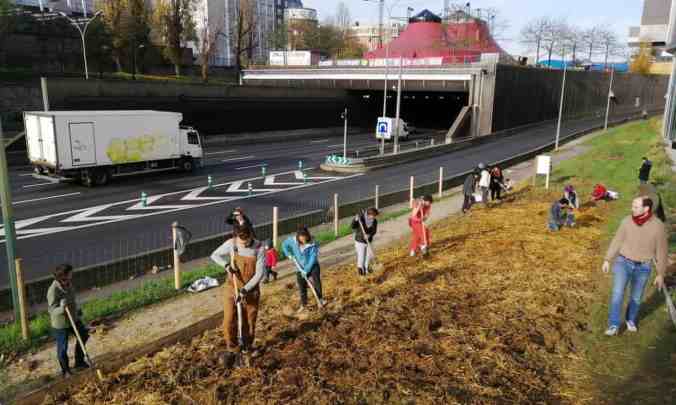
A Miyawaki forest being planted on the outskirts of Paris, France. Photograph: Courtesy of Boomforest

We knew from a recent post about the importance of small tracts of tree cover, based on reporting in the USA. Here is more from Europe, and about the botanist inspiring an acceleration of planting:

Fast-growing mini-forests spring up in Europe to aid climate

Miyawaki forests are denser and said to be more biodiverse than other kinds of woods

4608 (2)

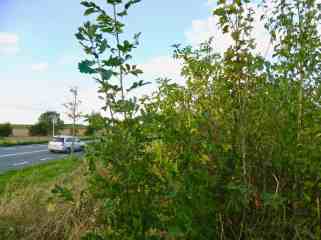
A three-year-old forest in Ormeignies, Belgium. Photograph: Urban Forests

Tiny, dense forests are springing up around Europe as part of a movement aimed at restoring biodiversity and fighting the climate crisis.

Often sited in schoolyards or alongside roads, the forests can be as small as a tennis court. They are based on the work of the Japanese botanist Akira Miyawaki, who has planted more than 1,000 such forests in Japan, Malaysia and elsewhere. Continue reading

If Not Europe Now, Where & When For A Global Green Recovery?

GettyImages-978196998_cycling-turbines_web

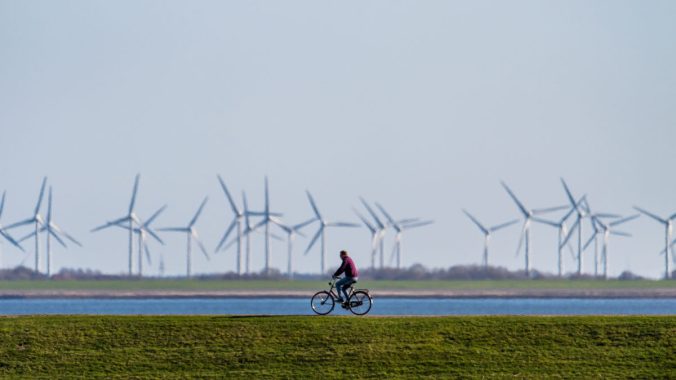
A bicyclist on an embankment in front of wind turbines in Norderney, Germany. LINO MIRGELER/GETTY IMAGES

Thanks to David G. Victor for this opinion:

Building Back Better: Why Europe Must Lead a Global Green Recovery

With the global economy reeling from the pandemic, most nations are focusing stimulus programs on reviving employment. But Europe is moving forward with a Green Deal initiative that provides a framework for decarbonizing its economy and spurring the rest of the world to follow. Continue reading

Threads

The threads of handloom speak to me every time I enter my closet, despite the fact that it’s a rare occurrence for me to wear a sari now that we no longer live in India. Even without that particular garment, half of my wardrobe is comprised of beautiful pieces of extraordinary workmanship, in handloom, shibori dying, and embroidery; designed in Kerala by Sreejith Jeevan for Rouka, and crafted in collaboration with numerous weaving and dying clusters.

Anoodha Kunnath and the Curiouser team once again bring this craft to life in inspiring ways. The excerpt above is from a longer film shot for Sahapedia, an online interactive encyclopedia on the arts, cultures and histories of India (and broadly South Asia). It aims to highlight the interdisciplinary and interconnected nature of cultural expression that cut across various domains.

The threads have to be strung across an open field before 8 am at least, so that they are dried by the morning breeze and warmed just enough by the tender sunlight found only at those hours. Street warping, just like everything that is done with great love and care, is painstaking; so much so that the author Sethu compares it to caring for a child. Continue reading

Oceans’ Call to Action

© Alexis Rosenfeld

We’re a day behind on World Oceans Day, but John Tanzer’s words are lasting, despite the date.

Don’t Waste A Crisis – A World Oceans Day Call to Action.

By John Tanzer, Oceans Practice Leader, WWF International

It was early March when the realization hit. Our Year of Ocean Action wasn’t going to happen — at least not in the way so many had been planning. 2020 would be extraordinary, but for all the wrong reasons. Our Super Year was meant to be the launch platform for a decade of strong global efforts to restore the ocean. Clearly, the attention and resources we had hoped to harness have been in much demand elsewhere.

I was not looking for a “silver lining” to the suffering and loss caused by the coronavirus, but somewhere in the back of my mind was a quote about not letting a crisis go to waste. Was it Winston Churchill who said it? Or a contemporary politician?

It turns out, it was not Churchill, and it wasn’t even a politician. The line can be traced back at least as far as 1976, to M. F. Weiner’s article in the journal Medical Economics, “Don’t Waste a Crisis — Your Patient’s or Your Own.” Weiner apparently meant that a medical crisis can be used to improve all aspects of a patient’s well-being.

So, it wasn’t a callous sentiment about seizing the upper hand in a moment of chaos. It was an acknowledgement that a crisis may arise which so disrupts the norm that all preconceptions are set aside, and all solutions are on the table.

Continue reading

Fixing Farms In Ireland

4494

Michael Davoren with his cattle in the Burren, Co Clare. Photograph: Eamon Ward/Burrenbeo Trust

Thanks to Ella McSweeney for this story about a young academic’s hands on, entrepreneurial approach to solving problems caused by Ireland’s farmers, who had followed incentives to their economically logical but environmentally disastrous conclusions:

‘Life attracts life’: the Irish farmers filling their fields with bees and butterflies

Rewarding positive environmental impact has revitalised an area of west Ireland. Is this a solution to the country’s ‘acute’ nature crisis?

2848

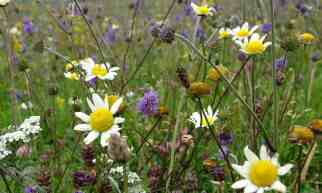
In late spring, the Burren is transformed into an explosion of colour. Photograph: Burrenbeo Trust

Michael Davoren shudders when he thinks of the 1990s. He’d been in charge of his 80-hectare farm in the Burren, Co Clare, since the 1970s, and the place was in his blood. The Davorens had worked these hills for 400 years.

But growing intensification fuelled by European subsidies meant that most farmers in this part of Ireland were having to decide between getting big or getting out. Hundreds were choosing the latter.

2848 (1)

Hundreds of farmers have signed up to a scheme that pays them to create healthier fields and clean waterways. Photograph: Burrenbeo Trust

Davoren followed the advice to specialise and chase the beef markets. “The more animals I kept, the more money I got,” he says. “I put more cattle out, bought fertiliser, made silage. Slurry run-off was killing fish. But if I kept fewer animals I’d be penalised 10% of my subsidy.”

The austere appearance of the Burren landscape belies its rich diversity. The thick rocks were laid down 300 million years ago when warm tropical seas covered the area, and the bodies of billions of marine creatures cascaded to the sea floor to form the Burren limestone. Continue reading

The Refuge Of Family Forests

Popkin_Tim-Leiby-2_web

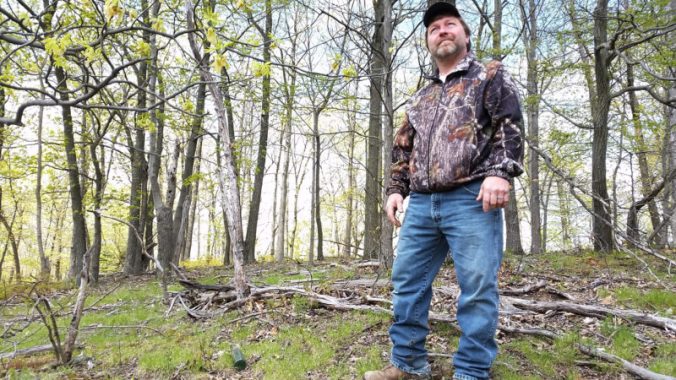
Tim Leiby co-owns his 95-acre forest near Blain, Pennsylvania with eight other families. GABRIEL POPKIN / YALE E360

Gabriel Popkin takes a “who knew?” topic and brightens up the day:

How Small Family Forests Can Help Meet the Climate Challenge

As efforts grow to store more CO2 emissions in forests, one sector has been overlooked — small, family-owned woodlands, which comprise 38 percent of U.S. forests. Now, a major conservation initiative is aiming to help these owners manage their lands for maximum carbon storage.

Popkin_hickory-leaf-recently-emerged_web_web2

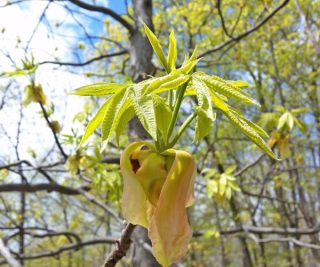
Hickory leaves emerge on Tim Leiby’s forest, a sign of progress toward bringing back native hardwoods. GABRIEL POPKIN / YALE E360

Tim Leiby had wrapped up a fun but fruitless early-morning turkey hunt and was enjoying an old John Wayne flick when I arrived at Willow Lodge near Blain, Pennsylvania. A few flurries drifted down on this unseasonably cold May morning. After a quick scan of antlers mounted on virtually every wall of the cozy hunting lodge, we headed out for a socially distanced stroll through what Leiby calls “our little piece of heaven.”

This 95-acre woods in south-central Pennsylvania’s ridge-and-valley country is a hunting and hiking refuge co-owned by eight families. Continue reading

Virtual Ocean Dialogues

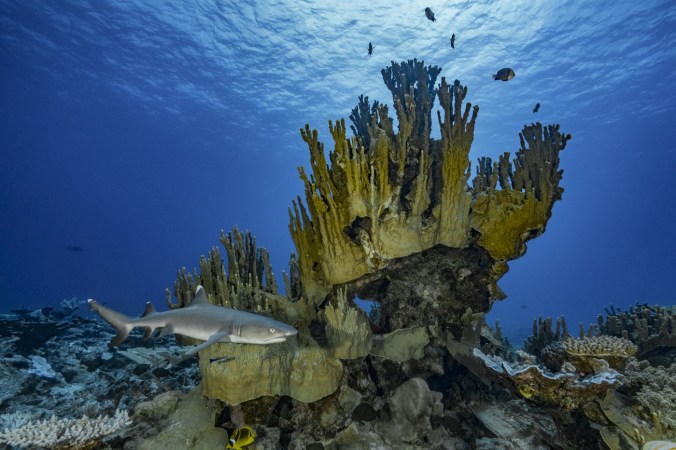
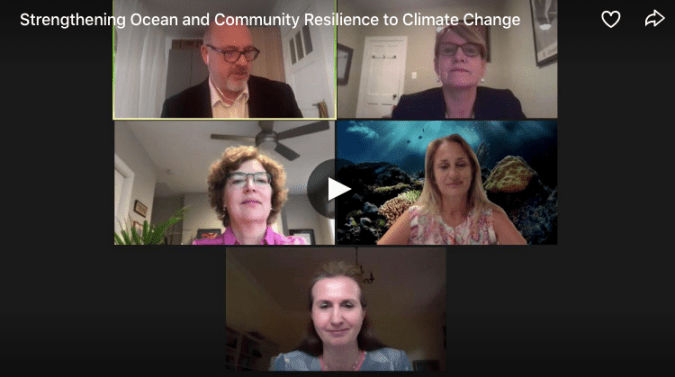
Another example of Costa Rican leadership and team action. The Virtual Ocean Dialogues, held by the World Economic Forum, “bring to light ambitious and inspiring solutions as well as tangible opportunities for positive change, and galvanize urgent global action for a healthy ocean. It will also spotlight some of the solutions that emerged as critical for the recovery from the COVID-19 crisis, including the role of the ocean in building the resilience that our economies and communities need to recover and eventually face other potential future shocks.”

The opening address by Costa Rica’s President Carlos Alvarado Quesada included statements about present and future actions.

“Costa Rica has historically been a leader in conservation,” Quesada says. It has doubled forest coverage in recent years and is aiming for a zero-emission economy by 2050.

Now it wants to turn its attentions to the sea. “We are working towards a sustainable approach for ocean management,” he says.

It is “committed to promoting a global blue economy transformation”, prioritizing mangrove forests, aquaculture and coastal biodiversity.

Continue reading

Costa Rican To Lead GEF

carlos_manuel_rodriguez_2

Some happy news:

Carlos Manuel Rodriguez named new CEO of Global Environment Facility

Costa Rican Environment and Energy Minister Carlos Manuel Rodriguez has been selected as the next CEO and Chairperson of the Global Environment Facility, the largest multilateral trust fund supporting environmental action in developing countries and the main financing mechanism for multiple United Nations environmental conventions. Continue reading