Honeybee Facts & Figures

Illustration by Matteo Giuseppe Pani. Source: Getty.

We have done our part to share, perhaps erroneously, that honeybees are in trouble. We hope we have been wrong:

The Great Honeybee Fallacy

For years, people have understood them to be at imminent risk of extinction, despite evidence to the contrary. Why?

Everyone, for so long, has been worried about the honeybees. Continue reading

Community Income From Rewilding

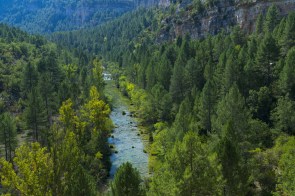
Rewilding Spain’s sustainable forest management support service helps municipalities generate income through activities such as resin extraction. NEIL ALDRIDGE

In the decade since we have been watching the work of Rewilding Europe we have seen income generation growing in importance:

Allowing trees to grow old in healthy ecosystems can help to lock up and store huge amounts of carbon.
JUAN CARLOS MUÑOZ ROBREDO /

Rewilding forest generates revenue for communities in the Iberian Highlands

Rewilding Spain has signed its first agreement to protect an old-growth forest in the Iberian Highlands. A change in forest management will support natural regeneration, delivering benefits to both nature and people. With other owners of old-growth forests interested in signing similar agreements, there is significant scaling-up potential.

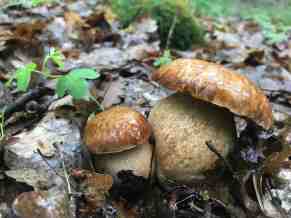
The old-growth forest protected by the new agreement is popular with mushroom pickers.
SEBASTIAN URSUTA

The importance of old-growth forests

Letting forests naturally regenerate is one of the most practical, immediate, and cost-effective ways of addressing our ecological and climate emergencies. As vital ecosystems that support millions of animals and plants, mature natural forests – or old-growth forests – lock up and store huge amounts of carbon. They are more resilient to climate change and disease than young tree plantations, with their diverse mix of native species allowing them to better adapt to a far wider range of conditions. Continue reading

How Many Trees Are Needed In The Amazon?

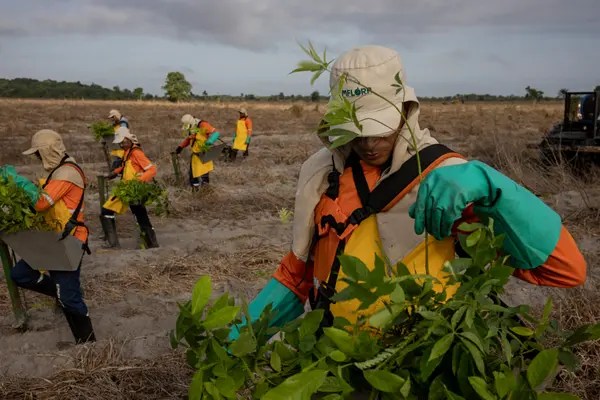
Forest restoration workers planted native Amazonian seedlings on degraded pastureland in Mãe do Rio, Brazil.

We do not know how many trees are needed but hope that the answer to the question below is yes:

Can Forests Be More Profitable Than Beef?

Cattle ranches have ruled the Amazon for decades. Now, new companies are selling something else: the ability of trees to lock away planet-warming carbon.

The residents of Maracaçumé, an impoverished town on the edge of the Amazon rainforest, are mystified by the company that recently bought the biggest ranch in the region. How can it possibly make money by planting trees, which executives say they’ll never cut down, on pastureland where cattle have been grazing for decades? Continue reading

Andrea Vidaurre, Making Good Trouble in California

Take five minutes to celebrate Andrea’s activism and its accomplishments:

2024 GOLDMAN PRIZE WINNER

Andrea Vidaurre

Andrea Vidaurre’s grassroots leadership persuaded the California Air Resources Board to adopt, in the spring of 2023, two historic transportation regulations that significantly limit trucking and rail emissions. The new regulations—the In-Use Locomotive Rule and the California Advanced Clean Fleets Rule—include the nation’s first emission rule for trains and a path to 100% zero emissions for freight truck sales by 2036. The groundbreaking regulations—a product of Andrea’s policy work and community organizing—will substantially improve air quality for millions of Californians while accelerating the country’s transition to zero-emission vehicles.

Marshes Matter, And This One More Than Many

The outer edge of the Nartë lagoon in Vlorë, Albania. YURIY BRYKAYLO / ALAMY STOCK PHOTO

I have worked in some of Albania’s most important coastal and inland bird habitats, though not this one. My time working there is not my only reason for caring about this particular location. Read on–thanks as always to Fred Pearce–to understand why it matters so much. No offense intended to Jared Kushner, but this is not one of his better ideas. The destruction is not worth whatever it is he is hoping to accomplish:

Jared Kushner Has Big Plans for Delta of Europe’s Last Wild River

Albania’s Vjosë River is known as Europe’s last wild river, and its pristine delta is a haven for migratory birds. As plans for luxury developments there — spearheaded by Donald Trump’s son-in-law Jared Kushner — move ahead, conservationists are sounding the alarm.

It is the jewel of the Adriatic. Its shimmering waters feed a rare colony of Dalmatian pelicans, the world’s largest freshwater birds, sustain the endangered Albanian water frog, and host loggerhead turtles on its encircling dunes. Continue reading

The Most Important View, If Climate Change Interests You


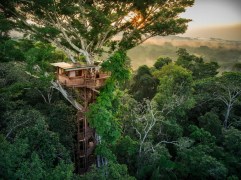
In a vulnerable, defendable part of the Amazon, the hundred-and-ten-foot-high tree house was built to attract wealthy tourists—and potential funders of conservation.Photograph courtesy Tamandua Expeditions

Tree house lodging is not new, but beyond beauty is impact. In that regard the accommodations with the most important view right now might be here:

The Highest Tree House in the Amazon

In 2023, conservationists and carpenters converged on Peru to build luxury accommodations in the rain-forest canopy.

Every day, empty logging trucks rumble into Puerto Lucerna, a small outpost on Peru’s Las Piedras River, which snakes through the lush Amazon rain forest. There, workers load them up with pyramids of freshly cut logs—cedar, quinilla, and, most important, ironwoods, which are prized for their hardness and rich color. Continue reading

The Paper Log House On View Until December

The Paper Log House at The Glass House. Photo by Michael Biondo.

The building in the background of the photo above has never featured in any of our architecture-focused posts before, even though architecture has been a key theme since our start, and especially after hosting these interns in India. I know why I never wanted that particular architect in our pages, but nevermind that. This post is about another architect’s achievement, which I plan to visit if I get close enough before December:

SHIGERU BAN: THE PAPER LOG HOUSE

The Glass House, Shigeru Ban Architects (SBA), and The Irwin S. Chanin School of Architecture of The Cooper Union announce the completion of Shigeru Ban: The Paper Log House at The Glass House. Students from The Cooper Union joined in erecting the structure through a unique opportunity offered this semester for the university’s Building Technology course. The collaborative installation will be on display April 15th through December 15th 2024 for The Glass House’s more than 13,000 annual visitors. Continue reading

Babatana Rainforest Conservation Project & High Integrity Carbon Credits

Sirebe tribal ranger Elijah Qalolilio Junior in the rainforest. DOUGLAS JUNIOR PIKACHA / NAKAU

A sign marks the boundary of protected Sirebe land. DOUGLAS JUNIOR PIKACHA / NAKAU

Of all the methods for addressing climate change, new incentives for protecting forests are among those we have most confidence in. Thanks to this article by Jo Chandler in Yale e360, if your introspection after reading this previous article had you down on carbon credits, there may be a way to restore your confidence:

The Sirebe forest at dusk. DOUGLAS JUNIOR PIKACHA / NAKAU

Solomon Islands Tribes Sell Carbon Credits, Not Their Trees

In a South Pacific nation ravaged by logging, several tribes joined together to sell “high integrity” carbon credits on international markets. The project not only preserves their highly biodiverse rainforest, but it funnels life-changing income to Indigenous landowners.

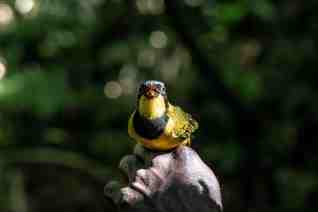
A male oriole whistler on a forest ranger’s hand. DOUGLAS JUNIOR PIKACHA / NAKAU

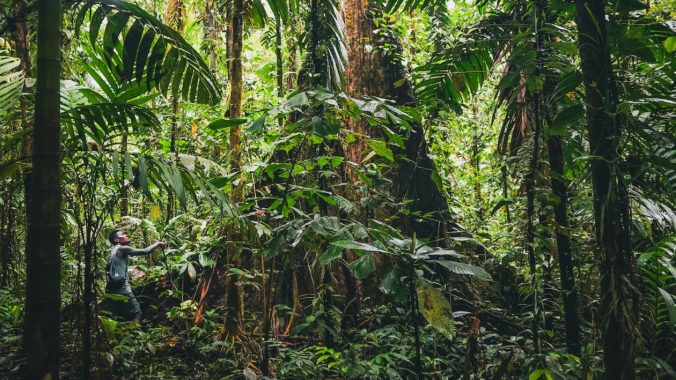
When head ranger Ikavy Pitatamae walks into the rainforest on Choiseul Island, the westernmost of the nearly 1,000 islands that make up the South Pacific archipelago of Solomon Islands, he surveys it with the heart of a tribal landowner and the eye of a forester. Continue reading

Assisted Evolution

Photo illustration by Lauren Peters-Collaer

If conservation failure is an option, then assisted evolution is a necessary consideration. Emily Anthes walks us through the idea:

When traditional conservation fails, science is using “assisted evolution” to give vulnerable wildlife a chance.

Scientists are trying to save lowland Leadbeater’s possums, tree-dwelling marsupials known as forest fairies, by crossbreeding them with possums from a separate highland population, a strategy known as genetic rescue.

For tens of millions of years, Australia has been a playground for evolution, and the land Down Under lays claim to some of the most remarkable creatures on Earth.

It is the birthplace of songbirds, the land of egg-laying mammals and the world capital of pouch-bearing marsupials, a group that encompasses far more than just koalas and kangaroos. (Behold the bilby and the bettong!) Nearly half of the continent’s birds and roughly 90 percent of its mammals, reptiles and frogs are found nowhere else on the planet.

Australia has also become a case study in what happens when people push biodiversity to the brink. Continue reading

Cambodian Mangrove Wonders

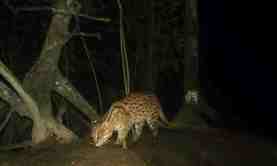
A fishing cat in Peam Krasop wildlife sanctuary. Photograph: Fauna & Flora/FCEE

Thanks to Robin McKie, now Science Editor at the Guardian, for this news from Cambodia:

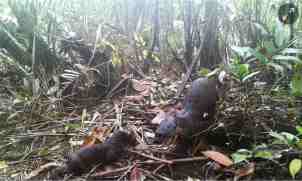
‘We found 700 different species’: astonishing array of wildlife discovered in Cambodia mangroves

Smooth-coated otters in the mangroves. Photograph: Fauna & Flora/FCEE

Hairy-nosed otters and cats that catch fish are among the startling diversity of creatures making their home in threatened habitats

One of the most comprehensive biodiversity surveys ever carried out in a mangrove forest has revealed that an astonishing array of wildlife makes its home in these key, threatened habitats. Continue reading

Industry Pivots Via Carbon Sequestration

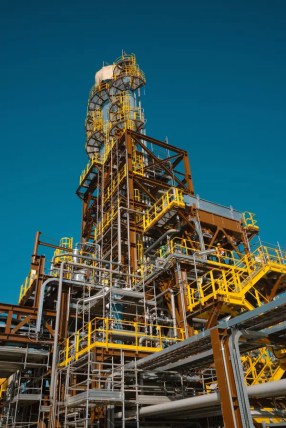
This gas processing plant at Casalborsetti is the focus of the first phase of an ambitious plan to capture carbon dioxide and bury it under the sea. Maurizio Fiorino for The New York Times

Where to put carbon is a major question of the day. Thanks to writers like Stanley Reed and publications like the New York Times the ideas keep coming:

Plan to Stash Pollution Beneath the Sea Could Save Money and Jobs

The Italian energy giant Eni sees future profits from collecting carbon dioxide and pumping it into natural gas fields that have been exhausted.

Renowned for ancient churches and the tomb of Dante, the 14th-century poet, the city of Ravenna and its environs along Italy’s Adriatic coast are also home to old-line industries like steel and fertilizer. Continue reading

Make Space For Weeds

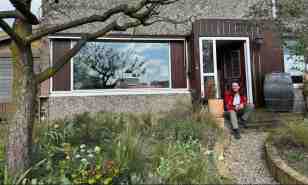
Tineke Menalda on her front doorstep in Amersfoort Photograph: Senay Boztas/Guardian

Weeds are part of nature, whether we like them or not. Thanks to Senay Boztas and the Guardian for this new take on weeds from Holland:

‘We need to accept the weeds’: the Dutch ‘tile whipping’ contest seeking to restore greenery

View image in fullscreen
A pile of ‘whipped’ paving stones in the village of Raalte.

National competition has goal of helping Netherlands reach environmental targets by removing garden paving

Tineke Menalda sits in the sun on her front step, nursing a cup of coffee and idly plucking out the odd weed. Three years ago, the front of her terrace house in Amersfoort was completely paved. But now, sitting in a lush garden of trees and green, she is an official ambassador for the strangest new sport in the Netherlands: tegelwippen, “tile whipping”, or “whipping away” the paving stones. Continue reading

South American Fishing Methods, And Choices

An open-net salmon farm on the Chilean side of the Beagle Channel. Photograph: Dani Casado

As we increase our awareness of the many choices we have when consuming fish (among other things), here is more food for thought:

Crabs, kelp and mussels: Argentina’s waters teem with life – could a fish farm ban do the same for Chile?

Puerto Almanza, on the Beagle Channel in Argentinian Tierra del Fuego, is one of the world’s most southerly settlements and best known for the local seafood, especially Patagonian king crabs.
Photograph: Visit Argentina

While the ecosystem is thriving off the coast of Argentina, the proliferation of salmon farms in Chile’s waters is threatening marine life, say critics

A rocky path, strewn with thick tree roots, leads from a dirt road down to a small green hut overlooking the choppy waters of the Beagle Channel, a strait between Chile and Argentina. The shack is home to Diane Mendez and her family but doubles as Alama Yagan, one of nine restaurants in the fishing village of Puerto Almanza. Continue reading

Illegal Miners Face The Fire

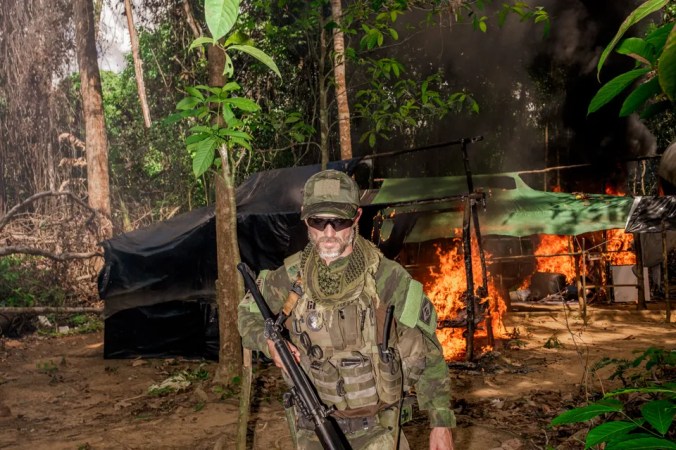
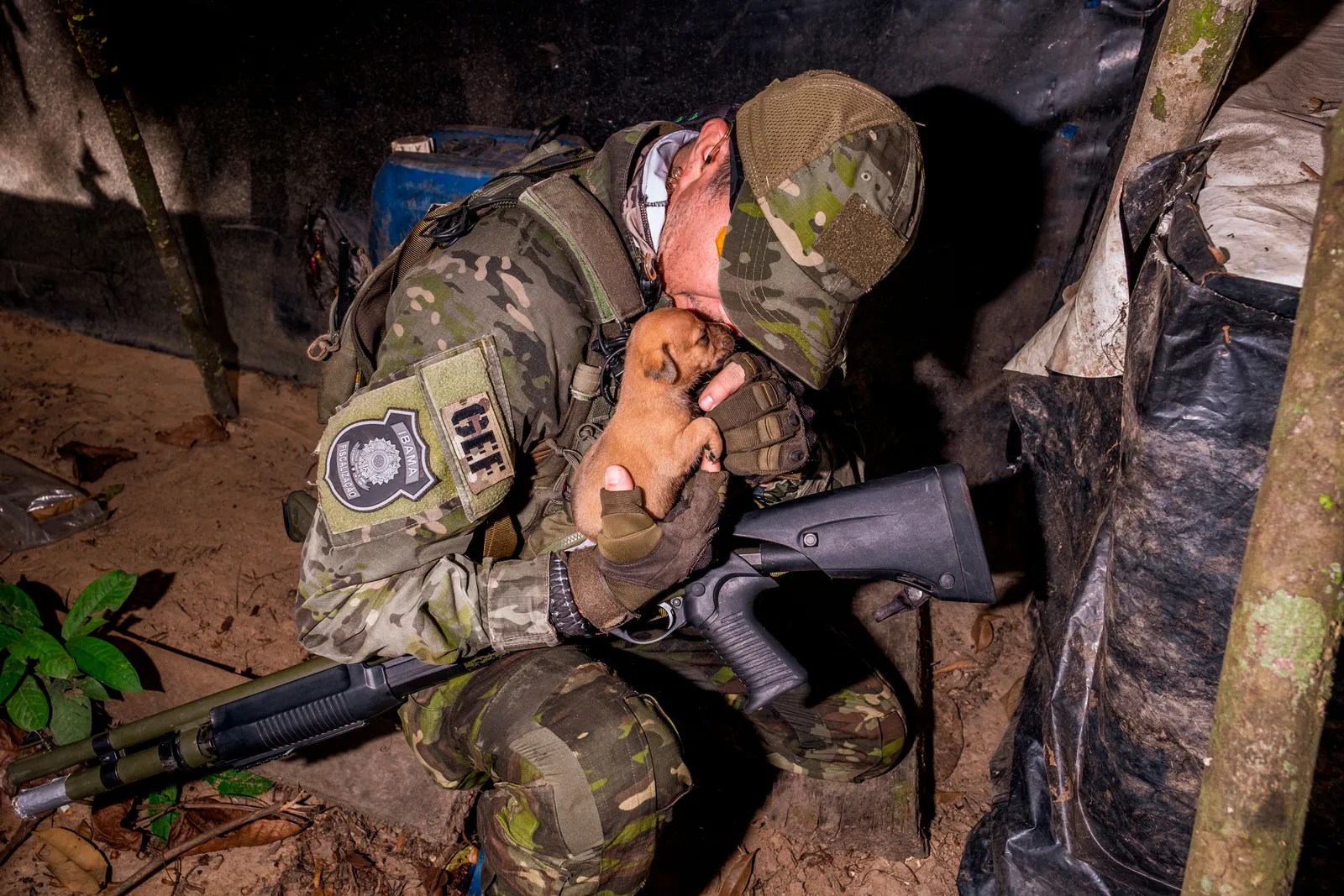
The G.E.F. burns mining camps as part of a long-running counteroffensive against environmental depredation. “Wherever they go, the miners destroy everything,” Felipe Finger, the unit’s leader, says. Photographs by Tommaso Protti for The New Yorker

Thanks to Jon Lee Anderson, as always, for his reporting from the danger zone that Brazil’s Amazon forest too often is:

The Brazilian Special-Forces Unit Fighting to Save the Amazon

As miners ravage Yanomami lands, combat-trained environmentalists work to root them out.

Roberto Cabral, a founder of the G.E.F., attends to a puppy discovered in a camp after miners fled.

In a clearing in the Brazilian Amazon, I stood with a group of armed men, discussing a viral TikTok video. The video, shot from a helicopter full of illegal miners, showed a vast stretch of rain forest, with dense foliage extending in all directions. The only sign of human habitation was below: a dirt circle surrounded by fanlike lean-tos made of wooden poles and palm fronds. It was a maloca, a traditional compound of the Yanomami, an Indigenous group that inhabits a remote territory in the rain forest of northern Brazil. Continue reading

Drone Cowboys

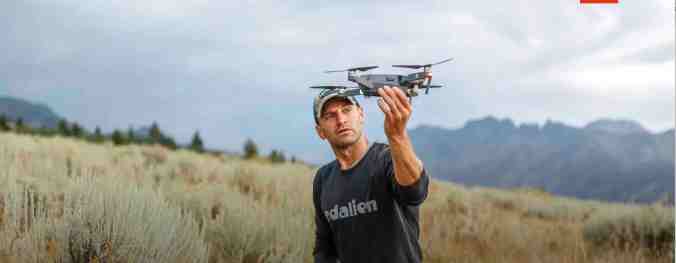
Daniel Anderson holds a drone on his family’s ranch in Montana’s Paradise Valley. Louise Johns/High Country News

High Country News is where a story like this gets assigned, and since they are a hyper-niche publication we thank The Atlantic for broadcasting it. If drones can unite these two constituencies, they are worth a moment of your time:

Illustration by Matteo Giuseppe Pani. Source: Getty.

Drones Could Unite Ranchers and Conservationists

Flying robots could offer a nonlethal way to keep wolves away from cattle.

In the summer of 2022, several researchers with USDA Wildlife Services held their breath as a drone pilot flew a large drone, equipped with a camera, toward a wolf standing in a pasture in southwestern Oregon. Continue reading

An Oil Company Funding Carbon Capture?

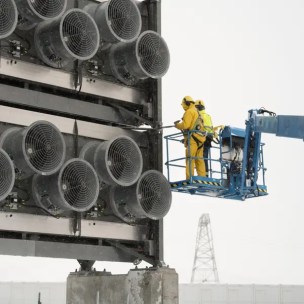
The plant will be powered by geothermal energy. Francesca Jones for The New York Times

David Gelles in the New York Times furthers our understanding of the expanding use of carbon capture, and the motives of the key actors utilizing this technology:

On a windswept Icelandic plateau, an international team of engineers and executives is powering up an innovative machine designed to alter the very composition of Earth’s atmosphere.

“Collector containers” where air is pulled in. Francesca Jones for The New York Times

If all goes as planned, the enormous vacuum will soon be sucking up vast quantities of air, stripping out carbon dioxide and then locking away those greenhouse gases deep underground in ancient stone — greenhouse gases that would otherwise continue heating up the globe.

Just a few years ago, technologies like these, that attempt to re-engineer the natural environment, were on the scientific fringe. They were too expensive, too impractical, too sci-fi. Continue reading

Dutch Water Knowhow Is Respectable

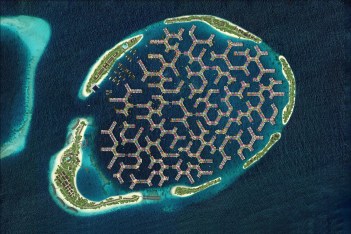
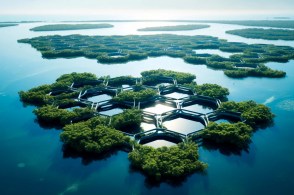
Waterstudio renderings like this one, of a floating “city” in the Maldives, are created using tools including Photoshop and the A.I. program Midjourney. Art work courtesy Waterstudio / Dutch Docklands

We respect the Dutch for their respect of nature, particularly their respect for the power of water and their longstanding determination to harmonize our life with it. This profile extends our respect:

A Dutch Architect’s Vision of Cities That Float on Water

What if building on the water could be safer and sturdier than building on flood-prone land?

Koen Olthuis, the founder of the architectural firm Waterstudio, believes that floating buildings like the Théâtre L’Île Ô, in Lyon, will transform urban living like skyscrapers did a century ago. Photograph by Giulio Di Sturco for The New Yorker

In a corner of the Rijksmuseum hangs a seventeenth-century cityscape by the Dutch Golden Age painter Gerrit Berckheyde, “View of the Golden Bend in the Herengracht,” which depicts the construction of Baroque mansions along one of Amsterdam’s main canals. Handsome double-wide brick buildings line the Herengracht’s banks, their corniced façades reflected on the water’s surface. Interspersed among the new homes are spaces, like gaps in a young child’s smile, where vacant lots have yet to be developed.

A rendering of a floating forest in the Persian Gulf, devised as part of a strategy to combat heat and humidity. When building projects on the water, Olthuis says, “you have to be very, very patient.” Art work courtesy Waterstudio

For the Dutch architect Koen Olthuis, the painting serves as a reminder that much of his country has been built on top of the water. The Netherlands (whose name means “low countries”) lies in a delta where three major rivers—the Rhine, the Meuse, and the Scheldt—meet the open expanse of the North Sea. More than a quarter of the country sits below sea level. Over hundreds of years, the Dutch have struggled to manage their sodden patchwork of land. Continue reading

Ed Yong With Binoculars

Ed Yong has graced our pages for a decade and still finds new ways to communicate the wonders of nature:

When I Became a Birder, Almost Everything Else Fell Into Place

Last September, I drove to a protected wetland near my home in Oakland, Calif., walked to the end of a pier and started looking at birds. Throughout the summer, I had been breaking in my first pair of binoculars, a Sibley field guide and the Merlin song-identification app, but always while hiking or walking the dog. On that pier, for the first time, I had gone somewhere solely to watch birds. Continue reading

Where Does Captured Carbon Go?

The Heirloom Carbon direct air capture plant in Tracy, California, which opened last November. HEIRLOOM CARBON

For keeping an eye on the captured carbon trail, thanks to Nicola Jones:

As Carbon Air Capture Ramps Up, Major Hurdles Remain

Aided by tax breaks and carbon credits, scores of plants are being developed or are now operating that remove CO2 from the air. Such facilities are considered necessary to limit global warming, but critics have questions about the high costs and where the captured carbon will go.

Texas is by far the top emitter of greenhouse gases in the United States: The oil-rich state releases twice as much carbon dioxide as the runner-up state, California, and as much as the entire country of Germany. Continue reading

Forest Adaptation Via Scientific Methodology

Scientists in northern Minnesota are exploring how to adapt forests for climate change, transitioning them to a warmer future by planting new mixes of southern seedlings. In this “transition test” in the Cutfoot Experimental Forest, forest ecologists thinned trees and planted seedlings of eight species, grown from seeds collected up to hundreds of miles to the south. CREDIT: BRIAN PALIK / USDA FOREST SERVICE

Thanks to John Tibbets and Knowable Magazine

This 8-year-old bitternut hickory, native to a milder climate to the south, is flourishing in northern Minnesota, notorious for long, intensely cold winters. CREDIT: BRIAN PALIK / USDA FOREST SERVICE

On a brisk September morning, Brian Palik’s footfalls land quietly on a path in flickering light, beneath a red pine canopy in Minnesota’s iconic Northwoods. A mature red pine, also called Norway pine, is a tall, straight overstory tree that thrives in cold winters and cool summers. It’s the official Minnesota state tree and a valued target of its timber industry.

But red pine’s days of dominance here could fade. In coming decades, climate change will make red pine and other Northwoods trees increasingly vulnerable to destructive combinations of longer, warmer summers and less extremely cold winters, as well as droughts, windstorms, wildfires and insect infestations. Climate change is altering ecological conditions in cold regions faster than trees can adapt or migrate. Continue reading