Vegan Hooligans @ Abby’s Diner

vegan01.jpg

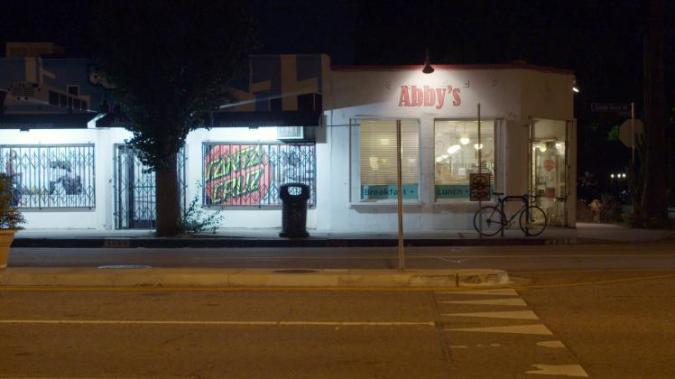
When I started reading this short piece below, subtitled “The chefs Roy Choi and Jose Mejia sample the Vegan Hooligans’ plant-based junk food at an L.A. pop-up.” and containing no photos, before getting two paragraphs in I had to see what Abby’s Diner looked like, and found the image above and those below, on Instagram and in a story by KCET, so following is a mix of the sources:

The chef Roy Choi posted up at the counter of Abby’s Diner in Los Angeles recently. Several times a week, the place morphs from a traditional greasy spoon—booths, tiled floor, B.L.T.s—to a greasy spoon that serves vegan renditions of such drive-through classics as the McDonald’s McRib.
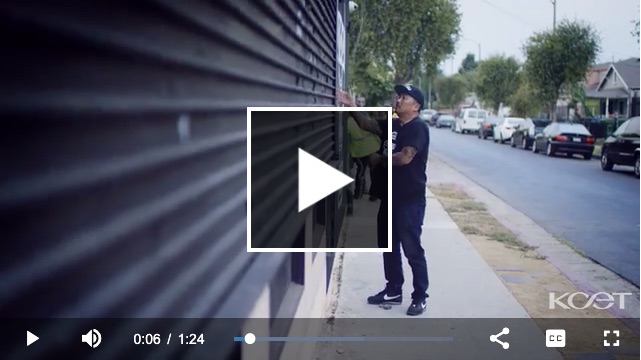
Roi Choi.jpg

Entrepreneur, social activist and chef Roy Choi takes a journey through his hometown of Los Angeles to explore complex social justice issues including food deserts, food waste and sustainability. Learn more about “Broken Bread.” Watch this trailer.

Sheila Marikar has not appeared in our pages before, but I will be on the lookout for more from her, because even without images (thanks to KCET and the Hooligans’ Instagram account for those here) her words make vegan more compelling:

vegan03

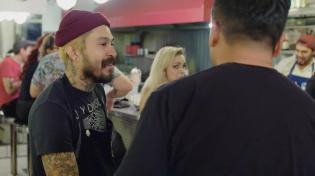
Jose Mejia is the man behind the Vegan Hooligans.

“I like to re-create a lot of stuff from fast food so people feel comfortable,” Jose Mejia said. He is a founder of the Vegan Hooligans, which began popping up last February. (The name is a nod to his love of punk rock and soccer.) He wore overalls and a brown beanie. “I wanted to create a brand that didn’t just capture the eyes of, like, vegans,” he added.

BeLeaf.jpgEleven years ago, Choi co-founded Kogi BBQ, a fleet of Korean-taco trucks that fuelled a food-truck renaissance and got him on a number of best-of lists (Food & Wine Best New Chef, Time 100). He is not a vegan. “Kogi, for Pete’s sake, means ‘meat’ in Korean,” he said. But after meeting Mejia while filming an episode of his TV series, “Broken Bread,” a less hedonistic version of Anthony Bourdain’s “No Reservations,” Choi decided to try more meat substitutes. Now he eats animals maybe once a week. Continue reading
Climate Change, Coffee & Solutions

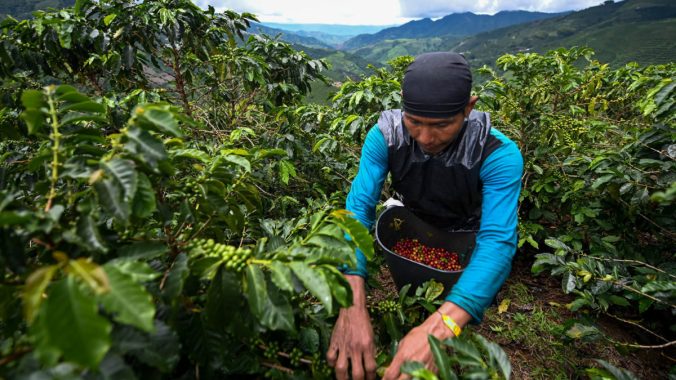
GettyImages-1146667212_ColombiaCoffee_web.jpg

A worker harvests coffee near the town of Santuario, Risaralda department, Colombia in May. RAUL ARBOLEDA/AFP/GETTY IMAGES

In Costa Rica, where we have been paying attention to the plight of coffee farmers in the last year, there are numerous scientific and sectoral organizations dedicated to assisting with the impact of climate change.  Richard Schiffman, who last appeared in our pages nearly a year ago, has this about Colombia’s approach:

As Climate Changes, Colombia’s Small Coffee Farmers Pay the Price

Hundreds of Colombia’s small coffee growers have stopped cultivating the bean in the face of low prices and reduced harvests linked to a shifting climate. As farmers struggle, the nation’s scientists are seeking to develop new varieties that will flourish in a changing environment.

Finca-Ocaso_IMG_6054_web.jpg

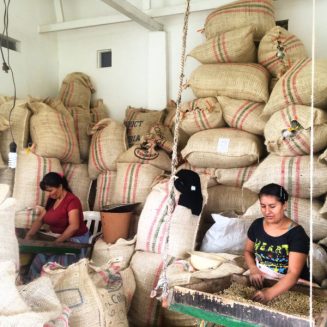
Women sort coffee beans at the 44-acre Finca El Ocaso farm, near Salento, Colombia. COURTESY OF FINCA EL OCASO

At first glance, Finca El Ocaso, located in the hills outside Salento, Colombia, could be mistaken for a natural forest: rows of squat Arabica coffee trees are interspersed with plantain, banana, and lime and shaded by towering nogal cafatero trees, whose high canopy hosts flocks of chattering parrots and other birds. The 44-acre coffee plantation has been certified by international organizations for being sustainable, climate-friendly, and fair to its workers.

But Finca El Ocaso is struggling under the weight of intensifying economic pressures.

Finca-Ocaso-Farm_Tradicion-cafetera_web1000.jpg

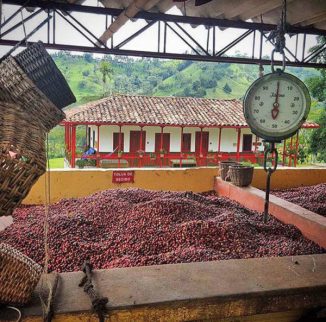
A coffee weighing station at Finca El Ocaso. Coffee prices have dropped so low that the family-run farm has started hosting tourists to make extra money. COURTESY OF FINCA EL OCASO

“Lots of smaller farms near us have gone out of business,” said farmer Gustavo Patiño. “It is no longer sustainable to have a medium-size farm that pays high taxes and expensive production costs, when in the end they may get paid less for their coffee than their expenses.”

Several years ago, in an effort to keep the plantation afloat, Patiño’s eldest daughter, Carolina, opened the farm to foreign and Colombian tourists. The plantation now attracts more than 1,000 visitors a year. “Our farm can only survive because we offer tours and sell our coffee to the tourists,” Patiño said.

GettyImages-1146667271_ColombiaCoffee_web.jpg

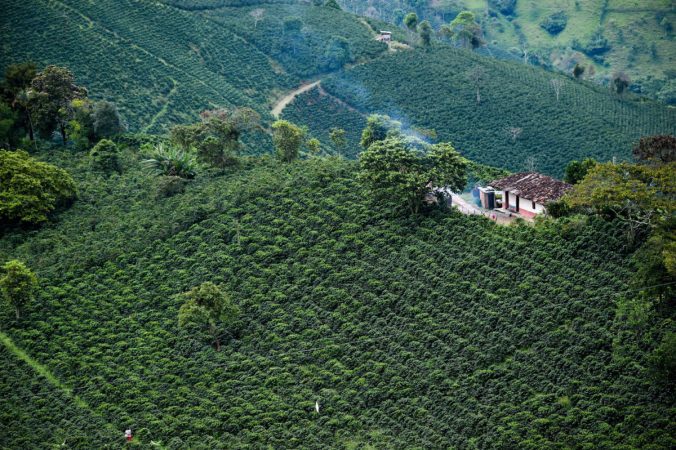
An aerial view of coffee plantations in Santuario, Colombia in May. Small farms such as these have been hit hardest by climate change and low coffee prices. RAUL ARBOLEDA/AFP/GETTY IMAGES

In the last 18 months, Colombia has lost nearly 100,000 acres of coffee plantations, more than 4 percent of the land under coffee cultivation, according to a statement issued last week by Colombia’s National Federation of Coffee Growers (Fedecafé). Continue reading

Taking Advantage of Assets at Hand

Foundations and charities are helping individuals, communities and businesses install solar panels and battery systems in Puerto Rico, with dual goals: to move the island toward renewable energy and allow small towns to be less dependent on the energy grid in case of another disaster. Greg Allen/NPR

Entrepreneurship and innovation are synonymous in many ways, starting with the ability to “think outside the box”. It’s even more inspiring when people put their creative efforts toward helping communities and the environment. Considering solar power in a Caribbean island environment may not seem like such a novel idea, but garnering private sector support for progress so the government can regroup after a natural disaster is a good example of leadership.

Puerto Rico Harnesses The Power Of The Sun For A Renewable Energy Future

Mameyes is a small community of about 1,000 people high in Puerto Rico’s central mountains. But in its own way, it is one of the leaders of Puerto Rico’s energy future.

Francisco Valentin grew up in Mameyes, where he runs a small store. Even before Maria he had big ambitions for his town. After Maria, he knew he wanted his community to run on solar power. And with the help of foundations, charities and the University of Puerto Rico — not the government — he has done that, converting the town’s school, health clinic and several other buildings.

The move to solar was important, Valentin says, because after Maria it took months before power was restored to the area. This makes Mameyes self-sufficient and able to respond to residents’ needs in future disasters. “The whole school is fully solar energy” and can serve as a shelter, he says.

With so much sunlight on tap, solar power has begun to boom in Puerto Rico since the hurricane. Across the island, individuals, communities and businesses are installing solar panels and battery systems. At the Community Foundation of Puerto Rico, Javier Rivera is working on solar systems with 50 mostly rural, underserved communities. His goal is to wire 250 communities for solar over the next few years.

Rivera says that especially after the hurricane, people realized they couldn’t depend on Puerto Rico’s Electric Power Authority. “Many people [didn’t] trust in the PREPA system before the hurricane. It’s not a secret,” he says. “People start to think about trying to find a solution, a long-term solution. And the sun is one of them.”

Continue reading
Schools as Frontline Against Food Deserts

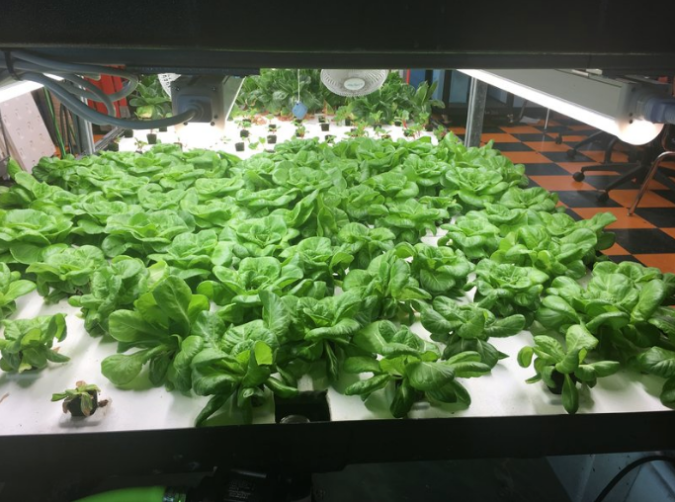
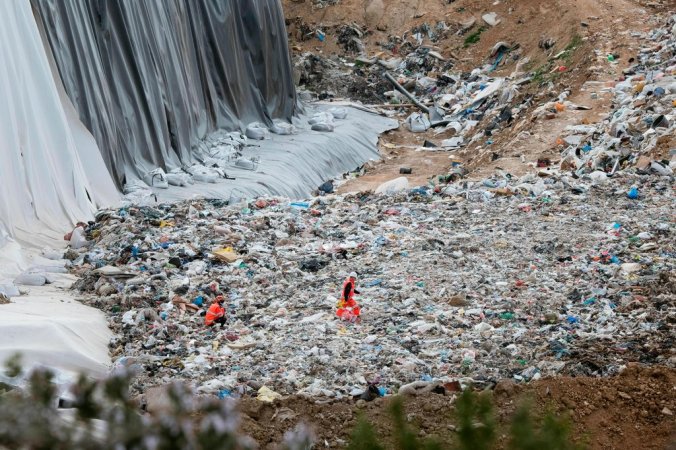
These greens are among the hydroponic crops grown by students at Brownsville Collaborative Middle School, in Brooklyn, N.Y. In June, the students started to sell discounted boxes of the fresh produce to community members. Robin Lloyd/for NPR

Thanks again to the Salt for more inspiring stories about communities cultivating more than just smart students.

How Hydroponic School Gardens Can Cultivate Food Justice, Year-Round

After a full day of school a few weeks ago, 12-year-old Rose Quigley donned gloves and quickly picked bunches of fresh lettuce, Swiss chard, kale, mint and oregano. But she didn’t have to leave her school in Brooklyn, N.Y., or even go outdoors to do it.

Quigley is one of dozens of students at Brownsville Collaborative Middle School who in the past year built a high-tech, high-yield farm inside a third-floor classroom. They decided what to grow, then planted seeds and harvested dozens of pounds of produce weekly.

The vegetables never stop coming because the crops are grown hydroponically — indoors, on floor-to-ceiling shelves that hold seedlings and plants sprouting from fiber plugs stuck in trays, each fed by nutrient-enriched water and lit by LED lamps. The students provide weekly produce for their cafeteria’s salad bar and other dishes.

Later that same day, for the first time, Quigley and several of her schoolmates also sold some of their harvest — at a discount from market rates — to community members. It’s part of a new weekly “food box” service set up in the school’s foyer. Each of 34 customers receive an allotment of fresh produce intended to feed two people for a week. Three students, paid as interns, used digital tablets to process orders, while peers handed out free samples of a pasta salad featuring produce from the farm. Continue reading

Ocean Conservationists vs. Ghost Nets

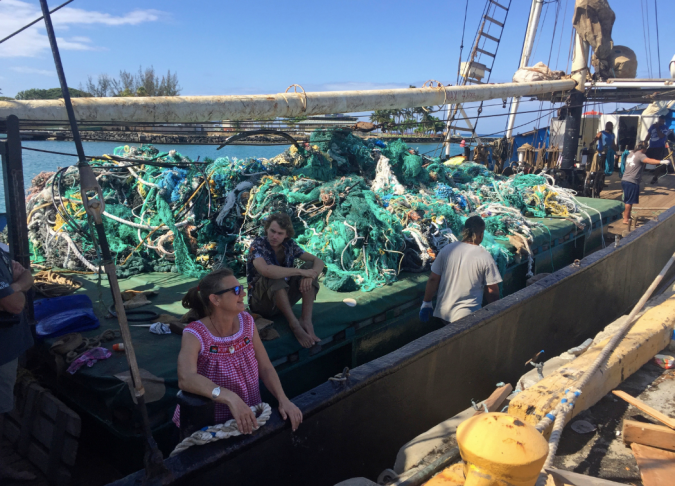
Ocean Voyages Institute’s cargo ship, the S/V KWAI, is docks in Honolulu, Hawaii as it holds fishing nets and consumer plastics collected during a recent 25-day mission in the Pacific Ocean. (Greg Yoder/Ocean Voyages Institute)

It’s an unfortunate truth that plastic is a serious problem in the world’s oceans, so every bit of progress addressing it is good news. Kudos to Mary Crowley and the volunteers at Ocean Voyages Institute for using simple technology to have such profound results.

Ocean Voyages Institute Removes 40 Tons of Plastic, including 5-Ton Ghost Net

Sausalito, CA – Ocean Voyages Institute, a nonprofit organization, announced today that it has successfully removed more than 40 tons of fishing nets and consumer plastics from the area known as the North Pacific Subtropical Convergence Zone, or more commonly known as the Pacific Gyre.

The sailing cargo ship, S/V KWAI, arrived in Honolulu today, having completed a 25-day clean up mission. In the Pacific, between California and Hawaii, four ocean currents converge to create a vortex that collects huge amounts of plastics. One sees detergent bottles, beer and soft drink crates, bleach and cleaning bottles, plastic furniture, packaging straps, buckets, children’s toys, and myriad types of plastic floating mid-ocean. This debris field covers vast expanses of ocean.

A prime target for OV Institute’s 2019 voyage was the fishing gear called “ghost nets.” Often weighing tons, these massive nets of nylon or polypropylene drift for decades, amassing plastic debris, ensnaring wildlife, and even entangling ships. An estimated 600,000 tons of this abandoned gear ends up in the oceans every year. According to the United Nations, some 380,000 marine mammals are killed every year by either ingesting or being caught in it.

“Satellite technology played a key role in our recovery effort, offering an innovative solution to finding areas of dense plastic pollution,” said Mary Crowley, Founder and Executive Director of OV Institute. “The nets and other debris are signs of the proliferating plastic pollution that poses threats to marine life, coastal environments, shipping, fisheries, wildlife and our health.” Continue reading

Why Is Vanilla So Expensive?

The Economist has not been one of our go-to sources for stories because it has an ideology that sometimes gets in the way of deeper investigation. Their stories and explanations are extremely thorough and very compelling, but we can usually guess the answer before the question is even asked.  Every now and then they surprise us, and here is a good example:

The bitter truth behind Madagascar’s roaring vanilla trade

How did hunger for the humble pod lead to greed, crime and riches? Wendell Steavenson travels to Madagascar to meet the new spice barons

In pods we trust
A quality-control chief in a co-operative in Belambo

I follow Felicité Raminisoa and her father, Romain Randiambololona, up a narrow track along the forested slopes of her family’s farm in southern Madagascar. It is lychee season and, as we walk, we break off branches of fruit and peel off the pink, spiky shells. Large yellow jackfruit grow like Chinese lanterns among loquat and clove trees, pepper vines and coffee plants. Sapphire dragonflies flash by as they chase each other over ponds of tilapia dammed into the valley. The air is muggy under the banana leaves but grows fresher as we climb. In all directions we can see vanilla vines winding around tree trunks. Each zigzag stem has been trained so that it grows no higher than Raminisoa can reach. Every so often she stops at a pale-yellow bloom and parts its waxy petals. With a spike snapped from an orange tree, she delicately scrapes away the membrane separating the anther from the stigma in order to pollinate the flower. This is a task that requires perfect timing. Each flower must be pollinated by hand on the morning it blooms or the beans won’t sprout.

Blooming marvellous
A vanilla flower is pollinated by hand

The family began to plant vanilla vines about 20 years ago mostly as “decoration”, says Randiambololona, his big grin punctuated by a missing tooth. At first the family sold fresh green vanilla pods to tourists, surprised that they would pay anything for them. But in 2014 the price of vanilla began to rise. Over the next three years it went from less than $40 per kilogram to more than $600 per kilogram. It felt like money was growing on their trees. In 2016 Raminisoa travelled to the northern region of Sava, where vanilla has been grown for generations, to learn how to cure the green pods into the commodity that was in such demand: pungent and wizened black beans. Continue reading

Tropical Wetlands Offer Another Surprise

TupanaBrazil_MultipleTrees_AmauriAquiar_flickr_web

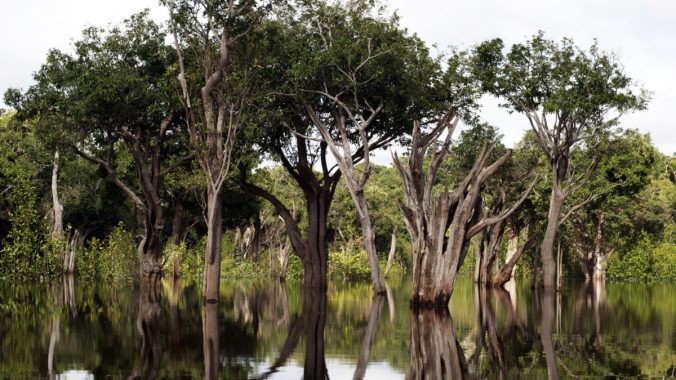
A wetland forest in Tupana, Brazil. AMAURI AGUIAR/FLICKR

Tropical wetlands have been a source of wonder, due to their biodiversity, since we started paying attention along time ago. Fred Pearce offers another of his surprises here:

Scientists Zero in on Trees as a Surprisingly Large Source of Methane

Recent research is showing that trees, especially in tropical wetlands, are a major source of the second most important greenhouse gas in the atmosphere, methane. The knowledge that certain woodlands are high methane emitters should help guide reforestation projects in many parts of the world.

MangroveRoots_Bali_Alamy_web.jpg

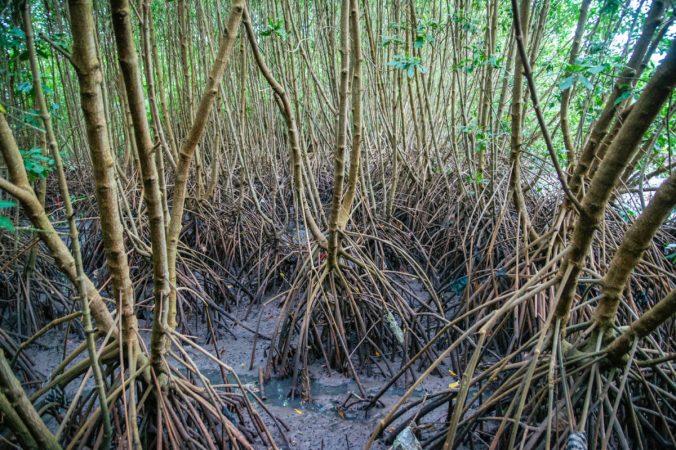
Tropical wetlands, such as this mangrove forest in Bali, give off the most intense tree-based emissions of methane. ALAMY

There are many mysteries in the Amazon. Until recently, one of the most troubling was the vast methane emissions emerging from the rainforest that were observed by satellites but that nobody could find on the ground. Around 20 million tons was simply unaccounted for.

Sunitha_SamplingAmazon_web.jpg

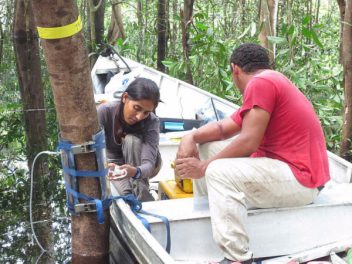
Sunitha Pangala installs a device that measures a tree’s methane emissions, in the Amazon. COURTESY OF SUNITHA PANGALA

Then Sunitha Pangala, a British post-doc researcher, spent two months traveling the Amazon’s waterways strapping gas-measuring equipment to thousands of trees. She found that trees, especially in the extensive flooded forests, were stimulating methane production in the waterlogged soils and mainlining it into the atmosphere.

Her 2014 expedition plugged a gaping hole in the planet’s methane budget. And she had discovered a hitherto ignored major source of the second most important greenhouse gas in the atmosphere. It now seems that most of the world’s estimated 3 trillion trees emit methane at least some of the time. Continue reading
Native Prairie & Savanna In The USA

CherokeePrairie_Arkansas_WilliamDarkPhotography_web.jpg

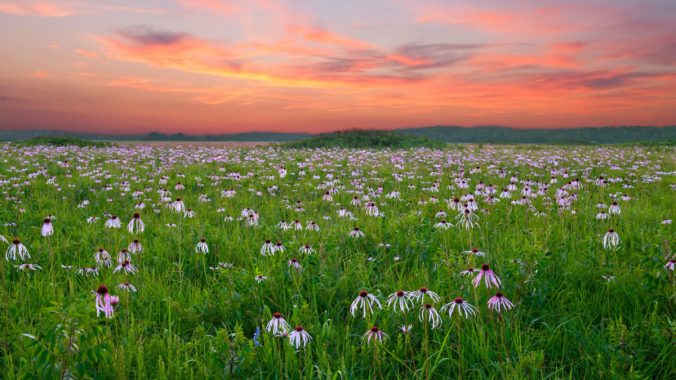
Cherokee Prairie Natural Area near Fort Smith, Arkansas. WILLIAM DARK PHOTOGRAPHY

Janet Marinelli, according to her author’s bio, is an award-winning independent journalist who was director of scientific and popular publications at Brooklyn Botanic Garden for 16 years; according to our read of her work over the last two years she is also a perfect fit with our mission to find at least one story every day that explains the natural world, illuminates the possibilities of entrepreneurial conservation or challenges us to be more careful with natural resources. She brightens our day:

Forgotten Landscapes: Bringing Back the Rich Grasslands of the Southeast

Native prairie and savanna once covered vast areas of the U.S. Southeast from Maryland to Texas, but agriculture and sprawl have left only small patches remaining. Now, a new initiative, driven by scientists and local communities, is pushing to restore these imperiled grassland habitats.

american-chaffseed_USFWS_web

Southeastern grasslands have some of the highest plant richness in the world, home to rare species such as American chaffseed. COURTESY OF TIM MARTIN & USFWS

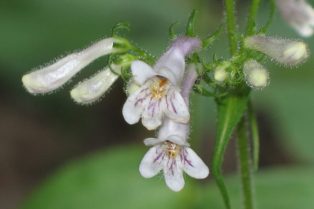
Dwayne Estes pulls over to the side of a rural road in Franklin County, Tennessee, about 20 miles from the Alabama border. He hops out of his truck and points out a small plant with dainty, trumpet-shaped white flowers with purple-streaked throats. “This is Penstemon kralii,” says Estes, a 40-year-old, 6-foot-3-inch-tall professor sporting a baseball cap and beard, the twin badges of honor for many field botanists. The plant is found almost exclusively at the base of the Cumberland Plateau escarpment, where it survives precariously in narrow, grassy roadside fringes with other rare and threatened species, including a sunflower and a blue-eyed grass yet to be named and described by scientists.

Krals-Penstemon_CumberlandPlateau_TimMartin_web.jpg

Kral’s penstemon. COURTESY OF TIM MARTIN & USFWS

We continue to the top of the steep, densely forested escarpment. Below, a checkerboard of croplands and pastures stretches as far as the eye can see. “Before 1840, those agricultural fields were prairies covering half a million, maybe 750,000 acres,” Estes says. “They were maintained by frequent fires and bison.” The wildfires probably swept up the base of the adjacent escarpment, he adds, keeping it open and sunny oak savanna where the penstemon and its companions could thrive. Like so many southern grassland denizens, they are vestiges of a lost botanical world that once covered as many as 120 million acres from Maryland to East Texas, caught in a vise between habitat loss to agriculture and urban sprawl on the one hand, and encroaching fire-suppressed forest on the other. Continue reading
Racing to Save Earth’s Rarest Eagle

Our long history with the Cornell Lab of Ornithology keeps their initiatives on our radar, and their films hold a very special place.

Sales from this award-winning documentary will benefit bird conservation.

World-renowned wildlife cinematographer, Neil Rettig, embarks on the most challenging assignment of his career: to find and film the rarest eagle on the planet.  An expertly woven tale with stunning cinematography, Bird of Prey journeys deep into the vanishing world of the Great Philippine Eagle and reveals an inspiring group of people that are determined to save the world’s most critically endangered eagle species from extinction.

Click here for more information on streaming options.

Fresh Ideas

featured_art_cu100_042.jpg

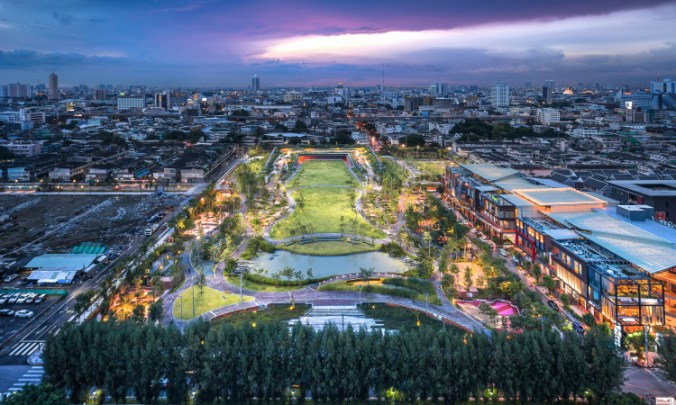
This oasis of green in the hyper-developed city has an important job: it can contain one million gallons of water. Here’s how.

Thursday night in Costa Rica Amie and I attended an event at the oldest, yet freshest Marriott in this country. Fresh with actions around sustainability. Fresh with a renovation and landscape plan that enhances the property’s coffee hacienda origins. And fresh with ideas from other parts of the world in their ongoing series of TED events. The picture above was on the screen as the speaker explained one of her projects; she gave an extended version of the TED talk she first presented earlier this year. I found some additional information about it to share here:

When Bangkok floods (and it floods a lot), this park does something amazing

web_ready_01_4_2flooding

Rainwater flows from the green roof through wetlands that frame two sides of the park into the retention pond; water can also collect in the detention lawn.

Bangkok is sinking. Spilling out across the delta of the Chao Phraya River, the Thai capital was once known as the Venice of the East for its network of canals.Today, thanks to explosive development, many of those waterways have been filled with cement. With nowhere for water to go, Bangkok has become notorious for frequent, destructive floods, sometimes after as little as 30 minutes of rain. The reality is that this city of 20 million people, built on shifting river mud, is sinking at the rate of more than one centimeter a year and could be below sea level as soon as 2030.

web_rady_01_8_4retention

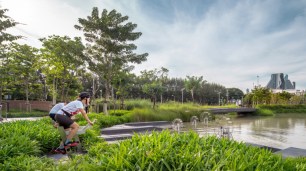
Stationary bikes serve two purposes: to give people a workout and to keep the pond water from getting stagnant.

Thai landscape architect Kotchakorn Voraakhom, a TED Fellow, watched firsthand as her city became a dense concrete jungle. “When I was young, there were rice fields and canals in the city,” she remembers. “I could hear boats from my house in central Bangkok. Now, all those fields and canals have been stopped with concrete and covered by highrises. All of the buildings and concrete become obstacles for water to drain, so the city floods.”

At her Bangkok firm Landprocess, Voraakhom designs parks, gardens, green roofs and bridges that address the city’s flooding problem while also reconnecting residents to their natural environment. “We’re so much in the buildings,” she says. “I think it’s very necessary for us, as urbanists, to have places where we can reconnect to our nature, to Mother Earth. Just to see the sky.”

Cyprus & the Right Side of Conservation


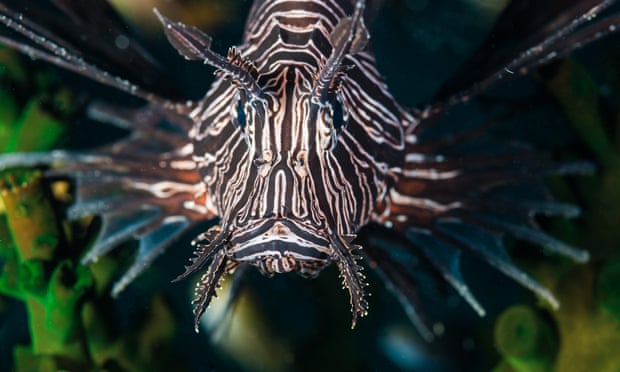
Lionfish, armed with venomous dorsal spines that enable them to deter predators, are more normally associated with warm tropical waters. Photograph: Arno Enzerink /www.stockphotogr/Arno Enzerink

After writing about some of Cyprus’ environmentally destructive actions, it feels good to hear about these positive organized efforts to eradicate this marine threat. Lionfish have long been on our radar, but this is the first we’ve heard of their spread through European waters.

Perhaps a new venue for eradication idea exchange is in order!

Cyprus begins lionfish cull to tackle threat to Mediterranean ecosystem

Cyprus  has held its first organised cull of lionfish after numbers of the invasive species have proliferated in recent years, threatening the Mediterranean ecosystem and posing a venomous danger to humans.

“They’re actually very placid,” said Prof Jason Hall-Spencer, a marine biologist, after spearing 16 of the exotic specimens in the space of 40 minutes in the inaugural “lionfish removal derby” off the island’s southern coast. He added: “The problem is they are not part of the natural ecosystem and we are seeing them in plague proportions.”

Lionfish, armed with venomous dorsal spines that enable them to deter predators, are more normally associated with warm tropical waters of the South Pacific and Indian Ocean. Almost two decades ago the non-native tropical fish began to enter US waters, appearing in the Atlantic after pet owners started releasing outsized lionfish from home aquariums into the sea. Now they have reached Europe. In 2012, after initial sightings off Turkey, Israel and Lebanon, they were spotted off Cyprus. Three years later they had appeared further south in Greece, Italy and Tunisia, testimony, scientists say, to their ability to both enter new territories and spawn at record rates.

As numbers proliferate, so have fears of the flamboyantly coloured fish posing the biggest ecological setback to ecosystems in the Mediterranean – which is already under pressure from pollution, tourism and over-exploitation. In the EU, Cyprus has become “the first line of defence” against the lionfish invasion. Continue reading
Reduce Is Best Because Recycle Is Costly & Re-Use Is The Next Big Thing

1114

Starbucks at South Terminal, Gatwick. The scheme is being launched by Starbucks and environmental charity Hubbub. Photograph: Zute Lightfoot

We have been using this cup since early 2017, and it really should have replaced the paper cup by now. But slow as the pace is, we are happy to read the news of this experiment and wish it well:

Gatwick hosts UK’s first airport reusable coffee cup trial

Customers buying coffee from South Terminal Starbucks will be able to borrow free refillable cup

1060.jpg

A sign will remind passengers to return their cup before they board a flight

The UK’s first airport reusable coffee cup trial gets under way this week at Gatwick, offering passengers the opportunity to borrow and return refillable cups in a bid to help cut waste and tackle “throwaway” culture.

Customers buying hot takeaway drinks from Starbucks will have the option to borrow a free reusable cup instead of using a paper cup, which they can then drop off at a designated point before boarding their flight.

The trial – starting on Monday in Gatwick’s South Terminal – will help customers reduce their disposable cup usage in a manageable “closed loop” environment that could be used in any travel hub. The scheme is being launched by Starbucks in partnership with the environmental charity Hubbub with support from Gatwick, the UK’s second largest airport. Continue reading

France Acts On Waste

merlin_155977602_ef40511f-9c82-437e-9129-dc6a888c864e-jumbo.jpg

A dump site in Castries, France. By 2023, unwanted, unsold goods in the country will have to be donated, reused or recycled. Xavier Malafosse/Sipa, via Associated Press

Food waste has been a topic regularly featured in these pages. And reducing carbon footprint obviously involves reducing waste in general. Palko Karasz reports on this almost unbelievable example of waste that had escaped our attention until now, and we are impressed by France’s decisive action:

France to End Disposal of $900 Million in Unsold Goods Each Year

LONDON — France plans to outlaw the destruction of unsold consumer products, a practice that currently results in the disposal of new goods worth 800 million euros, or more than $900 million, in the country each year.

By 2023, manufacturers and retailers will have to donate, reuse or recycle the goods, Prime Minister Édouard Philippe said on Tuesday of the measure, which the government billed as the first of its kind.

“It is waste that defies reason,” Mr. Philippe said at a discount store in Paris, according to Agence France-Presse, and he called the practice “scandalous.”

Under a new measure that will be part of a bill set to be debated by the government in July, destroying unsold goods could result in financial penalties or prison time. Continue reading

Creative Conservation

capitalism-socialism-and-democracy-joseph-a-schumpeter-first-edition-1943-signed.jpgI just checked the index of my dissertation to see if this book to the right is listed. It is not. Strange.

Rarely has a single idea had so much impact on me. Creative destruction, a concept that Joseph Schumpeter is most famous for, comes from that book. I will not try to explain it here because either you already know what it means or else you should really read it from the source.

In my dissertation I was interested in the impact of the efforts of entrepreneurs–specifically every single one of the thousands of entrepreneurs that started up a hotel business from the 1880s to the 1980s on both the Canadian and US side of Niagara Falls–to join together to develop a mutually beneficial solution when facing a collective threat. In this century-long story I had metrics to determine how those efforts impacted the likelihood of a hotelier’s staying in business after starting up. Niagara Falls was at risk of being ruined as a natural attraction. Hoteliers on each side of the border joined one another, cooperating with their direct competitors, to find a solution to that risk. Hoteliers, independently of the actions of those on the other side, jointly invested in conservation initiatives. The rich quantitative data show that on the side of the border that invested more heavily in conservation, over the course of 100 years hotels had fewer failures (permanent closure) overall. Bravo, Canada. Continue reading

Authentica’s Culture Is Conservation

fort-cochin-girls-118.jpgAbout one year in to our time in India Amie got us involved in an initiative that helped reduce our carbon footprint by ensuring that the bags we used in our hotel gift shops contained no plastic. Instead we used bags made from recycled newspaper. We were fortunate enough to have an intern from Amherst College that summer who wanted to work on this. His enthusiasm for the project was so infectious that other interns joined him. Being from Korea, Sung Ho Paik has what I believe is K-pop accompanying his video below.

We were still expanding this initiative with intern assistance years later. Items sold in our gift shops in Kerala followed the lead of the takeaway bag initiative, and elephant paper may be an extreme example but is a useful segue to what is on my mind today. We had the opportunity to join forces with an excellent local design firm in their idea to launch a retail concept with the kind of products that we have always believed in. We  believe in ideas that support entrepreneurial conservation with great design.

Authentica springs from these roots, and the culture of conservation is clearly a guiding force in what will be on offer.

Creative Canine Collaboration

A team of specially-trained hunting dogs has been helping conservationists and researchers find rare turtles in Iowa. KATE PAYNE/IPR

Thanks to Iowa Public Radio for some good conservation news from the Heart Land.

Specially Trained Dogs Help Conservationists Find Rare Iowa Turtles

An eastern Iowa conservation group is taking an unconventional approach to tracking rare turtles on its land. Iowa Public Radio tagged along with a man who’s trained his hunting dogs to find the reptiles for researchers. Counting the creatures will help conservationists manage the land better.

It’s a cool morning on a nature preserve owned by Bur Oak Land Trust in Johnson County. I’m scouring a shady hillside with John Rucker and his four Boykin spaniels, looking for turtles.

“Find turtle, find turtle,” Rucker calls to his dogs. He turns to me and says, “did I tell you I’m the only person in the world that does this?”

When he’s not living off the grid in rural Montana, Rucker travels the country with his specially-trained hunting dogs, helping scientists and conservationists find turtles.

“This is Rooster,” John says, introducing the dogs. “This is Jenny Wren. She’s the one that gives me my litters. And that’s Mink. No, that’s Jaybird, and that’s Mink.”

We make our way through the undergrowth, checking in brush piles and under old logs. When the dogs find a turtle, they’ll pick it up and bring it back to be counted.

“You will notice that as soon as they strike a scent trail their tails will start wagging furiously, and then their whole demeanor becomes extremely excitable,” Rucker explains.

Citizen conservationist Judy Felder is one of the volunteers out hunting today.

“It’s sort of like a religion for me,” Felder says. “Nature is important and somebody has to defend it, protect it, preserve it.” Continue reading

Weavers at Hand

This video expresses the concept of artisan ethos in almost too many ways to count: from the centuries old traditions of weaving in India , to creative communities coming together to rebuild cultural patrimony in the face of natural disasters, not to mention the well-crafted visual storytelling of the piece itself. (Kudos yet again to Anoodha and her Curiouser team for their own style of weaving.) Continue reading

Supporting The Climate Strikers

Strike350.jpg

McKibben-ClimateStrike.jpg

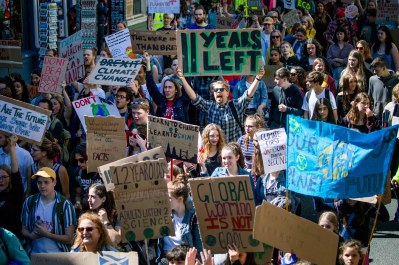
Young people have used strikes to call attention to the climate disaster. Now they’ve challenged adults to do the same.Photograph by Jane Barlow / Getty

Bill MkKibben makes the case that It’s Not Entirely Up to School Students to Save the World:

…What all of these people have in common is a strong sense that business as usual has become the problem, and that it needs to be interrupted, if only for a day. The climate crisis is a perplexing one because, mostly, we just get up each day and do what we did the day before, as if an enormous emergency weren’t unfolding around us. That hasn’t been true of past crises: during the Second World War, oceans may have separated American civilians from the fighting, but every day they were aware of the need to change their ways of life: to conserve resources, buy bonds, black out their windows at night if they lived on the coast.

The climate emergency, however, is deceptive. Unless it’s your town that day that’s being hit by wildfire or a flood, it’s easy to let the day’s more pressing news take precedence. It can be hard to remember that climate change underlies so many daily injustices, from the forced migration of refugees to the spread of disease. Indeed, the people who suffer the most are usually those on the periphery—the iron law of climate change is that the less you did to cause it the more you suffer from it. So we focus on the latest Presidential tweet or trade war instead of on the latest incremental rise in carbon dioxide, even though that, in the end, is the far more critical news.

A one-day work stoppage—a decision to spend a day demanding action from governments or building a bike path—is a way to break out of that bad habit…

He is promoting the idea that all of us should get involved now, and there are some useful guidelines for how to do so:

Strike.jpg

School strikers are calling on everyone: young people, parents, workers, and all concerned citizens to join massive climate strikes and a week of actions starting on September 20.

People all over the world will use their power to stop “business as usual” in the face of the climate emergency. We will join young people in the streets to demand an end to the age of fossil fuels and emergency action to avoid climate breakdown.

Problem Solving the Entrepreneurial Way


The phrase “necessity is the mother of invention” comes to mind when related to overcoming the obstacles of handling emergencies in remote or dangerous locations. But after listening  to Zipline founder Keller Rinaudo’s TED talk, “entrepreneurship is the new philanthropy” seems more apropos. Our direct experience is more within the entrepreneurial conservation model in developing economies, but the energy with which many countries have leap frogged established technologies with 21st century models and solutions belies their assumed status of development. Continue reading

The Simplest Impact You Can Personally Have Related To Climate Change

CarbonFood

The average greenhouse gas impact (in kilograms of CO2) of getting 50 grams of protein from various food types. Source: Poore and Nemecek, Science

We have been on the lookout since we started this platform for stories like this. There have been too many to link back to.Thanks to this team of collaborators I have just read a primer that is more clear, convincing and relatively painless in its instruction on how to change my diet than any of the earlier ones:

Your Questions About Food and Climate Change, Answered

How to shop, cook and eat in a warming world.

By Julia Moskin, Brad Plumer, Rebecca Lieberman and Eden Weingart. Graphics by Nadja Popovich. Illustrations by Cari Vander Yacht

Does what I eat have an effect on climate change?

Yes. The world’s food system is responsible for about one-quarter of the planet-warming greenhouse gases that humans generate each year. That includes raising and harvesting all the plants, animals and animal products we eat — beef, chicken, fish, milk, lentils, kale, corn and more — as well as processing, packaging and shipping food to markets all over the world. If you eat food, you’re part of this system.

How exactly does food contribute to global warming?

Lots of ways. Here are four of the biggest: When forests are cleared to make room for farms and livestock — this happens on a daily basis in some parts of the world — large stores of carbon are released into the atmosphere, which heats up the planet. When cows, sheep and goats digest their food, they burp up methane, another potent greenhouse gas contributing to climate change. Animal manure and rice paddies are also big methane sources. Finally, fossil fuels are used to operate farm machinery, make fertilizer and ship food around the globe, all of which generate emissions.

Continue reading