Seed Vault, Conservation For The Long Run

Travels to the seed vault on top of the world

Travels to the seed vault on top of the world

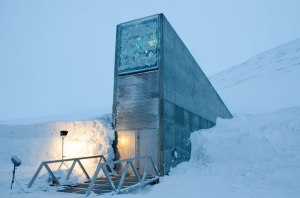
In advance of a story of our own, albeit set in the tropics at our upcoming beach resort, on this same topic, we thank Conservation for the story  they offered in an earlier issue of their magazine about this seed vault way way north:

…One day in Svalbard lasts four months, and the sun never sets; one night lasts four months, and the sun never rises. The other four months consist mainly of either long days with short nights or long nights with short days. Here the equinoxes—the two days annually with 12 hours each of daylight and darkness—really mean something. But what does “a day” mean here, and how many are there in a year? Continue reading

Newspaper Bag Station at Cardamom County

???????????????????????????????

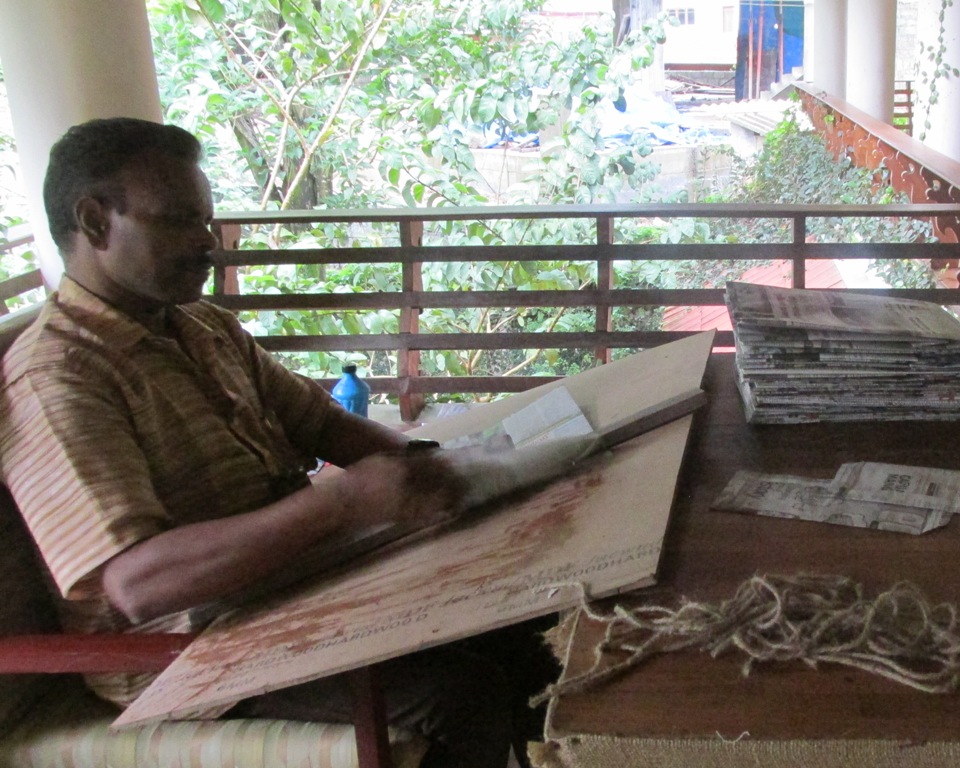
New member of PaperTrails stationed at Cardamom County

At Cardamom County, we have been working to get the local community involved through the group PaperTrails. PaperTrails helps provide jobs for people who could otherwise not get them. La Paz Group has appreciated the way it involves the locals by providing work and  re-purposing old newspaper. For La Paz Group they make gift bags out of recycled newspaper and sanitary bags from recycled paper. Now, we have a new member of the PaperTrails team stationed at Cardamom County. He is stationed on the second level of the Ayurvedic Center and makes bags for all the La Paz Group properties.. We like this because now guests can engage with the paper bag initiative in a new way. They can see how they are made and learn to make them as well.  Continue reading

Notes from the Garden: Building a house or a vegetable cage?

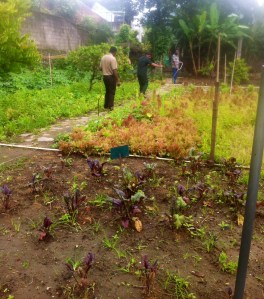
photo 2

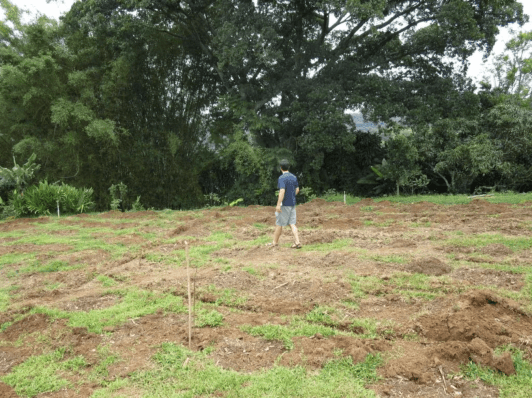
Measuring the length of our new monkey-protected area in the organic farm at Cardamom County

Building a 15 meter x 20 meter vegetable cage is no small feat. The last estimate we had was that it would cost about 4 lakhs, which is apparently the cost of a small house. A lakh is a unit in the South Asian numbering system equivalent to 100,000. So, is 400,000 rupees worth it for a vegetable cage? I think spending energy to get a smarter design would be more worth it.

With the help of Raxa Collective’s head engineer, it is very likely we will be able to lower that cost significantly. As I talked about in my post about quantifying farm-to-table, I think that with a combination of lowering the cost and then taking advantage of the monkey-protected area as vigorously as possible with efficient use of the space, it will be worth it. There are elements of farm-to-table that are not quantifiable but can be seen in the overall conservation story of supporting smart land-use practices.

At the end of the day, at least the food here is locally sourced mostly from the Cumbum vegetable market in Tamil Nadu. This market is only about 25 km away and the farmers in that market are relatively close. This is far better then the way most food is sourced in the United States.

In the United States, eating local is a challenge. Most agriculture in the states is for corn and soybeans, rather than vegetables. And “local” is difficult when the local environment has few green spaces left, let alone farmland. So even though we don’t have “monkey-challenges” to growing our food locally in the states, we have monocultures and rapid suburbanization keeping us farther and farther away from fresh food.  Continue reading

Notes from the Garden: Learning and Harvesting

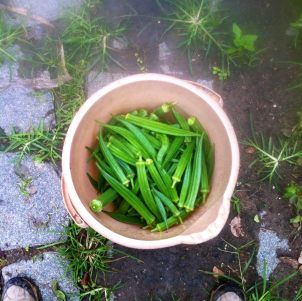
10559917_10201592002281680_8268726655977842745_nIn Cardamom County today, we harvested spinach, ladiesfinger (okra), mint, beans, and parsley. Our full wheelbarrow is heading straight to the kitchen. How many hotels have you heard of that grow a good portion of the food on site?
We have been hoping to get the monkey-proof vegetable cage approved so that we can grow the majority of our staple foods on site. Today, I will be meeting with one of the head engineers to see how we can make the design more smart: cut cost but still get the job done.

Continue reading

When Monkeys Lend a Hand

The monkey shepherds of Nelliampathy, photo credit: The Hindu

While we face the “monkey-challenges” at Cardamom County other forms of agriculture (or in this case, animal husbandry) have found forms of “primate collaboration”.

Thanks to The Hindu‘s K.A. Shaji for this timely story.

The term ‘monkey shepherd’ may not sound absurd here. A female monkey, aged about eight years, and her two children shepherd a flock of 150 goats on a farm at this picturesque hill station in Palakkad. Continue reading

Community, Control, Conservation

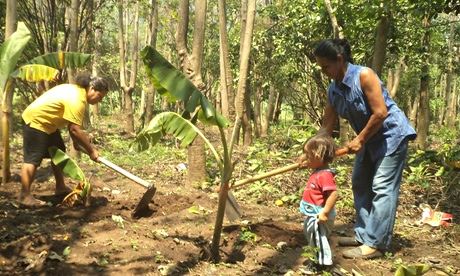
Salvadorans Elsy Álvarez and Maria Menjivar, with her young daughter, plant plantain seedlings in a clearing in the forest. Photograph: Claudia Ávalos/IPS

Salvadorans Elsy Álvarez and Maria Menjivar, with her young daughter, plant plantain seedlings in a clearing in the forest. Photograph: Claudia Ávalos/IPS

We have normally emphasized the word collaboration in conjunction with the conservation initiatives carried out by communities. This article in the Guardian points to research findings that indicates that another c-word, control, is sometimes key to understanding how communities reduce deforestation:

…Analysis suggests that in areas formally overseen by local communities, deforestation rates are dozens to hundreds of times lower than in areas overseen by governments or private entities. About 10-20% of global greenhouse gas emissions are attributed to deforestation each year.

The findings were released by the World Resources Institute (WRI), a thinktank, and the Rights and Resources Initiative (RRI), a global network that focuses on forest tenure. Continue reading

Gianluca, Come To Kerala!

sada-bike

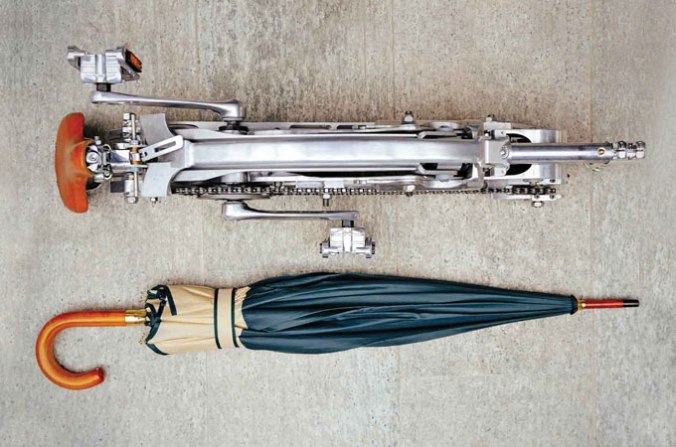
As the metropolitan area of Ernakulum, where Raxa Collective has many contributors who commute to work, completes its futuristic mass transit scheme, our thoughts reach out to a time when the collapsible bike is a necessity here. For now, we can appreciate the design for its own sake of this model that has just come to our attention.

We like everything we read about it, as much as the visual aesthetics. We even hope we might be of some service to its creator, given our history with entrepreneurial conservation. We are on the lookout, constantly, for opportunities to collaborate with creative craftsmen and to welcome them into Raxa Collective’s growing community across the globe. Conservation magazine brought Gianluca Sada onto our radar. We extend to him our usual invitation for a visit thanks to that:

COLLAPSIBLE COMMUTE

Carrying a bicycle onto a bus or subway for unrideable sections of your carless commute is less than convenient. This is where the Sada Bike fits in. Whereas other foldable bikes have shrunken frames and wheels, the Sada Bike’s full-sized frame folds down to the size of an umbrella; its spokeless, hubless, 26-inch wheels double as a backpack frame.

Continue reading

Grouse, Green Goals, Collaboration Required

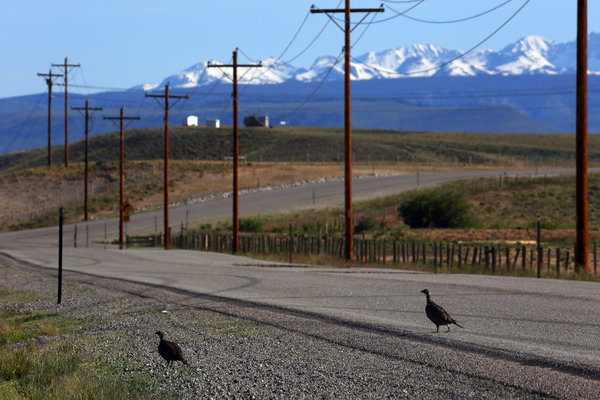
Sage grouse in a part of Wyoming where Shell has gas fields. Credit Jim Wilson/The New York Times

Sage grouse in a part of Wyoming where Shell has gas fields. Credit Jim Wilson/The New York Times

Conservation is a classic collective action challenge. Collaboration is a requisite for success. This New York Times report on the struggle between the energy needs of a country, and efforts to conserve a bird species illustrates how green priorities can sometimes conflict in unexpected ways, and how cooperation can prevail for the common good:

…On paper, at least, the Wyoming plan is in line with federal goals, officials say. It cordons off large areas as critical for the bird to survive, and its authors say it is the best compromise they could fashion.

Nestled in the gray-green sagebrush on the sprawling ranches or pecking their way along the dusty roads near the Pinedale Anticline gas fields, the squat, mottled-brown birds appeared unruffled. But they are persnickety creatures easily disturbed by human activities. Every year, males return to relatively open areas called leks, splaying their tail feathers and puffing up their chests as they waddle and call to attract hens. Vulnerable to predators like coyotes and eagles, the grouse depends on vast expanses of sagebrush for food and shelter. Wyoming’s plan would restrict development to levels that would not disturb the birds. For example, it would limit surface disturbance to 5 percent a square mile and ban activity within 0.6 miles of the leks. Continue reading

Home On The Range

Prairie Project

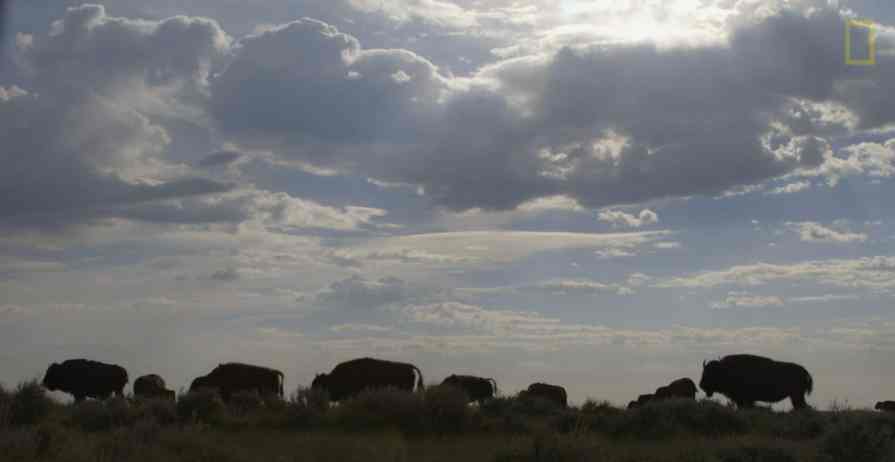
The great plains play an important role in both the history and prehistory of North America on many levels–in terms of wildlife, ecosystems and human occupation–and the American bison were an integral part of all three. The American Prairie Reserve is an ambitious project to reintroduce herds of the species into 3.5 million acres of public and private land patched together to create a protected area roughly the size of the state of Connecticut.

Sean Gerrity is passionate about the project, so much so that he is able to leverage his successful Silicon Valley business acumen into creative 21st-century solutions to the world’s conservation challenges with ideas that include the 73 bison calves awaiting their release into the wild the next day.

If all goes well, this bull calf will spend the rest of his life roaming grasslands that once teemed with millions of his forebears. He will encounter herds of elk, deer, and pronghorn. He will sniff the wind nervously for the scent of cougar and bear and wolf. Prairie dogs will dive for cover at the tremor of his hooves while hawks soar hungrily overhead in the endless sky. He will run for miles, for days, with no fence to hinder him.

If all goes well, this bull calf—or perhaps this calf’s children or his children’s children—will belong to a herd 10,000-bison strong, the largest conservation herd in all the world and the cornerstone inhabitants of the American Prairie Reserve, which has set its sights on becoming the largest wildlife reserve in the continental United States. Continue reading

Salt of the Earth


Sisyphus-retouched-HD-pre-LA

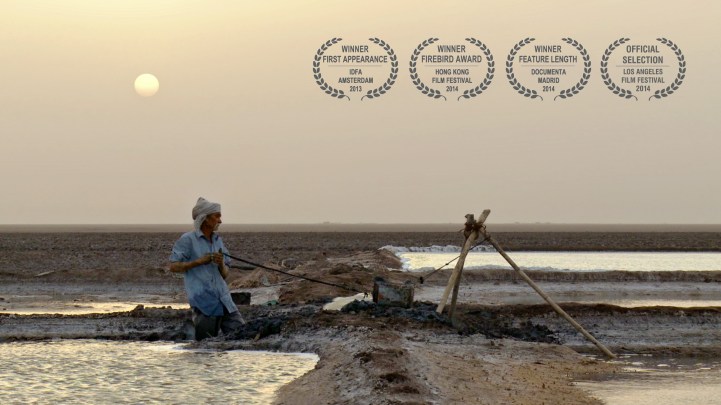
Salt is a quiet seasoning, making its culinary point by bringing out the best in the dish it’s been added to. The crystaline mineral is so ubiquotus that we often don’t consider its vast history in the forging (and funding) of empires. Neither do we think about the labor it takes to bring it forth from the earth and water around the world.

Indian film maker Farida Pacha has the perfectionist sensibility to share the story of the families who return to the saline desert of Gujarat’s Little Rann of Kutch to laboriously extract the salt from the desolate landscape. This seasonal migration has been going on for generations and the work is a matter of pride more than economy.

Director’s Notes: This is not a social issue film, even though the story of the salt people and their exploitation is a shocking one. What attracts me is the more fundamentally tragic question at the heart of their existence: what compels them to return to the desert to labor tediously year after year, generation after generation? What meaning do they find in this existence? Continue reading

How Do You Write 200 Crore, In Words And Deeds, In The New Improved India?

Screen Shot 2014-06-15 at 11.37.21 AM

200 crore is a uniquely Indian way of saying a number. Two billion; or 2,000,000,000 is the way to see the number written out in Western terminology, but the Indian deeds associated with this particular number are much more important, according to news headlines across India in recent days (here taken from the Hindu):

The government plans to plant 200 crore trees along the entire 1 lakh km National Highways network across the country to employ jobless youth.

“The length of National Highways in the country is one lakh kilometre. I have asked officials to come out with a plan to plant 200 crore trees along these stretches which in turn would create jobs for the unemployed on the one hand and protect the environment on the other,” Road Transport, Highways, Shipping and Rural Development Minister Nitin Jairam Gadkari said in New Delhi on Friday.

A similar scheme could be implemented under MNREGA (Mahatma Gandhi National Rural Employment Gurantee Act) along the village and district roads and state highways. That has the potential to employ 30 lakh youth, he said while inaugurating a conference on “Regeneration of Rivers”.

Mr. Gadkari said Gram Panchayats will be taken into confidence and the unemployed youth could be assigned 50 trees each which could fetch livelihood for them from the produce. Continue reading

Bison, A European Species Almost Lost

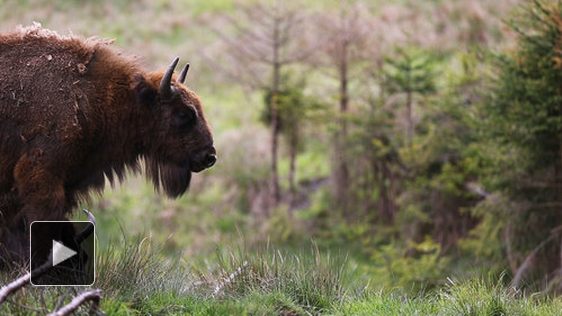
Bison

Thanks, prince (and New York Times for the video record of a noteworthy collaborative act of conservation, with a dash of altruism, and creative definition of commons):

Bringing Back Europe’s Bison

A German prince is leading an effort to bring back the European bison, Europe’s largest land mammal, in Bad Berleburg. The animal almost went extinct in the early 20th century.

More On Tesla’s Mr. Musk

Photograph by Dario Cantatore/Getty.

Photograph by Dario Cantatore/Getty.

We like him more the more we hear of him, and while we do not know enough to gush, nor to promote his automotive products, we pass along this interesting news as recorded on the New Yorker‘s website:

Yesterday, one of the more interesting people in Silicon Valley did one of the more interesting things that the car industry has seen in a while. Elon Musk, the C.E.O. of Tesla, opened up all of his patents. “Tesla will not initiate patent lawsuits against anyone who, in good faith, wants to use our technology,” he wrote in a blog post. Tesla’s competitors can now freely take advantage of its batterieschargers, or sunroofs. Continue reading

Coffee in Xandari

Here at Xandari (Alajuela, Costa Rica) everything is ready for coffee’s big return. The resort’s land was once dedicated to growing and harvesting the finest estate coffee this country offers (you can visit the Doka Estate, to which Xandari’s land once belonged, in one of our guests’ favorite day tours), but for the last 18 years more attention was given to the organic vegetables, orchards and gardens that now dot the verdant grounds. Plans are in motion, however, to bring the crop back to this area long celebrated for the quality of its coffee.

The ground is tilled:

Screen Shot 2022-07-22 at 10.58.04 AM

Continue reading

Big Business, Conservation, Innovation

We have written about and linked to others’ thoughts on altruism more than once, thinking we will eventually have an ultimate illumination on its origins and how to increase its likelihood. Likewise on our main theme as an organization, with regard to entrepreneurial conservation. We also keep a watch out for big companies (versus entrepreneurs) and governments (as in the case of the state initiative in the banner above, which is discussed below) doing the right thing.

Thanks to this article in the New Yorker for bringing our attention to the efforts to bring sustainable and affordable water to the good folks of Texas, and at the same time raising our awareness of the tightrope walking between big businesses that have many motivations to participate in innovative conservation schemes, and the organizations that have been the innovators in this regard for decades:

Mark Tercek, the head of the Nature Conservancy, recently took a tour of the largest chemical-manufacturing facility in North America: the Dow plant in Freeport, Texas. The Nature Conservancy, which is responsible for protecting a hundred and nineteen million acres in thirty-five countries, is the biggest environmental nongovernmental organization in the world. Tercek, accompanied by two colleagues, had come to Freeport because the facility—a welter of ethylene crackers and smokestacks built next to a river that flows into the Gulf of Mexico—is at the center of a pilot collaboration that he hopes will reshape conservation.The key idea is to create tools that can assign monetary value to natural resources. Continue reading

Critter-Countering Collaboration

A section of tree showing holes made by the Asian long horned beetle. The city of Boston, the Mass. Dept. of Agricultural Resources, the Dept. of Conservation and Recreation, and the US Dept. of Agriculture celebrate the eradication of the Asian longhorned beetle at the Arnold Arboretum. The event lifts the 1.5 mile quarantine that had been placed around Faulkner Hospital (including the Arboretum) after the discovery of infested trees there in 2010. Jon Chase/Harvard Staff Photographer

A section of tree showing holes made by the Asian long horned beetle. The city of Boston, the Mass. Dept. of Agricultural Resources, the Dept. of Conservation and Recreation, and the US Dept. of Agriculture celebrate the eradication of the Asian longhorned beetle at the Arnold Arboretum. The event lifts the 1.5 mile quarantine that had been placed around Faulkner Hospital (including the Arboretum) after the discovery of infested trees there in 2010.
Jon Chase/Harvard Staff Photographer

Harvard Gazette reports on this collaborative effort to deal with a determined pest that has ravaged forests in recent years:

“The whole country knows about Boston. When a challenge presents itself, the entire community here comes together. The eradication of the Asian longhorned beetle is a great example of that,” said Gary Woodward, the U.S. Department of Agriculture’s deputy undersecretary of marketing and regulatory programs.

Continue reading

Google, Maps, And Modern Conservation

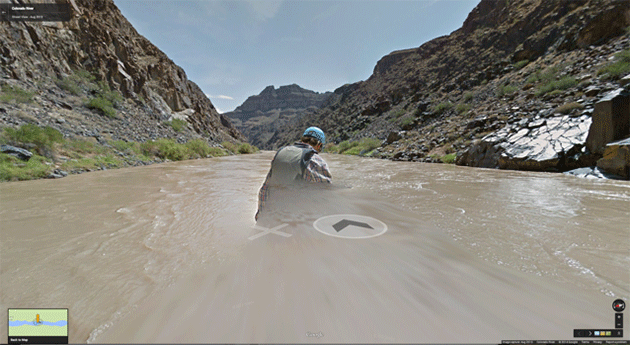
StreetViewGrandCanyon-1-630

Screen capture from Google’s Street View Grand Canyon

We have not been sourcing from Harper’s, one of the great magazines covering topics of interest to Raxa Collective. We will mend our ways starting now:

Grand Plan

Why has Google added the Grand Canyon to Street View? By Jeremy Miller

Continue reading

Help Hanging Rock, If You Can

18064a9e-466d-40ea-86d7-2a6ade5ee448-460x276

Government funding for Hanging Rock will support the upkeep of picnic areas, wetlands and protection of plant and animal life. Photograph: John Crook/AAP

Fans of Peter Weir will be inclined to heed the call, if they can, to help ensure Hanging Rock is not spoiled:

Controversial plans to build a tourist resort at Victoria’s Hanging Rock have been scrapped after the state government committed $250,000 a year to maintain the landmark.

The funding, announced on Friday, will fund the upkeep of trails and signs along the rock, as well as the nearby picnic areas, wetlands and protection of plant and animal life. Planning protections in the area would be strengthened to shield the area from “inappropriate development in the long-term”, the Victorian planning minister, Matthew Guy, said.

Plans by the Macedon Ranges shire council to build a 100-room resort, eco-cabins, a “nature-focused adventure facility” and a day spa near the unique volcanic rock formation had divided the small community north-west of Melbourne. Continue reading

If You Happen To Be In Amsterdam

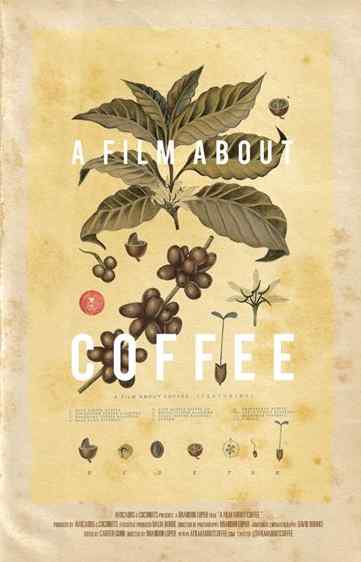
Most of our followers know we love coffee. We love how it grows. We love how it tastes. We love the settings where we can drink it. Which makes it all the more unfortunate that we’re in India and not in Amsterdam this weekend to experience Coffee Week NL 2014.

The festival collaboration with the Allegra Foundation makes participation all the more enticing:

50% of all ticket sales to The Amsterdam Coffee Festival will go towards Project Waterfall, the charitable components of NL Coffee Week. Continue reading

Better Driving

tumblr_mo9zu18bZf1qz5g9bo1_1280

No matter how you view it, driving more fuel-efficiently is a worthy goal, but in a world with more than enough aggression already we think “Softer Slower” by Huntley Muir sends just the right visual reminder of another reason why driving more gently is a worthy goal:

Su and Donna, the two halves of artist duo Huntley Muir, have painted a poster that encourages people to be more tender on the accelerator.

“We decided to cut our speed by 10 miles an hour to save fuel and cut pollution and noise. It really works – we do use less fuel, it’s safer, less stressful and we don’t even notice the difference. And we are below the legal speed limits as well. Such goody two shoes. Continue reading