Support Your News Sources

Our blog is a mix of first person accounts and references to stories from major news sources around the world, mostly about communities (unique forms of heritage, unique approaches to getting important things done for community members, etc.), about conservation (especially examples of entrepreneurial approaches to the conservation of unique cultural and natural heritage), and about collaboration (especially in relation to communities and conservation). We scan far and wide for stories. We depend on newspapers to which we do not subscribe, in return feeding traffic back to their websites. We think this is a fair exchange, but what do we know? It is definitely worth further investigation.
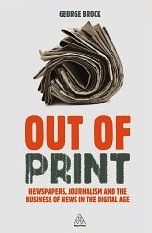


Whatever news sources you regularly depend on, you should read this review by Nicholas Lemann in the Times Literary Supplement about this book that documents, in the context of the USA, the economic challenges facing the newspaper business:

People tend to have little sympathy with accounts of crisis in a trade or profession. It comes across as evidence of excessive self-preoccupation, or as a prelude to special pleading before government.Journalism’s difficulties seem to be drawing this kind of reaction from many people who aren’t journalists. Isn’t the press still a swaggering, even power-abusing actor in politics and society? Doesn’t it command vast attention and resources? Isn’t more news being read by more people than ever before? Continue reading

Statler Hotel Partners with Clean the World

Jason Koski/University Photography

According to the Cornell Chronicle from a few weeks ago, Cornell University’s Statler Hotel has been a partner with the nonprofit Clean the World organization since March, and has collected over 2,500 bars of soap from the Statler’s rooms. This soap has been recycled and distributed to communities in need throughout over 55 countries.

Clean the World is a great group that we have written about before, since its goal is to take something that would otherwise be wasted and provide it to people at risk of poor health due to hygienic conditions  that can be easily ameliorated by increased access to soap.

Continue reading

Thevara Badminton, Inauguration

This slideshow requires JavaScript.

Raxa Collective has at least as many neighborhoods to consider as we do properties under our management–each of which has a remarkable surrounding community–which is to say six in Kerala, one in Costa Rica, and one in Ghana. Continue reading

Fact-Checking Walter Isaacson

Walter Isaacson has done some remarkable things (according to his present byline he is “CEO of the Aspen Institute. Author of biographies of Steve Jobs, Albert Einstein, Benjamin Franklin, and Henry Kissinger. Former editor of Time, CEO of CNN”).  Little reason for him to doubt his own authority, on anything.  But he invites you to fact check the book he is currently working on, starting with a draft of a chapter published in Medium.  I appreciate the creative spirit of collaboration, and his faith in the wider community to get his facts both straight and full of color:

The Culture That Gave Birth to the Personal Computer

I am sketching a draft of my next book on the innovators of the digital age. Here’s a rough draft of a section that sets the scene in Silicon Valley in the 1970s. I would appreciate notes, comments, corrections

In that draft he makes reference to the starting point of the Whole Earth Catalog, and the meme that came with it of using an image of the earth from space to communicate its fragility and limitations as much as its wondrousness; which, along with the rest of the draft (as if you needed convincing) makes the book sound worth the wait: Continue reading

2013 Thevara Badminton Invitational

This slideshow requires JavaScript.

Opposite the badminton field, which part of the year serves as cow pasture, is a wall with these hand-painted signs announcing the December dates for the tournament that these players have been practicing for–singles, doubles, juniors, seniors, etc..  Raxa Collective is proud sponsor of this tournament. Live webcam coverage (maybe) so stay tuned.

Borneo, Birds And The Field Method Of Learning Science

This slideshow requires JavaScript.

More than one contributor to this site has been a fan of the Cornell Laboratory of Ornithology for several decades. During graduate school, for example, when Sapsucker Woods provided more than just a walk in the woods.  The Lab’s fan base is global, for good reason, both among casual bird lovers and more serious bird watchers. The Lab became the focus of professional interest to several of us when we began managing lodges in the rain forests of Central America, and we discovered what we had not known while at Cornell: it has the largest collection of field recordings of bird songs in the world.  Guests at our lodges were awed by this resource when it was pointed out to them. The images above reflect more recent appreciation we have for the Lab. Continue reading

Our Gang, Thevara (Racquets In Hand)

photo

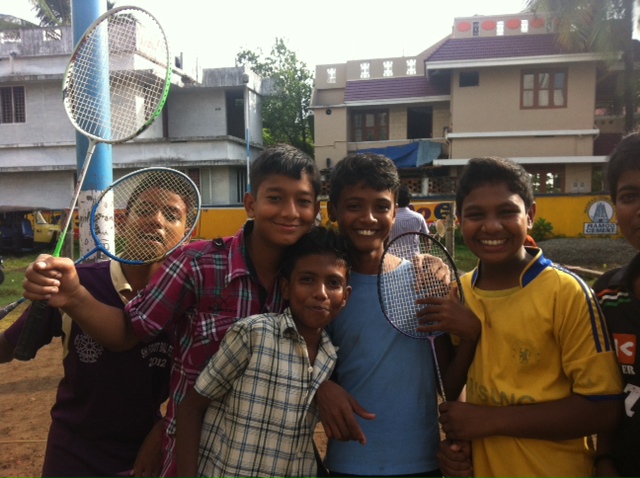
As we post this, collaboration on the badminton court is in full swing; these young friends in our community are Raxa Collective’s best hope for global domination of a sport: the power smile. We are cheering them on in badminton as well. December 23 is a big day, we are told. Stay tuned.

Drink the Wild Air

“Live in the sunshine, swim the sea, drink the wild air.” Alejandra Benavides/conCIENCIA

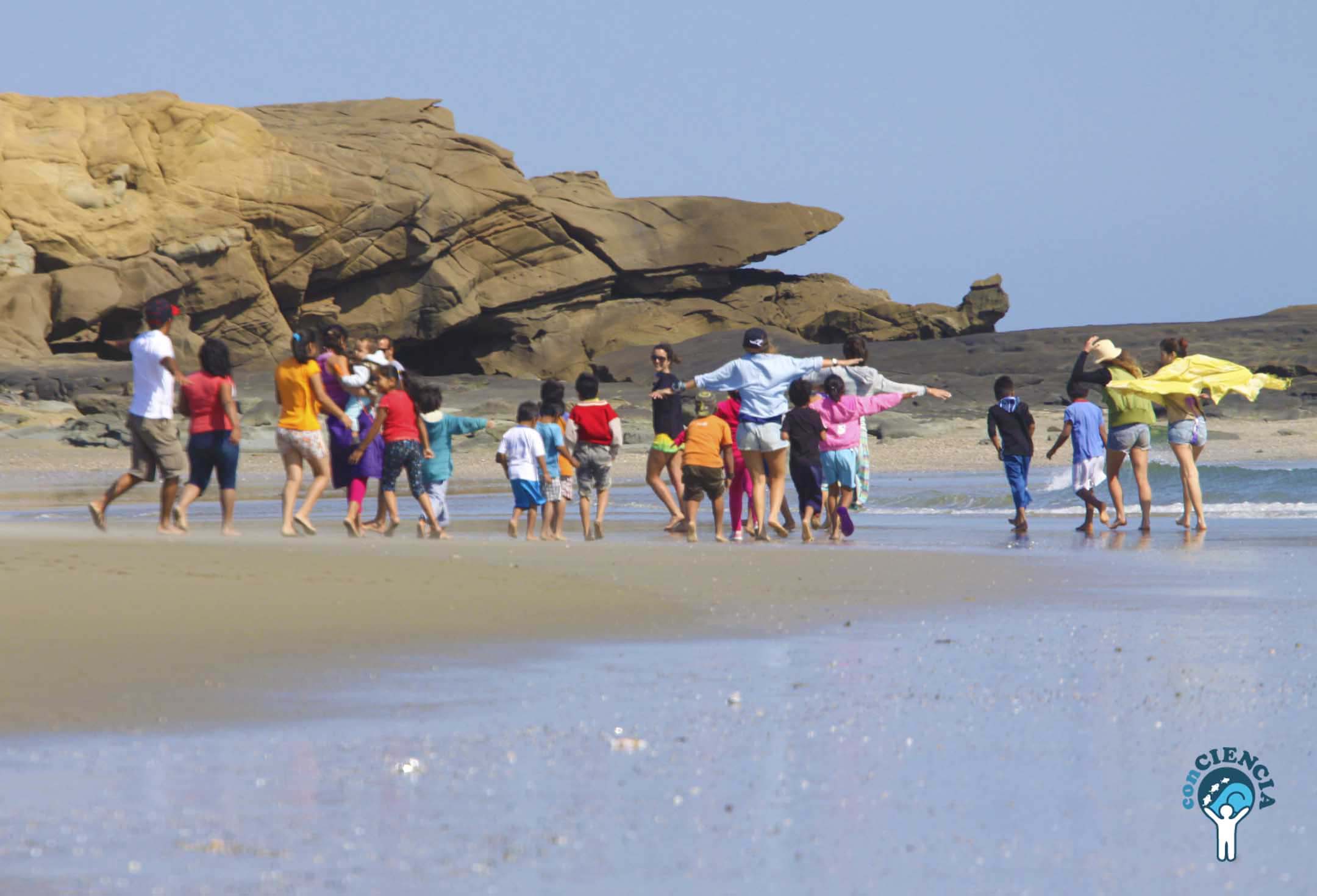
Working for the balance and health of nature as a conservation biologist brought me to understand the importance of nature in the balance and health of communities. The great gap between the two inspired me to establish conCIENCIA, a nature-based education design program. We build environmental identity in fishing villages across Peru through nature-based integrated learning guided by play, creativity, curiosity and the senses.
As First Mermaid in conCIENCIA, I work with an amazing group of artists and scientist, to connect coastal children to the natural wonderland, since 2010.

Lobitos has some of the most beautiful beaches on the Peruvian coast. Its world-class surfing draws hundreds of surfers from all over the planet and is known far and wide. A lesser-known fact is that it also has 153 children enrolled in its elementary school. Walking down the beach we wonder where these kids are. We walk from point to point with not one in sight. There’s no laughter or splashing on the shores. Surfers and fishermen dominate our view. No mothers and children sharing the democratic fun the beach offers: a place with more attractions than we could ever finish exploring.

In Latin American cities like Rio de Janeiro it is on the beach that rich and poor meet, crossing the giant social chasm that separates them, virtually identical in their bathing suits, covered in sand, sweat and salt. Surprisingly, this doesn’t seem to be the case in many of Peru’s coastal towns. Exactly why is hard to say. Our NGO conCIENCIA helps coastal communities develop an environmental identity and engagement through outdoor science-based learning. We hope to be able to answer the question ‘why’ through surveys, conversation and appreciation.

On the surface one could say it is cultural.  Fishermen don’t bathe in the sea or lounge on the beach. This is their place of work, as for a New Yorker her office would be–of course, with greater hardships and demands. The sea is treacherous and fish stock is dwindling. Continue reading

Collaboration For Impact

Photograph: Robert Knight Archive/Redferns/Getty.

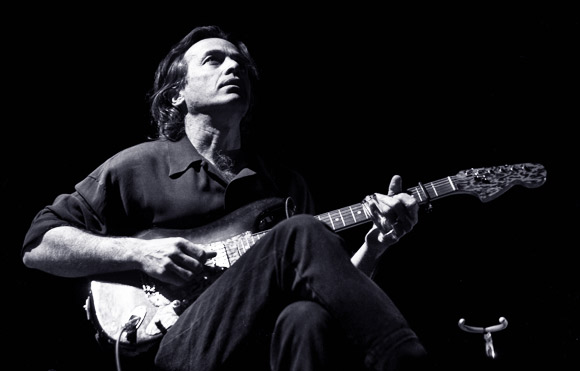
You need not be a fan of his guitar style, which is unique; nor his producer credentials, which are significant. You do not even have to like the Rolling Stones to appreciate the following:

(It is worth noting, perhaps, that before Keith Richards encountered Cooder, he was essentially a strummer. After their encounters, during which, Richards has written, he took Cooder for all he was worth, the modern Rolling Stones, with the two guitars attempting to manage rhythmically and harmonically what Cooder accomplished with one, were born.) Continue reading

Unakka Pazha Kootu

Raxa interns and Amie, pre-mixing!

Raxa interns and Amie, pre-mixing!

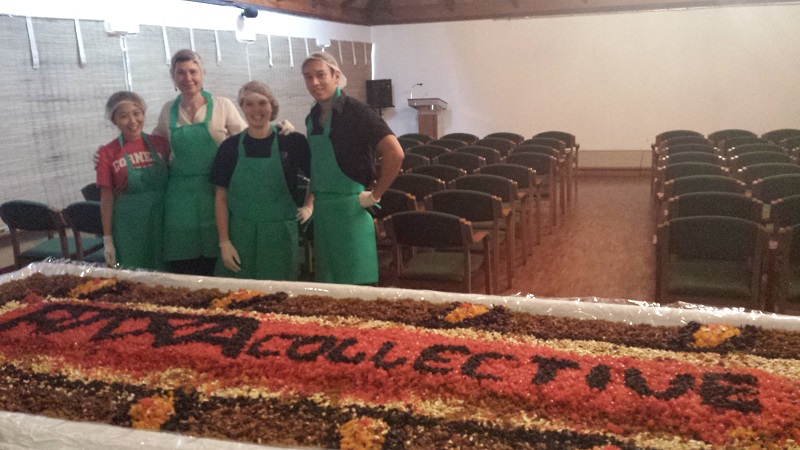
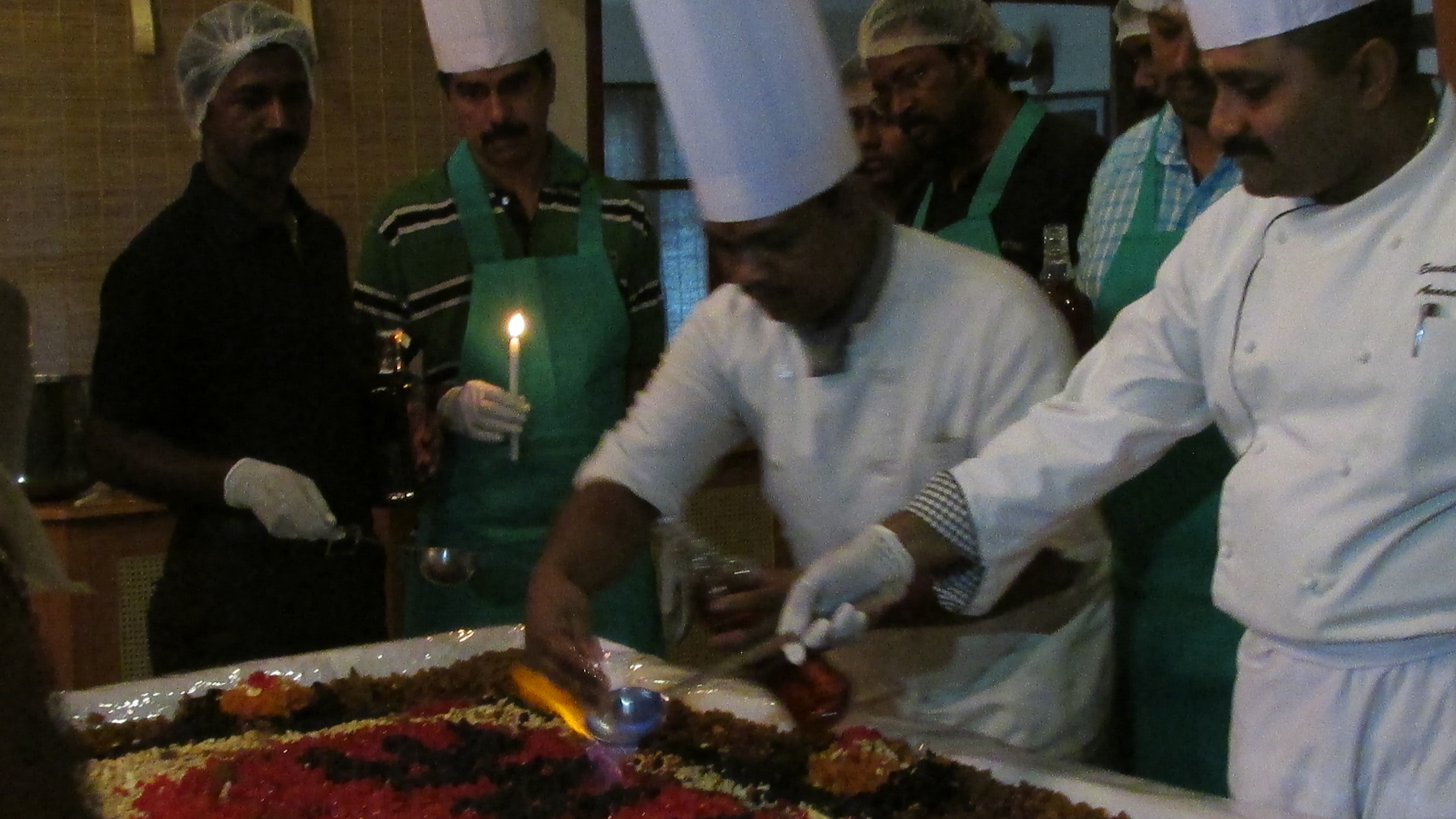
Christmas is still two months away and Cardamom County is nowhere close to a location that receives snowfall, but we still rang in the holiday season a little early by holding the unakka pazha kootu ceremony. Unakka pazha kootu is a mixture of dried fruits, spices, and liquor, which is used as the core ingredient to make Christmas cake and pudding.

Setting the alcohol and mixture on fire

Setting the alcohol and mixture on fire

A MASSIVE amount of dried fruits—dates, cherries, cashew nuts, black current, sultanas, apricot, plums, fig, ginger peel, and orange peel—were elaborately and colorfully organized on top of carefully plastic lined tables laid out side by side inside the conference hall. Then, Shinou, our bakery chef, lit up a candle and literally set the fruits and alcohol on fire! Continue reading

Library, Social Enterprise, Community

Raxa Collective’s work, mostly in rural communities, brings us into contact with many organizations–public sector, private sector and hybrids–that carry out work that does not look anything like the work we do, but with some of the same objectives. Business models differ, but the mission is focused on improving the opportunity set of communities. This organization is our idea of a trifecta:

Our Model

READ Global brings together educationenterprise and community development to create lasting social change in rural communities. READ partners with rural villages to build Community Library and Resource Centers (READ Centers) that offer knowledge, information and opportunities to villagers that lack the most basic educational resources.

READ Centers are designed to serve whole communities and their surrounding areas. Resources are available for all – adults, children, students, teachers, women and even those who are illiterate.

Take a look at our new photo essay to learn more about our programs, and to see the faces and stories behind the “READ Effect”: a testament to how READ Centers serve as catalysts to uplift entire communities. Continue reading

High Tide in New York City

This slideshow requires JavaScript.

(all photos ©Ken Brown)
In India, as with the rest of the world, sometimes life gets the best of us and we miss out on the cyclical events that have marked time for millennia. Once again we have Ken Brown to thank for both bringing this event to our attention and documenting it so well.
I know it sounds like something from the Discovery Channel, but a truly remarkable event takes place each year when a 460 million year mating ritual is enacted on the beaches of New York City during a full moon high tide. Continue reading

Cats And Dogs And The Golden Rule


This slideshow requires JavaScript.

When we posted about a unusual collaboration between cheetahs and shepherd dogs, we started watching for more news on the same.  This website tells a different story about feline-canine common interests, with a clear reminder about the human interest in behaving more empathetically toward our neighbors:

CHEETAH AND AFRICAN WILD DOGS NEED LOTS OF SPACE: Of all the large carnivores of Africa cheetahs and wild dogs need lots of space. Recognition of this led to the RANGE WIDE CONSERVATION PLANNING PROCESS bringing together all sectors of society to develop frameworks under which all stakeholders – government, community and private – can work together to ensure the survival of these iconic species. Use this website to learn more about this innovative approach, the distribution of the two species, who is working to help them and what is being done on the ground. Continue reading

Urban Pollination Studied By Seattle’s Citizen Scientists

Thanks to this coverage commitment we came across the video above and this accompanying explanation:

…Marie Clifford and Susan Waters, graduate researchers at the University of Washington in Seattle, have found a way to get around scarce research funding: citizen scientists. The Urban Pollination Project (UPP), co-founded in 2011, takes Seattle community gardeners and trains them to collect data on local bees. Tapping into citizen scientist efforts, Clifford and Waters can gather data from 35 Seattle community gardens – a scale of research otherwise outside of their resources and funding capabilities. Continue reading
Citizen Science in Belize – Update – If You Can’t Beat’em, Wear’em

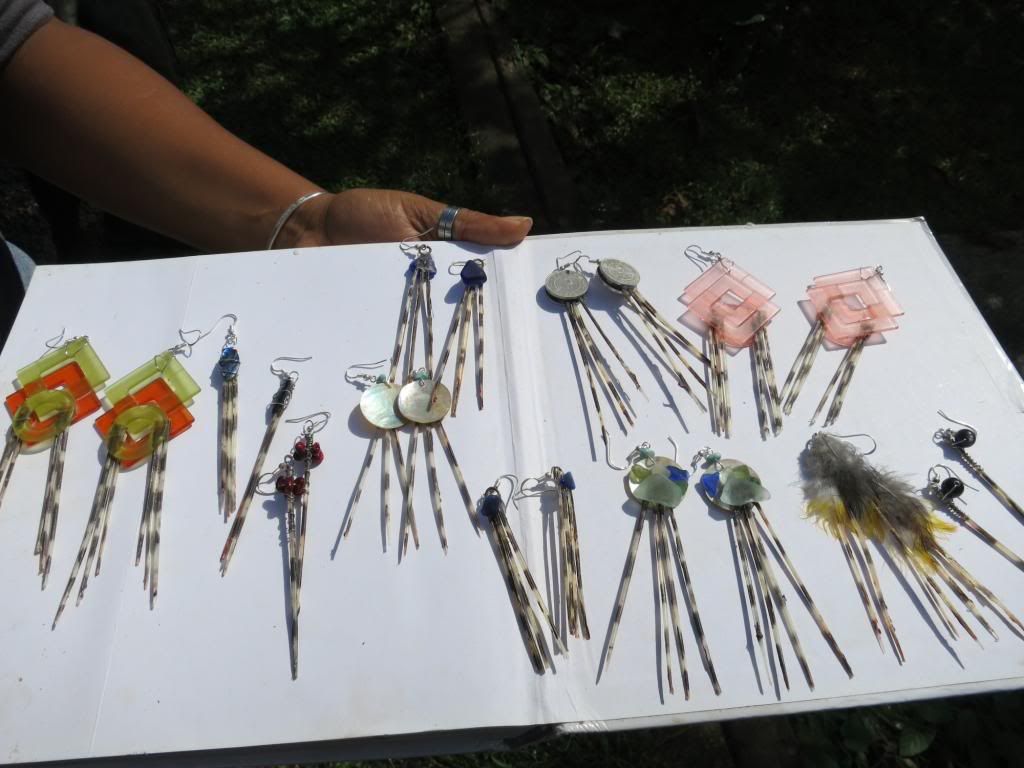
Lionfish spine earrings crafted by Palovi Baezar, Punta Gorda, Belize. Credit: Polly Alford, ReefCI

In earlier posts about my volunteer experience in Belize with ReefCI, I talked about the lionfish invasion that is threatening coral reef and other marine ecosystems throughout the Caribbean, Gulf of Mexico, and Southern Atlantic Seaboard of the United States, and noted that, at least for the foreseeable future, human intervention, particularly the establishment of a commercial fishery for the species, appears to be the only solution to keep the invasion under control.

I mentioned the idea of lionfish jewelry as a possible way of increasing the economic return to fisherfolk who may otherwise be reluctant to go after lionfish given the difficulty of catching them (the fish must be harvested by spearing or hand netting rather than through traditional methods such as lines or nets). I’ve been pleased to learn that at least one artisan in Belize has picked up on the idea, using some of the lionfish spines that I collected while I was there. She has already crafted some beautiful earrings (see photo above) and is working on other jewelry items as well as decorative mirrors. Elsewhere, jewelry crafted from lionfish tails and fins is being sold online, and through a retail outlet in Curaçao.  Continue reading

Helping Kerala: Transatlantic Collaboration

Western Ghats

Western Ghats

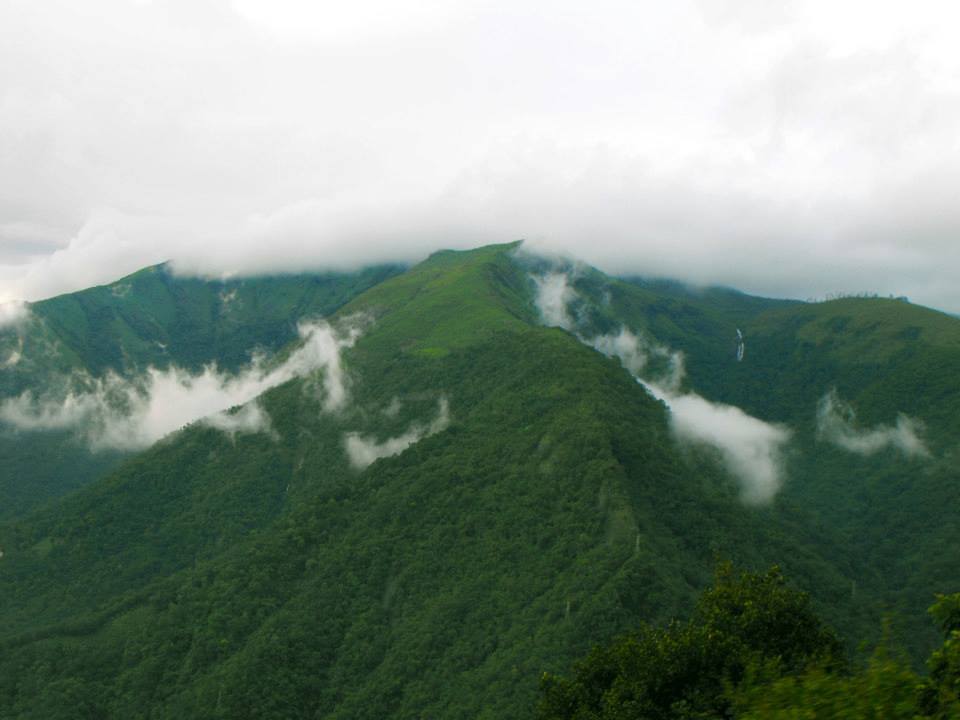
Kerala State Biodiversity Board (KSBB) has recently joined with the University of Alabama (UA) in Huntsville to help improve Kerala’s landslide alert system and the conservation of the Western Ghats. Both projects are currently in the development phases for testing, but implementations of such projects in Kerala could have profound and lifesaving affects. According to an article in The Hindu, a landslide alert system would be able to help predict landslides and give advanced warning to the authorities in the area.

Placed one kilometer apart above ground, the sensors, which cost about $300 each, register ground movement and record rainfall and soil moisture. The data is transferred to an off-site computer hosting a software model that provides advance warning of a landslip.

If testing proceeds, KSBB would place this system first in the Idukki district, an area known for having multiple landslides during the monsoon season. Predicting landslides in this area can save hundreds of lives, but this landslide alert system is not the only project in development that involves the UA and the KSBB working together to protect this region.

Continue reading

Big Day Arizona

Northern Saw-whet Owl from Rustler Park

Northern Saw-whet Owl from Rustler Park

As we pulled up to the Rustler Park Campground parking lot in the Coronado National Forest a light rain began to fall.  Graham and I turned to each other upon arrival and with the same quizzical tone wondered, “Why is there someone else up here?”  The lights of another car illuminated the area and once we parked a man approached us.  There was a knock on my window as his flashlight blinded me.  I began the conversation puzzled and slightly alarmed, “Hey…how you doing?”  He announced himself as Portal’s lieutenant police officer and he asked to see our identification.  As I got out of the car to retrieve my id I noticed another ten or so officers standing behind the car.  When he asked what we were doing there at this hour and I replied “Birding” we received an expected response: “Birding? It’s midnight”.

This was hardly the way I imagined our Big Day would begin, but I suppose being searched to see if we were drug traffickers was an appropriate way to start our 24-hour birding adventure in the Chiricahua Mountains of Southeast Arizona. After trying to explain what a Big Day was (a whole day of non-stop birding in an attempt to see as many species as possible during that time) the officer hesitantly departed.

We didn’t have much time to think about this interaction, because our day was about to begin.

I gave Graham the countdown as my phone read, 11:59:45, 15 seconds, 10 seconds, 5 seconds, and Go. We immediately cupped our hands to our ears. There were three night birds we desperately needed at high elevation, and each was just as hard as next. A “sweep” of these three species would be unlikely to say the least. We did have one thing going for us though. For the past two months we had been interning at the Southwest Research Station just up the mountain from Portal. For those two months we had done almost nothing but bird. We knew specifically, sometimes down to a certain tree, where we could find each bird on our target list.

So as the clock struck midnight we were standing at the bathroom at Rustler Park listening for the rarest owl in the Chiricahuas, the Northern Saw-whet Owl. Graham and I used double playback, meaning I played the bird’s call and he would respond as a second bird; this strategy usually has a higher success rate of eliciting a call. To our delight we heard the tooting call of the owl echoing off the canyons. On a normal day we would want to see this bird, but today was far from normal. We were solely after numbers, and in the birding world an aural identification is sufficient. Once we got the Saw-whet we headed up the trail to the Forest Service cabins and began playing the Flammulated Owl. Our recordings weren’t loud enough, so I had to do it the old fashioned way and emulate the call myself. Based on my experiences in these mountains this particular owl is the most sought-after bird because it is the hardest to find. During the summer internship I received numerous emails from fellow birders asking where to spot it. But at the moment those other birders were certainly not our problem—getting this owl to respond was! Continue reading

Cheetahs And Shepherd Dogs, Partners In Entrepreneurial Conservation

Thanks to a friend’s travels to the southern tip of Africa, a story from the field about colleagues we hope to meet soon. The friend learned of this program during a visit to a Cape Town winery (cheers to them and that; click the logo to the right to read more than we can share here):

Cheetah Outreach

Promoting the survival of the free ranging, Southern African cheetah through environmental education and delivering conservation initiatives.

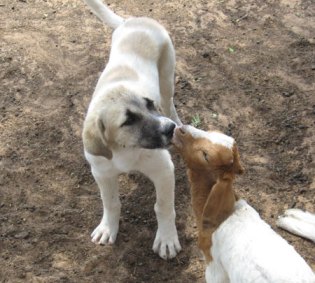
As a result of the success of Cheetah Conservation Fund’s livestock guarding dog programme in Namibia, a trial programme was launched by De Wildt’s Wild Cheetah Management Project (WCMP) and Cheetah Outreach in 2005 to introduce the Anatolian shepherd to serve farmers in South Africa. To give this trial the best possible chance of success, farmers  Continue reading

Bees Provide Much

Earlier this week we highlighted a new clearing house for bee news, and now we have come across another, deeper well of knowledge related to bees, and all that they do/provide more than honey. Who knew, for example, that among the important physical realm issues he pondered, bees figured into this man’s thinking:

“If the bee disappeared off the surface of the globe then man would only have four years of life left. No more bees, no more pollination, no more plants, no more animals, no more man.” Albert Einstein

This and more, from CIBER (Centre of Integrative Bee Research) at the University of Western Australia in Perth, Western Australia. Their cross-disciplinary research team includes: Continue reading

If You Happen To Be In Hillsborough, NC (USA)


We note and share the occasional tributes to careers we might not have had the chance to think about. This post catches our attention just as the earlier ones did, but in particular thanks to the collaborative exploration between father and daughter:

“For the past forty years, my father has travelled around America as a telephone-pole salesman,” Sara Macel writes in the afterword to her forthcoming book, “May the Road Rise to Meet You.” The book is a visual narrative of her father’s professional life, the life he lived separately from their shared family experience. Macel and her father, Dennis, retraced his steps and photographed places he may have passed along the way. Continue reading