Community, Control, Conservation

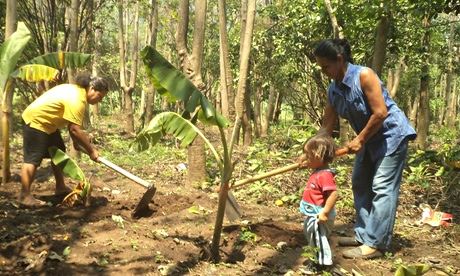
Salvadorans Elsy Álvarez and Maria Menjivar, with her young daughter, plant plantain seedlings in a clearing in the forest. Photograph: Claudia Ávalos/IPS

Salvadorans Elsy Álvarez and Maria Menjivar, with her young daughter, plant plantain seedlings in a clearing in the forest. Photograph: Claudia Ávalos/IPS

We have normally emphasized the word collaboration in conjunction with the conservation initiatives carried out by communities. This article in the Guardian points to research findings that indicates that another c-word, control, is sometimes key to understanding how communities reduce deforestation:

…Analysis suggests that in areas formally overseen by local communities, deforestation rates are dozens to hundreds of times lower than in areas overseen by governments or private entities. About 10-20% of global greenhouse gas emissions are attributed to deforestation each year.

The findings were released by the World Resources Institute (WRI), a thinktank, and the Rights and Resources Initiative (RRI), a global network that focuses on forest tenure. Continue reading
Plant-a-Tree at Xandari

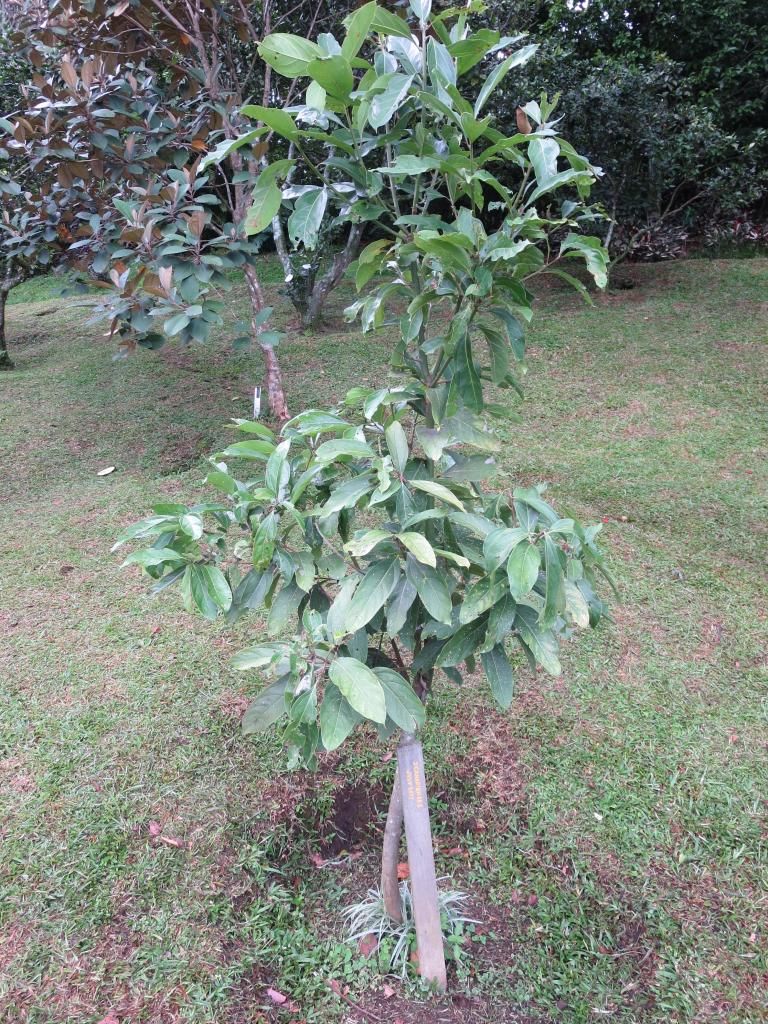
The stake in front that holds the planter’s name says (quite humorously, to my mind): 3 CANADIENSES!

Plant-a-tree programs are real winners: educational, fun, and productive. Next time you visit Xandari (or another sustainable or eco-friendly hotel), be sure to ask about the opportunity about the opportunity to plant a sapling. At Xandari, plantings are usually done in the orchard or in one of the old coffee plots. Everybody who plants a tree has a small wooden stake erected near the spot, commemorating the event and recognizing the effort to make the world a little bit greener. Continue reading

“Patagonia Sin Represas”–Finalmente

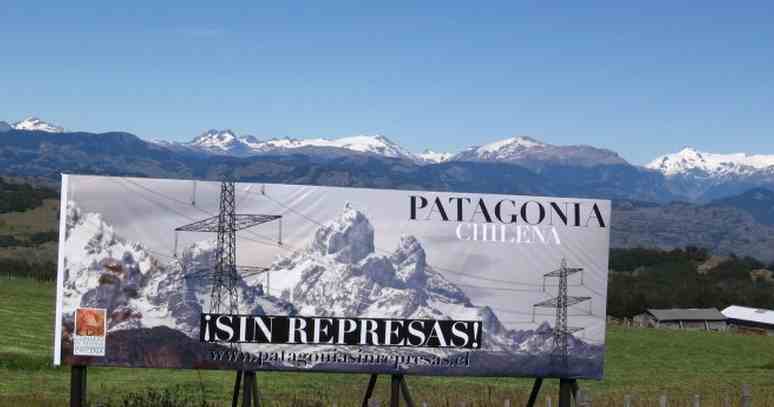
One of the many billboards representing the outcry from environmentalists and concerned members of the tourism sector

One of the many billboards representing the outcry from environmentalists and concerned members of the tourism sector

It’s been some years since our work brought me to this magical part of the world, but all of Patagonia and the specific region of Aysen have long been close to our hearts. So the news that the Chilean government overturned their 2011 approval of the HidroAysén project was happy indeed. The Baker and Pascua Rivers, previously slated for a series of 5 dams, are two of Patagonias wildest, and that’s saying a lot in a country filled with rugged beauty as diverse as it’s 4,300 kilometer length can possibly hold.

Part of that diversity has the potential to offer multiple options for renewable energy sources other than hydro-electric power. Solar power from the Atacama Desert, wave and tide projects from that enormous coastline, as well as wind turbines in areas of the country where winds reach gale force strength on a regular day are all possible options.  Continue reading

Help Hanging Rock, If You Can

18064a9e-466d-40ea-86d7-2a6ade5ee448-460x276

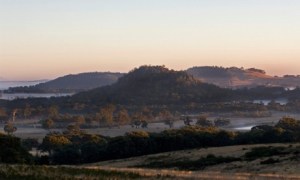
Government funding for Hanging Rock will support the upkeep of picnic areas, wetlands and protection of plant and animal life. Photograph: John Crook/AAP

Fans of Peter Weir will be inclined to heed the call, if they can, to help ensure Hanging Rock is not spoiled:

Controversial plans to build a tourist resort at Victoria’s Hanging Rock have been scrapped after the state government committed $250,000 a year to maintain the landmark.

The funding, announced on Friday, will fund the upkeep of trails and signs along the rock, as well as the nearby picnic areas, wetlands and protection of plant and animal life. Planning protections in the area would be strengthened to shield the area from “inappropriate development in the long-term”, the Victorian planning minister, Matthew Guy, said.

Plans by the Macedon Ranges shire council to build a 100-room resort, eco-cabins, a “nature-focused adventure facility” and a day spa near the unique volcanic rock formation had divided the small community north-west of Melbourne. Continue reading

Make The Pledge by Nikki Miles

tumblr_mwb61wXD4G1qz5g9bo1_1280

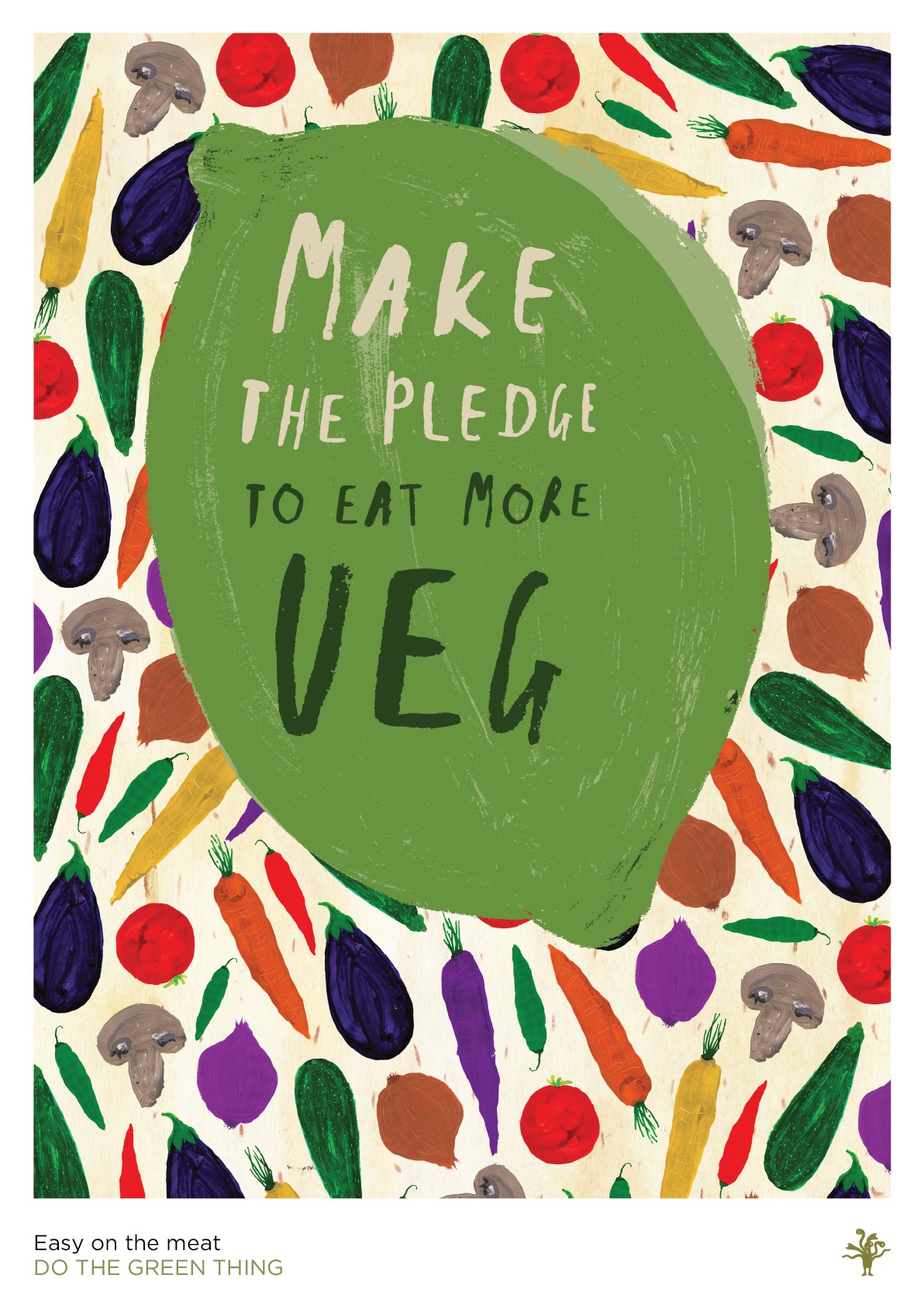
The day has come. Come! During the last month of food trials at 51, we were looking forward to the day–yesterday–when the doors officially opened and we could invite both vegetarian and non-vegetarian friends to dine, and in particular feast on a roasted vegetable dish rooted in Malabar Coast vegetables and Eastern European foodways. Thanks to another of the Young Creatives for this encouragement on getting non-vegetarians to pledge to add more vegetables to their diet–all it takes is better-tasting veggies, we think, and some creative promotion:

With this playful painting, illustrator Nikki Miles is urging us to make a pinky promise to go easy on the meat and its carbon consequences and enjoy some veg instead.

“I don’t eat a lot of meat but I’m not strictly a vegetarian either,” says Nikki. I have tried being a vegetarian in the past but I found it to hard to give up the odd bacon sandwich or roast dinner with beef gravy.  I only eat meat around once or twice a week because vegetables are yummy too! Eating more veg and less meat is a simple way to make a big difference to your health and the environment.” Continue reading

Earth Hour 2014


Earth Hour

Earth Hour

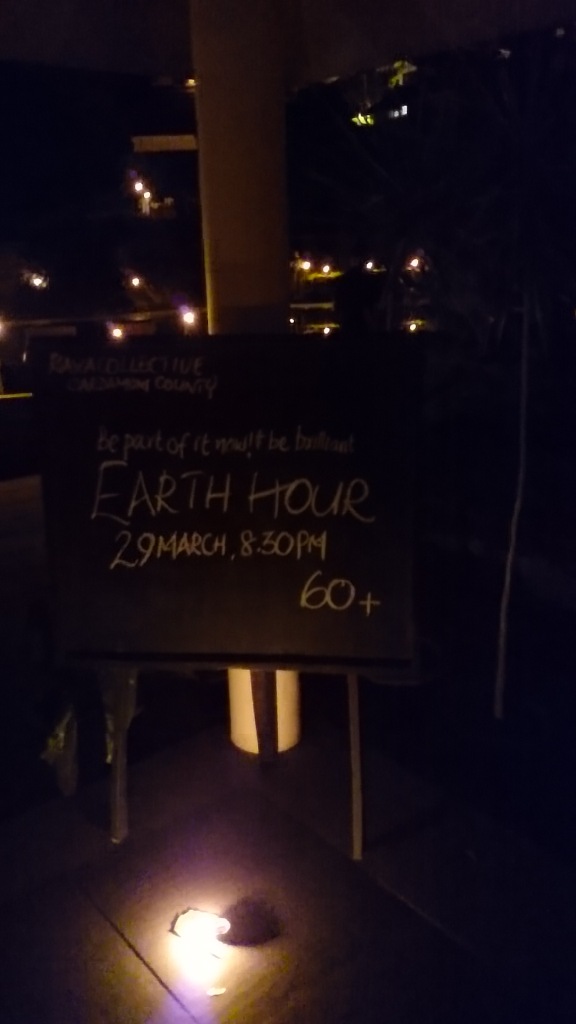
RAXA Collective properties joined the millions of people around the world celebrating Earth Hour on March 29th. Earth Hour is a voluntary movement with the goal to highlight global activism about energy consumption. One hour staggered in local time across the globe people come together and switch off all their electricity. Continue reading

The Lights Are On by Sylvia Moritz

tumblr_n0msx5vlNw1qz5g9bo1_1280

As noted yesterday, we will continue highlighting the best of the Young Creatives for the Do The Green Thing campaign. Raxa Collective’s operations teams at various properties can relate to Sylvia’s challenge to all of us to collaborate on conservation of electricity, whether in the hospitality community, the traveler community, in our residential home community or wherever:

Graphic designer and illustrator Sylvia Moritz wants to spell an end to the stupidity of leaving lights on in empty rooms.

“Electricity is a daily comfort we take for granted,” says Sylvia. “It is our sun when it is night, it is our means of living out our modern daily lifestyles. To recklessly exhaust this energy source, to squander something so integral to our survival, is wasteful. I hope this illustrated idiom can switch people’s behaviour.” Continue reading

Still Counting On Do The Green Thing

tumblr_n377x1rxqr1qz5g9bo1_1280

Since we started highlighting these posters only during its final week or so, there are many other posters to highlight and we intend to do so in the coming days. Not all, since not all creative output is created equal. In this final campaign poster, about reduction of light pollution, the Young Creatives series concluded on a cosmic note:

The shining star of our 29 Posters for the Planet campaign is Rebecca Charlton, the winner of WWF and Do The Green Thing’s Young Creatives competition. With her intricate and dazzling illustration, she reminds every person in every building in every city that stars not bulbs are the best sources of light in the night.

Continue reading

Do The Green Thing Countdown 29/29

29 Posters Final Template

Today’s the day this series was designed for, and Shiv’s “Less Light” provides a fitting conclusion about doing the green thing this evening:

Illustrator and art director Shiv uses a blend of photography and computer trickery to create a bewitching image to get us warmed up for Earth Hour tomorrow evening. Her poster urges us to switch off, save energy and enjoy the the galaxies above. Shiv said:

“I moved out of London nearer the countryside a couple of years ago and what I love is how much of the sky at night i can see now. I think Earth Hour is a great opportunity to see the stars while the urban lights are down, and that everyone should take advantage of this.”

Why?

Continue reading

Do The Green Thing Countdown 28/29

tumblr_n33p2xFFaL1qz5g9bo1_1280

“Let’s Ride” is a cool, clean visual that says it all, whether you are already a member of the biking community, or yet to become one:

Josh Higgins built and led the design team behind Barack Obama’s 2012 presidential campaign and is now Communication Design Manager for Facebook. Using fresh colours and geometrical shapes, his poster rallies the world to do more bike riding and less driving.

“I have always loved cycling and rode a bike since age 6 because it is fun,” says Josh. “Now I am a bit older I realize it is so much more. Riding a bike is a proven stress releaser. It is great for our environment and whether you are riding purely for pleasure or to get from point A to point B, you will arrive feeling relaxed, energized and happier about the world.”

Why?

Continue reading

Do The Green Thing Countdown 27/29

tumblr_n31wkrCfVp1qz5g9bo1_1280

Better By Bike” speaks again on the topic of bicycle power, in the interest of Earth Hour as promoted by WWF and which Raxa Collective’s community will be participating in:

Today we are delighted to present a poster from a man who needs no introduction, but that won’t stop us from introducing him anyway. Sir Paul Smith is one of the most admired figures in the world of fashion: a style guru, a gentleman and a mad keen cyclist. He has created a piece of heartfelt pro-pedal propaganda featuring one of his own cycles and a message in his own writing: “it’s better by bike”. We agree.

Why?  Continue reading

Do The Green Thing Countdown 26/29

tumblr_n2zzyyGvp21qz5g9bo1_1280

Today’s is a dark one, darker than our normal post content but in the spirit of going with the flow we link out to this poster appropriately called Extermination Workshop:

Step forward Michael Wallis, a left-field thinker and co-founder of branding agency Corke Wallis. In this satirical poster-cum-drama set in the future, he speculates on the totally ridiculous idea of standby mode, and makes us ask ourselves: “why on earth would humanity come up with such a hopeless invention?”

Michael says: “I’m supporting Green Thing and Earth Hour so that when the apocalypse comes it is at the hands of something really epic like aliens or cyborgs or giant reptiles from another dimension, not DVD players.”

Why?


Continue reading

Pro-Environment Posters For WWF’s March 29 Earth Hour Initiative

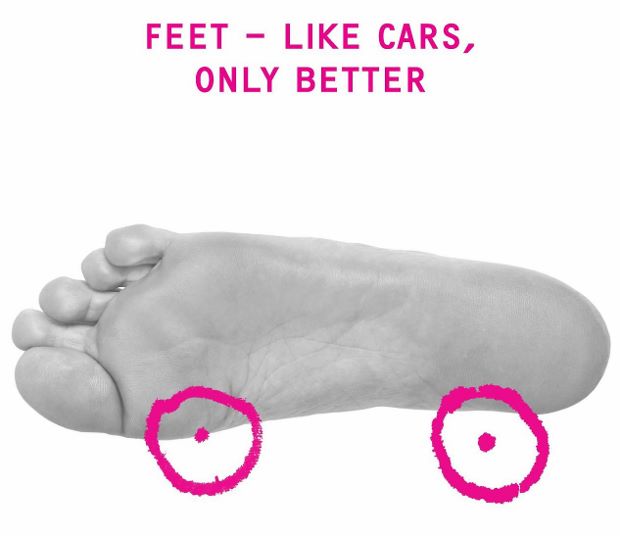
Walk the Walk by Marina Willer for 29 Posters for the Planet

Walk the Walk by Marina Willer for 29 Posters for the Planet

We appreciate collaborative efforts to raise awareness about environmental issues, especially when they come from places where the focus is not normally on conservation. Design agencies are generally designed to sell more stuff. Publishers are generally designed to use ex-trees to communicate stuff. But some designers are on the other side of the consumer behavior-influencing fence. And some publishers use those ex-trees to publicize a more tree-centric future.  Ethics sometimes prevail over ambition. Education sometimes jumps the line.

Professional communities–whether design firms, publishers, hotel companies or take your pick–all have latent collective action lurking in their futures. We hope nature and culture are the beneficiaries. Thanks in particular at this moment to publisher Phaidon, which is in itself worthy of a post on its series of environmentally-friendly books and initiatives, for bringing this initiative of design firm Pentagram to our attention:

Pentagram’s carbon free foot print

Design agency works with Do The Green Thing charity on environmentally friendly posters

The gulf between our high-consumption lifestyles and the kind of sustainable world many of us hope to inhabit is vast. Yet the changes that could take us there aren’t unthinkable, as our recent book, The World We Made, makes clear. Continue reading

“Change the Mascot”

The United States National Football Leage (NFL) and it’s Hunky Dory Saucery Thing (which is beyond my scope of imagination) have never held any interest for me. The sport doesn’t elicit any reaction other than sympathy for the players’ bodies, although my disinterest bears  no grudge against those who enjoy a game, whether from within the dynamic minefield of titanic collisions or from the comfort of their own home’s sofa, or anything in between. In fact, I know so little of the culture, statistics, and geopolitical implications of the sport that before last week I couldn’t have named three teams off the top of my head. Today, I unsuspectingly watched this:


Continue reading

The World Needs Another Golf Course Like It Needs Another Hole In The Ozone

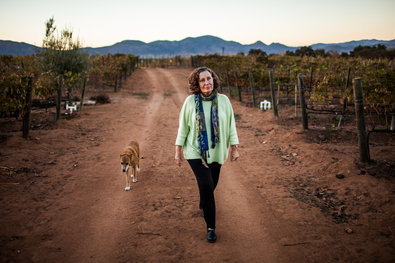
Max Whittaker for The New York Times Natalia Badán, a winery owner and longtime resident of the Guadalupe Valley, called a zoning change “an aggression.”

Max Whittaker for The New York Times
Natalia Badán, a winery owner and longtime resident of the Guadalupe Valley, called a zoning change “an aggression.”

If you have ever swung a golf club, in earnest, on a challenging hole somewhere on a beautifully crafted course, you might agree: the game is good for the soul. But there is such thing as too much of a good thing:

A Rustic Paradise, Open for Development

By DAMIEN CAVE Continue reading

A 3-Way Intersection As Puzzle: Property Rights, Community Rights, Conservation

We will leave surfing topics to the resident expert, Jake. But this short documentary poses a conundrum that, while we instinctively side with the surfers, challenges us as stewards of property on India’s coast line. We want everyone to have access to the beach, but we want to prevent the kind of “tragedy of the commons” that is evident when no one has clear responsibility and authority for stewardship.

As we prepare to open Pearl Beach in a few months on a pristine section of Kerala’s coast, we have taken an approach that minimizes our footprint on the land while allowing us to do what we do, hosting guests from around the world, giving them an authentic taste of local nature and culture, and channeling the profits to conservation.

Continue reading

Cats And Dogs And The Golden Rule


This slideshow requires JavaScript.

When we posted about a unusual collaboration between cheetahs and shepherd dogs, we started watching for more news on the same.  This website tells a different story about feline-canine common interests, with a clear reminder about the human interest in behaving more empathetically toward our neighbors:

CHEETAH AND AFRICAN WILD DOGS NEED LOTS OF SPACE: Of all the large carnivores of Africa cheetahs and wild dogs need lots of space. Recognition of this led to the RANGE WIDE CONSERVATION PLANNING PROCESS bringing together all sectors of society to develop frameworks under which all stakeholders – government, community and private – can work together to ensure the survival of these iconic species. Use this website to learn more about this innovative approach, the distribution of the two species, who is working to help them and what is being done on the ground. Continue reading

Really, Karnataka?

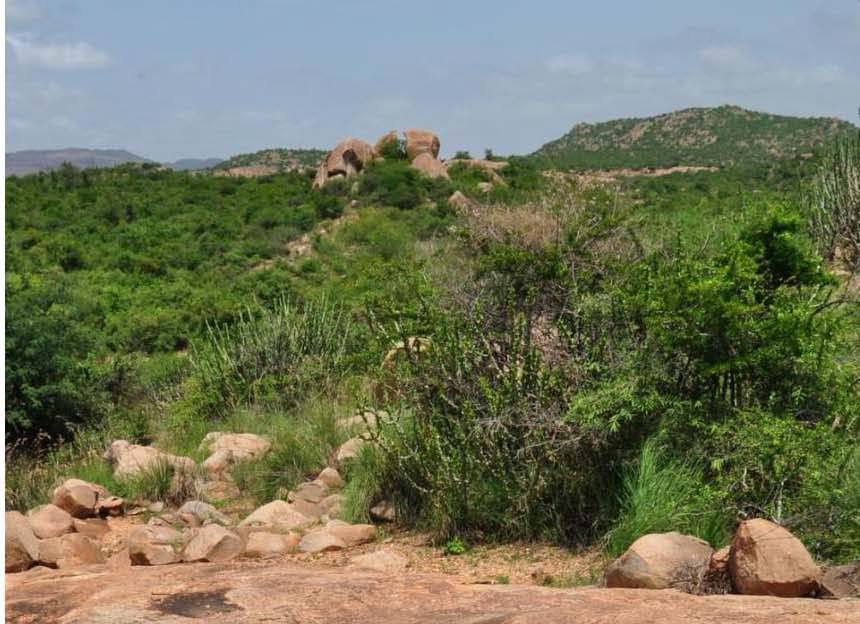
Forest near Daroji Sanctuary, Karnataka; photo credit: Santosh Martin

Forest near Daroji Sanctuary, Karnataka; photo credit: Seshadri K.S

We’ve stated before that our site is not dedicated to outrage, but we do make an effort to point out questionable environmental decisions by corporations and countries when we see them.

So when it came to our attention that the minister of tourism in the Indian state of Karnataka was spearheading a plan to create a zoo/wildlife safari within the buffer zone of the Daroji Bear Sanctuary we had to take notice. According to Santosh Martin, honorary wildlife warden for the region

The fragile ecosystem is home to critically endangered species of both animals and plants including pangolins, sloth bears, wolves, leopards, etc., which are classified as Schedule I by the WPA. This site is also a breeding ground for the Indian eagle owl, brown fish owl and possibly the blue tailed bee eater. More than 150 bird species have been documented in this area by naturalists which include the yellow-throated bulbul, painted spur-fowl, painted sand grouse, etc. Continue reading

Cheetahs And Shepherd Dogs, Partners In Entrepreneurial Conservation

Thanks to a friend’s travels to the southern tip of Africa, a story from the field about colleagues we hope to meet soon. The friend learned of this program during a visit to a Cape Town winery (cheers to them and that; click the logo to the right to read more than we can share here):

Cheetah Outreach

Promoting the survival of the free ranging, Southern African cheetah through environmental education and delivering conservation initiatives.

As a result of the success of Cheetah Conservation Fund’s livestock guarding dog programme in Namibia, a trial programme was launched by De Wildt’s Wild Cheetah Management Project (WCMP) and Cheetah Outreach in 2005 to introduce the Anatolian shepherd to serve farmers in South Africa. To give this trial the best possible chance of success, farmers  Continue reading

The Journalism-Academic Complex

Illustration to John Seabrook's 2011 article "Snacks For A Fat Planet" showing: Indra Nooyi, the C.E.O. of PepsiCo, says it must be a “good company” in a moral sense.

Illustration to John Seabrook’s May 16, 2011 article “Snacks For A Fat Planet” in the New Yorker. showing: Indra Nooyi, the C.E.O. of PepsiCo, says it must be a “good company” in a moral sense.

The Military-Industrial Complex that then-exiting President Eisenhower warned about is unfortunately alive and well, as we saw in the previous decade, when journalists were mostly asleep at the wheel, often even contributors to the dark complex. But journalism has been reborn in some quarters with a new sense of purpose, and new approaches to vigilance that is worthy of the Fourth Estate. Diligent investigative journalism allied with advanced academic research-driven thinking skills produces a better complex.

Case in point: when accomplished academics such as Professor Aaron Chatterji share cogent, punchy follow up posts to articles that caught our attention years back, today’s news on labor activism meets yesterday’s analysis of the intersection of food/health trends and corporate buzz phrases like social responsibility. Thanks to this Duke University professor, New Yorker readers get follow up on a story that might otherwise have been fading, but should not:

Nooyi has backed up her rhetoric with concrete steps, acquiring healthier brands like Tropicana and Quaker Oats and creating Pepsi Next, a lower-calorie version of the flagship brand. She even hired a former official from the World Health Organization to oversee the reforms. Continue reading