Gardens As Havens For Wildlife

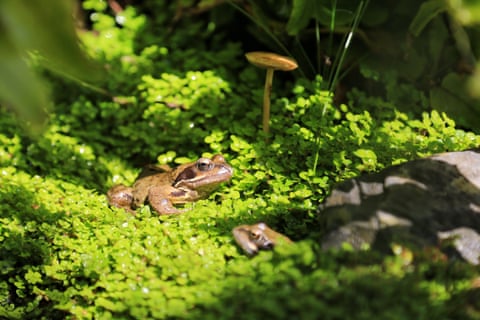
Two frogs in a garden pond enjoying the sunshine on a bed of weed.

Common frogs and other amphibians will spawn in the most modest of garden ponds. Photograph: Brendan Allis/Getty Images/iStockphoto

There are many variations on the theme of garden as haven in our pages over the years. The common thread is that at the scale of a garden, there is much that the individual can do to support conservation. Thanks to Jules Howard for adding to the theme:

The frogs may be gone, but life goes on: how I regained my faith in gardening for wildlife

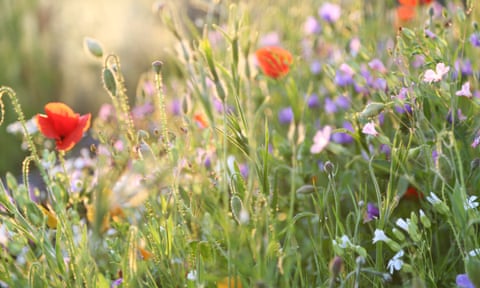
Wildflower field

Gardens allowed to grow a little wild can be a lifeline for struggling pollinator populations – in rural as well as urban areas. Photograph: kirin_photo/Getty Images/iStockphoto

The extremes of the climate crisis mean it’s harder than ever to provide a garden haven for birds, insects and other animals. Some gardeners are questioning whether trying to do the right thing is time well spent

More than two decades ago, I had the honour of running the world’s last (possibly only) frog telephone helpline. No, this is not a set-up for a punchline. Continue reading
Resilience At Sycamore Gap

The shoots growing from the stump of the Sycamore Gap tree.

The Sycamore Gap tree, a beloved way marker, had grown for centuries along Hadrian’s Wall in England before vandals cut it down last year. Now little shoots have been discovered growing at its stump. Jason Lock/National Trust

When this act of vandalism was in the news last year, it felt terrible but had no meaning. But if the felled tree is giving new life, we must celebrate that:

A man kneels beside a tree stump with a tape measure in his hands.

Gary Pickles, a ranger at Hadrian’s Wall Path National Trail, inspecting the Sycamore Gap tree shoots that recently appeared. Jason Lock/National Trust

Vandals last year chopped down the famed tree, which had stood on Hadrian’s Wall in England for nearly 200 years.

On a fine, bright morning last Friday, just like so many other fine, bright mornings, Gary Pickles took a walk.

Two people in a fenced-in area in a field by a stone wall.

Mr. Pickles and a colleague at the site where the tree once stood. Jason Lock/National Trust

Mr. Pickles, a ranger who works at Northumberland National Park in England, just south of the Scottish border, was inspecting a route that wends past Hadrian’s Wall, constructed by the Roman Army in the second century A.D. He walked past the cleft where the Sycamore Gap tree had famously jutted out into the landscape before it was illegally cut down last year, and he bent down to its stump. Continue reading

Emma Marris On Urban Shade

A man wipes his forehead under the hot sun as he walks under shade sail.

Matt McClain / The Washington Post / Getty

The science writer Emma Marris, here featured in The Atlantic, first came to our attention in a passing mention ten years ago, then again in full force six years ago. Whether or not you live in an urban area, you likely depend on urban areas for some part of your livelihood so her essay may be of interest:

Trees are nice and all, but they’re not enough.

On a 92-degree Saturday afternoon in Portland, Oregon, I went looking for shade in Cully Park, which was built on top of an old landfill and opened in 2018. The city included plenty of trees in the design—I mean, this is Oregon. Continue reading

Fighting Pollution With Garbage

Image may contain Outdoors Flower Plant Nature Pond and Water

Photograph: Abir Mahmud, University of Dhaka

Our thanks to Hannah Richter for her reporting and writing, as well as to Wired for publishing what sounds not like garden variety too good to be true, but quintessentially ridiculous.

Kudos to Nepal for testing out this idea in spite of how it sounds:

Image may contain Lake Nature Outdoors Water Aerial View Architecture and Building

Groups of platforms installed in Nagdaha lake in Nepal. PHOTOGRAPH: SAMYAK PRAJAPATI/THE SMALL EARTH NEPAL

Polluted Lakes Are Being Cleansed Using Floating Wetlands Made of Trash

Platforms combining plants and recycled garbage could offer a cut-price solution for reviving polluted bodies of water.

ON THE BANKS of Nagdaha, a polluted and lotus-infested lake in Nepal, Soni Pradhanang is putting trash back into the water—on purpose.

Image may contain Plant Potted Plant Water Waterfront Boat Transportation Vehicle Outdoors and Food

A floating treatment wetland system loaded with plants. PHOTOGRAPH: SAMYAK PRAJAPATI/THE SMALL EARTH NEPAL

She carefully assembles a platform of styrofoam and bamboo mats, then weaves it together with zip ties and coconut fiber, refuse from nearby tech stores. Then, she pokes 55 plants lush with red flowers through 2-inch holes in the platform, each plant set 6 inches apart. Though Pradhanang’s creation isn’t high-tech, it is effective, and one of the most affordable water-filtration systems available. “I’m cheap,” she says, laughing. Continue reading

Appalachian Solar & Remediation

A photo of solar panels under a blue skyThanks to Bridgett Ennis at Yale Climate Connections for expanding our coverage of brownfield remediation, which surprisingly has only featured in one previous post in our 13 years linking to environmental news stories. Now two:

Massive solar farm planned for coal mine site in eastern Kentucky

Solar developer BrightNight is set to transform the Starfire coal mine into an 800-megawatt solar farm, bringing renewable energy and jobs to southern Appalachia.

A massive solar farm is in the works at the site of one of the largest coal mines in southern Appalachia. Continue reading

With Rewilding, Markets Are Not Everything, But Are A Key Ingredient

Rewilding can support the development of a wide range of nature-based businesses. NEIL ALDRIDGE

Places can have a particular taste, maybe one that is even iconic, and coffee was the obvious tool in our taste of place toolkit for decades. When it came time to focus on these products as our primary work we drew on some earlier experiments.

One was with honey and the other was with wine. All that was long before coming home to Costa Rica to launch Organikos.

Lunch provided with products from the Wild Côa Network during the ERN-EYR event in the Greater Côa Valley. The Wild Côa Network, which now comprises over 50 members, is driving the development of nature-based enterprise in and around Portugal’s Greater Côa Valley. NELLEKE DE WEERD

We are about to introduce two new products, and one has a story that mixes conservation and rewilding. So, in this story  that follows we sense something akin to the Organikos products in our Authentica shops:

Nature-based business networks take off across Rewilding Europe landscapes

Helping nature heal can lead to prosperous local economies. Nature-based business networks are being developed in a growing number of our rewilding landscapes, enabling businesses and communities to benefit from nature recovery in a sustainable way. This, in turn, is generating more support for rewilding.

The network effect

Today, nature-based business networks are a growing feature of Rewilding Europe’s expanding portfolio of rewilding landscapes. These bring businesses together under a shared rewilding vision for the landscape, facilitating the creation of new tourism packages, helping to close gaps in tourism experiences, and creating new economic opportunities. Continue reading

The Garden Against Time, Reviewed

It always comes back to the commons. Thanks to Naomi Huffman at The Atlantic for bringing this book to our attention:

What Gardens of the Future Should Look Like

In her new book, Olivia Laing argues that the lives of all people are enriched with access to land they can use freely.

On a Sunday afternoon in May, the Elizabeth Street Garden, a serene public park wedged between Manhattan’s SoHo and Little Italy neighborhoods, was filled with people undeterred by the gray sky and spitting rain. Visitors sat at tables among fuchsia azaleas and yellow irises, and in the shade of loping old trees, talking, eating pizza, and drinking iced coffee. A painter faced an easel at the back of the garden and composed a watercolor. Continue reading

Celebrating Voices Of The Americas

Curved exterior of the National Museum of the American Indian in DC, pale bricks glowing as if during sunrise.We missed the 2024 INDIGENOUS VOICES OF THE AMERICAS –CELEBRATING THE NATIONAL MUSEUM OF THE AMERICAN INDIAN. Our calendars are already marked for next year, based on what we see from this year’s celebration:

Across the Western Hemisphere, thousands of Indigenous communities are sustaining traditional practices and contributing to a more equitable future. Today, these individuals and nations define who they are, through their own stories in their own words.

An illustration of the ingredients for Cherokee bean bread.In 2024, Indigenous Voices of the Americas: Celebrating the National Museum of the American Indian highlights living traditions of Indigenous peoples. At its core, the program honors contemporary and traditional creative expressions, celebrations, and community connections that feed new possibilities for Indigenous futures. The program is co-presented by the Smithsonian Center for Folklife and Cultural Heritage, the National Museum of the American Indian, and the National Park Service.

We would not have known about it except for this article (thanks to National Public Radio, USA):

Bolivian skateboarders demonstrate their skills on the half pipe.

Bolivian women skateboarders — wearing traditional garb — demonstrate their skills on the half pipe. Ben de la Cruz/NPR

It’s a rather unusual skateboard lesson.

Little girls are lined up to learn to balance on a board on a half-pipe ramp. The teachers are young women from Bolivia, in their teens and 20s, wearing traditional garb as a tribute to female strength. Their outfits do not seem as if they are ideal for skateboarding: Each skateboarder wears a beribboned bowler hat and a poofy skirt. Among the eager disciples is Poppy Moore…

Paul Theroux, Still Indulging

At home in Hawaii in 2021. Michelle Mishina Kunz for The New York Times

During the first few months of this platform, when travel experiences as well as variations on biophilia and  conservation became our prevailing themes, a post mentioned one of the great travel writers of our time. 13 years passed and this is his first full reference:

Paul Theroux on Necessary Solitude, Risks and the Joy of Writing

After 60 years of writing and publishing — and almost 60 books — I feel ordering my thoughts on paper to be not a job but a process of my life. You always hear writers complain about the hellish difficulty of writing, but it’s a dishonest complaint.

So many people have it much harder — soldiers, firefighters, field workers, truckers. The writer’s profession is a life of self-indulgence. Continue reading

Adapting Maple Syrup Making

Students tap a tree for maple syrup in Randolph, Vermont, on 20 May 2024.

Students tap a tree for maple syrup in Randolph, Vermont, on 20 May 2024. Photograph: Olivia Gieger/The Guardian

Maple syrup is a good example of what we call taste of place products, and we are happy to see the next generation in Vermont adapting the making of this one for the future:

‘It’s the future of sugar’: new technology feeds Vermont maple syrup boom amid climate crisis

With tools as seemingly simple as these blue tubes, it’s easier than ever to extract sap from maple trees, as these young people demonstrated during a May Future Farmers of America convention on 20 May.

With tools as seemingly simple as these blue tubes, it’s easier than ever to extract sap from maple trees, as these young people demonstrated during a Future Farmers of America convention on 20 May. Photograph: Olivia Gieger/The Guardian

The season to tap trees is now earlier and longer, but new processes and generations are helping the industry thrive

On a warm May Monday, more than three dozen high school students took to the forest behind a former dairy barn at Vermont State University in Randolph.

In teams of four, they ran blue plastic tubing from tree to tree, racing to connect the tubes across three trees in 30 minutes. One student leaned back and pulled it taut with his body weight while another secured tube to tree. Quickly, they dashed to the next in what appears to be a twisted tug-of-war. Continue reading

Glass Eels & Industry

A lot of Mainers want badly to win the elver lottery. This year, more than forty-five hundred people applied for sixteen available licenses. “It’s an industry, not a fucking cult,” a fisherman said. Illustration by Agnes Jonas

Salty language comes with the territory in this story; we thank Paige Williams as always for her excellent reporting at the intersection of natural history and current environmental affairs:

Inside the Slimy, Smelly, Secretive World of Glass-Eel Fishing

Each spring, hundreds of millions of baby eels swarm the waterways of coastal Maine. Soaring global demand incited an era of jackpot payouts and international poaching.

The Sargasso Sea, a warm, calm expanse of the North Atlantic Ocean, is bordered not by land but by four strong currents—a gyre. Vast mats of prickly brown seaweed float so thickly on the windless surface that Christopher Columbus worried about his ships getting stuck. Continue reading

Making Good Trouble In India

Another of this year’s trouble-making prize-winners:

Meet Alok Shukla

Alok Shukla led a successful community campaign that saved 445,000 acres of biodiversity-rich forests from 21 planned coal mines in the central Indian state of Chhattisgarh. In July 2022, the government canceled the 21 proposed coal mines in Hasdeo Aranya, whose pristine forests—popularly known as the lungs of Chhattisgarh—are one of the largest intact forest areas in India. Continue reading

Nature’s Ghosts, Author’s Viewpoint

Thanks to Sophie Yeo, editor of Inkcap Journal and the author of this book to the right, for sharing that book’s key insights in essay form in the Guardian:

Nature’s ghosts: how reviving medieval farming offers wildlife an unexpected haven

Agriculture is often seen as the enemy of biodiversity, but in an excerpt from her new book Sophie Yeo explains how techniques from the middle ages allow plants and animals to flourish

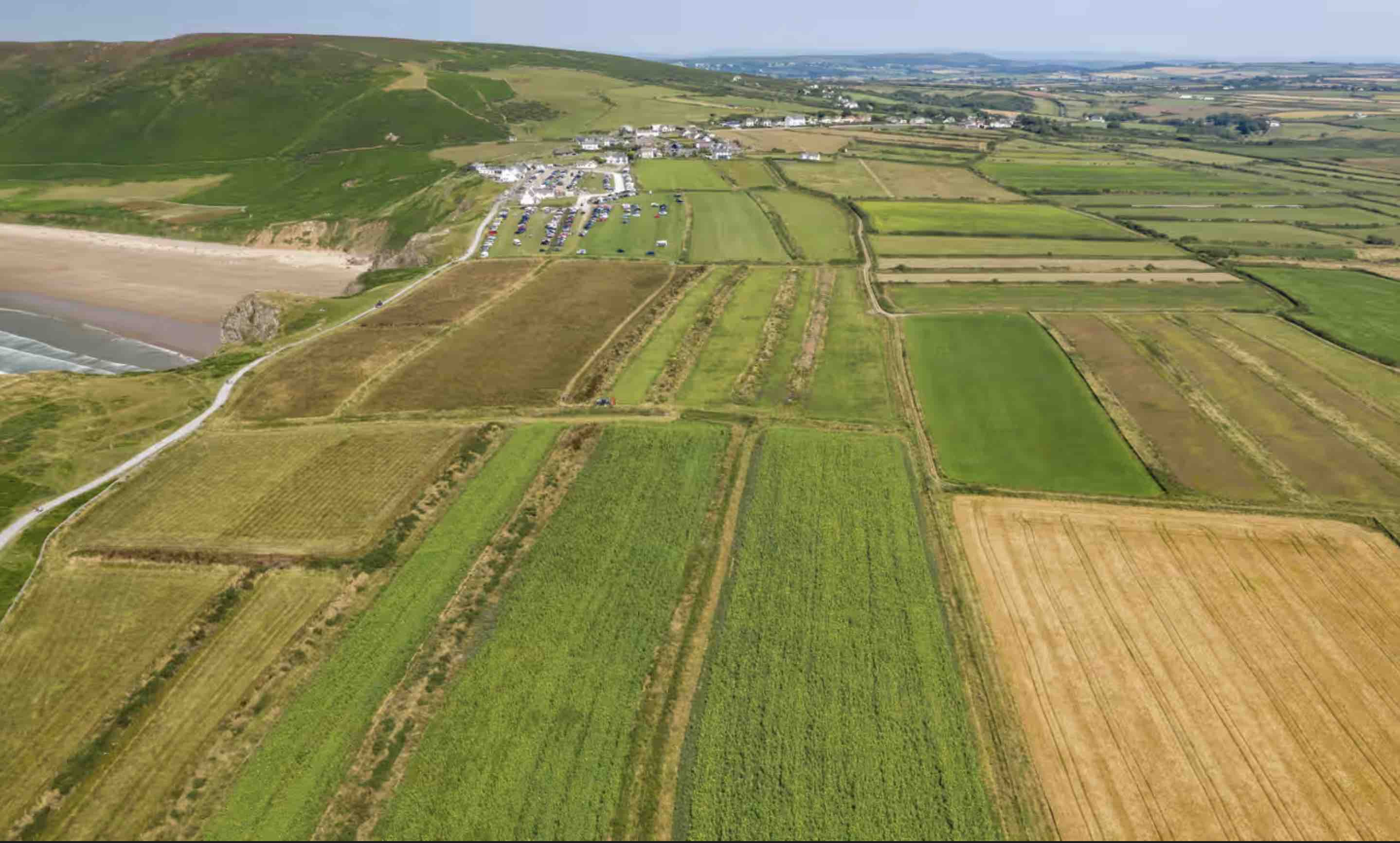
The Vile, a medieval strip field system below Rhossili village, Gower, Wales. Photograph: Wales/Alamy

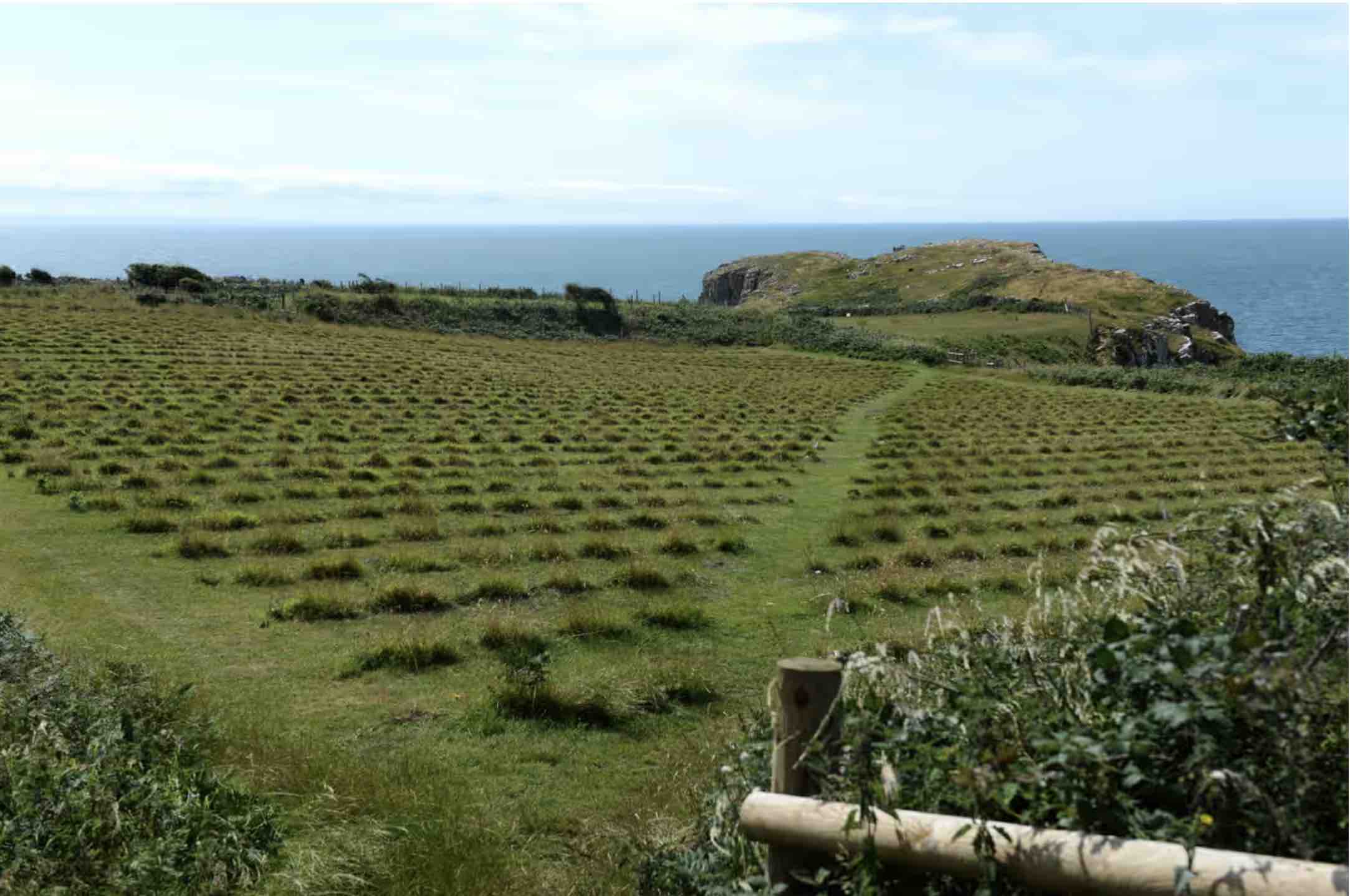
The Vile clings on to the edge of the Gower peninsula. Its fields are lined up like strips of carpet, together leading to the edge of the cliff that drops into the sea. Each one is tiny, around 1-2 acres. From the sky, they look like airport runways, although this comparison would have seemed nonsensical to those who tended them for most of their existence.

A field of lavender on the Vile above Fall bay, Rhossili, planted in summer 2019 to encourage pollinating insects. Photograph: Holden Wildlife/Alamy

That is because the Vile is special: a working example of how much of Britain would have been farmed during the middle ages. Farmers have most likely been trying to tame this promontory since before the Norman conquest.

The fields have retained their old names, speaking to a long history of struggle against the soil. Stoneyland. Sandyland. Bramble Bush. Mounds of soil known as “baulks” separate one strip from the next. Continue reading

English Apple Heritage

Today completes a trifecta of shared articles about trees, and Sam Knight gets extra thanks for the link with a part of food heritage our family is especially fond of (which led to finding the video above):

Illustration by Nicholas Konrad / The New Yorker

The English Apple Is Disappearing

As the country loses its local cultivars, an orchard owner and a group of biologists are working to record and map every variety of apple tree they can find in the West of England.

In June, 1899, Sabine Baring-Gould, an English rector, collector of folk songs, and author of a truly prodigious quantity of prose, was putting the finishing touches on “A Book of the West,” a two-volume study of Devon and Cornwall. Baring-Gould, who had fifteen children and kept a tame bat, wrote more than a thousand literary works, including some thirty novels, a biography of Napoleon, and an influential study of werewolves. Continue reading

The Paper Log House On View Until December

The Paper Log House at The Glass House. Photo by Michael Biondo.

The building in the background of the photo above has never featured in any of our architecture-focused posts before, even though architecture has been a key theme since our start, and especially after hosting these interns in India. I know why I never wanted that particular architect in our pages, but nevermind that. This post is about another architect’s achievement, which I plan to visit if I get close enough before December:

SHIGERU BAN: THE PAPER LOG HOUSE

The Glass House, Shigeru Ban Architects (SBA), and The Irwin S. Chanin School of Architecture of The Cooper Union announce the completion of Shigeru Ban: The Paper Log House at The Glass House. Students from The Cooper Union joined in erecting the structure through a unique opportunity offered this semester for the university’s Building Technology course. The collaborative installation will be on display April 15th through December 15th 2024 for The Glass House’s more than 13,000 annual visitors. Continue reading

Babatana Rainforest Conservation Project & High Integrity Carbon Credits

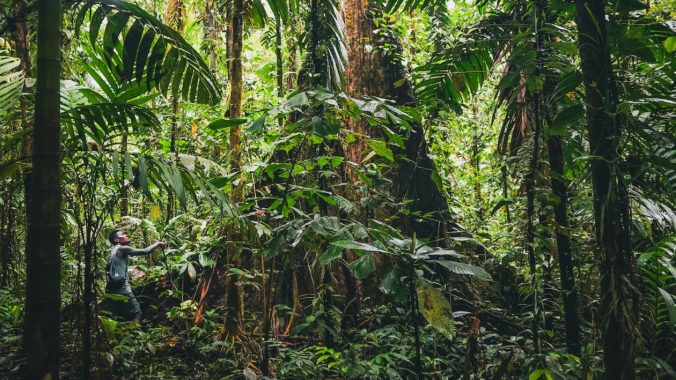
Sirebe tribal ranger Elijah Qalolilio Junior in the rainforest. DOUGLAS JUNIOR PIKACHA / NAKAU

A sign marks the boundary of protected Sirebe land. DOUGLAS JUNIOR PIKACHA / NAKAU

Of all the methods for addressing climate change, new incentives for protecting forests are among those we have most confidence in. Thanks to this article by Jo Chandler in Yale e360, if your introspection after reading this previous article had you down on carbon credits, there may be a way to restore your confidence:

The Sirebe forest at dusk. DOUGLAS JUNIOR PIKACHA / NAKAU

Solomon Islands Tribes Sell Carbon Credits, Not Their Trees

In a South Pacific nation ravaged by logging, several tribes joined together to sell “high integrity” carbon credits on international markets. The project not only preserves their highly biodiverse rainforest, but it funnels life-changing income to Indigenous landowners.

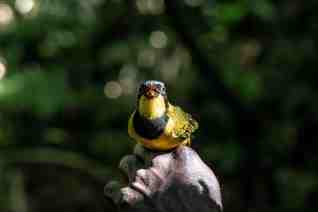
A male oriole whistler on a forest ranger’s hand. DOUGLAS JUNIOR PIKACHA / NAKAU

When head ranger Ikavy Pitatamae walks into the rainforest on Choiseul Island, the westernmost of the nearly 1,000 islands that make up the South Pacific archipelago of Solomon Islands, he surveys it with the heart of a tribal landowner and the eye of a forester. Continue reading

Make Space For Weeds

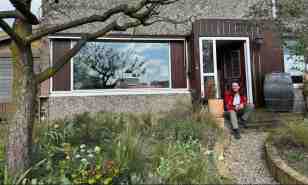
Tineke Menalda on her front doorstep in Amersfoort Photograph: Senay Boztas/Guardian

Weeds are part of nature, whether we like them or not. Thanks to Senay Boztas and the Guardian for this new take on weeds from Holland:

‘We need to accept the weeds’: the Dutch ‘tile whipping’ contest seeking to restore greenery

View image in fullscreen
A pile of ‘whipped’ paving stones in the village of Raalte.

National competition has goal of helping Netherlands reach environmental targets by removing garden paving

Tineke Menalda sits in the sun on her front step, nursing a cup of coffee and idly plucking out the odd weed. Three years ago, the front of her terrace house in Amersfoort was completely paved. But now, sitting in a lush garden of trees and green, she is an official ambassador for the strangest new sport in the Netherlands: tegelwippen, “tile whipping”, or “whipping away” the paving stones. Continue reading

South American Fishing Methods, And Choices

An open-net salmon farm on the Chilean side of the Beagle Channel. Photograph: Dani Casado

As we increase our awareness of the many choices we have when consuming fish (among other things), here is more food for thought:

Crabs, kelp and mussels: Argentina’s waters teem with life – could a fish farm ban do the same for Chile?

Puerto Almanza, on the Beagle Channel in Argentinian Tierra del Fuego, is one of the world’s most southerly settlements and best known for the local seafood, especially Patagonian king crabs.
Photograph: Visit Argentina

While the ecosystem is thriving off the coast of Argentina, the proliferation of salmon farms in Chile’s waters is threatening marine life, say critics

A rocky path, strewn with thick tree roots, leads from a dirt road down to a small green hut overlooking the choppy waters of the Beagle Channel, a strait between Chile and Argentina. The shack is home to Diane Mendez and her family but doubles as Alama Yagan, one of nine restaurants in the fishing village of Puerto Almanza. Continue reading

The Vertical Forest In Milan

The Vertical Forest, a residential complex in Milan. Marta Carenzi/Archivio Marta Carenzi/Mondadori Portfolio, via Getty Images

Italy has not figured in our climate change solutions coverage, until now. Our thanks to Stephen Wallis and the New York Times for this:

A Growth Spurt in Green Architecture

Buildings made shaggy with vegetation or fragrant with wood are no longer novelties.

In the lineup of climate villains, architecture towers above many. The building and construction industries account for some 37 percent of worldwide carbon dioxide emissions, according to the United Nations Environment Program. Three of the most commonly used building materials — concrete, steel and aluminum — generate nearly a quarter of all carbon output. Continue reading

A Tiny Forest For Roosevelt Island

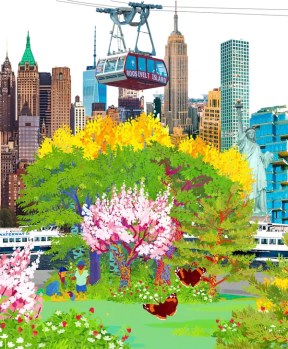
An artist’s rendering of the Manhattan Healing Forest. Courtesy of SUGi

Thanks to Cara Buckley for another in her long line of tree stories:

Coming Soon to Manhattan, a Brand-New Tiny Forest

Pocket-size forests filled with native plants have been embraced worldwide for their environmental benefits. Now one is planned for New York City.

A trend that’s gaining momentum around the world is set to finally arrive in Manhattan. It’s a tiny forest, to be planted on the southern end of Roosevelt Island, in the East River, this spring. According to its creators, it would be the first of its kind in the city and would consist of 1,000 native plants, trees and shrubs, covering just 2,700 square feet. Continue reading