#2 Of One Dozen Love Letters About Xandari

The October-November, 2014 issue of Conde Nast Traveler’s India edition came with a special supplement. This low resolution image of that feature includes the cover and the page inside that featured our newly opened property (click the image to be taken to a more recent honor from the same magazine; when you get to the December recommendation be sure to scroll down to see our mention last month on that publication’s website).

The timeline may have looked choppy in the first love letter, but that is how it goes with reminiscences, even when the archival material is immaculate. To give an overview of the Xandari story in a manner that conveys my deep debt of gratitude, but also keep it reasonably short (two decades condensed to 12 posts), I am going to jump around starting with the image above.

* blurry text on the right of the image is reprinted at the end below

On the left of that image is the cover of a special edition–India’s Stunning Boutique Hotels–published by Conde Nast Traveller in October 2014; to the right of the cover was the story about the property we had just opened for our client MLHS, led by George M George. This publication arrived at exactly the moment we were opening the hotel, then named Spice Harbour, soon to be rechristened Xandari Harbour. And Raxa Collective, the code name for our assignment with MLHS, would eventually (July 1, 2016, thus these dozen love letters starting yesterday) revert to our company’s proper name, La Paz Group. Continue reading

#1 Of One Dozen Love Letters About Xandari

xneighbor1

Xandari’s neighborhood includes some of the best estate-quality coffee land in Costa Rica

I keep correspondences for as long as possible. With all of our moving around some of my older paper correspondences have been lost along the way, but since the advent of email, and especially since archiving email has been possible, I have been a diligent archivist.

So, as I reflect on the completion of our engagement with MLHS June 30, that gives me a dozen opportunities for daily reflection on Xandari as we prepare to hand over the keys. Email archives keep it real.

My relationship with George M George, related in an earlier post, started a couple years after I had first met the man who created Xandari in Costa Rica. From the mid- to late-1990s I was focused on destination-level strategy work in Costa Rica and other countries in that region. I met Sherrill Broudy first during those years as part of my effort to understand the hotel investors who came to Costa Rica from other countries. At that point, the main building of Xandari and just a few villas had been built. Continue reading

Our Goal Here

We will continue sharing news stories and sharing anecdotes from our daily work lives that reflect Raxa Collective’s orientation to Community, Conservation & Collaboration. Those “3C’s” have been essential ingredients of La Paz Group’s work since the beginning, which is how they became the focal points of Raxa Collective. We have also had Sense & Sensibility as watchwords in our company for the last 16 years or so, and that will not change. Continue reading

Community, Collaboration & Conservation 2011-2016

As pop-ups go, this has been long-lived. We listened to the communities we came to Kerala to serve; we collaborated with them every day of the week, each month, year after year since arrival; and the conservation work will continue. We will be watching and commenting from our new site at lapazgroup.net, which will retain all our material from the past five years.

My personal thanks to all the individuals who are listed in the Contributors section above. It would be unfair to highlight any one or even just a few of them. By definition each one broke through the inertia sometimes described as the collective action problem–leaving it to someone else to do–and did the writing and illustration needed to make our work resonate with a broad audience. And if you look at the number of views, visitors and comments they left behind, our readers seemed to appreciate all that. We had employees, as well as interns, plus friends and family— even our main man on more than one occasion contributing–individually, collectively, collaboratively.

Thanks said, we hope you will continue to follow us after the name change in a couple days.

The Collective Of Raxa

As we wind down this pop-up endeavor, a comment on our collaborators. First and foremost on the George M George of 2010, whose vision was what got this collective going. George had come to my attention ten years earlier in a classroom in France, where I was offering a course called Organizational Behavior in the Masters program Cornell Hotel School had established there. My first, and lasting impression of George was that he valued laughter over all else. Continue reading

Arecibo Observatory at Risk, but Defended

Photo by Nadia Drake

If you’re a fan of James Bond films, then chances are you’ve seen the Arecibo Observatory in Puerto Rico on a screen at some point–it was the location for the climax of Goldeneye, where Pierce Brosnan debuted as the British spy character. The largest radio telescope in the world, and for several decades managed by Cornell University, Arecibo Observatory is now threatened with defunding in the coming year, but the community around it in Puerto Rico, as Nadia Drake (whose father once directed the Observatory) reports for NatGeo and Science Friday, is rallying around it:

SAN JUAN and ARECIBO, Puerto Rico — Francisco Cordova just started his job as director of Puerto Rico’s Arecibo Observatory, the world’s largest radio telescope. But at a public meeting on day two of his new post, he was already facing the iconic telescope’s potential demolition.

At meetings June 7 in San Juan and Arecibo, students, scientists, observatory staff and community members spoke about what would be lost in terms of science and education if the observatory were to close, an outcome that no one in attendance seemed to find acceptable in any way. As the world’s largest single-dish radio telescope, Arecibo is famous for searching for distant galaxies,  gravitational waves, and signs of extraterrestrial life.

Continue reading

Raxa Collective, A Purposeful Pop-Up

When the first post appeared on this site we did not have a specific end date in mind. But now we do. Nearly 7,000 posts, half a million views and 1,825 days later on June 14, 2016 five years of blogging about community, collaboration and conservation around the world under the banner of Raxa Collective will be complete. We will continue these endeavors, and more, under the banner of La Paz Group. We will incorporate enhancement and expansion ideas that our readers, friends, colleagues and contributors have all shared with us.

Raxa Collective has had a very specific objective: the creation of a meaningful brand with community, conservation and collaboration as the core values. Xandari is that brand; it is the legacy of a collaboration between MLHS and La Paz Group. We expect that Xandari’s remarkable sense of community will continue to flourish under MLHS’s own guidance, as La Paz Group moves on to new challenges in the realm of entrepreneurial conservation.

Intangible Heritage Worthy Of Conservation

9-690

Who gets to decide what is worthy of conservation, and what is not? I am given reason to think about this on a regular basis, given the work that we have been doing for the last two decades. There is no one answer, of course, but I conclude regularly that it comes down to very deep personal experiences–those which lead individuals to alter the path of their lives and thereby have an impact on the conservation of something they have come to care deeply about. John Muir, Teddy Roosevelt and others come to mind on the larger scale of this line of thinking.

Reading one of our other blog posts today, I was taken back in time to pre-India workdays, 2008-2010. Milo, I had forgotten until just now, had a chance to wrestle firsthand with one of Patagonia’s most important conservation issues, and it is fair to say that what he is doing today is influenced by intense experiences he had in Patagonia, followed by a couple of years living with us in India. That would be an example of a smaller scale of this line of thinking. Same goes for the story I just read, and when I look at the photo above, and the one below, I am reminded that sometimes an image alone, or a series of images like these, can lead to this same path-changing epiphany.

4-690

I have family in the vicinity of this story’s subjects, and am thinking just now that I have not made a visit to that family in too long; time to plan a visit? The thought is now lodged deeply in my thinking.
Continue reading

Waste Not, Want Not

Indian weddings (and other big parties) serve a lot of food — and have a lot of leftovers. Now there's a plan in Mumbai to share the surplus with those who are hungry. Mahesh Kumar A./AP

Indian weddings (and other big parties) serve a lot of food — and have a lot of leftovers. Now there’s a plan in Mumbai to share the surplus with those who are hungry.
Mahesh Kumar A./AP

Living in India provides daily examples of life’s major contradictions: silence and chaos, simplicity and grandeur, lack and excess… Traditional Indian weddings illustrate the examples of abundance – even the most modest of weddings will represent some version of the the proverbial “groaning board” – be it traditional banana-leaf thali of south India or an elaborate multi-course dinner in towering tents. Whenever food is prepared for a crowd there’s potential for waste, even in the so-called “developed world”.

The beauty of this inspiring story is how it taps into Mumbai’s dabbawalla system, taking advantage of the extraordinary logistics of a food distribution system that has functioned well for decades. (If you’ve never seen Ritesh Batra’s beautiful film The Lunchbox, run and find it now…)

India has 194.6 million undernourished people — that’s more than half the world total.It’s what people mean when they talk about “food insecurity:” the economic and social condition of limited or unpredictable access to adequate food.

But in a study published in the August 2015 issue of the journal Lancet, researchers found that India also has 46 million obese citizens.

The dabbawallas — Mumbai’s lunch delivery collective — have stepped in with an initiative they’re calling the Roti Bank. Their aim is to connect the have-nots with the have-too-muchs.

“We deal with food every day, so we’re ideally placed to fix this,” says Dashrath Kedare, a co-founder of the Roti Bank and a leader of one of the dabbawalla unions. Continue reading

Xandari, Monday Morning

WestPoolSunrise

We are currently in the middle of filming a series of short films at Xandari, here in Costa Rica, to match the series of short films we have made of the various Xandari properties in Kerala, India. The film crew arrives at 4:45 so we can catch the rising sun, which I find best viewed from the west edge of the property. Above you can see some of the coffee planted in the last two years, in the midst of one of Xandari’s highly productive organic vegetable gardens. The film crew is drawn to this space at sunrise and sunset. Soon you will see why, cinematically. For now, some more images from the edge of the forest reserve, following Saturday morning’s outing; this time focused on various introduced species of flora that complement Costa Rica’s most famous introduced species of plant (high grade arabica coffee). Continue reading

Human – Pachyderm – Apium Collaboration

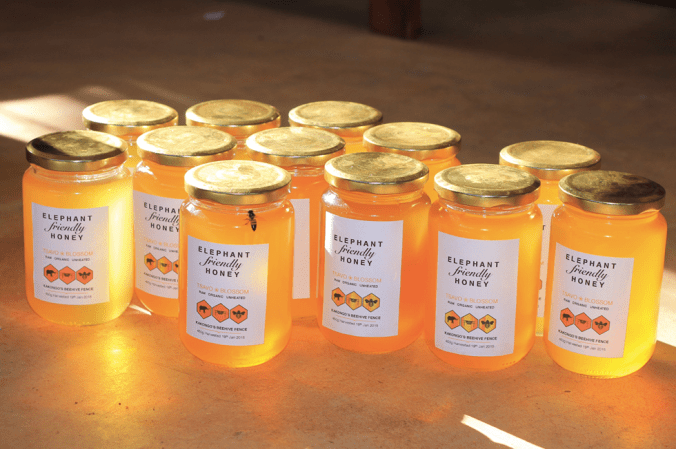
Innovation takes many forms. It’s especially satisfying when that innovation works with nature instead of against her. Examples of creative collaboration to solve environmental issues, be they unusual agricultural pest control or ways to avoid human/wildlife conflict such as this Elephant and Bee project are happy news indeed.

Some of our team live in Kerala, India – and know from personal experience the intelligence, and perseverance of elephants, when confronted with an obstacle to plants or trees they crave. This beehive fence concept is incredibly clever, taking advantage of the elephants’ natural fear of bees to keep them safe from potentially deadly conflict.

“I congratulate Dr. King as the winner of this important award. Her research underlines how working with, rather than against, nature can provide humanity with many of the solutions to the challenges countries and communities face. Continue reading

US Currency Change Coming

We’ve reported on the positive alterations of currency before, when it was the British five-pound note that was becoming plastic instead of plant fiber. That was good news in terms of ecological footprint, because the plastic notes should live longer and thereby save materials in the long run. In the case of the US change with the five-, ten-, and twenty-dollar bills, the impact is less on the environment and more in the social arena: women would feature on paper currency for the first time in modern history. From the New York Times:

WASHINGTON — Treasury Secretary Jacob J. Lew on Wednesday announced the most sweeping and historically symbolic makeover of American currency in a century, proposing to replace the slaveholding Andrew Jackson on the $20 bill with Harriet Tubman, the former slave and abolitionist, and to add women and civil rights leaders to the $5 and $10 notes.

Mr. Lew may have reneged on a commitment he made last year to make a woman the face of the $10 bill, opting instead to keep Alexander Hamilton, to the delight of a fan base swollen with enthusiasm over a Broadway rap musical named after and based on the life of the first Treasury secretary.

Continue reading

Of the Land


Tradition is like a collective memory, where craft and cultivation intermingle, inspired with stories of the land, its history and its culture.

Anoodha from Curiouser says “A stay at Xandari Pearl, is experiencing a slice of life, of the beautiful coastal town of Marari.”

Yes indeed.


The Minecraft Generation

Screenshot of the first hour of survival mode in Minecraft

In this past week’s edition, the New York Times Magazine published a very interesting story by Clive Thompson about the popular video game Minecraft, which he argues is becoming an educational tool in a way, particularly in the arena of coding and problem-solving. I’ve played the game myself for a number of hours (probably somewhere between 50-150, which among the “Minecraft generation” would be considered pennies). I can affirm that this Swedish blockbuster–the game is built on cubes of different materials that you can break down and build up–is addictive, a creative outlet, and a fun way to spend time with friends.

As Thompson states, the STEM educational movement, where science, technology, engineering, and math are especially encouraged in the US system to increase competitiveness in students, can benefit from some of the habits and skills that Minecraft helps develop for those interested enough. The article is worth reading if you have kids who might play, enjoy playing yourself, or are interested in checking the game out:

Jordan wanted to build an unpredictable trap.

An 11-year-old in dark horn-­rimmed glasses, Jordan is a devotee of Minecraft, the computer game in which you make things out of virtual blocks, from dizzying towers to entire cities.

Continue reading

Meander


Welcome! Walk barefoot in the sand…you know you want to!

Stroll through the meandering pathways and wander past curated views of trees rustling in the wind.

Fundamentally, Xandari Pearl is an invitation to relax and rest, pearl-like, in the arms of curved walls, to the lullaby of the sea.

Come see for yourself…


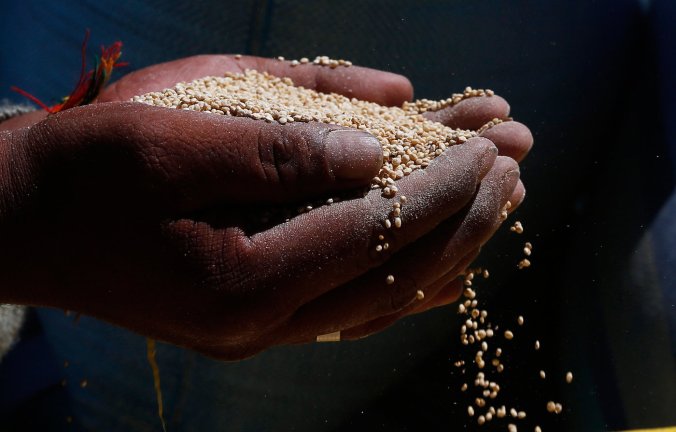
With Quinoa, All’s Well Only If It Ends Well

peruvianquinoa_custom-eb612ca1281105ba9be2d6e069a3db7ab8627b5b-s1400-c85

A man holds Peruvian quinoa. New studies of detailed data gathered by Peru’s government find that the global quinoa boom really was good both for Peruvians — both those who grow it and those who eat it. Juan Karita/AP

Thanks to National Public Radion (USA)’s Salt program for this important update:

Your Quinoa Habit Really Did Help Peru’s Poor. But There’s Trouble Ahead

The price of quinoa tripled from 2006 to 2013 as America and Europe discovered this new superfood. That led to scary media reports that the people who grew it in the high Andes mountains of Bolivia and Peru could no longer afford to eat it. And while, as we reported, groups working on the ground tried to spread the word that your love of quinoa was actually helping Andean farmers, that was still anecdote, rather than evidence.
Continue reading

Float

The ocean stirs the imagination and inspires the heart. In its frolicking waves and every grain of sand is a story of the earth. And the beautifully timed crash of the waves whisper about nature’s simple treasures. For the sea and its tales along the land are a continual miracle. – Rosanna Abrachan

The tale we hear is thrilling – of knowledge passed down for generations, of artisanal fishing practices that grace us with sustenance from the Arabian Sea without depleting her waters.

Come sea!

The Back Stories

IMG_20151111_180059

Beach time with little Adoniya and her mother Sini, member of the Xandari family.

Ask me the most meaningful part of my job around here in recent time and I’d hold up the Xandari films without a doubt. To call them films or videos is an acknowledgement of their formats and the creative process that goes into them. But to embrace all of them together with the words labour of love is simply the truth. (Watch them here).That we loved making them, loved dissecting the resorts to take a closer look at their DNA, their dreams. Above all, loved the Xandari family a little bit more. I’ll tell you why.

Continue reading

Roots and Anchors

Anybody can welcome you to a destination. Tell you about the must-do and the must-see. Weave you through its facts and fables, seat you through its culinary journey. At Xandari, we welcome you to our people. And the living stories they are. From what’s cooking to an effective cure for colds, good ol’ ways of growing with the land to dreams by the beach, we hear them loud. And, are part of them.

Here’s to our pride. Here’s to our people. Here’s to our family.

Rosanna Abrachan

Community, Collaboration and Conservation are the “3 Cs” that we stand by, and crafting these videos felt like a large family gathering with a smorgasbord of experiences to choose from. Thank you Anoodha and the RAXA Collective –Xandari Pearl teams!

Stay tuned for more!

Agripreneurship

A wonderful aspect of both young people and entrepreneurs is their ability to find creative solutions to apparently insoluble problems. The two overlap beautifully within the Global Forum on Agricultural Research (GFAR) and the Youth Agripreneurs Project (YAP), where the goal is to pilot innovation to help rural communities world wide.

Kulisha, which is the verb ‘to feed’ in Swahili, the national language of Kenya, is a proposed project that addresses both the problem of creating a sustainable food source in Kenya and the extractive fishing methods of coastal trawlers. Aquaculture is an important food industry in East Africa, but the method of using fish meal from wild caught anchovies is destructive on all levels. Kulisha’s goal is to produce sustainable fish feed in Kenya made from black soldier fly larva.

Our idea, Kulisha, will provide a low-cost, high-quality sustainable fish feed made from black soldier fly larvae. We will sell dried insects to these rural fish farmers to replace the anchovies they are using to mix their own. In addition, we’ll produce a nutrient-rich fertilizer as a by-product from raising the insects which will be sold at a low cost to local crop farmers. It is our long term goal to formulate and sell our own feed. Continue reading