The Essayist Essay

Heller-Trump-Oberlin-Collapse-of-Public-Language-1200.jpg

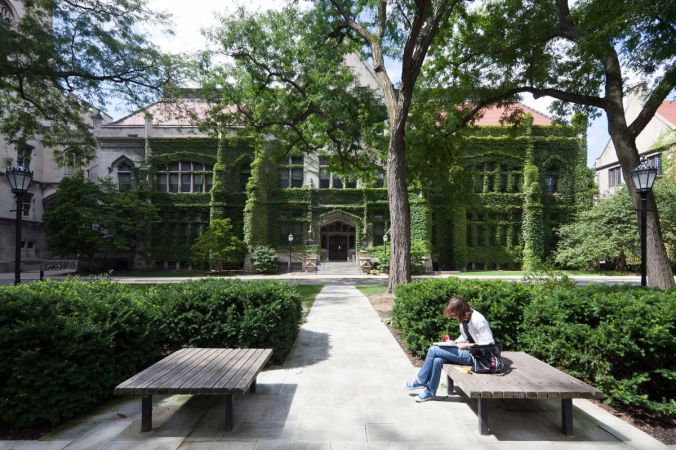
A student at the University of Chicago, which recently declared itself a space safe from safe spaces. PHOTOGRAPH BY B. O’KANE / ALAMY

I have just read the most remarkable short essay (or is it a blog post?), the best in a very long time because it is eloquent, wrestles with important ideas, and is very timely. Although the title of the essay has a reference to a divisive character who I do not look forward to reading more about, I nonetheless waded in because the writer has written some of my favorite reported pieces in the last couple years.

And it was rewarded quickly, because as soon as the second paragraph he used a word that I did not know, a beautiful word. And followed that with a couple beautiful sentences opening the third paragraph. I was hooked. And in less than half an hour I was fully rewarded with inspiration and motivation.

Essays and the essayists have been the topic of numerous posts here over the years, because we have many language-lovers and word-players among our ranks. (For silly example, the first word in the title of this post is meant to convey “the most essay-ish of all” while using the word that normally just means someone who writes an essay.)  But also because, as we have tried to also communicate, words matter alot in translating ideas and ideals into actions. So, may I recommend: Continue reading
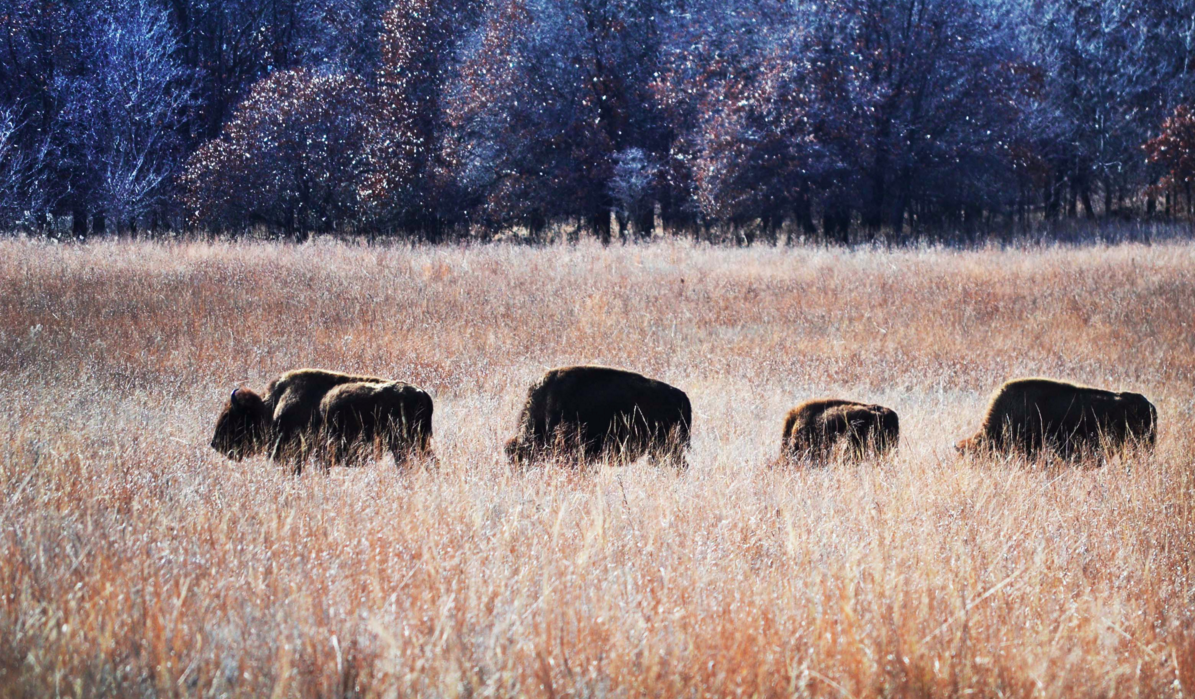
Bluestem Ranch Returns to Osage Nation

Bison on the Bluestem Ranch

Bison on the Bluestem Ranch

Osage Nation Takes Ownership of Ted Turner’s 43,000-Acre Ranch

Ted Turner is the second largest individual landowner in North America, with approximately two million acres of personal and ranch land. His lands are more than conservation, as he’s managed to unite economic viability with ecological sustainability and environmental projects including water resource and timber management, and the reintroduction of native species to the land.

Although the recent news of the sale of Bluestem Ranch back to the Osage Nation might impact his land holdings, it certainly adds to his legacy of positive land management.

The Osage Nation is filing applications for federal trust status to protect the land from future sale…. Continue reading

An Abandoned Quarry Transformed

img_9482-1

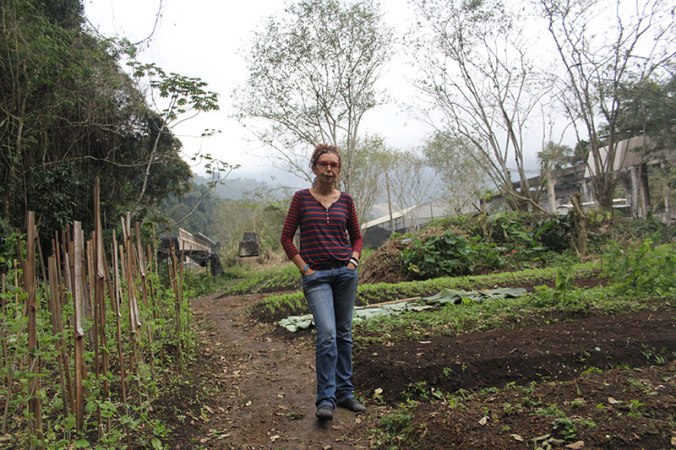
Fátima Anselmo, owner of Orgânicas da Fátima. All photos from: modernfarmer.com

The following is a story about a woman in Rio de Janeiro whose passion for sustainable farming, along with the support of a loyal community, allowed her to transcend an unforeseen hardship and turn an industrial wasteland into a fruitful organic farm. Here’s the story as told on Modern Farmer:

On a steep, forested hillside, in what was once a quarry in Rio de Janeiro, Fátima Anselmo scoops a handful of loose, dark soil from one of her garden beds. “It’s alive!” she says, holding the dirt in the air.

The whole place, in fact, is bursting with life.

Continue reading

Community Food Systems Minor at Cornell

Compost demonstration in the Dedza region, Malawi. Photo by Catherine Hickey via cornell.edu

Classes are starting at Cornell University around now, and there’s a new minor in town: Community Food Systems, a multidisciplinary study housed within the College of Agriculture and Life Sciences’ Department of Developmental Sociology. With elective courses from three categories (ethical and epistemic perspectives; ecological perspectives; and agricultural perspectives) in wide-ranging departments like philosophy, natural resources, economics, and anthropology, the minor also includes a required practicum with a community-based organization that works on “just, equitable and environmentally sound” food systems. Krisy Gashler writes for the Cornell Chronicle:

Scott Peters, professor of Development Sociology, said the minor has been a years-long process of discussion among faculty, staff and community partners, and was developed through the Food Dignity project, a 5-year, $5 million grant from the Agriculture and Food Research Initiativeand support from a Cornell Engaged Curriculum development grant.

Continue reading

Adjutant Storks and their Conservation Brigade

A rag picker looks for valuables among a group of Greater Adjutant Storks in a garbage dump site near Deepor Beel Wildlife Sanctuary in Assam. Photo by Ritu Raj Konwar, via The Hindu

Looking at the photo above, you may not see much to like in the Greater Adjutant, a type of stork found primarily in northern India and parts of Cambodia. But these big birds are important scavengers in their ecosystem, helping to break down dead animals. In this way they’re like vultures, a similarly-maligned group of relatively unattractive birds. As you’ll read below, many rural communities in India historically did not welcome the Greater Adjutant, which is classified as endangered by the IUCN. But storks, like other large avian families such as vulture and cranes, are not doing too well on a global scale: of the nineteen species of stork, the IUCN labels fifteen of their population trends as decreasing; four are endangered, while two are near-threatened and three are vulnerable. All of which makes the news from the state of Assam in India even more heartening:

On a cloudy day in July, in a remote village in northeastern India, Charu Das excitedly imitates the awkward movements of a stork with her hands.

In a few months, the greater adjutant stork—called hargilla, which means “swallower of bones” in Sanskrit—will descend on this hamlet, situated in Assam’s Brahmaputra Valley, to breed in large numbers.

Continue reading

Patrimonial Matrimonial Innovation

10tuscany1-master768.jpg

A fort atop the Italian town of Montalcino. In October, residents there and in neighboring San Giovanni d’Asso will vote on whether to merge the two communities. CreditNadia Shira Cohen for The New York Times

Although we appreciate, even adore, the wines and the fungi referenced in this story, it is worth reading for a look at practical issues facing aging towns that possess world class patrimony:

A Merger of Brunello and Truffles? 2 Tuscan Towns May Be Better Together

By

SAN GIOVANNI D’ASSO, Italy — Two small towns in southeastern Tuscany, one famous for red wine, the other for truffles and organic grain, are considering a municipal marriage of convenience that could blur their cherished identities, separately formed over the centuries.

With a population of just 853, San Giovanni d’Asso can no longer deliver basic services to its citizens on a daily basis. Left with only three town officials to do the work, something as simple as getting an identity card drawn up and stamped requires making an appointment days in advance.

So the town’s mayor, Fabio Braconi, picked up the phone back in 2014 and sought help from a neighbor, Montalcino, 10 miles to the south across rolling wheat fields. Continue reading

10,000 Suns

We have a long fascination with Land Art Installations and urban land reclamation going back to the earliest days of this site.  Learning about landscape architect Adam E. Anderson’s public art project in Providence, Rhode Island was exciting news.

This summer long “botanical performance” takes land that until recently was covered by an elevated highway system and cultivating it with volunteers into a different sort of public space.

Rather than using high maintenance and energy intensive large swaths of turf grass, the installation uses the bio-accumulating (removes toxins) and habitat creating properties of Helioanthus (aka, Sunflower) planted in rows in a series of large circles, leaving paths in-between for intimate exploration. Continue reading

Reflections On Collecting Things

Museum.jpg

This exhibition, brought to our attention by a lengthy respectful review here, is the first time we have heard of this museum, but now that it is on our radar we stay tuned. This looks like our kind of show:

Object Lessons: The New Museum
Explores Why We Keep Things

Curators at the New Museum have created an exhibit with over 4,000 objects that examines the various ways we collect and own items.

By

We live in a sharing economy of collaborative consumption — services, not stuff. Crowdsourcing, peer-to-peer rentals like Airbnb: An interest, exemplified by millennials, in a temporary ownership of goods.

Apps, not objects. Continue reading

Connecting the Dots

In our business we often use words like synchronicity and synergy to illustrate the amazing frequency of “right time-right place” meetings and connections. In the summer of 2011 one of the original interns (and creators of this site) came to work with us in Kerala. In search of a project, we introduced him to Diwia Thomas to brainstorm a social entrepreneurship collaboration. That process led to an amazing joint venture paperbag making workshop with the Kerala Forestry Department.

The very first post I wrote on this site was about Diwia Thomas and her company Papertrails. It just so happens it was published exactly 5 years ago. It also just so happened that this morning my Facebook feed included the news that Diwia had been honored with the Unique Times’ Young Women Business Excellence Award 2016. Continue reading

Environment, Rights & Responsibilities

Okeowo-Rebecca-Martin-Fights-Niagara-Bottling-1200.jpg

The singer Rebecca Martin helped keep Niagara, a water-bottling company, from tapping a reservoir near her adopted home, in upstate New York. “What’s more important than drinking water? Nothing,” she says. PHOTOGRAPH BY PAT KEPIC

Thanks to Alexis Okeowo for this note about actions our fellow citizens take, a reminder of our rights and responsibilities:

A JAZZ SINGER FIGHTS NIAGARA BOTTLING

By Alexis Okeowo

For years, Rebecca Martin was used to being transient, without a permanent home or commitments. As a jazz musician who performed both solo and with a band named Once Blue, Martin spent much of her time on the road touring and performing, while being loosely based in New York City. When she decided, almost fifteen years ago, to move to Kingston, ninety miles north of the city on the Hudson River, she felt a sense of relief. She had “really lost touch with the idea of community and responsibility to one another,” she said, and took the chance to grow her family and settle down. She started noticing ways that her new town could improve. There was a shop in her neighborhood that was selling large knives, big enough to be called swords, near two schools. Continue reading

#12 Of One Dozen Love Letters About Xandari

IMG_0040

After our visit to Cardamom County last weekend to bid farewell to our colleagues there, Amie suggested that I amend my dozen Xandari love letters writing engagement to a baker’s dozen: Cardamom County has been so integral to our time in Kerala that it would not be proper to reflect only on Xandari in this manner. Continue reading

#11 Of One Dozen Love Letters About Xandari

XWebsite.jpg

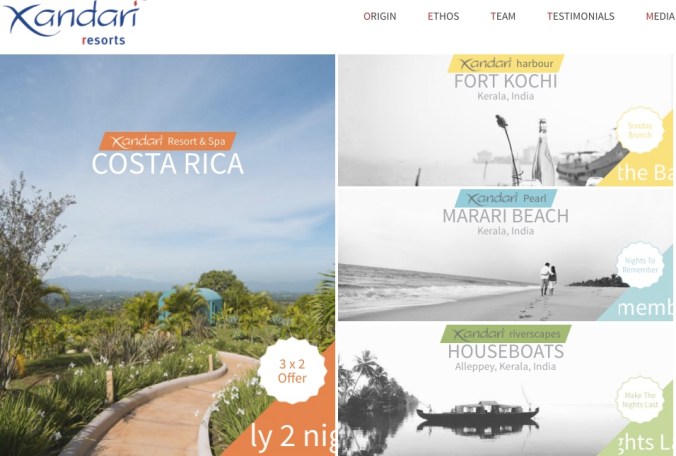
It is that time of year. Monsoon in Kerala, and what we like to call green season in Costa Rica. The rains are delicious, and give the sense of abundance and replenishment, refreshment. It is the ideal time for ayurveda in Kerala. Or just pure relaxation with a book, escaping the news and other distractions–digital detox–and any of the four properties shown above can help you achieve that bliss.

For one more day La Paz Group will be responsible for ensuring that Xandari delivers that bliss. July 1 onward George M George and his team will be in that role. In making the rounds to all the properties this week we have been experiencing a sensation that maps on almost perfectly to the sensation that has come with two decades of nomadic life. Continue reading

#10 Of One Dozen Love Letters About Xandari

ADXHArchitectural Digest is not the reason we do what we do. But when they take note, in any manner, we feel the love. Xandari Harbour soft-opened, and within a very short time got an inordinate amount of good press even before the formal opening. Yet the AD mention, which was neither a cover story nor even a particularly huge feature, had a different level of impact on those of us on the team that developed it.
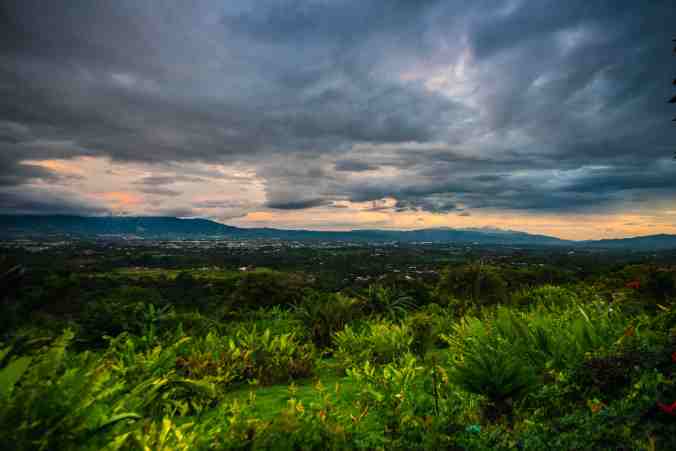
George M George, the visionary who saw the potential in the run down property and particularly the crumbling godown (waterfront warehouse) featured on the left above post-restoration, was that team’s source of energy, inspiration, encouragement–this would not have happened without his excellent leadership. Continue reading

#9 Of One Dozen Love Letters About Xandari

XCRMSN1

Two years ago I had the pleasure of meeting a family at Xandari in Costa Rica who were on their first vacation in Costa Rica and at Xandari. The father in the family was a photographer by avocation and he shared various photographs with me that he had taken on that visit. He captured views from the property that I consider to be classic favorites of the guests who know Xandari the best. I asked permission to use his photographs, which he granted, but this is the first chance (oops) I have had to share them.

Then one year ago I had the good fortune to meet them again on their second vacation at Xandari–good fortune in the sense that I do not spend alot of time at the Costa Rica property, and so meeting them again was just funny good luck. Ray showed me more photographs. I noticed his scope and scale had changed this time around. Continue reading

#7 Of One Dozen Love Letters About Xandari

XP

Dear Xandari Pearl circa 2026,

I hope the day this photo was taken (yesterday as I type this) will be remembered. Amie wept. Saji shared some wisdom–and we all embraced in the hopeful spirit of looking forward to this lovely property’s prosperity. I shared recollections of my first visit to this property  years before moving to India, and wanted each of the team members to know why this property is the most important work so far in my lifetime. It had to do with this location’s personal meaning to George M George, and how that meaning influenced the design process. Xandari Costa Rica was a big part of that process as well, and the Xandari community should be aware of that special link. Continue reading

#5 Of One Dozen Love Letters About Xandari

Photo credit: Milo Inman

When the conversation about bringing the Xandari concept to India was in the early stages, Milo was in the early stages of mastering the camera. We spent a large percentage of our time in the backwaters in those days, working with our team at River Escapes, and this gave Milo time with his craft in an astounding setting. My father was a photographer, and his father painted landscapes, but for some reason their visual acuity skipped a generation and Milo got it. He saw in composition and captured with camera what escaped me. A  collection of these photographs has adorned our office walls since they were taken in 2011.  And they have influenced our thinking about what is now called Xandari Riverscapes.

XR2

Photo credit: Milo Inman

The houseboat operation has been written about many times in these pages over the years, but in the archival diving of the last week I discovered some fascinating correspondence related to my first visit to Kerala.

George M George had taken me to the backwaters and showed me the first houseboat under construction. The craftsmen were doing something I had no idea was possible, stitching together a hull with no nails; and then afterwards the artistry of the upper deck, and all that we have written about elsewhere.

I have just reread a letter I wrote to Sherrill Broudy after that first visit to Kerala a dozen years ago, and had shared my snapshots with him, saying that what I saw reminded me of Xandari with the curvaceous, organic feel.

Continue reading

#4 Of One Dozen Love Letters About Xandari

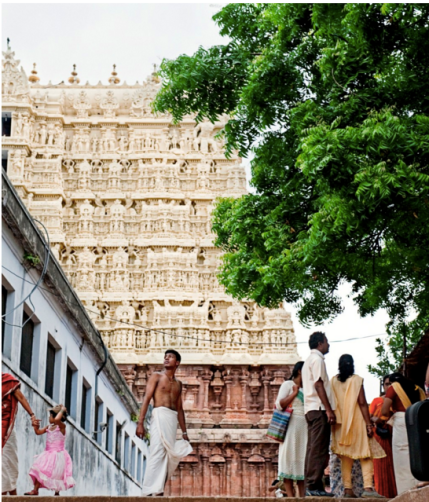
The Sri Padmanabhaswamy temple, in Trivandrum, has been amassing gold for centuries. PHOTOGRAPH BY CHIARA GOIA

What I love most about Xandari is this fact: over nearly two decades, several tens of thousands of guests have trusted Xandari with their valuable vacation time, and that faith has been reciprocated with such authentic hospitality that Xandari has one of the most loyal clientele of any hotel I know of. Most guests coming to Xandari today are related through kinship or friendship to guests who have already been at Xandari before. That loyalty is like treasure buried deep inside of Xandari. Continue reading

#3 Of One Dozen Love Letters About Xandari

X3By the time that MLHS had completed the acquisition of Xandari in Costa Rica we were already well under way with the development of what is now Xandari Pearl, on the beach about 40km south of Xandari Harbour. Reflecting today on what I love about Xandari, I again am reminded of some rather heroic decisions made by George M George, and the board of directors who he reported to.

In 2010, when we were in the early months of this relationship between MLHS and La Paz Group, there was already a completed architectural plan for the beach property that MLHS owned at Marari. There were already permits applied for the construction of those plans. So it was with some trepidation that I took a firm position in my recommendation to the board George reported to: those plans would result in a resort that would not fit the strategic road map I was laying out. To start with, it was 80+ rooms; and there were other issues but scale was the one I focused on.

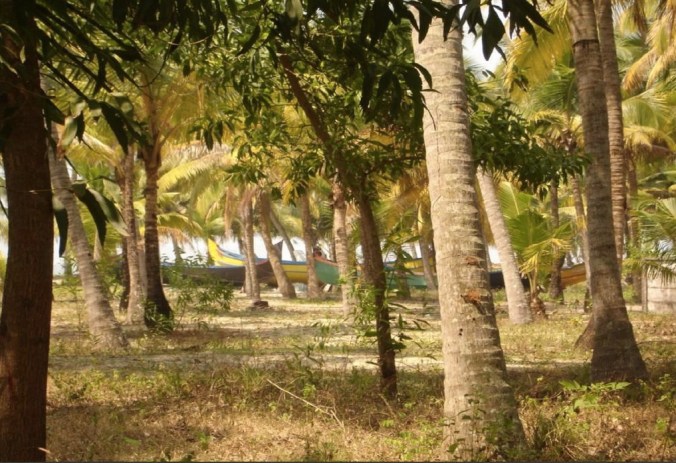
Just now I was looking at the powerpoint presentation I brought into the board room with me to make my case about abandoning the original plans for the resort at Marari. The first image in that presentation was the one above, which was a photo snapped just some days prior to the meeting. I talked about the natural beauty of the beach property, and how our target market would appreciate meandering on paths through as much of that as we could preserve; ideally we would not cut a single tree. We would let the local fishermen continue to keep their boats on property. And other points about that land. Continue reading

If You Happen To Be In Atlanta

A rendering of the Atlanta Food & Wine Festival Vineyard in the City in Midtown. Credit: AF&WF.

A rendering of the Atlanta Food & Wine Festival Vineyard in the City in Midtown. Credit: AF&WF.

From newly minted bike lanes and bike sharing, to the Rails to Trails  Atlanta Beltline conservation project, each year Atlanta seems to be refining its “livability quotients”.  The Atlanta Food & Wine Festival just made it that much better. As pop ups go, a vineyard is a novel idea!

Each year the Atlanta Food & Wine Festival team and Advisory Council challenge themselves to create educational, engaging and entertaining programming and events for Festival guests. Continue reading