Thookkuvilakku – Hanging Lamp

Photo credits: Ramesh Kidangoor

The Thookkuvilakku or traditional brass lamp, is an integral part of all rituals and ceremonies in Kerala and lighting the lamp on any occasions is believed to be auspicious. Bronze, popularly known as Odu in Kerala, is used for making all types of brass lamps. Continue reading

Shine A Light

chipata-blog480

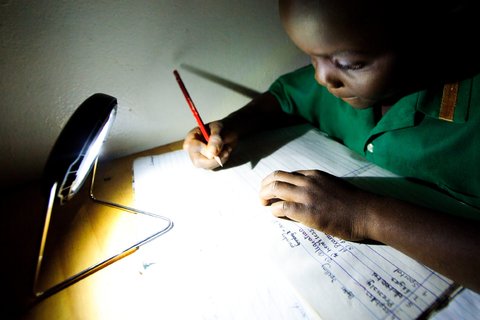
Green Blog shares this news about a significant innovation at the intersection of crowdfunding, renewables and community welfare in Africa and Asia:

By visiting Web sites like Kickstarter and Indiegogo, you can give money to any number of causes. These Web sites collect small amounts from many individuals in what is known as crowdfunding to finance everything from business start-ups to charitable causes to art projects.

While online crowdfunding is still relatively new, it has already demonstrated that many small contributions can add up. Deloitte, the accounting and consulting firm, estimates that the largest 30 crowdfunding sites raised more than $1.5 billion over the last five years, and expects that in 2013 alone the number could be $3 billion.

Continue reading

Entrepreneurial Conservation In The Cabinet

idy0zePVhYWU

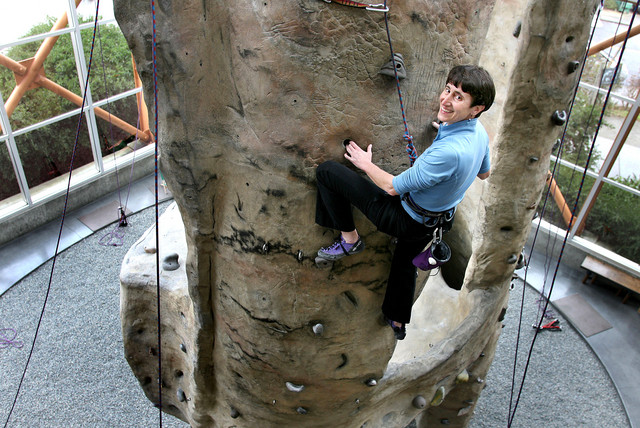
Recreational Equipment, Inc. (REI) CEO Sally Jewell climbs the 65-foot rock climbing pinnacle at REI’s Seattle flagship store. Photographer: Scott Cohen/AP Photo

We stay out of politics, for the most part, but point to interesting events when we notice them. This news qualifies, because it seems the leader of one big country has captured the spirit of entrepreneurial conservation in a rather visible way, choosing a business leader to run the largest conservation component of the federal government. Oddly, she appeals to both environmentalists and industrialists, but that is the point. This choice is outside the box, and seems to tap into some of our favorite “c” words. As the article below notes, this business person has led some important collective action initiatives, building a community to ensure that this political leader gives conservation the attention it deserves. We laud both of them for cooperating in such a creative manner:

President Barack Obama said he has selected Sally Jewell, chief executive officer of Recreational Equipment Inc., to be secretary of the U.S. Interior Department in his second-term Cabinet.

Jewell’s background as an engineer and experience in the banking, energy and retail industries give her the skills needed to run a department that oversees 500 million acres of public land, Obama said as he introduced her at the White House. Continue reading

Perunnal – Church Celebrations

Photo credits: Ramesh Kidangoor
In Kerala almost every church in every village has an annual celebration called Perunnal.  All members of each church participate in a festive procession during this community event.

Continue reading

Oil, Rainforest, Communities

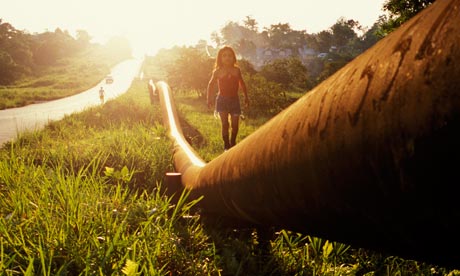
Pipe dreams: the 500km pipeline that transports oil from Lago Agrio to the port of Esmeraldas, on the Pacific Coast. The oil discovery destroyed the area. Photograph: Remi Benali/Corbis

Can there be happy endings related to oil discovery in remote, ecologically and culturally sensitive areas? Note likely.  But this story is worth a read:

American biologist Kelly Swing thwacks a bush with his butterfly net and a dozen or so bugs and insects drop in. One is a harvester, or daddy-long-legs, another a jumping spider which leaps on to a leaf where two beetles are mating. Continue reading

Chakkulathukavu Pongala – Sree Bhagavathy Temple, Alleppey

Photo credits: Ramesh Kidangoor

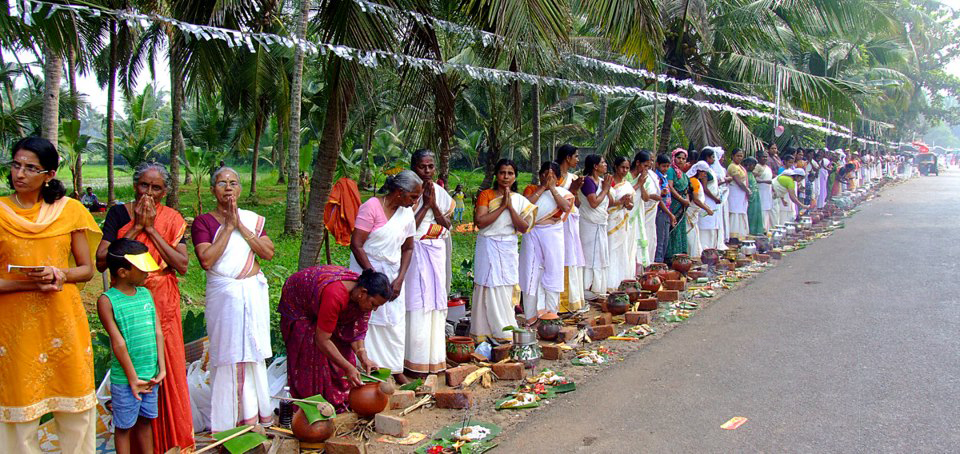
This festival takes place in Sree Bhagavathy Temple near Alleppey during the month of Vrischikam (November/December) in Kerala’s lunar-based calendar; the time when the glory of the Goddess is at its peak. This is one of the state’s most renowned festivals, where tens of thousands of female devotees gather around the temple days before the function. The women line up on both sides of the main streets and each arranges an area for offering the Pongala (cooking demo) in front of them. Each one brings an earthen cooking pot with rice, coconut and jaggery. Continue reading

Mayan-Like Patterns

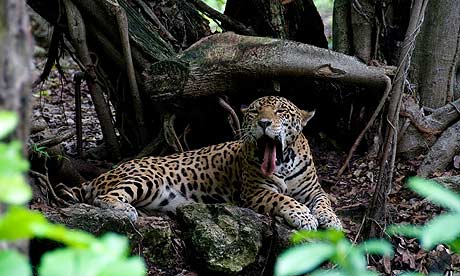
A jaguar – a symbol of Mayan royalty – is endangered but roams free in the Maya Biosphere Reserve, Guatemala. Photograph: Larry Larsen/Alamy

A jaguar – a symbol of Mayan royalty – is endangered but roams free in the Maya Biosphere Reserve, Guatemala. Photograph: Larry Larsen/Alamy

We make frequent links and comment on topics meant to raise awareness about innovative, fun and sometimes loony efforts—from the humble to the grand– to avert environmental collapse.  The dangers are real enough that we assume readers get enough of the doom and gloom elsewhere, so that we can focus our efforts on evidence of potential solutions, and encourage collective action.

The photo above accompanies a story in the Guardian worth a read, to put in perspective why it is that the Mayan calendar doomsdate hoopla, or at least some of the accompanying history, was worth a bit of attention:

…Today, much of the Mayans’ ancient homeland is a 7,700-square mile protected area in Guatemala called the Maya Biosphere Reserve. With an area greater than the states of Connecticut and Rhode Island combined, the reserve protects the largest remaining forest in Central America. Beneath the canopy, monumental vestiges of temples and palaces attest to past splendour. Similar magnificence is found in the reserve’s wildlife. The jaguar, once a symbol of Mayan royalty, still roams free in one of Central America’s last wild places. Continue reading

If You Happen To Be In Kochi

This slideshow requires JavaScript.

Art and culture are about to explode onto Kochi at a season that is already filled with color and light. Biennales have been taking place for well over a hundred years, starting in Venice and spreading throughout the world.

Just as the lost port of Muziris had been a regional gateway for the world the Kochi Muziris Biennale, the first of its type in India, has the goal of reviving the vibrancy of Kochi as a meeting point of culture and trade. Spanning the calendar period of 12/12/12 and 13/03/13, the three month long exhibition is expected to draw high international visitation in what has been designed as a cultural strategy of self-renewal. Continue reading

Chamundi Theyyam – Ritual Dance

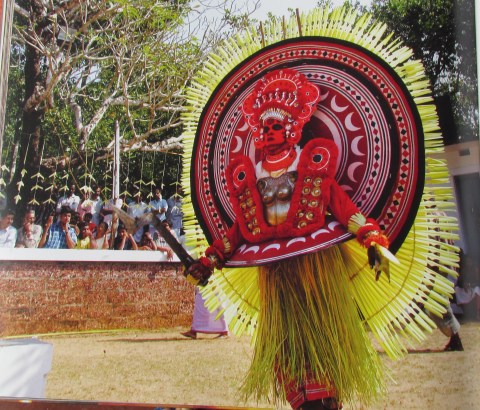
Theyyam are ritual filled performances of dance, music and religious worship of the people of Kerala. There are nearly 400 deities that are represented in this manner, with each Theyyam believed to be a physical manifestation of the particular god. One of the Theyyam performed in the northern regions of Kerala is Chamundi Theyyam, representing the god Durga Devi. Continue reading

Alms For Aristocrats

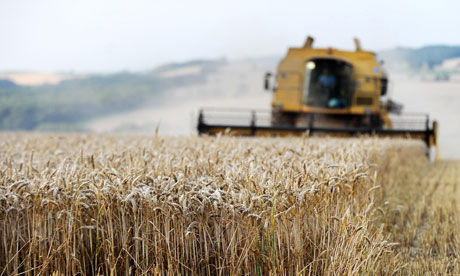
‘Not long ago, farm payments were justified on the grounds that world demand was low. Now they are justified on the grounds that world demand is high.’ Photograph: Andrew Matthews/PA

We are overwhelmingly in favor of supporting family farms whenever and wherever possible.  Family farms are increasingly a form of heritage in danger of extinction.  Sometimes but not always charity or government support is a solution to specific needs of family farms (search on Willie Nelson’s Farm Aid initiative for examples).  But charity from the poor flowing to the wealthiest landowners?  There are boundaries to the definition of a family farm that we had not thought to specify until reading this Guardian editorial today:

Squatting at the heart of last week’s summit, poisoning all negotiations, is a vast, wobbling lump of pork fat called the common agricultural policy. The talks collapsed partly because the president of the European council, pressed by François Hollande, proposed inflating the great blob by a further €8bn over six years. I don’t often find myself on their side, but the British and Dutch governments were right to say no. Continue reading

Cezanne And The Community Of Artists

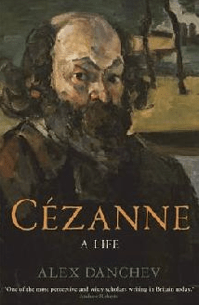
The subject of this biography is the main reason to listen to this interview with the author, but not the only reason.  The biographer, himself, is another: why would a professor of international relations take on such a task?  He has a very good explanation in that interview.

Most importantly the interview hints at why the biography is likely worth a read: Cezanne’s intense and atypical sense of community, especially among well-regarded artists of his era, fascinates.  The fact that he took up fine art relatively late in life stuns (if you did not know it already).  His commitment to simple life away from the distractions of urban modernity is something we can relate to. His friend of the friendless actions inspire (except with regard to Dreyfus). The author has, according to Kirkus Reviews

researched every facet and nuance of Paul Cézanne’s life (1839–1906). His comfortable childhood in Provence, his years in Paris, where he was influenced by the Impressionists, and his dependence on the allowance from his father created the artist some suggested was “not all there.” Continue reading

Farming, Biodiversity & Cooperative Conservation

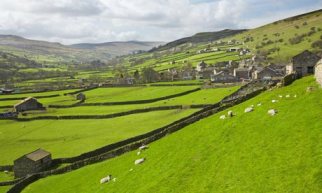
All over the world farmers like Bishnu Maya (in Nepal) are the main custodians of agricultural biodiversity through the conservation, use and improvement of plant genetic resources on-farm

Click the image above to go to the source of this interesting look at the relationship between farming, biodiversity and conservation:

The study ‘Flows under stress: availability of plant genetic resources in times of climate and policy change’ describes how eight members of the CGIAR Consortium, whose research is focused on plant genetic resources, are (re)organizing their conservation and improvement activities in light of climate change adaptation. Continue reading

Daniel Decker, Come To Kerala!

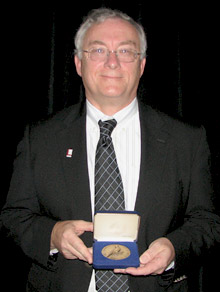
Daniel Decker holds a medal for the Aldo Leopold Award.

From time to time we extend invitations that reflect our appreciation for individuals making heroic contributions to the arts and sciences.  Professor Decker is more than worthy, as you can see in the story about the prize he just received (click the image to the left to go to the full story):

Decker’s research and outreach work has promoted a long-term vision of wildlife management by addressing how human dimensions have impact in such areas as suburban wildlife, adaptive harvest management, community-based management, hunter retention and wildlife habituation in national parks.

Continue reading

Learning, Thinking, Doing

Cornell University President David Skorton, and his renaissance man colleague Glenn Altschuler co-write a blog called College Pros(e) and today they make an argument about college majors, and what matters in choosing them–a perspective we happen to share in its entirety.  Click their image to go to the post, which is worth more than the three minutes it takes to read it:

…Liberal arts majors actually do just fine, with incomes far in excess of the median in the United States. And many of them, like the Cornell graduates surveyed in 2009 (download here), are as satisfied or more satisfied with their lives as their classmates in other disciplines. For them, to quote an English proverb, enough is as good as a feast.

The liberal arts, moreover, also serves as a preferred pathway to rewarding and remunerative careers…

Read the whole post here.

Pre-Space Spelunking

Caves.  What have they done for us lately?  According to an article in Phys.Org, for astronauts they do amazingly important things, like providing:

…a taste of working as a safe and effective team during long spaceflights. In particular, they can hone their leadership and group skills while working in a typical multicultural team found on the International Space Station. Course designer Loredana Bessone explains the similarities of caving and working in space: “The ‘cavenauts’ have to adapt to a completely new environment. Working and living underground is both physically and mentally demanding.”

Community. Collaboration. We get it. This team spelunked for six days together and the video of their experience (after the jump) is worth six minutes, especially for any adrenaline junky. Continue reading

Community, Collaboration & Swiss Fun

While a group of graduate and undergraduate students from Singapore, Korea, the Philippines and the USA were in Kerala generating content for the stop motion summary of their internship experience, another group of students in Lausanne were just finishing their own stop motion fun.  Watch to the end to see the “making of” segment, which is just as fun as the finished product.

Thank You to All Cardamom County Staffs & Friends

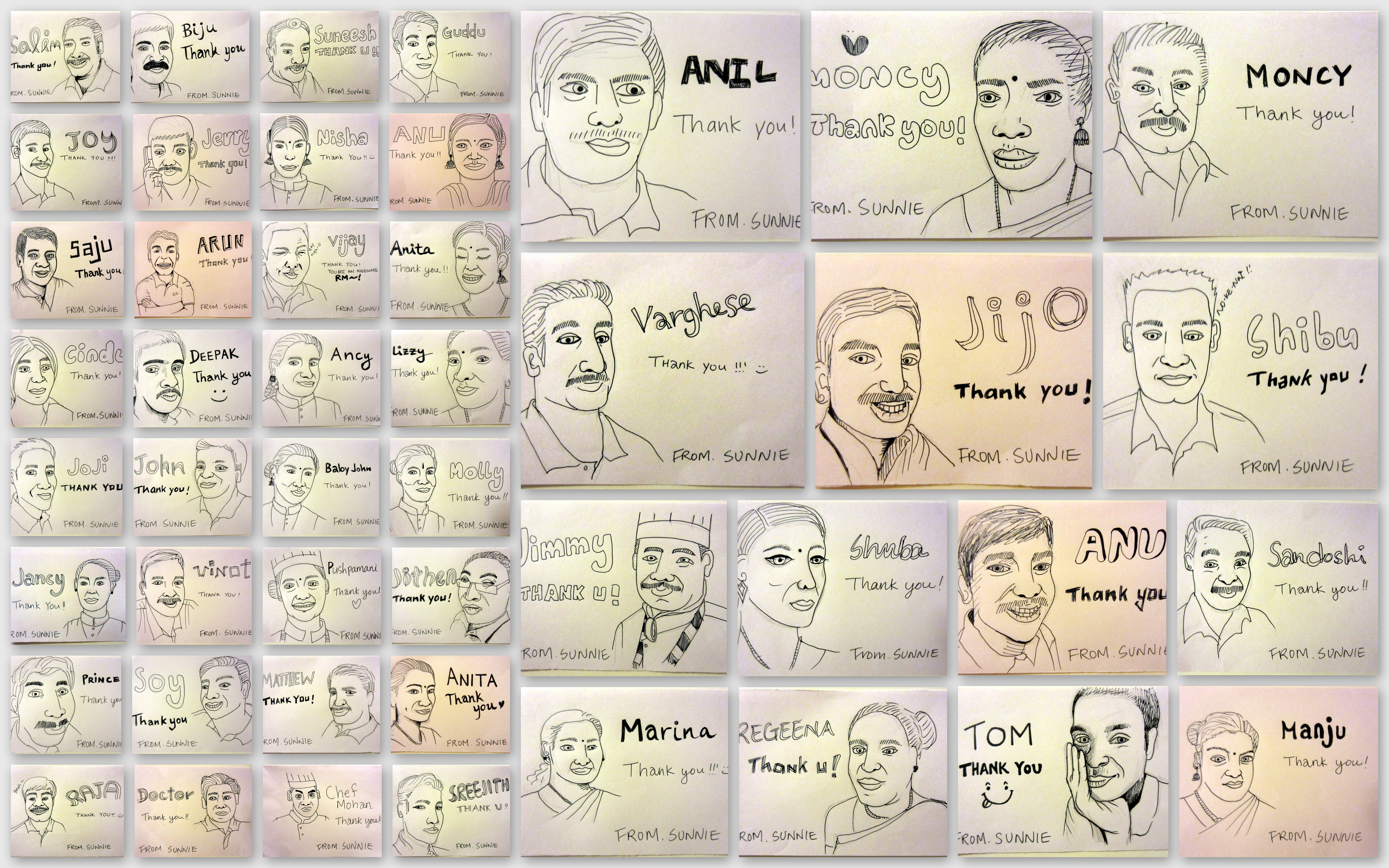
Even though I’m truly happy to be back at school, saying farewell to the staffs that I have been working with for more than 2 months was not easy. Every day I would pass by them saying “Namaskaram” which is “hello” in Malayalam or “Sukamano?” which is “how are you?” For every encounter, they kindly answered back to my poor Malayalam greetings and made my Kerala experience SUPER (as Indians often say)! To show my gratitude to all resort staffs, I drew some sketches as thank you notes. Thank you all, and I hope to see you soon. 🙂

Communitarian Is As Communitarian Does

Thanks to one of most thoughtful, witty writers at The Atlantic or any other similar publication, a glimpse of an unsung hero who has community and collaboration written all over his accomplishments (toward the end of the linked item, click further onward to a profile of this amazing fellow from a few years back):
The profile also reminded me what a thoroughly decent and public-spirited guy Tim Berners-Lee is. Sometimes people who do great things turn out to be jerks, but he definitely isn’t such a case. One other thing Tim Berners-Lee isn’t is fabulously wealthy–and finding out why he hadn’t taken the road to riches (and that he almost had) was for me one of the more interesting outcomes of this reporting project.

What Would Jean Jacques Rousseau Do?

Our rivers and natural resources are to be valued and commodified, a move that will benefit only the rich, argues George Monbiot. Photograph: Alamy

Click the image to the left to go to the editorial opinion of one of The Guardian‘s environmentally-oriented writers.  It starts with a quotation from Jean Jacques Rousseau; not shabby:

‘The first man who, having enclosed a piece of ground, bethought himself of saying ‘This is mine’, and found people simple enough to believe him, was the real founder of civil society. Continue reading