Go, Marcus!

In case you missed my earlier post on the topic, you may want to listen to that podcast before reading this more straightforward “business wunderkind” story in today’s Sunday New York Times.  Still, the closing paragraphs of the story circle around to why this fellow has our attention.  Great food interests us, yes; entrepreneurship, yes; but even more so this sense of community:

He often seeks interaction with the broader community, whether at his restaurants, through the Internet, or on his daily subway ride. In Harlem, he has held free cooking classes for children and has helped expand the farmer’s market in the area. More than 70 percent of Red Rooster employees are local residents, many of whom had little experience with fine dining. The restaurant hired additional managers to get the employees up to speed.
“When you look at strategy, it’s not set up to be a pure moneymaking machine,” says Derek Evans, the media adviser for the Marcus Samuelsson Group. “It’s a passion machine.”

A Learning Laboratory (Stop Motion Video!)

Yesterday, Jonathon, Siobhan, Milo, and I moved into one of the new Raxa Collective properties under development. As the four of us huddled silently under our covers, the backwaters of Kerala’s nighttime accompanied Jonathon’s ghost stories…

Instead of spooky tales, though, today I want to share with you another story Jonathon narrates, Raxa Collective presents “A Learning Laboratory.” It’s a short video, Jonathon (narrator), Sunnie (illustrator), Siobhan (director), and I (producer) put together with the help of all the staff and summer interns to highlight some of the best anecdotes of how Raxa Collective’s Cardamom County ecolodge has acted as a “learning laboratory” for its staff, international trainees, and summer interns.

Enjoy!

Earliest Inhabitants

Tribals have been an integral part of the Wayanad district for thousands of years. Its earliest settlers were the tribes of Adivasis, which are divided into various sects such as Paniyas, Kurumbas, Adiyas and Kurichyars. It is currently estimated that nearly 400,000 tribal people live Wayanad.  The sects are physically distinguisable with their dark skin and stout builds. Tribal dwellings recreated on the adjoing grounds of the wildlife sanctuary offer a glimpse into their traditional life.

Continue reading

Poothan-Thira Kali

Kerala offers a veritable array of the performing arts, most of them springing from folk tradition. Though often related to religious rituals and mythological stories, they are also very much the language of the  people. Dramatic costumes, vibrant colours, throbbing music; watching a folk dance is an unforgettable experience. Poothan-Thira Kali is one of the popular ritualistic dances of North Kerala. Continue reading

Golden Rule Loops

the fourth instalment of the “valtari mystery film experiment” is by icelandic directors arni & kinski. their video for rembihnútur focuses on meditation:

the much needed changes in the world will happen through changes within each and every one of us. we all want and need love. this film is a celebration of sigur rós’s music and the benefit it is having in the elevation of consciousness that is happening with humankind. people are finding strength in love, care, and respect for themselves, each other, and the world we live in.

more information is here

Community Self-Help

Click the image above for the full story describing scientific investigation into a phenomenon that might be called an inverted Golden Rule:

…“Self-compassion is treating yourself with the same kindness and care you’d treat a friend,” says Kristin Neff, a professor of psychology at the University of Texas at Austin and the leading researcher in the growing field of self-compassion…

…A recent study at the University of California, Berkeley, suggests an even more surprising way to heighten self-compassion: acting compassionately toward others…

…“There was a unique benefit to giving support—the benefit wasn’t just from feeling connected or realizing that others had problems, too,” explains Breines, a doctoral candidate in psychology and the study’s lead author. During tough times, people naturally tend to focus on themselves and find it difficult to support others, she says. “But actually, as many people intuitively discover, taking the opportunity to support other people can make you feel better about what you’re going through.”…

Happy Centenary Birthday, Woody

I am a week late, but I do not think he would mind.  There is plenty to read and listen to with Woody in mind, but my first realization that I had missed his birthday was while listening to a podcast a few days ago.  If you are interested in Woody’s life and the context of his music, it is worth a listen.  I also do not think Woody would mind sharing the celebration a bit, so after the jump have another go at this song.

Continue reading

Eine Kleine Bankmusik

Not many people would mistake us for a bank advertising medium.  But today, full disclosure, we feel willing to play that role.  Just because the music is nice, the scene is well thought out in a family-friendly, music-as-inspiration kind of spirit.  As banks go in today’s world, this one has the right idea: it is the community that really matters; and we love the collaboration.  That town square seems well conserved, doesn’t it?

Participatory Monitoring Workshop: Part 2/3

My penultimate post covered the participatory monitoring workshop I attended the last week of June. Here I will describe our results in the last two days of the meetings.

When dividing the attendees into different groups with assigned topics of discussion, the workshop organizers assigned me as discussion leader of the Resident (Urban and Rural) group, where six or seven of us talked about varied approaches and types of programs.

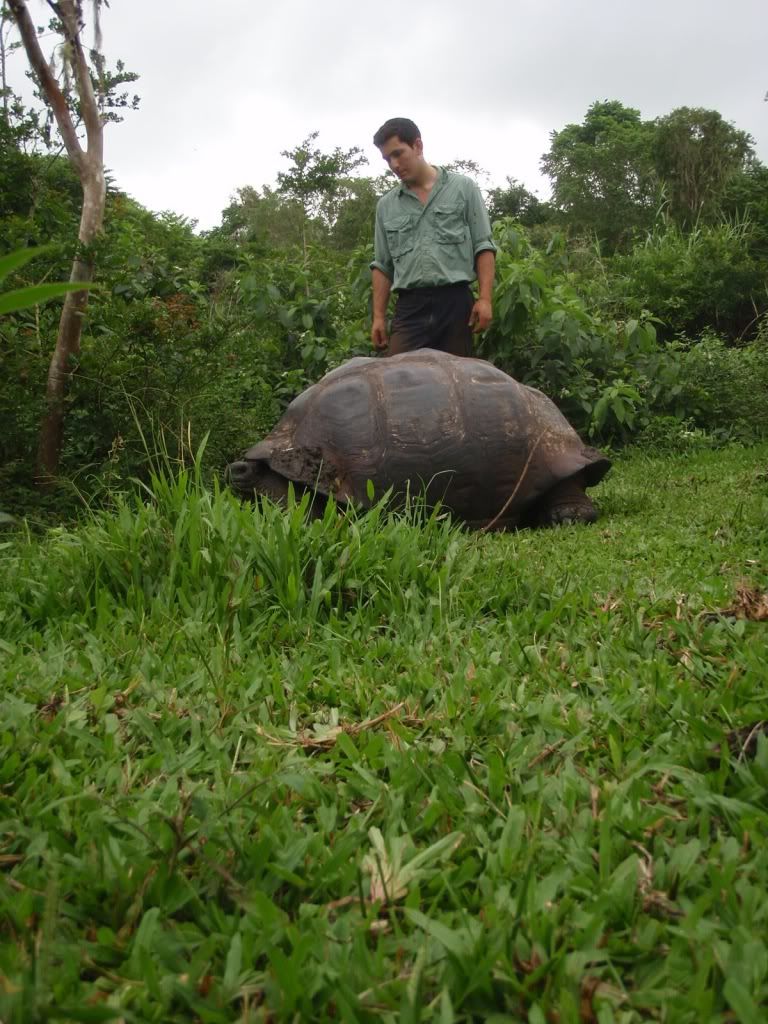
We started with the rural residents, focusing on farmers since the majority of landowners in the agricultural region of Santa Cruz fit that category, either with coffee, sugarcane, cattle, or other crops. There are countless farms in the area, and only about a dozen of them practice any tourism, but we considered this smaller group the perfect audience for a pilot project, since they should be more interested in completing periodic checklists of focal species that serve as tourist attractions. Guides from cruises or local operators often take groups of tourists up into the highlands to see wild giant tortoises and less common landbird species like the Vermilion Flycatcher, and these few farms offer not only passage in their land (as safe havens for the attractive species) but also their coffee or homebrewed sugarcane rum to the tourists. Some properties even have lava tunnels, one of which I’ve been told by a Hawaiian visitor is even more impressive than the famous Thurston lava tunnel on the other well-known volcanic archipelago of the Pacific Ocean.

Continue reading

Learning a New Language: Malayalam

Many Cornell “hotelies” are multilingual; not only bilingual but often speaking three or four languages. Their coursework is in English, they may speak Spanish or French from high school education, and Chinese helps as the number of Chinese travelers increase every year. For example, my good friend from the Cornell Hotel School speaks Spanish because she is from Venezuela, speaks Chinese because her family is a Chinese-origin, speaks English just like all my classmates, and maybe she speaks some other languages that I don’t even know about. Similarly, I speak English, Korean, and some Spanish and Mandarin. So, as an hotelier, I called myself a multilingual and thought I could easily communicate with people anywhere I go. Until I arrived in Kerala.

Learning Malayalam is the first time in my life trying to learn a language that has a totally different alphabets and pronunciation.  So the experience is totally different from learning English, Spanish, or French. One of my colleagues here learned Hindi before she arrived in Kerala for her studies but Malayalam is so different from Hindi that it doesn’t help her communicate. The one thing that saved all of us (Interns from US) is that English is an official second language in Kerala so all of the resort staffs here speak English pretty well. However, most of them speak Malayalam to each other during work and speak English only with foreigners, so I thought that learning Malayalam would be a good idea to get to know the culture and people better.

My first step in learning Malayalam started with memorizing some simple words and phrases so that I can initiate conversation with everyone.  So our journey of learning Malayalam started by asking around for some Malayalam lessons.

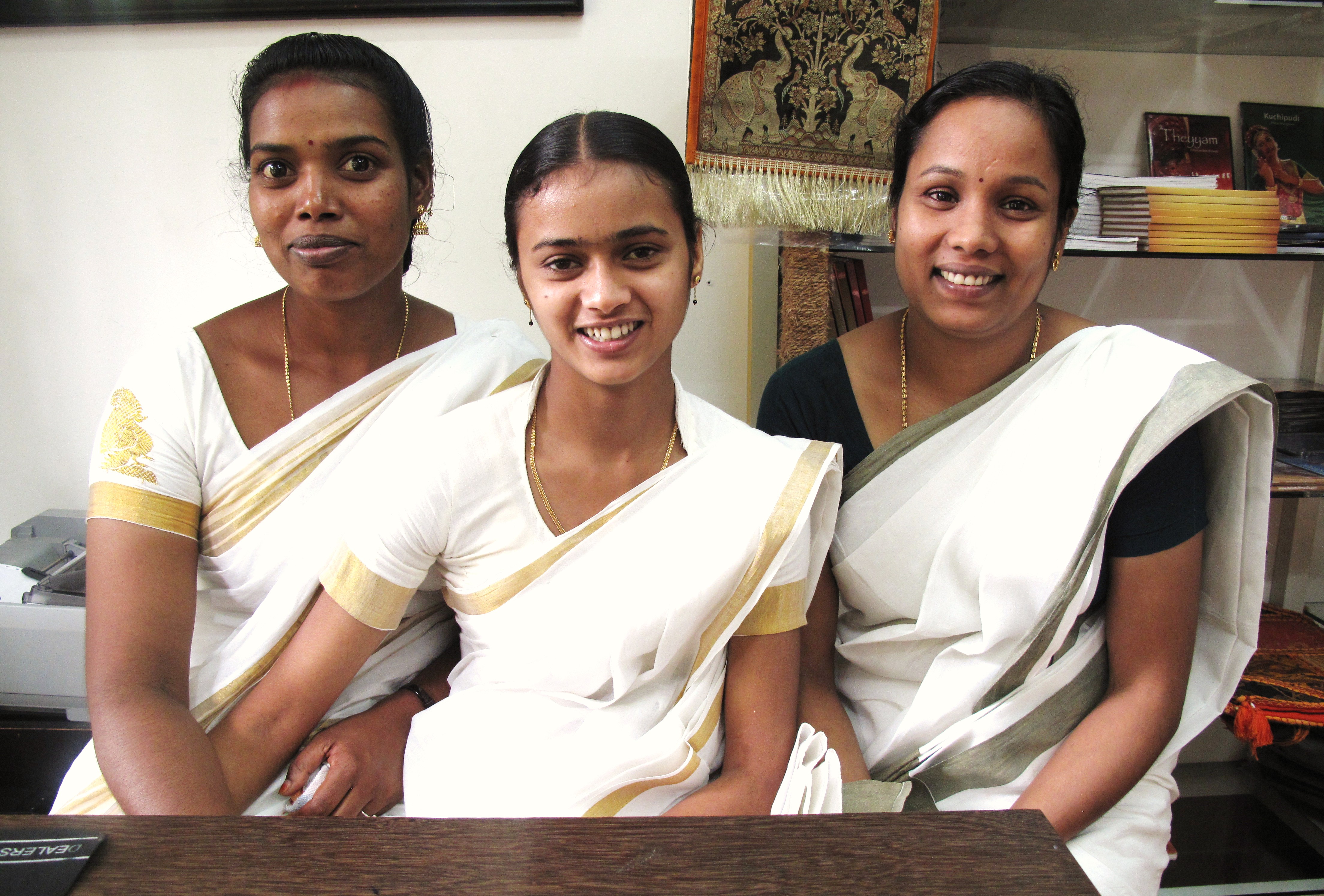
Ayuraveda Therapists & Receptionist

Continue reading

“I found love when I was 6”: A Story of Tattoos and Love

There are many things I could have named this blog post, but I decided it should sound scandalous, it should sound crazy, it should sound epic. I mean, what is more scandalous, more crazy, and more epic than falling in love when you’re is only 6 years old?

Getting a tattoo? No.

Getting a tatttoo at 6? No.

Getting a tattoo of your true love at 6? Now that, my friends, is crazy.

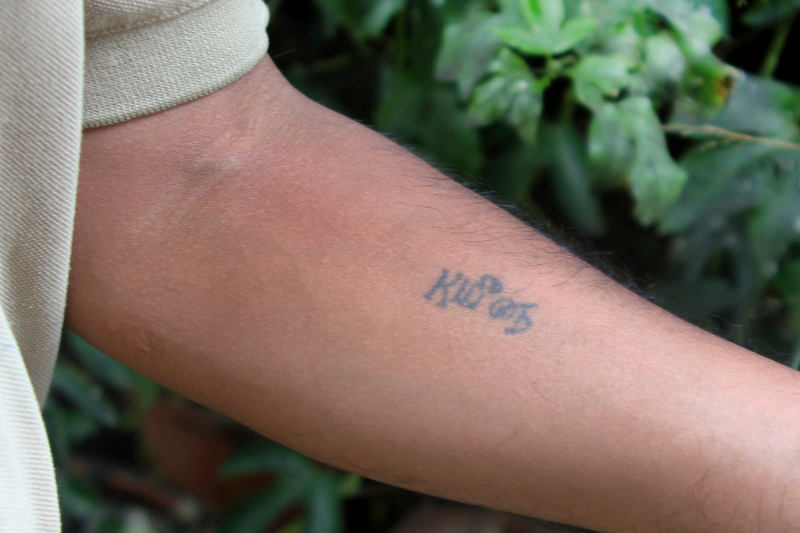
Kamal's Tattoo of his wife's name, Meena

Kamal’s Tattoo of his wife’s name, Meena

Continue reading

Participatory Workshop Introduction

Last week, thanks to the effort of very helpful contacts on the islands, I was able to attend a Participatory Monitoring workshop in Puerto Ayora. For those of you unfamiliar with the term in the workshop title, you are not alone. Participatory monitoring, community science, public participation in scientific research, volunteer data collection–these all mean practically the same thing as citizen science, which I have briefly written about before. Here is another good, and possibly the most definitive, source of information on the subject, and although the site is a part of the Cornell Lab of Ornithology, I’ve pointed out (even more briefly) that projects are by no means limited to birds.

The workshop consisted of an impressive list of international expert invitees—representing Cedar Crest College/Earth Watch, SUNY (College of Environmental Science and Forestry and at Stony Brook), Stanford University, Pepperdine University/ Scripps Institution of Oceanography, the Center for Biodiversity and Conservation/American Museum of Natural History, Colorado State University/University of Wisconsin-Madison, the United States National Park Service (Joshua Tree National Park and Acadia National Park), and the Galápagos Conservancy. Additionally, the Galápagos National Park, Charles Darwin Foundation, WWF Galápagos, Conservation International, Universidad Central Sede Galápagos, and Grupo FARO were present. A very skilled interpreter, with portable headsets, helped those who didn’t speak English or Spanish. Being in the minority of non-PhD.-holders, and practically the only person with just an undergraduate education, made walking into the room slightly unnerving, but I knew that since the Cornell Lab of Ornithology didn’t have a representative in attendance there were still constructive inputs that I could contribute, seeing as the workshop was about citizen science. Another comfort was that people commonly mistake me for being older than I am. While a freshman at Cornell two years ago, many of my TAs thought I was a senior or junior for most of the semester, and when traveling, people who I tell I’m studying at Cornell tend to assume I’m in graduate studies until I correct them.

Continue reading

Collective Outcomes

Click the image below to go to the story:

An agricultural engineer, Pinto studied the islanders’ farming practice, compared crops and set up a scheme supported by Fase to carry out an expert appraisal. His ideas were well received and at the end of the first year the community decided to change the design of the macapis, the tubular cages used to catch prawn. The gap between the slats was enlarged to a centimetre, enabling baby prawns to slip through, thus improving stocks.

Collective work … on the Amazon estuary near Macapa. Photo: Gary Calton

Story’s It

I can trace it back to the beginning for you, trace my Moth addiction to its start. For the uninitiated, the Moth is an organization devoted to the craft of storytelling. It’s real people telling true stories, “live and without notes.”

So can I.  Click the image above to read Nathan Englander’s engaging account of telling stories in front of a live audience.  Reading it I am reminded of my recently untended year-old efforts to further articulate Why La Paz Group?

Continue reading

Being Full of It: A Meaningful Word

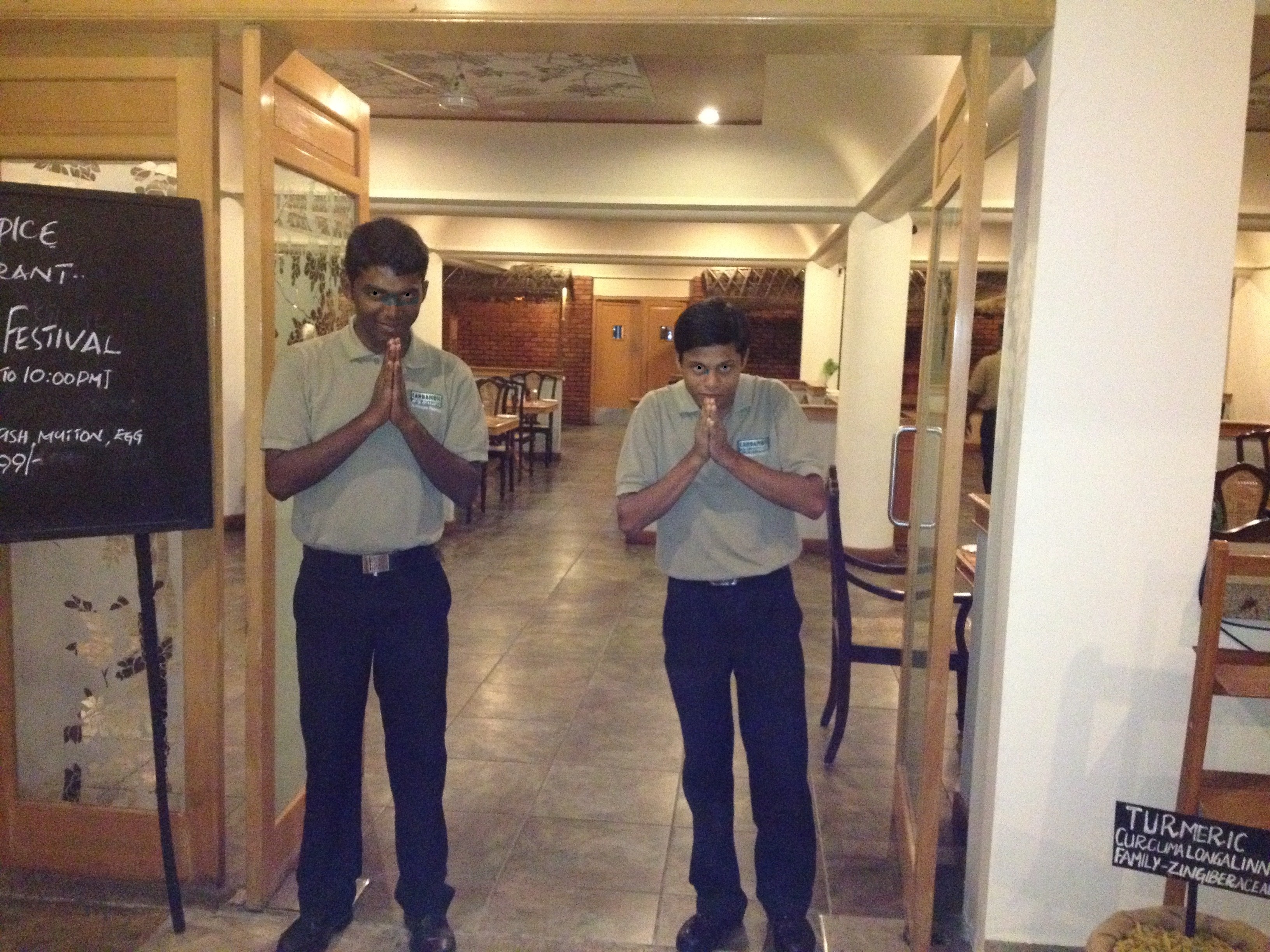
Since arriving in Kerala, I have been greeted many ways.  I have exchanged many smiles and hellos, and I have been veiled with jasmine garland and pressed with traditional dika.  However, the greeting I find most profound lies in a single word: Namaskaram.

Two people, worlds apart, meet with this word.  Each of their hands draws together in a prayerful pose in the nest of their individual chests.  With a bow of their heads, they utter, “Namaskaram.”  At first, it seemed like a simple interaction, yet when I asked the native people for the meaning, I learned that it has a much deeper connotation.

A signal of respect.  A promise of hospitality.  A notion of putting aside one’s ego.  All of these meanings are understood with Namaskaram.  I witness and experience them with nearly every interaction among the people here at Cardamom County, but the latter meaning, putting aside one’s ego, has struck a powerful chord in me. Continue reading

First Few Days at Tomás de Berlanga: Part 1

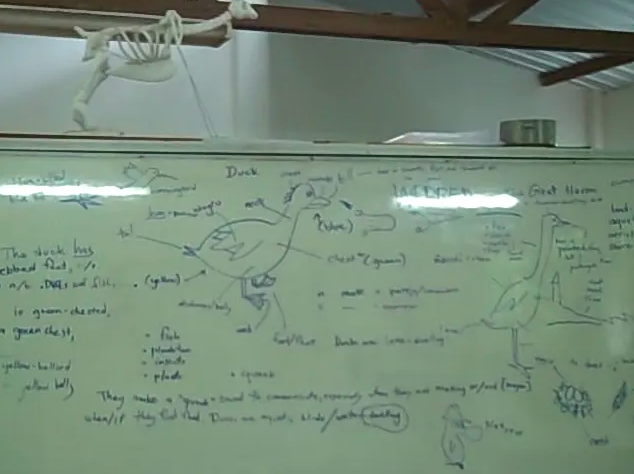
Snapshot of whiteboard on Friday afternoon

Although I have not yet posted as promised about the birds I saw in Mindo, I have to describe my week so far on Santa Cruz before I forget the details and delay the sequence of more current and relevant events too much.

I arrived at school early Monday morning to start working at the Tomás de Berlanga school (named for the man who first discovered the archipelago). I was to temporarily take the place of an English teacher who was still waiting for her visa renewal on the mainland, or “el Continente,” as Galapageños call it, and teach English to two classes.

For the upper levels of the school, classes are on a block schedule of eighty minutes periods, and my two classes were of intermediate English level 7th-9th graders and 10th-12th graders. Each group was of ten to twelve students that had all been born on one of the islands or el Continente, and some of whose parents speak English.

My goal for this first day was to spend the classes gauging the students’ English proficiency, their interest in birds, and especially their knowledge of Santa Cruz’s avifauna. One of the ways I did the former was via an exercise that one of the other English teachers, Eduardo, recommended: put a sentence on a piece of paper and cut it so each word is separated, mix them up, and give them to groups of students to put back together. I thought this was a great idea, so I took some time to think of sentences that might have several ways to be composed (both to ease the process for students but also to see if there were any trends towards certain structures).

Continue reading

Preparing for CUBs in the Galápagos

Over the summer, I’ll be working with youth in the community of the second largest island of the Galápagos archipelago, Santa Cruz. This central island is the touristic center of the archipelago, and Puerto Ayora, its capital, is the most populated (and thus, urban) area in the islands. In particular, my goal is to engage students of the Unidad Educativa Modelo Tomás de Berlanga, a bilingual non-profit school five minutes from the center of Puerto Ayora, and create a youth-led project that focuses on habitat awareness and improvement, participatory science, and the arts, specifically through birds.

I will try to apply the framework of the Celebrate Urban Birds program to the Galápagos, using a list of around 16-20 focal species to teach those I can reach on Santa Cruz about citizen science as a tool for conservation and research while hopefully deepening an appreciation of their surroundings. I aim Continue reading

Celebrate Urban Birds

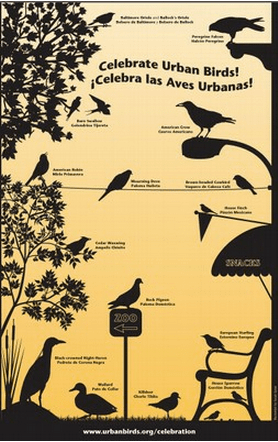
Screen Shot 2012-12-22 at 8.01.16 AMFor the past year, I have been working at the Cornell Lab of Ornithology for the project Celebrate Urban Birds. Distinct from other citizen science projects the Lab of O. is involved with, such as eBird or FeederWatch, Celebrate Urban Birds (CUBs) stays true to its name and hones in on the celebratory aspect of studying birds: artwork, festivals, education, and other activities promoting community. Of course, there is still data involved. Thousands of forms have been filed—both electronically and physically—containing information on sightings of the sixteen focal species within 10-minute observation periods. These observations, along with notes about sighting location, are the source of data for the project. Participants include the address from which they are looking for birds in the ten minutes, describe the general amount of greenery and pavement in the area (as well as the size of the area itself), and list whether they saw, did not see, or were not sure about each of the sixteen species. This information constitutes a checklist that can be compiled into a larger repository of sightings in various types of green spaces around the country; the CUBs website contains species maps according to the number of observations in the last 90 days, marking where, say, a Brown-headed Cowbird has and has not been seen.
Continue reading

Find Your Spring

Man is a complicated creature. We learn this in our liberal arts education programs. We learn it in our days of being ourselves and of imaging what it’s like to be someone else. He has seasons like his mother Earth. Some are restful, others treacherous, and some are fruitful as the spring.

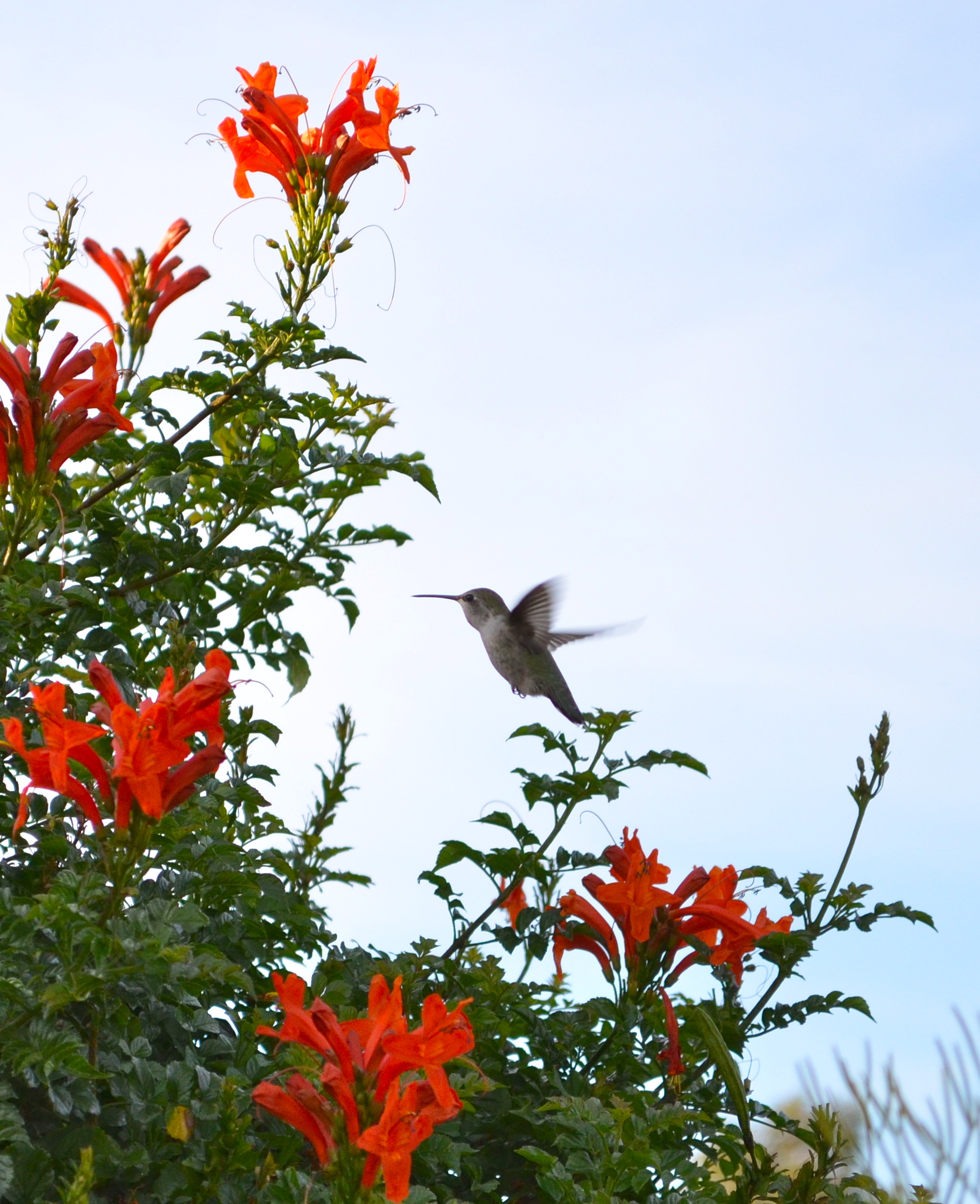
Cape Honeysuckle provides nectar for the hummingbirds

We have yet to “re-understand” how sensitive we are to the winds of change, how linked we are to the ground we stand upon.

Continue reading