If you spend five minutes listening to Gerald Chertavian in the video above, and it resonates in any manner, then you should learn more about the organization he formed. It came to our attention, as many other great stories have recently, thanks to From Scratch, Jessica Harris’s radio show and podcast repository. Continue reading
Community
Bamboo Rafting – Periyar Tiger Reserve

Bamboo Rafting
Community based ecotourism is the hallmark of the Periyar Tiger Reserve. These programmes are conducted by the local people responsible for the surveillance of the vulnerable parts of the reserve. Bamboo Rafting is a dawn to dusk range hiking and rafting programme through some of the richest forest tracts of the reserve. Continue reading
Out On A Limb

Dr. “Canopy Meg” Lowman, uses the canopy walkway to study leaf growth and defoliation in the forest canopy
Nicknamed the “Real-Life Lorax” by National Geographic and “Einstein of the Treetops” by the Wall Street Journal, Meg Lowman pioneered the science of canopy ecology. She is currently the Director of the Nature Research Center at the North Carolina Museum of Natural Science, and research professor at NCSU. For over 30 years, “Canopymeg” has solved mysteries of insect pests and ecosystem health in the highest layer of the world’s forests, designing the tools of the trade- hot-air balloons and walkways for treetop exploration- as she went. Her personal mantra is “no child left indoors.” Continue reading
What do a Super Bowl Hero and a Forest Biologist Have in Common?
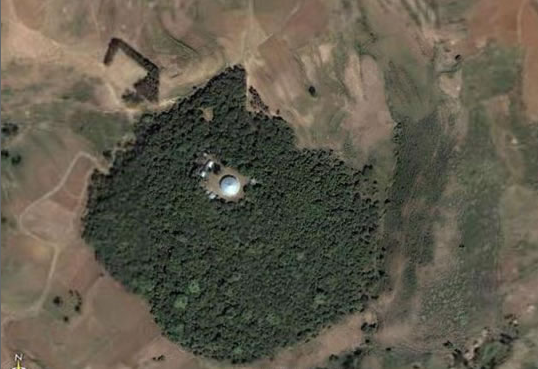
Debresena church forest- South Gondar, Ethiopia (Picture from Google earth)
“I can try to explain it to you, but unless you see it for yourself, you really can’t gasp the situation. They’re going through one of the worst droughts ever, it’s barely rained in three years. There is no water to grow vegetation, no water to drink. Everything is like desert. For people in the United States, it’s hard to wrap your mind around that.”
Anquan Boldin, Football star for Baltimore Ravens, winner of the 2013 SuperBowl
As a nerdy scientist, I was never a SuperBowl fan. This year when Anquan Boldin, who shares my passion for building stone walls in Ethiopia, made the first touchdown of the winning Baltimore Ravens, I became one. Continue reading
Crowdsourcing A Design Solution

After our renovation of the reception area at Cardamom County last year, we decided to leave the largest wall–a spectacular, privileged space for art–completely white until we found exactly the right piece. Given the property’s location in the hills where the best cardamom in the world grows, we formed a vision for a piece of art that would abstract cardamom in some beautiful way. We spoke to the director of the government’s cardamom research laboratory, thinking they might have some molecular images of cardamom (more on which after the jump) but they did not. And so we dropped that idea, but we are still looking. And that is how we happened upon the image above, and the description of this and others by the same artist on a Japanese design website:
Using his background in computer graphics and illustration, media artist Makoto Murayama creates technical, scientific blueprints of flowers that look like they belong in a manual for semiconductors. In fact, his work has just been selected as part of thesolaé art gallery project, an initiative to bring art into the offices of Tokyo Electron, one of Japan’s largest semiconductor companies. Continue reading
Agraharam – Brahmin Homes

Photo Credits: Ramesh Kidangoor
Brahmin homes are called agraharam. They are made up of 50 to 100 dwellings housed in a single compound that are so closely packed that, in most cases, two homes have a single wall as separation. The Brahmin mix of Tamil and Kerala culture is evident in every aspect of their lives, ranging from language, behavior, architecture and culinary skills. Continue reading
Kottiyoor Mahadeva Temple – Kannur
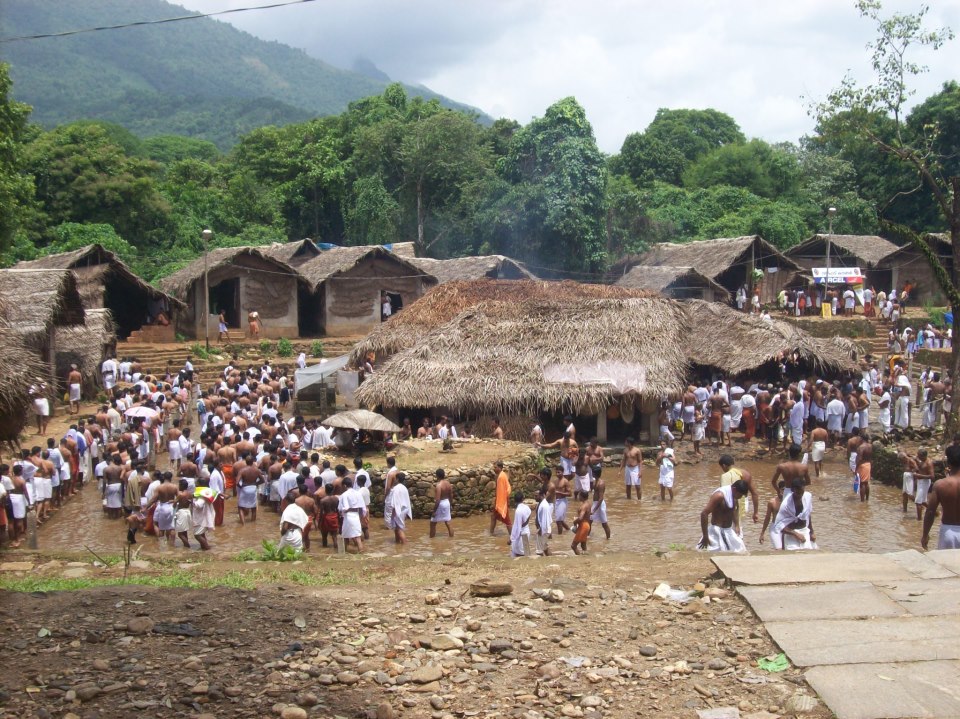
Photo Credits: Ranjith
Kottiyoor Mahadeva Temple is located near Kelakam in the Kannur district. Described as the ” Varanasi of the South”, the shrine is dedicated to Lord Shiva and is an important pilgrim centre of north Kerala. Located in the deep forest, it is interesting to notice that there are no physical temple structures except for a Shiva linga. The annual festival attracts lakhs of devotees every year during the ” Vaisakha Maholsavam”. Continue reading
Kerala’s Classical Arts
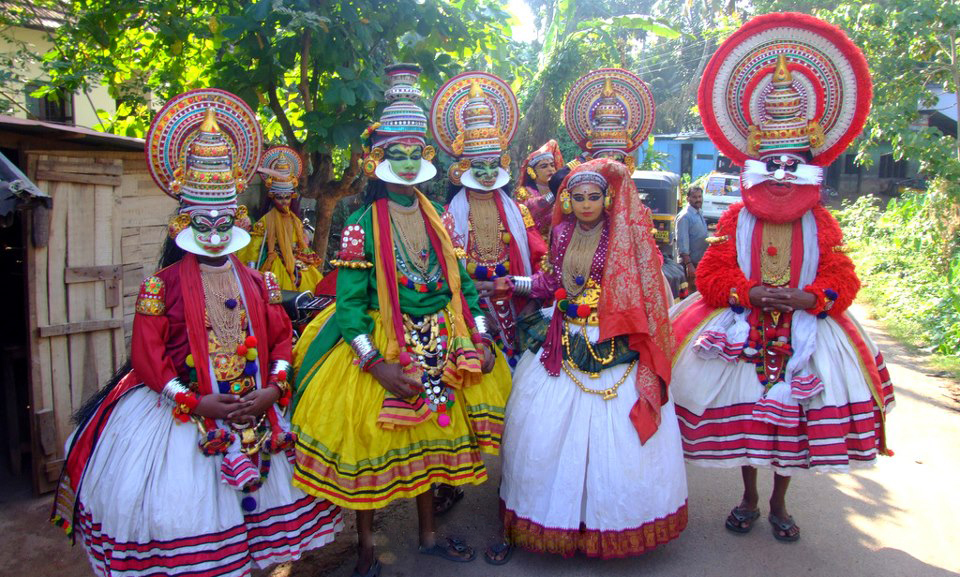
Photo Credits: Ramesh Kidangoor
From December to May Kerala comes alive with its colorful Temple festivals. Each Temple has its own lore, ranging from the fantastic to the bizarre, and always involving many people within their communities. Kerala’s classical arts such as Kathakali, Theyyam and Panchavadyam, among others enjoy a frenzied resurrection during the festival season. Continue reading
Community-Enhanced Blogging
 On occasion we have linked to stories in The Atlantic, one of the oldest continuously published magazines in the world. Most recently we have been paying attention to a science writer there. One writer we have not had occasion to link to is Ta-Nehisi Coates, who writes often about race, social justice, politics and other topics we care deeply about but which are not the focus of this blog. He writes for the print magazine but he is also among the most prolific bloggers on the magazine’s website. He has just posted a profound note (pasted in full below, but please click here so he gets full “internet metrics” credit for it) about the importance of community, aka The Horde, in his writing:
Last night The Atlantic won two awards. The first was for best website. The second was for essays and criticism. The essay in question was written by me. In my mind, these awards are linked. Writing for the website has fundamentally changed how I write in print. Continue reading
For Bees, Europe Does The Right Thing
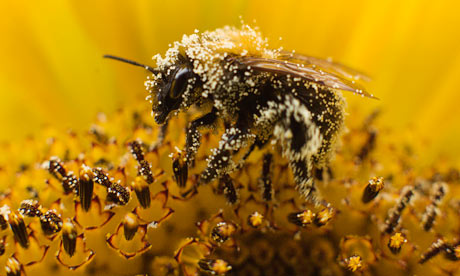
A bee collects pollen from a sunflower in Utrecht, the Netherlands. EU states have voted in favour of a proposal to restrict the use of pesticides linked to serious harm in bees. Photograph: Michael Kooren/Reuters
At a time when news out of Europe often points to political dysfunction, on at least one front we can point to some good news for these creatures who need help perhaps more than ever, and deserve it; they are finally getting it in at least one part of the world:
Europe will enforce the world’s first continent-wide ban on widely used insecticides alleged to cause serious harm to bees, after a European commission vote on Monday.
The suspension is a landmark victory for millions of environmental campaigners, backed by the European Food Safety Authority (EFSA), concerned about a dramatic decline in the bee population. The vote also represents a serious setback for the chemical producers who make billions each year from the products and also UK ministers, who voted against the ban. Both had argued the ban would harm food production. Continue reading
Pooja – Hindu Worship
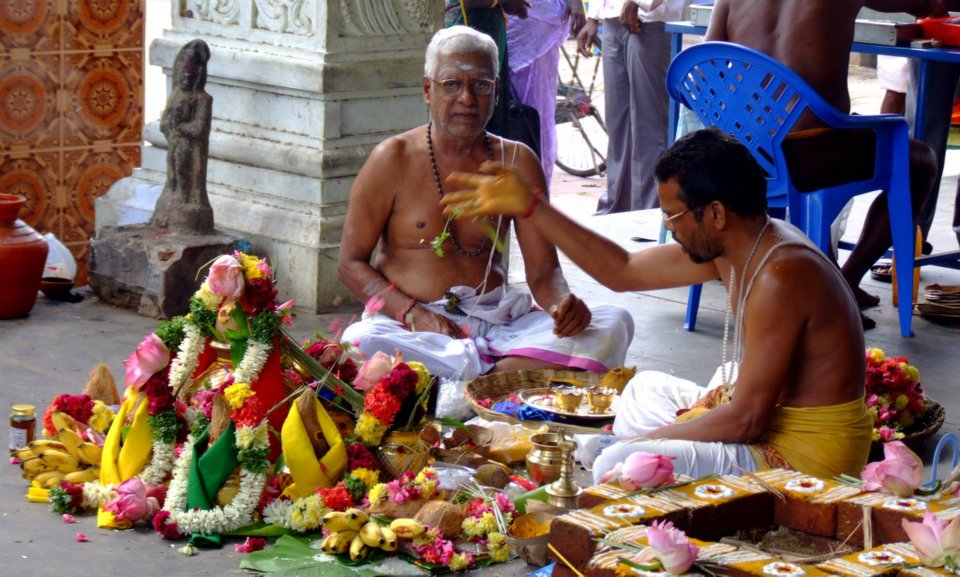
Photo Credits:Ramesh Kidangoor
The Hindu view of the universe is a cyclical one and the complex theme of Hindu mythology is dominated by the constant conflict between good and evil. Pooja is a ritualistic worship performed by Hindus as an offerings to various Gods and Goddess. It is an act of showing reverence through invocations, prayers, songs and rituals. Pooja can be performed in different ways like through meditation, chanting mantras, and offering flowers and fruits. Poojas are regularly performed in Hindu homes, irrespective of caste or status. Continue reading
The Bishnois of Rajasthan: The First Environmentalists

During Mukam festival, pilgrims traditionnally release sand on top of the dunes to fortify them and block the advance of the desert. With the years they had come to bring the sand in plastic bags, Khamu Rham’s campaign aims at inciting the pilgrims to use fabric instead.

Khamu Ram Bishnoi installs the first dustbin near the temple dedicated to Bishnoi’s prophet Jamboji, who edicted the 29 rules of the Bishnoi faith in the 15th century. The dustbin is modeled after the ones he saw in France to which he adds a sustainable twist: a jute bag.

Khamu Ram Bishnoi campaigns against plastic pollution in India since 2005. In 2010, he created this public dustbin modeled after the ones he saw in France where he was invited for a series of environmental conferences.

Khamu Ram Bishnoi has been awarded «Extraordinary man of India» for his fight against plastic pollution. He received his award on February 24, 2013 in Jaipur.
Khamu Ram Bishnoi fights against the pollution carried by discarded plastic bags in India since 2005. Every year during Mukam festival, the Bishnois, his community, must bring sand on top of dunes to solidify them and block the advance of the desert. Lately pilgrims had taken the habit of collecting the sand in plastic bags, causing a widespread pollution in the Thar desert. To protect the landscapes and the animals who regularly ate plastic bags, Khamu Ram started to demonstrate noisily to educate his community about alternatives to plastic bags.
In 2008, he was invited to talk at a series of environmental conferences in France. When looking at the street dustbins in Paris, Khamu Ram had the idea of a mobile public dustbin. Since 2010, he installs these dustbins complete with jute bags in public places, during festivals, pilgrimages, and organizes their collection. Last February Khamu Ram Bishnoi received the award of “Extraordinary man of India” in Jaipur, Rajasthan.
If Khamu Ram Bishnoi is an extraordinary man, he’s also part of an extraordinary community. He is a bishnoi. Continue reading
Documentary: Shunte ki pao! (Are you listening), the life of a family of climate refugees in Bangladesh
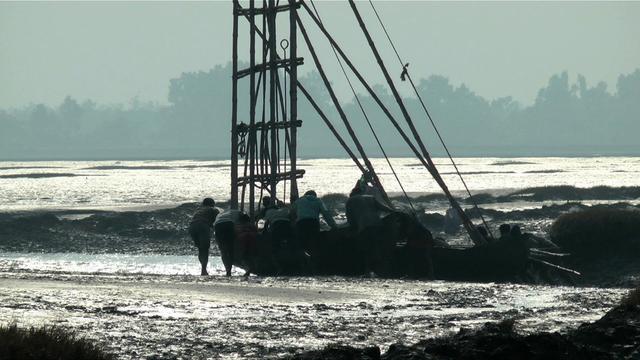
When introducing his documentary at the Paris International Documentary festival, Cinéma du Réel, director Kamar Ahmad Simon said to the audience: “Thank you for being here. I will be back at the end of the screening to discuss the film with you. I’d like to know your opinion and to answer any questions you may have, whether you liked the film or not, so I can go forward and progress.” If I had to sum up the response from the audience and jury it would be something like: “Please keep going. We’ll follow.”
Click here for the trailer of Shunte Ki Pao ! (Are you listening)
Rakhi and Soumen are a beautiful couple, they are young, in love and are the happy parents of little Rahul. You could say they have it all. That’s if their region of the coastal belts of Bangladesh had not been wiped out by the tidal in 2009. Rakhi and Soumen are climate refugees. A couple among almost a million homeless, stranded under the open sky on an ancient dyke. They now live in a small village named Sutarkhali. Rakhi and Soumen were from the middle-class, today three years after the tidal, they buy fruits by the unit, fish for their meal and line-up on neverending queues for food aid. And life goes on. Shunte Ki Pao ! (Are you listening) is not about disaster, it tells how people build a life afterwards. Continue reading
Earth Day In Historical Context

Earth Day began as a minimally organized teach-in.
Those who do not know their environmental history may or may not be doomed, but they are missing something. Knowing the history is a pleasure in itself, as this article in the current issue of the New Yorker demonstrates. Know this:
…Earth Day’s success was partly a matter of timing: it took place at the moment when years of slowly building environmental awareness were coming to a head, and when the energy of the sixties was ready to be directed somewhere besides the Vietnam War and the civil-rights movement. A coterie of celebrated environmental prophets—Rachel Carson, David Brower, Barry Commoner, Paul Ehrlich—had already established themselves, and Rome reminds us of Continue reading
University-Based Groups Worth Noting

An occasional feature, beginning here, will point to university-based groups–informal organizations, living arrangements, secret societies, etc.– we can relate to:
Co-operative societies bring forth the best capacities, the best influences of the individual for the benefit of the whole, while the good influences of the many aid the individual.
Leland Stanford
October 1, 1891
Stanford University Opening Ceremonies
Ecology’s Social Enterprise

This organization (click the banner above to go to the site), new to us but working its way to a centennial birthday (click the banner below to go to that section on the website)–

A meeting was held at Columbus, Ohio, on December 28th, 1915, at which it was decided to organize the Ecological Society of America….The interests and activities of this society will be of the broadest character, embracing every phase of the relation of organisms to their environmental condition…–The Geographical Review 1916–
About the Ecological Society of America
1914: The beginning…
–is as modern and practical as one could want, including this section on its website titled Explore Ecology As A Career with a wealth of links and related resources:
Ecology As A Career
What Do Ecologists Do? Continue reading
Community, Theater & Transformation
We have mentioned this fellow more than once, and we have an ongoing thing for libraries (thank you Toronto Public Library for making this possible, and may you do the right things in order to live forever!). Now we must mention the journalist who conducts this “interview” by asking few questions, brilliantly, and then brilliantly getting out of the way and letting his interviewee speak. And speak he does. If you have a better definition of art, operatic or otherwise, please let us know. This is worth every minute, so wait until you have time to watch it from beginning to end.
Communities of Learning, Science, And The Role Of Culture

A meeting of doctors at the university of Paris. From a medieval manuscript of “Chants Royaux”, Bibliothèque Nationale, Paris.
Click on the image to the right to go to the source, an online publication we have consistently enjoyed so far:
The lone survivor of traditional Western European ‘scientific’ culture is science.
It has survived because it is now the handmaid of technology, without which contemporary civilization would collapse utterly. Anyone who doubts this should try to get a research grant for genuinely “pure” research.Today, in European cultures, and in other cultures that have borrowed it, science per se is strictly peripheral at best. It is not only inseparable from technology; it is all but completely divorced from philosophy. This is a far cry from the Middle Ages.
The centrality of science in all spheres of Western European culture was ensured when the crucial elements — all of them — were borrowed during the Crusades, more or less simultaneously, from Classical Arabic civilization. Continue reading
Gangsta Guerilla Gardening
Food activist Ron Finley campaigns to “change the composition of the soil” in his hometown of South Central LA. In place of the “food desert” made up of liquor stores and fast food (not to mention drive-by shootings) he and his volunteer organization LA Green Grounds plants “food forests” in abandoned lots, traffic medians and sidewalk parkways.
Finley’s point of view is a call to arms to change our conversation about food.
The city of LA leads the United States in vacant lots. They own 26 square miles in vacant lots. That’s the equivalent of 20 New York Central Parks. That’s enough space to plant 724,838,400 tomato plants.
As a combination vegetable graffiti artist and gardening gangster, Continue reading
A Look Back at AguaClara
Pure nostalgia. That’s how I felt when I looked through the photos on my computer of my trip to Honduras two years ago. I was reminded by a previous post about my experience with AguaClara, a Cornell project team that designs and builds water treatment plant for impoverished communities in Honduras. The team has grown in size and prestige ever since I left, and it’s garnered multiple awards (from the EPA and Katerva, most recently).

AguaClara team members walking across a narrow suspension bridge in rural Honduras.
 Organikos