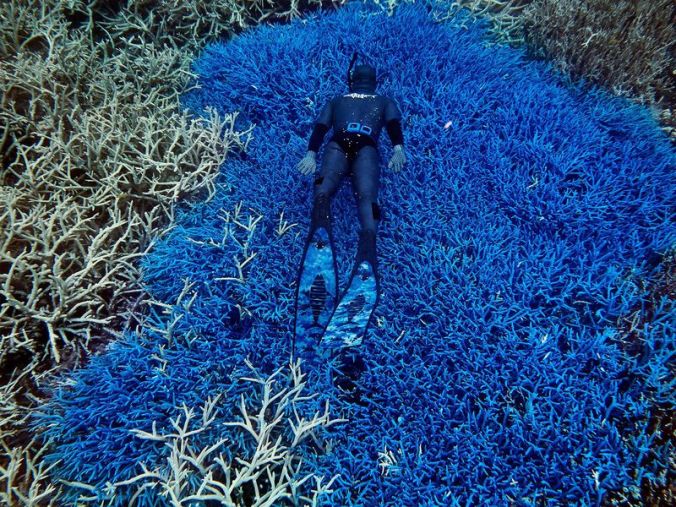
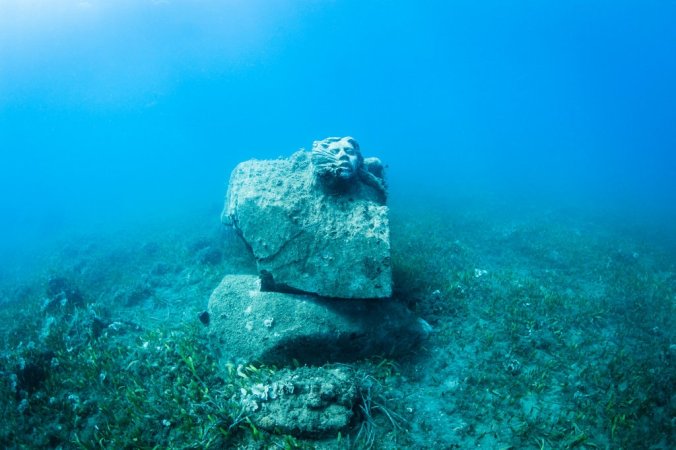
By collecting images and GPS data from citizen divers, scientists can get a better sense of the health of the entire Great Barrier Reef. (Damian Bennett)
Citizen Science has been a common thread for us on this site, linking creatures of land, sea and air as subjects of study. Marine Ecosystem citizen science has especially fascinated us in terms of the creative thinking applied to problems of invasive species.
The collaborative goal of documenting such a vast ecosystem as the Great Barrier Reef, and using creative solutions to combat threats to this wonder of the natural world is inspiring, to say the least.
Massive Citizen Science Effort Seeks to Survey the Entire Great Barrier Reef
Only about 1,000 of 3,000 individual reefs have been documented, but the Great Reef Census hopes to fill in the gaps
The majority of individual reefs that make up the Great Barrier Reef have not been directly surveyed. (Damian Bennett)
In August, marine biologists Johnny Gaskell and Peter Mumby and a team of researchers boarded a boat headed into unknown waters off the coasts of Australia. For 14 long hours, they ploughed over 200 nautical miles, a Google Maps cache as their only guide. Just before dawn, they arrived at their destination of a previously uncharted blue hole—a cavernous opening descending through the seafloor.
After the rough night, Mumby was rewarded with something he hadn’t seen in his 30-year career. The reef surrounding the blue hole had nearly 100 percent healthy coral cover. Such a find is rare in the Great Barrier Reef, where coral bleaching events in 2016 and 2017 led to headlines proclaiming the reef “dead.”
“It made me think, ‘this is the story that people need to hear,’” Mumby says.
The expedition from Daydream Island off the coast of Queensland was a pilot program to test the methodology for the Great Reef Census, a citizen science project headed by Andy Ridley, founder of the annual conservation event Earth Hour. His latest organization, Citizens of the Great Barrier Reef, has set the ambitious goal of surveying the entire 1,400-mile-long reef system in 2020.
“We’re trying to gain a broader understanding on the status of the reef—what’s been damaged, where the high value corals are, what’s recovering and what’s not,” Ridley says. Continue reading

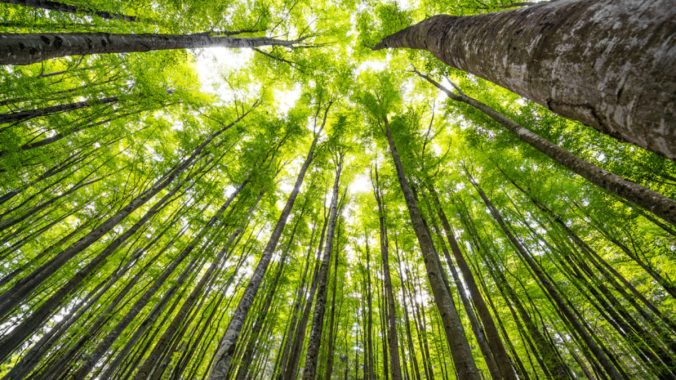
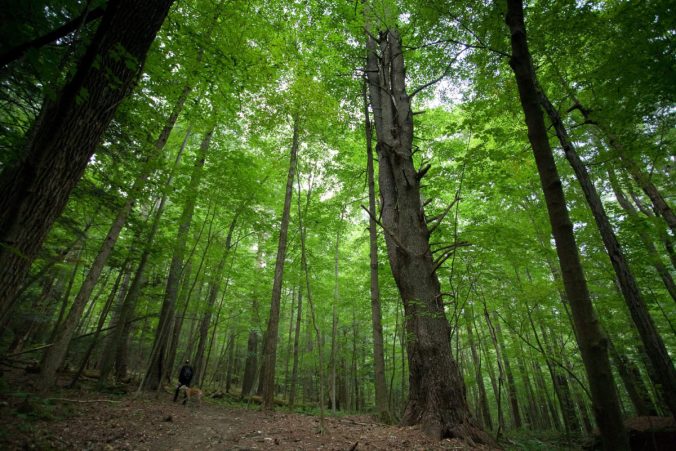
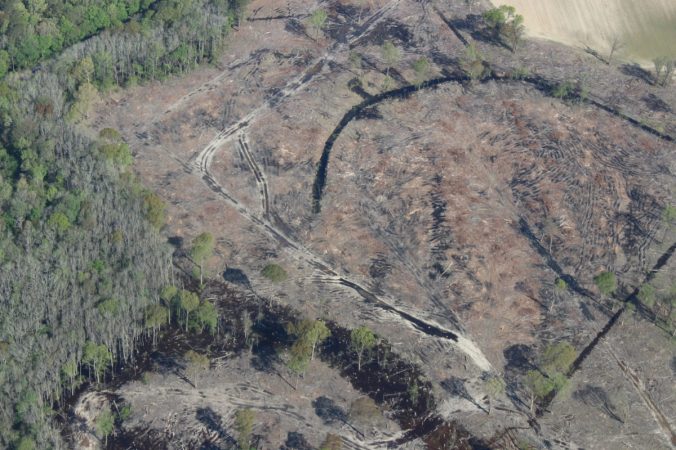

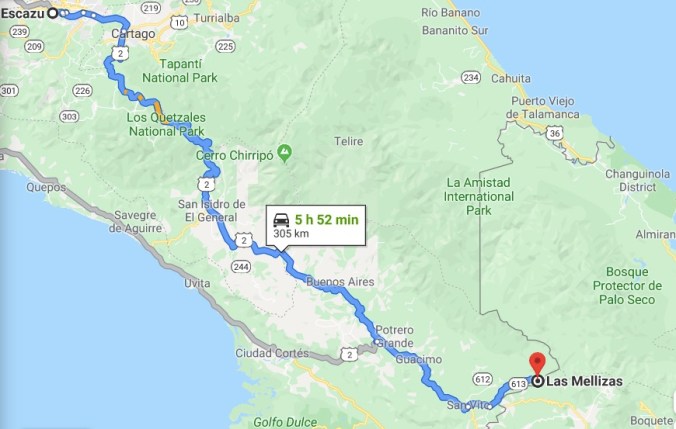
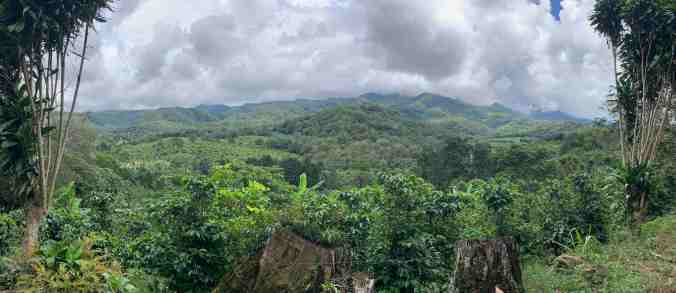


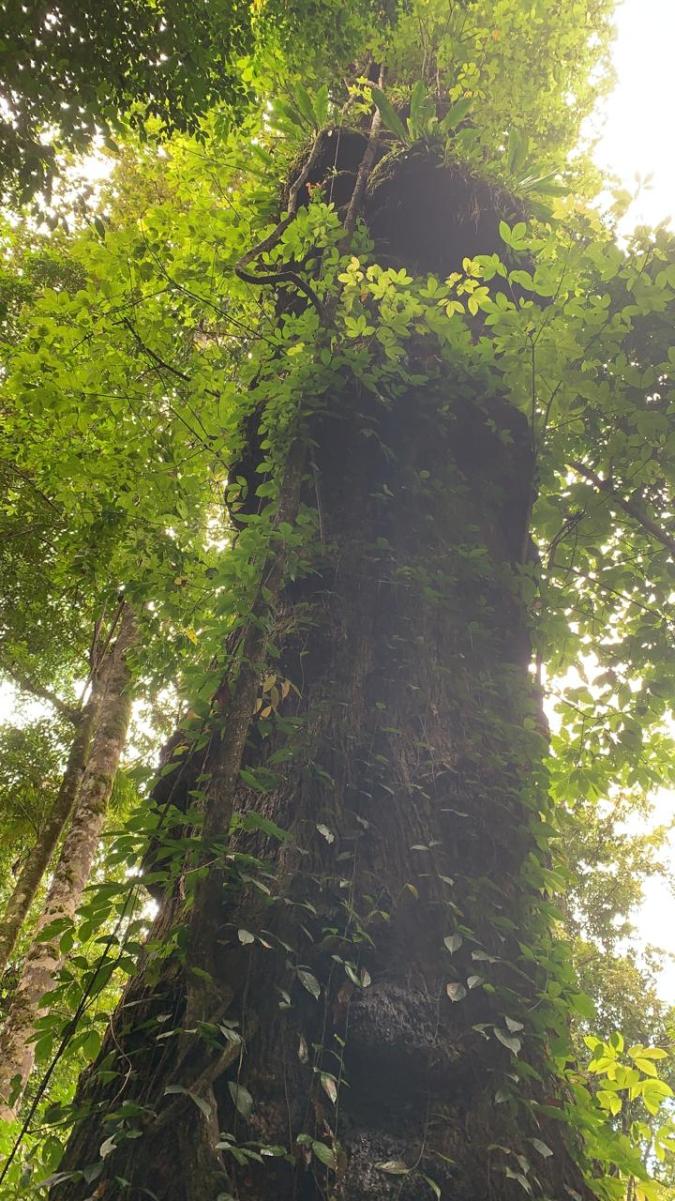
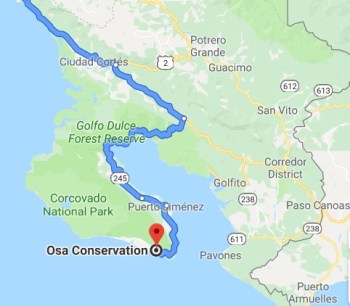
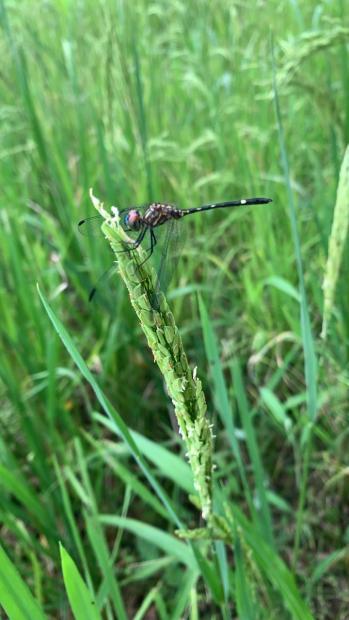 Finally we had the chance to do that this past weekend. The tree above is a good representative for why the Osa Peninsula is so important. With one of the longest life spans of any tree in this tropical forest, the abundance of diverse plants and animals that depend on the tree for life make it symbolically important as much as it is biologically important. The insect to the right, feeding on the top of a rice stalk, shifted my attention from the charismatic megaflora that made Saturday an immersive biophilia exemplar of a day–and helped me focus on acts taken by Osa Conservation to make their operation more sustainable. A one-time farm in their land holding has been rewilded. A few hectares were retained for experimental organic farming.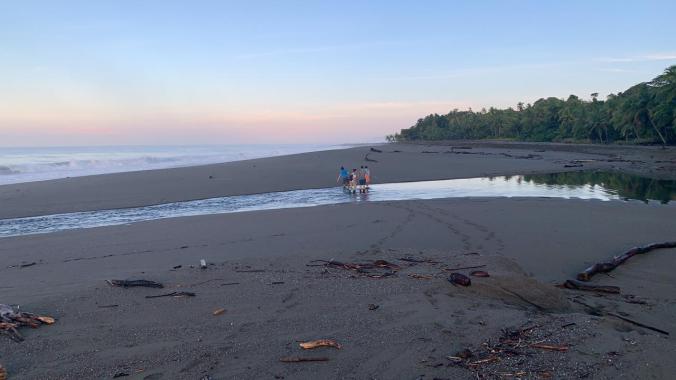
 The rice strain is an example of that, but I will save that story for another day. After being
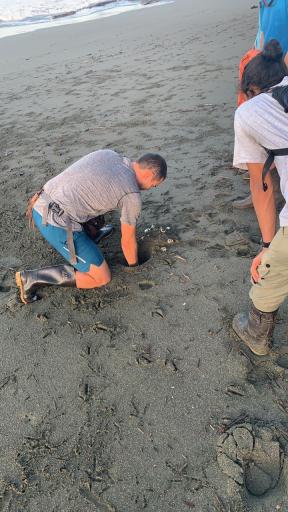
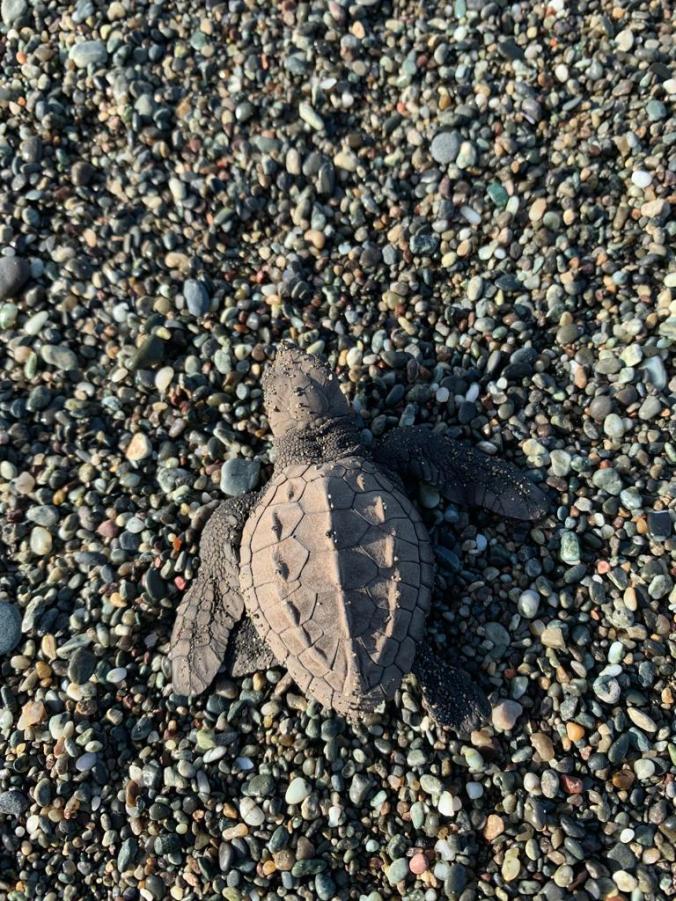
 We may have been a mere 15 minutes too late in that case, but soon enough another nesting site was found and the surgical strike–to remove the eggs and transfer them to a hatchery where they are better protected–was under way. The protocols allow for digging carefully so that not a single egg is in danger of rupture, or even addled. They are removed one by one, counted, and placed in exactly the same formation as they were in the nest, so they can be re-nested in the hatchery as the mother turtle had laid them. Marine biologists believe that the order in the nest matters to their viability.
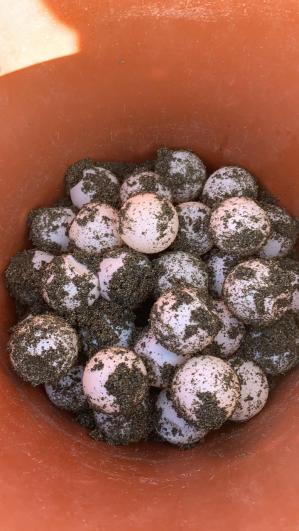 It was almost 6am at this point and by 8am this nest moved to safety and hatchlings from two previously moved nests were ready for release. Of all the photos I took yesterday it is difficult to choose one that is most evocative of the power of this experience. But somehow a bucket full of eggs is a candidate.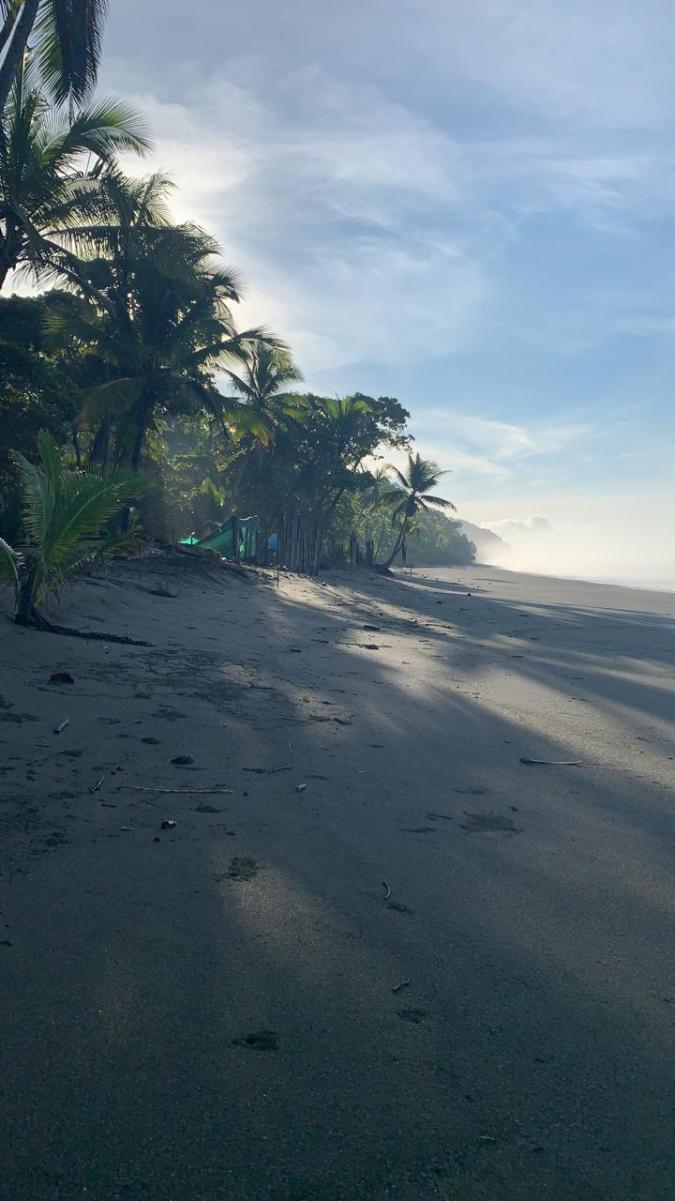
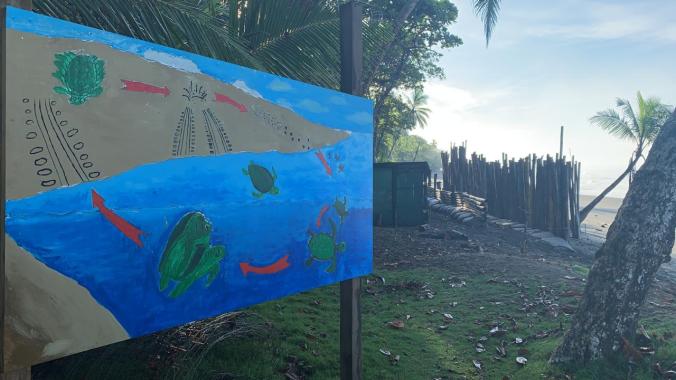
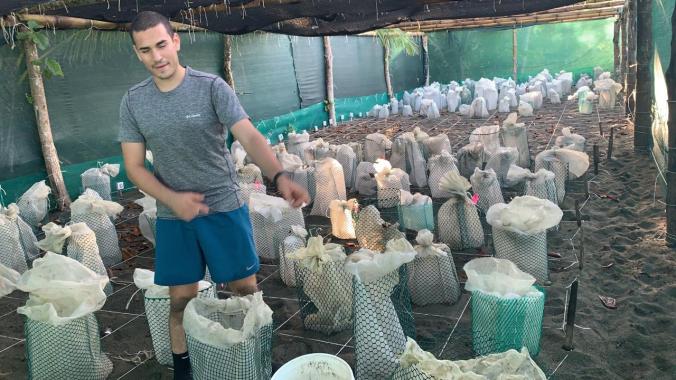
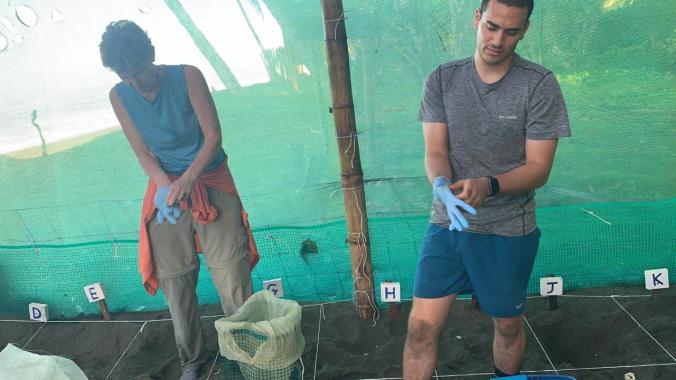
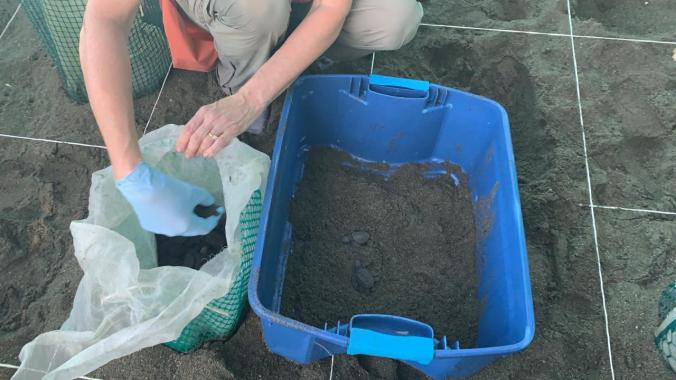
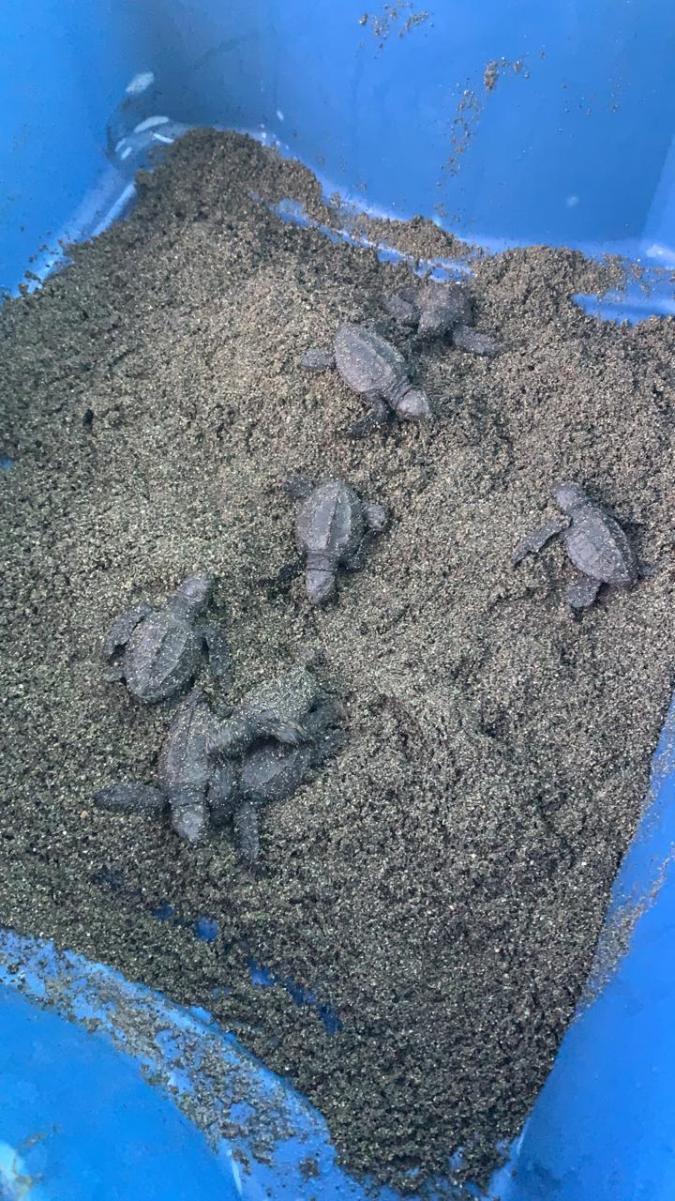
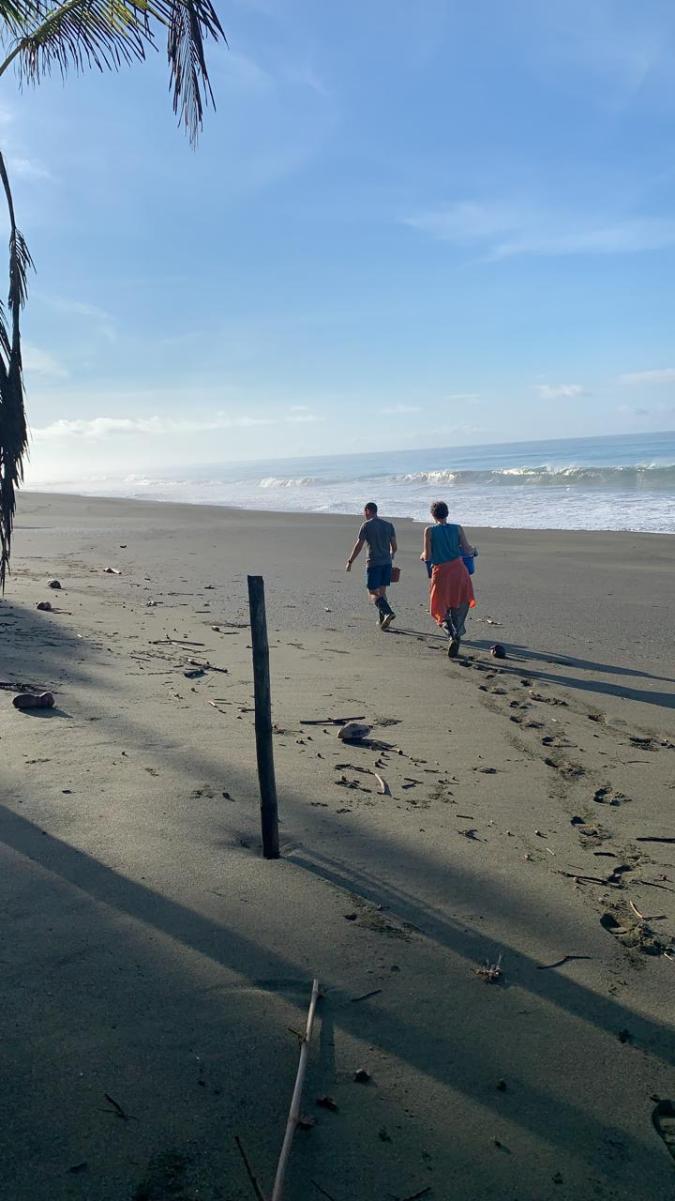
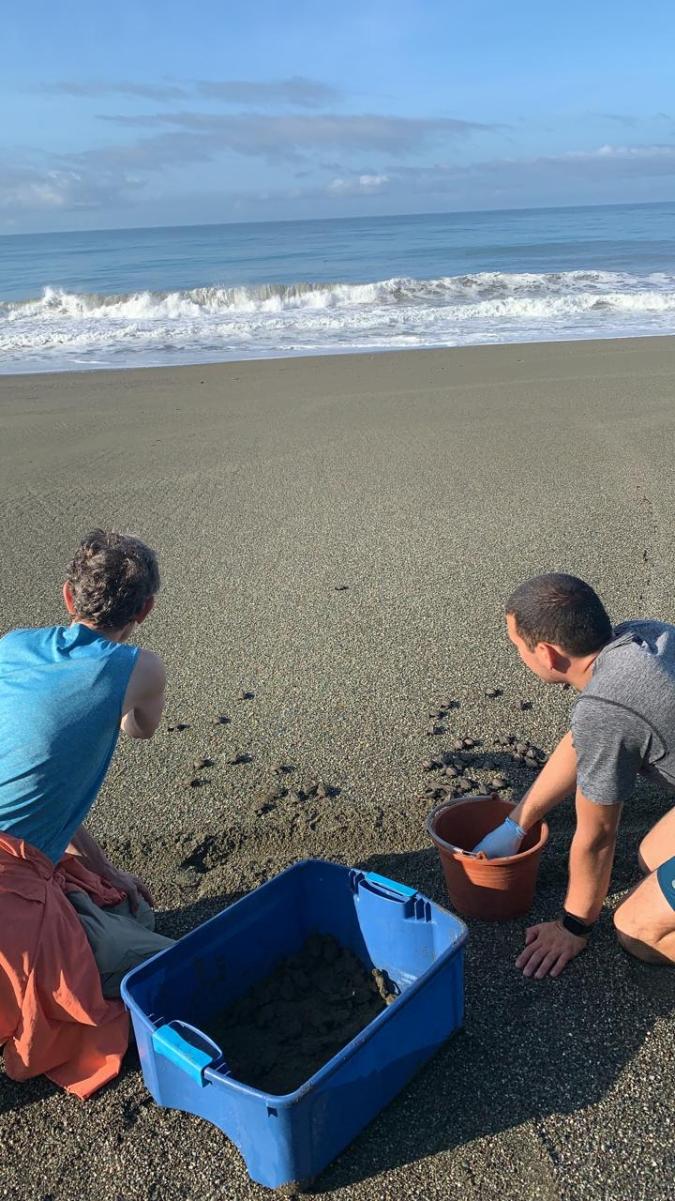 133 in total, marching to the water. A race of sorts.
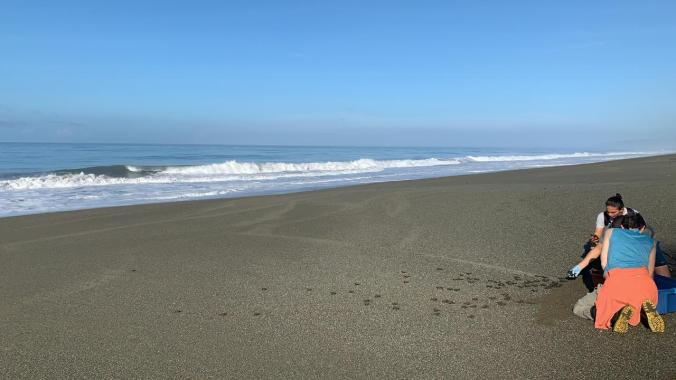 Amie, a bird-lover, wields a stick to keep them away in case that is needed.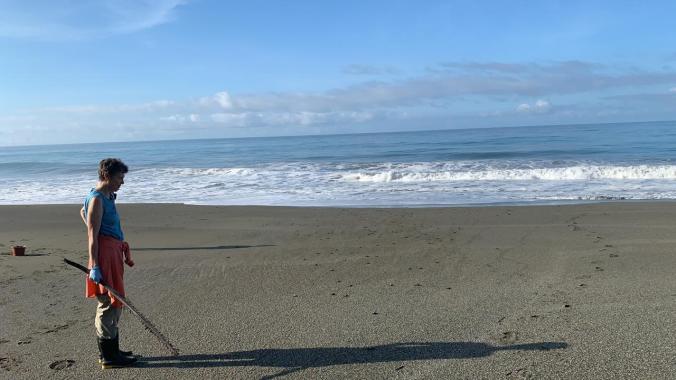




 Organikos