Camera Trap, Australia Edition

Thanks to the Nature Conservancy’s blog for this addition to our growing file of stories about non-intrusive filming of wild animals in remote places:

Camera Trapping in the Australian Desert

BY JUSTINE E. HAUSHEER

When trying to drink out of a tiny waterhole, camels hit approximately a 9.5 on a scale from 1 to Exceptionally Awkward. Continue reading

Mayan City, Deep Jungle Discovery

NYerMaya.jpg

Mr. Preston shares an experience that is not familiar to many people, and perhaps only considered enviable by a select few. The team at Chan Chich Lodge meets visitors every day of the year who are looking for a distant cousin of this experience described below, and those guests come away invariably awed by the opportunity to have a safe, comfortable adventure deep in nature, exploring well protected remains of a Mayan civilization buried by time and jungle. For them, this is worth a read:

AN ANCIENT CITY EMERGES IN A REMOTE RAIN FOREST

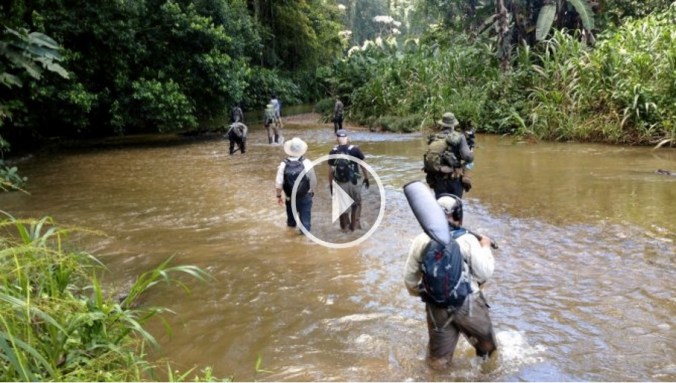
…The revelation of an ancient city in a valley in the Mosquitia mountains, of Honduras, one of the last scientifically unexplored regions on Earth, was a different story. This was the first time a large archaeological site had been discovered in a purely speculative search using a technology called lidar, or “light detection and ranging,” which can map terrain through the thickest jungle foliage, an event I chronicled in a story for the magazine in 2013. As a result, this discovery revealed something vanishingly rare: a city in an absolutely intact, undisturbed, pristine state, buried in a rain forest so remote and untouched that the animals there appeared never to have seen people before. Continue reading

2017, Year Of Wilderness Conservation, Farming & Food

CCL Board.jpg

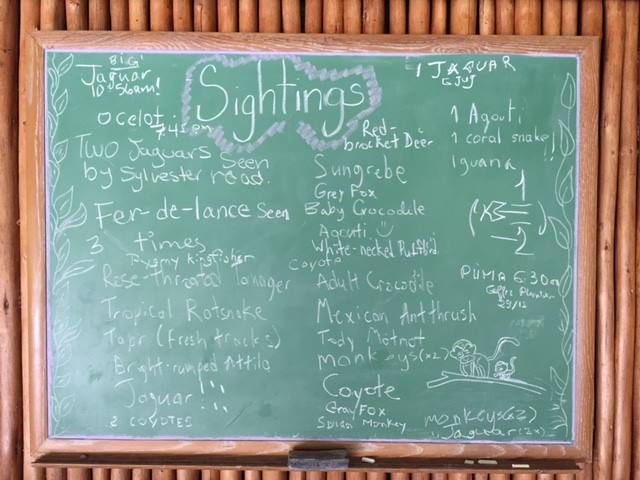
A few days ago Arnay, the General Manager of Chan Chich Lodge, posted a snapshot of the sightings board just outside the reception area, where guests share what they have seen on any given day while trekking with guides, or trekking solo. 2016 was not exceptional for Chan Chich, but it was another year of exceptional opportunity to witness the abundance that comes with committed conservation.

The big cats made their presence known day after day after day. The entire food chain on which they depend was right there with them, well balanced in the 30,000 acres of forest that Chan Chich protects, surrounded by an additional nearly half million acres that other private conservation-minded land-owners protect in northwest Belize. Continue reading

Support Sea Shepherd

2016-12-15-lightbox-donation-appeal-01

Of all the posts we could possibly share on the last day of the year, the jolly roger gets our nod this year more than most. Heavy weather ahead, and these folks know how to sail through and get done what no one else is willing or able to do when it comes to protecting marine ecosystems.

logo-jolly-roger-white-on-black-thick-140x

We have shared as many news stories as we could follow since starting this platform, and always hope to see more. Their story is not as well known as it should be, nor do they have as much financial support as they need to continue to carry out their mission, so we urge support:

WE ARE SEA SHEPHERD

Sea Shepherd Conservation Society (SSCS) is an international non-profit, marine wildlife conservation organization.

Established in 1977, our mission is to end the destruction of habitat and slaughter of wildlife in the world’s oceans in order to conserve and protect ecosystems and species. We use innovative direct-action tactics to investigate, document, and take action when necessary to expose and confront illegal activities on the high seas. By safeguarding the biodiversity of our delicately balanced ocean ecosystems, Sea Shepherd works to ensure their survival for future generations.

China Closes Out 2016 With Another Important Conservation Statement

jp-ivory-master768

A Chinese police officer watched over ivory products being prepared for destruction during a ceremony in Beijing in 2015. China’s ban announced on Friday would shut down the world’s largest domestic ivory market. Credit Ng Han Guan/Associated Press

Yesterday’s news, combined with today’s, could be called a conservation bifecta:

China Bans Its Ivory Trade, Moving Against Elephant Poaching

By

China announced on Friday that it was banning all commerce in ivory by the end of 2017, a move that would shut down the world’s largest ivory market and could deal a critical blow to the practice of elephant poaching in Africa. Continue reading

Thank You, China, For Pandolin Protection

gettyimages-630598630_wide-7e4e677e0cd500d7c0e39f09b54a995411618f81-s1100-c85

An undated photo, released Wednesday, shows Shanghai customs officers checking pangolin scales at a port in Shanghai. Chinese customs seized over three tonnes of pangolin scales, state media said, in the country’s biggest-ever smuggling case involving the animal parts. STR/AFP/Getty Images

Thanks to National Public Radio (USA) for reporting the news related to this remarkable animal:

China Announces Its Largest-Ever Seizure Of Trafficked Pangolin Scales

Camila Domonoske

Chinese officials have seized 3.1 tonnes (more than 3.4 tons) of illegally trafficked pangolin scales from a port in Shanghai, according to state media. Continue reading

Droning Over Wetlands

Thanks to The Nature Conservancy’s Cool Green Science team for helping us realize we almost missed this story:

Flight Over the Bas-Ogooué: Using Drones to Map Gabon’s Wetlands

BY JUSTINE E. HAUSHEER

How do you map a nearly inaccessible 9,000-square-kilometer African wetland that is home to hippos, forest elephants, crocodiles, and the notorious Gaboon viper?

Enter the drones.

Nature Conservancy scientists are using unmanned aerial vehicles to create the first-ever detailed wetlands habitat map of coastal Gabon, in collaboration with scientists from NASA, and other conservation groups working in Gabon. Continue reading

For the Birds: a Message to North American Policymakers


The State of North America’s Birds 2016

The State of North America’s Birds 2016

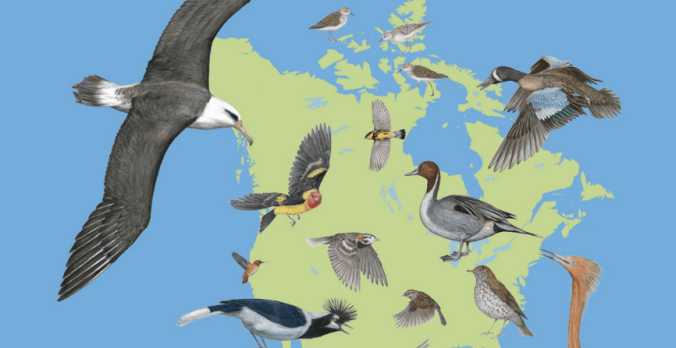
We continue to laud the importance of eBird on this site, gaining special importance as it becomes more and more clear that wildlife doesn’t acknowledge political borders. The data gleaned from tens of thousands of Canadian, Mexican and U.S. citizen scientists who contribute to eBird indicate that more than 350 species in North America migrate up and down Canada, the U.S.A, and Mexico over the course of a calendar year.

And according to the recently released State of North America’s Birds 2016 report, those three countries—their governments, and their societies—need to step up and do more to preserve our continent’s spectacular and shared natural heritage of birdlife. This report is the first-ever scientific conservation assessment of all 1,154 bird species in North America, and it was only possible because of the tremendous scale and big-data capabilities of citizen-science….

Among the many takeaways from eBird maps and models includes one of relevance to our property, Chan Chich Lodge, located on 30,000 acres of Belizean forest in the Yucatan peninsula.
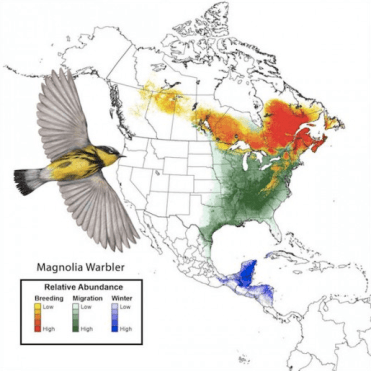
The Yucatan Peninsula is one of North America’s most vital bird habitat regions

The Yucatan Peninsula is one of North America’s most vital bird habitat regions

Not only is the Yucatan rich with endemic birdlife, it’s a critical wintering area for more than 120 birds species that migrate from Canada and the U.S.A. In winter, the entire population of Magnolia Warblers relies on an area of tropical forest in Mexico only 1/10 the size of its boreal forest breeding range, with the Yucatan as the bull’s-eye of their wintering range.

Continue reading

Fast Cats’ Feast

The cheetah is the fastest animal on land—a fact that is often repeated, but seldom truly appreciated. When documentary-makers film cheetas, they typically go for low-angle close-ups that capture the creature’s majesty, but that underplay its speed. The BBC’s The Hunt bucked the trend last year with aerial shots that reveal just how fast the cheetah is.

Ed Yong, writing on the Atlantic’s website, refers to the video clip above with his opening paragraph of Cheetahs Never Prosper. The cat lays the table for its feast, in full speed, and then Mr. Yong shares some plain truths: Continue reading

Redemption, Dammed Rivers Edition

kim-newlifealongwashingtonstateselwhariver-1200

It’s been only two years since the removal of the last of the dams that obstructed the Elwha River, in Washington State, but already species are returning. Photograph Courtesy E. Tammy Kim

Among our favorite story types, the story of ecological recovery, which is to say of redemption, the following is a welcome addition to the files of 2016:

NEW LIFE ALONG WASHINGTON STATE’S ELWHA RIVER

By E. Tammy Kim

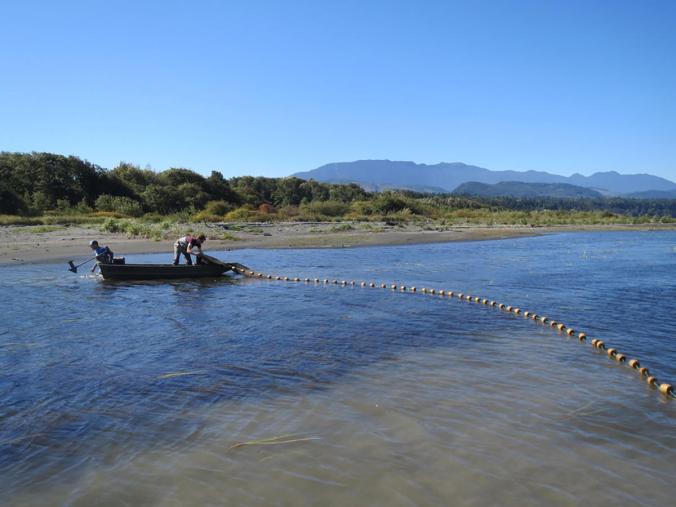
…Shaffer and her colleagues have sampled the Elwha’s nearshore region, where the river meets the ocean, once or twice a month since 2006. August, of course, is an ideal time; when you go in January, McBride said, “your fingers freeze, so you just put ’em under your armpits.” The work of the C.W.I. now seems particularly vital, because, for the first time in several generations, the forty-five-mile-long Elwha is a living river, end to end. Between 2011 and 2014, two large, century-old hydroelectric dams were demolished as part of a federal recovery effort. Continue reading

The Gift Of The Camera Trap

3-week-old-male-kitten-at-den-site-Laguna-Atscosa-NWR.jpg

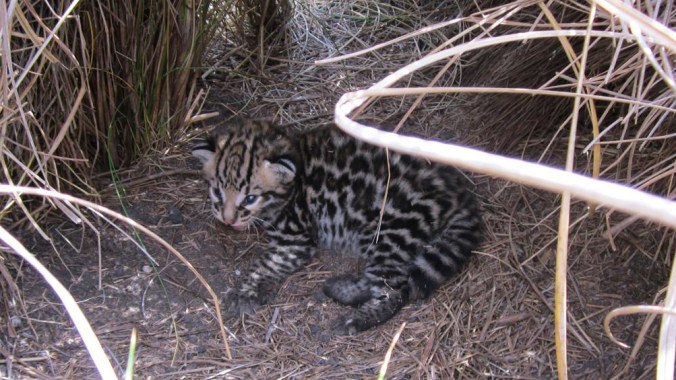
Three week old male ocelot kitten. Photo courtesy of US Fish and Wildlife Service

Thanks to Matt Miller and TNC’s Cool Green Science:

Camera Trap Captures Images of Texas Ocelot Kittens

Great news for ocelots: This year, several females with kittens were documented in South Texas using remote cameras.

The U.S. Fish and Wildlife Service (USFWS) issued a public service announcement brimming with good news, including the first ocelot den documented in 20 years on Laguna Atascosa National Wildlife Refuge, and ocelots with kittens on the Yturria Ranch, a private ranch protected by conservation easements held by The Nature Conservancy and USFWS. Continue reading

Thank You, Guardian & John Vidal

1993

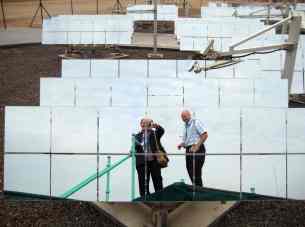
Vidal visiting the experimental solar thermal power plant on the outskirts of Masdar, UAE, in 2011.

When the photograph to the left was taken we were just starting to gather stories here.  John Vidal was the veteran among major news-gathering organizations and the Guardian had shown leadership with an Environment section. Not always pleasant, but fair to say that Mr. Vidal has balanced the good, the bad and the ugly better than most. Thanks to him for that.

In 27 years as environment editor at the Guardian, I have seen both devastation and progress. Now I’m retiring – but I still have hope for the future of the planet

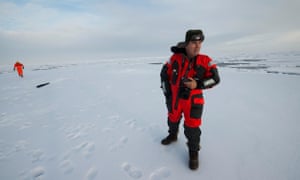
John Vidal on an Arctic ice floe in 2012.

John Vidal on an Arctic ice floe in 2012. Photograph: Daniel Beltrá/Greenpeace

In September 1989, Guardian editor Peter Preston took me to one side. “Environment? Your idea. You do it,” he said. I was on the arts desk and had quite forgotten that, two years earlier, I had proposed that we cover this fast-emerging issue in more depth and with new pages. Continue reading

Rolling Back Environmental Laws, A Rolling Plague

5150

The proposals threaten indigenous territory in Brazil, opponents say. Photograph: Alamy Stock Photo

We hear it is coming to the USA after inauguration next month, and has been a tendency in tough times in many places–relaxing environmental protections to encourage economic growth. Bad ideas have a way of spreading and our thanks to the Guardian for their observations in Brazil:

Brazil’s plan to roll back environment laws draws fire: ‘The danger is real’

Environmental and indigenous activists condemn plan they say would threaten indigenous territories and make compliance with Paris deal impossible Continue reading

Walking on the Wildside

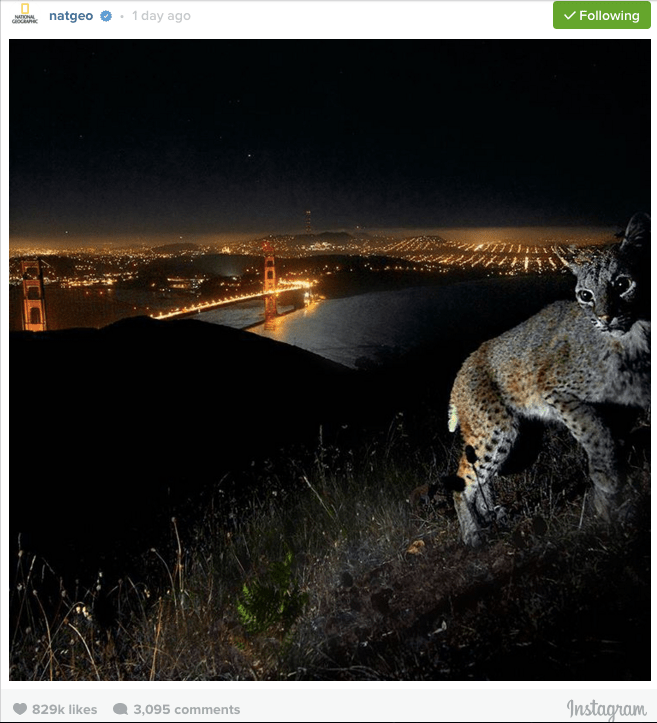
Camera Trap photo: Natgeo Instagram

Camera Trap photo: Natgeo Instagram

The photo above is a reminder that amazing camera trap captures of wildlife needn’t be limited to remote areas, or even exotic locations.

Bobcat takes a ‘selfie’ above Golden Gate Bridge

Seldom seen, bobcats rarely will stand still for a photo.

But every once in a while the shy, nocturnal feline will take a selfie — although not intentionally, of course.

This one triggered a remote camera hidden on a ridge in the Marin Headlands overlooking San Francisco and the Golden Gate Bridge. The camera was set up by National Geographic photographer Steve Winter.

The photo was posted today on the National Geographic’s Instagram account, but it’s apparently several years old. Continue reading

Atlantic Canyon Withdrawal, Another Obama Legacy

ap_16281732045464_wide-253ae041d7cf2035c25a21f614330c82b0673230-s400-c15

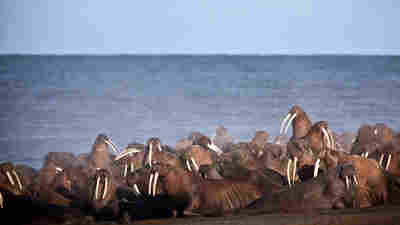
Walruses rest on the shores of the Chukchi Sea, the vast majority of which was designated off-limits to drilling on Tuesday. Ryan Kingsbery/AP

It is impossible to predict what will happen 2017 onward to these final environmental initiatives of the outgoing President of the USA. Nonetheless, we will cheer his efforts on behalf of conservation right to the very end of his term.  Thanks to National Public Radio (USA) for this news:

Obama Designates Atlantic, Arctic Areas Off-Limits To Offshore Drilling

“These actions, and Canada’s parallel actions, protect a sensitive and unique ecosystem that is unlike any other region on earth,” the White House said in a statement. Continue reading

Cabo Pulmo & Octavio Aburto’s Masterful Storytelling

David and Goliath

The more we look around, the more we find that Mr. Aburto is telling the Cabo Pulmo story as well as anyone:

The People (Past and Present)

What make Cabo Pulmo a success story is its people: when faced with the dilemma to either continue fishing or to turn towards conservative goals, the community decided they needed to change. Continue reading

Christmas Bird Count, 2016

Seth’s work at the Cornell Lab of Ornithology, with the Celebrate Urban Birds initiative helped us all get a close look at citizen science in action. Past Christmas counts since then have been an annual tradition in these pages. Thanks to Lisa Feldcamp for a note on this topic with her post Give Kids the Gift of Birding on The Nature Conservancy’s website Cool Green Science:

The annual Christmas Bird Count is one of birding’s most cherished traditions. This year, consider introducing the count to a child. There’s no better time to get a youngster started in birding.

“When I was a kid in a large family of eight kids in Upstate New York, my parents told us we could do anything that cost less than $5; baseball, boy scouts, or birding,” says Tom Rusert of Sonoma Birding. “I joined Junior Audubon with my brothers, not realizing it would be a life sport to enjoy forever. It really is no different than any other sport.” Continue reading

Big Weather & Big Cats At Chan Chich Lodge

Cockscomb Basin Wildlife Sanctuary is of interest because it is a pioneer in conservation in Belize–as Chan Chich Lodge is in its own way. But in writing about it Vicky Croke, for The Wild Life at WBUR (National Public Radio, Boston, USA), reminds a few of us of our time in Belize during Earl, and the aftermath during which jaguar sitings have been, and continue to be, inexplicably spectacular:

Jaguars Interrupted: Counting Big Cats After A Hurricane

Two months after Earl hit Belize, researchers at the world’s first jaguar reserve are still taking stock.

By Vicki Croke

This past summer, within days of gathering spectacular camera-trap footage of a female jaguar and her two tiny cubs sauntering through the Cockscomb Basin Wildlife Sanctuary in Belize, field scientists with Panthera, the global wild cat conservation organization, got the news that a tropical storm was forming and might just come their way. Continue reading

Sardine Disco Balls, Or Cabo Pulmo

15tb-sardines-superjumbo

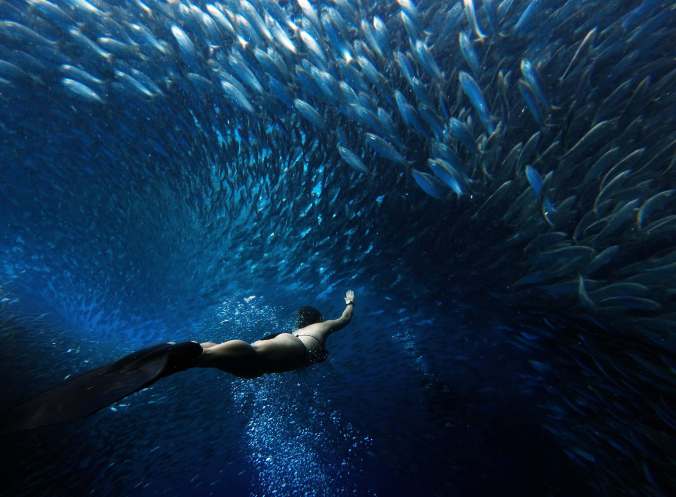
A free diver swooping into a sardine ball. Credit Keith Sepe

Joanna Klein’s story in the Science section of the New York Times this week, titled Swimming With the Mysterious Sardine Disco Balls of the Philippines, has had me thinking in recent days about the Gulf of California, and specifically about Villa del Faro. If you have reason to be in the Philippines, click the image above to get a quick view of what may be in store for a diver in certain waters.

But otherwise, I will riff off that photo in the direction of Baja California Sur. The intensity of those sardine schools are comparable to the biodiversity in the waters of Cabo Pulmo. Continue reading

Rail-Trail Expansions

Rail-Trail.jpg

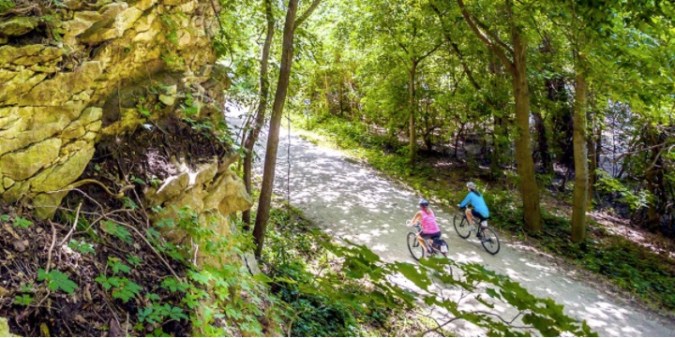
Thanks to Lorraine Chow at EcoWatch for this update on the longest rail-trail conversion in the USA, linking St. Louis to Kansas City:

You can now walk or cycle across most of the state of Missouri. Gov. Jay Nixon has opened a 47.5-mile extension to the Katy Trail, effectively creating one continuous hike-and-bike path from the St. Louis area to the outskirts of Kansas City.

rail-trail2“You’ll be able to go 287 miles on an incredible asset,” Nixon told the Kansas City Star at the ribbon-cutting on Dec. 10 in Pleasant Hill, a suburb just south of Kansas City.

According to the governor’s office, the new section of the trail follows the corridor of the old Rock Island Railroad for 47.5 miles from Pleasant Hill to Windsor, where a junction connects to the rest of the Katy Trail State Park. Continue reading