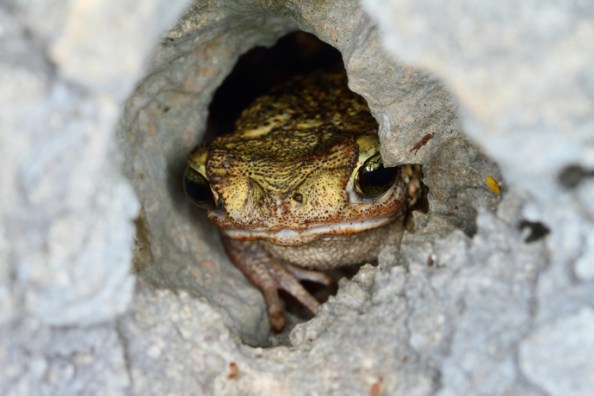
A male toad of an undescribed species hides in the limestone of the southwestern Dominican Republic. CREDIT PHOTOGRAPH COURTESY MIGUEL A. LANDESTOY
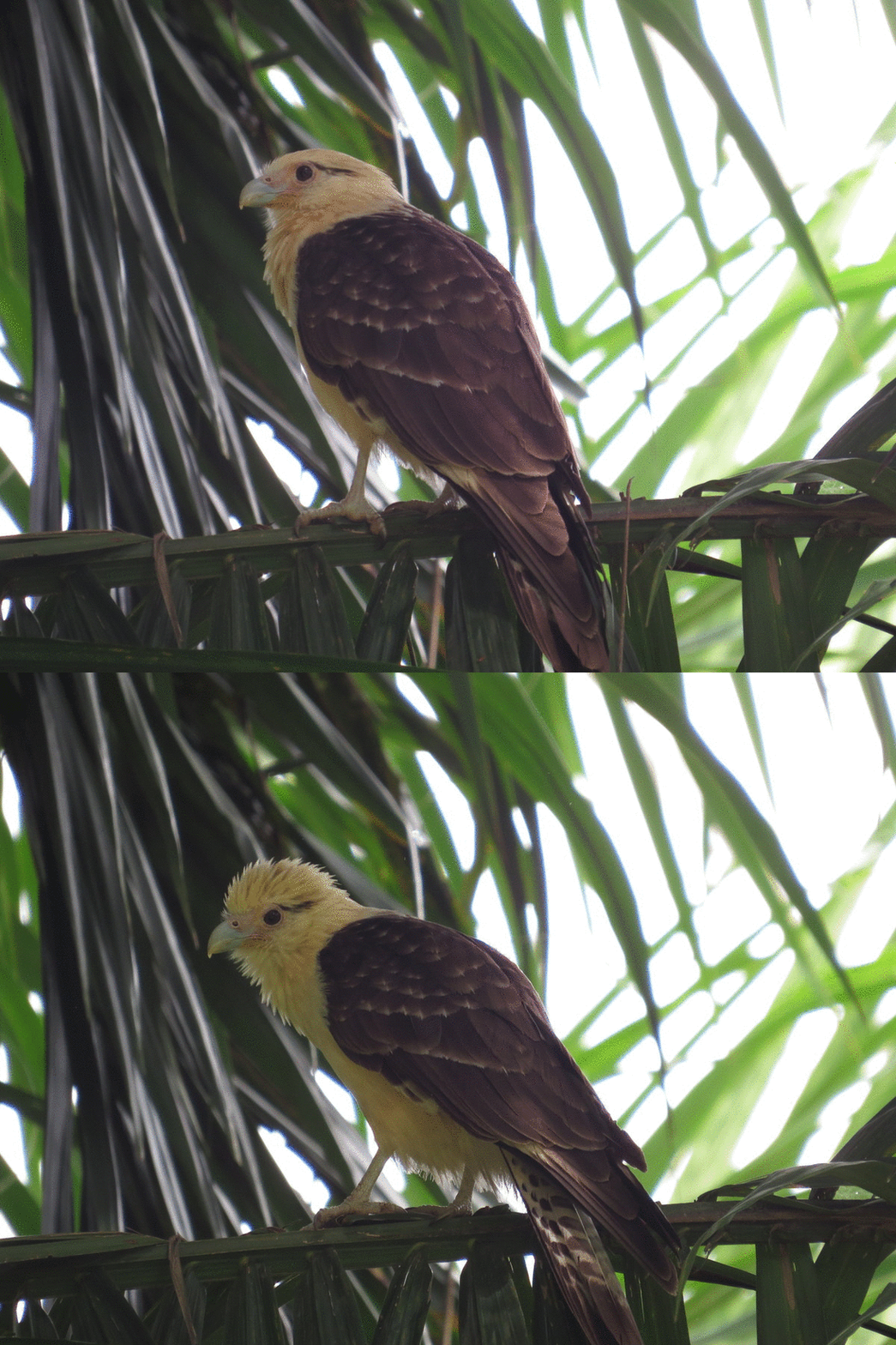
There is a reason why we highlight birds every single day. They are spectacular in many diverse ways, as well as beautiful in more ways than can be counted, and sometimes smile-inducingly odd; always exceptional ambassadors to the human world from their natural habitats, which are under constant pressure and threat. Birds may seem more charismatic than amphibians but from an ecologist’s point of view they are both extremely valuable indicators of ecosystem health. If you have been following Seth’s posts about the preparation for the Smithsonian expedition he is about to embark on, you will likely agree they would enjoy crossing paths with the team described in this story:
The southernmost corner of the Dominican Republic is dominated by limestone karst, a landscape with the look and feel of a petrified giant sponge. Snakes, small mammals, and fat, furry tarantulas live in the fissures and holes in the karst, as do toads, including one species that is not yet fully known to science. I met this new toad at three o’clock one late-fall morning, in a karst forest off a mining road near the town of Pedernales. I was with Miguel Landestoy and Robert Ortiz, a pair of freelance field biologists who have been friends since their youth, and who still spend much of their time looking for amphibians. Continue reading








 Organikos