If You Use Amazon, Read This

Screen Shot 2014-10-11 at 10.58.33 AM

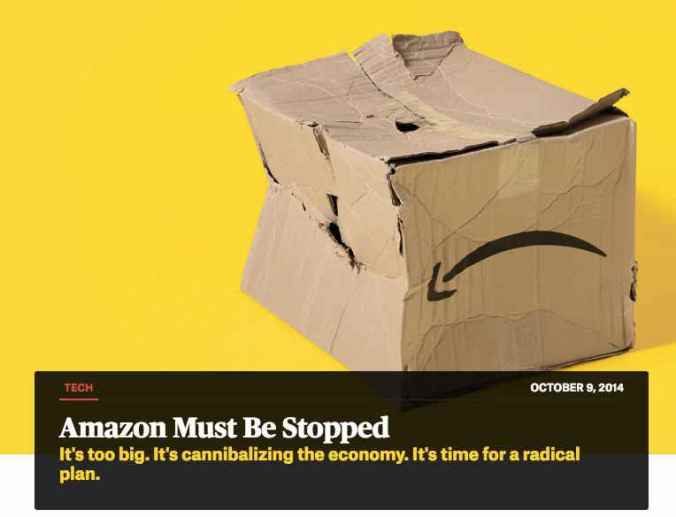
As the article below suggests, whether we shop with them or not we are all complicit. It is the best article yet on the growing concern over not only Amazon’s market power but its cultural influence. And in true liberal spirit of the great publication that offers it, both sides of the argument are presented starting at the first sentence:

Before we speak ill of Amazon, let us kneel down before it. Twenty years ago, the company began with the stated goal of creating a bookstore as comprehensive as the great Library of Alexandria, and then quickly managed to make even that grandiloquent ambition look puny. Amazon could soon conjure the full text of almost any volume onto a phone in less time than a yawn. Its warehouses are filled with an unabridged catalogue of items that comes damn close to serving every human need, both basic and esoterica mere click away, speedily delivered, and as cheap as capitalism permits. Continue reading
Pots Calling Kettles Black

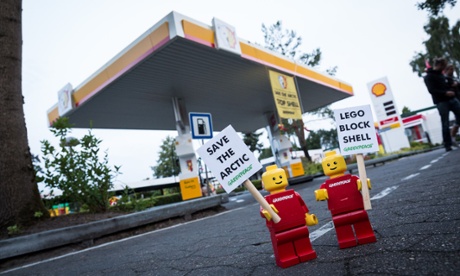
Mini activist figures at a Shell gas station in Legoland in Billund, Denmark, part of a global campaign targeting Lego and highlighting Shell’s plans for Arctic oil exploration. Photograph: Uffe Weng/Greenpeace

Mini activist figures at a Shell gas station in Legoland in Billund, Denmark, part of a global campaign targeting Lego and highlighting Shell’s plans for Arctic oil exploration. Photograph: Uffe Weng/Greenpeace

Lego is easy to love. Anyone who had these toys as a child, or who has children who have these toys, can testify to the joy they bring.

Shell is easy not to love, for reasons that do not really need to be explained here.

And yet, Lego is a product made up primarily of petroleum, so what we learn in this story in today’s Guardian seems odd as much as it seems good:

Lego will not renew its marketing contract with Shell after coming under sustained pressure from Greenpeace to end a partnership that dates to the 1960s.

The environmental campaign group, protesting about the oil giant’s plans to drill in the Arctic, had targeted the world’s biggest toy maker with a YouTube video that attracted nearly 6m views for its depiction of a pristine Arctic, built from 120kg of Lego, being covered in oil. Continue reading

Food Rebels

From guerilla gardeners, to food foraging, to our own movement toward preserving food biodiversity and farm to table sustainability, we love to write about the food we eat and how it reaches our plate.

Luckily for all of us we’re not alone in either our interest or speaking out about it. Generations since Rachel Carson‘s seminal book there have been people writing about, and more importantly, acting upon the need to re-embrace the old methods of food production while sometimes using technology to our more healthy advantage.

Food Forward opens the door into a new world of possibility, where pioneers and visionaries are creating viable alternatives to the pressing social and environmental impacts of our industrial food system. Continue reading

Breakthroughs In Nutrition Via Entrepreneurial Conservation

Exo's peanut butter-and-jelly bar contains about 40 ground-up crickets and has a familiar nutty, sweet flavor. Meredith Rizzo/NPR

Exo’s peanut butter-and-jelly bar contains about 40 ground-up crickets and has a familiar nutty, sweet flavor. Meredith Rizzo/NPR

Thanks to National Public Radio (USA)’s food-focused program, The Salt, for another story on unexpected breakthroughs in nutrition:

…”Insects are probably the most sustainable form of protein we have on Earth,” Bitty Foods founder Megan Miller, who spoke passionately about eating bugs at a TEDx Manhattan event earlier this year, tells The Salt. “The only real barrier to Americans eating insects is a cultural taboo.” Continue reading

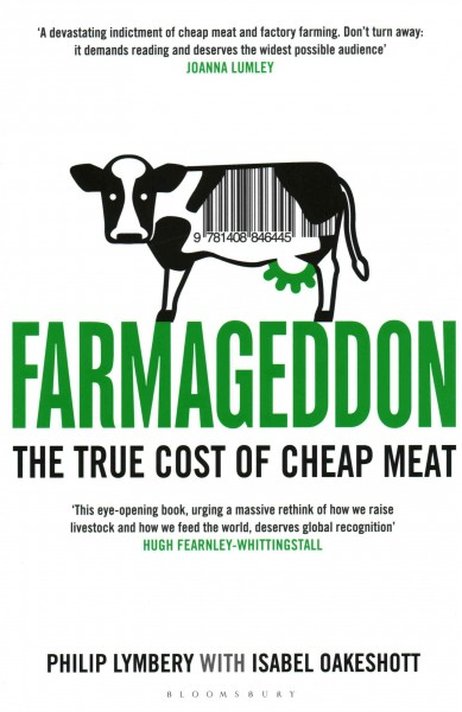
Farmageddon, Reviewed

As Kayleigh continues work begun last month, bringing our attention to all the ways we can improve our food sourcing, this book review seems timely. Barbara King, the reviewer, is a noted anthropologist but even more noted author on the topic of animal emotions. We have not read the book yet, but as always with a good book review our attention is drawn to reasons why we might, or might not, make time for this one.

9781408846445_custom-edb29a20eb514ead6c26ac932f8f904d2cffa1a4-s3-c85

Thanks to National Public Radio (USA) for sharing the review:

For Philip Lymbery, head of the U.K.-based Compassion in World Farming and his co-author Isabel Oakeshott, a visit to California’s Central Valley amounted to an encounter with suffering.

In Farmageddon: The True Cost of Cheap Meat, Lymbery and Oakeshott write that the mega-dairies of the Central Valley are “milk factories where animals are just machines that rapidly break down and are replaced.” At one huge dairy they visited, cows stood idly outdoors, some in shade and some in the sun. No grass cushioned their feet and certainly none was available to eat since, like almost all factory-farm cows, the animals were maintained on an unnatural diet of crops such as corn. The stench in the air was “a nauseous reek.” Continue reading

If You Happen To Be In Amsterdam

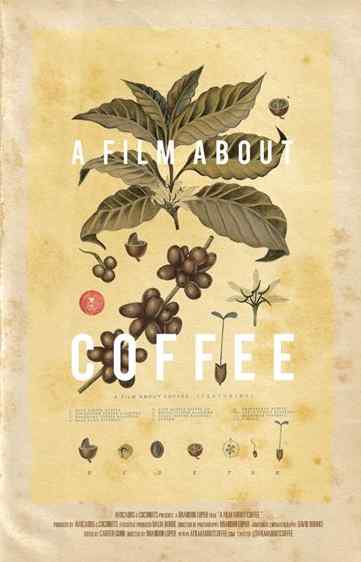
Most of our followers know we love coffee. We love how it grows. We love how it tastes. We love the settings where we can drink it. Which makes it all the more unfortunate that we’re in India and not in Amsterdam this weekend to experience Coffee Week NL 2014.

The festival collaboration with the Allegra Foundation makes participation all the more enticing:

50% of all ticket sales to The Amsterdam Coffee Festival will go towards Project Waterfall, the charitable components of NL Coffee Week. Continue reading

Green Economy Realism

There’s no way toward a sustainable future without tackling environmentalism’s old stumbling blocks: consumption and jobs. And the way to do that is through a universal basic income.

Illustration by Edward Carvalho-Monaghan

Illustration by Edward Carvalho-Monaghan

There is nothing wrong, per se, with wishful thinking. It is when those wishful thoughts are left in dream state that they can become tedious, even dangerous. Action matters. It is where dreams meet reality. Reality matters at least as much as dreams in getting to a desired outcome. This is true with regard to environmental issues as with any other. We appreciate reminders whenever, wherever we find them:

For as long as the environment has existed, it’s been in crisis. Nature has always been a focus of human thought and action, of course, but it wasn’t until pesticides and pollution started clouding the horizon that something called “the environment” emerged as a matter of public concern.

In 1960s and 1970s America, dystopian images provoked anxiety about the costs of unprecedented prosperity: smog thick enough to hide skylines from view, waste seeping into suburban backyards, rivers so polluted they burst into flames, cars lined up at gas stations amid shortages, chemical weapons that could defoliate entire forests. Economists and ecologists alike forecasted doom, warning that humanity was running up against natural limits to growth, extinction crises, and population explosions.

But the apocalypse didn’t happen. The threat that the environment seemingly posed to economic growth and human well-being faded from view; relieved to have vanquished the environmental foe, many rushed to declare themselves its friends instead. Continue reading

Caveat Emptor For Intangibles

In case you do not already know about him and his writing on topics related to modern technology as it intersects with the law, the post excerpted below by Tim Wu is a good place to start. It seems possible to simultaneously agree with the specific point of this post, and also be confused with the general implication. Agreement could stem from reading enough of Tim Wu to implicitly trust his expertise. Confusion could stem from the itinerary planning screen-captured and shown above, which reminds that not everything we buy is re-sellable. Still, we click “Hold” to ponder this just a bit more to hopefully clear the fog:

…we tend to overlook the milder forms of truth-stretching that have come to shape online living, and it’s hard not to. They’re often perpetuated by big and reputable companies, like Apple, Seamless, and Amazon.

Take search. General search sites, like Google and Bing, are pretty straightforward: you type in a query and get results ranked by some measure of relevance; you also see clearly marked advertisements. This experience tends to shape our expectation that searches deliver relevant results. But the same search on sites like Amazon or Seamless turns up not only relevant results but disguised advertisements, as well. Continue reading

Better Brewed Beer

foamy-beer

A time-honored artisanal endeavor is quietly articulating a 21st century version of industrial production

When we have links to articles reviewing the literature of vegetarian cooking and/or first-person stories, told in multiple parts about the ecological benefits of eating invasive fish species, it is only fitting that we offer information about ecologically sensitive beverages. The community of craft beer producers in the USA in particular has undergone nothing less than a renaissance. Thanks to the magazine website of Conservation for this story:

From the outside, the New Belgium Brewery, located on 50 acres near downtown Fort Collins, Colorado, appears to be an environmentalist’s dreamscape. Company-issued bicycles surround the facility. A parking lot next to the brew house has an electric car charging station. Solar panels layer the roof of the bottling plant. A well-worn biking path snakes across the property. Continue reading

Better Driving

tumblr_mo9zu18bZf1qz5g9bo1_1280

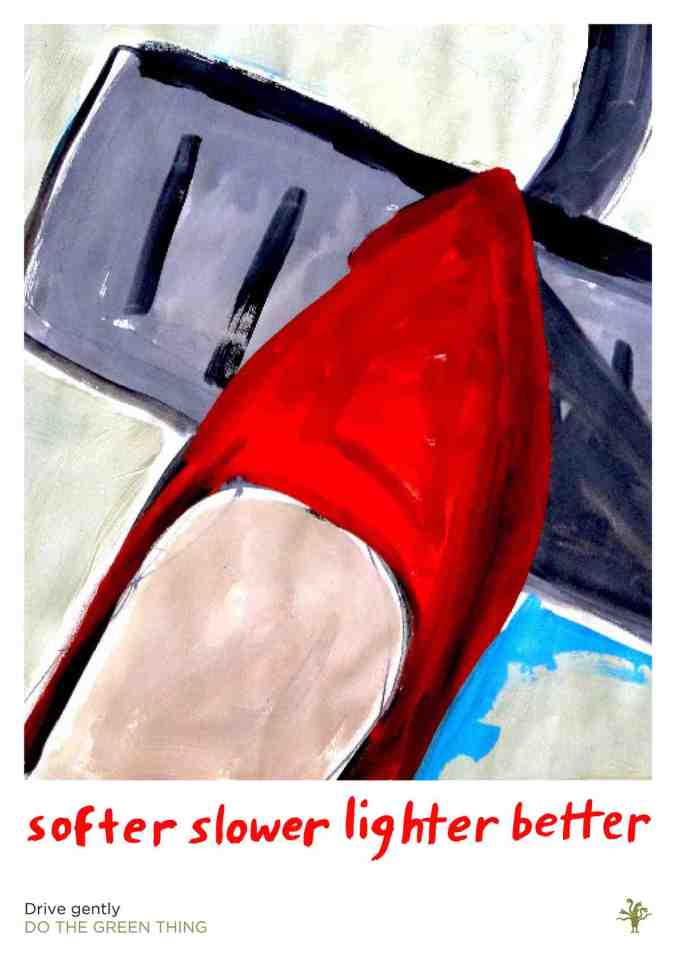
No matter how you view it, driving more fuel-efficiently is a worthy goal, but in a world with more than enough aggression already we think “Softer Slower” by Huntley Muir sends just the right visual reminder of another reason why driving more gently is a worthy goal:

Su and Donna, the two halves of artist duo Huntley Muir, have painted a poster that encourages people to be more tender on the accelerator.

“We decided to cut our speed by 10 miles an hour to save fuel and cut pollution and noise. It really works – we do use less fuel, it’s safer, less stressful and we don’t even notice the difference. And we are below the legal speed limits as well. Such goody two shoes. Continue reading

Amazon Not Prime

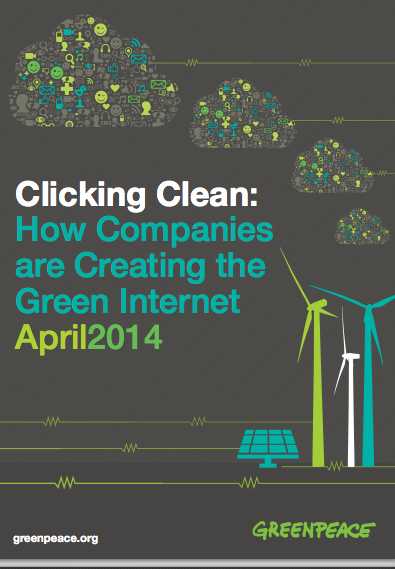
Screen Shot 2014-04-04 at 9.06.54 AMJeff Bezos wants Amazon to be “Earth’s most customer-centric company.” What do customers’ interests and concerns include? We believe customers increasingly care about the environmental practices, and cultural impact, of companies they buy from.

George Packer published a profile of Amazon in mid-February that raises questions about the modern form of capitalism, especially with regard to its impact on culture. Today in a follow up blog post about Amazon on the New Yorker’s website Packer brought to our attention this study about cloud computing’s best and worst corporate citizens. Amazon does not fare well in the analysis. Click the image to the left to go to the full publication, but start with the quick summary below:

Executive Summary

For the estimated 2.5 billion people around the world who are connected to the internet, it is impossible to imagine life without it. The internet  has rewoven the fabric of our daily lives – how we communicate with each other, work and entertain ourselves – and become a foundation of the global economy.

Seemingly on a daily basis, new businesses that use the internet as their foundation are disrupting and often replacing long-standing business models and industries. From music and video to communications and mail, more and more of our “offline” world is moving online. We can expect that trend to continue and accelerate as the global online population reaches 50% of the world’s projected population, moving from 2.3 billion in 2012 to an expected 3.6 billion people by 2017. Continue reading

Perchance To Dream

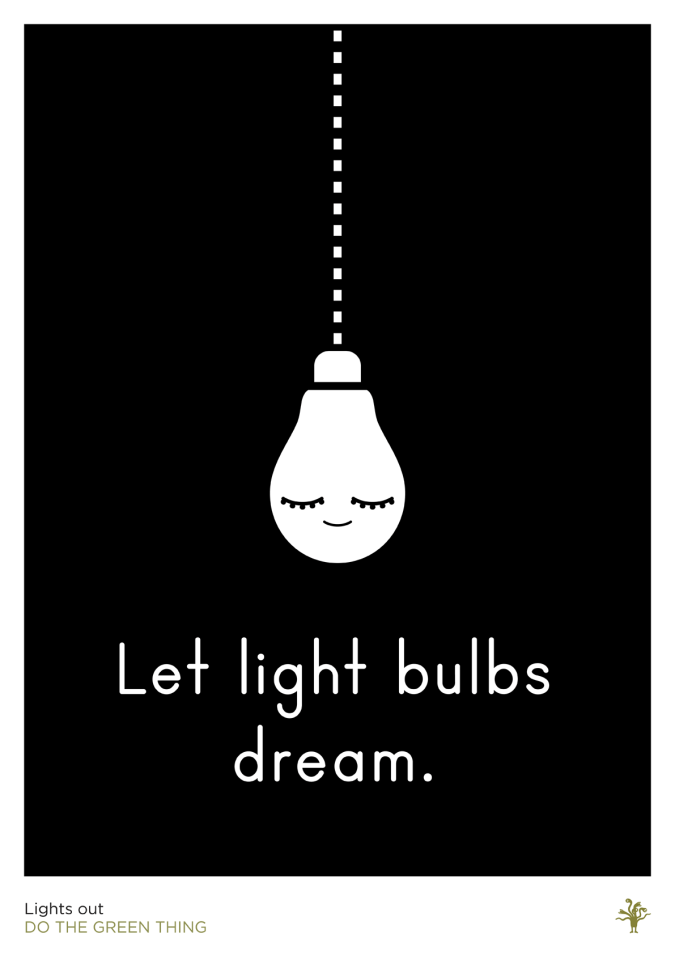
Endearing, yes, unless “Lights Out” makes you think the way Philip K. Dick did about dreaming while inanimate, or even as Shakespeare did; dark stuff that, but we get the point of our friends at this great initiative:

Design company Hudson-Powell have created this rather endearing poster, encouraging us to show light bulbs a bit of compassion.

“In the Shinto religion inanimate objects are often given a persona or spirit to help people relate to them in a more humanistic way and to create a dialog with the object. Taking this idea and applying it to light bulbs, making them delicate living things that need rest and can dream seemed like a playful way of getting people to remember to turn them off.”

Why? Continue reading

Make The Pledge by Nikki Miles

tumblr_mwb61wXD4G1qz5g9bo1_1280

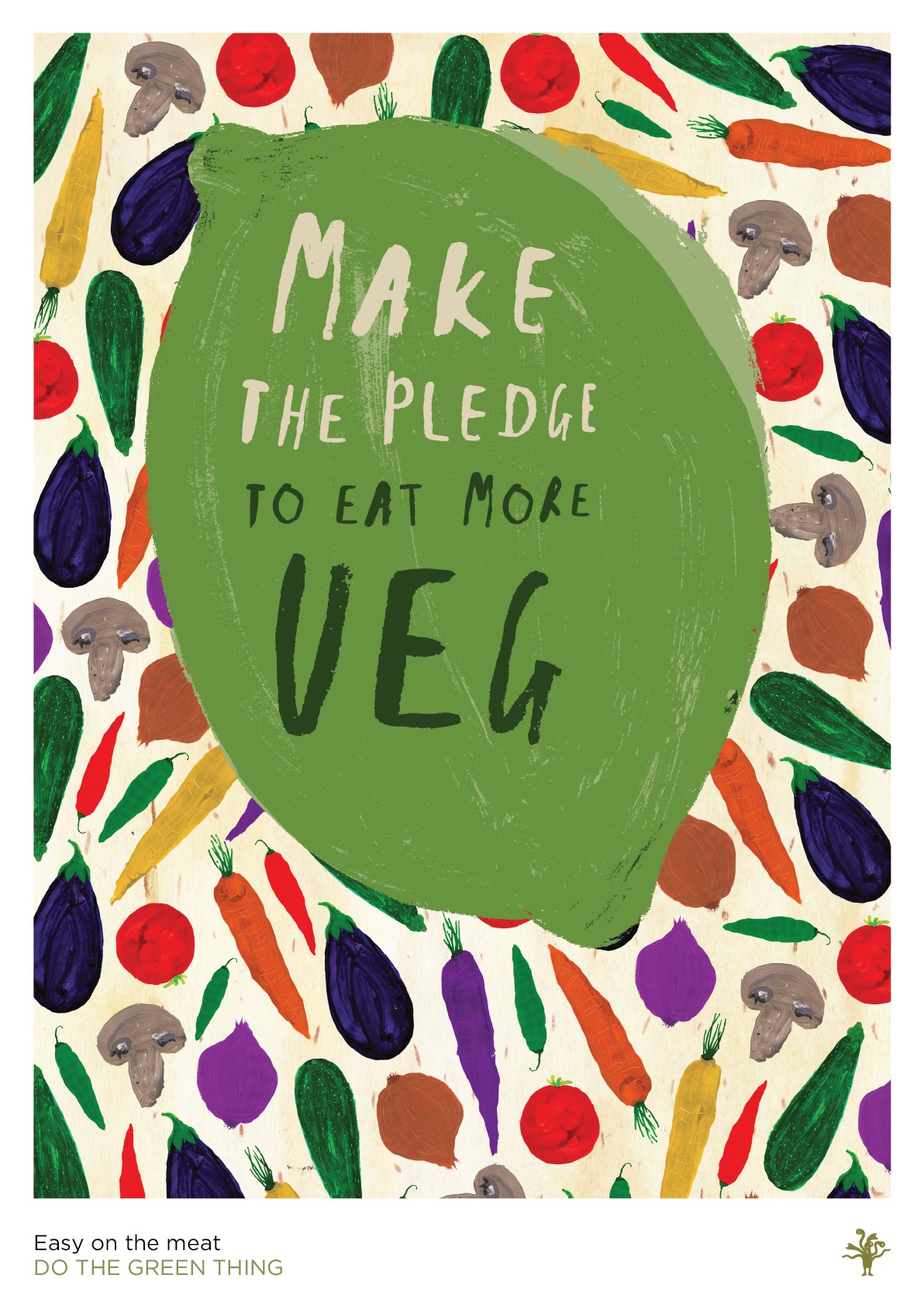
The day has come. Come! During the last month of food trials at 51, we were looking forward to the day–yesterday–when the doors officially opened and we could invite both vegetarian and non-vegetarian friends to dine, and in particular feast on a roasted vegetable dish rooted in Malabar Coast vegetables and Eastern European foodways. Thanks to another of the Young Creatives for this encouragement on getting non-vegetarians to pledge to add more vegetables to their diet–all it takes is better-tasting veggies, we think, and some creative promotion:

With this playful painting, illustrator Nikki Miles is urging us to make a pinky promise to go easy on the meat and its carbon consequences and enjoy some veg instead.

“I don’t eat a lot of meat but I’m not strictly a vegetarian either,” says Nikki. I have tried being a vegetarian in the past but I found it to hard to give up the odd bacon sandwich or roast dinner with beef gravy.  I only eat meat around once or twice a week because vegetables are yummy too! Eating more veg and less meat is a simple way to make a big difference to your health and the environment.” Continue reading

The Lights Are On by Sylvia Moritz

tumblr_n0msx5vlNw1qz5g9bo1_1280

As noted yesterday, we will continue highlighting the best of the Young Creatives for the Do The Green Thing campaign. Raxa Collective’s operations teams at various properties can relate to Sylvia’s challenge to all of us to collaborate on conservation of electricity, whether in the hospitality community, the traveler community, in our residential home community or wherever:

Graphic designer and illustrator Sylvia Moritz wants to spell an end to the stupidity of leaving lights on in empty rooms.

“Electricity is a daily comfort we take for granted,” says Sylvia. “It is our sun when it is night, it is our means of living out our modern daily lifestyles. To recklessly exhaust this energy source, to squander something so integral to our survival, is wasteful. I hope this illustrated idiom can switch people’s behaviour.” Continue reading

Still Counting On Do The Green Thing

tumblr_n377x1rxqr1qz5g9bo1_1280

Since we started highlighting these posters only during its final week or so, there are many other posters to highlight and we intend to do so in the coming days. Not all, since not all creative output is created equal. In this final campaign poster, about reduction of light pollution, the Young Creatives series concluded on a cosmic note:

The shining star of our 29 Posters for the Planet campaign is Rebecca Charlton, the winner of WWF and Do The Green Thing’s Young Creatives competition. With her intricate and dazzling illustration, she reminds every person in every building in every city that stars not bulbs are the best sources of light in the night.

Continue reading

Do The Green Thing Countdown 28/29

tumblr_n33p2xFFaL1qz5g9bo1_1280

“Let’s Ride” is a cool, clean visual that says it all, whether you are already a member of the biking community, or yet to become one:

Josh Higgins built and led the design team behind Barack Obama’s 2012 presidential campaign and is now Communication Design Manager for Facebook. Using fresh colours and geometrical shapes, his poster rallies the world to do more bike riding and less driving.

“I have always loved cycling and rode a bike since age 6 because it is fun,” says Josh. “Now I am a bit older I realize it is so much more. Riding a bike is a proven stress releaser. It is great for our environment and whether you are riding purely for pleasure or to get from point A to point B, you will arrive feeling relaxed, energized and happier about the world.”

Why?

Continue reading

Do The Green Thing Countdown 27/29

tumblr_n31wkrCfVp1qz5g9bo1_1280

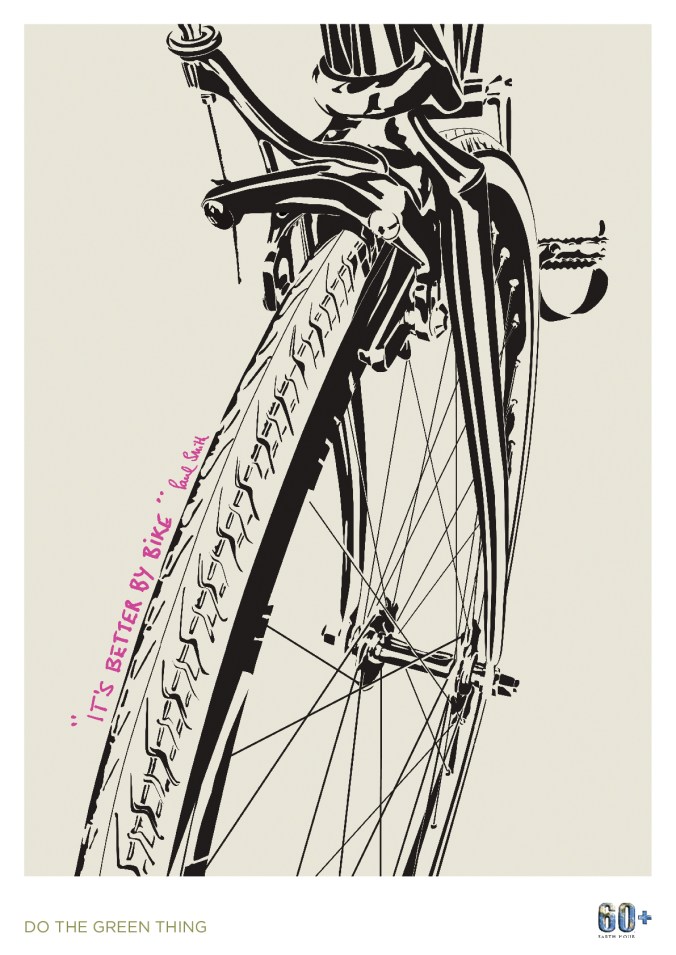
Better By Bike” speaks again on the topic of bicycle power, in the interest of Earth Hour as promoted by WWF and which Raxa Collective’s community will be participating in:

Today we are delighted to present a poster from a man who needs no introduction, but that won’t stop us from introducing him anyway. Sir Paul Smith is one of the most admired figures in the world of fashion: a style guru, a gentleman and a mad keen cyclist. He has created a piece of heartfelt pro-pedal propaganda featuring one of his own cycles and a message in his own writing: “it’s better by bike”. We agree.

Why?  Continue reading

Pro-Environment Posters For WWF’s March 29 Earth Hour Initiative

Walk the Walk by Marina Willer for 29 Posters for the Planet

Walk the Walk by Marina Willer for 29 Posters for the Planet

We appreciate collaborative efforts to raise awareness about environmental issues, especially when they come from places where the focus is not normally on conservation. Design agencies are generally designed to sell more stuff. Publishers are generally designed to use ex-trees to communicate stuff. But some designers are on the other side of the consumer behavior-influencing fence. And some publishers use those ex-trees to publicize a more tree-centric future.  Ethics sometimes prevail over ambition. Education sometimes jumps the line.

Professional communities–whether design firms, publishers, hotel companies or take your pick–all have latent collective action lurking in their futures. We hope nature and culture are the beneficiaries. Thanks in particular at this moment to publisher Phaidon, which is in itself worthy of a post on its series of environmentally-friendly books and initiatives, for bringing this initiative of design firm Pentagram to our attention:

Pentagram’s carbon free foot print

Design agency works with Do The Green Thing charity on environmentally friendly posters

The gulf between our high-consumption lifestyles and the kind of sustainable world many of us hope to inhabit is vast. Yet the changes that could take us there aren’t unthinkable, as our recent book, The World We Made, makes clear. Continue reading

Lexicon of Sustainability

Thanks to the Public Broadcasting Service of the USA for the video above and these links to sustainability-focused terminology, in this case related to Food Waste:

Nearly 40 percent of the food we grow, distribute, put on store shelves then ultimately buy as consumers never gets eaten. It’s called food waste and people are doing something about it by gleaning, composting, and learning to eat from head to tail to eliminate waste.

Food Terms

Food waste
“Forty. That’s the percentage of food in this country that never gets eaten, or that’s grown and never comes to market. It’s the food we distribute that never reaches a destination or sits on grocery store shelves without finding a consumer. And it’s food consumers buy but never eat. “
– Douglas Gayeton, LOCAL: The New Face of Food and Farming in America Continue reading