Pre-Colonization Food

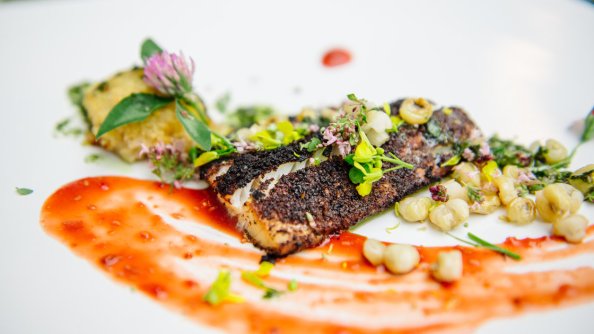
Sean Sherman’s Walleye filet with sumac and maple sugar, a white bean and smoked walleye croquette and toasted hominy; Becca Dilley/Courtesy of Heavytable.com

As we fine tune the concept of Malabar Soul Food at 51 we’re always on the lookout for other stories of cultural culinary crossovers. This is especially relevant with chefs who are pushing culinary limits by reaching back to early foodways like Sean Sherman, a member of the Oglala Lakota tribe. Mr. Sherman’s life is in the kitchen, but a great deal of his energies go into discovering the pre-colonization foods of his Great Plains ancestors. Thanks once again to NPR and the Salt for sharing this story.

Sherman, who calls himself the Sioux Chef, grew up on the Pine Ridge Indian Reservation in South Dakota. It’s where he first started to learn about the traditional foods of the Plains, whether it was hunting animals like pronghorn antelope and grouse, or picking chokecherries for wojapi, a berry soup.

“We were close to the Badlands and its sand hills, which is not the best growing area by far,” says Sherman, who’s now 40. “But we would also spend weeks in the Black Hills, crawling around and learning stuff.”

Sherman’s grandfather was among the first Native American children to go to mission schools on the reservation, and he was one of Sherman’s first teachers. Continue reading

Reasons Not To Eat Certain Things

PHOTOGRAPH FROM PIEPENBURG / LAIF / REDUX

PHOTOGRAPH FROM PIEPENBURG / LAIF / REDUX

For those of us on a recent reconnaissance mission in Greece, this post from the Elements section of the New Yorker‘s website seems just a bit late, but nonetheless an excellent thought exercise:

Ben Lerner’s new novel, “10:04,” opens with a meditation on a decadent and expensive lunch in Chelsea, prominently featuring baby octopus. The narrator is supposed to be celebrating the six-figure sale of his book, but instead he focusses on the absurdity of the meal: “the impossibly tender things” had been “literally massaged to death.” He wonders about eating “an animal that decorates its lair, has been observed at complicated play.” Afterward, he and his agent walk out onto the High Line to watch the traffic on Tenth Avenue, and he experiences an empathic response to the once sentient octopuses now curdling within him:

I intuited an alien intelligence, felt subject to a succession of images, sensations, memories, and affects that did not, properly speaking, belong to me: the ability to perceive polarized light; a conflation of taste and touch as salt was rubbed into the suction cups; a terror localized in my extremities, bypassing the brain completely. Continue reading

51 Spice

The video above follows the process of acquiring, drying, and blending a mix of Indian spices to create the 51 spice mixes that head chef Ghanshyam Giri will be using for special chicken or fish dishes.

This slideshow requires JavaScript.

Back in January, I shared another spice video (which I didn’t Continue reading

Past, Present & Future Food

grid_2048

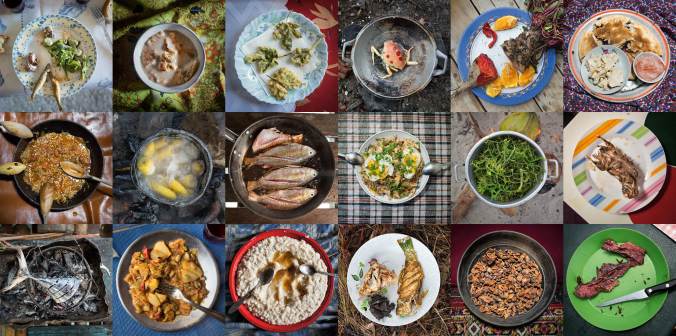
Top row: escargots, sardines, and fava beans (Crete); naan in salty yak-milk tea (Afghanistan); fried geranium leaves (Crete); boiled crab (Malaysia); raw beetroot and oranges (Crete); chapati, yak butter, and rock salt (Pakistan). Middle row: dried-apricot soup (Pakistan); boiled plantains (Bolivia); fried coral reef fish (Malaysia); bulgur, boiled eggs, and parsley (Tajikistan); stewed-seaweed salad (Malaysia); boiled ptarmigan (Greenland). Bottom row: grilled tuna (Malaysia); cooked potatoes, tomatoes, and fava beans in olive oil (Crete); rice with melted yak butter (Afghanistan); fried fish with tamarind (Malaysia); dried apricots (Pakistan); grilled impala (Tanzania; photographer’s utensils shown).

Thanks to National Geographic for this article:

The Evolution of Diet

Some experts say modern humans should eat from a Stone Age menu. What’s on it may surprise you.

It’s suppertime in the Amazon of lowland Bolivia, and Ana Cuata Maito is stirring a porridge of plantains and sweet manioc over a fire smoldering on the dirt floor of her thatched hut, listening for the voice of her husband as he returns from the forest with his scrawny hunting dog. Continue reading

A little taste of Kerala

photo 2

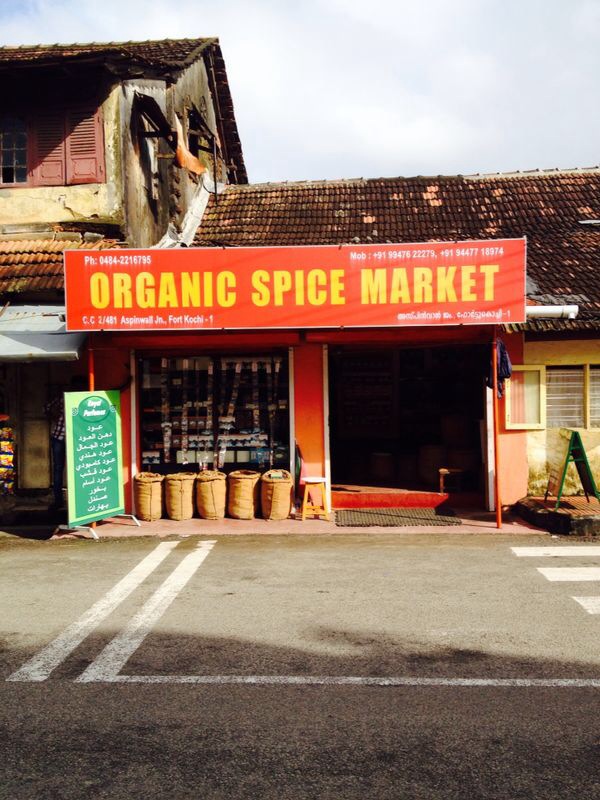
Just down the street in Mattancherry is an organic spice shop with a wide variety of classic South Indian spices. The aroma inside of the shop definitely met my olfactory needs for new smells.

The 51 restaurant at Spice Harbour serves a Xandari Salad to represent Raxa Collective’s other property, Xandari Resorts. The Xandari Salad has become a favorite at 51 with its tahini-yogurt dressing, avocado, roasted cashews, and feta cheese on top of a fresh lettuce mix.

photo 1
Continue reading

Our Daily Bread, Please

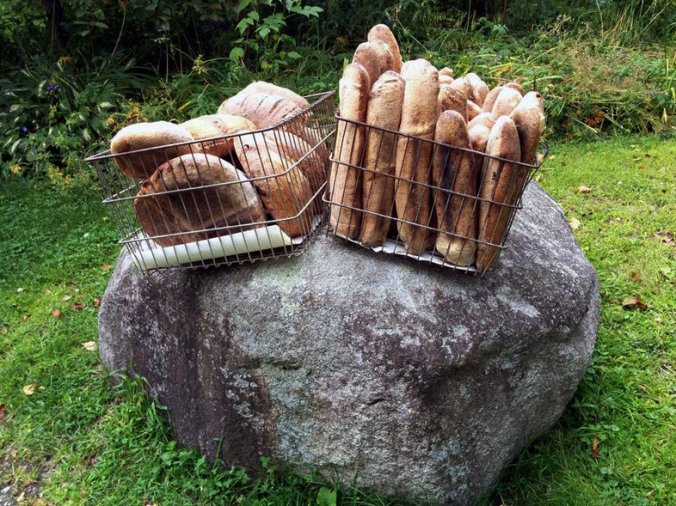
Rabin bread on a rock at the farmers market in Plainfield prior to setting up the table. Jon Kalish for NPR

Rabin bread on a rock at the farmers market in Plainfield prior to setting up the table. Jon Kalish for NPR

Where can we find the stones, here in Kerala, to build the oven to bake the bread to allow the reincarnation of this labor of love when the oven man and his wife of great heart from Vermont stop baking? We will find out. We will surely let you know. Meanwhile listen to and/or read this story, thanks to National Public Radio (USA):

When Jules Rabin lost his job teaching anthropology in 1977, he and his wife, Helen, turned to baking to keep their family afloat. For 37 years they’ve baked sourdough bread that people in central Vermont can’t seem to live without.

The year before Jules left Goddard College, he and Helen built a replica of a 19th century peasant oven, hauling 70 tons of fieldstone from nearby fields. The stones covered an igloo-shaped brick baking chamber 5 1/2 feet in diameter. Continue reading

Indian Independence Day at Spice Harbour

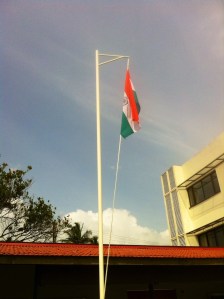
10355655_10201665725084704_4823049703076743324_oYesterday at Spice Harbour I got to participate for the first time in an Independence Day flag raising ceremony.

It’s a good time to tip our hats to history. On August 15, 1947, after centuries of British imperialism, India gained independence. I am no expert on the Indian Independence movement so I won’t speak to it too much, but I know there were many political organizations and philosophies behind it that were united by their desire to end British rule. Mohandas Gandhi’s nonviolent philosophy and civil disobedience is what led the final parts of the struggle for independence that prompted the eventual withdrawal of the British. Since we’re talking about colonial India, we can put Kerala and Spice Harbour into historical context. Continue reading

Say It Ain’t So, Ferran!

Ferran Adrià, of the award-winning restaurant elBulli. Photograph: Emmanuel Dunand/AFP/Getty Images

Ferran Adrià, of the award-winning restaurant elBulli. Photograph: Emmanuel Dunand/AFP/Getty Images

The quote from a group supporting the development of a museum on a protected coastal ecosystem–“We understand that it’s very easy to raise the populist flag in defence of the environment and that this always manages to attract a good number of supporters,”–says all you need to know to understand how important this issue is. In fact, it is not so easy. It is not easy at all to protect the last remaining unspoiled beaches in the world. We are sure that with a bit of publicity, the right outcome will prevail in this case:

When Ferran Adrià shut the doors of his elBulli restaurant in 2011, he quickly reassured gastronomes that it was not closing for good, just for a revamp. ElBulli would become a cultural foundation , complete with museum and visitor centre called elBulli 1846, all to reopen on an expanded plot in 2015.

Foodies may have been reassured, but not so environmentalists, who are furious that the expanded elBulli will eat up more space on the Cala Montjoi, one of Spain‘s few protected Mediterranean beaches. Continue reading

Al Fresco Meals Across Time and Space

This slideshow requires JavaScript.

Long after humans made living indoors commonplace we still carry the strong desire to commune with nature in one way or another. Whether through gardening or exploration, we crave being outdoors, and that often has meant bringing our meals with us.

The origin of the word “picnic” is unclear. It first appeared in an English dictionary in 1748, and it probably derived from the French pique-nique.

A 17th-century French pique-nique may have been what we now think of as a potluck. In the 18th century, its American counterpart may have been more like a salon gathering. By the 19th century, though, it had become common for Americans to hold these events outside. Continue reading

Humanity’s Diet Makes A Difference, Historically As Well As Futuristically

On the timescale of evolutionary history, paleo enthusiasts note, agriculture is a fad. Credit Illustration by Mike Ellis.

On the timescale of evolutionary history, paleo enthusiasts note, agriculture is a fad. Credit Illustration by Mike Ellis.

Since the early days of this blog we have been hungry consumers of environmental long form journalism, of which Elizabeth Kolbert’s New Yorker chronicles are best-in-category. They are also, frankly, almost always depressing.

Nonetheless, they put humanity into its natural context. This not-at-all-depressing chronicle demonstrates the value of that contextualization well:

The first day I put my family on a Paleolithic diet, I made my kids fried eggs and sausage for breakfast. If they were still hungry, I told them, they could help themselves to more sausage, but they were not allowed to grab a slice of bread, or toast an English muffin, or pour themselves a bowl of cereal.

Continue reading

Yes, We Can

Andrew Scrivani for The New York Times

Andrew Scrivani for The New York Times

Food trials at 51 are a permanent condition, thankfully, because we are on the constant search for ever-better vegetarian meals.  This definitely qualifies:

A GOOD APPETITE

The Ultimate Veggie Burger

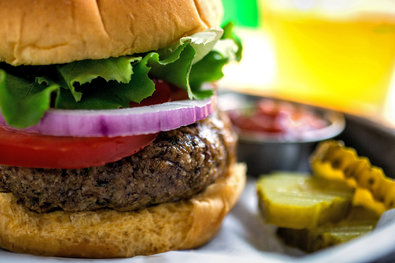
It’s difficult to make a veggie burger with great flavor and a firm, succulent texture. This is how you do it.

A New Way Of Tasting

BN-DS230_2LYONS_DV_20140716073028Does the world really need a new lifestyle magazine at this moment in time? If the magazine is created by someone who revolutionized the way wine is evaluated, the answer may be yes:

CAN A WINE EVER be perfect? If so, who is qualified to pass that judgment? Is it the winemaker who is trained in viticulture or oenology? The merchant with a fabled palate who buys the wines year after year? Or is it the critic, with no formal training but a strong sense of smell, a notebook and an ability to taste 10,000 wines a year?

Continue reading

Throwback Thursday: A Fruit Most Treasured


Pomegranate tree at Harvest Fresh Farm. Photo credit: Kayleigh Levitt

Pomegranate tree at Harvest Fresh Farm. Photo credit: Kayleigh Levitt

With Kayleigh stationed at Cardamom County we’re currently exploring ways to make our organic garden more productive, despite the challenges posed by local wildlife. With that goal in mind we visited a colleague’s farm in Tamil Nadu, in an area where they don’t face monkey challenges, but some of their produce requires special netting to protect against birds and bats.

While there we enjoyed a farm tour that included harvesting a few different species of pomegranate, which happens to be part of my daily menu for many years. (Frequent guests at 51 will notice the healthy and delicious seeds making an appearance in many ways.) Continue reading

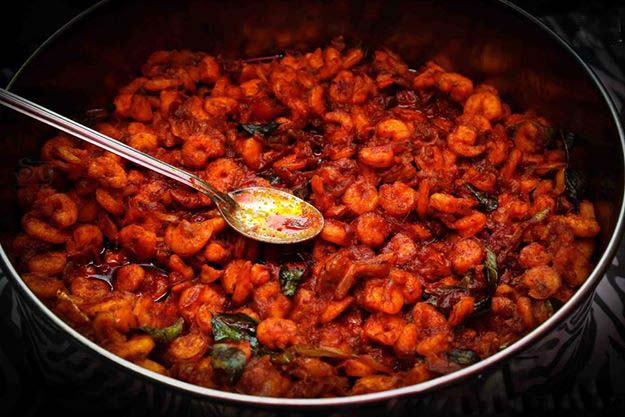
Flavors Of Kerala: Prawn Masala

Photo credits : Shymon

Photo credit: Shymon

Prawns (also called shrimp) are plentiful in the backwaters and coastal areas of Kerala. Prawns are one of the most popular seafood ingredients in Kerala, cooked in a variety of ways to suit different traditional dishes.

The delicious and spicy prawn masala is a favorite way to use the small crustaceans. The prawns are first marinated in a variety of spices, including turmeric, chili powder, pepper, and salt. They are then sauteed in a pan with a small amount of oil, chopped onions, garlic, ginger, green chili, tomato and curry leaves until brown. Finally, adding the marinade, they are allowed to simmer over a low flame for another ten minutes. Yum! Continue reading

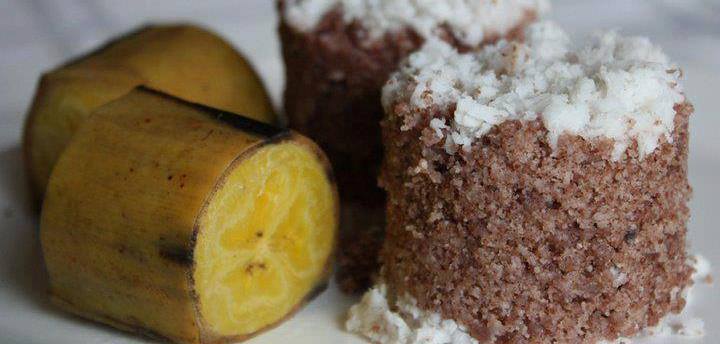
Boiled Banana

Photo credits : Shymon

Photo credits: Shymon

When bananas are so ubiquitous here in the tropics, it’s good to have a variety of ways for eating the fruit. For Western readers, boiling bananas might seem strange, but it is quite common in India. Boiled banana is considered an excellent food for infants and children in Ayurveda. In Kerala, cuisines like puttu and rava uppuma (a savory south Indian breakfast dish) are perfectly matched with boiled bananas.  Continue reading

Jackfruit

Photo credits : Shymon

Photo credits: Shymon

Jackfruit is known as chakka in Malayalam, and is mostly consumed as ripened fruit. That might seem like stating the obvious, but since jackfruit is so abundant in Kerala, most households make different varieties of traditional dishes from both ripened and unripened fruit. Some examples include chakka puzukku (unripe jackfruit curry), chakka yappam (steamed jackfruit rice cakes), chakka payazam (jackfruit pudding) and chakka chips. Jackfruit trees are cultivated in the Western Ghats of India. Continue reading

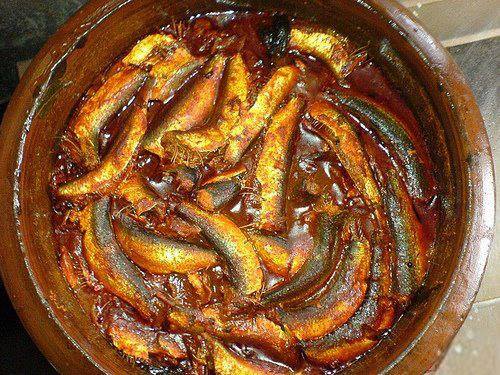
Sardine Fish Curry

Photo credits : Shymon

Photo credits: Shymon

In Kerala, sardines are always available fresh from the sea. Rich in Omega-3 fatty acids, sardines are prepared in most households as a staple, especially as a fish curry. Sardine fish curry is one of the most popular dishes in Kerala, and it is not only very tasty, but very spicy too. Continue reading

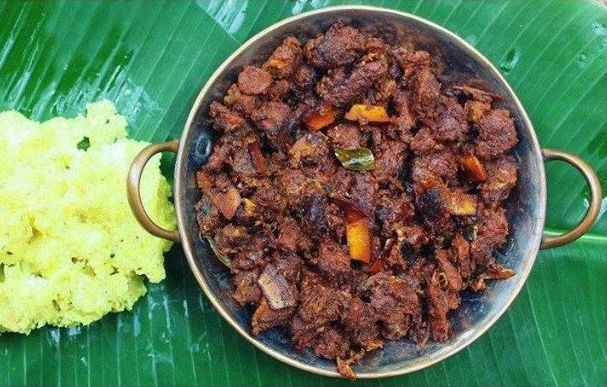
Flavours of Kerala – Beef Fry

Photo credit : Jithin

Photo credit: Jithin

Beef fry is a favorite traditional dish in Kerala. It is prepared with heavy spices and gets quite hot, so it is well paired with tapioca, poratta, and appam. The main ingredients are onion, garlic, ginger, coconut flakes, green chilies, curry leaves, Garam masala, turmeric powder, red chili powder, pepper powder, salt, and coconut oil. Continue reading

Dhokla, Indian Street Food

25KITCH1-sfSpan

Indian food fit for print:

Next Stop, India: Full Steam Ahead

Growing Fruit and Vegetables at Xandari

The view from the path right before reception

Much of the fresh, rich compost that Xandari produces from all sorts of organic material is used as the perfect substrate to grow delicious fruits and vegetables on property, both in greenhouses and out in the open. During our tour a few days ago with José Luis, James and I saw dozens of tomatoes (three different varieties), lots of lettuce, citrus and other tropical fruits, green beans, and much more.

Continue reading