Made In India, Another Success Story

india-cheese-1_custom-cdfd530867a80077bdc11384d4b4e94c6ec88a84-s1400-c85.jpg

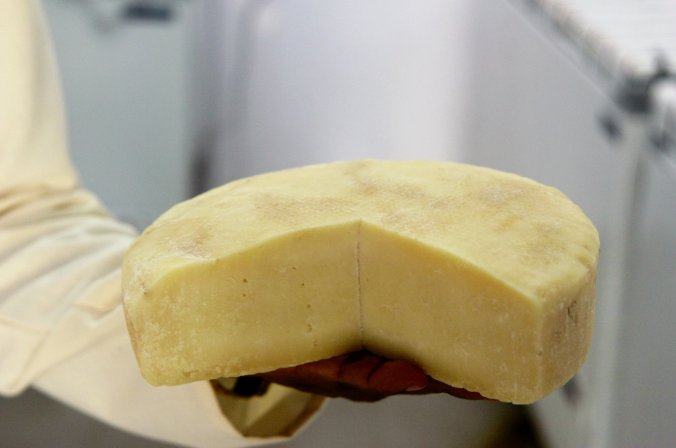
A wheel of hard, aged cheese. Aarthi Gunnupuri

Since our setting up shop in India in 2010 we have seen many improvements all around us, all much more important than cheese. But, finally, even the cheese is making life here better. Thanks as always to the folks at the salt, from National Public Radio (USA):

These Monks Have A Calling: Making Fresh Italian Cheese — In India

AARTHI GUNNUPURI

In a monastery tucked away in a quiet back lane of Bangalore, India, Benedictine monks of the Vallombrosian Order are using their European connections to meet rising demand for fresh, Italian-style cheese in this South Asian country. Continue reading

If You Happen To Be In Williamstown

photogclark

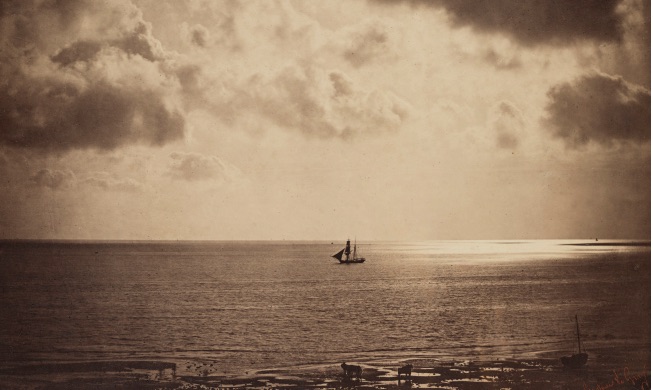
Thanks to Louis Menand, whose post THE MAJESTY OF EARLY PHOTOGRAPHY brought to our attention this exhibit (his comment on the museum itself, shared at the end of this post, is worthy of a read to the end):

…Right next to “Photography and Discovery” is another small exhibit, also of works the Clark owns, of early-nineteenth-century British paintings, many by Turner and Constable. I looked in to try out Galassi’s thesis, and you really can see the continuity between what those painters were doing, exploring the effects of sunlight on everyday subjects, and what the photographers would start doing a few years later…

The museum’s description makes us think of the parallels between photography and travel in terms of opening up horizons to an ever-widening audience:

When photographs were first widely produced and distributed during the second half of the nineteenth century, they offered viewers new ways to discover unknown people, places, and things. This exhibition explores how photographers considered these subjects during the medium’s first seventy-five years. During this exciting period, images were captured for many different reasons—from documentation to curiosity—and they came in many forms, including deluxe book illustrations, portable portrait cards, and frame-worthy landscapes. Continue reading

Raduan Nassar, Back To The Land

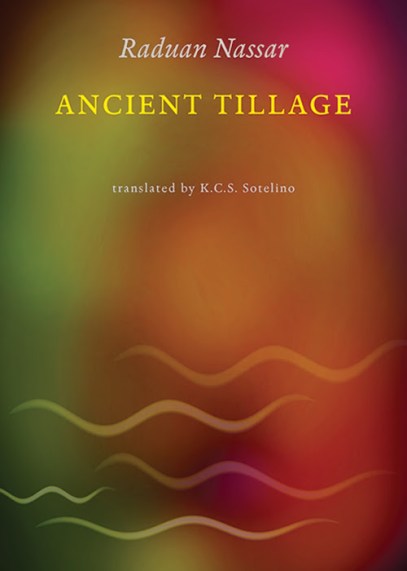
9780811226561On January 31st, 2017 New Directions Publishing is bringing this masterpiece, published originally in Brazil in 1984, to an English-reading audience for the first time:

For André, a young man growing up on a farm in Brazil, life consists of “the earth, the wheat, the bread, our table, and our family.” He loves the land, fears his austere, pious father, who preaches from the head of the table as if from a pulpit, and loathes himself as he begins to harbor shameful feelings for his sister Ana. Lyrical and sensual, written with biblical intensity, this classic Brazilian coming-of-age novel follows André’s tormented path. He falls into the comforting embrace of liquor as—in his psychological and sexual awakening—he must choose between body and soul, obligation and freedom.

I was completing a degree in literature the year this was first published, but Portuguese was not an option for my reading, nor was Brazil really on my map at that time. As a result, or for whatever other reasons, I never heard of this book before.

Work assignments took me to Brazil several times in the intervening decades, and Latin America has been home base for most of the last two decades. I know I must read this, and soon, so it has just moved to the top of my next-book list. But for a very different reason the author has my attention, thanks to this:

WHY BRAZIL’S GREATEST WRITER STOPPED WRITING

In 1984, at the height of his literary fame, Raduan Nassar announced his retirement, to become a farmer. Continue reading

Sunrise Over Thevara

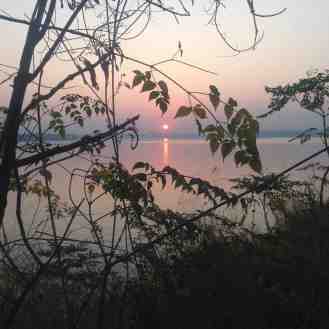
thevaraRecently I have been on morning walks extending miles across the waters from Thevara (the land on the left across the water in the photo above) our neighborhood starting in 2010.
In the early years, while getting to know our new neighborhood, I snapped photos mainly of people and took notes.

Continue reading

A Spice Primer

spice

Our work in the land of spices, the Malabar coast of India, has taught us a thing or two about spices, but we never tire of hearing an expert share the fundamentals of their knowledge (click the image above to go to the podcast):

Lior Lev Sercarz, chef and owner of La Boîte, a destination spice shop in New York City, joins us to discuss his book The Spice Companion: A Guide to the World of Spices. He offers ways for home cooks to try new flavor combinations and make custom spice blends with a curated collection of 102 spices. He also details their histories and origins, and includes information on where to buy and store spices, five traditional cuisine pairings, and three quick suggestions for use.

Back To The Land, And A Future

18Farmers5-superJumbo-v2.jpg

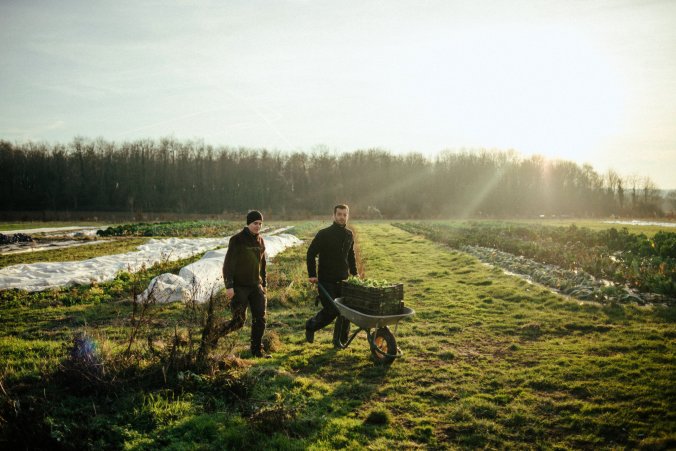
Vincent Martin, right, made a living selling health club memberships in Paris until he left his job about five years ago. “Land is key,” he said. Credit Dmitry Kostyukov for The New York Times

We are going back to the land this year, in Belize, and can relate to the description and explanation these ex-urbanites give for their retreat to the rural, agricultural life of their forebears:

Life on the Farm Draws Some French Tired of Urban Rat Race

By

SAULX-LES-CHARTREUX, France — Two years ago, Elisabeth Lavarde decided to quit her office job in Paris and start a new life in Saulx-les-Chartreux, a small town with two butchers and one baker just south of the capital.

Ms. Lavarde, 39, is now an apprentice farmer at a 24-acre farm that grows organic vegetables, sold directly to local consumers. New farmers like Ms. Lavarde usually make what they see as a decent salary of about 1,500 euros, or about $1,600, a month, slightly above the French minimum wage.

“I wanted a job with more meaning,” she said. “I felt like I was tilting at windmills.” Continue reading

Ancient Grain, Great Again

11rye-slide-it3z-master768

It is not quite as ancient as geological time, but rye grain goes way back. And deserves as comeback, we think, almost regardless of all the nifty innovations that will determine the future of grain-growing. While we are busy with greatness-making, our thought is at this moment, let’s not forget the grains that got us here:

Rye, a Grain With Ancient Roots, Is Rising Again

By Julia Moskin

Any adventurous eater who has wandered into the woods of modern Nordic cuisine has probably tripped over a loaf of rye bread. There is wonderfully chewy rugbrod at Great Northern Food Hall in Grand Central Terminal, spice-scented Swedish limpa at Plaj in San Francisco, and darkly rugged toast at Bachelor Farmer in Minneapolis. Continue reading

If You Happen To Be In London

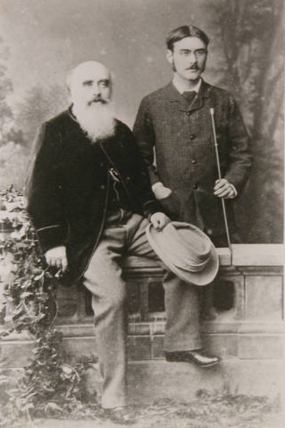
John Lockwood Kipling with his son Rudyard Kipling, 1882. © National Trust/Charles Thomas

John Lockwood Kipling with his son Rudyard Kipling, 1882. © National Trust/Charles Thomas

Kipling is almost a household name for many in our group, but primarily in the context of Rudyard Kipling, the writer of the well-known stories and fables about India. When researching the author a few years back I was surprised to learn about his talented father, whose beautiful illustrations graced the early editions of several of his son’s books.

Rudyard Kipling’s bookplate ‘Ex Libris', Lockwood Kipling, 1909. © National Trust Images/John Hammond

Rudyard Kipling’s bookplate ‘Ex Libris’, Lockwood Kipling, 1909. © National Trust Images/John Hammond

Those lucky enough to be in London this month can visit the Victoria & Albert Museum for the exhibition Lockwood Kipling: Arts and Crafts in the Punjab and London.

More of note, not only was the senior Kipling an artist, writer, museum director, teacher, and influential figure in the Arts and Crafts movement – he was also a conservationist, distinguished for promoting the traditional textile crafts of India and what is now Pakistan.

The exhibit coincides with Conferences and Symposia related to the 3-year international research project on Kipling’s legacy.

The 19th century Arts and Crafts revival in British India is a fascinating chapter in the international history of art and design. However, John Lockwood Kipling’s career as designer and architectural sculptor, curator and educator, illustrator and journalist, has received little attention. Continue reading

Sanskrit Scholarship & Mystical Journeys

guru

Our random meeting and conversations with some scholars in southern India led to an exploration of the origins of yoga, which we linked to here.

guru1

Next, using some of the same clues provided by those conversations, we were led to some excellent programming by Smithsonian Channel that includes one of the two scholarly co-authors mentioned in that previous post (see the second book) plus someone you may recognize from another context:

MYSTICAL JOURNEY: KUMBH MELA

West meets East when acclaimed actor Dominic West joins his childhood friend on a pilgrimage to Northern India and the biggest religious festival in the world, Kumbh Mela. Here, 100 million Hindus have gathered to wash away their sins in the holy rivers near Allahabad, on the banks of Sangam. It is also where Dominic’s friend Sir James Mallinson will be initiated into a senior role called a mahant. Follow these friends on this incredible two-week journey, and submerge yourself in the sacred waters and culture of this triennial celebration.

Mayan City, Deep Jungle Discovery

NYerMaya.jpg

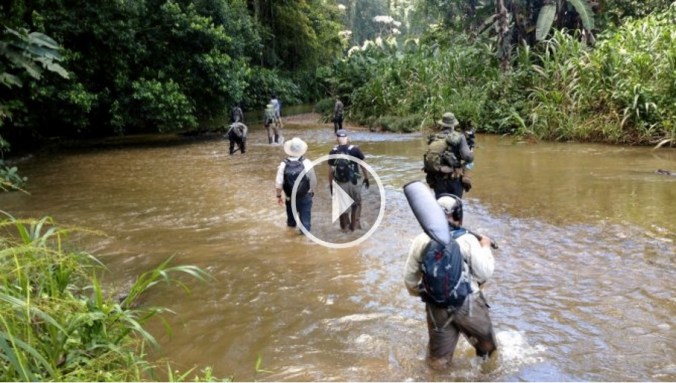
Mr. Preston shares an experience that is not familiar to many people, and perhaps only considered enviable by a select few. The team at Chan Chich Lodge meets visitors every day of the year who are looking for a distant cousin of this experience described below, and those guests come away invariably awed by the opportunity to have a safe, comfortable adventure deep in nature, exploring well protected remains of a Mayan civilization buried by time and jungle. For them, this is worth a read:

AN ANCIENT CITY EMERGES IN A REMOTE RAIN FOREST

…The revelation of an ancient city in a valley in the Mosquitia mountains, of Honduras, one of the last scientifically unexplored regions on Earth, was a different story. This was the first time a large archaeological site had been discovered in a purely speculative search using a technology called lidar, or “light detection and ranging,” which can map terrain through the thickest jungle foliage, an event I chronicled in a story for the magazine in 2013. As a result, this discovery revealed something vanishingly rare: a city in an absolutely intact, undisturbed, pristine state, buried in a rain forest so remote and untouched that the animals there appeared never to have seen people before. Continue reading

Origins Of Modern Yoga

9780195395341One of the excellent benefits of living in south India is meeting people who know alot about south India. Sounds circular, but occasionally the people are specialists on topics we have come to care deeply about. We met a group of Sanskrit scholars yesterday quite by chance, one of whom is a leading authority on the texts that are the earliest documentation of what we now call yoga.

When we mentioned our interest in yoga from the lay perspective, because we offer yoga experiences in various properties we manage in Asia and Latin America, it led to a simple question: where can we learn the most, most accessibly, about the real origins of yoga? The answer was this book and this author (incidentally a friend and colleague of the one to whom we were asking the question. So over at Oxford University Press this is what we found.

With a bit more searching we found this excellent BBC Radio 4 segment from just a few months ago that features the same scholar, Mark Singleton, and is worth a listen if you are interested in the origins of modern yoga.  Continue reading

2017, Year Of Wilderness Conservation, Farming & Food

CCL Board.jpg

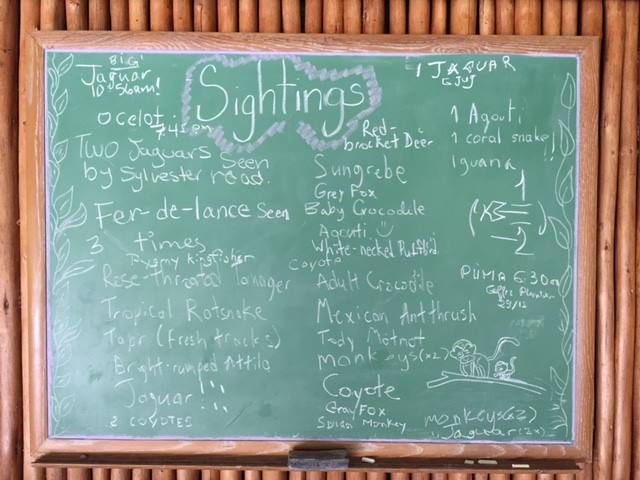
A few days ago Arnay, the General Manager of Chan Chich Lodge, posted a snapshot of the sightings board just outside the reception area, where guests share what they have seen on any given day while trekking with guides, or trekking solo. 2016 was not exceptional for Chan Chich, but it was another year of exceptional opportunity to witness the abundance that comes with committed conservation.

The big cats made their presence known day after day after day. The entire food chain on which they depend was right there with them, well balanced in the 30,000 acres of forest that Chan Chich protects, surrounded by an additional nearly half million acres that other private conservation-minded land-owners protect in northwest Belize. Continue reading

Old World Trade In Spices, Lessons for 21st Century Leadership Thinking

01ghosh-2-superJumbo.jpg

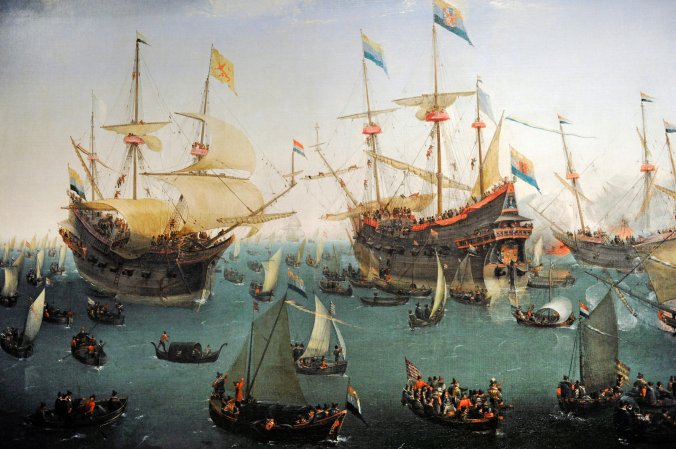
“The Return to Amsterdam of the Second Expedition to the East Indies,” painted by Hendrik Cornelisz Vroom, 1599. CreditPhas/UIG, via Getty Images

Amitav Ghosh, who we think of primarily as a writer of fiction, is also an important non-fiction thinker/author, and most recently published “The Great Derangement: Climate Change and the Unthinkable.” This op-ed in the New York Times puts future trade discussions into perspective in the most remarkable setting we can think of at the moment– the spice trade of centuries past. From our perch on the Malabar coast of India this is a welcome bit of history with which to welcome the new year and the challenges ahead:

GOA, India — For many years the word “globalization” was used as shorthand for a promised utopia of free trade powered by the world’s great centers of technological and financial innovation. But the celebratory note has worn thin. The word is now increasingly invoked to explain a widespread recoiling from a cosmopolitan earth. People in many countries are looking nostalgically backward, toward less connected, supposedly more secure times.

But did such an era ever exist? Was there ever an unglobalized world? Continue reading

Greening Museums

garden_drawing

Illustration by Emily Woodworth

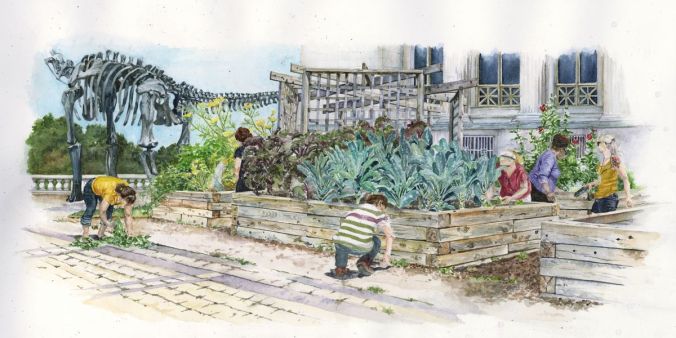
There have been moments in recent months when continued attention to the little details we see, and link to concerning incremental improvements in environmental sensitivity, social responsibility, or any other sustainability metric seems akin to “rearranging the deck chairs on the Titanic.” Political turmoil, and specifically political commitment to dismantle environmental protection in various influential countries, might make incremental change seem even less significant to some. These deck chairs are different. Every instance of care and action is a data point worthy of attention, and we will continue to connect the dots. Today, from the Field Museum of Chicago and their awesome Green Team:

THE FIELD MUSEUM’S GREEN TEAM

A Greener Field (the Museum’s “green team”) began as a grassroots recycling effort in 1989, and now has over 40 members representing every area of the Museum.  Staff members who share the Museum’s commitment to improving sustainability attend monthly meetings which provide an outlet for them to share successes and challenges in terms of greening their departments, as well as a vehicle to initiate and help implement institution-wide programs.  From bike sharing programs to recycling and composting Continue reading

Kerala’s Stars Redux

We published this post in the early period of this site, but the beauty of the subject and the timeliness of the season begs its redux…

The colorful stars that begin to grace Kerala buildings in December from homes, to businesses, to places of worship have humble beginnings despite their current flashy status.  The were originally a simple white 7 point star that correlated with the beacon leading to the Christmas manger.

Many of these folded and cut paper stars are the handiwork of a group of women in a fishing villages around the southern Kerala city of Kollam. Continue reading

The Little Things

lead_large

Tastemade

Thanks to Jessica Leigh Hester for her article in the upcoming issue of the Atlantic–Big in Japan: Tiny Food, The joy of cooking in miniature–which helps us put 2016 into some kind of perspective (we cannot articulate the perspective, just that this is as good as any other story to help us make sense of it):

The broth sizzles in a tiny pot hung over a flame on a miniature irori, or “hearth.” A knife the size of a pinkie finger nudges minuscule cubes of tofu from a palm-size cutting board. Flakes of seaweed tumble off a spoon pinched between a thumb and finger. A couple of minutes later, a tiny ladle dishes the finished miso soup into bowls no bigger than a thumbnail.  Continue reading

Vatican’s Small Steps Toward Gender Equality

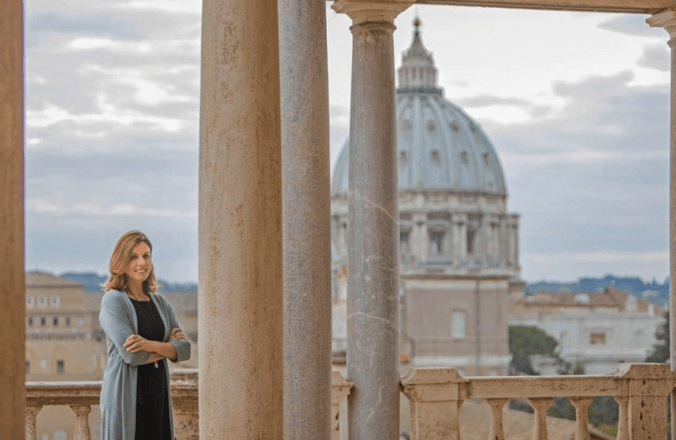
Barbara Jatta will oversee an institution that is one of the Holy See’s major sources of funds with about $311 million in gross revenues a year. PHOTO: VATICAN MUSEUMS

Barbara Jatta will oversee an institution that is one of the Holy See’s major sources of funds with about $311 million in gross revenues a year. PHOTO: VATICAN MUSEUMS

Without religious affiliation, we’ve applauded the current pope’s embrace of environmental protection and other progressive leaning policies. In a current political atmosphere where gender often overrides qualification, we appreciate this appointment all the more.

Pope Francis Names New Female Director of Vatican Museums

ROME—The Vatican Museums, one of the world’s pre-eminent art collections, announced Tuesday that Barbara Jatta, an Italian art historian and longtime Vatican official, will become its new director, making her the first woman to hold one of the most prestigious jobs in the art world.

The appointment by Pope Francis, which is effective Jan. 1, will also make Ms. Jatta the most prominent female administrator at the Vatican. The pope has spoken about expanding the roles of women in the Catholic Church, but most high Vatican offices are reserved for cardinals and bishops, who must be men. (Margaret Archer, a British sociologist, was named president of the Pontifical Academy of Social Sciences, an advisory body to the pope, in 2014.)

The Museums, which include priceless masterpieces including the Sistine Chapel frescoes by Michelangelo, regularly appear among the world’s top 10 museum complexes by attendance, with over six million visitors in 2015. The collections include 70,000 objects, dating back from antiquity through the 20th century. Continue reading

‘Tis the Season for Creative Arborescent Decision-Making

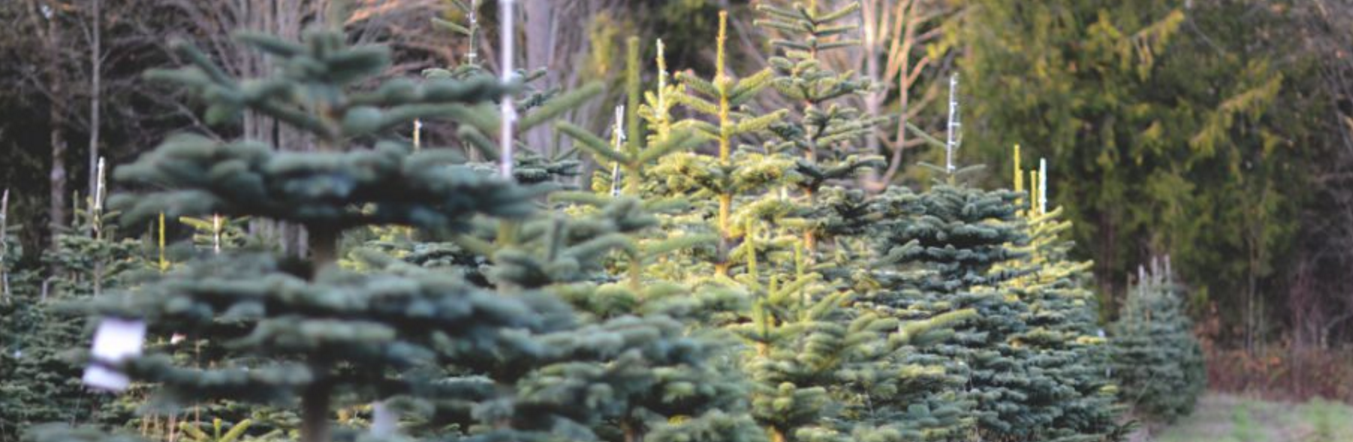
photo credit: Carol Fernandez

photo credit: Carol Fernandez

Real Vs. Fake Trees – Which is Better for the Environment?

Tis the season for an age-old question: Which kind of Christmas tree – real or fake – is better for the environment?

We love this question, because it’s an example of a simple choice that anyone and everyone can make that can reduce our impacts on the environment.

We also love this question because, like many environmental issues, the answer isn’t as simple as you might think. Our #1 recommendation? Buy a real tree. Read on for more details on the impacts of both real and fake Christmas trees, and then make the choice that’s right for you. And check out our 12 Tree Tips for other earth-friendly holiday decoration tips.

REAL CHRISTMAS TREES

In 2015, 26.9 million trees were purchased from live Christmas tree farms – more than twice the number of fake trees purchased (12 million).   Continue reading

Better Food, Faster

little-quinoaisthenewbigmac-1200It’s time to change fast food for the better, forever.

Fresh and nutritious food doesn’t have to cost a fortune or take forever to prepare. At eatsa, we’ve upped the taste factor alongside affordability and speed, with bold flavors, seasonal ingredients, and hearty portions. Our commitment to you is simple: faster, nutritious, more affordable and tastier food. Continue reading

Keeping A Family Business Busy, Moving Into The Future While Preserving The Past

09calabria3-master675

Camillo Sirianni, a third-generation family business that began as a mechanized carpentry company in 1909, has overcome the isolation of its hometown to become a leading manufacturer of school furniture. Credit Gianni Cipriano for The New York Times

The EU, like all governance systems and especially relatively young ones, had its shortcomings; but it also had plenty of visionary good that we continue to admire:

Internet Throws Lifeline to Family Businesses in Small Town in Italy’s South

By

SOVERIA MANNELLI, Italy — Mario Caligiuri can still recall the night that may be credited with changing the fortunes of Soveria Mannelli.

It was New Year’s Eve at the turn of the millennium, and as mayor he dashed off an email to the authorities in Rome seeking an audience to explain his initiative to connect his struggling mountaintop town of about 3,000 inhabitants to the internet. Continue reading